Maria Licciardi
Case Summary
When Italian police raided what they believed was Maria Licciardi's hideout in June 2001, they expected a spartan fugitive's den. Instead, they found marble floors, a grand piano, and an outsize Jacuzzi — all tucked inside an attic bristling with surveillance cameras. The most powerful woman in the Neapolitan underworld had vanished again, as she always did, slipping back into the maze of streets where she had been born fifty years earlier. A fellow mafioso once told investigators that Maria Licciardi was more dangerous than Sicily's most-wanted fugitive, Matteo Messina Denaro. Italy's Interior Ministry called her the 'strategic head' of a criminal confederation controlling twenty rival Camorra clans. She brokered peace between warring gangsters, dispatched kill orders through a pentito who later testified that 'talking with Maria was the same as talking with Gennaro, the boss,' and in 1999 recalled an entire heroin shipment on quality-control grounds — a decision the Lo Russo clan defied, triggering at least eleven overdose deaths in a single month. She earned three nicknames: La Madrina, La Piccolina, and La Principessa. She earned each of them. This is the story of the woman who ran Naples.
March 24, 1951, Secondigliano, Naples, Italy(Age: 75)
Related Cases
Convicted
Connection tags:

Convicted
Connection tags:

Alleged
Connection tags:

Accused
Connection tags:
Alleged
Connection tags:

Convicted
Connection tags:
Case Details
The officers found the grand piano first.
When hundreds of Naples police — backed by helicopters circling low above Secondigliano's cramped rooftops — finally breached what they believed was Maria Licciardi's attic hideout on June 9, 2001, they expected a fugitive's lair: spartan, functional, built for quick escape. Instead they found marble floors. An outsize Jacuzzi. Surveillance cameras wired to every approach. The kind of domestic luxury that announced, in its very extravagance, that the woman who lived here had never doubted she was untouchable. The rooms were empty. La Madrina — The Godmother — had slipped away again, as she had for years. Her photograph had been plastered across Italy. Her name appeared on the government's register of the country's thirty most-wanted criminals. And still she had vanished into the warren of streets that had sheltered her since birth, leaving behind nothing but a piano that no one would ever play.
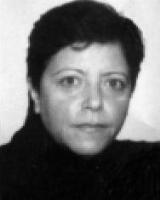
Five days later, on June 14, 2001, officers from the Naples Mobile Squad and a special operations unit quietly stopped a car traveling near the town of Melito on the city's northern fringe. Inside were a married couple and a small, dark-haired woman in the back seat wearing a simple yellow sundress. She was unremarkable in every way except that she was precisely who her circulated mugshot said she was. Maria Licciardi did not resist. She was fifty years old. She had spent the last eight years running one of the most powerful criminal confederations in southern Europe, and she faced her arrest with the same composure she had reportedly brought to everything else: silence, stillness, a face that gave nothing away.
She had been born in that same neighborhood on March 24, 1951 — Secondigliano, a northern suburb of Naples that sits at the edge of the city like a sentence waiting to be finished. Post-war poverty had done its work there thoroughly. The Italian state's reach did not extend reliably to the south, and in the vacuum the Camorra — the ancient, tentacled criminal organization that predates the Sicilian Mafia by centuries — had built its own parallel world of authority and obligation. The Licciardi family had inhabited that world with particular seniority. Maria's father was a guappo, a local boss. Her brothers Gennaro, Pietro, and Vincenzo each rose to senior Camorra rank. Her husband, Antonio Teghemié, was also a clan member. This was not a family that stumbled into organized crime. It was organized crime's family.
Of the brothers, it was Gennaro who cast the longest shadow. Known as 'a Scigna — The Monkey — Gennaro Licciardi possessed the rare combination of ruthlessness and diplomatic instinct that separates a warlord from a statesman. By the early 1990s, the Camorra's landscape around Naples was a fractured, violent thing: perhaps twenty rival clans competing for territory, revenge cycles burning through neighborhoods, blood payments multiplying faster than the underlying profits could justify. Gennaro recognized the waste in all of it. Together with the heads of the Contini and Mallardo clans, he helped forge the Secondigliano Alliance — a criminal coalition designed to rationalize the chaos, divide territories equitably, and allow everyone to get rich without killing each other's sons. It was, by any measure, an extraordinary piece of criminal statecraft.
Then, on August 3, 1994, Gennaro Licciardi died in Voghera prison from blood poisoning. He was not yet forty. He had built the architecture of a criminal empire and left no obvious successor within it. Maria's brothers Pietro and Vincenzo were already behind bars, arrested in the crackdown years of the early 1990s. Her husband was also in custody. The Secondigliano Alliance, still fragile, still requiring the constant maintenance that only genuine authority could provide, needed someone to hold it together.
Maria Licciardi stepped forward.
What happened next is the part of the story that Italian law enforcement would spend the better part of a decade trying to fully document and that courts would eventually confirm. From 1993 onward, she had begun consolidating her position within the clan structure. By the mid-1990s, she was effectively running it. The Interior Ministry would eventually describe her as the 'strategic head' of the Secondigliano Alliance — the first woman ever to hold that position. Fellow Camorristi gave her a title that, in their world, was not given lightly: La Madrina. The Godmother. Among the women of the Camorra's inner circle, they called her La Principessa. On the street, where her small frame had become a kind of running joke among those who didn't know better, they called her La Piccolina — the Little One, a piccerella — the Little Girl. She stood perhaps five feet tall. She was, by all credible accounts, the most feared person in a city full of feared people.
Her leadership style defied the stereotypes that Italian law enforcement and even the press had developed around female Camorra figures. Previous research had framed women in these structures as support roles — wives who shielded assets, mothers who transmitted messages, daughters who buried secrets. Licciardi was something categorically different. She operated, as one journalist put it, 'just like the manager of a multinational.' She prohibited her affiliates from using social media and from getting tattoos — both too visible, both too easily catalogued by the Carabinieri's database units. She diversified the clan's revenue base, extending into prostitution rings, a significant operational departure from the Licciardi clan's prior practices. She oversaw drug trafficking, cigarette smuggling, extortion, and money laundering with a systems-level attention to detail that prosecutors found, when they finally assembled the evidence, almost corporate in its structure.
A state witness named Gaetano Guida would later testify before the court that 'talking with Maria Licciardi was the same as talking with Gennaro, the boss.' He described how she transmitted orders through the clan's network, how decisions moved outward from her and came back as compliance or punishment. She was, in his account, not a figurehead elevated by family circumstance but a genuine operational commander. Fellow mafiosi told investigators she was more dangerous than Matteo Messina Denaro, the Sicilian boss who was at that point the most-hunted organized crime fugitive in Italy.
And then, in the spring of 1999, came the decision that would illuminate, more starkly than almost anything else in her career, what kind of leader she actually was.
A large consignment of heroin had arrived from Istanbul. It was unusually, dangerously pure — the kind of potency that would kill users who had calibrated their tolerance to street-level product. Licciardi ordered that the shipment not be distributed. The reasoning was not moral. It was economic. Dead customers don't buy drugs. A wave of overdoses would bring police flooding into the streets, shutting down the very infrastructure that made the trade profitable. The Lo Russo clan, a Camorra outfit that fell within the Alliance's orbit but answered to its own imperatives, defied her order.
In April 1999, at least eleven people died of heroin overdoses in Naples in a single month.
The deaths triggered exactly the massive police crackdown Licciardi had anticipated. They also triggered something else: a bloody internal war between the Licciardi-led Alliance and the Lo Russo clan, a conflict that would eventually involve car bombs and bazooka attacks on the streets of one of Europe's most densely populated cities. The episode, reconstructed through court testimony and investigative records, is perhaps the clearest window into how Licciardi thought about power. She had been right. Being right had meant nothing to the Lo Russo clan. And eleven people had died for that defiance.
By 2001, Licciardi had become the most visible target of Naples's anti-Camorra prosecutors. In January of that year, she ordered the bombing of the office building of senior Naples prosecutor Luigi Bobbio — not an assassination attempt, precisely, but a message, the organized crime version of a warning shot. Bobbio did not stop. He continued his work under police protection, and in the months that followed, more than seventy members of the Licciardi clan were arrested. Every one of them maintained silence. The omertà held.
But Licciardi herself was now a fugitive in the most scrutinized neighborhood in Italy. Journalists, impressed by her capacity to remain invisible in plain sight, called her the Scarlet Pimpernel of Italy. The raid on her attic hideout — with its marble floors and grand piano and surveillance-camera ring — had produced nothing but evidence of how she lived, not the woman herself. It would take another five days, a car near Melito, and a woman in a yellow sundress to end two years of evasion.
She was convicted of mafia-type association under Article 416-bis of the Italian Penal Code and related charges. The courts acquitted her nine separate times on murder charges — the evidence trail for those orders, if they existed, had been too carefully maintained. She served eight years and was released in 2009. Her brother Vincenzo had assumed leadership of the clan after her arrest and was himself apprehended as a most-wanted fugitive on February 7, 2008. Sociologist Anna Maria Zaccaria of the University of Naples Federico II observed, with the dry precision of someone who had studied these dynamics for decades, that prison does not represent a barrier for Camorra leadership. The families continued. The structures persisted.
Licciardi's release in 2009 appeared, to investigators who kept watching, to be less a retirement than a resumption. She was seventy years old when, in August 2021, officers from a special anti-mafia Carabinieri unit moved to intercept her at Rome's Ciampino Airport. She was attempting to board a flight to Malaga, Spain, carrying — according to investigators who reviewed her travel documents — a one-way ticket. She told authorities she was traveling to visit her daughter. Investigators believed she intended to extend the clan's criminal network across the Spanish border, where other Italian organized crime groups had already established significant footholds. Interior Minister Luciana Lamorgese praised the arrest publicly, citing 'the determination of the judiciary and the police forces to counter the Camorra organizations.' It was a notable statement for a government minister to make about the capture of a seventy-year-old woman in an airport terminal.
On approximately March 15, 2023, following a trial conducted under the abbreviated Italian rite known as rito abbreviato, a court sentenced Maria Licciardi — then seventy-one years old — to twelve years and eight months in prison. The charge: leading the Licciardi Camorra clan founded by her brothers. She is currently serving that sentence.
The cultural echo of her story extends beyond the court records. Roberto Saviano, the journalist whose 2006 book Gomorrah exposed the Camorra's global reach and inspired the acclaimed television series of the same name, has identified Licciardi as the primary inspiration for the character of Scianel — the chain-smoking, unsparing female mob boss who moves through the show's Naples like a force of nature. Whether that characterization flatters or diminishes the real woman is a question the real woman has never publicly addressed.
What the record does show is this: Maria Licciardi was born into a world that had already decided what she was. She turned that inheritance into something the Italian state spent thirty years trying to fully comprehend. She brokered peace between men who respected only violence. She ran a criminal empire across a decade while the authorities circled, and she did it with a discipline so absolute that men who had built their reputations on brutality called her the most dangerous person they had ever met. She is, by the law's verdict, a criminal. She is also, by any honest reckoning of the evidence, something considerably harder to categorize than that. The piano in the empty attic. The yellow sundress at the car window. The one-way ticket to Malaga. The woman at the center of each image, giving nothing away.
Timeline
The Heroin Massacre — Defied Order Kills 11
In spring 1999, Licciardi orders that a dangerously pure consignment of heroin from Istanbul be withheld from sale, recognizing it would kill customers and invite catastrophic police attention. The rival Lo Russo clan defies her directive and distributes the product anyway, resulting in at least 11 overdose deaths across Naples in April 1999 alone. The deaths trigger massive police crackdowns and ignite a bloody gang war featuring car bombs and bazooka attacks between the Licciardi and Lo Russo factions.
The episode demonstrated both Licciardi's pragmatic, business-first approach to narcotics management and the lethal consequences of defying her authority — while simultaneously illustrating the limits of her control over rival clans within the Alliance she had built.
State Witness Testifies: 'Same as Talking to the Boss'
Pentito (state witness) Gaetano Guida delivers damning testimony before Italian prosecutors, stating that 'talking with Maria Licciardi was the same as talking with Gennaro, the boss.' Guida details how she personally transmitted kill orders and served as the operational nerve center of the Secondigliano Alliance, filling every function her brother once performed. His testimony provides investigators with rare insider confirmation of her command authority.
Guida's account was pivotal in establishing that Licciardi's leadership was substantive and operational — not ceremonial — directly undermining any defense strategy that might have portrayed her as a peripheral family figure rather than a commanding boss.
Released from Prison After Eight Years
Maria Licciardi is released from Italian custody after serving her eight-year sentence for mafia-type association, having been acquitted on all murder charges. Her brother Vincenzo had assumed nominal clan leadership during her imprisonment but had himself been arrested in February 2008, leaving a leadership vacuum. Investigators immediately place Licciardi under surveillance, suspecting she will resume directing clan operations.
Her release confirmed what sociologist Anna Maria Zaccaria of the University of Naples Federico II had observed: that incarceration does not represent a genuine barrier to Camorra leadership, and that Licciardi's reintegration into clan command was virtually inevitable.
Resumes Clan Command — Investigators Watch
Italian anti-mafia investigators document evidence that Licciardi has resumed active direction of the Licciardi clan following her 2009 release, overseeing extortion rackets, disruption of public auction processes, and continued narcotics operations in the Naples area. Operating with the institutional knowledge of decades at the top and the contacts accumulated over a criminal career spanning the 1990s and 2000s, she rebuilds her network systematically. Her prohibition on clan members using social media and getting tattoos — designed to minimize law enforcement visibility — continues as organizational policy.
The post-release resumption of leadership underscored the structural embeddedness of Licciardi's authority within the clan and the persistent difficulty Italian law enforcement faced in permanently dismantling a Camorra dynasty through individual prosecutions.
Crime Location
Photos

Maria Licciardi, known as 'The Godmother,' photographed at time of her August 2021 arrest; image published by Newsweek
MariaLicciardi1
Sources
- Maria Licciardi - Wikipedia
- Italy's 'Godmother' of the Camorra sentenced to nearly 13 years in prison
- Maria Licciardi: Italy's 'Godmother' jailed for nearly 13 years
- Maria Licciardi, 'The Godmother' of the Camorra, Sentenced to Nearly 13 Years
- Gomorrah (book)
- Secondigliano Alliance - Wikipedia
- Licciardi clan - Wikipedia
- Italy arrests 'Godmother' of Naples mafia at Rome airport
Frequently Asked Questions
Table of Contents
Case Summary
When Italian police raided what they believed was Maria Licciardi's hideout in June 2001, they expected a spartan fugitive's den. Instead, they found marble floors, a grand piano, and an outsize Jacuzzi — all tucked inside an attic bristling with surveillance cameras. The most powerful woman in the Neapolitan underworld had vanished again, as she always did, slipping back into the maze of streets where she had been born fifty years earlier. A fellow mafioso once told investigators that Maria Licciardi was more dangerous than Sicily's most-wanted fugitive, Matteo Messina Denaro. Italy's Interior Ministry called her the 'strategic head' of a criminal confederation controlling twenty rival Camorra clans. She brokered peace between warring gangsters, dispatched kill orders through a pentito who later testified that 'talking with Maria was the same as talking with Gennaro, the boss,' and in 1999 recalled an entire heroin shipment on quality-control grounds — a decision the Lo Russo clan defied, triggering at least eleven overdose deaths in a single month. She earned three nicknames: La Madrina, La Piccolina, and La Principessa. She earned each of them. This is the story of the woman who ran Naples.
March 24, 1951, Secondigliano, Naples, Italy(Age: 75)
Case Details
The officers found the grand piano first.
When hundreds of Naples police — backed by helicopters circling low above Secondigliano's cramped rooftops — finally breached what they believed was Maria Licciardi's attic hideout on June 9, 2001, they expected a fugitive's lair: spartan, functional, built for quick escape. Instead they found marble floors. An outsize Jacuzzi. Surveillance cameras wired to every approach. The kind of domestic luxury that announced, in its very extravagance, that the woman who lived here had never doubted she was untouchable. The rooms were empty. La Madrina — The Godmother — had slipped away again, as she had for years. Her photograph had been plastered across Italy. Her name appeared on the government's register of the country's thirty most-wanted criminals. And still she had vanished into the warren of streets that had sheltered her since birth, leaving behind nothing but a piano that no one would ever play.
Five days later, on June 14, 2001, officers from the Naples Mobile Squad and a special operations unit quietly stopped a car traveling near the town of Melito on the city's northern fringe. Inside were a married couple and a small, dark-haired woman in the back seat wearing a simple yellow sundress. She was unremarkable in every way except that she was precisely who her circulated mugshot said she was. Maria Licciardi did not resist. She was fifty years old. She had spent the last eight years running one of the most powerful criminal confederations in southern Europe, and she faced her arrest with the same composure she had reportedly brought to everything else: silence, stillness, a face that gave nothing away.
She had been born in that same neighborhood on March 24, 1951 — Secondigliano, a northern suburb of Naples that sits at the edge of the city like a sentence waiting to be finished. Post-war poverty had done its work there thoroughly. The Italian state's reach did not extend reliably to the south, and in the vacuum the Camorra — the ancient, tentacled criminal organization that predates the Sicilian Mafia by centuries — had built its own parallel world of authority and obligation. The Licciardi family had inhabited that world with particular seniority. Maria's father was a guappo, a local boss. Her brothers Gennaro, Pietro, and Vincenzo each rose to senior Camorra rank. Her husband, Antonio Teghemié, was also a clan member. This was not a family that stumbled into organized crime. It was organized crime's family.
Of the brothers, it was Gennaro who cast the longest shadow. Known as 'a Scigna — The Monkey — Gennaro Licciardi possessed the rare combination of ruthlessness and diplomatic instinct that separates a warlord from a statesman. By the early 1990s, the Camorra's landscape around Naples was a fractured, violent thing: perhaps twenty rival clans competing for territory, revenge cycles burning through neighborhoods, blood payments multiplying faster than the underlying profits could justify. Gennaro recognized the waste in all of it. Together with the heads of the Contini and Mallardo clans, he helped forge the Secondigliano Alliance — a criminal coalition designed to rationalize the chaos, divide territories equitably, and allow everyone to get rich without killing each other's sons. It was, by any measure, an extraordinary piece of criminal statecraft.
Then, on August 3, 1994, Gennaro Licciardi died in Voghera prison from blood poisoning. He was not yet forty. He had built the architecture of a criminal empire and left no obvious successor within it. Maria's brothers Pietro and Vincenzo were already behind bars, arrested in the crackdown years of the early 1990s. Her husband was also in custody. The Secondigliano Alliance, still fragile, still requiring the constant maintenance that only genuine authority could provide, needed someone to hold it together.
Maria Licciardi stepped forward.
What happened next is the part of the story that Italian law enforcement would spend the better part of a decade trying to fully document and that courts would eventually confirm. From 1993 onward, she had begun consolidating her position within the clan structure. By the mid-1990s, she was effectively running it. The Interior Ministry would eventually describe her as the 'strategic head' of the Secondigliano Alliance — the first woman ever to hold that position. Fellow Camorristi gave her a title that, in their world, was not given lightly: La Madrina. The Godmother. Among the women of the Camorra's inner circle, they called her La Principessa. On the street, where her small frame had become a kind of running joke among those who didn't know better, they called her La Piccolina — the Little One, a piccerella — the Little Girl. She stood perhaps five feet tall. She was, by all credible accounts, the most feared person in a city full of feared people.
Her leadership style defied the stereotypes that Italian law enforcement and even the press had developed around female Camorra figures. Previous research had framed women in these structures as support roles — wives who shielded assets, mothers who transmitted messages, daughters who buried secrets. Licciardi was something categorically different. She operated, as one journalist put it, 'just like the manager of a multinational.' She prohibited her affiliates from using social media and from getting tattoos — both too visible, both too easily catalogued by the Carabinieri's database units. She diversified the clan's revenue base, extending into prostitution rings, a significant operational departure from the Licciardi clan's prior practices. She oversaw drug trafficking, cigarette smuggling, extortion, and money laundering with a systems-level attention to detail that prosecutors found, when they finally assembled the evidence, almost corporate in its structure.
A state witness named Gaetano Guida would later testify before the court that 'talking with Maria Licciardi was the same as talking with Gennaro, the boss.' He described how she transmitted orders through the clan's network, how decisions moved outward from her and came back as compliance or punishment. She was, in his account, not a figurehead elevated by family circumstance but a genuine operational commander. Fellow mafiosi told investigators she was more dangerous than Matteo Messina Denaro, the Sicilian boss who was at that point the most-hunted organized crime fugitive in Italy.
And then, in the spring of 1999, came the decision that would illuminate, more starkly than almost anything else in her career, what kind of leader she actually was.
A large consignment of heroin had arrived from Istanbul. It was unusually, dangerously pure — the kind of potency that would kill users who had calibrated their tolerance to street-level product. Licciardi ordered that the shipment not be distributed. The reasoning was not moral. It was economic. Dead customers don't buy drugs. A wave of overdoses would bring police flooding into the streets, shutting down the very infrastructure that made the trade profitable. The Lo Russo clan, a Camorra outfit that fell within the Alliance's orbit but answered to its own imperatives, defied her order.
In April 1999, at least eleven people died of heroin overdoses in Naples in a single month.
The deaths triggered exactly the massive police crackdown Licciardi had anticipated. They also triggered something else: a bloody internal war between the Licciardi-led Alliance and the Lo Russo clan, a conflict that would eventually involve car bombs and bazooka attacks on the streets of one of Europe's most densely populated cities. The episode, reconstructed through court testimony and investigative records, is perhaps the clearest window into how Licciardi thought about power. She had been right. Being right had meant nothing to the Lo Russo clan. And eleven people had died for that defiance.
By 2001, Licciardi had become the most visible target of Naples's anti-Camorra prosecutors. In January of that year, she ordered the bombing of the office building of senior Naples prosecutor Luigi Bobbio — not an assassination attempt, precisely, but a message, the organized crime version of a warning shot. Bobbio did not stop. He continued his work under police protection, and in the months that followed, more than seventy members of the Licciardi clan were arrested. Every one of them maintained silence. The omertà held.
But Licciardi herself was now a fugitive in the most scrutinized neighborhood in Italy. Journalists, impressed by her capacity to remain invisible in plain sight, called her the Scarlet Pimpernel of Italy. The raid on her attic hideout — with its marble floors and grand piano and surveillance-camera ring — had produced nothing but evidence of how she lived, not the woman herself. It would take another five days, a car near Melito, and a woman in a yellow sundress to end two years of evasion.
She was convicted of mafia-type association under Article 416-bis of the Italian Penal Code and related charges. The courts acquitted her nine separate times on murder charges — the evidence trail for those orders, if they existed, had been too carefully maintained. She served eight years and was released in 2009. Her brother Vincenzo had assumed leadership of the clan after her arrest and was himself apprehended as a most-wanted fugitive on February 7, 2008. Sociologist Anna Maria Zaccaria of the University of Naples Federico II observed, with the dry precision of someone who had studied these dynamics for decades, that prison does not represent a barrier for Camorra leadership. The families continued. The structures persisted.
Licciardi's release in 2009 appeared, to investigators who kept watching, to be less a retirement than a resumption. She was seventy years old when, in August 2021, officers from a special anti-mafia Carabinieri unit moved to intercept her at Rome's Ciampino Airport. She was attempting to board a flight to Malaga, Spain, carrying — according to investigators who reviewed her travel documents — a one-way ticket. She told authorities she was traveling to visit her daughter. Investigators believed she intended to extend the clan's criminal network across the Spanish border, where other Italian organized crime groups had already established significant footholds. Interior Minister Luciana Lamorgese praised the arrest publicly, citing 'the determination of the judiciary and the police forces to counter the Camorra organizations.' It was a notable statement for a government minister to make about the capture of a seventy-year-old woman in an airport terminal.
On approximately March 15, 2023, following a trial conducted under the abbreviated Italian rite known as rito abbreviato, a court sentenced Maria Licciardi — then seventy-one years old — to twelve years and eight months in prison. The charge: leading the Licciardi Camorra clan founded by her brothers. She is currently serving that sentence.
The cultural echo of her story extends beyond the court records. Roberto Saviano, the journalist whose 2006 book Gomorrah exposed the Camorra's global reach and inspired the acclaimed television series of the same name, has identified Licciardi as the primary inspiration for the character of Scianel — the chain-smoking, unsparing female mob boss who moves through the show's Naples like a force of nature. Whether that characterization flatters or diminishes the real woman is a question the real woman has never publicly addressed.
What the record does show is this: Maria Licciardi was born into a world that had already decided what she was. She turned that inheritance into something the Italian state spent thirty years trying to fully comprehend. She brokered peace between men who respected only violence. She ran a criminal empire across a decade while the authorities circled, and she did it with a discipline so absolute that men who had built their reputations on brutality called her the most dangerous person they had ever met. She is, by the law's verdict, a criminal. She is also, by any honest reckoning of the evidence, something considerably harder to categorize than that. The piano in the empty attic. The yellow sundress at the car window. The one-way ticket to Malaga. The woman at the center of each image, giving nothing away.
Timeline
The Heroin Massacre — Defied Order Kills 11
In spring 1999, Licciardi orders that a dangerously pure consignment of heroin from Istanbul be withheld from sale, recognizing it would kill customers and invite catastrophic police attention. The rival Lo Russo clan defies her directive and distributes the product anyway, resulting in at least 11 overdose deaths across Naples in April 1999 alone. The deaths trigger massive police crackdowns and ignite a bloody gang war featuring car bombs and bazooka attacks between the Licciardi and Lo Russo factions.
The episode demonstrated both Licciardi's pragmatic, business-first approach to narcotics management and the lethal consequences of defying her authority — while simultaneously illustrating the limits of her control over rival clans within the Alliance she had built.
State Witness Testifies: 'Same as Talking to the Boss'
Pentito (state witness) Gaetano Guida delivers damning testimony before Italian prosecutors, stating that 'talking with Maria Licciardi was the same as talking with Gennaro, the boss.' Guida details how she personally transmitted kill orders and served as the operational nerve center of the Secondigliano Alliance, filling every function her brother once performed. His testimony provides investigators with rare insider confirmation of her command authority.
Guida's account was pivotal in establishing that Licciardi's leadership was substantive and operational — not ceremonial — directly undermining any defense strategy that might have portrayed her as a peripheral family figure rather than a commanding boss.
Released from Prison After Eight Years
Maria Licciardi is released from Italian custody after serving her eight-year sentence for mafia-type association, having been acquitted on all murder charges. Her brother Vincenzo had assumed nominal clan leadership during her imprisonment but had himself been arrested in February 2008, leaving a leadership vacuum. Investigators immediately place Licciardi under surveillance, suspecting she will resume directing clan operations.
Her release confirmed what sociologist Anna Maria Zaccaria of the University of Naples Federico II had observed: that incarceration does not represent a genuine barrier to Camorra leadership, and that Licciardi's reintegration into clan command was virtually inevitable.
Resumes Clan Command — Investigators Watch
Italian anti-mafia investigators document evidence that Licciardi has resumed active direction of the Licciardi clan following her 2009 release, overseeing extortion rackets, disruption of public auction processes, and continued narcotics operations in the Naples area. Operating with the institutional knowledge of decades at the top and the contacts accumulated over a criminal career spanning the 1990s and 2000s, she rebuilds her network systematically. Her prohibition on clan members using social media and getting tattoos — designed to minimize law enforcement visibility — continues as organizational policy.
The post-release resumption of leadership underscored the structural embeddedness of Licciardi's authority within the clan and the persistent difficulty Italian law enforcement faced in permanently dismantling a Camorra dynasty through individual prosecutions.
Crime Location
Photos
Maria Licciardi, known as 'The Godmother,' photographed at time of her August 2021 arrest; image published by Newsweek
MariaLicciardi1
Sources
- Maria Licciardi - Wikipedia
- Italy's 'Godmother' of the Camorra sentenced to nearly 13 years in prison
- Maria Licciardi: Italy's 'Godmother' jailed for nearly 13 years
- Maria Licciardi, 'The Godmother' of the Camorra, Sentenced to Nearly 13 Years
- Gomorrah (book)
- Secondigliano Alliance - Wikipedia
- Licciardi clan - Wikipedia
- Italy arrests 'Godmother' of Naples mafia at Rome airport
Frequently Asked Questions
Related Cases
Convicted
Connection tags:
Convicted
Connection tags:
Alleged
Connection tags:
Accused
Connection tags:
Alleged
Connection tags:
Convicted
Connection tags:
Tags
Popular Culture
TV (2014)
Italian crime drama series in which the ruthless, chain-smoking female mob boss character 'Scianel' is widely cited by journalist Roberto Saviano as being inspired by Maria Licciardi and her leadership of the Licciardi Camorra clan.
book (2006)
Roberto Saviano's landmark investigative exposé of the Neapolitan Camorra, which drew on the operations of the Secondigliano Alliance and figures such as Maria Licciardi, and served as the basis for the TV series.