15 cases
Convicted: Sara Jane Moore
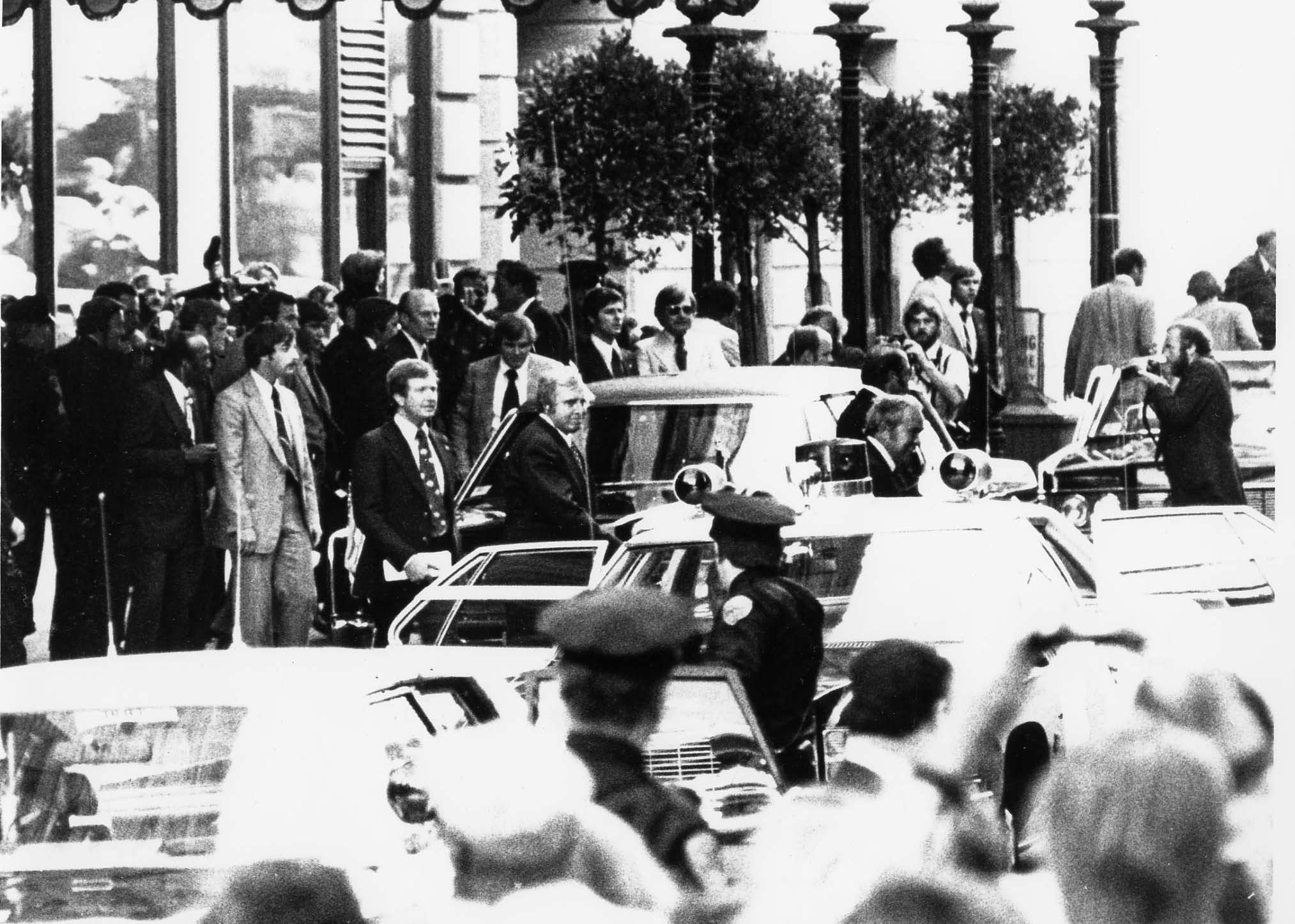
On September 22, 1975, a 45-year-old woman with a new .38-caliber revolver stood in the crowd outside San Francisco's St. Francis Hotel and fired one shot at the President of the United States. The bullet missed Gerald Ford's head by five inches. The day before, police had already arrested Sara Jane Moore on an illegal weapons charge and confiscated her gun; she walked free, bought a replacement the next morning, and tried anyway. She was not a trained operative, not a seasoned radical, not a career criminal. She was a five-times-married West Virginia bookkeeper who had somehow become simultaneously an FBI informant and a spy against the FBI, a woman so consumed by the revolutionary fervor of 1970s San Francisco that she convinced herself murdering a president would ignite a leftist uprising. She was wrong about nearly everything. But she came terrifyingly close to being right about one thing: five more inches, and American history changes. Sara Jane Moore died on September 24, 2025, in a nursing home in Franklin, Tennessee, at age 95, two days after the 50th anniversary of her attempt. This is the story of how an ordinary woman walked to the edge of history and pulled the trigger.
Accused: Phoolan Devi
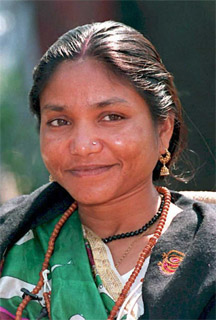
At 1:30 on a July afternoon in 2001, three masked gunmen opened fire outside a government residence on Ashoka Road in New Delhi. Nine bullets found their mark. The target was Phoolan Devi, 37, a sitting Member of Parliament who had once been the most wanted woman in India, hunted across three states for a massacre that left twenty men dead on the banks of a river in Uttar Pradesh. She had been a child bride, a gang rape survivor, a feared dacoit who robbed from the rich and shared with the poor, and a democratically elected lawmaker. The arc of her life was so extreme that it seemed impossible any single person could have lived it. The man who would claim responsibility for her killing, a Thakur named Sher Singh Rana, said he did it to avenge the 1981 Behmai massacre. The Behmai case itself would not reach a verdict until February 14, 2024, exactly forty-three years after the killings that defined her legend. This is the story of a woman born at the very bottom of one of the world's most stratified societies, who refused to stay there, whatever the cost.
Convicted: Maria Mandl
She held orphaned children from Soviet transports in her arms, sang to them, gave them cookies and chocolate. Then, after a few days, she personally escorted some of them to the gas chambers. This was Maria Mandl: Lagerführerin of Auschwitz II-Birkenau's women's camp, the highest-ranking woman in the entire Nazi concentration camp system, and the figure prisoners knew only as 'The Beast.' Death lists bearing her signature implicate her in approximately 500,000 murders. She organized a prisoner orchestra that played during selections and executions. She rode a bicycle along prisoner lines and struck faces as she passed. And yet, on the morning of her hanging in January 1948, she knelt on a prison floor before a woman she had once held power over, wept, and begged for forgiveness. Her last words were spoken in Polish, a language not her own, in a country she had helped to destroy. Her execution received almost no coverage in the Austrian press. Her death certificate was not amended to reflect her Holocaust role until 2017. The first biography of her life was not published until 2023. This is the story of how a shoemaker's daughter from a small Catholic village in Upper Austria became one of history's most prolific female killers, and how the world spent eighty years looking away.
Convicted: Irma Ilse Ida Grese
Irma Ilse Ida Grese, widely known as the 'Hyena of Auschwitz' and the 'Beast of Belsen', was a Nazi concentration camp Helferin at Ravensbrück, Auschwitz II-Birkenau, and Bergen-Belsen. Her atrocities committed in Birkenau during the Holocaust period made her one of the most notorious female Nazi war criminals. Grese was convicted for crimes against humanity at the Belsen Trial in 1945 and was sentenced to death.
Convicted: Biljana Plavšić
Biljana Plavšić is a former Bosnian Serb politician, university professor, and scientist who notably served as President of Republika Srpska, a region within Bosnia and Herzegovina. During the Bosnian War, she was accused of participating in the planning, instigation, ordering, and execution of crimes against humanity, including genocide, extermination, murder, and other severe violations of international law. In 2003, Plavšić pleaded guilty to crimes against humanity and was sentenced to 11 years in prison by the International Criminal Tribunal for the former Yugoslavia. She was released in 2009 after serving two-thirds of her sentence.
Convicted: Pauline Nyiramasuhuko
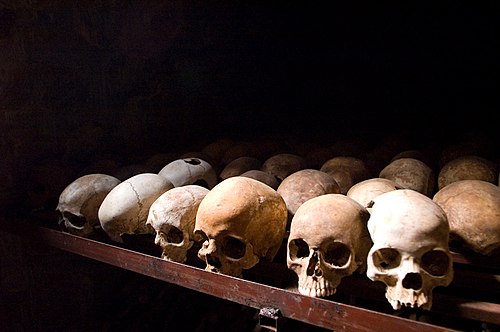
Pauline Nyiramasuhuko was a Rwandan politician who served as the Minister for Family Welfare and the Advancement of Women. She was tried and convicted by the International Criminal Tribunal for Rwanda (ICTR) for inciting troops and militia to carry out rape during the 1994 Rwandan genocide. This makes her the first woman to be convicted of genocide by the ICTR and the first woman ever to be convicted of genocidal rape. In June 2011, she was sentenced to life imprisonment on seven charges.
Alleged Offender: Catherine de' Medici
Catherine de' Medici, though not officially convicted or charged, is often implicated in a series of political machinations and alleged crimes during her reign as Queen of France. She is notably associated with the St. Bartholomew's Day Massacre in 1572, where thousands of Huguenots (French Protestants) were slaughtered by Catholic mobs. While her role in the massacre is still debated among historians, she is often portrayed as a perpetrator or instigator.
Convicted: Lynette Alice 'Squeaky' Fromme
Lynette Alice 'Squeaky' Fromme was a member of the Manson Family, a cult led by Charles Manson. Although she was not directly involved in the infamous Tate-LaBianca murders, her criminal legacy stems from a separate incident. In 1975, Fromme attempted to assassinate US President Gerald Ford. The assassination attempt was unsuccessful, and she was consequently sentenced to life in prison. She was paroled in 2009 after serving approximately 34 years. She also published a book about her life in 2018.
Convicted: Ilse Koch
Ilse Koch, a German war criminal, committed horrific acts during World War II while her husband Karl-Otto Koch was the commandant at Buchenwald concentration camp. Though she had no official position in the Nazi state, she became one of the most infamous figures after the war due to her involvement in atrocities. She was known as the 'Kommandeuse of Buchenwald' and was accused of taking souvenirs from the skin of murdered inmates.
Convicted: Griselda Blanco Restrepo
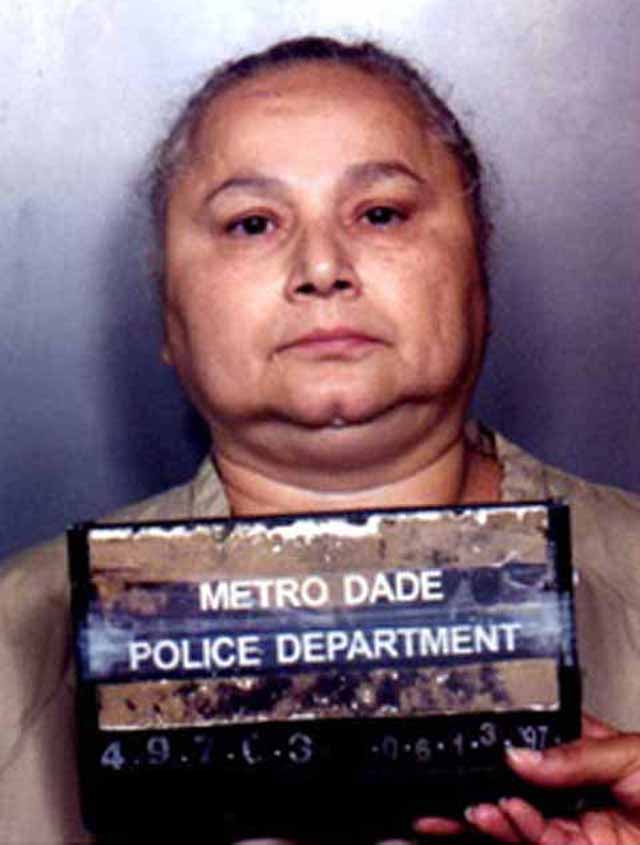
On the afternoon of September 3, 2012, a gunman dismounted from a motorcycle outside a butcher shop in Medellín, Colombia, and shot a 69-year-old woman twice in the head. He was gone before anyone could stop him. The woman was Griselda Blanco Restrepo, and the method of her killing was one she had invented herself. In the 1970s and 1980s, Blanco built a cocaine empire that shipped 1,500 kilograms of product into Miami every month, generated an estimated $80 million monthly, and left dozens if not hundreds of people dead on both sides of the Atlantic. She mentored Pablo Escobar. She pioneered motorcycle assassinations. She named her youngest son Michael Corleone, after the Godfather character, because she saw the parallel and felt no shame in it. She was convicted of federal drug trafficking in 1985. She beat a capital murder case when her star witness was caught having phone sex with prosecutors' secretaries. She served nearly two decades in prison, suffered a heart attack, was deported to Colombia, and allegedly became a born-again Christian. None of it was enough to save her. The killers who found her outside the Carnicería Cardiso that September afternoon were never identified. She was buried at Jardines de Montesacro cemetery in Medellín, in the same ground as Pablo Escobar. The Godmother of Cocaine, who had ordered the deaths of husbands, rivals, and at least one two-year-old child, ended her life on the same streets where she had built her legend: in Medellín, violently, by surprise. This is her story.
Convicted: Mary Elizabeth Surratt (née Jenkins; baptismal name Maria Eugenia Jenkins Surratt)
On July 7, 1865, in the sweltering heat of a Washington summer that pushed nearly 100 degrees, a middle-aged Catholic widow in a black bombazine dress was escorted to a wooden scaffold at the Old Arsenal Penitentiary. Moments later, Mary Elizabeth Surratt became the first woman ever executed by the United States federal government. She died for her alleged role in the assassination of Abraham Lincoln, convicted on the testimony of a self-serving tenant and a debt-ridden tavern keeper whose own freedom may have depended on what they said about her. Surratt never testified. She was not permitted to. Five of the nine military commissioners who condemned her signed a petition begging President Andrew Johnson to spare her life. He refused, later claiming he never saw it. Her son, who fled to the Vatican to escape justice, was eventually tried in a civilian court and walked free after the jury deadlocked. Her co-conspirator Lewis Powell, standing on his own gallows, said she was innocent. More than 150 years later, historians still argue about whether the United States government hanged a guilty woman, a scapegoat, or something more complicated than either.
Convicted: Jiang Qing
Jiang Qing, also known as Madame Mao, was a key figure in the Chinese communist revolution and the fourth wife of Mao Zedong, the Chairman of the Communist Party and Paramount leader of China. She played a significant role in the Cultural Revolution, leading the radical Gang of Four. In the aftermath of Mao's death and the end of the Cultural Revolution, Jiang was arrested and convicted for counter-revolutionary crimes during the Gang of Four trial. She was held mainly responsible for the chaotic and violent period of the Cultural Revolution, which resulted in widespread human rights abuses and millions of deaths.
Convicted: Locusta
Locusta, also known as Lucusta, was a notorious poison maker in the 1st-century Roman Empire. She was active during the final two reigns of the Julio-Claudian dynasty and is believed to have been involved in the assassinations of Claudius and Britannicus. Emperor Nero favored her and had her train other poisoners in his service. After Nero's death, Locusta was executed by his successor, Galba.
Convicted: Anne Perry
Anne Perry, born as Juliet Marion Hulme, is a British writer known for her historical detective fiction. However, before gaining fame as an author, she was involved in a notorious murder case in New Zealand in 1954, when she and her friend, Pauline Parker, killed Pauline's mother, Honora Parker. The two teenage girls were convicted of the crime and Juliet was incarcerated until 1959. After her release, she moved to England and changed her name to Anne Perry.
Convicted: Clara Hamilton Harris (later Clara Hamilton Harris Rathbone)
She survived the night Abraham Lincoln was shot. She held her fiancé's arm together with her bare hands while his blood soaked her white dress from collar to hem. She stayed until dawn with a screaming, inconsolable Mary Todd Lincoln, absorbing the widow's grief alongside her own. Clara Harris endured all of that — and still, eighteen years later, she never saw her death coming. On the night of December 23, 1883, in a consular residence in Hanover, Germany, her husband Henry Rathbone shot and stabbed her to death in their bedroom while their three children slept nearby. He then turned the knife on himself five or six times. He survived. She did not. A German court found Henry guilty but criminally insane. He was committed to an asylum, where he lived another twenty-seven years, apparently never fully comprehending what he had done. The children were shipped back across the Atlantic. Clara was buried in a foreign city cemetery and eventually disinterred when no family came to tend her grave. This is the story of a woman who sat two feet from history's most famous assassination, and lived to describe it — only to become the victim of a quieter, more intimate one. It is also the story of what trauma does to the people left alive in its wake: how it metastasizes, quietly, over years, until it destroys everything it touches.