Sandra Ávila Beltrán

Case Summary
When federal agents swarmed a Mexico City restaurant on September 28, 2007, and placed Sandra Ávila Beltrán under arrest, she did not flinch. She smiled. Then she asked if she could freshen her makeup before the cameras filmed her. It was the kind of composure that takes a lifetime to cultivate, and Sandra's lifetime had been extraordinary preparation. Born into one of Mexico's most storied narco dynasties, niece of Guadalajara Cartel godfather Miguel Ángel Félix Gallardo, she had watched the drug trade operate from her cradle. She had buried two husbands, both former police commanders turned traffickers, both killed by hired assassins. She had allegedly coordinated a 9.5-ton cocaine shipment and paid millions in ransom when her own son was kidnapped. By the time the agents clicked the handcuffs, she had already become a legend: La Reina del Pacífico. The Queen of the Pacific. What followed her arrest was almost as astonishing as the life that preceded it. This is the true story of the most glamorous and dangerous woman in the history of the Mexican drug war.
October 16, 1960, Mexicali, Baja California, Mexico(Age: 65)
Related Cases
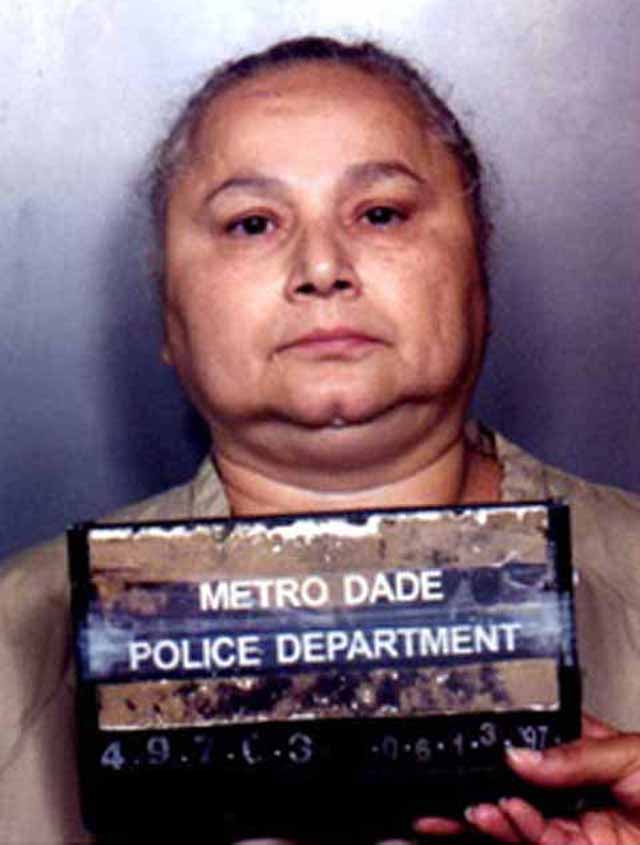
Convicted
Connection tags:
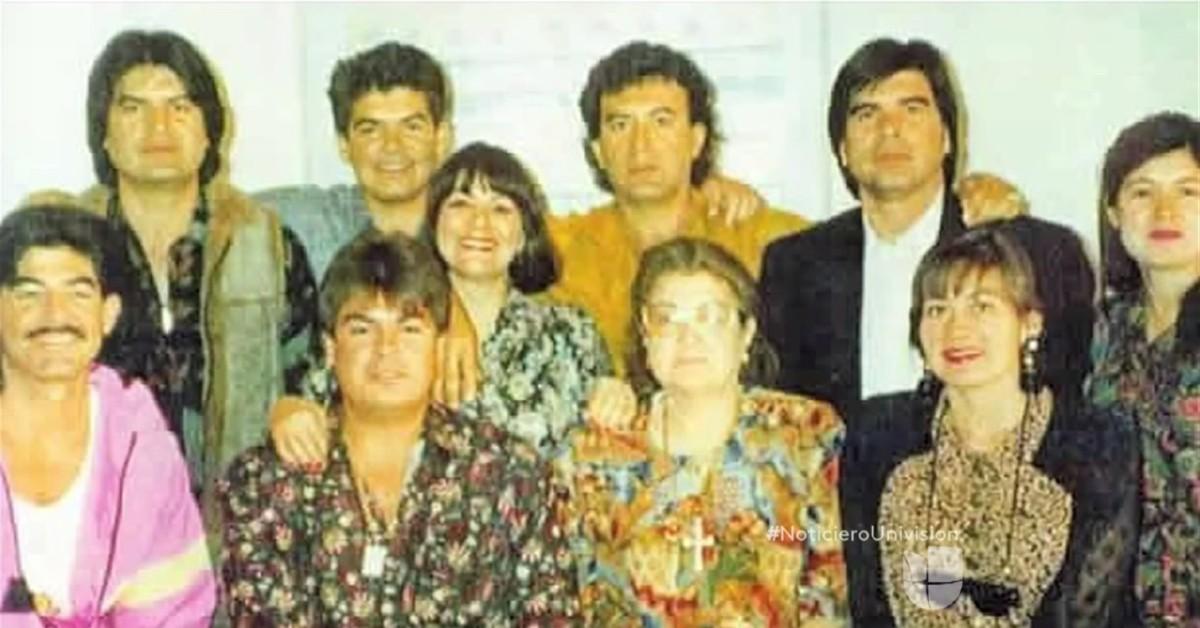
Alleged
Connection tags:

Alleged
Connection tags:

Convicted
Connection tags:
Convicted
Connection tags:
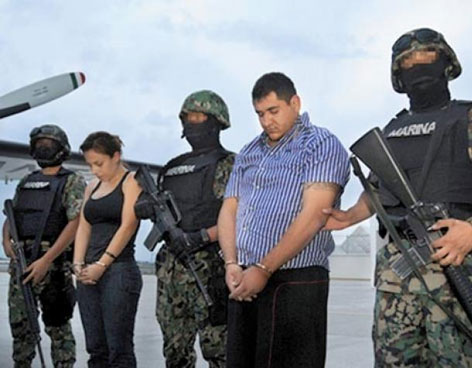
Accused
Connection tags:
Case Details
The agents had been watching the restaurant for hours. More than thirty federal officers, operating under orders from the Mexican Attorney General's office, had fanned out across the surrounding streets of Mexico City on the morning of September 28, 2007. Inside, seated at a table with Juan Diego Espinoza Ramírez, a senior figure in Colombia's Norte del Valle Cartel, was the woman they had spent four years and enormous resources pursuing. When they moved in, Sandra Ávila Beltrán did not run. She did not rage. She looked at the cameras being raised around her, smiled with the easy confidence of a woman who had navigated far worse moments, and asked the agents whether they might allow her a moment to touch up her makeup.
They did not. But the image that went out to the world's press told the story anyway: a striking forty-six-year-old woman in fashionable clothes, smiling through her arrest as though it were a minor inconvenience. It was the most perfectly composed entrance to custody in the annals of the Mexican drug war. And it was entirely in character.
Sandra Ávila Beltrán was born on October 16, 1960, in Mexicali, Baja California. The geography of her origins carried a kind of dark symbolism; Mexicali sits directly on the border, a city defined by the porous line between two worlds. But her more consequential inheritance was genealogical. Her mother, María Luisa Beltrán Félix, came from a family already embedded in heroin smuggling by the 1970s. Her father's side connected her, through her great-uncle Juan José Quintero Payán, to the highest echelons of the Mexican narco world. Most significantly, her uncle on her mother's side was Miguel Ángel Félix Gallardo, known throughout the criminal world as El Padrino, the godfather. Félix Gallardo built the Guadalajara Cartel into the most powerful drug trafficking organization Mexico had ever seen. He is currently serving a forty-year sentence for his role in the 1984 torture and murder of DEA agent Enrique Camarena. On her father's side, she also carried family ties to Rafael Caro Quintero, another Guadalajara Cartel founder, and through her mother's lineage she was connected to the Beltrán-Leyva Brothers, who would become one of the most feared cartel factions of the 2000s.
She was, by any reasonable accounting, third-generation organized crime royalty.
And yet the young Sandra did not immediately follow that path. She moved to Guadalajara, enrolled in Communication Sciences at the Universidad Autónoma de Guadalajara, and by all accounts aspired to become a journalist. Friends who knew her then described a sharp, socially confident young woman with ambitions that pointed away from the family business. That trajectory ended abruptly when she was approximately twenty-one years old. A jealous boyfriend kidnapped her. The details of what happened during that period remain murky, as so many chapters of her life do, but those who have studied her biography believe the experience fractured her connection to the ordinary world and accelerated her drift toward the one she had been born into.
Her first marriage was to Luis Fuentes Jiménez, a former commander of the Federal Judicial Police in Baja California who had made the well-worn transition from lawman to cartel operative. They had a son together, José Luis Fuentes Ávila. Fuentes Jiménez was killed by hired assassins. Her second husband, also a former police commander turned trafficker, met the same fate. Two husbands, two bullets. Sandra raised her son and built her own operation.
By the late 1990s, DEA officials had identified her as something more than a cartel appendage. She was, in their assessment, an important financial and logistical link between Mexico's Sinaloa Cartel and Colombia's Norte del Valle Cartel. She was said to coordinate cocaine shipments moving north toward the United States, and she did not, according to those officials, shy away from the intimidation tactics that kept the machinery running. She was comfortable in boardrooms and dangerous rooms alike.
The moment that gave her a name came in December 2001, when Mexican authorities seized 9.5 tons of cocaine from a vessel called the Macel, intercepted off the coast of Manzanillo, Colima. The investigation that unspooled from that seizure led investigators toward a network connecting the Sinaloa Cartel to the Norte del Valle Cartel, and Sandra Ávila Beltrán sat at the intersection. The press, catching the scent of something cinematic, gave her a title: La Reina del Pacífico. The Queen of the Pacific.
She was also, by this point, romantically involved with Juan Diego Espinoza Ramírez, known as El Tigre, who operated as a senior emissary of the Norte del Valle Cartel in Mexico. The relationship was both personal and professional, which made it doubly useful to investigators and doubly dangerous for Sandra.
Then came 2002, and a crisis that would ultimately prove to be her undoing. Her son, José Luis, was kidnapped. The ransom demand was staggering. Accounts vary on the precise figure, but Sandra reportedly paid somewhere between three and five million dollars to secure his return. The transaction moved through channels that law enforcement was watching. The sheer volume of cash attracted scrutiny, and the Attorney General's office began building a case. It took more than four years and the sustained attention of thirty federal agents to construct it.
On that September morning in 2007, they finally closed the trap. Sandra and Espinoza Ramírez were arrested together in the restaurant, charged with organized crime, drug trafficking, money laundering, and illegal weapons possession. The charges read like a catalog of her adult life. She was taken to the Santa Martha Acatitla women's prison in Mexico City.
What followed in the Mexican courts was an extended and peculiar spectacle. The case against her proved, in legal terms, more difficult to prosecute than the four years of investigation had suggested. Charges fell away. In February 2011, a minor scandal erupted when it emerged that a doctor had administered Botox injections to Sandra inside the prison, a treatment not authorized for inmates. The prison director and the hospital chief lost their jobs. It was the kind of absurdist detail that writers of fiction would be advised to cut for credibility, but in Sandra's story, it fit perfectly.
By early 2011, all major drug trafficking charges in Mexico had been dropped for insufficient evidence. A federal judge in Jalisco sentenced her to one year for possession of a firearm reserved for military use. She had already served it. Technically, she could have walked out.
She did not walk out. Mexican courts, and then the relationship between Mexico and the United States, had other plans. After two earlier denials, in June 2012 Mexican judges cleared the final legal obstacles to extradition. On August 10, 2012, Sandra Ávila Beltrán was placed on a plane and flown to Florida, where she was taken to the Miami Federal Detention Center to face cocaine trafficking charges rooted in the 2001 Macel seizure and its aftermath.
The American case was narrower than expected. On April 23, 2013, she pleaded guilty in U.S. federal court in Florida, but not to trafficking cocaine herself. The charge she admitted to was being an accessory after the fact: between 2002 and 2004, she had provided financial assistance to Espinoza Ramírez, covering travel, lodging, and expenses, with the intent of helping him evade arrest. It was a significant legal reduction from what investigators had long believed her role to be. On July 25, 2013, she was sentenced to seventy months in federal prison, with full credit for all time already served. Five days later, on July 30, 2013, she walked out of U.S. Bureau of Prisons custody.
She barely had time to breathe. Deported to Mexico on August 20, 2013, she was re-arrested the moment her plane landed at Mexico City International Airport. Mexican authorities had been waiting on new money laundering charges. She was sentenced to five additional years and transferred to the Federal Social Readaptation Center No. 4 in Tepic, Nayarit, known as El Rincón.
The end, when it came, arrived on a legal technicality with profound implications. On February 6, 2015, a federal tribunal in Jalisco overturned her Mexican money laundering conviction on double jeopardy grounds. She had already been prosecuted for the same conduct in both Mexico and the United States; trying her again, the tribunal ruled, violated constitutional protections. She was ordered released immediately. On the night of February 7, 2015, her face covered, Sandra Ávila Beltrán walked out of El Rincón after approximately seven years in prison, including two years in isolation.
She was fifty-four years old. She settled in Guadalajara.
The years that followed took a direction that almost no one could have predicted, though perhaps they should have. Sandra had always understood image. She had understood it on the morning of her arrest, when she asked about her makeup. She understood it now. In 2022, she re-emerged on social media, TikTok and Instagram and Facebook, sharing glimpses of BMW vehicles, horses, and international travel to audiences that quickly numbered in the hundreds of thousands. She had become, in the language of the internet, an influencer. That same year, she filed an administrative complaint with Mexico's Institute of Industrial Property, arguing that Telemundo and Netflix had used her image and story without consent to promote the telenovela and streaming series built around the character of Teresa Mendoza in "La Reina del Sur." She was publicly contemptuous of Kate del Castillo's portrayal of the role she considered inspired by her life, stating in interviews that the characterization was too masculine. In April 2024, Mexico's Federal Administrative Justice Court upheld a ruling in her favor and ordered Telemundo to pay a fine of approximately 448,100 pesos, roughly $25,200 at current exchange rates. The larger question of royalties remained open.
By 2025, she had registered both her name and the alias La Reina del Pacífico as trademarks and launched a women's clothing line in collaboration with Mexican brand Cuadra. The collection featured blouses embroidered in gold thread bearing the legend "La Reyna" and a crown motif, available in black, red, and white. She was simultaneously pursuing legal action in Mexican courts, demanding the return of three houses in Mexico City's Magdalena Contreras borough that had been seized during the investigation against her and whose return had been ordered as far back as June 2014 without ever being carried out. She also sought the return of bank accounts, vehicles, and jewelry.
Her cultural footprint is difficult to measure and impossible to ignore. Spanish author Arturo Pérez-Reverte published "La Reina del Sur" in 2002, and though he has been careful about making direct attributions, Sandra's story is widely recognized as foundational to it. Los Tigres del Norte, the most celebrated narcocorrido group in Mexican musical history, wrote a corrido in her honor titled "Reina de Reinas." Los Tucanes de Tijuana did the same. Netflix's "Narcos: Mexico" features a character, Isabella Bautista, played by Teresa Ruiz, widely understood as a loose composite inspired by her. In the series "El Cartel," actress Patricia Manterola portrayed her directly. A book compiled from prison interviews, "La Reina del Pacífico: Es la Hora de Contar," was published in 2008, assembled by the respected Mexican journalist Julio Scherer García while she was still incarcerated.
Sandra has consistently maintained that former President Felipe Calderón fabricated the charges against her for political reasons, and she has publicly accused him of collaborating with the cartels he claimed to be fighting. She has stated, in multiple interviews across multiple decades, that she never used drugs herself. She speaks of her path not as ambition but as destiny, as something her bloodline made nearly inevitable.
Whether that framing is genuine belief or practiced narrative, it is impossible to say from the outside. What can be said is this: Sandra Ávila Beltrán was born into a world that most people only read about, navigated it for decades with remarkable survival instincts, spent seven years in prison across two countries on charges that were substantially reduced or overturned, and emerged to become one of the most recognizable women in Mexico. She is building a brand from the ruins of a prosecution. She is winning trademark disputes in federal court. She is selling gold-embroidered blouses that bear her crown.
The Queen of the Pacific, it turns out, was never really finished.
Timeline
Birth & Criminal Dynasty Origins
Sandra Ávila Beltrán was born in Mexicali, Baja California, Mexico, into one of the most powerful drug trafficking dynasties in Mexican history. She was the niece of Miguel Ángel Félix Gallardo ('El Padrino'), founder of the Guadalajara Cartel, and had family ties to Rafael Caro Quintero and the Beltrán-Leyva Brothers, making her a third-generation trafficker by birthright.
Her bloodline placed her at the epicenter of Mexican organized crime before she made a single personal choice, establishing the family network that would later define her criminal career.
Kidnapping & Path Redirected
Around age 21, while studying Communication Sciences at the Universidad Autónoma de Guadalajara and aspiring to become a journalist, Sandra was kidnapped by a jealous boyfriend. This traumatic event is widely believed to have derailed her academic ambitions and steered her toward the narco world her family inhabited.
The kidnapping is considered the pivotal turning point that redirected her life from journalism into drug trafficking, making it a defining biographical moment in her criminal trajectory.
December 2001 Cocaine Seizure — 'La Reina' Born
A 9.5-ton cocaine seizure from the ship 'Macel' off the coast of Manzanillo, Colima, linked Sandra Ávila Beltrán to a major drug trafficking operation connecting Mexico's Sinaloa Cartel with Colombia's Norte del Valle Cartel. She was romantically involved with Norte del Valle figure Juan Diego Espinoza Ramírez ('El Tigre'), and investigators alleged she served as a critical financial and logistical bridge between the two cartels. This seizure gave rise to her iconic media nickname 'La Reina del Pacífico.'
The Macel seizure was the foundational piece of evidence that would eventually anchor U.S. cocaine trafficking charges against her and cemented her legendary status in narco culture.
Son's Kidnapping Triggers Investigation
Sandra's son was kidnapped, and she reportedly paid a ransom of $3–5 million for his safe return. The enormous sum she was able to mobilize drew immediate law enforcement scrutiny, prompting Mexican and U.S. authorities to launch a formal investigation into her finances and criminal network. It would take more than four years and 30 dedicated federal agents to build a prosecutable case against her.
The ransom payment was the unintentional act that exposed the scale of her wealth and triggered the sustained investigative effort that ultimately led to her arrest five years later.
Arrest at Mexico City Restaurant
Over 30 federal agents arrested Sandra Ávila Beltrán and Juan Diego Espinoza Ramírez ('El Tigre') at a restaurant in Mexico City. She famously smiled for cameras and requested agents allow her to freshen her makeup before being filmed, projecting a defiant composure that immediately captivated the media. She was charged with organized crime, drug trafficking, money laundering, and illegal weapons possession.
Her composed, glamorous demeanor at arrest transformed her into a global media phenomenon and a symbol of narco femininity, fueling comparisons to fictional characters and inspiring widespread cultural commentary.
Mexican Drug Charges Dropped; Firearm Sentence Served
By early 2011, a Mexican federal judge dropped all major drug trafficking charges against Sandra due to insufficient evidence. A federal judge in Jalisco sentenced her to one year in prison for possession of a firearm reserved for military use — a sentence she had already fully served while awaiting trial. The same period saw a prison scandal erupt when a doctor administered unauthorized Botox injections to her at Santa Martha Acatitla prison, resulting in the dismissal of the prison director and hospital chief.
The collapse of Mexico's primary drug charges represented a major legal victory and set the stage for U.S. authorities to press their own extradition request, shifting the legal battle to American courts.
Extradition to the United States
After two prior extradition denials, Mexican judges cleared the final legal obstacles in June 2012, and on August 10, 2012, Sandra Ávila Beltrán was extradited to the United States and flown to the Miami Federal Detention Center in Florida. She faced U.S. federal cocaine trafficking charges dating back to 2001, stemming from her alleged role coordinating shipments between the Sinaloa and Norte del Valle cartels.
Extradition moved her case into the U.S. federal system, where prosecutors held far more robust evidence and where a plea deal would ultimately resolve charges that Mexico had failed to prosecute successfully.
U.S. Guilty Plea & Sentencing
On April 23, 2013, Sandra pleaded guilty in U.S. federal court in Florida to being 'an accessory after the fact,' specifically for providing financial assistance — covering travel, lodging, and expenses — to Espinoza Ramírez between 2002 and 2004 to hinder his arrest. On July 25, 2013, she was sentenced to 70 months in federal prison with full credit for time already served, and was released from U.S. Bureau of Prisons custody just five days later, on July 30, 2013.
The reduced charge of accessory after the fact — rather than full drug trafficking conspiracy — was widely seen as a significant legal outcome in her favor, reflecting both her negotiating position and the limits of available evidence.
Re-Arrest in Mexico & Double Jeopardy Ruling
Deported to Mexico on August 20, 2013, Sandra was immediately re-arrested upon landing at Mexico City International Airport on money laundering charges and sentenced to five additional years at the Federal Social Readaptation Center No. 4 in Tepic, Nayarit. However, on February 6, 2015, a federal tribunal in Jalisco overturned her conviction, ruling she had already been tried for the same offense in both Mexico and the United States, constituting double jeopardy. She walked free from 'El Rincón' prison on the night of February 7, 2015, her face covered, after approximately seven years total in custody.
The double jeopardy ruling was a landmark legal outcome that permanently closed the Mexican criminal case against her, ending over a decade of prosecution and incarceration.
Trademark Victory & Brand 'La Reina del Pacífico'
After filing an administrative complaint with Mexico's Institute of Industrial Property (IMPI) against Telemundo and Netflix for using her likeness without consent to promote 'La Reina del Sur,' Sandra won a ruling upheld in April 2024 by Mexico's Federal Administrative Justice Court, ordering Telemundo to pay a fine of approximately 448,100 pesos (~US $25,200), with potential for far larger royalty claims. She had previously registered both her name and the alias 'La Reina del Pacífico' as trademarks beginning October 10, 2022, and in 2025 launched a women's clothing line featuring gold-embroidered blouses bearing the legend 'La Reyna' in collaboration with Mexican brand Cuadra.
Her successful monetization of her own narco legend — through trademarks, legal victories against major media companies, and a fashion line — marked a remarkable transformation from convicted drug trafficker to brand entrepreneur and cultural icon.
Crime Location
Photos
Sandra-Avila-Beltran
Sources
- La Reina del Pacífico: Es la Hora de Contar
- Sandra Ávila Beltrán – Wikipedia
- The Queen of the Pacific: The Rise and Fall of Sandra Ávila Beltrán
- Mexico Extradites 'Queen of the Pacific' Drug Suspect to U.S.
- Sandra Ávila Beltrán Pleads Guilty in U.S. Federal Court
- Mexico's 'Queen of the Pacific' Released From Prison
- La Reina del Pacífico Gana Demanda Contra Telemundo y Netflix
- La Reina del Sur (Novel)
Frequently Asked Questions
Table of Contents
Case Summary
When federal agents swarmed a Mexico City restaurant on September 28, 2007, and placed Sandra Ávila Beltrán under arrest, she did not flinch. She smiled. Then she asked if she could freshen her makeup before the cameras filmed her. It was the kind of composure that takes a lifetime to cultivate, and Sandra's lifetime had been extraordinary preparation. Born into one of Mexico's most storied narco dynasties, niece of Guadalajara Cartel godfather Miguel Ángel Félix Gallardo, she had watched the drug trade operate from her cradle. She had buried two husbands, both former police commanders turned traffickers, both killed by hired assassins. She had allegedly coordinated a 9.5-ton cocaine shipment and paid millions in ransom when her own son was kidnapped. By the time the agents clicked the handcuffs, she had already become a legend: La Reina del Pacífico. The Queen of the Pacific. What followed her arrest was almost as astonishing as the life that preceded it. This is the true story of the most glamorous and dangerous woman in the history of the Mexican drug war.
October 16, 1960, Mexicali, Baja California, Mexico(Age: 65)
Case Details
The agents had been watching the restaurant for hours. More than thirty federal officers, operating under orders from the Mexican Attorney General's office, had fanned out across the surrounding streets of Mexico City on the morning of September 28, 2007. Inside, seated at a table with Juan Diego Espinoza Ramírez, a senior figure in Colombia's Norte del Valle Cartel, was the woman they had spent four years and enormous resources pursuing. When they moved in, Sandra Ávila Beltrán did not run. She did not rage. She looked at the cameras being raised around her, smiled with the easy confidence of a woman who had navigated far worse moments, and asked the agents whether they might allow her a moment to touch up her makeup.
They did not. But the image that went out to the world's press told the story anyway: a striking forty-six-year-old woman in fashionable clothes, smiling through her arrest as though it were a minor inconvenience. It was the most perfectly composed entrance to custody in the annals of the Mexican drug war. And it was entirely in character.
Sandra Ávila Beltrán was born on October 16, 1960, in Mexicali, Baja California. The geography of her origins carried a kind of dark symbolism; Mexicali sits directly on the border, a city defined by the porous line between two worlds. But her more consequential inheritance was genealogical. Her mother, María Luisa Beltrán Félix, came from a family already embedded in heroin smuggling by the 1970s. Her father's side connected her, through her great-uncle Juan José Quintero Payán, to the highest echelons of the Mexican narco world. Most significantly, her uncle on her mother's side was Miguel Ángel Félix Gallardo, known throughout the criminal world as El Padrino, the godfather. Félix Gallardo built the Guadalajara Cartel into the most powerful drug trafficking organization Mexico had ever seen. He is currently serving a forty-year sentence for his role in the 1984 torture and murder of DEA agent Enrique Camarena. On her father's side, she also carried family ties to Rafael Caro Quintero, another Guadalajara Cartel founder, and through her mother's lineage she was connected to the Beltrán-Leyva Brothers, who would become one of the most feared cartel factions of the 2000s.
She was, by any reasonable accounting, third-generation organized crime royalty.
And yet the young Sandra did not immediately follow that path. She moved to Guadalajara, enrolled in Communication Sciences at the Universidad Autónoma de Guadalajara, and by all accounts aspired to become a journalist. Friends who knew her then described a sharp, socially confident young woman with ambitions that pointed away from the family business. That trajectory ended abruptly when she was approximately twenty-one years old. A jealous boyfriend kidnapped her. The details of what happened during that period remain murky, as so many chapters of her life do, but those who have studied her biography believe the experience fractured her connection to the ordinary world and accelerated her drift toward the one she had been born into.
Her first marriage was to Luis Fuentes Jiménez, a former commander of the Federal Judicial Police in Baja California who had made the well-worn transition from lawman to cartel operative. They had a son together, José Luis Fuentes Ávila. Fuentes Jiménez was killed by hired assassins. Her second husband, also a former police commander turned trafficker, met the same fate. Two husbands, two bullets. Sandra raised her son and built her own operation.
By the late 1990s, DEA officials had identified her as something more than a cartel appendage. She was, in their assessment, an important financial and logistical link between Mexico's Sinaloa Cartel and Colombia's Norte del Valle Cartel. She was said to coordinate cocaine shipments moving north toward the United States, and she did not, according to those officials, shy away from the intimidation tactics that kept the machinery running. She was comfortable in boardrooms and dangerous rooms alike.
The moment that gave her a name came in December 2001, when Mexican authorities seized 9.5 tons of cocaine from a vessel called the Macel, intercepted off the coast of Manzanillo, Colima. The investigation that unspooled from that seizure led investigators toward a network connecting the Sinaloa Cartel to the Norte del Valle Cartel, and Sandra Ávila Beltrán sat at the intersection. The press, catching the scent of something cinematic, gave her a title: La Reina del Pacífico. The Queen of the Pacific.
She was also, by this point, romantically involved with Juan Diego Espinoza Ramírez, known as El Tigre, who operated as a senior emissary of the Norte del Valle Cartel in Mexico. The relationship was both personal and professional, which made it doubly useful to investigators and doubly dangerous for Sandra.
Then came 2002, and a crisis that would ultimately prove to be her undoing. Her son, José Luis, was kidnapped. The ransom demand was staggering. Accounts vary on the precise figure, but Sandra reportedly paid somewhere between three and five million dollars to secure his return. The transaction moved through channels that law enforcement was watching. The sheer volume of cash attracted scrutiny, and the Attorney General's office began building a case. It took more than four years and the sustained attention of thirty federal agents to construct it.
On that September morning in 2007, they finally closed the trap. Sandra and Espinoza Ramírez were arrested together in the restaurant, charged with organized crime, drug trafficking, money laundering, and illegal weapons possession. The charges read like a catalog of her adult life. She was taken to the Santa Martha Acatitla women's prison in Mexico City.
What followed in the Mexican courts was an extended and peculiar spectacle. The case against her proved, in legal terms, more difficult to prosecute than the four years of investigation had suggested. Charges fell away. In February 2011, a minor scandal erupted when it emerged that a doctor had administered Botox injections to Sandra inside the prison, a treatment not authorized for inmates. The prison director and the hospital chief lost their jobs. It was the kind of absurdist detail that writers of fiction would be advised to cut for credibility, but in Sandra's story, it fit perfectly.
By early 2011, all major drug trafficking charges in Mexico had been dropped for insufficient evidence. A federal judge in Jalisco sentenced her to one year for possession of a firearm reserved for military use. She had already served it. Technically, she could have walked out.
She did not walk out. Mexican courts, and then the relationship between Mexico and the United States, had other plans. After two earlier denials, in June 2012 Mexican judges cleared the final legal obstacles to extradition. On August 10, 2012, Sandra Ávila Beltrán was placed on a plane and flown to Florida, where she was taken to the Miami Federal Detention Center to face cocaine trafficking charges rooted in the 2001 Macel seizure and its aftermath.
The American case was narrower than expected. On April 23, 2013, she pleaded guilty in U.S. federal court in Florida, but not to trafficking cocaine herself. The charge she admitted to was being an accessory after the fact: between 2002 and 2004, she had provided financial assistance to Espinoza Ramírez, covering travel, lodging, and expenses, with the intent of helping him evade arrest. It was a significant legal reduction from what investigators had long believed her role to be. On July 25, 2013, she was sentenced to seventy months in federal prison, with full credit for all time already served. Five days later, on July 30, 2013, she walked out of U.S. Bureau of Prisons custody.
She barely had time to breathe. Deported to Mexico on August 20, 2013, she was re-arrested the moment her plane landed at Mexico City International Airport. Mexican authorities had been waiting on new money laundering charges. She was sentenced to five additional years and transferred to the Federal Social Readaptation Center No. 4 in Tepic, Nayarit, known as El Rincón.
The end, when it came, arrived on a legal technicality with profound implications. On February 6, 2015, a federal tribunal in Jalisco overturned her Mexican money laundering conviction on double jeopardy grounds. She had already been prosecuted for the same conduct in both Mexico and the United States; trying her again, the tribunal ruled, violated constitutional protections. She was ordered released immediately. On the night of February 7, 2015, her face covered, Sandra Ávila Beltrán walked out of El Rincón after approximately seven years in prison, including two years in isolation.
She was fifty-four years old. She settled in Guadalajara.
The years that followed took a direction that almost no one could have predicted, though perhaps they should have. Sandra had always understood image. She had understood it on the morning of her arrest, when she asked about her makeup. She understood it now. In 2022, she re-emerged on social media, TikTok and Instagram and Facebook, sharing glimpses of BMW vehicles, horses, and international travel to audiences that quickly numbered in the hundreds of thousands. She had become, in the language of the internet, an influencer. That same year, she filed an administrative complaint with Mexico's Institute of Industrial Property, arguing that Telemundo and Netflix had used her image and story without consent to promote the telenovela and streaming series built around the character of Teresa Mendoza in "La Reina del Sur." She was publicly contemptuous of Kate del Castillo's portrayal of the role she considered inspired by her life, stating in interviews that the characterization was too masculine. In April 2024, Mexico's Federal Administrative Justice Court upheld a ruling in her favor and ordered Telemundo to pay a fine of approximately 448,100 pesos, roughly $25,200 at current exchange rates. The larger question of royalties remained open.
By 2025, she had registered both her name and the alias La Reina del Pacífico as trademarks and launched a women's clothing line in collaboration with Mexican brand Cuadra. The collection featured blouses embroidered in gold thread bearing the legend "La Reyna" and a crown motif, available in black, red, and white. She was simultaneously pursuing legal action in Mexican courts, demanding the return of three houses in Mexico City's Magdalena Contreras borough that had been seized during the investigation against her and whose return had been ordered as far back as June 2014 without ever being carried out. She also sought the return of bank accounts, vehicles, and jewelry.
Her cultural footprint is difficult to measure and impossible to ignore. Spanish author Arturo Pérez-Reverte published "La Reina del Sur" in 2002, and though he has been careful about making direct attributions, Sandra's story is widely recognized as foundational to it. Los Tigres del Norte, the most celebrated narcocorrido group in Mexican musical history, wrote a corrido in her honor titled "Reina de Reinas." Los Tucanes de Tijuana did the same. Netflix's "Narcos: Mexico" features a character, Isabella Bautista, played by Teresa Ruiz, widely understood as a loose composite inspired by her. In the series "El Cartel," actress Patricia Manterola portrayed her directly. A book compiled from prison interviews, "La Reina del Pacífico: Es la Hora de Contar," was published in 2008, assembled by the respected Mexican journalist Julio Scherer García while she was still incarcerated.
Sandra has consistently maintained that former President Felipe Calderón fabricated the charges against her for political reasons, and she has publicly accused him of collaborating with the cartels he claimed to be fighting. She has stated, in multiple interviews across multiple decades, that she never used drugs herself. She speaks of her path not as ambition but as destiny, as something her bloodline made nearly inevitable.
Whether that framing is genuine belief or practiced narrative, it is impossible to say from the outside. What can be said is this: Sandra Ávila Beltrán was born into a world that most people only read about, navigated it for decades with remarkable survival instincts, spent seven years in prison across two countries on charges that were substantially reduced or overturned, and emerged to become one of the most recognizable women in Mexico. She is building a brand from the ruins of a prosecution. She is winning trademark disputes in federal court. She is selling gold-embroidered blouses that bear her crown.
The Queen of the Pacific, it turns out, was never really finished.
Timeline
Birth & Criminal Dynasty Origins
Sandra Ávila Beltrán was born in Mexicali, Baja California, Mexico, into one of the most powerful drug trafficking dynasties in Mexican history. She was the niece of Miguel Ángel Félix Gallardo ('El Padrino'), founder of the Guadalajara Cartel, and had family ties to Rafael Caro Quintero and the Beltrán-Leyva Brothers, making her a third-generation trafficker by birthright.
Her bloodline placed her at the epicenter of Mexican organized crime before she made a single personal choice, establishing the family network that would later define her criminal career.
Kidnapping & Path Redirected
Around age 21, while studying Communication Sciences at the Universidad Autónoma de Guadalajara and aspiring to become a journalist, Sandra was kidnapped by a jealous boyfriend. This traumatic event is widely believed to have derailed her academic ambitions and steered her toward the narco world her family inhabited.
The kidnapping is considered the pivotal turning point that redirected her life from journalism into drug trafficking, making it a defining biographical moment in her criminal trajectory.
December 2001 Cocaine Seizure — 'La Reina' Born
A 9.5-ton cocaine seizure from the ship 'Macel' off the coast of Manzanillo, Colima, linked Sandra Ávila Beltrán to a major drug trafficking operation connecting Mexico's Sinaloa Cartel with Colombia's Norte del Valle Cartel. She was romantically involved with Norte del Valle figure Juan Diego Espinoza Ramírez ('El Tigre'), and investigators alleged she served as a critical financial and logistical bridge between the two cartels. This seizure gave rise to her iconic media nickname 'La Reina del Pacífico.'
The Macel seizure was the foundational piece of evidence that would eventually anchor U.S. cocaine trafficking charges against her and cemented her legendary status in narco culture.
Son's Kidnapping Triggers Investigation
Sandra's son was kidnapped, and she reportedly paid a ransom of $3–5 million for his safe return. The enormous sum she was able to mobilize drew immediate law enforcement scrutiny, prompting Mexican and U.S. authorities to launch a formal investigation into her finances and criminal network. It would take more than four years and 30 dedicated federal agents to build a prosecutable case against her.
The ransom payment was the unintentional act that exposed the scale of her wealth and triggered the sustained investigative effort that ultimately led to her arrest five years later.
Arrest at Mexico City Restaurant
Over 30 federal agents arrested Sandra Ávila Beltrán and Juan Diego Espinoza Ramírez ('El Tigre') at a restaurant in Mexico City. She famously smiled for cameras and requested agents allow her to freshen her makeup before being filmed, projecting a defiant composure that immediately captivated the media. She was charged with organized crime, drug trafficking, money laundering, and illegal weapons possession.
Her composed, glamorous demeanor at arrest transformed her into a global media phenomenon and a symbol of narco femininity, fueling comparisons to fictional characters and inspiring widespread cultural commentary.
Mexican Drug Charges Dropped; Firearm Sentence Served
By early 2011, a Mexican federal judge dropped all major drug trafficking charges against Sandra due to insufficient evidence. A federal judge in Jalisco sentenced her to one year in prison for possession of a firearm reserved for military use — a sentence she had already fully served while awaiting trial. The same period saw a prison scandal erupt when a doctor administered unauthorized Botox injections to her at Santa Martha Acatitla prison, resulting in the dismissal of the prison director and hospital chief.
The collapse of Mexico's primary drug charges represented a major legal victory and set the stage for U.S. authorities to press their own extradition request, shifting the legal battle to American courts.
Extradition to the United States
After two prior extradition denials, Mexican judges cleared the final legal obstacles in June 2012, and on August 10, 2012, Sandra Ávila Beltrán was extradited to the United States and flown to the Miami Federal Detention Center in Florida. She faced U.S. federal cocaine trafficking charges dating back to 2001, stemming from her alleged role coordinating shipments between the Sinaloa and Norte del Valle cartels.
Extradition moved her case into the U.S. federal system, where prosecutors held far more robust evidence and where a plea deal would ultimately resolve charges that Mexico had failed to prosecute successfully.
U.S. Guilty Plea & Sentencing
On April 23, 2013, Sandra pleaded guilty in U.S. federal court in Florida to being 'an accessory after the fact,' specifically for providing financial assistance — covering travel, lodging, and expenses — to Espinoza Ramírez between 2002 and 2004 to hinder his arrest. On July 25, 2013, she was sentenced to 70 months in federal prison with full credit for time already served, and was released from U.S. Bureau of Prisons custody just five days later, on July 30, 2013.
The reduced charge of accessory after the fact — rather than full drug trafficking conspiracy — was widely seen as a significant legal outcome in her favor, reflecting both her negotiating position and the limits of available evidence.
Re-Arrest in Mexico & Double Jeopardy Ruling
Deported to Mexico on August 20, 2013, Sandra was immediately re-arrested upon landing at Mexico City International Airport on money laundering charges and sentenced to five additional years at the Federal Social Readaptation Center No. 4 in Tepic, Nayarit. However, on February 6, 2015, a federal tribunal in Jalisco overturned her conviction, ruling she had already been tried for the same offense in both Mexico and the United States, constituting double jeopardy. She walked free from 'El Rincón' prison on the night of February 7, 2015, her face covered, after approximately seven years total in custody.
The double jeopardy ruling was a landmark legal outcome that permanently closed the Mexican criminal case against her, ending over a decade of prosecution and incarceration.
Trademark Victory & Brand 'La Reina del Pacífico'
After filing an administrative complaint with Mexico's Institute of Industrial Property (IMPI) against Telemundo and Netflix for using her likeness without consent to promote 'La Reina del Sur,' Sandra won a ruling upheld in April 2024 by Mexico's Federal Administrative Justice Court, ordering Telemundo to pay a fine of approximately 448,100 pesos (~US $25,200), with potential for far larger royalty claims. She had previously registered both her name and the alias 'La Reina del Pacífico' as trademarks beginning October 10, 2022, and in 2025 launched a women's clothing line featuring gold-embroidered blouses bearing the legend 'La Reyna' in collaboration with Mexican brand Cuadra.
Her successful monetization of her own narco legend — through trademarks, legal victories against major media companies, and a fashion line — marked a remarkable transformation from convicted drug trafficker to brand entrepreneur and cultural icon.
Crime Location
Photos
Sandra-Avila-Beltran
Sources
- La Reina del Pacífico: Es la Hora de Contar
- Sandra Ávila Beltrán – Wikipedia
- The Queen of the Pacific: The Rise and Fall of Sandra Ávila Beltrán
- Mexico Extradites 'Queen of the Pacific' Drug Suspect to U.S.
- Sandra Ávila Beltrán Pleads Guilty in U.S. Federal Court
- Mexico's 'Queen of the Pacific' Released From Prison
- La Reina del Pacífico Gana Demanda Contra Telemundo y Netflix
- La Reina del Sur (Novel)
Frequently Asked Questions
Related Cases
Convicted
Connection tags:
Alleged
Connection tags:
Alleged
Connection tags:
Convicted
Connection tags:
Convicted
Connection tags:
Accused
Connection tags:
Tags
Popular Culture
TV (2011)
Telemundo telenovela starring Kate del Castillo as Teresa Mendoza, a character widely credited as inspired by Sandra Ávila Beltrán's life as 'La Reina del Pacífico.' Ávila Beltrán successfully sued Telemundo for using her image without consent to promote the series.
TV (2016)
Netflix/USA Network English-language adaptation of La Reina del Sur, also loosely inspired by Sandra Ávila Beltrán's story and included in her trademark and image-rights legal actions.
book (2002)
Novel by Spanish author Arturo Pérez-Reverte widely credited as the primary literary inspiration drawn from Sandra Ávila Beltrán's life as a powerful female figure in the Mexican drug trade.
TV (2018)
Netflix series in which the character Isabella Bautista, played by Teresa Ruiz, is loosely based on Sandra Ávila Beltrán and her role as a female power broker within the Guadalajara and Sinaloa cartel networks.
TV (2008)
Colombian-produced telenovela in which actress Patricia Manterola portrays a character based on Sandra Ávila Beltrán.
TV (2007)
Narcocorrido written and performed by Los Tigres del Norte in honor of Sandra Ávila Beltrán, celebrating her status as 'La Reina del Pacífico.'
TV (2007)
Narcocorrido composed by Los Tucanes de Tijuana in tribute to Sandra Ávila Beltrán's notoriety as a female cartel figure.
book (2008)
Non-fiction book by journalist Julio Scherer García compiled from prison interviews with Ávila Beltrán, offering her own account of her life, family, and involvement in the drug trade.