21 cases
Convicted: Ghislaine Maxwell
Ghislaine Maxwell, once a high-profile British socialite, became globally notorious following her association and subsequent legal trial with financier Jeffrey Epstein. Her life transformed dramatically from attending elite social gatherings to facing charges in a New York trial for sex trafficking and child abuse. Maxwell's case captured international attention due to its depth of criminal activities intertwined with the lifestyles of the influential. Convicted in 2021, Maxwell was handed a 20-year prison sentence, underscoring her pivotal role in facilitating Epstein's network of sexual exploitation. This outcome not only secured a measure of justice for the victims but also highlighted the severe implications of power misuse in elite circles. Currently, Maxwell remains incarcerated, her previous affluent lifestyle starkly contrasted by her life behind bars, continually making headlines and prompting discussions about accountability and the social elite.
Convicted: Maria Licciardi
When Italian police raided what they believed was Maria Licciardi's hideout in June 2001, they expected a spartan fugitive's den. Instead, they found marble floors, a grand piano, and an outsize Jacuzzi — all tucked inside an attic bristling with surveillance cameras. The most powerful woman in the Neapolitan underworld had vanished again, as she always did, slipping back into the maze of streets where she had been born fifty years earlier. A fellow mafioso once told investigators that Maria Licciardi was more dangerous than Sicily's most-wanted fugitive, Matteo Messina Denaro. Italy's Interior Ministry called her the 'strategic head' of a criminal confederation controlling twenty rival Camorra clans. She brokered peace between warring gangsters, dispatched kill orders through a pentito who later testified that 'talking with Maria was the same as talking with Gennaro, the boss,' and in 1999 recalled an entire heroin shipment on quality-control grounds — a decision the Lo Russo clan defied, triggering at least eleven overdose deaths in a single month. She earned three nicknames: La Madrina, La Piccolina, and La Principessa. She earned each of them. This is the story of the woman who ran Naples.
Convicted: Valerie Jean Solanas
On the afternoon of June 3, 1968, Valerie Jean Solanas rode an elevator to Andy Warhol's Manhattan studio, pulled two firearms from a paper bag, and opened fire. She shot Warhol three times, hit art critic Mario Amaya in the hip, and attempted to execute Warhol's manager before her gun jammed. Then she walked out, hailed a cab, and waited. That evening, she surrendered to a Times Square patrolman, handed him both weapons, and offered nine words of explanation: 'He had too much control over my life.' Warhol survived, barely, after five hours of surgery during which he was briefly declared dead. He never fully recovered. Solanas, a woman with an IQ of 131 who authored one of the most provocative feminist texts of the twentieth century and held a psychology degree with honors, spent the rest of her life cycling through psychiatric wards and welfare hotels. She died alone in a San Francisco flophouse in 1988, her body undiscovered for days. What drove her to The Factory that afternoon, and what her life reveals about genius, mental illness, and the violence that festers at society's margins, remains as unsettling now as it was then.
Convicted: Magdalena Solís
On a May night in 1963, a fourteen-year-old boy named Sebastián Guerrero crept close enough to a limestone cave in rural Tamaulipas, Mexico, to see what was happening inside. What he witnessed sent him sprinting more than twenty-five kilometers through scrubland and darkness to the nearest police station, his lungs burning, his story so horrific that the officer on duty refused to believe him. That decision cost two people their lives. The officer who eventually agreed to escort Guerrero back to the caves was found the next day with his heart cut from his chest. At the center of it all was Magdalena Solís, a former prostitute from the slums of Tamaulipas who had, in the span of a few months, transformed herself into a goddess. Or, more precisely, allowed herself to be transformed, then seized the role entirely. Known as 'The High Priestess of Blood,' Solís presided over at least eight confirmed murders in the isolated village of Yerbabuena, orchestrating rituals so brutal that investigators who arrived at the scene struggled to process what they found. The true death toll, authorities suspected, reached fifteen or sixteen victims. Solís would serve fifty years in prison; whether she lived to see her release remains, to this day, unconfirmed.
Convicted: Delfina María de Jesús González
Delfina de Jesús González, along with her sister María de Jesús González, were Mexican serial killers. They operated a bordello in the state of Guanajuato, Mexico, from the 1950s to the mid-1960s, luring poor girls with promises of good jobs, only to force them into prostitution. The sisters murdered the girls when they became ill, unattractive to clients, or stopped complying. The exact number of their victims remains unknown, with estimates ranging from 91 to 150 people.
Alleged Offender: Claudia Berenice Ochoa Félix
In May 2014, a young woman named Yuriana Castillo Torres was kidnapped off the streets of Culiacán, Sinaloa, and murdered. The men who took her believed she was someone else: a glamorous social media star whose physical resemblance to Kim Kardashian had made her the most-talked-about woman in the narco underworld. The intended target, Claudia Ochoa Félix, was alive. For now. She had been born into the capital of Mexico's deadliest cartel territory, married a Sinaloa Cartel lieutenant, survived a car crash that killed her boyfriend, and allegedly fallen in love with the man who commanded the cartel's most feared assassination squad. By 2014, her Instagram account was a fever dream of gold-plated rifles, stacks of cash, and designer everything, and the world had decided she was the 'Empress of the Ántrax.' She said it was all lies. Mexican authorities said she was never under investigation. A respected journalist who knew the cartel better than almost anyone agreed she showed no signs of actual membership. Then, on a September morning in 2019, she was found dead in a private residence in her hometown. She was 32. The cause was accidental. Some people never believed it.
Convicted: Lynette Alice 'Squeaky' Fromme
Lynette Alice 'Squeaky' Fromme was a member of the Manson Family, a cult led by Charles Manson. Although she was not directly involved in the infamous Tate-LaBianca murders, her criminal legacy stems from a separate incident. In 1975, Fromme attempted to assassinate US President Gerald Ford. The assassination attempt was unsuccessful, and she was consequently sentenced to life in prison. She was paroled in 2009 after serving approximately 34 years. She also published a book about her life in 2018.
Convicted: Karla Faye Tucker
When Houston homicide detectives arrived at Jerry Lynn Dean's apartment in the predawn hours of June 13, 1983, they found a pickaxe still lodged in Deborah Thornton's chest. Both victims had been hacked to death in what investigators later described as one of the most savage double homicides they had encountered. The woman who swung that pickaxe was twenty-three years old and weighed barely over a hundred pounds. Her name was Karla Faye Tucker. Fourteen years later, she would become the first woman executed in Texas since 1863, and only the second woman executed in the United States since the reinstatement of capital punishment. By then, Pope John Paul II had pleaded for her life. So had Pat Robertson, Newt Gingrich, and the brother of one of her victims. Governor George W. Bush said no anyway. The story of Karla Faye Tucker is many things at once: a portrait of catastrophic childhood neglect, a chronicle of breathtaking violence, and one of the most polarizing death penalty cases in American history. It is a story about who we decide deserves to die, and whether a person can become someone genuinely new behind bars. It has no clean ending and no comfortable moral. But it begins, as these stories so often do, with a girl nobody saved in time.
Convicted: Leslie Louise Van Houten
Leslie Van Houten is an American convicted murderer who was a member of the Manson Family, a cult led by Charles Manson. Van Houten was involved in the murders of Leno and Rosemary LaBianca, a crime for which she was convicted. During her time with Manson's group, she was known by various aliases, including Louella Alexandria, Leslie Marie Sankston, Linda Sue Owens and Lulu.
Accused: Enriqueta Martí Ripollés
On the morning of February 10, 1912, Barcelona police broke down the door of a ground-floor apartment on Carrer de Ponent and found something that would haunt the city for generations. Behind a locked interior door sat roughly fifty jars and basins arranged with terrible precision: congealed human blood, rendered fat, hand skeletons, bone dust, and small glass vials of finished elixirs, each one labeled in elegant calligraphy. Cowering in the front room were two children, one of them a five-year-old girl named Teresita who had been missing from the streets of El Raval for only days. The apartment's tenant was a woman named Enriqueta Martí Ripollés. By day, neighbors knew her as a ragged beggar who shuffled through Barcelona's poorest quarters with a child at her side. By night, she was something else entirely: wigged, jeweled, and dressed in silk, moving through the parlors of the city's wealthiest families and selling them preparations she claimed could cure tuberculosis, reverse aging, and treat venereal disease. Preparations made, authorities alleged, from the bodies of the city's most vulnerable children. She became known across Spain as "The Vampire of Barcelona." She was never convicted. She never stood trial. And the full truth of what happened inside that locked room may have been buried, deliberately and permanently, by the very people she served.
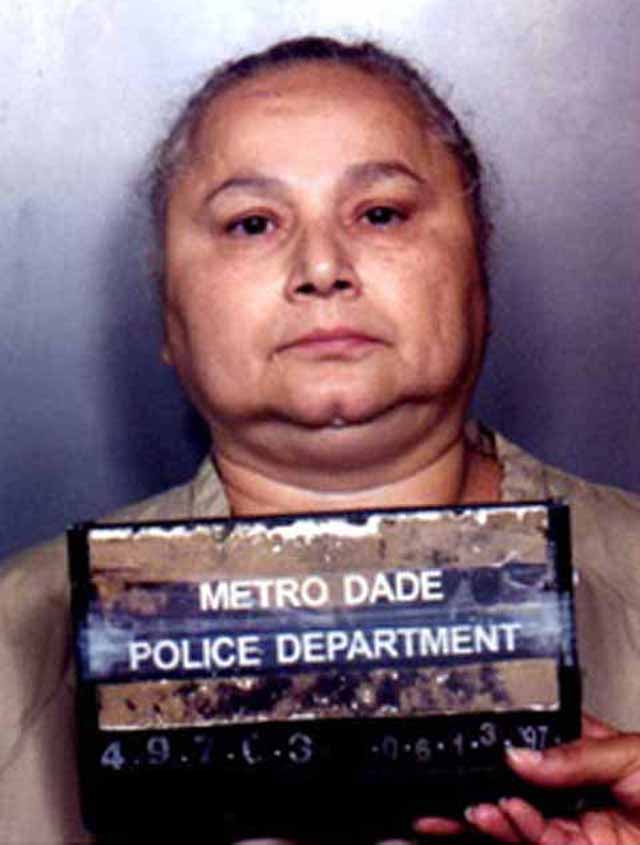
Convicted: Griselda Blanco Restrepo
On the afternoon of September 3, 2012, a gunman dismounted from a motorcycle outside a butcher shop in Medellín, Colombia, and shot a 69-year-old woman twice in the head. He was gone before anyone could stop him. The woman was Griselda Blanco Restrepo, and the method of her killing was one she had invented herself. In the 1970s and 1980s, Blanco built a cocaine empire that shipped 1,500 kilograms of product into Miami every month, generated an estimated $80 million monthly, and left dozens if not hundreds of people dead on both sides of the Atlantic. She mentored Pablo Escobar. She pioneered motorcycle assassinations. She named her youngest son Michael Corleone, after the Godfather character, because she saw the parallel and felt no shame in it. She was convicted of federal drug trafficking in 1985. She beat a capital murder case when her star witness was caught having phone sex with prosecutors' secretaries. She served nearly two decades in prison, suffered a heart attack, was deported to Colombia, and allegedly became a born-again Christian. None of it was enough to save her. The killers who found her outside the Carnicería Cardiso that September afternoon were never identified. She was buried at Jardines de Montesacro cemetery in Medellín, in the same ground as Pablo Escobar. The Godmother of Cocaine, who had ordered the deaths of husbands, rivals, and at least one two-year-old child, ended her life on the same streets where she had built her legend: in Medellín, violently, by surprise. This is her story.
Convicted: Tracey Avril Wigginton
The police found her bank card tucked inside the dead man's shoe. His clothes had been folded neatly nearby, as though someone had taken great care with them, though no such care had been taken with Edward Baldock himself. He lay on the grass at Orleigh Park, stabbed twenty-seven times, his head nearly severed from his body. It was October 1989, and Brisbane was about to reckon with one of the most disturbing murders in its history. The woman whose card was found in that shoe was Tracey Wigginton, a 24-year-old who stood six feet tall and moved through the city's occult underground with quiet intensity. She had, by her own account and the accounts of her associates, been working toward this night for some time. She wanted to drink a human being's blood. When police caught up with her, she told them she had felt nothing while stabbing Baldock, that she had sat down afterward to smoke a cigarette and watched him die. At sentencing, she faced the cameras and said: "It's hard to be famous, isn't it? A legend in my own mind." This is the story of Tracey Wigginton: a troubled child from Rockhampton who became the most notorious female killer in modern Australian history, and the questions her case still provokes today about justice, rehabilitation, and the darkness that can take root inside a human being.
Convicted: Matilda Mary Devine
Matilda Mary Devine, popularly known as Tilly Devine, was an English Australian organized crime boss. She was involved in numerous illicit activities including running sly-grog shops, which were illegal bars in Australia, leading razor gangs, and managing prostitution. She became a notorious figure in Sydney during the interwar years. Her criminal reign was marked with violence, lawlessness, and defiance of the authorities, which contributed to her fame and infamy alike.
Convicted: Sandra Ávila Beltrán
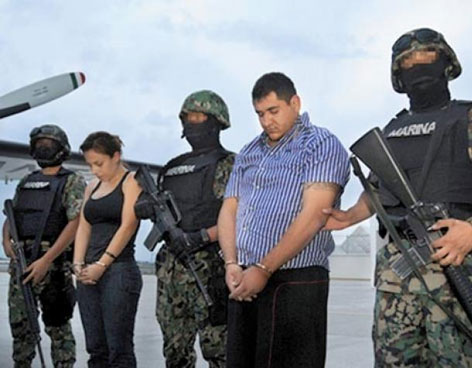
When federal agents swarmed a Mexico City restaurant on September 28, 2007, and placed Sandra Ávila Beltrán under arrest, she did not flinch. She smiled. Then she asked if she could freshen her makeup before the cameras filmed her. It was the kind of composure that takes a lifetime to cultivate, and Sandra's lifetime had been extraordinary preparation. Born into one of Mexico's most storied narco dynasties, niece of Guadalajara Cartel godfather Miguel Ángel Félix Gallardo, she had watched the drug trade operate from her cradle. She had buried two husbands, both former police commanders turned traffickers, both killed by hired assassins. She had allegedly coordinated a 9.5-ton cocaine shipment and paid millions in ransom when her own son was kidnapped. By the time the agents clicked the handcuffs, she had already become a legend: La Reina del Pacífico. The Queen of the Pacific. What followed her arrest was almost as astonishing as the life that preceded it. This is the true story of the most glamorous and dangerous woman in the history of the Mexican drug war.
Accused: Verónica Mireya Moreno Carreón
She had been decorated for bravery. She had taken a bullet in the line of duty, recovered, and returned to the streets of San Nicolás de los Garza as what colleagues called a model police officer. Then Verónica Mireya Moreno Carreón walked out of her uniform and into the most violent organization in northern Mexico. By the fall of 2011, Mexican Navy intelligence had identified her as the plaza boss of Los Zetas in San Nicolás, the first woman known to hold formal territorial command within the cartel's brutal hierarchy. She managed executions, torture operations, extortion networks, drug distribution, and a web of corrupted police officers, some of whom she almost certainly knew from her years on the force. When marines finally caught up with her in a stolen vehicle in a working-class neighborhood, they found a revolver, 150 doses of cocaine and crack, marijuana, and six cell phones. She was barely 35 years old. Her story has no clean ending: no publicly confirmed conviction, no final sentence on record. What remains is a portrait of institutional failure, personal transformation, and a question Mexico's justice system has never fully answered.
Accused: Onie Virginia Hill
On the evening of June 20, 1947, a .30-caliber carbine was pressed against the window of a Beverly Hills mansion and fired nine times. Benjamin "Bugsy" Siegel, reading the newspaper on the sofa inside, was dead before he hit the floor. His right eye was found fifteen feet away. His girlfriend, Virginia Hill, had flown to Paris four days earlier. She described it as a spontaneous vacation. Nobody believed her. Not the investigators. Not the mob. Not the men who had watched her move money across state lines, carry intelligence between crime families, and charm her way through two decades in the highest ranks of American organized crime. Born dirt-poor in rural Alabama in 1916, Hill had transformed herself from a seventeen-year-old shimmy dancer at a World's Fair restaurant into the only woman ever officially identified as a Mafia associate. The United States Senate called her a "central clearing house" for organized crime intelligence. Everyone else called her the Queen of the Mob. When her body was found beside an Austrian brook in March 1966, authorities ruled it a suicide. Bruises on her neck, an unidentified substance in her blood, and a diary full of mob secrets suggested the real story was considerably more complicated. It almost always was, with Virginia Hill.
Convicted: Jiang Qing
Jiang Qing, also known as Madame Mao, was a key figure in the Chinese communist revolution and the fourth wife of Mao Zedong, the Chairman of the Communist Party and Paramount leader of China. She played a significant role in the Cultural Revolution, leading the radical Gang of Four. In the aftermath of Mao's death and the end of the Cultural Revolution, Jiang was arrested and convicted for counter-revolutionary crimes during the Gang of Four trial. She was held mainly responsible for the chaotic and violent period of the Cultural Revolution, which resulted in widespread human rights abuses and millions of deaths.
Convicted: Lee Ann Armanini Reidel
On a cold January night in 2001, a man stepped into the rear parking lot of a Long Island gym to grab a CD from his car. He never made it back inside. Alexander Algeri, 32, was shot three times in the head and neck by a hired killer who mistook him for his best friend. The intended target, Paul Reidel, was alive. His wife had paid to have him killed. The case of Lee Ann Reidel is a story about money, a crumbling marriage, a mob-connected boyfriend, and a conspiracy so tangled that it destroyed everyone it touched, including an innocent man who had been the best man at the very wedding that set these events in motion. When the jury finally returned its verdict in a Suffolk County courtroom in March 2004, Lee Ann wept. She had smiled through most of the six-week trial. That detail alone tells you something about the woman at the center of this story.
Alleged Offender: Enedina Arellano Félix de Toledo
She outlasted them all. While her brothers were being shot in the streets, arrested by federal police, and extradited to American courtrooms, Enedina Arellano Félix de Toledo was doing something none of them ever managed: disappearing in plain sight. Born in Mazatlán in 1961, she earned a legitimate accounting degree, married a Tijuana lawyer, and spent decades managing the financial engine of one of Mexico's most brutal criminal organizations. The U.S. Treasury sanctioned her in 2000. The DEA tracked her for years. Mexico's attorney general eventually put her on a priority fugitives list shared with U.S. authorities. And yet, as of early 2026, she has never been arrested. Not once. No handcuffs, no courtroom, no extradition hearing. While the Tijuana Cartel her family built collapsed around her, one brother killed, the others imprisoned, she transformed what remained into a quieter, more businesslike operation running through pharmacies and real estate in Guadalajara. The DEA and Mexican authorities consider her the first woman ever to lead a major Mexican drug cartel. She carries the aliases La Jefa, La Madrina, and La Narcomami. Intelligence reports place her in Guadalajara today, living under a false identity. The accountant, it turns out, has always been the hardest one to catch.
Convicted: Susan Denise Atkins
Susan Denise Atkins was a member of the 'Manson Family', the cult led by Charles Manson that committed a series of nine murders at four locations in California over a period of five weeks in the summer of 1969. Known within the Manson family as Sadie, Sadie Glutz, Sadie Mae Glutz or Sexy Sadie, Atkins was convicted for her participation in eight of these killings, most notably the Tate murders. She was originally sentenced to death, but her sentence was later commuted to life imprisonment after the California Supreme Court invalidated all death sentences issued prior to 1972. She was incarcerated until her death in 2009, at the time being California's longest-serving female inmate.
Convicted: Stephanie St. Clair (also known as Stephanie Saint-Clair; later Stephanie St. Clair Hamid)
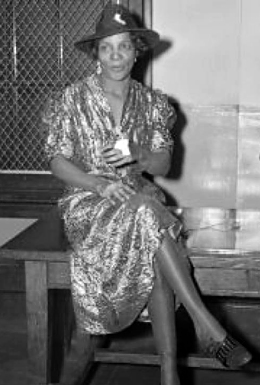
On October 23, 1935, a Bronx gangster named Dutch Schultz lay bleeding from four bullet wounds in a Newark chophouse, the victim of a Murder Inc. hit ordered by Lucky Luciano. As he drifted in and out of consciousness, a telegram arrived at his hospital bedside. It read: 'As ye sow, so shall ye reap.' It was signed 'Madame Queen of Policy.' The woman who sent it had survived a murder contract, a cellar full of coal dust, and a decade of all-out war with the most dangerous mobster in New York. She had done it all without the backing of any organized crime family, without the protection of the law, and without the privilege that white men in her industry took for granted. Stephanie St. Clair was a Black woman from Guadeloupe who had arrived in Harlem with nothing and built a half-million-dollar criminal empire, educated her neighbors about their constitutional rights, and exposed a corrupt police department before the world. She was, by any measure, one of the most remarkable figures in American organized crime history. Almost nobody knows her name.