Recently Added Cases

The most recently added cases to our database

Recent Case Profiles

Griselda Blanco Restrepo
closedConvictedHistorical

Griselda Blanco Restrepo

Convicted: Griselda Blanco Restrepo

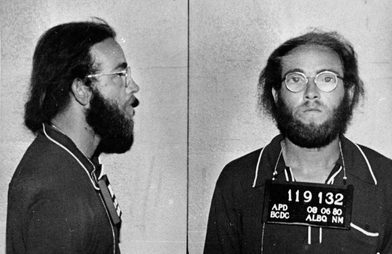
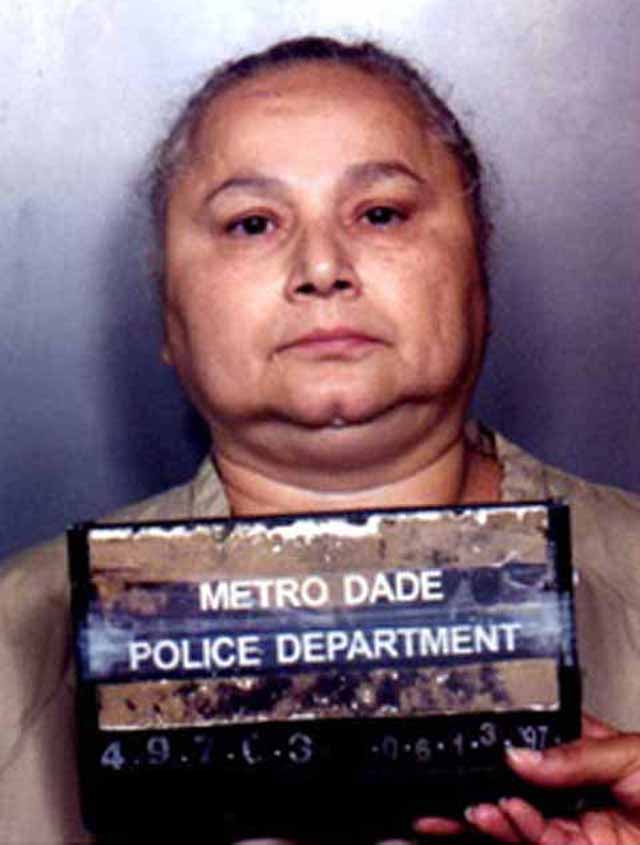
On the afternoon of September 3, 2012, a gunman dismounted from a motorcycle outside a butcher shop in Medellín, Colombia, and shot a 69-year-old woman twice in the head. He was gone before anyone could stop him. The woman was Griselda Blanco Restrepo, and the method of her killing was one she had invented herself. In the 1970s and 1980s, Blanco built a cocaine empire that shipped 1,500 kilograms of product into Miami every month, generated an estimated $80 million monthly, and left dozens if not hundreds of people dead on both sides of the Atlantic. She mentored Pablo Escobar. She pioneered motorcycle assassinations. She named her youngest son Michael Corleone, after the Godfather character, because she saw the parallel and felt no shame in it. She was convicted of federal drug trafficking in 1985. She beat a capital murder case when her star witness was caught having phone sex with prosecutors' secretaries. She served nearly two decades in prison, suffered a heart attack, was deported to Colombia, and allegedly became a born-again Christian. None of it was enough to save her. The killers who found her outside the Carnicería Cardiso that September afternoon were never identified. She was buried at Jardines de Montesacro cemetery in Medellín, in the same ground as Pablo Escobar. The Godmother of Cocaine, who had ordered the deaths of husbands, rivals, and at least one two-year-old child, ended her life on the same streets where she had built her legend: in Medellín, violently, by surprise. This is her story.

drug traffickingcocaine
Laren Renee Sims (alias: Elisa McNabney, also known as Elisa Redelsperger, Elisa Barasch, Shane Ivaroni, and 34+ other aliases — total 38 documented aliases)
closedAccusedHistorical

Laren Renee Sims (alias: Elisa McNabney, also known as Elisa Redelsperger, Elisa Barasch, Shane Ivaroni, and 34+ other aliases — total 38 documented aliases)

Accused: Laren Renee Sims (alias: Elisa McNabney, also known as Elisa Redelsperger, Elisa Barasch, Shane Ivaroni, and 34+ other aliases — total 38 documented aliases)

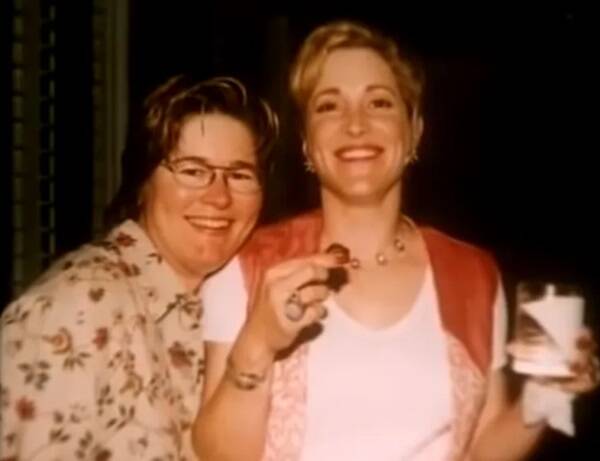
On Easter Sunday 2002, a jail officer in Brooksville, Florida found a woman dead in her cell. She had braided strips from her pillowcase into a rope and fastened it to an air duct in the ceiling. She was thirty-six years old, and she had been, at various points in her life, at least thirty-eight different people. Her FBI criminal rap sheet ran to one hundred and thirteen pages. Her real name was Laren Renee Sims. Most people knew her as Elisa McNabney, the glamorous, horse-loving wife of Sacramento trial attorney Larry McNabney. In the fall of 2001, she and her twenty-one-year-old legal secretary administered horse tranquilizer to Larry at a show in Los Angeles County, stored his body in a garage refrigerator for three months, buried him in a vineyard, liquidated over $500,000 in assets, and fled across the country in a red Jaguar. She was a former straight-A student with a reported IQ of 140. She was a mother who kept her teenage daughter by her side through the whole gruesome flight. She was a con artist, a forger, and a fugitive. When detectives finally traced her to a Florida beach, she looked up and said simply: "I'm the one you're looking for." This is the story of Laren Renee Sims: a woman who spent thirty years constructing false identities, fell into a marriage that may have saved her and ultimately destroyed her, and chose suicide over a courtroom. It is one of the most bizarre, cold-blooded, and strangely human cases in California criminal history.

poisoninghorse tranquilizer
Clara Hamilton Harris (later Clara Hamilton Harris Rathbone)
closedConvictedHistorical

Clara Hamilton Harris (later Clara Hamilton Harris Rathbone)

Convicted: Clara Hamilton Harris (later Clara Hamilton Harris Rathbone)

She survived the night Abraham Lincoln was shot. She held her fiancé's arm together with her bare hands while his blood soaked her white dress from collar to hem. She stayed until dawn with a screaming, inconsolable Mary Todd Lincoln, absorbing the widow's grief alongside her own. Clara Harris endured all of that — and still, eighteen years later, she never saw her death coming. On the night of December 23, 1883, in a consular residence in Hanover, Germany, her husband Henry Rathbone shot and stabbed her to death in their bedroom while their three children slept nearby. He then turned the knife on himself five or six times. He survived. She did not. A German court found Henry guilty but criminally insane. He was committed to an asylum, where he lived another twenty-seven years, apparently never fully comprehending what he had done. The children were shipped back across the Atlantic. Clara was buried in a foreign city cemetery and eventually disinterred when no family came to tend her grave. This is the story of a woman who sat two feet from history's most famous assassination, and lived to describe it — only to become the victim of a quieter, more intimate one. It is also the story of what trauma does to the people left alive in its wake: how it metastasizes, quietly, over years, until it destroys everything it touches.

Lincoln assassinationFord's Theatre
Celeste Beard Johnson
appealedConvictedHistorical

Celeste Beard Johnson

Convicted: Celeste Beard Johnson

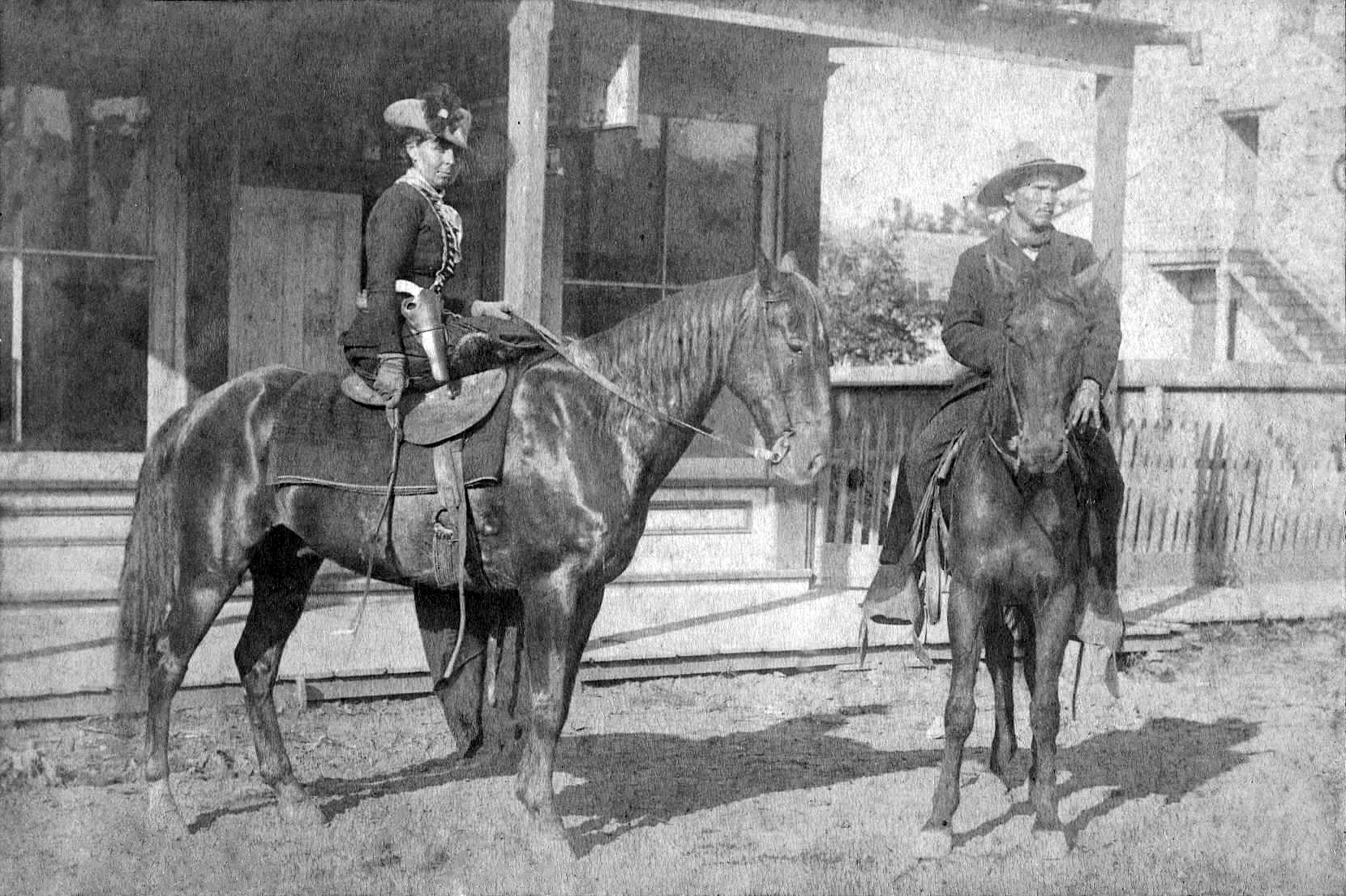
At 3:00 in the morning on October 2, 1999, Tracey Tarlton crept into a sleeping man's bedroom in the affluent Westlake Hills neighborhood of Austin, Texas, and pressed a 20-gauge shotgun against his abdomen. Steven Beard, a 76-year-old retired Fox Broadcasting executive worth millions, never heard her coming. His much younger wife was asleep in a separate wing of their lakeside mansion. Or so she claimed. Celeste Beard Johnson was beautiful, charming, and seemingly devoted. She was also, investigators would discover, spending at a pace that defied grief: more than $670,000 burned through in the months surrounding her husband's wounding and death. When Tarlton was arrested six days after the shooting, police found a shrine of Celeste's photographs in her home. When Tarlton finally broke her silence, she described a calculated manipulation, a manufactured love affair, and a cold-blooded plot to collect an inheritance. Celeste's own twin daughters took the stand against her. A phone call, recorded by one of those daughters, captured Celeste screaming that she had 'hired somebody' to have Tarlton silenced. In March 2003, a Travis County jury found Celeste Beard Johnson guilty of capital murder. She is currently serving a life sentence at the Lane Murray Unit in Gatesville, Texas, with parole eligibility not until 2042, when she will be nearly 80 years old. She has always maintained her innocence. Her daughters disagree.

female killerTexas murder
GT
closedAllegedHistorical

Giulia Tofana (also spelled Toffana, Tophana, Tophania; possible true surname: Mangiardi, per modern scholarship)

Alleged Offender: Giulia Tofana (also spelled Toffana, Tophana, Tophania; possible true surname: Mangiardi, per modern scholarship)

A woman stands over a pot of soup, a small vial in her hand. The liquid she has just tipped into the broth is colorless, odorless, invisible. Then something breaks inside her. She pulls the bowl away from her husband and confesses everything. That single moment of conscience, recorded in court testimony from the 1659 Roman poison investigation, may have unraveled one of the most elaborate criminal networks in early modern history. At its center, at least according to legend, stood a Sicilian woman named Giulia Tofana, creator of a poison so perfectly engineered it mimicked natural illness, so cleverly packaged it passed as a devotional product bearing the image of a saint. Traditional accounts credit her with over 600 deaths, mostly husbands of women with nowhere else to turn. But modern scholarship tells a different story entirely: the woman behind the myth may have died quietly in her sleep around 1651, years before the trial that made her famous. Her real surname may not have been Tofana at all. And the network eventually prosecuted by Roman authorities may have been run by someone else. This is the true story of Giulia Tofana: part documented history, part deliberate mythology, and wholly extraordinary.

Giulia TofanaAqua Tofana
Jean Lee (born Marjorie Jean Maude Wright)
closedConvictedHistorical

Jean Lee (born Marjorie Jean Maude Wright)

Convicted: Jean Lee (born Marjorie Jean Maude Wright)

On the morning of 19 February 1951, Jean Lee was too sedated to walk to her own execution. When the door opened and she saw the masked hangman waiting in his large felt hat and black goggles, she collapsed. Prison officers carried her to the trapdoor, placed her on a chair, and fitted the rope. At 8:00 a.m., seven stone and six pounds of unconscious woman dropped eight feet. She was thirty-one years old. Lee became the last woman ever executed in Australia, a distinction she holds to this day. But the story of how a girl from Dubbo, New South Wales, once a milliner and a waitress, arrived at that gallows is darker and more complicated than any simple narrative of guilt allows. Together with her lover, professional criminal Robert Clayton, and their associate Norman Andrews, Lee had participated in the torture and murder of 'Pop' Kent, a 73-year-old Carlton bookmaker, in November 1949. The three had tied the old man to a chair and spent an hour beating, stabbing, and ultimately strangling him in a bid to find his hidden cash. The neighbours heard him screaming. What followed was a legal saga that raised serious questions about coerced confessions, political interference, and whether a woman who hadn't delivered the final blow deserved to die for it. The Victorian government, unmoved by mass public protest, said yes. The High Court of Australia agreed. This is the story of Jean Lee: her life, her crimes, and the morning they carried her, unconscious, to meet the rope.

female murdererAustralia
Ranavalona I (born Rabodonandrianampoinimerina; also known as Ramavo, Ranavalo-Manjaka I, and Ranavalona reniny)
closedAccusedHistorical

Ranavalona I (born Rabodonandrianampoinimerina; also known as Ramavo, Ranavalo-Manjaka I, and Ranavalona reniny)

Accused: Ranavalona I (born Rabodonandrianampoinimerina; also known as Ramavo, Ranavalo-Manjaka I, and Ranavalona reniny)

In a single year, 1838, an estimated 100,000 people died by her command, forced to swallow poison from the tangena nut and then prove their innocence by vomiting chicken skin. She ruled Madagascar for thirty-three years, expelled every Christian missionary on the island, mounted the skulls of approximately twenty-one Europeans on pikes along her coastline, and oversaw a population collapse that cut her island's people nearly in half. Her name was Ranavalona I, and for three decades she was the most feared sovereign in the Indian Ocean world. Western contemporaries called her the 'Mad Monarch of Madagascar,' the 'Bloody Mary of Madagascar,' the 'Female Caligula.' Revisionist historians see something else entirely: a pragmatic anti-colonial strategist who kept her island free from European domination at any cost. Both portraits carry weight. Born a commoner around 1778, she seized absolute power through a palace coup, eliminated the legitimate royal heir and his entire family, and never looked back. She died quietly, in her own bed, in her own palace, at approximately eighty-three years of age. France did not colonize Madagascar until 1896, thirty-five years after her death. The full story of her reign is one of blood, genius, and the terrible arithmetic of survival at the height of empire.

Ranavalona IMadagascar