Mary Flora Bell
Case Summary
The morning after Mary Bell strangled four-year-old Martin Brown to death, she broke into a nursery school and left four handwritten notes claiming responsibility for the killing. Police dismissed them as a prank. The author was ten years old. What followed over the summer of 1968 in Scotswood, Newcastle, was one of the most disturbing chapters in British criminal history: a child killer operating in plain sight, in broad daylight, returning to mutilate a victim's body with broken scissors, and sitting with the grieving families of her victims as though nothing had happened. Mary Flora Bell was not a monster who emerged from nowhere. She was a product of almost incomprehensible abuse, a girl whose own mother allegedly tried to poison her with sleeping pills and drop her from a first-floor window. That context explains nothing and excuses nothing, but it haunts everything. She would become Britain's youngest female killer on record, a title she still holds. This is her story.
May 26, 1957, Corbridge, Northumberland, England (raised in Scotswood, Newcastle upon Tyne)(Age: 69)
Related Cases

Convicted
Connection tags:

Convicted
Connection tags:
Convicted
Connection tags:

Convicted
Connection tags:

Convicted
Connection tags:
Convicted
Connection tags:
Case Details
At 11:10 on the night of July 31, 1968, a three-year-old boy named Brian Howe was found partially concealed in the weeds of a stretch of wasteland in Scotswood, Newcastle. The children who played there called it Tin Lizzie, a scrubby corridor of land near the railway line where kids built dens and caught insects in the long summer evenings. Brian had been missing for hours. When they found him, he was dead, his small body arranged in the dirt with an almost deliberate stillness. The coroner confirmed death by manual strangulation. Clumps of grass had been pulled over him, as if someone had tried, without urgency, to cover the evidence.
Police noticed something else. Someone had returned to the body after death. Using broken scissors and a razor blade, the killer had carved the letter 'M' into the child's abdomen, cut locks of his hair, and made multiple shallow incisions across his skin. A pair of broken scissors lay near his feet. This was not frenzy. This was something colder.
The killer was eleven years old.
Mary Flora Bell was born on May 26, 1957, in Corbridge, Northumberland, and raised in Scotswood, a working-class inner suburb of Newcastle upon Tyne. Her mother, Betty McCrickett, was a teenage sex worker. Her father, Billy Bell, was a violent alcoholic with a criminal record that included armed robbery, and his biological relationship to Mary was, by some accounts, uncertain. What is not uncertain is the kind of childhood that followed.
From birth, Betty appeared to reject her daughter with a ferocity that alarmed those around her. She reportedly tried to give the infant away at the hospital. As Mary grew, witnesses and family members later alleged that Betty gave her sleeping pills, dropped her from a first-floor window, and forced her to engage in sexual acts with clients. Family members suspected Betty suffered from what is now recognized as Munchausen syndrome by proxy, a condition in which a caregiver fabricates or induces illness in a child for attention. Whether or not that diagnosis fits, the result was a little girl who learned early that adults were dangerous, that love was transactional, and that pain was the baseline of existence.
By the spring of 1968, Mary Bell was ten years old and already alarming the Scotswood neighborhood in ways that hadn't yet crystallized into anything adults took seriously. On May 11, 1968, she pushed a three-year-old boy off an air raid shelter roof, sending him seven feet to the ground with serious head injuries. That same evening, parents of three small girls reported that Bell had attempted to strangle their children in a sandpit. None of these incidents led to formal action. She was a child; children played rough.
Fourteen days later, the playing stopped.
On May 25, 1968, the day before her eleventh birthday, Mary Bell led four-year-old Martin Brown into an abandoned, derelict house at 85 St. Margaret's Road in Scotswood. Martin was small, trusting, and easy to steer. Bell told him he had a sore throat. She offered to massage his neck. She tightened her grip and strangled him to death. A witness later reported hearing Bell explain to her thirteen-year-old friend and neighbor Norma Joyce Bell (no relation) exactly how to kill someone this way: squeeze the neck, push up the lungs. She had thought about it. She knew how it worked.
Martin's body was found in the house that afternoon. His death was initially given an open verdict; no obvious sign of foul play was visible to the first responders. The neighborhood grieved. Mary Bell attended the vigil.
The following day, May 26, on her birthday, Bell and Norma Bell broke into the Woodland Crescent Nursery nearby. They vandalized the building and left four handwritten notes scattered inside. The notes were not subtle. They stated plainly that someone had committed murder, referencing Martin Brown by name. Police read them and dismissed them. They were the work of children, some dark joke in bad taste. Officers did not investigate further. Mary Bell was not questioned.
Two months passed. Then Brian Howe died.
The investigation that followed Brian's death was led with gathering urgency by Detective Chief Inspector James Dobson. The mutilation of the body deepened the horror but also provided clues. The carved 'M' had been amended from an 'N' first scratched by Norma Bell, a detail that suggested at least two participants. The cutting was deliberate but unskilled. The scissors left behind were from the neighborhood. Dobson's team interviewed children across Scotswood, including Mary Bell herself. She was confident, fluent, and oddly specific in her answers, offering details about the crime scene that she should not have known. She corrected a detective's assumption about the location of the body. She showed little of the distress the other children displayed.
Eventually, testimony and inconsistencies converged on two names: Mary Bell and Norma Bell. Both were arrested. Both denied the charges initially. Then the handwritten notes from the nursery were re-examined. The handwriting was matched.
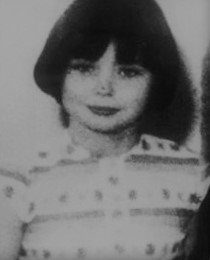
The trial of Mary Bell and Norma Bell opened at Newcastle Assizes on December 5, 1968, before Mr Justice Cusack. It lasted nine days. In an unusual decision, the judge waived the girls' right to anonymity, permitting newspapers to print their names, photographs, and ages. The public saw, for the first time, the face of the killer: a dark-haired eleven-year-old in a school photo, looking ordinary.
Prosecutor Rudolph Lyons QC argued to the jury that the murders had been committed, in his words, "solely for the pleasure and excitement of killing." The courtroom heard testimony from court-appointed psychiatrist Dr. Robert Orton, who described Bell as suffering from a psychopathic personality disorder, characterized by a lack of feeling toward others and a tendency toward impulsive action. A Home Office psychiatrist, Dr. David Westbury, added a detail that stopped the room: no suitable psychiatric facility existed anywhere in England to properly hold or treat a child like her. Justice Cusack described this fact as "unhappy."
The jury deliberated for three hours and twenty-five minutes. On December 17, 1968, they returned their verdicts: Mary Bell was found not guilty of murder but guilty of the manslaughter of both Martin Brown and Brian Howe, the lesser charge granted on grounds of diminished responsibility. Norma Bell was acquitted entirely.
Mr Justice Cusack sentenced Mary Bell to be detained at Her Majesty's Pleasure, an indeterminate term with no fixed release date. She was, he said, "dangerous" and posed "a very grave risk to other children." At eleven years and six months of age, she became Britain's youngest female killer on record. She remains so today.
Bell's institutional journey was neither straightforward nor comfortable. She was placed at the Red Bank Secure Unit in Newton-le-Willows, Lancashire, the only girl among twenty-three male inmates. In November 1973, at sixteen, she was transferred to Moor Court open prison. In September 1977, she absconded with another inmate and two men in Blackpool before being recaptured within days. In May 1980, she walked out of HM Prison Askham Grange for the last time. She was twenty-three years old. She had served approximately eleven and a half years. The state gave her a new identity and a new name and sent her quietly into England.
She built a life. On May 25, 1984 (the same date she had killed Martin Brown sixteen years earlier), she gave birth to a daughter. The girl grew up not knowing who her mother was, or rather, who her mother had been.
That ended in April 1998, when reporters traced Bell to a coastal town in Sussex and broke the story publicly. Bell and her fourteen-year-old daughter fled to a police safe house. The daughter, at an age not far from the one at which her mother had committed two murders, learned the truth about her family.
Later that same year, Bell cooperated with journalist Gitta Sereny on a book titled "Cries Unheard: Why Children Kill, The Story of Mary Bell." For her participation, Bell received approximately fifteen thousand pounds. The publication detonated a political firestorm. Prime Minister Tony Blair publicly condemned the payment as profiting from crime. The controversy contributed directly to legislative reform aimed at restricting such arrangements in future cases.
In May 2003, Bell won a landmark High Court case establishing lifelong anonymity protections for herself and her daughter. The order, which journalists and legal scholars came to call the Mary Bell Order, set a precedent that would later be applied to the killers of toddler James Bulger in 1993. In 2009, the order was extended again to cover Bell's granddaughter, referred to in court documents only as 'Z.'
Bell's current identity and location remain protected by court order. She lives under a pseudonym somewhere in England. According to Gitta Sereny, who knew Bell better than perhaps any other journalist, Bell does not claim innocence and does not argue that her childhood abuse excuses what she did. She knows what she did. She carries it.
The Mary Bell case resists easy conclusions. It is not a story about a born monster, though the crimes were monstrous. It is not a redemption narrative, because redemption is too simple a word for what follows killing a child. It is, at its core, a case study in what happens when society fails a child so completely that the child becomes the failure herself, and two small boys pay the price.
Britain's juvenile justice system was never quite the same after Newcastle Assizes, December 1968. The debate about criminal responsibility for children, about where punishment ends and treatment begins, about whether an eleven-year-old can truly understand the permanence of death, continues in courtrooms and academic journals to this day. Mary Bell started that conversation. She is still, quietly, part of it.
Somewhere in England, a grandmother in her late sixties lives under a name that is not hers. The grandchild referred to in a court document as 'Z' grows up not knowing her family's history. Three generations now live in the shadow of two summer mornings in Scotswood, when a girl with a ruined childhood put her hands around the throats of children smaller than herself and squeezed until they stopped moving. The wasteland they called Tin Lizzie is long gone. Martin Brown and Brian Howe are not.
Timeline
Birth and Troubled Origins
Mary Flora Bell was born in Corbridge, Northumberland, to Betty McCrickett, a teenage sex worker, and Billy Bell, a violent alcoholic criminal. Her mother reportedly rejected her at birth, attempted to give her away for adoption, and subjected her to severe abuse throughout childhood, including alleged forced involvement with clients and deliberate harm.
Bell's traumatic early life — marked by neglect, abuse, and suspected Munchausen syndrome by proxy inflicted by her mother — formed the psychological backdrop that would later be central to her defense at trial.
Early Warning Signs of Violence
Weeks before her first murder, Bell pushed a three-year-old boy seven feet off an air raid shelter roof, causing serious head injury. On the same evening, parents of three small girls reported that Bell had attempted to strangle their children in a sandpit, foreshadowing the lethal violence to come.
These incidents demonstrated a clear and escalating pattern of predatory violence toward small children that went unaddressed by authorities, leaving younger victims in the community vulnerable.
Murder of Martin Brown
On the eve of her 11th birthday, Mary Bell strangled four-year-old Martin Brown to death inside an abandoned derelict house at 85 St. Margaret's Road, Scotswood, Newcastle upon Tyne. She is believed to have acted alone, and his death was initially ruled as having an open cause of death with no clear sign of foul play detected.
This was Bell's first killing, and the failure of authorities to identify it as a homicide immediately allowed her to remain free and kill again two months later.
Nursery Break-In and Written Confessions
The day after Martin Brown's death — Bell's 11th birthday — Bell and 13-year-old neighbor Norma Joyce Bell broke into the Woodland Crescent Nursery, vandalized it, and left four handwritten notes that effectively confessed to the murder of Martin Brown. Police dismissed the notes as childish pranks, missing a critical investigative opportunity.
The written notes were a direct, documented confession that was ignored by investigators, representing a significant failure that allowed Bell to remain at large.
Murder of Brian Howe
Bell and Norma Bell lured three-year-old Brian Howe to wasteland near a local railway line known as 'Tin Lizzie' and strangled him to death. His body was discovered at 11:10 p.m., partially concealed under clumps of grass and weeds, with the coroner confirming death by strangulation.
The second murder, committed with a co-offender and involving deliberate concealment of the body, demonstrated premeditation and escalation, ultimately forcing a serious homicide investigation that would lead to Bell's arrest.
Post-Mortem Mutilation of Brian Howe
After killing Brian Howe, Bell returned to his body and used broken scissors and a razor blade to carve the letter 'M' into his abdomen — amending an 'N' initially scratched by Norma — and also cut his hair and inflicted multiple incisions. A broken pair of scissors was found near his feet by investigators.
The deliberate post-mortem mutilation and the initial carved 'N' were key forensic details that implicated both Bell and Norma, and the prosecution cited them as evidence of the killings being committed 'solely for the pleasure and excitement of killing.'
Trial Begins at Newcastle Assizes
The trial of Mary Bell and Norma Bell commenced at Newcastle Assizes before Mr Justice Cusack, lasting nine days. Prosecutor Rudolph Lyons QC opened the case by arguing the murders were committed 'solely for the pleasure and excitement of killing,' while the judge controversially waived the defendants' right to anonymity, allowing media to publish their names, ages, and photographs.
The decision to waive anonymity set a precedent that Bell would later successfully challenge in court, and the trial itself forced British society to confront the disturbing reality of child-on-child homicide.
Psychiatric Testimony on Bell's Mental State
Court-appointed psychiatrist Dr. Robert Orton testified that Bell suffered from a psychopathic personality disorder, displaying a profound lack of feeling toward others and a tendency to act on impulse. Home Office psychiatrist Dr. David Westbury added that no suitable psychiatric facility existed in England capable of holding her, a situation the judge publicly described as 'unhappy.'
The psychiatric testimony was pivotal in securing a manslaughter verdict on grounds of diminished responsibility rather than murder, and the absence of appropriate facilities highlighted systemic gaps in the juvenile justice system.
Conviction and Indeterminate Sentencing
After three hours and twenty-five minutes of deliberation, the jury of five women and seven men acquitted Norma Bell of all charges but convicted Mary Bell of the manslaughter of both Martin Brown and Brian Howe on grounds of diminished responsibility. Mr Justice Cusack sentenced Bell to detention at Her Majesty's Pleasure — an indeterminate sentence — declaring her 'dangerous' and a 'very grave risk to other children.'
At 11 years and six months old, Bell became Britain's youngest female killer, a record that still stands, and her indeterminate sentence reflected the court's profound uncertainty about how to handle a child of such dangerous disposition.
Landmark Anonymity Order and Lasting Legal Legacy
Bell won a landmark High Court case granting lifelong anonymity to both herself and her daughter, who had only learned of her mother's true identity in 1998 when journalists exposed Bell's location on the Sussex Coast. The order — informally known as the 'Mary Bell Order' — set a legal precedent later extended to cover Bell's granddaughter born in January 2009, and became a template used in subsequent cases including those of the killers of James Bulger.
The Mary Bell Order fundamentally reshaped British law on the anonymity rights of convicted criminals post-release, influencing juvenile justice policy and establishing protections for the families of offenders in high-profile cases.
Crime Location
Photos
Mary Flora Bell ScotswoodA

Mary Bell Norma Bell 26 May 1968 Woodland Crescent Nursery MessageA

M.Bell.Slum.Clearance.Scotswood.1968A

Flowerpowerportfolio

Scotswood City Engineers 1966
Sources
- Cries Unheard: Why Children Kill — The Story of Mary Bell
- The Case of Mary Bell
- Mary Flora Bell — Wikipedia
- Life Detention for Child Killer Mary Flora Bell
- Mary Bell — Getty Images Archive
- Mary Bell wins lifelong anonymity in landmark ruling
- R v Mary Bell — Newcastle Assizes Trial Records
Frequently Asked Questions
Table of Contents
Case Summary
The morning after Mary Bell strangled four-year-old Martin Brown to death, she broke into a nursery school and left four handwritten notes claiming responsibility for the killing. Police dismissed them as a prank. The author was ten years old. What followed over the summer of 1968 in Scotswood, Newcastle, was one of the most disturbing chapters in British criminal history: a child killer operating in plain sight, in broad daylight, returning to mutilate a victim's body with broken scissors, and sitting with the grieving families of her victims as though nothing had happened. Mary Flora Bell was not a monster who emerged from nowhere. She was a product of almost incomprehensible abuse, a girl whose own mother allegedly tried to poison her with sleeping pills and drop her from a first-floor window. That context explains nothing and excuses nothing, but it haunts everything. She would become Britain's youngest female killer on record, a title she still holds. This is her story.
May 26, 1957, Corbridge, Northumberland, England (raised in Scotswood, Newcastle upon Tyne)(Age: 69)
Case Details
At 11:10 on the night of July 31, 1968, a three-year-old boy named Brian Howe was found partially concealed in the weeds of a stretch of wasteland in Scotswood, Newcastle. The children who played there called it Tin Lizzie, a scrubby corridor of land near the railway line where kids built dens and caught insects in the long summer evenings. Brian had been missing for hours. When they found him, he was dead, his small body arranged in the dirt with an almost deliberate stillness. The coroner confirmed death by manual strangulation. Clumps of grass had been pulled over him, as if someone had tried, without urgency, to cover the evidence.
Police noticed something else. Someone had returned to the body after death. Using broken scissors and a razor blade, the killer had carved the letter 'M' into the child's abdomen, cut locks of his hair, and made multiple shallow incisions across his skin. A pair of broken scissors lay near his feet. This was not frenzy. This was something colder.
The killer was eleven years old.
Mary Flora Bell was born on May 26, 1957, in Corbridge, Northumberland, and raised in Scotswood, a working-class inner suburb of Newcastle upon Tyne. Her mother, Betty McCrickett, was a teenage sex worker. Her father, Billy Bell, was a violent alcoholic with a criminal record that included armed robbery, and his biological relationship to Mary was, by some accounts, uncertain. What is not uncertain is the kind of childhood that followed.
From birth, Betty appeared to reject her daughter with a ferocity that alarmed those around her. She reportedly tried to give the infant away at the hospital. As Mary grew, witnesses and family members later alleged that Betty gave her sleeping pills, dropped her from a first-floor window, and forced her to engage in sexual acts with clients. Family members suspected Betty suffered from what is now recognized as Munchausen syndrome by proxy, a condition in which a caregiver fabricates or induces illness in a child for attention. Whether or not that diagnosis fits, the result was a little girl who learned early that adults were dangerous, that love was transactional, and that pain was the baseline of existence.
By the spring of 1968, Mary Bell was ten years old and already alarming the Scotswood neighborhood in ways that hadn't yet crystallized into anything adults took seriously. On May 11, 1968, she pushed a three-year-old boy off an air raid shelter roof, sending him seven feet to the ground with serious head injuries. That same evening, parents of three small girls reported that Bell had attempted to strangle their children in a sandpit. None of these incidents led to formal action. She was a child; children played rough.
Fourteen days later, the playing stopped.
On May 25, 1968, the day before her eleventh birthday, Mary Bell led four-year-old Martin Brown into an abandoned, derelict house at 85 St. Margaret's Road in Scotswood. Martin was small, trusting, and easy to steer. Bell told him he had a sore throat. She offered to massage his neck. She tightened her grip and strangled him to death. A witness later reported hearing Bell explain to her thirteen-year-old friend and neighbor Norma Joyce Bell (no relation) exactly how to kill someone this way: squeeze the neck, push up the lungs. She had thought about it. She knew how it worked.
Martin's body was found in the house that afternoon. His death was initially given an open verdict; no obvious sign of foul play was visible to the first responders. The neighborhood grieved. Mary Bell attended the vigil.
The following day, May 26, on her birthday, Bell and Norma Bell broke into the Woodland Crescent Nursery nearby. They vandalized the building and left four handwritten notes scattered inside. The notes were not subtle. They stated plainly that someone had committed murder, referencing Martin Brown by name. Police read them and dismissed them. They were the work of children, some dark joke in bad taste. Officers did not investigate further. Mary Bell was not questioned.
Two months passed. Then Brian Howe died.
The investigation that followed Brian's death was led with gathering urgency by Detective Chief Inspector James Dobson. The mutilation of the body deepened the horror but also provided clues. The carved 'M' had been amended from an 'N' first scratched by Norma Bell, a detail that suggested at least two participants. The cutting was deliberate but unskilled. The scissors left behind were from the neighborhood. Dobson's team interviewed children across Scotswood, including Mary Bell herself. She was confident, fluent, and oddly specific in her answers, offering details about the crime scene that she should not have known. She corrected a detective's assumption about the location of the body. She showed little of the distress the other children displayed.
Eventually, testimony and inconsistencies converged on two names: Mary Bell and Norma Bell. Both were arrested. Both denied the charges initially. Then the handwritten notes from the nursery were re-examined. The handwriting was matched.
The trial of Mary Bell and Norma Bell opened at Newcastle Assizes on December 5, 1968, before Mr Justice Cusack. It lasted nine days. In an unusual decision, the judge waived the girls' right to anonymity, permitting newspapers to print their names, photographs, and ages. The public saw, for the first time, the face of the killer: a dark-haired eleven-year-old in a school photo, looking ordinary.
Prosecutor Rudolph Lyons QC argued to the jury that the murders had been committed, in his words, "solely for the pleasure and excitement of killing." The courtroom heard testimony from court-appointed psychiatrist Dr. Robert Orton, who described Bell as suffering from a psychopathic personality disorder, characterized by a lack of feeling toward others and a tendency toward impulsive action. A Home Office psychiatrist, Dr. David Westbury, added a detail that stopped the room: no suitable psychiatric facility existed anywhere in England to properly hold or treat a child like her. Justice Cusack described this fact as "unhappy."
The jury deliberated for three hours and twenty-five minutes. On December 17, 1968, they returned their verdicts: Mary Bell was found not guilty of murder but guilty of the manslaughter of both Martin Brown and Brian Howe, the lesser charge granted on grounds of diminished responsibility. Norma Bell was acquitted entirely.
Mr Justice Cusack sentenced Mary Bell to be detained at Her Majesty's Pleasure, an indeterminate term with no fixed release date. She was, he said, "dangerous" and posed "a very grave risk to other children." At eleven years and six months of age, she became Britain's youngest female killer on record. She remains so today.
Bell's institutional journey was neither straightforward nor comfortable. She was placed at the Red Bank Secure Unit in Newton-le-Willows, Lancashire, the only girl among twenty-three male inmates. In November 1973, at sixteen, she was transferred to Moor Court open prison. In September 1977, she absconded with another inmate and two men in Blackpool before being recaptured within days. In May 1980, she walked out of HM Prison Askham Grange for the last time. She was twenty-three years old. She had served approximately eleven and a half years. The state gave her a new identity and a new name and sent her quietly into England.
She built a life. On May 25, 1984 (the same date she had killed Martin Brown sixteen years earlier), she gave birth to a daughter. The girl grew up not knowing who her mother was, or rather, who her mother had been.
That ended in April 1998, when reporters traced Bell to a coastal town in Sussex and broke the story publicly. Bell and her fourteen-year-old daughter fled to a police safe house. The daughter, at an age not far from the one at which her mother had committed two murders, learned the truth about her family.
Later that same year, Bell cooperated with journalist Gitta Sereny on a book titled "Cries Unheard: Why Children Kill, The Story of Mary Bell." For her participation, Bell received approximately fifteen thousand pounds. The publication detonated a political firestorm. Prime Minister Tony Blair publicly condemned the payment as profiting from crime. The controversy contributed directly to legislative reform aimed at restricting such arrangements in future cases.
In May 2003, Bell won a landmark High Court case establishing lifelong anonymity protections for herself and her daughter. The order, which journalists and legal scholars came to call the Mary Bell Order, set a precedent that would later be applied to the killers of toddler James Bulger in 1993. In 2009, the order was extended again to cover Bell's granddaughter, referred to in court documents only as 'Z.'
Bell's current identity and location remain protected by court order. She lives under a pseudonym somewhere in England. According to Gitta Sereny, who knew Bell better than perhaps any other journalist, Bell does not claim innocence and does not argue that her childhood abuse excuses what she did. She knows what she did. She carries it.
The Mary Bell case resists easy conclusions. It is not a story about a born monster, though the crimes were monstrous. It is not a redemption narrative, because redemption is too simple a word for what follows killing a child. It is, at its core, a case study in what happens when society fails a child so completely that the child becomes the failure herself, and two small boys pay the price.
Britain's juvenile justice system was never quite the same after Newcastle Assizes, December 1968. The debate about criminal responsibility for children, about where punishment ends and treatment begins, about whether an eleven-year-old can truly understand the permanence of death, continues in courtrooms and academic journals to this day. Mary Bell started that conversation. She is still, quietly, part of it.
Somewhere in England, a grandmother in her late sixties lives under a name that is not hers. The grandchild referred to in a court document as 'Z' grows up not knowing her family's history. Three generations now live in the shadow of two summer mornings in Scotswood, when a girl with a ruined childhood put her hands around the throats of children smaller than herself and squeezed until they stopped moving. The wasteland they called Tin Lizzie is long gone. Martin Brown and Brian Howe are not.
Timeline
Birth and Troubled Origins
Mary Flora Bell was born in Corbridge, Northumberland, to Betty McCrickett, a teenage sex worker, and Billy Bell, a violent alcoholic criminal. Her mother reportedly rejected her at birth, attempted to give her away for adoption, and subjected her to severe abuse throughout childhood, including alleged forced involvement with clients and deliberate harm.
Bell's traumatic early life — marked by neglect, abuse, and suspected Munchausen syndrome by proxy inflicted by her mother — formed the psychological backdrop that would later be central to her defense at trial.
Early Warning Signs of Violence
Weeks before her first murder, Bell pushed a three-year-old boy seven feet off an air raid shelter roof, causing serious head injury. On the same evening, parents of three small girls reported that Bell had attempted to strangle their children in a sandpit, foreshadowing the lethal violence to come.
These incidents demonstrated a clear and escalating pattern of predatory violence toward small children that went unaddressed by authorities, leaving younger victims in the community vulnerable.
Murder of Martin Brown
On the eve of her 11th birthday, Mary Bell strangled four-year-old Martin Brown to death inside an abandoned derelict house at 85 St. Margaret's Road, Scotswood, Newcastle upon Tyne. She is believed to have acted alone, and his death was initially ruled as having an open cause of death with no clear sign of foul play detected.
This was Bell's first killing, and the failure of authorities to identify it as a homicide immediately allowed her to remain free and kill again two months later.
Nursery Break-In and Written Confessions
The day after Martin Brown's death — Bell's 11th birthday — Bell and 13-year-old neighbor Norma Joyce Bell broke into the Woodland Crescent Nursery, vandalized it, and left four handwritten notes that effectively confessed to the murder of Martin Brown. Police dismissed the notes as childish pranks, missing a critical investigative opportunity.
The written notes were a direct, documented confession that was ignored by investigators, representing a significant failure that allowed Bell to remain at large.
Murder of Brian Howe
Bell and Norma Bell lured three-year-old Brian Howe to wasteland near a local railway line known as 'Tin Lizzie' and strangled him to death. His body was discovered at 11:10 p.m., partially concealed under clumps of grass and weeds, with the coroner confirming death by strangulation.
The second murder, committed with a co-offender and involving deliberate concealment of the body, demonstrated premeditation and escalation, ultimately forcing a serious homicide investigation that would lead to Bell's arrest.
Post-Mortem Mutilation of Brian Howe
After killing Brian Howe, Bell returned to his body and used broken scissors and a razor blade to carve the letter 'M' into his abdomen — amending an 'N' initially scratched by Norma — and also cut his hair and inflicted multiple incisions. A broken pair of scissors was found near his feet by investigators.
The deliberate post-mortem mutilation and the initial carved 'N' were key forensic details that implicated both Bell and Norma, and the prosecution cited them as evidence of the killings being committed 'solely for the pleasure and excitement of killing.'
Trial Begins at Newcastle Assizes
The trial of Mary Bell and Norma Bell commenced at Newcastle Assizes before Mr Justice Cusack, lasting nine days. Prosecutor Rudolph Lyons QC opened the case by arguing the murders were committed 'solely for the pleasure and excitement of killing,' while the judge controversially waived the defendants' right to anonymity, allowing media to publish their names, ages, and photographs.
The decision to waive anonymity set a precedent that Bell would later successfully challenge in court, and the trial itself forced British society to confront the disturbing reality of child-on-child homicide.
Psychiatric Testimony on Bell's Mental State
Court-appointed psychiatrist Dr. Robert Orton testified that Bell suffered from a psychopathic personality disorder, displaying a profound lack of feeling toward others and a tendency to act on impulse. Home Office psychiatrist Dr. David Westbury added that no suitable psychiatric facility existed in England capable of holding her, a situation the judge publicly described as 'unhappy.'
The psychiatric testimony was pivotal in securing a manslaughter verdict on grounds of diminished responsibility rather than murder, and the absence of appropriate facilities highlighted systemic gaps in the juvenile justice system.
Conviction and Indeterminate Sentencing
After three hours and twenty-five minutes of deliberation, the jury of five women and seven men acquitted Norma Bell of all charges but convicted Mary Bell of the manslaughter of both Martin Brown and Brian Howe on grounds of diminished responsibility. Mr Justice Cusack sentenced Bell to detention at Her Majesty's Pleasure — an indeterminate sentence — declaring her 'dangerous' and a 'very grave risk to other children.'
At 11 years and six months old, Bell became Britain's youngest female killer, a record that still stands, and her indeterminate sentence reflected the court's profound uncertainty about how to handle a child of such dangerous disposition.
Landmark Anonymity Order and Lasting Legal Legacy
Bell won a landmark High Court case granting lifelong anonymity to both herself and her daughter, who had only learned of her mother's true identity in 1998 when journalists exposed Bell's location on the Sussex Coast. The order — informally known as the 'Mary Bell Order' — set a legal precedent later extended to cover Bell's granddaughter born in January 2009, and became a template used in subsequent cases including those of the killers of James Bulger.
The Mary Bell Order fundamentally reshaped British law on the anonymity rights of convicted criminals post-release, influencing juvenile justice policy and establishing protections for the families of offenders in high-profile cases.
Crime Location
Photos
Mary Flora Bell ScotswoodA
Mary Bell Norma Bell 26 May 1968 Woodland Crescent Nursery MessageA
M.Bell.Slum.Clearance.Scotswood.1968A
Flowerpowerportfolio
Scotswood City Engineers 1966
Sources
- Cries Unheard: Why Children Kill — The Story of Mary Bell
- The Case of Mary Bell
- Mary Flora Bell — Wikipedia
- Life Detention for Child Killer Mary Flora Bell
- Mary Bell — Getty Images Archive
- Mary Bell wins lifelong anonymity in landmark ruling
- R v Mary Bell — Newcastle Assizes Trial Records
Frequently Asked Questions
Related Cases
Convicted
Connection tags:
Convicted
Connection tags:
Convicted
Connection tags:
Convicted
Connection tags:
Convicted
Connection tags:
Convicted
Connection tags:
Tags
Popular Culture
book (1998)
Journalist Gitta Sereny collaborated with Mary Bell on this controversial non-fiction account of her life, crimes, and rehabilitation. Bell received approximately £15,000, prompting Prime Minister Tony Blair to condemn the payment and triggering legislative debate on criminals profiting from their stories.
book (1972)
Gitta Sereny's first book-length examination of the Mary Bell case, based on court records and investigative journalism, considered a foundational text in the study of juvenile crime and criminal responsibility.
documentary (1998)
British documentary examining the cases of children who have killed, featuring discussion of Mary Bell's case alongside the James Bulger murder and broader questions of juvenile criminal responsibility.
TV (2003)
British television drama inspired by the Mary Bell case, exploring themes of childhood trauma, neglect, and the moral complexity of juvenile crime.
documentary (2010)
Documentary revisiting the 1968 murders committed by Mary Bell, examining the social conditions of Scotswood, the trial, and the lasting legal legacy of the case.