10 cases tagged “female killer”
Convicted: Jodi Ann Arias
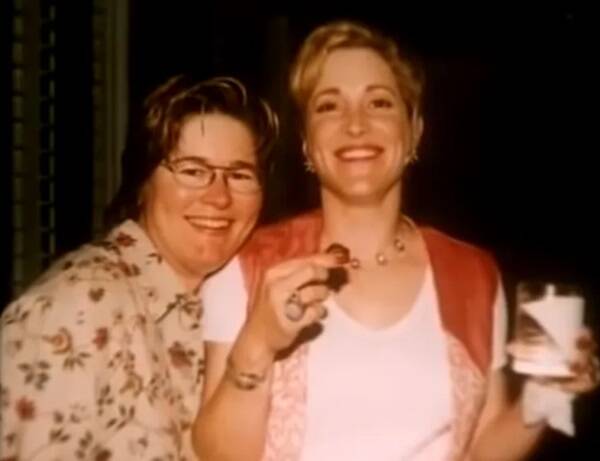
When Travis Alexander's friends broke into his Mesa, Arizona home on June 9, 2008, the smell told them everything before their eyes could. He had been missing for five days. Inside the master bathroom, they found him crumpled in the shower: twenty-seven stab wounds, a throat slashed nearly to the spine, and a single .25-caliber bullet in his forehead. He was thirty years old. Within days, investigators had a name: Jodi Ann Arias, his ex-girlfriend, an aspiring photographer with a smile that charmed everyone she met. She would eventually confess to the killing, but not before telling two other stories first. What followed was one of the most-watched murder trials in American history, a 64-day courtroom spectacle broadcast live to millions, fueled by explicit text messages, recovered photographs of the victim alive in his shower just hours before his death, and a defendant who took the stand for 18 consecutive days and insisted she acted in self-defense. The jury didn't believe her. Neither did much of the country. She is serving life without parole. From a Nevada convention hall where two ambitious young people first locked eyes, to a prison cell in Goodyear, Arizona where Arias now sells artwork and writes a Substack blog, this is the full story of a killing that America could not look away from.
Convicted: Myra Hindley
On the morning of October 7, 1965, eighteen-year-old David Smith walked to a public telephone box in Hattersley, Greater Manchester, hands shaking, and dialed 999. The night before, he had watched his brother-in-law bludgeon a seventeen-year-old to death with an axe. The brother-in-law was Ian Brady. The woman who had invited him to witness it was Myra Hindley. What that phone call exposed would redefine evil in the British imagination for generations. Between 1963 and 1965, Brady and Hindley abducted five children and teenagers from the streets of Greater Manchester, sexually assaulted them, and buried four in shallow graves on the desolate expanse of Saddleworth Moor. The fifth was killed in Hindley's living room. The evidence police found inside that house was staggering in its horror: photographs of a ten-year-old girl bound and gagged in Hindley's bedroom, and sixteen minutes of audio tape capturing that same child's final, agonized moments. A luggage ticket for the suitcase containing these materials was found hidden inside the spine of Hindley's Catholic prayer book. Myra Hindley would spend thirty-six years in prison, applying repeatedly for parole, insisting she had changed. The British public never believed her. One of her victims, Keith Bennett, has never been found. His mother died in 2012, still waiting. This is the story of how an ordinary girl from Gorton became the most reviled woman in British criminal history.
Convicted: Celeste Beard Johnson
At 3:00 in the morning on October 2, 1999, Tracey Tarlton crept into a sleeping man's bedroom in the affluent Westlake Hills neighborhood of Austin, Texas, and pressed a 20-gauge shotgun against his abdomen. Steven Beard, a 76-year-old retired Fox Broadcasting executive worth millions, never heard her coming. His much younger wife was asleep in a separate wing of their lakeside mansion. Or so she claimed. Celeste Beard Johnson was beautiful, charming, and seemingly devoted. She was also, investigators would discover, spending at a pace that defied grief: more than $670,000 burned through in the months surrounding her husband's wounding and death. When Tarlton was arrested six days after the shooting, police found a shrine of Celeste's photographs in her home. When Tarlton finally broke her silence, she described a calculated manipulation, a manufactured love affair, and a cold-blooded plot to collect an inheritance. Celeste's own twin daughters took the stand against her. A phone call, recorded by one of those daughters, captured Celeste screaming that she had 'hired somebody' to have Tarlton silenced. In March 2003, a Travis County jury found Celeste Beard Johnson guilty of capital murder. She is currently serving a life sentence at the Lane Murray Unit in Gatesville, Texas, with parole eligibility not until 2042, when she will be nearly 80 years old. She has always maintained her innocence. Her daughters disagree.
Convicted: Diane Michelle Zamora
In the fall of 1996, a nineteen-year-old Naval Academy midshipman named Diane Zamora sat in her barracks at Annapolis, trading stories with her fellow cadets about devotion and sacrifice. She had a fiancé, she told them. He loved her so much that he had killed a girl for her. She said it like a badge of honor. What the cadets did next would unravel a nine-month-old murder and destroy two of the most promising military careers in Texas. Diane Zamora had grown up in Crowley, Texas, with straight A's, a National Honor Society pin, and dreams of becoming an astronaut. Her boyfriend, David Graham, was bound for the Air Force Academy. Together, they looked like the future. But on the night of December 3, 1995, a sixteen-year-old girl named Adrianne Jones climbed into Graham's car and never came home. What followed was one of the most chilling true crime cases of the 1990s: a story about jealousy so corrosive it became lethal, two killers who confessed and then blamed each other, and a murder that a jury watched unfold on Court TV. Zamora is currently serving a life sentence in Texas. She won't be eligible for parole until 2036.
Convicted: Debra Lynn Baker
In June 1990, as Jerry Sternadel lay dying in a Wichita Falls hospital, he did something extraordinary: he told doctors and family members exactly who had killed him. He named two women. One of them, his bookkeeper Debra Lynn Baker, would eventually be convicted of first-degree murder for poisoning him with arsenic administered in his cran-apple juice. The other, his wife Lou-Ann, was never charged. Baker's trial ended on the fourth anniversary of Sternadel's death with a verdict that stunned the courtroom: guilty of murder, sentenced to just ten years' probation and a $10,000 fine. No prison time. Not yet. The case of Debra Baker is a story of loyalty twisted into something lethal, of a privileged life built on a dead man's money, and of a justice system that the victim's own family condemned as a catastrophic failure. His daughter called it a terrible injustice. His first wife wrote a book about it. And Debra Baker, who refused to implicate her best friend even at the cost of a life sentence, walked out of that courtroom a free woman.
Convicted: Adele Vicuna Craven
When Ronald Scott Pryor crouched in the basement of a handsome Edgewood, Kentucky home on July 12, 2000, a crowbar in his hand, he was waiting for a signal. It came from upstairs, from the pilot's wife: a whispered code phrase, 'the ferret is loose.' What followed would expose one of the most calculated murder-for-hire plots in Northern Kentucky history, orchestrated by a woman trained in the science of death, fueled by a secret affair, and financed by a half-million-dollar life insurance policy. Adele Vicuna Craven was a trained mortician turned stay-at-home mother, living inside the comfortable shell of a life she had come to despise. Her husband, Delta Airlines pilot Stephen Craven, earned $200,000 a year and had no idea his wife had not only taken a lover but had shopped around for someone willing to kill him. Pryor bludgeoned Stephen with a crowbar twelve times. When Stephen survived, Adele handed Pryor a firearm. Three shots finished the job. The case would consume nearly four years of courtroom battles, produce a mistrial, and ultimately force Adele into a guilty plea that sent her to the Kentucky Correctional Institution for Women for the rest of her natural life. This is the story of how a marriage rotted from the inside out, and what one woman was willing to do to escape it.
Convicted: Mary Flora Bell
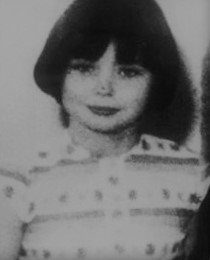
The morning after Mary Bell strangled four-year-old Martin Brown to death, she broke into a nursery school and left four handwritten notes claiming responsibility for the killing. Police dismissed them as a prank. The author was ten years old. What followed over the summer of 1968 in Scotswood, Newcastle, was one of the most disturbing chapters in British criminal history: a child killer operating in plain sight, in broad daylight, returning to mutilate a victim's body with broken scissors, and sitting with the grieving families of her victims as though nothing had happened. Mary Flora Bell was not a monster who emerged from nowhere. She was a product of almost incomprehensible abuse, a girl whose own mother allegedly tried to poison her with sleeping pills and drop her from a first-floor window. That context explains nothing and excuses nothing, but it haunts everything. She would become Britain's youngest female killer on record, a title she still holds. This is her story.
Convicted: Rita Gluzman (born Rita Shapiro)
On Easter Sunday morning, April 7, 1996, an East Rutherford police officer spotted a man dropping garbage bags into the Passaic River behind a small New Jersey electronics company. When Officer Richard Freeman approached, he found blood on the man's hands and clothing. Inside those bags were sixty-five pieces of what had once been Yakov Gluzman, a prominent cancer researcher, dismembered through the night with hacksaws and a scalpel after his wife and her cousin attacked him with axes in his own apartment. The woman who orchestrated it had once moved George H.W. Bush, UN Secretary-General U Thant, and Canadian Prime Minister Pierre Trudeau to action on her behalf. She had survived rape at age ten, near-starvation at eleven, and the entire machinery of Soviet bureaucracy. She had gone on an 18-day hunger strike to free her husband from the USSR. And then, more than two decades later, she waited in his darkened apartment holding an axe. Rita Gluzman became the first woman ever charged and convicted under the Violence Against Women Act, a law built to protect women from men like the one prosecutors said she had become. Tabloids called her the Jewish Lizzie Borden. She still calls herself innocent.
Convicted: Virginia Gail Larzelere
At approximately 1:00 p.m. on March 8, 1991, a masked gunman walked into a quiet dental office in Edgewater, Florida, and fired a sawed-off shotgun through a wooden door. Behind that door, cowering against the wood, was Dr. Norman Larzelere. His last audible words were a name: his son's. Witnesses heard him call out 'Jason, is that you?' before the blast tore through his chest. On the other side of the door stood his wife, Virginia, who promptly called 911 and performed CPR on the man she had allegedly just arranged to have killed. She had spent the preceding months taking out seven life insurance policies on Norman totaling $2.1 million, and prosecutors alleged she had forged his signature on every one of them. What followed was one of Florida's most tangled criminal sagas: a death sentence, fifteen years on death row alongside Aileen Wuornos, a defense attorney later convicted of sixteen felonies who was allegedly consuming a liter of vodka and methamphetamine daily during her trial, and a son who was acquitted of the very conspiracy that sent his mother to the electric chair. Virginia Larzelere has maintained her innocence for more than three decades. The legal fight is still not over.
Convicted: Kristin Margrethe Rossum
When paramedics arrived at the San Diego apartment on November 6, 2000, they found Gregory de Villers lying in bed, unresponsive, his body blanketed in red rose petals, a wedding photograph pressed against his chest. His wife, Kristin, stood nearby in tears, telling them he had taken his own life. It looked like a scene from a movie. It was, in fact, staged to look like one. Kristin Rossum, 24 years old and a trained toxicologist with access to the county medical examiner's controlled substance supply, had poisoned her husband with seven times the lethal dose of fentanyl — then arranged his corpse in a tableau lifted from her favorite film, American Beauty. She was sleeping with her married boss, secretly using methamphetamine she stole from her own workplace, and her husband had just threatened to expose everything. The rose petals were the detail that haunted investigators, the detail that made the case famous, and the detail that ultimately helped convict her. This is the story of how a summa cum laude graduate with a drug habit, a secret affair, and a dangerous job became one of California's most notorious poisoners.