Myra Hindley

Case Summary
On the morning of October 7, 1965, eighteen-year-old David Smith walked to a public telephone box in Hattersley, Greater Manchester, hands shaking, and dialed 999. The night before, he had watched his brother-in-law bludgeon a seventeen-year-old to death with an axe. The brother-in-law was Ian Brady. The woman who had invited him to witness it was Myra Hindley.
What that phone call exposed would redefine evil in the British imagination for generations. Between 1963 and 1965, Brady and Hindley abducted five children and teenagers from the streets of Greater Manchester, sexually assaulted them, and buried four in shallow graves on the desolate expanse of Saddleworth Moor. The fifth was killed in Hindley's living room.
The evidence police found inside that house was staggering in its horror: photographs of a ten-year-old girl bound and gagged in Hindley's bedroom, and sixteen minutes of audio tape capturing that same child's final, agonized moments. A luggage ticket for the suitcase containing these materials was found hidden inside the spine of Hindley's Catholic prayer book.
Myra Hindley would spend thirty-six years in prison, applying repeatedly for parole, insisting she had changed. The British public never believed her. One of her victims, Keith Bennett, has never been found. His mother died in 2012, still waiting.
This is the story of how an ordinary girl from Gorton became the most reviled woman in British criminal history.
July 23, 1942, Crumpsall, Manchester, England, United Kingdom(Age: 60)
November 15, 2002, West Suffolk Hospital, Bury St Edmunds, Suffolk, England (Bronchial pneumonia caused by hypertension and coronary heart disease (confirmed by Home Office pathologist Dr. Michael Heath at inquest))
Related Cases

Convicted
Connection tags:
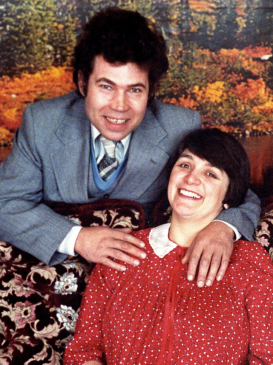
Convicted
Connection tags:
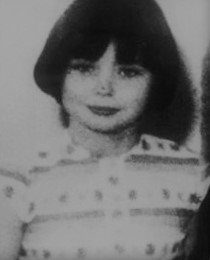
Convicted
Connection tags:

Convicted
Connection tags:
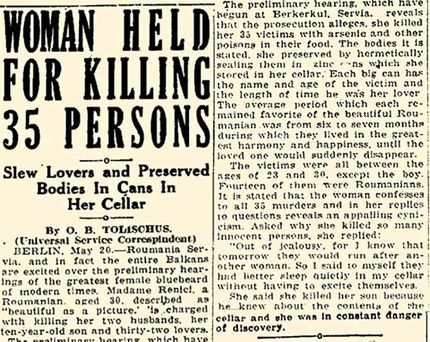
Convicted
Connection tags:

Convicted
Connection tags:
Case Details
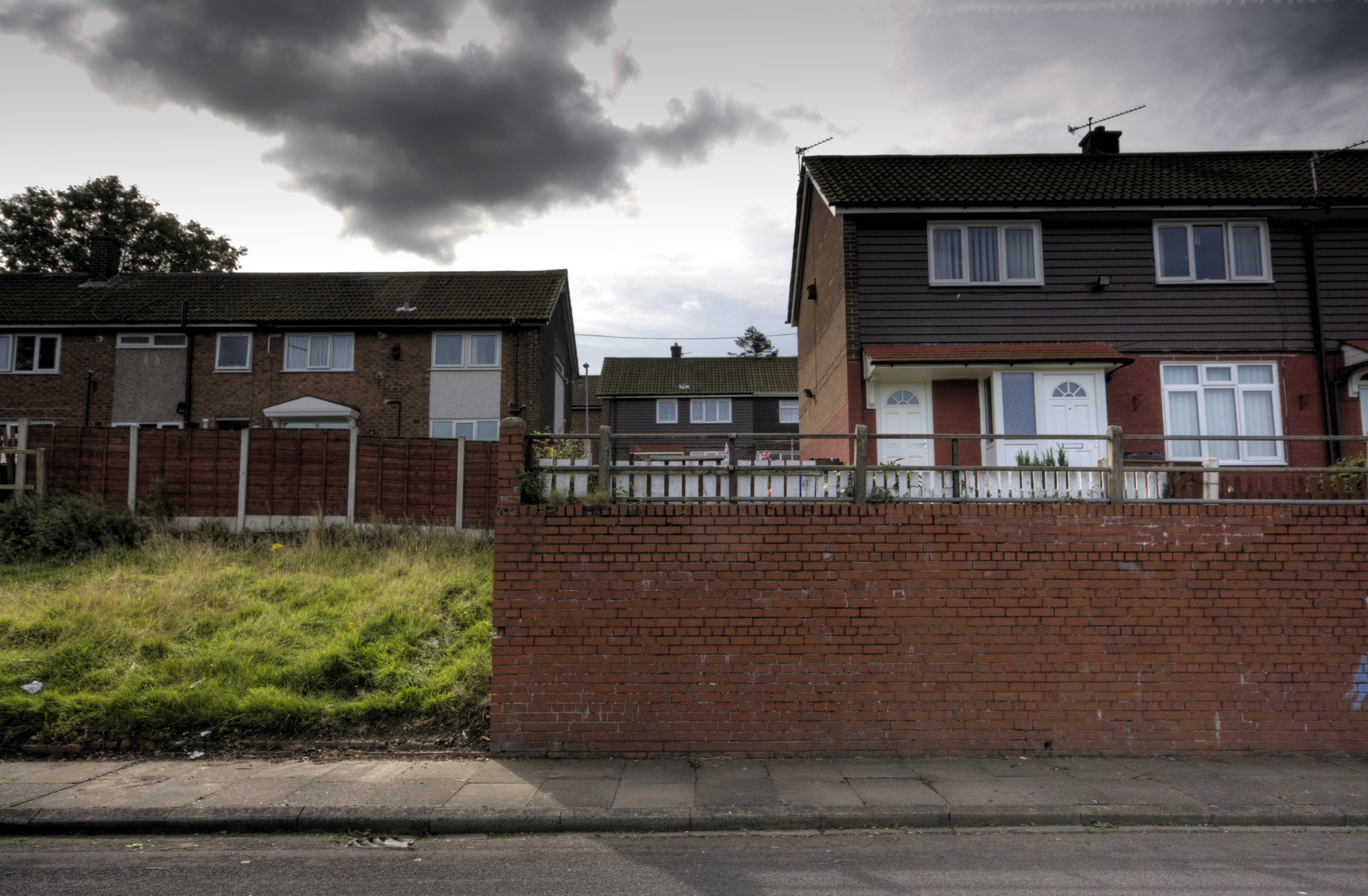
The morning of October 7, 1965 was cold and grey over Hattersley, a housing estate perched on the eastern fringe of Greater Manchester. David Smith, eighteen years old and visibly shaking, walked to a public telephone box and dialed 999. He told the officer on duty that a body was lying at 16 Wardle Brook Avenue. He had watched the man who lived there kill someone with an axe the previous night. That man was his brother-in-law, Ian Brady. The woman of the house was his sister-in-law, Myra Hindley.
Police arrived within the hour. They found Edward Evans, seventeen years old, wrapped in polythene and bound with electrical flex. He had been struck repeatedly with an axe. Brady greeted officers at the door with near-perfect composure. Hindley offered little. Both were taken into custody, Brady immediately, Hindley four days later, after detectives began methodically working through the contents of that terraced house and what it connected to.
What they found would redefine evil in the British imagination for decades to come.
Myra Hindley was born on July 23, 1942, at Crumpsall Hospital, Manchester, the first child of Bob and Nellie Hindley. The family lived in Gorton, a tight-knit, sooty working-class district of row houses and corner pubs. Her father, Bob, had served with the Parachute Regiment during the Second World War and returned from it psychologically damaged and prone to violence. He drank heavily. He encouraged his daughter to fight back when provoked, to be hard, to never show weakness. It was, in its way, an education.
When Myra was five, her sister Maureen was born, and the cramped family circumstances led her parents to send her to live with her maternal grandmother on Bannock Street. She stayed permanently. She adored the old woman, later saying that whatever good existed in her came from her Gran. The arrangement also removed her from the worst of her father's rages, though it couldn't insulate her entirely from Gorton's rough edges.
She attended Ryder Brow Secondary Modern, where teachers recognized above-average intelligence alongside poor attendance. Neighbors remembered her as sociable, kind to young children, someone who could be trusted. Then, in 1957, a close friend named Michael Higgins drowned, and the fifteen-year-old Hindley was undone by it. She blamed herself for not being there. She converted to Roman Catholicism, carried a prayer book, attended Mass. The faith would follow her for the rest of her life in ways that grew increasingly and grotesquely ironic.
In January 1961, she took a job as a typist at Millwards Merchandise, a chemical distribution firm in Gorton. On one of her first days, she noticed a stock clerk named Ian Brady and wrote in her diary that she hoped he would ask her out. He didn't. For nearly a year, he barely acknowledged her existence, which appears to have sharpened her fixation rather than diminished it.
Brady was then twenty-three, Glaswegian by birth, with a history of juvenile theft and a consuming private obsession with Nazi philosophy, Dostoevsky, and the Marquis de Sade. He was cold, deliberate, intellectually vain. When he finally turned his attention toward Hindley, the effect on her was total.
She bleached her hair platinum blonde and began wearing heavy makeup and short skirts. She read the books he placed in front of her: Hitler's Mein Kampf, the writings of de Sade, texts on domination and pain. She absorbed his contempt for ordinary people, his conviction that certain individuals existed beyond conventional morality, his view that the strong owed the weak nothing. The transformation was not subtle. People who had known her before noticed. Most assumed it was simply what infatuation did to a young woman. They were wrong about what this was.
The couple became romantically involved in late 1961. Within a year, they were photographing each other on Saddleworth Moor, a high, treeless, windswept expanse of peat bog and heather twelve miles east of Manchester. The images look almost like holiday snapshots: Hindley smiling into the wind, Brady squinting in a leather jacket. Hidden in the same collection were other photographs. Images of a young girl, bound, gagged, posed.
On July 12, 1963, Pauline Reade, sixteen years old, left her home in Gorton for a dance at the British Railways Club. She never arrived. Hindley had approached her in a van and asked her to help search for a lost glove on the moor. Brady followed on his motorbike. On Saddleworth Moor that evening, he sexually assaulted Pauline and cut her throat. They buried her in a shallow grave in the peat, and drove home.
What followed had a terrible, patient rhythm. John Kilbride, twelve, was taken from a market in Ashton-under-Lyne in November 1963. Keith Bennett, also twelve, disappeared while walking to his grandmother's house in Longsight in June 1964. Lesley Ann Downey, ten years old, was taken from a fairground in Ancoats on Boxing Day 1964. Each time, Hindley provided the vehicle, the approach, the trusted female face that made children feel it was safe to accept help.
What happened to Lesley Ann Downey was recorded. Brady brought a reel-to-reel tape machine. The sixteen-minute recording captured the child crying, begging, praying, being directed and mocked. One voice was Brady's. The other was Hindley's. Photographs taken that day showed Lesley Ann bound and gagged in Hindley's bedroom.
The evidence trail that broke the case open ran through Manchester Central Railway Station, where detectives located two suitcases Brady had stored in the left-luggage office. Inside: the photographs, the tape, other materials. The luggage ticket for those suitcases had been concealed inside the spine of Hindley's Catholic prayer book.
The trial opened at Chester Assizes on April 19, 1966. When the tape recording of Lesley Ann Downey was played in court, the room fell into a silence that journalists present struggled to describe adequately. Jurors wept. Members of the public gallery pressed handkerchiefs to their mouths. Brady and Hindley sat without visible reaction.
On May 6, 1966, after two hours of deliberation, the jury convicted Brady of all three murders for which he was charged: those of John Kilbride, Lesley Ann Downey, and Edward Evans. Hindley was convicted of the murders of Downey and Evans, and found guilty as an accessory after the fact in the murder of Kilbride. Justice Fenton Atkinson, sentencing both to life imprisonment, described them as "two sadistic killers of the utmost depravity." The death penalty had been abolished six months earlier.
Hindley received two concurrent life sentences plus an additional seven years for harboring Brady after the Kilbride murder. In 1985, the Home Office set her minimum tariff at thirty years. In 1990, Home Secretary David Waddington escalated it to a whole-life tariff. She would make parole applications anyway, repeatedly, for three and a half decades.
Inside prison, she remade herself with considerable energy. She converted more seriously to Catholicism. She earned an Open University degree in humanities. She took up badminton, pottery, tapestry. Prison reports noted exceptional intelligence alongside a pronounced arrogance. The peer Lord Longford became her most persistent public champion, repeatedly arguing for her release and being repeatedly mocked for it. The British public, who had heard her voice on the tape, remained implacably opposed.
In 1970, Hindley severed ties with Brady. She fell in love with a prison officer named Patricia Cairns, who had previously been a nun; Cairns was convicted in 1974 for her role in a plot to help Hindley escape. Later, at HMP Durham, Hindley developed a close relationship with Rosemary West, convicted in 1995 for her own series of murders. Some reports described the relationship as romantic, though neither woman confirmed this publicly.
In 1985, Brady confessed to journalist Fred Harrison that he had killed Pauline Reade and Keith Bennett, the two victims for whom neither had originally been charged. Hindley initially denied it. Two years later, in 1987, she released a full public confession admitting her role in all five murders. She then accompanied detectives to Saddleworth Moor and led them to Pauline Reade's burial site. The young woman's remains were recovered twenty-four years after she had walked out of Gorton looking for a dance.
Keith Bennett's body was not found. It has not been found since. Searches of the moor were conducted in 1987 and again in subsequent years. Hindley maintained she could not recall the precise location. Whether she truly couldn't or wouldn't is a question that died with her. Keith's mother, Winnie Johnson, spent the remaining years of her life writing letters to Hindley, to Brady, to police commissioners, to anyone who might help her bring her son home. She died in August 2012, still waiting. Greater Manchester Police subsequently announced they had no active plans to resume the search.
Hindley was diagnosed with angina in 1999 and later suffered a brain aneurysm. In November 2002, she contracted bronchial pneumonia at HMP Highpoint in Suffolk. She was transferred to West Suffolk Hospital in Bury St Edmunds and died there on November 15, 2002, aged sixty, having served thirty-six years. Home Office pathologist Dr. Michael Heath confirmed the cause at the subsequent inquest: bronchial pneumonia brought on by hypertension and coronary heart disease. The jury returned a unanimous verdict of natural causes.
Fewer than ten people attended her funeral at Cambridge Crematorium. Twenty local undertakers had initially refused to handle her body. Her ashes were scattered at Stalybridge Country Park, less than ten miles from the moor where four of her victims had lain in the peat.
Ten days after her death, on November 25, 2002, the Law Lords ruled that judges, not politicians, should set minimum sentences for convicted murderers. The Home Secretary's power to set tariffs was abolished. She had outlasted the legal architecture that held her, if only barely.
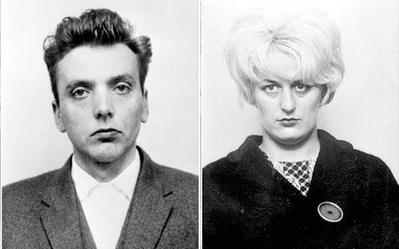
Her 1965 police mugshot, taken at Hyde Police Station shortly after her arrest, remains one of the most recognized faces in British criminal history. In 1997, artist Marcus Harvey exhibited a large-scale recreation of it at the Royal Academy's Sensation show, the image rendered in children's handprints. Four Royal Academicians resigned in protest. Visitors threw ink and eggs at the canvas. It was cleaned and rehung. Author Helen Birch wrote that Hindley's image had become "synonymous with the idea of feminine evil." The Smiths, who grew from the same Manchester streets as their subject matter, addressed the case in their 1984 song "Suffer Little Children," written from the perspective of the children buried on the moor.
What the Moors Murders case forced upon British society, and continues to force, is a confrontation with a specific and deeply uncomfortable problem. The problem is not Ian Brady, whose violence and pathology fit recognizable patterns of male predatory evil. The problem is Hindley, who held children still, who offered a trusted face to lure them close, whose voice is the second one on the tape.
She spent her final decades claiming transformation and redemption while one family searched a moor for bones that have still not been found. Keith Bennett would have been seventy-two years old in 2024. His mother never stopped looking for him. The moor has kept its secret for sixty years, and there is no reason yet to think it will give it up.
Timeline
Birth and Early Life in Gorton
Myra Hindley was born at Crumpsall Hospital, Manchester, the first child of Bob and Nellie Hindley. She was raised in the working-class district of Gorton and at age five was sent to live with her maternal grandmother after her sister Maureen was born — a bond she later described as the source of any goodness in her.
Her upbringing, including an alcoholic and violent father and early displacement from her family home, shaped the psychological vulnerabilities that Brady would later exploit.
Meeting Ian Brady at Millwards
Hindley joined Millwards Merchandise in Gorton as a typist in January 1961 and immediately became infatuated with stock clerk Ian Brady, who ignored her for nearly a year. By late 1961 the pair had become romantically involved, and under Brady's influence Hindley bleached her hair, adopted sado-masochistic ideology, and immersed herself in Nazi literature.
This relationship was the critical catalyst for the Moors Murders; Brady systematically radicalised Hindley, transforming her from an ordinary young woman into a willing accomplice in serial murder.
Murder of Pauline Reade — First Known Killing
Hindley and Brady abducted 16-year-old Pauline Reade on her way to a dance in Gorton, with Hindley luring her into a van under the pretence of searching for a lost glove on Saddleworth Moor. Reade was sexually assaulted and murdered; her body was buried in a shallow moorland grave and would not be recovered until 1987.
This was the first of five murders and established the pattern by which Hindley used her identity as a trusted woman to lure victims — a role that made the crimes uniquely shocking to the public.
Murder of Lesley Ann Downey and Creation of Audio Tape
Ten-year-old Lesley Ann Downey was abducted from a Ancoats fairground on Boxing Day 1964 and taken to Hindley's home at 16 Wardle Brook Avenue, Hattersley, where she was sexually assaulted, photographed bound and gagged, and murdered. Brady and Hindley recorded a 16-minute audio tape of Downey's final moments, which would become the most devastating piece of evidence presented at trial.
The tape recording, played in open court to a visibly distressed jury, was the single most damning piece of evidence against both defendants and permanently sealed public hatred of Hindley.
Edward Evans Murder Witnessed by David Smith
Brady bludgeoned 17-year-old Edward Evans to death with an axe at Wardle Brook Avenue in front of Hindley's brother-in-law David Smith, who had been deliberately invited by Brady to witness a killing. Smith was so traumatised that he reported the crime to police the following morning, triggering the investigation that unravelled the entire case.
This was the pivotal miscalculation that ended the killing spree; Brady's decision to involve Smith provided police with an eyewitness and led directly to both arrests.
Suitcases Discovered at Manchester Central Station
Police found suitcases Brady had left at Manchester Central Railway Station containing photographs of Lesley Ann Downey bound and gagged in Hindley's bedroom, along with the audio tape recordings of her torture and murder. The luggage ticket for the suitcases was discovered hidden in the spine of Hindley's Roman Catholic communion prayer book.
This discovery transformed the investigation from a single murder inquiry into a serial murder case and provided the prosecution with irrefutable photographic and audio evidence of Hindley's direct participation.
Trial Opens at Chester Assizes
The trial of Ian Brady and Myra Hindley opened at Chester Assizes on 19 April 1966, presided over by Justice Fenton Atkinson. The prosecution presented the photographs and played the audio tape of Lesley Ann Downey's final moments in open court, causing visible distress among jurors and spectators and generating enormous national press coverage.
The trial was one of the most sensational in British legal history and permanently altered public understanding of female criminality, as Hindley's role as an active perpetrator rather than a passive follower was laid bare.
Conviction and Life Sentences Imposed
After two hours of deliberation on 6 May 1966, the jury found Brady guilty of all three charged murders and Hindley guilty of murdering Lesley Ann Downey and Edward Evans, and as an accessory after the fact to the murder of John Kilbride. Justice Fenton Atkinson sentenced both to life imprisonment, describing them as 'two sadistic killers of the utmost depravity'; the death penalty had been abolished just six months earlier.
The convictions established Hindley as one of Britain's most reviled criminals; her minimum tariff was later set at 30 years in 1985 and escalated to a whole-life tariff in 1990, ensuring she would never be released.
Full Public Confession and Recovery of Pauline Reade
In 1987, following Brady's 1985 confession to journalist Fred Harrison, Hindley released a full public confession admitting her role in all five murders, having previously denied involvement in the Reade and Bennett killings. She subsequently led police to the moorland grave of Pauline Reade on Saddleworth Moor, whose remains were recovered on 1 July 1987; the body of Keith Bennett has never been found.
The confession ended two decades of denial but also destroyed Hindley's repeated claims of rehabilitation as grounds for parole; Keith Bennett's mother Winnie Johnson campaigned for his remains until her own death in 2012.
Death at West Suffolk Hospital
Hindley, who had been diagnosed with angina in 1999 and suffered a brain aneurysm, fell ill with bronchial pneumonia at HMP Highpoint in Suffolk and was transferred to West Suffolk Hospital, Bury St Edmunds, where she died on 15 November 2002, aged 60, having served 36 years. An inquest returned a unanimous verdict of death by natural causes; twenty local undertakers initially refused to handle her body, and her funeral at Cambridge Crematorium was attended by fewer than ten people.
Her death in custody without parole prompted the Law Lords to rule on 25 November 2002 that judges — not politicians — should set minimum sentences, stripping the Home Secretary of the tariff-setting power her case had made so politically charged.
Crime Location
Photos
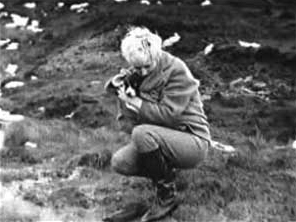
Myra at John Kilbride's grave
Moors Murderers
16 wardle brook avenue

Ashworth Hospital - geograph.org.uk - 90341

Flowerpowerportfolio

HoeGrain

Hollin brown knoll a635

Moors murders map
Sources
- Moors Murders – Wikipedia
- Myra Hindley – Wikipedia
- Beyond Belief
- Myra Hindley: Inside the Mind of a Murderess
- See No Evil: The Moors Murders
- Moors Murders: The Trial
- Brady and Hindley: Genesis of the Moors Murders
- Hindley mugshot – Wikimedia Commons
- R v Hindley [1966] Chester Assizes
- The Moors Murders (Murderpedia entry)
Frequently Asked Questions
Table of Contents
Case Summary
On the morning of October 7, 1965, eighteen-year-old David Smith walked to a public telephone box in Hattersley, Greater Manchester, hands shaking, and dialed 999. The night before, he had watched his brother-in-law bludgeon a seventeen-year-old to death with an axe. The brother-in-law was Ian Brady. The woman who had invited him to witness it was Myra Hindley.
What that phone call exposed would redefine evil in the British imagination for generations. Between 1963 and 1965, Brady and Hindley abducted five children and teenagers from the streets of Greater Manchester, sexually assaulted them, and buried four in shallow graves on the desolate expanse of Saddleworth Moor. The fifth was killed in Hindley's living room.
The evidence police found inside that house was staggering in its horror: photographs of a ten-year-old girl bound and gagged in Hindley's bedroom, and sixteen minutes of audio tape capturing that same child's final, agonized moments. A luggage ticket for the suitcase containing these materials was found hidden inside the spine of Hindley's Catholic prayer book.
Myra Hindley would spend thirty-six years in prison, applying repeatedly for parole, insisting she had changed. The British public never believed her. One of her victims, Keith Bennett, has never been found. His mother died in 2012, still waiting.
This is the story of how an ordinary girl from Gorton became the most reviled woman in British criminal history.
July 23, 1942, Crumpsall, Manchester, England, United Kingdom(Age: 60)
November 15, 2002, West Suffolk Hospital, Bury St Edmunds, Suffolk, England (Bronchial pneumonia caused by hypertension and coronary heart disease (confirmed by Home Office pathologist Dr. Michael Heath at inquest))
Case Details
The morning of October 7, 1965 was cold and grey over Hattersley, a housing estate perched on the eastern fringe of Greater Manchester. David Smith, eighteen years old and visibly shaking, walked to a public telephone box and dialed 999. He told the officer on duty that a body was lying at 16 Wardle Brook Avenue. He had watched the man who lived there kill someone with an axe the previous night. That man was his brother-in-law, Ian Brady. The woman of the house was his sister-in-law, Myra Hindley.
Police arrived within the hour. They found Edward Evans, seventeen years old, wrapped in polythene and bound with electrical flex. He had been struck repeatedly with an axe. Brady greeted officers at the door with near-perfect composure. Hindley offered little. Both were taken into custody, Brady immediately, Hindley four days later, after detectives began methodically working through the contents of that terraced house and what it connected to.
What they found would redefine evil in the British imagination for decades to come.
Myra Hindley was born on July 23, 1942, at Crumpsall Hospital, Manchester, the first child of Bob and Nellie Hindley. The family lived in Gorton, a tight-knit, sooty working-class district of row houses and corner pubs. Her father, Bob, had served with the Parachute Regiment during the Second World War and returned from it psychologically damaged and prone to violence. He drank heavily. He encouraged his daughter to fight back when provoked, to be hard, to never show weakness. It was, in its way, an education.
When Myra was five, her sister Maureen was born, and the cramped family circumstances led her parents to send her to live with her maternal grandmother on Bannock Street. She stayed permanently. She adored the old woman, later saying that whatever good existed in her came from her Gran. The arrangement also removed her from the worst of her father's rages, though it couldn't insulate her entirely from Gorton's rough edges.
She attended Ryder Brow Secondary Modern, where teachers recognized above-average intelligence alongside poor attendance. Neighbors remembered her as sociable, kind to young children, someone who could be trusted. Then, in 1957, a close friend named Michael Higgins drowned, and the fifteen-year-old Hindley was undone by it. She blamed herself for not being there. She converted to Roman Catholicism, carried a prayer book, attended Mass. The faith would follow her for the rest of her life in ways that grew increasingly and grotesquely ironic.
In January 1961, she took a job as a typist at Millwards Merchandise, a chemical distribution firm in Gorton. On one of her first days, she noticed a stock clerk named Ian Brady and wrote in her diary that she hoped he would ask her out. He didn't. For nearly a year, he barely acknowledged her existence, which appears to have sharpened her fixation rather than diminished it.
Brady was then twenty-three, Glaswegian by birth, with a history of juvenile theft and a consuming private obsession with Nazi philosophy, Dostoevsky, and the Marquis de Sade. He was cold, deliberate, intellectually vain. When he finally turned his attention toward Hindley, the effect on her was total.
She bleached her hair platinum blonde and began wearing heavy makeup and short skirts. She read the books he placed in front of her: Hitler's Mein Kampf, the writings of de Sade, texts on domination and pain. She absorbed his contempt for ordinary people, his conviction that certain individuals existed beyond conventional morality, his view that the strong owed the weak nothing. The transformation was not subtle. People who had known her before noticed. Most assumed it was simply what infatuation did to a young woman. They were wrong about what this was.
The couple became romantically involved in late 1961. Within a year, they were photographing each other on Saddleworth Moor, a high, treeless, windswept expanse of peat bog and heather twelve miles east of Manchester. The images look almost like holiday snapshots: Hindley smiling into the wind, Brady squinting in a leather jacket. Hidden in the same collection were other photographs. Images of a young girl, bound, gagged, posed.
On July 12, 1963, Pauline Reade, sixteen years old, left her home in Gorton for a dance at the British Railways Club. She never arrived. Hindley had approached her in a van and asked her to help search for a lost glove on the moor. Brady followed on his motorbike. On Saddleworth Moor that evening, he sexually assaulted Pauline and cut her throat. They buried her in a shallow grave in the peat, and drove home.
What followed had a terrible, patient rhythm. John Kilbride, twelve, was taken from a market in Ashton-under-Lyne in November 1963. Keith Bennett, also twelve, disappeared while walking to his grandmother's house in Longsight in June 1964. Lesley Ann Downey, ten years old, was taken from a fairground in Ancoats on Boxing Day 1964. Each time, Hindley provided the vehicle, the approach, the trusted female face that made children feel it was safe to accept help.
What happened to Lesley Ann Downey was recorded. Brady brought a reel-to-reel tape machine. The sixteen-minute recording captured the child crying, begging, praying, being directed and mocked. One voice was Brady's. The other was Hindley's. Photographs taken that day showed Lesley Ann bound and gagged in Hindley's bedroom.
The evidence trail that broke the case open ran through Manchester Central Railway Station, where detectives located two suitcases Brady had stored in the left-luggage office. Inside: the photographs, the tape, other materials. The luggage ticket for those suitcases had been concealed inside the spine of Hindley's Catholic prayer book.
The trial opened at Chester Assizes on April 19, 1966. When the tape recording of Lesley Ann Downey was played in court, the room fell into a silence that journalists present struggled to describe adequately. Jurors wept. Members of the public gallery pressed handkerchiefs to their mouths. Brady and Hindley sat without visible reaction.
On May 6, 1966, after two hours of deliberation, the jury convicted Brady of all three murders for which he was charged: those of John Kilbride, Lesley Ann Downey, and Edward Evans. Hindley was convicted of the murders of Downey and Evans, and found guilty as an accessory after the fact in the murder of Kilbride. Justice Fenton Atkinson, sentencing both to life imprisonment, described them as "two sadistic killers of the utmost depravity." The death penalty had been abolished six months earlier.
Hindley received two concurrent life sentences plus an additional seven years for harboring Brady after the Kilbride murder. In 1985, the Home Office set her minimum tariff at thirty years. In 1990, Home Secretary David Waddington escalated it to a whole-life tariff. She would make parole applications anyway, repeatedly, for three and a half decades.
Inside prison, she remade herself with considerable energy. She converted more seriously to Catholicism. She earned an Open University degree in humanities. She took up badminton, pottery, tapestry. Prison reports noted exceptional intelligence alongside a pronounced arrogance. The peer Lord Longford became her most persistent public champion, repeatedly arguing for her release and being repeatedly mocked for it. The British public, who had heard her voice on the tape, remained implacably opposed.
In 1970, Hindley severed ties with Brady. She fell in love with a prison officer named Patricia Cairns, who had previously been a nun; Cairns was convicted in 1974 for her role in a plot to help Hindley escape. Later, at HMP Durham, Hindley developed a close relationship with Rosemary West, convicted in 1995 for her own series of murders. Some reports described the relationship as romantic, though neither woman confirmed this publicly.
In 1985, Brady confessed to journalist Fred Harrison that he had killed Pauline Reade and Keith Bennett, the two victims for whom neither had originally been charged. Hindley initially denied it. Two years later, in 1987, she released a full public confession admitting her role in all five murders. She then accompanied detectives to Saddleworth Moor and led them to Pauline Reade's burial site. The young woman's remains were recovered twenty-four years after she had walked out of Gorton looking for a dance.
Keith Bennett's body was not found. It has not been found since. Searches of the moor were conducted in 1987 and again in subsequent years. Hindley maintained she could not recall the precise location. Whether she truly couldn't or wouldn't is a question that died with her. Keith's mother, Winnie Johnson, spent the remaining years of her life writing letters to Hindley, to Brady, to police commissioners, to anyone who might help her bring her son home. She died in August 2012, still waiting. Greater Manchester Police subsequently announced they had no active plans to resume the search.
Hindley was diagnosed with angina in 1999 and later suffered a brain aneurysm. In November 2002, she contracted bronchial pneumonia at HMP Highpoint in Suffolk. She was transferred to West Suffolk Hospital in Bury St Edmunds and died there on November 15, 2002, aged sixty, having served thirty-six years. Home Office pathologist Dr. Michael Heath confirmed the cause at the subsequent inquest: bronchial pneumonia brought on by hypertension and coronary heart disease. The jury returned a unanimous verdict of natural causes.
Fewer than ten people attended her funeral at Cambridge Crematorium. Twenty local undertakers had initially refused to handle her body. Her ashes were scattered at Stalybridge Country Park, less than ten miles from the moor where four of her victims had lain in the peat.
Ten days after her death, on November 25, 2002, the Law Lords ruled that judges, not politicians, should set minimum sentences for convicted murderers. The Home Secretary's power to set tariffs was abolished. She had outlasted the legal architecture that held her, if only barely.
Her 1965 police mugshot, taken at Hyde Police Station shortly after her arrest, remains one of the most recognized faces in British criminal history. In 1997, artist Marcus Harvey exhibited a large-scale recreation of it at the Royal Academy's Sensation show, the image rendered in children's handprints. Four Royal Academicians resigned in protest. Visitors threw ink and eggs at the canvas. It was cleaned and rehung. Author Helen Birch wrote that Hindley's image had become "synonymous with the idea of feminine evil." The Smiths, who grew from the same Manchester streets as their subject matter, addressed the case in their 1984 song "Suffer Little Children," written from the perspective of the children buried on the moor.
What the Moors Murders case forced upon British society, and continues to force, is a confrontation with a specific and deeply uncomfortable problem. The problem is not Ian Brady, whose violence and pathology fit recognizable patterns of male predatory evil. The problem is Hindley, who held children still, who offered a trusted face to lure them close, whose voice is the second one on the tape.
She spent her final decades claiming transformation and redemption while one family searched a moor for bones that have still not been found. Keith Bennett would have been seventy-two years old in 2024. His mother never stopped looking for him. The moor has kept its secret for sixty years, and there is no reason yet to think it will give it up.
Timeline
Birth and Early Life in Gorton
Myra Hindley was born at Crumpsall Hospital, Manchester, the first child of Bob and Nellie Hindley. She was raised in the working-class district of Gorton and at age five was sent to live with her maternal grandmother after her sister Maureen was born — a bond she later described as the source of any goodness in her.
Her upbringing, including an alcoholic and violent father and early displacement from her family home, shaped the psychological vulnerabilities that Brady would later exploit.
Meeting Ian Brady at Millwards
Hindley joined Millwards Merchandise in Gorton as a typist in January 1961 and immediately became infatuated with stock clerk Ian Brady, who ignored her for nearly a year. By late 1961 the pair had become romantically involved, and under Brady's influence Hindley bleached her hair, adopted sado-masochistic ideology, and immersed herself in Nazi literature.
This relationship was the critical catalyst for the Moors Murders; Brady systematically radicalised Hindley, transforming her from an ordinary young woman into a willing accomplice in serial murder.
Murder of Pauline Reade — First Known Killing
Hindley and Brady abducted 16-year-old Pauline Reade on her way to a dance in Gorton, with Hindley luring her into a van under the pretence of searching for a lost glove on Saddleworth Moor. Reade was sexually assaulted and murdered; her body was buried in a shallow moorland grave and would not be recovered until 1987.
This was the first of five murders and established the pattern by which Hindley used her identity as a trusted woman to lure victims — a role that made the crimes uniquely shocking to the public.
Murder of Lesley Ann Downey and Creation of Audio Tape
Ten-year-old Lesley Ann Downey was abducted from a Ancoats fairground on Boxing Day 1964 and taken to Hindley's home at 16 Wardle Brook Avenue, Hattersley, where she was sexually assaulted, photographed bound and gagged, and murdered. Brady and Hindley recorded a 16-minute audio tape of Downey's final moments, which would become the most devastating piece of evidence presented at trial.
The tape recording, played in open court to a visibly distressed jury, was the single most damning piece of evidence against both defendants and permanently sealed public hatred of Hindley.
Edward Evans Murder Witnessed by David Smith
Brady bludgeoned 17-year-old Edward Evans to death with an axe at Wardle Brook Avenue in front of Hindley's brother-in-law David Smith, who had been deliberately invited by Brady to witness a killing. Smith was so traumatised that he reported the crime to police the following morning, triggering the investigation that unravelled the entire case.
This was the pivotal miscalculation that ended the killing spree; Brady's decision to involve Smith provided police with an eyewitness and led directly to both arrests.
Suitcases Discovered at Manchester Central Station
Police found suitcases Brady had left at Manchester Central Railway Station containing photographs of Lesley Ann Downey bound and gagged in Hindley's bedroom, along with the audio tape recordings of her torture and murder. The luggage ticket for the suitcases was discovered hidden in the spine of Hindley's Roman Catholic communion prayer book.
This discovery transformed the investigation from a single murder inquiry into a serial murder case and provided the prosecution with irrefutable photographic and audio evidence of Hindley's direct participation.
Trial Opens at Chester Assizes
The trial of Ian Brady and Myra Hindley opened at Chester Assizes on 19 April 1966, presided over by Justice Fenton Atkinson. The prosecution presented the photographs and played the audio tape of Lesley Ann Downey's final moments in open court, causing visible distress among jurors and spectators and generating enormous national press coverage.
The trial was one of the most sensational in British legal history and permanently altered public understanding of female criminality, as Hindley's role as an active perpetrator rather than a passive follower was laid bare.
Conviction and Life Sentences Imposed
After two hours of deliberation on 6 May 1966, the jury found Brady guilty of all three charged murders and Hindley guilty of murdering Lesley Ann Downey and Edward Evans, and as an accessory after the fact to the murder of John Kilbride. Justice Fenton Atkinson sentenced both to life imprisonment, describing them as 'two sadistic killers of the utmost depravity'; the death penalty had been abolished just six months earlier.
The convictions established Hindley as one of Britain's most reviled criminals; her minimum tariff was later set at 30 years in 1985 and escalated to a whole-life tariff in 1990, ensuring she would never be released.
Full Public Confession and Recovery of Pauline Reade
In 1987, following Brady's 1985 confession to journalist Fred Harrison, Hindley released a full public confession admitting her role in all five murders, having previously denied involvement in the Reade and Bennett killings. She subsequently led police to the moorland grave of Pauline Reade on Saddleworth Moor, whose remains were recovered on 1 July 1987; the body of Keith Bennett has never been found.
The confession ended two decades of denial but also destroyed Hindley's repeated claims of rehabilitation as grounds for parole; Keith Bennett's mother Winnie Johnson campaigned for his remains until her own death in 2012.
Death at West Suffolk Hospital
Hindley, who had been diagnosed with angina in 1999 and suffered a brain aneurysm, fell ill with bronchial pneumonia at HMP Highpoint in Suffolk and was transferred to West Suffolk Hospital, Bury St Edmunds, where she died on 15 November 2002, aged 60, having served 36 years. An inquest returned a unanimous verdict of death by natural causes; twenty local undertakers initially refused to handle her body, and her funeral at Cambridge Crematorium was attended by fewer than ten people.
Her death in custody without parole prompted the Law Lords to rule on 25 November 2002 that judges — not politicians — should set minimum sentences, stripping the Home Secretary of the tariff-setting power her case had made so politically charged.
Crime Location
Photos
Myra at John Kilbride's grave
Moors Murderers
16 wardle brook avenue
Ashworth Hospital - geograph.org.uk - 90341
Flowerpowerportfolio
HoeGrain
Hollin brown knoll a635
Moors murders map
Sources
- Moors Murders – Wikipedia
- Myra Hindley – Wikipedia
- Beyond Belief
- Myra Hindley: Inside the Mind of a Murderess
- See No Evil: The Moors Murders
- Moors Murders: The Trial
- Brady and Hindley: Genesis of the Moors Murders
- Hindley mugshot – Wikimedia Commons
- R v Hindley [1966] Chester Assizes
- The Moors Murders (Murderpedia entry)
Frequently Asked Questions
Related Cases
Convicted
Connection tags:
Convicted
Connection tags:
Convicted
Connection tags:
Convicted
Connection tags:
Convicted
Connection tags:
Convicted
Connection tags:
Tags
Popular Culture
book (1984)
Song by Manchester band The Smiths referencing the Moors Murders victims by name; included on their 1984 debut album. Initially caused controversy and accusations of exploitation.
TV (2006)
ITV two-part drama depicting the abductions, murders, investigation, and trial of Brady and Hindley. Starred Maxine Peake as Myra Hindley.
TV (2006)
HBO/Channel 4 drama focusing on Lord Longford's controversial campaign to secure Myra Hindley's release from prison. Samantha Morton portrayed Hindley.
TV (1995)
Large-scale painting by Marcus Harvey recreating Hindley's police mugshot using children's handprints as a printing medium. Displayed at the Royal Academy's 1997 Sensation exhibition; caused protests, vandalism, and the resignation of four Royal Academicians.
documentary (2022)
Channel 4 documentary revisiting the 1966 Chester Assizes trial using archive footage, expert analysis, and witness testimony.
book (1967)
One of the earliest full-length books on the Moors Murders, by Welsh playwright Emlyn Williams, who attended the trial and interviewed witnesses.
book (1988)
Biographical examination of Hindley by Jean Ritchie exploring her psychology, relationship with Brady, crimes, and imprisonment.
book (1986)
Written by journalist Fred Harrison, to whom Ian Brady first confessed the murders of Pauline Reade and Keith Bennett in 1985.