Ranavalona I (born Rabodonandrianampoinimerina; also known as Ramavo, Ranavalo-Manjaka I, and Ranavalona reniny)

Case Summary
In a single year, 1838, an estimated 100,000 people died by her command, forced to swallow poison from the tangena nut and then prove their innocence by vomiting chicken skin. She ruled Madagascar for thirty-three years, expelled every Christian missionary on the island, mounted the skulls of approximately twenty-one Europeans on pikes along her coastline, and oversaw a population collapse that cut her island's people nearly in half. Her name was Ranavalona I, and for three decades she was the most feared sovereign in the Indian Ocean world. Western contemporaries called her the 'Mad Monarch of Madagascar,' the 'Bloody Mary of Madagascar,' the 'Female Caligula.' Revisionist historians see something else entirely: a pragmatic anti-colonial strategist who kept her island free from European domination at any cost. Both portraits carry weight. Born a commoner around 1778, she seized absolute power through a palace coup, eliminated the legitimate royal heir and his entire family, and never looked back. She died quietly, in her own bed, in her own palace, at approximately eighty-three years of age. France did not colonize Madagascar until 1896, thirty-five years after her death. The full story of her reign is one of blood, genius, and the terrible arithmetic of survival at the height of empire.
January 1, 1778, Merina Kingdom, Madagascar (exact location disputed; possibly Palace of Ambatomanoina or central highlands)(Age: 83)
August 16, 1861, Manjakamiadana Palace, Antananarivo, Madagascar (Natural causes (died in her sleep at approximately age 83))
Related Cases

Accused
Connection tags:

Accused
Connection tags:

Convicted
Connection tags:

Convicted
Connection tags:
Convicted
Connection tags:

Convicted
Connection tags:
Case Details
The night King Radama I of Madagascar died, in the deep summer of 1828, a woman began moving through the corridors of power with a swiftness that suggested she had been ready for exactly this moment. She was not the legitimate heir. She was not Radama's favorite. She was one of twelve wives, childless within the marriage, and by the conventional mathematics of succession, she was nobody. But by sunrise, she had seized the royal palace with loyal soldiers at her side, and the man who should have been king, Prince Rakotobe, nephew of the dead monarch and the rightful claimant, was already condemned.
His name would not survive her.
She was born around 1778 with the name Rabodonandrianampoinimerina, called Ramavo in her youth, in the highland Merina Kingdom of Madagascar. Her origins were defiantly ordinary. Her father was a commoner, not of the noble class that typically produced queens. But fate intervened early: her father discovered and reported a conspiracy to assassinate King Andrianampoinimerina, Radama's father. Gratitude, in a royal household, takes practical forms. The king adopted Ramavo and betrothed her to his own son. A commoner's daughter was suddenly a future queen.
She became one of Radama I's twelve wives when he ascended the throne in 1810. Whatever warmth or ambition burned in her during those years, she left few visible traces. She bore Radama no children. She was not his confidante or favorite. She watched, instead, as her husband welcomed British missionaries from the London Missionary Society, signed treaties of friendship with European powers, and allowed Christianity to take root on the island. She watched, and she waited.
When Radama died in July 1828, probably from illness at thirty-six years old, the machinery of legitimate succession should have elevated his nephew Rakotobe. It did not. Ramavo had spent years cultivating alliances within the military, particularly among Merina officers who resented foreign influence and missionary encroachment. In the hours after Radama's death, she mobilized those loyalists, occupied the palace, and presented the court with a completed act. Rakotobe was seized. His mother was seized. So were most of their relatives. Within days, they were all dead.
On August 1, 1828, she was proclaimed Queen of Madagascar. Her formal coronation followed on June 12, 1829, and with it came her royal name: Ranavalona, meaning "kept aside" or "folded aside." The name carried its own quiet menace. She was the first female monarch Madagascar had seen since Queen Rafohy in the sixteenth century.
She moved immediately, and with clarity of purpose. The treaties Radama had signed with Britain were nullified. Missionaries from the London Missionary Society were expelled. In 1835, she banned Christianity outright among Malagasy subjects, making practice of the faith punishable by death. The church buildings that had gone up across the highlands were shuttered. The schools the missionaries had founded fell silent. Ranavalona was not interested in what Europe was selling, in any form.
To sustain this independence, she needed an army and the means to supply it. She found both through a ruthless mobilization of her kingdom's people. The traditional system of fanompoana, which required subjects to perform forced labor in lieu of tax payments, was expanded to an industrial scale. Tens of thousands of Malagasy men and women were conscripted to build roads, haul timber, and serve in military campaigns aimed at extending Merina control across the island. The death toll among those laboring under fanompoana was substantial; the work was brutal and the conditions were lethal, and the queen considered this a reasonable price for national sovereignty.
Her army grew to an estimated twenty thousand to thirty thousand soldiers. She deployed them relentlessly, crushing resistance from coastal peoples and expanding the Merina realm. The conquest was not gentle.
Justice, in Ranavalona's kingdom, had its own particular horror. The queen institutionalized the tangena ordeal as a primary means of determining guilt. A suspected criminal, or practicing Christian, or perceived enemy would be brought forward, forced to swallow the poisonous extract of the tangena nut, and then made to swallow three pieces of chicken skin. If the person vomited all three pieces and survived the poison, they were declared innocent. If they did not, they were executed as guilty. The ordeal was applied to thousands. Historian Gwyn Campbell, the leading Madagascar scholar of the modern era, estimated that in a single year, 1838, approximately 100,000 people died as a result of this practice.
One hundred thousand people. In a single year.
The population of Madagascar, estimated at roughly five million in 1833, had been cut nearly in half by 1839, reduced to approximately two and a half million. The causes were multiple: military campaigns, deaths under fanompoana, the judicial killings, famine following economic disruption. The sheer scale of that collapse sits, even now, beyond easy comprehension.
And yet the full portrait of Ranavalona refuses simple framing. The same queen who presided over mass death also harbored one of the most remarkable figures in Indian Ocean history: Jean Laborde, a French shipwreck survivor who washed ashore around 1831 or 1832 with technical knowledge and ambition in equal measure. Rather than expelling him with the other Europeans, Ranavalona brought him into her inner circle and gave him a commission. Near Antananarivo, at a site called Mantasoa, Laborde directed the construction of an industrial complex that produced cannons, muskets, gunpowder, silk, soap, and ceramics. For the first time, the Merina Kingdom could manufacture its own modern weapons. Madagascar's dependence on European imports was severed. Ranavalona had found in a French castaway the instrument of her own industrial self-sufficiency.
Laborde's relationship with the queen was, by all accounts, intimate as well as professional. The question of Prince Rakoto's paternity had shadowed the court since his birth. The prince arrived on September 23, 1829, more than a year after Radama I's death. The most widely suspected father was Andriamihaja, a general who served as Ranavalona's lover and closest military advisor in the early years of her reign. Laborde's name has also been attached to the speculation over the years. The queen never addressed it. The prince grew up knowing he would one day be king, whatever the circumstances of his conception.
In 1845, the tension between Ranavalona's Madagascar and the European powers reached a violent crisis. A joint Anglo-French naval force attacked the port of Tamatave, testing the queen's coastal defenses. They were repelled. What followed was a message that needed no translation: Ranavalona ordered the skulls of approximately twenty-one European dead mounted on pikes along the coastline, left visible from the water as a communication to any future naval commanders weighing their options.
No further military attacks came during her reign.
The deeper threat proved not to be cannons but conspiracy, and it came from within her own family. In 1855, her son Prince Rakoto secretly signed what became known as the Lambert Charter with Joseph-François Lambert, a French entrepreneur. The document granted Lambert first rights to exploit Madagascar's natural resources; in exchange, Lambert would help Rakoto overthrow his own mother and assume the throne. The conspiracy was not discovered until 1857. When it was, Ranavalona's response was swift and comprehensive: every European remaining in Madagascar was expelled, their property confiscated. Laborde, who had built her factories and shared her bed, was gone. The explorer Ida Pfeiffer, who had the extraordinary misfortune of visiting Madagascar precisely when the conspiracy unraveled, found herself tried alongside Laborde before the queen's court. She was ultimately exiled rather than executed, but the ordeal broke her health; she died the following year.
Rakoto was not executed. He was her son, and she loved him, or something that functioned like love within the architecture of her character. He remained the heir.
There is no authentic likeness of Ranavalona I. She banned photography and portraiture of herself, believing such representations could capture or damage the soul. The image most often reproduced in books and encyclopedias is a posthumous painting created by the artist Philippe-Auguste Ramanankirahina for a 1906 colonial exhibition in Marseille. Art historians believe the model was actually a photograph of her niece, Rabodo, who later ruled as Queen Rasoherina. The woman who shaped an island for thirty-three years left no verified face behind in any archive anywhere in the world.
She died on the night of August 16, 1861, in the Manjakamiadana Palace in Antananarivo, in her sleep, at approximately eighty-three years of age. The woman who had survived palace coups, naval bombardment, and three decades of European pressure died quietly, in her own bed, in her own palace, in a kingdom that was still hers.
Her son ascended the throne as Radama II. He lasted two years before he was assassinated.
France colonized Madagascar in 1896, thirty-five years after Ranavalona's death. It took the most powerful imperial nation on the African continent that long to accomplish what she had prevented for an entire reign.
Western contemporaries gave her names meant to diminish: the "Mad Monarch of Madagascar," the "Bloody Mary of Madagascar," the "Female Caligula." These characterizations dominated scholarship for generations, fed largely by accounts from European missionaries, traders, and diplomats whose access, whose livelihoods, and whose colonial ambitions she had actively thwarted. Their testimony was, to put it gently, interested.
Beginning in the 1970s, historians started reassessing the evidence. Gwyn Campbell and other Madagascar scholars argued that her economic and military policies were rational, coherent responses to the demonstrable threat of European imperial expansion, and that the most lurid accounts of her brutality came from sources with compelling reasons to exaggerate. The tangena killings were real, and their scale was staggering; no serious historian disputes that. But framing Ranavalona as simply "mad" or "bloodthirsty" served a specific narrative purpose: it made colonization a rescue mission rather than a conquest.
The truth, as it usually does, accommodates both realities. She killed on a massive scale. She also kept her island free. She used forced labor that destroyed tens of thousands of lives, and she used it to build a kingdom that held the world's most aggressive imperial powers at bay for thirty-three years. She was neither the monster of missionary pamphlets nor the enlightened proto-nationalist of revisionist enthusiasm — she was something rarer and more unsettling: a woman of extraordinary political intelligence operating in a world that offered her no soft choices.
Somewhere in Antananarivo, her throne still exists, preserved in the Rova, the royal palace complex that crowns the city's central ridge. The woman who sat on it has no verified face in any archive anywhere in the world. Only the throne remains, solid and certain, outlasting every account ever written of the queen who ruled from it.
Timeline
Birth of Rabodonandrianampoinimerina
Ranavalona I was born circa 1778 with the birth name Rabodonandrianampoinimerina, also called Ramavo in her youth, in the Merina Kingdom of Madagascar. Her father was a commoner whose loyalty to King Andrianampoinimerina would dramatically alter her destiny.
Her humble origins as the daughter of a commoner made her eventual rise to sole ruler of Madagascar all the more remarkable and historically unprecedented.
Royal Adoption and Betrothal
Ramavo's father uncovered and reported an assassination plot against King Andrianampoinimerina, saving the monarch's life. As a reward, the king adopted Ramavo into the royal household and betrothed her to his son, Prince Radama — the future King Radama I.
This pivotal act of loyalty transformed a commoner's daughter into a royal consort, placing her in direct proximity to the throne she would eventually seize.
Becomes One of Radama I's Twelve Wives
Upon Radama I's ascension to the throne in 1810, Ramavo became one of his twelve wives. She was not his favored consort, and the two had no children together, leaving her politically vulnerable during his reign.
Her marginalized status within the royal household forced her to cultivate independent military and political alliances that would prove essential when she made her bid for power.
Palace Coup and Elimination of Rival Heir
Upon the death of King Radama I in July 1828, Ranavalona swiftly mobilized loyal military supporters, occupied the royal palace, and outmaneuvered the legitimate heir Rakotobe. She ordered the elimination of Rakotobe, his mother, and most of their relatives to extinguish any rival claim to the throne.
This ruthless seizure of power demonstrated the calculated political brutality that would define her 33-year reign and established her as a force willing to destroy entire family lines to secure her rule.
Ascends to Throne
On August 1, 1828, Ranavalona was proclaimed Queen of Madagascar. A formal coronation ceremony followed on June 12, 1829, where she took the royal name Ranavalona, meaning 'kept aside' or 'folded aside.' She was the first female monarch of Madagascar since Queen Rafohy in the 16th century.
Her proclamation as queen marked the beginning of a reign that would successfully resist European imperialism for over three decades, keeping Madagascar independent at the height of the colonial era.
Birth of Prince Rakoto — Paternity Disputed
On September 23, 1829, Ranavalona gave birth to her only child, Prince Rakoto, the future King Radama II. Since Radama I had been dead for over a year, the true paternity was widely suspected to be Andriamihaja, her general and lover, or later Jean Laborde.
The disputed paternity of her heir underscored the queen's personal power and independence, and Prince Rakoto would later become the instrument of a conspiracy to overthrow his own mother.
Christianity Ban
Ranavalona I formally banned Christianity among Malagasy subjects in 1835, expelled missionaries of the London Missionary Society, and nullified treaties of friendship with Britain. This sweeping reversal of Radama I's pro-Western policies enforced strict isolationism and self-sufficiency.
The ban on Christianity and expulsion of foreign missionaries was a cornerstone of her anti-colonial strategy, severing European cultural and political influence over her kingdom.
Tangena Ordeal Claims Approximately 100,000 Lives
Ranavalona employed the traditional tangena ordeal as a judicial tool on a massive scale: suspects were forced to swallow three pieces of chicken skin after ingesting poison from the tangena nut, with survival and vomiting all three skins constituting proof of innocence. Historian Gwyn Campbell estimated this practice alone claimed approximately 100,000 lives in the single year of 1838.
The industrial-scale use of the tangena ordeal became the most infamous emblem of her reign, contributing to an estimated halving of Madagascar's population from approximately 5 million to 2.5 million between 1833 and 1839.
Repels Joint Anglo-French Naval Attack at Tamatave
Ranavalona successfully repelled a joint Anglo-French naval attack on the port of Tamatave in 1845. Afterward, she ordered the skulls of approximately 21 Europeans mounted on pikes along the coastline as a stark warning to foreign powers against future aggression.
This military victory and its gruesome aftermath cemented her international reputation as an unyielding defender of Malagasy sovereignty and earned her the Western epithet 'the Bloody Mary of Madagascar.'
Lambert Charter Conspiracy Uncovered — Europeans Expelled
In 1855, her son Prince Rakoto had secretly signed the Lambert Charter with French entrepreneur Joseph-François Lambert, granting France first rights to exploit Madagascar's resources in exchange for support to depose the queen. When the conspiracy was discovered in 1857, Ranavalona expelled all Europeans from Madagascar, confiscated their property, and tried Jean Laborde and explorer Ida Pfeiffer before her court.
The discovery of the conspiracy — orchestrated by her own son — represented the gravest internal threat to her reign and prompted a final, total purge of European influence that held until her death four years later.
Death in the Manjakamiadana Palace
Ranavalona I died peacefully in her sleep on August 16, 1861, at approximately age 83, in the Manjakamiadana Palace in Antananarivo. Her son Rakoto ascended the throne as King Radama II, immediately reversed her isolationist policies, and was assassinated just two years later.
Her death ended a 33-year reign during which she successfully kept Madagascar independent from European colonialism; France would conquer the island just 35 years later, in 1896, vindicating her lifelong resistance.
Crime Location
Photos
Antananarivo Church
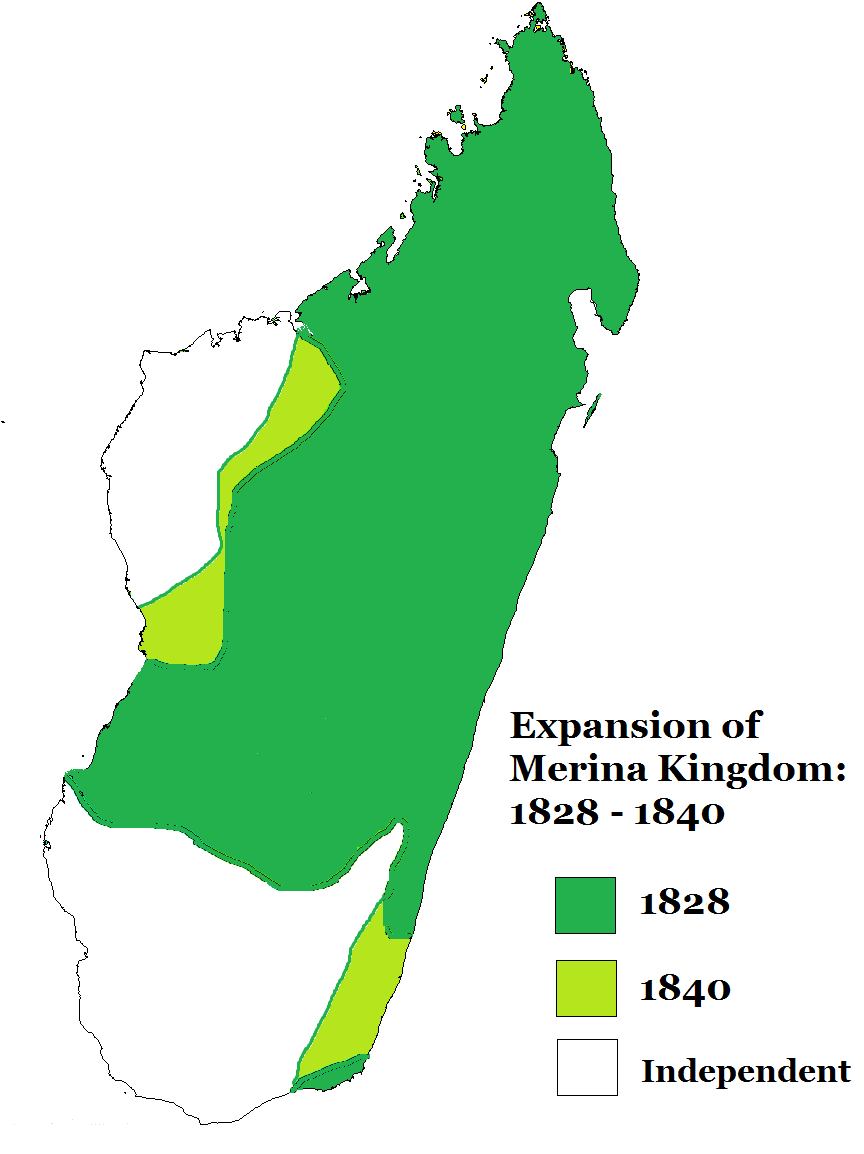
Madagascar-expansion of Merina rule under Ranavalona I
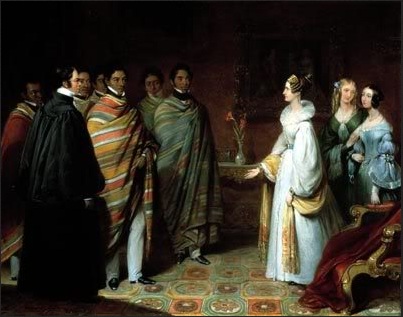
Madagascar ambassadors to England 1836-1837 - Henry Room

Original wooden manjakamiadana palace of Ranavalona I of Madagascar

Profile portrait of king Radama II

Queen Ranavalona I of Madagascar engraving

Ranavalona I - Primary image

Ranavalona I - Image 8
Sources
- Female Caligula: Ranavalona, the Mad Queen of Madagascar
- An Economic History of Imperial Madagascar, 1750–1895: The Rise and Fall of an Island Empire
- Ranavalona I — Wikipedia
- Flashman's Lady
- The Queen's Ordinary Style of Appearing in Public (1838 engraving)
- Madagascar: A History of Arrivals, What Happened, and Will Happen Next
Frequently Asked Questions
Table of Contents
Case Summary
In a single year, 1838, an estimated 100,000 people died by her command, forced to swallow poison from the tangena nut and then prove their innocence by vomiting chicken skin. She ruled Madagascar for thirty-three years, expelled every Christian missionary on the island, mounted the skulls of approximately twenty-one Europeans on pikes along her coastline, and oversaw a population collapse that cut her island's people nearly in half. Her name was Ranavalona I, and for three decades she was the most feared sovereign in the Indian Ocean world. Western contemporaries called her the 'Mad Monarch of Madagascar,' the 'Bloody Mary of Madagascar,' the 'Female Caligula.' Revisionist historians see something else entirely: a pragmatic anti-colonial strategist who kept her island free from European domination at any cost. Both portraits carry weight. Born a commoner around 1778, she seized absolute power through a palace coup, eliminated the legitimate royal heir and his entire family, and never looked back. She died quietly, in her own bed, in her own palace, at approximately eighty-three years of age. France did not colonize Madagascar until 1896, thirty-five years after her death. The full story of her reign is one of blood, genius, and the terrible arithmetic of survival at the height of empire.
January 1, 1778, Merina Kingdom, Madagascar (exact location disputed; possibly Palace of Ambatomanoina or central highlands)(Age: 83)
August 16, 1861, Manjakamiadana Palace, Antananarivo, Madagascar (Natural causes (died in her sleep at approximately age 83))
Case Details
The night King Radama I of Madagascar died, in the deep summer of 1828, a woman began moving through the corridors of power with a swiftness that suggested she had been ready for exactly this moment. She was not the legitimate heir. She was not Radama's favorite. She was one of twelve wives, childless within the marriage, and by the conventional mathematics of succession, she was nobody. But by sunrise, she had seized the royal palace with loyal soldiers at her side, and the man who should have been king, Prince Rakotobe, nephew of the dead monarch and the rightful claimant, was already condemned.
His name would not survive her.
She was born around 1778 with the name Rabodonandrianampoinimerina, called Ramavo in her youth, in the highland Merina Kingdom of Madagascar. Her origins were defiantly ordinary. Her father was a commoner, not of the noble class that typically produced queens. But fate intervened early: her father discovered and reported a conspiracy to assassinate King Andrianampoinimerina, Radama's father. Gratitude, in a royal household, takes practical forms. The king adopted Ramavo and betrothed her to his own son. A commoner's daughter was suddenly a future queen.
She became one of Radama I's twelve wives when he ascended the throne in 1810. Whatever warmth or ambition burned in her during those years, she left few visible traces. She bore Radama no children. She was not his confidante or favorite. She watched, instead, as her husband welcomed British missionaries from the London Missionary Society, signed treaties of friendship with European powers, and allowed Christianity to take root on the island. She watched, and she waited.
When Radama died in July 1828, probably from illness at thirty-six years old, the machinery of legitimate succession should have elevated his nephew Rakotobe. It did not. Ramavo had spent years cultivating alliances within the military, particularly among Merina officers who resented foreign influence and missionary encroachment. In the hours after Radama's death, she mobilized those loyalists, occupied the palace, and presented the court with a completed act. Rakotobe was seized. His mother was seized. So were most of their relatives. Within days, they were all dead.
On August 1, 1828, she was proclaimed Queen of Madagascar. Her formal coronation followed on June 12, 1829, and with it came her royal name: Ranavalona, meaning "kept aside" or "folded aside." The name carried its own quiet menace. She was the first female monarch Madagascar had seen since Queen Rafohy in the sixteenth century.
She moved immediately, and with clarity of purpose. The treaties Radama had signed with Britain were nullified. Missionaries from the London Missionary Society were expelled. In 1835, she banned Christianity outright among Malagasy subjects, making practice of the faith punishable by death. The church buildings that had gone up across the highlands were shuttered. The schools the missionaries had founded fell silent. Ranavalona was not interested in what Europe was selling, in any form.
To sustain this independence, she needed an army and the means to supply it. She found both through a ruthless mobilization of her kingdom's people. The traditional system of fanompoana, which required subjects to perform forced labor in lieu of tax payments, was expanded to an industrial scale. Tens of thousands of Malagasy men and women were conscripted to build roads, haul timber, and serve in military campaigns aimed at extending Merina control across the island. The death toll among those laboring under fanompoana was substantial; the work was brutal and the conditions were lethal, and the queen considered this a reasonable price for national sovereignty.
Her army grew to an estimated twenty thousand to thirty thousand soldiers. She deployed them relentlessly, crushing resistance from coastal peoples and expanding the Merina realm. The conquest was not gentle.
Justice, in Ranavalona's kingdom, had its own particular horror. The queen institutionalized the tangena ordeal as a primary means of determining guilt. A suspected criminal, or practicing Christian, or perceived enemy would be brought forward, forced to swallow the poisonous extract of the tangena nut, and then made to swallow three pieces of chicken skin. If the person vomited all three pieces and survived the poison, they were declared innocent. If they did not, they were executed as guilty. The ordeal was applied to thousands. Historian Gwyn Campbell, the leading Madagascar scholar of the modern era, estimated that in a single year, 1838, approximately 100,000 people died as a result of this practice.
One hundred thousand people. In a single year.
The population of Madagascar, estimated at roughly five million in 1833, had been cut nearly in half by 1839, reduced to approximately two and a half million. The causes were multiple: military campaigns, deaths under fanompoana, the judicial killings, famine following economic disruption. The sheer scale of that collapse sits, even now, beyond easy comprehension.
And yet the full portrait of Ranavalona refuses simple framing. The same queen who presided over mass death also harbored one of the most remarkable figures in Indian Ocean history: Jean Laborde, a French shipwreck survivor who washed ashore around 1831 or 1832 with technical knowledge and ambition in equal measure. Rather than expelling him with the other Europeans, Ranavalona brought him into her inner circle and gave him a commission. Near Antananarivo, at a site called Mantasoa, Laborde directed the construction of an industrial complex that produced cannons, muskets, gunpowder, silk, soap, and ceramics. For the first time, the Merina Kingdom could manufacture its own modern weapons. Madagascar's dependence on European imports was severed. Ranavalona had found in a French castaway the instrument of her own industrial self-sufficiency.
Laborde's relationship with the queen was, by all accounts, intimate as well as professional. The question of Prince Rakoto's paternity had shadowed the court since his birth. The prince arrived on September 23, 1829, more than a year after Radama I's death. The most widely suspected father was Andriamihaja, a general who served as Ranavalona's lover and closest military advisor in the early years of her reign. Laborde's name has also been attached to the speculation over the years. The queen never addressed it. The prince grew up knowing he would one day be king, whatever the circumstances of his conception.
In 1845, the tension between Ranavalona's Madagascar and the European powers reached a violent crisis. A joint Anglo-French naval force attacked the port of Tamatave, testing the queen's coastal defenses. They were repelled. What followed was a message that needed no translation: Ranavalona ordered the skulls of approximately twenty-one European dead mounted on pikes along the coastline, left visible from the water as a communication to any future naval commanders weighing their options.
No further military attacks came during her reign.
The deeper threat proved not to be cannons but conspiracy, and it came from within her own family. In 1855, her son Prince Rakoto secretly signed what became known as the Lambert Charter with Joseph-François Lambert, a French entrepreneur. The document granted Lambert first rights to exploit Madagascar's natural resources; in exchange, Lambert would help Rakoto overthrow his own mother and assume the throne. The conspiracy was not discovered until 1857. When it was, Ranavalona's response was swift and comprehensive: every European remaining in Madagascar was expelled, their property confiscated. Laborde, who had built her factories and shared her bed, was gone. The explorer Ida Pfeiffer, who had the extraordinary misfortune of visiting Madagascar precisely when the conspiracy unraveled, found herself tried alongside Laborde before the queen's court. She was ultimately exiled rather than executed, but the ordeal broke her health; she died the following year.
Rakoto was not executed. He was her son, and she loved him, or something that functioned like love within the architecture of her character. He remained the heir.
There is no authentic likeness of Ranavalona I. She banned photography and portraiture of herself, believing such representations could capture or damage the soul. The image most often reproduced in books and encyclopedias is a posthumous painting created by the artist Philippe-Auguste Ramanankirahina for a 1906 colonial exhibition in Marseille. Art historians believe the model was actually a photograph of her niece, Rabodo, who later ruled as Queen Rasoherina. The woman who shaped an island for thirty-three years left no verified face behind in any archive anywhere in the world.
She died on the night of August 16, 1861, in the Manjakamiadana Palace in Antananarivo, in her sleep, at approximately eighty-three years of age. The woman who had survived palace coups, naval bombardment, and three decades of European pressure died quietly, in her own bed, in her own palace, in a kingdom that was still hers.
Her son ascended the throne as Radama II. He lasted two years before he was assassinated.
France colonized Madagascar in 1896, thirty-five years after Ranavalona's death. It took the most powerful imperial nation on the African continent that long to accomplish what she had prevented for an entire reign.
Western contemporaries gave her names meant to diminish: the "Mad Monarch of Madagascar," the "Bloody Mary of Madagascar," the "Female Caligula." These characterizations dominated scholarship for generations, fed largely by accounts from European missionaries, traders, and diplomats whose access, whose livelihoods, and whose colonial ambitions she had actively thwarted. Their testimony was, to put it gently, interested.
Beginning in the 1970s, historians started reassessing the evidence. Gwyn Campbell and other Madagascar scholars argued that her economic and military policies were rational, coherent responses to the demonstrable threat of European imperial expansion, and that the most lurid accounts of her brutality came from sources with compelling reasons to exaggerate. The tangena killings were real, and their scale was staggering; no serious historian disputes that. But framing Ranavalona as simply "mad" or "bloodthirsty" served a specific narrative purpose: it made colonization a rescue mission rather than a conquest.
The truth, as it usually does, accommodates both realities. She killed on a massive scale. She also kept her island free. She used forced labor that destroyed tens of thousands of lives, and she used it to build a kingdom that held the world's most aggressive imperial powers at bay for thirty-three years. She was neither the monster of missionary pamphlets nor the enlightened proto-nationalist of revisionist enthusiasm — she was something rarer and more unsettling: a woman of extraordinary political intelligence operating in a world that offered her no soft choices.
Somewhere in Antananarivo, her throne still exists, preserved in the Rova, the royal palace complex that crowns the city's central ridge. The woman who sat on it has no verified face in any archive anywhere in the world. Only the throne remains, solid and certain, outlasting every account ever written of the queen who ruled from it.
Timeline
Birth of Rabodonandrianampoinimerina
Ranavalona I was born circa 1778 with the birth name Rabodonandrianampoinimerina, also called Ramavo in her youth, in the Merina Kingdom of Madagascar. Her father was a commoner whose loyalty to King Andrianampoinimerina would dramatically alter her destiny.
Her humble origins as the daughter of a commoner made her eventual rise to sole ruler of Madagascar all the more remarkable and historically unprecedented.
Royal Adoption and Betrothal
Ramavo's father uncovered and reported an assassination plot against King Andrianampoinimerina, saving the monarch's life. As a reward, the king adopted Ramavo into the royal household and betrothed her to his son, Prince Radama — the future King Radama I.
This pivotal act of loyalty transformed a commoner's daughter into a royal consort, placing her in direct proximity to the throne she would eventually seize.
Becomes One of Radama I's Twelve Wives
Upon Radama I's ascension to the throne in 1810, Ramavo became one of his twelve wives. She was not his favored consort, and the two had no children together, leaving her politically vulnerable during his reign.
Her marginalized status within the royal household forced her to cultivate independent military and political alliances that would prove essential when she made her bid for power.
Palace Coup and Elimination of Rival Heir
Upon the death of King Radama I in July 1828, Ranavalona swiftly mobilized loyal military supporters, occupied the royal palace, and outmaneuvered the legitimate heir Rakotobe. She ordered the elimination of Rakotobe, his mother, and most of their relatives to extinguish any rival claim to the throne.
This ruthless seizure of power demonstrated the calculated political brutality that would define her 33-year reign and established her as a force willing to destroy entire family lines to secure her rule.
Ascends to Throne
On August 1, 1828, Ranavalona was proclaimed Queen of Madagascar. A formal coronation ceremony followed on June 12, 1829, where she took the royal name Ranavalona, meaning 'kept aside' or 'folded aside.' She was the first female monarch of Madagascar since Queen Rafohy in the 16th century.
Her proclamation as queen marked the beginning of a reign that would successfully resist European imperialism for over three decades, keeping Madagascar independent at the height of the colonial era.
Birth of Prince Rakoto — Paternity Disputed
On September 23, 1829, Ranavalona gave birth to her only child, Prince Rakoto, the future King Radama II. Since Radama I had been dead for over a year, the true paternity was widely suspected to be Andriamihaja, her general and lover, or later Jean Laborde.
The disputed paternity of her heir underscored the queen's personal power and independence, and Prince Rakoto would later become the instrument of a conspiracy to overthrow his own mother.
Christianity Ban
Ranavalona I formally banned Christianity among Malagasy subjects in 1835, expelled missionaries of the London Missionary Society, and nullified treaties of friendship with Britain. This sweeping reversal of Radama I's pro-Western policies enforced strict isolationism and self-sufficiency.
The ban on Christianity and expulsion of foreign missionaries was a cornerstone of her anti-colonial strategy, severing European cultural and political influence over her kingdom.
Tangena Ordeal Claims Approximately 100,000 Lives
Ranavalona employed the traditional tangena ordeal as a judicial tool on a massive scale: suspects were forced to swallow three pieces of chicken skin after ingesting poison from the tangena nut, with survival and vomiting all three skins constituting proof of innocence. Historian Gwyn Campbell estimated this practice alone claimed approximately 100,000 lives in the single year of 1838.
The industrial-scale use of the tangena ordeal became the most infamous emblem of her reign, contributing to an estimated halving of Madagascar's population from approximately 5 million to 2.5 million between 1833 and 1839.
Repels Joint Anglo-French Naval Attack at Tamatave
Ranavalona successfully repelled a joint Anglo-French naval attack on the port of Tamatave in 1845. Afterward, she ordered the skulls of approximately 21 Europeans mounted on pikes along the coastline as a stark warning to foreign powers against future aggression.
This military victory and its gruesome aftermath cemented her international reputation as an unyielding defender of Malagasy sovereignty and earned her the Western epithet 'the Bloody Mary of Madagascar.'
Lambert Charter Conspiracy Uncovered — Europeans Expelled
In 1855, her son Prince Rakoto had secretly signed the Lambert Charter with French entrepreneur Joseph-François Lambert, granting France first rights to exploit Madagascar's resources in exchange for support to depose the queen. When the conspiracy was discovered in 1857, Ranavalona expelled all Europeans from Madagascar, confiscated their property, and tried Jean Laborde and explorer Ida Pfeiffer before her court.
The discovery of the conspiracy — orchestrated by her own son — represented the gravest internal threat to her reign and prompted a final, total purge of European influence that held until her death four years later.
Death in the Manjakamiadana Palace
Ranavalona I died peacefully in her sleep on August 16, 1861, at approximately age 83, in the Manjakamiadana Palace in Antananarivo. Her son Rakoto ascended the throne as King Radama II, immediately reversed her isolationist policies, and was assassinated just two years later.
Her death ended a 33-year reign during which she successfully kept Madagascar independent from European colonialism; France would conquer the island just 35 years later, in 1896, vindicating her lifelong resistance.
Crime Location
Photos
Antananarivo Church
Madagascar-expansion of Merina rule under Ranavalona I
Madagascar ambassadors to England 1836-1837 - Henry Room
Original wooden manjakamiadana palace of Ranavalona I of Madagascar
Profile portrait of king Radama II
Queen Ranavalona I of Madagascar engraving
Ranavalona I - Primary image
Ranavalona I - Image 8
Sources
- Female Caligula: Ranavalona, the Mad Queen of Madagascar
- An Economic History of Imperial Madagascar, 1750–1895: The Rise and Fall of an Island Empire
- Ranavalona I — Wikipedia
- Flashman's Lady
- The Queen's Ordinary Style of Appearing in Public (1838 engraving)
- Madagascar: A History of Arrivals, What Happened, and Will Happen Next
Frequently Asked Questions
Related Cases
Accused
Connection tags:
Accused
Connection tags:
Convicted
Connection tags:
Convicted
Connection tags:
Convicted
Connection tags:
Convicted
Connection tags:
Tags
Popular Culture
book (1977)
Historical fiction novel by George MacDonald Fraser featuring a fictionalized portrayal of Ranavalona I and her court in Madagascar, seen through the eyes of the fictional anti-hero Harry Flashman.
book (2005)
Popular biography by Keith Laidler presenting Ranavalona I through a largely Western colonial lens, emphasizing accounts of brutality and earning her the 'Female Caligula' epithet in popular culture.