Judias Anna Lou 'Judy' Buenoano
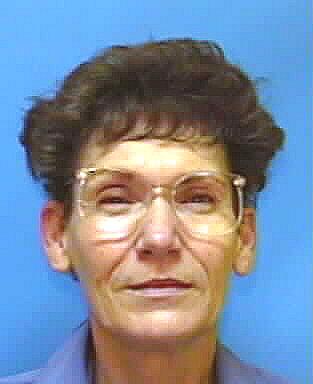
Case Summary
At 7:08 on the morning of March 30, 1998, a correctional officer at Florida State Prison threw the switch on the electric chair. The woman strapped into it, asked moments earlier if she had any final words, had answered only 'No, sir,' and closed her eyes. She was pronounced dead at 7:13 a.m. Her name was Judy Buenoano, and she had spent the previous evening watching a hunting and fishing show, eating chocolates, and reading a Mary Higgins Clark murder mystery. The neatness of that detail feels almost unbearable: a woman convicted of poisoning her husband, her son, and her boyfriend with arsenic, spending her last hours absorbed in fiction about someone else's crime. Prosecutor Russell Edgar had a name for her. He called her the Black Widow, a woman who 'fed off her mates and her young.' The evidence bore him out. Across nearly two decades, Buenoano is believed to have poisoned at least three people and built a life on their insurance payouts. She never confessed. She maintained her innocence to the end, eyes shut, silent in the chair. This is the story of how she got there.
April 4, 1943, Quanah, Texas, USA(Age: 54)
March 30, 1998, Florida State Prison, Starke, Florida, USA (Execution by electrocution (electric chair))
Related Cases

Convicted
Connection tags:

Accused
Connection tags:

Accused
Connection tags:
Convicted
Connection tags:
Convicted
Connection tags:

Convicted
Connection tags:
Case Details
The canoe went over on May 13, 1980, on the East River near Milton, Florida. The water was dark and warm. In the boat with Judy Buenoano were two of her children: her younger son James and her nineteen-year-old son Michael, who wore heavy metal braces on both his arms and legs. He wore no life jacket. When the canoe capsized, James made it to the bank. Michael sank.
The official finding was accidental drowning. It would take three more years, a car bomb, and a determined Pensacola detective to unravel what had actually happened on that river. By then, the bodies were already in the ground.
Judy Buenoano was born Judias Welty on April 4, 1943, in Quanah, Texas, the third of four siblings. Her father was an itinerant farm laborer. Her mother, also named Judias Welty, died of tuberculosis when Judy was somewhere between two and four years old. She and her younger brother Robert were sent to live with their grandparents. When their father remarried, the children were moved again, this time to Roswell, New Mexico, where Judy would later claim she was starved, physically abused, and forced to work as a servant by her father and stepmother.
Whether those accounts were wholly accurate is difficult to say. Judy had a complicated relationship with the truth. She later told people her mother had been a full-blooded member of the Mesquite Apache tribe, a group that does not exist. But the documented record of her childhood suggests something genuinely brutal. At approximately fourteen years old, she attacked her father, her stepmother, and two stepbrothers with scalding grease. With no juvenile facility available in New Mexico at the time, she served two months in an adult prison.
She came out of it, seemingly, with resolve. She chose to attend reform school upon her release. She graduated in 1960. She trained as a nursing assistant. In 1961, she gave birth to an illegitimate son, Michael, born on March 30 of that year. The date would carry a grim irony she could not have foreseen.
In 1962, she married Air Force Sergeant James Goodyear. The couple settled in Orlando, Florida, near McCoy Air Force Base, where James was stationed. He adopted Michael. They had two more children together: James Jr. and Kimberly. From the outside, the picture looked ordinary. A military family. Three children. A home in Florida.
James Goodyear shipped out to Vietnam. He came back in 1971. Within months of his return, he was sick. His symptoms were vague at first, the kind of thing that gets attributed to stress or something picked up overseas. Then they worsened. He was admitted to the hospital and died on September 16, 1971. The cause of death was recorded as natural causes, consistent with complications from something he might have encountered during his service. Judy collected approximately $28,000 in life insurance and $64,000 in benefits from the Veterans Administration.
No one looked closely. Why would they? A Vietnam veteran, back home not even a year, died of illness. It happened.
By 1972, Judy had a new partner: Bobby Joe Morris of Pensacola. In 1977, Morris relocated to Trinidad, Colorado, and Judy followed with her children. In January 1978, Morris was dead. Later toxicological analysis would confirm arsenic poisoning, with some reports also noting massive concentrations of Thorazine in his remains. Judy collected on multiple life insurance policies as his common-law wife.
No charges were filed.
On May 3, 1978, Judy went to the courthouse and legally changed her surname, and those of her children, to Buenoano. It was a corrupted rendering of the Spanish phrase buen año, meaning good year, which is also what Goodyear means. She had, in a sense, translated herself.
Around this same period, her son Michael began deteriorating. He had enlisted in the Army, but his health collapsed before he could complete his service. He developed severe weakness, partial paralysis, and difficulty controlling his limbs. Physicians would later attribute these symptoms to chronic arsenic poisoning. By the spring of 1980, he was in metal braces on both arms and both legs.
On May 13, 1980, Judy took Michael and James Jr. canoeing on the East River. The canoe capsized. James Jr. survived. Michael, nineteen years old, armored in heavy metal and stripped of any flotation, drowned. Judy collected his life insurance. She used the proceeds to open a beauty salon in Gulf Breeze, Florida.
She was, by then, practiced at this. The pattern is almost businesslike in retrospect: relationship, insurance policy, illness, death, collection. Then a new chapter, a new name, a fresh start financed by grief she had manufactured.
In 1983, she was engaged to a Pensacola businessman named John Gentry. Gentry sold wallpaper. He was trusting, affectionate, and devoted to Judy. She persuaded him that they should each take out life insurance policies on the other. His policy grew, incrementally, to between $500,000 and $510,000. She gave him capsules she described as vitamin C supplements. They contained arsenic and paraformaldehyde.
Gentry grew ill but did not die. Judy adjusted her approach.
On the evening of June 25, 1983, Gentry walked out of the Driftwood Restaurant near downtown Pensacola and got into his car. The pipe bomb planted beneath it detonated. Gentry was badly injured. He survived.
He survived, and that changed everything.
Pensacola police detective Ted Chamberlain caught the bombing case. It looked at first like a standard investigation into attempted murder: who had planted the bomb, who had a motive. The answer, quickly, pointed to Judy Buenoano. Investigators found wire and tape in her home that matched materials recovered from the blast site. But as Chamberlain dug into her background, something else emerged. The history of dead men. The insurance policies. The son who drowned.
Autopsies were ordered. James Goodyear's body was exhumed. Michael Goodyear's body was exhumed. Bobby Joe Morris's body was exhumed. In all three cases, toxicological testing confirmed arsenic poisoning. James Goodyear, dead since 1971, had been carrying it in his tissues for more than a decade.
Buenoano was arrested in 1983. In March 1984, a Santa Rosa County jury convicted her of first-degree murder in the death of her son Michael. She was sentenced to life in prison. Separately, she was convicted of the attempted murder of John Gentry in Escambia County and sentenced to twelve years. Her surviving son, James Jr., was charged as an accomplice in the car bombing; he was acquitted.
The James Goodyear trial followed in 1985. It began on October 22 in Orange County. The prosecution laid out the arsenic findings, the insurance payouts, the pattern that stretched across fifteen years and multiple states. On November 26, 1985, Judy Buenoano was convicted of first-degree premeditated murder and sentenced to death.
She was transferred to death row at the Broward Correctional Institution for women. Her Florida Department of Corrections number was 160663. On paper, she was a white female, brown hair, hazel eyes, five feet seven, one hundred and seventy pounds. In practice, she was the woman Prosecutor Russell Edgar had taken to calling the Black Widow: someone who, in his words, fed off her mates and her young.
Investigators suspected her involvement in additional deaths. A 1974 murder in Alabama. The 1980 death of another boyfriend, Gerald Dossett, whose body was exhumed and tested for arsenic after her arrest. No additional charges were ever filed. The full accounting of what Judy Buenoano may have done across her lifetime remains, in certain corners, unresolved. What was established, across three separate trials, was enough. She had collected an estimated $240,000 in insurance proceeds from the people around her.
For thirteen years, she appealed. Federal habeas corpus petitions. State courts. The Eleventh Circuit. All denied. On March 29, 1998, both the Eleventh Circuit Court of Appeals and the Florida Supreme Court rejected her final filings. Governor Lawton Chiles signed her death warrant.
She spent her last day quietly. She watched a hunting and fishing show on television. She ate chocolates. Her surviving children, Kim Hawkins and James Goodyear Jr., came to say goodbye, along with a cousin named Jeanne Eaton. Her final meal was steamed broccoli, asparagus, strawberries, tomato wedges, and hot tea with lemon. She had been reading a Mary Higgins Clark murder mystery, "Remember Me," though she did not finish it.
At 7:02 on the morning of March 30, 1998, correctional officers escorted Buenoano into the execution chamber at Florida State Prison in Starke. Witnesses described her as frail, barely walking under her own power. She was strapped into the electric chair with eight leather restraints. Her head had been shaved. Conducting gel was applied. When the warden asked if she had any final statement, she said: "No, sir." She kept her eyes shut.
The current was switched on at 7:08 a.m. The electrocution lasted thirty-eight seconds. She was pronounced dead at 7:13 a.m. Eastern Standard Time.
The date was March 30. Her son Michael had been born on March 30, 1961. He would have turned thirty-seven that morning.
Judy Buenoano was the first woman executed in Florida since 1848, when a formerly enslaved woman named Celia was hanged for killing her enslaver. She was the first woman ever executed in Florida's electric chair. She was the first woman electrocuted anywhere in the United States since Rhonda Belle Martin was put to death in Alabama on October 11, 1957, and only the third woman executed in the country since the reinstatement of the death penalty in 1976, following Velma Barfield in 1984 and Karla Faye Tucker just weeks earlier, in February 1998.
Her body was cremated. She never confessed. She maintained her innocence through every appeal, every interview, every day on death row, and into the chamber itself.
What to make of that silence is a question without a clean answer. True believers in her innocence were few and found little support in the toxicological record. But her silence points to something else worth noting about the Buenoano case: the long years between each death, the distances between Florida and Colorado and Alabama, the way each tragedy was packaged as grief rather than crime. She operated in an era before computerized insurance databases, before prosecutors compared notes across state lines as a matter of routine. She counted on compartmentalization. For a long time, it worked.
The case is documented in Chris Anderson and Sharon McGehee's 1991 book "Bodies of Evidence" and revisited in the Investigation Discovery documentary series "Very Scary People" in 2023. Detective Ted Chamberlain, the man who pulled the thread that unraveled it all, began with a car bomb and ended with a death sentence. He did not set out to solve the murders of the 1970s. He set out to find who had tried to kill John Gentry. The rest followed, one exhumed body at a time.
The electric chair at Florida State Prison is nicknamed Old Sparky. At 7:13 a.m. on the thirtieth of March, 1998, Judy Buenoano became the last secret it helped keep.
Timeline
Birth in Quanah, Texas
Judias Welty was born on April 4, 1943, in Quanah, Texas, the third of four children of an itinerant farm laborer. Her mother, also named Judias Welty, would die of tuberculosis when Judy was only two to four years old, setting in motion a turbulent and abusive childhood. She and her younger brother Robert were subsequently sent to live with their grandparents.
Her chaotic early life — marked by poverty, loss, and later claimed abuse — formed the backdrop against which she constructed elaborate false identities and narratives throughout her adult life.
Imprisoned at Age 14 After Family Attack
At approximately age 14, Judy attacked her father, stepmother, and two stepbrothers with scalding hot grease, resulting in her imprisonment in an adult New Mexico correctional facility for two months — the only facility available, as no juvenile detention existed. Upon release, she chose to enroll in reform school, eventually graduating in 1960. This early act of extreme violence foreshadowed the calculated brutality she would later employ against those closest to her.
The earliest documented instance of Buenoano's willingness to use lethal means against family members, and her first contact with the criminal justice system.
Marriage to James Goodyear and Family Life in Orlando
In 1962, Judy married Air Force Sergeant James Goodyear, and the couple settled near McCoy Air Force Base in Orlando, Florida. James adopted her illegitimate son Michael, and the couple had two more children together — James Jr. and Kimberly. This period of apparent domestic normalcy concealed what investigators would later determine was a calculated scheme to profit from life insurance policies taken out on family members.
The marriage established the first of several relationships Buenoano would exploit for financial gain through insurance fraud and murder.
Death of Husband James Goodyear — Arsenic Poisoning
James Goodyear died on September 16, 1971, in Orlando, Florida, shortly after returning from a tour of duty in Vietnam, having suffered mysterious and debilitating symptoms. His death was initially ruled as natural causes, allowing Buenoano to collect approximately $28,000 in life insurance proceeds and $64,000 in Veterans Administration benefits. Exhumation years later confirmed he had been systematically poisoned with arsenic.
Goodyear's murder was the first confirmed killing in Buenoano's pattern of poisoning intimate partners for insurance proceeds, though it went undetected for over a decade.
Death of Boyfriend Bobby Joe Morris in Colorado
After relocating from Pensacola to Trinidad, Colorado, with her children and common-law partner Bobby Joe Morris in 1977, Buenoano watched Morris die in January 1978 under circumstances later confirmed as arsenic poisoning, with some reports also indicating massive amounts of Thorazine in his remains. She collected on multiple life insurance policies as his common-law wife. Though exhumation later confirmed the poisoning, she was never charged in connection with his death.
Morris's death demonstrated Buenoano's escalating pattern of targeting intimate partners for financial gain and her ability to evade suspicion across multiple states and jurisdictions.
Drowning Murder of Son Michael Buenoano
On May 13, 1980, Buenoano took her 19-year-old son Michael — already severely weakened and partially paralyzed from chronic arsenic poisoning she had been administering — on a canoe trip on the East River near Milton, Florida. The canoe capsized, and Michael, encumbered by heavy metal arm and leg braces and wearing no life jacket, drowned. Buenoano subsequently used his life insurance proceeds to open a beauty salon in Gulf Breeze, Florida.
Michael's murder was the most chilling of Buenoano's crimes — the deliberate killing of her own disabled and poisoned child — and would become the first charge for which she was convicted.
Car Bomb Attack on Fiancé John Gentry
On June 25, 1983, a pipe bomb planted in the car of Pensacola businessman John Gentry — Buenoano's fiancé — exploded outside the Driftwood Restaurant near downtown Pensacola. Gentry survived the blast, which prompted a police investigation that unraveled Buenoano's entire criminal history. Investigators discovered she had been feeding Gentry 'vitamin C' capsules laced with arsenic and paraformaldehyde, and had persuaded him to take out a $500,000–$510,000 life insurance policy in her favor.
The failed car bombing was the critical mistake that triggered the investigation leading to Buenoano's arrest; Gentry's survival meant there was a living witness to her schemes.
Arrest, Exhumations, and Charges Filed
Following the car bombing, Pensacola detective Ted Chamberlain launched an investigation that exposed deep inconsistencies in Buenoano's fabricated background. Authorities ordered the exhumations of James Goodyear, Michael Goodyear, and Bobby Joe Morris, all of which confirmed lethal levels of arsenic poisoning. Buenoano was arrested in 1983 and faced charges of first-degree murder, attempted murder, and insurance fraud, with investigators estimating she had collected approximately $240,000 in insurance proceeds across all her victims.
The exhumations provided the forensic proof that transformed a car bombing investigation into a multi-victim serial murder case spanning three states over more than a decade.
Conviction for Murder of Son Michael and Attempted Murder of Gentry
On March 31, 1984, Buenoano was convicted of first-degree murder in the drowning death of her son Michael Goodyear in Santa Rosa County (Case #8400017) and sentenced to life in prison. She was also convicted of the attempted first-degree murder of John Gentry in Escambia County (Case #8401390) and sentenced to 12 years. Her son James Goodyear Jr., charged as an accomplice in the car bombing, was acquitted.
These convictions marked the first time Buenoano was held legally accountable for her crimes, though the most serious charge — the death sentence for her husband's murder — was yet to come.
Death Sentence for Murder of Husband James Goodyear
After a trial beginning October 22, 1985, in Orange County (Case #8404741), Buenoano was convicted of the first-degree premeditated murder of her husband James Goodyear and sentenced to death on November 26, 1985. She was also convicted of multiple counts of grand theft through insurance fraud. She was subsequently housed on death row at the Broward Correctional Institution for Women under Florida DOC Number 160663.
The death sentence for James Goodyear's murder set in motion thirteen years of appeals and ultimately led to Buenoano becoming the first woman executed in Florida in 150 years.
Execution by Electrocution at Florida State Prison
At 7:02 a.m. on March 30, 1998, a frail Buenoano was escorted into the execution chamber at Florida State Prison in Starke, Florida, strapped into the electric chair known as 'Old Sparky' with eight leather straps, her head shaved and conducting gel applied. When asked for final words, she replied only 'No, sir,' and kept her eyes shut as the current was applied at 7:08 a.m. for 38 seconds; she was pronounced dead at 7:13 a.m. EST. She was the first woman executed in Florida since 1848, the first woman ever executed in Florida's electric chair, and the first woman electrocuted in the United States since 1957.
Buenoano's execution closed one of the most chilling serial poisoning cases in American criminal history and marked a historic milestone as the first female electrocution in the U.S. in over four decades. She never admitted guilt and was cremated following her death.
Crime Location
Photos
Judy Buenoano
Sources
- Bodies of Evidence
- Judias Buenoano — Wikipedia
- Judy Buenoano — Murderpedia
- Judy Buenoano — Crime Museum
- Florida Department of Corrections Inmate Record — Judias Buenoano (DC# 160663)
- Buenoano v. State, 478 So.2d 387 (Fla. 1985)
- Very Scary People — Season featuring Judy Buenoano
- Judy Buenoano Case — U.S. District Court, Middle District of Florida
Frequently Asked Questions
Table of Contents
Case Summary
At 7:08 on the morning of March 30, 1998, a correctional officer at Florida State Prison threw the switch on the electric chair. The woman strapped into it, asked moments earlier if she had any final words, had answered only 'No, sir,' and closed her eyes. She was pronounced dead at 7:13 a.m. Her name was Judy Buenoano, and she had spent the previous evening watching a hunting and fishing show, eating chocolates, and reading a Mary Higgins Clark murder mystery. The neatness of that detail feels almost unbearable: a woman convicted of poisoning her husband, her son, and her boyfriend with arsenic, spending her last hours absorbed in fiction about someone else's crime. Prosecutor Russell Edgar had a name for her. He called her the Black Widow, a woman who 'fed off her mates and her young.' The evidence bore him out. Across nearly two decades, Buenoano is believed to have poisoned at least three people and built a life on their insurance payouts. She never confessed. She maintained her innocence to the end, eyes shut, silent in the chair. This is the story of how she got there.
April 4, 1943, Quanah, Texas, USA(Age: 54)
March 30, 1998, Florida State Prison, Starke, Florida, USA (Execution by electrocution (electric chair))
Case Details
The canoe went over on May 13, 1980, on the East River near Milton, Florida. The water was dark and warm. In the boat with Judy Buenoano were two of her children: her younger son James and her nineteen-year-old son Michael, who wore heavy metal braces on both his arms and legs. He wore no life jacket. When the canoe capsized, James made it to the bank. Michael sank.
The official finding was accidental drowning. It would take three more years, a car bomb, and a determined Pensacola detective to unravel what had actually happened on that river. By then, the bodies were already in the ground.
Judy Buenoano was born Judias Welty on April 4, 1943, in Quanah, Texas, the third of four siblings. Her father was an itinerant farm laborer. Her mother, also named Judias Welty, died of tuberculosis when Judy was somewhere between two and four years old. She and her younger brother Robert were sent to live with their grandparents. When their father remarried, the children were moved again, this time to Roswell, New Mexico, where Judy would later claim she was starved, physically abused, and forced to work as a servant by her father and stepmother.
Whether those accounts were wholly accurate is difficult to say. Judy had a complicated relationship with the truth. She later told people her mother had been a full-blooded member of the Mesquite Apache tribe, a group that does not exist. But the documented record of her childhood suggests something genuinely brutal. At approximately fourteen years old, she attacked her father, her stepmother, and two stepbrothers with scalding grease. With no juvenile facility available in New Mexico at the time, she served two months in an adult prison.
She came out of it, seemingly, with resolve. She chose to attend reform school upon her release. She graduated in 1960. She trained as a nursing assistant. In 1961, she gave birth to an illegitimate son, Michael, born on March 30 of that year. The date would carry a grim irony she could not have foreseen.
In 1962, she married Air Force Sergeant James Goodyear. The couple settled in Orlando, Florida, near McCoy Air Force Base, where James was stationed. He adopted Michael. They had two more children together: James Jr. and Kimberly. From the outside, the picture looked ordinary. A military family. Three children. A home in Florida.
James Goodyear shipped out to Vietnam. He came back in 1971. Within months of his return, he was sick. His symptoms were vague at first, the kind of thing that gets attributed to stress or something picked up overseas. Then they worsened. He was admitted to the hospital and died on September 16, 1971. The cause of death was recorded as natural causes, consistent with complications from something he might have encountered during his service. Judy collected approximately $28,000 in life insurance and $64,000 in benefits from the Veterans Administration.
No one looked closely. Why would they? A Vietnam veteran, back home not even a year, died of illness. It happened.
By 1972, Judy had a new partner: Bobby Joe Morris of Pensacola. In 1977, Morris relocated to Trinidad, Colorado, and Judy followed with her children. In January 1978, Morris was dead. Later toxicological analysis would confirm arsenic poisoning, with some reports also noting massive concentrations of Thorazine in his remains. Judy collected on multiple life insurance policies as his common-law wife.
No charges were filed.
On May 3, 1978, Judy went to the courthouse and legally changed her surname, and those of her children, to Buenoano. It was a corrupted rendering of the Spanish phrase buen año, meaning good year, which is also what Goodyear means. She had, in a sense, translated herself.
Around this same period, her son Michael began deteriorating. He had enlisted in the Army, but his health collapsed before he could complete his service. He developed severe weakness, partial paralysis, and difficulty controlling his limbs. Physicians would later attribute these symptoms to chronic arsenic poisoning. By the spring of 1980, he was in metal braces on both arms and both legs.
On May 13, 1980, Judy took Michael and James Jr. canoeing on the East River. The canoe capsized. James Jr. survived. Michael, nineteen years old, armored in heavy metal and stripped of any flotation, drowned. Judy collected his life insurance. She used the proceeds to open a beauty salon in Gulf Breeze, Florida.
She was, by then, practiced at this. The pattern is almost businesslike in retrospect: relationship, insurance policy, illness, death, collection. Then a new chapter, a new name, a fresh start financed by grief she had manufactured.
In 1983, she was engaged to a Pensacola businessman named John Gentry. Gentry sold wallpaper. He was trusting, affectionate, and devoted to Judy. She persuaded him that they should each take out life insurance policies on the other. His policy grew, incrementally, to between $500,000 and $510,000. She gave him capsules she described as vitamin C supplements. They contained arsenic and paraformaldehyde.
Gentry grew ill but did not die. Judy adjusted her approach.
On the evening of June 25, 1983, Gentry walked out of the Driftwood Restaurant near downtown Pensacola and got into his car. The pipe bomb planted beneath it detonated. Gentry was badly injured. He survived.
He survived, and that changed everything.
Pensacola police detective Ted Chamberlain caught the bombing case. It looked at first like a standard investigation into attempted murder: who had planted the bomb, who had a motive. The answer, quickly, pointed to Judy Buenoano. Investigators found wire and tape in her home that matched materials recovered from the blast site. But as Chamberlain dug into her background, something else emerged. The history of dead men. The insurance policies. The son who drowned.
Autopsies were ordered. James Goodyear's body was exhumed. Michael Goodyear's body was exhumed. Bobby Joe Morris's body was exhumed. In all three cases, toxicological testing confirmed arsenic poisoning. James Goodyear, dead since 1971, had been carrying it in his tissues for more than a decade.
Buenoano was arrested in 1983. In March 1984, a Santa Rosa County jury convicted her of first-degree murder in the death of her son Michael. She was sentenced to life in prison. Separately, she was convicted of the attempted murder of John Gentry in Escambia County and sentenced to twelve years. Her surviving son, James Jr., was charged as an accomplice in the car bombing; he was acquitted.
The James Goodyear trial followed in 1985. It began on October 22 in Orange County. The prosecution laid out the arsenic findings, the insurance payouts, the pattern that stretched across fifteen years and multiple states. On November 26, 1985, Judy Buenoano was convicted of first-degree premeditated murder and sentenced to death.
She was transferred to death row at the Broward Correctional Institution for women. Her Florida Department of Corrections number was 160663. On paper, she was a white female, brown hair, hazel eyes, five feet seven, one hundred and seventy pounds. In practice, she was the woman Prosecutor Russell Edgar had taken to calling the Black Widow: someone who, in his words, fed off her mates and her young.
Investigators suspected her involvement in additional deaths. A 1974 murder in Alabama. The 1980 death of another boyfriend, Gerald Dossett, whose body was exhumed and tested for arsenic after her arrest. No additional charges were ever filed. The full accounting of what Judy Buenoano may have done across her lifetime remains, in certain corners, unresolved. What was established, across three separate trials, was enough. She had collected an estimated $240,000 in insurance proceeds from the people around her.
For thirteen years, she appealed. Federal habeas corpus petitions. State courts. The Eleventh Circuit. All denied. On March 29, 1998, both the Eleventh Circuit Court of Appeals and the Florida Supreme Court rejected her final filings. Governor Lawton Chiles signed her death warrant.
She spent her last day quietly. She watched a hunting and fishing show on television. She ate chocolates. Her surviving children, Kim Hawkins and James Goodyear Jr., came to say goodbye, along with a cousin named Jeanne Eaton. Her final meal was steamed broccoli, asparagus, strawberries, tomato wedges, and hot tea with lemon. She had been reading a Mary Higgins Clark murder mystery, "Remember Me," though she did not finish it.
At 7:02 on the morning of March 30, 1998, correctional officers escorted Buenoano into the execution chamber at Florida State Prison in Starke. Witnesses described her as frail, barely walking under her own power. She was strapped into the electric chair with eight leather restraints. Her head had been shaved. Conducting gel was applied. When the warden asked if she had any final statement, she said: "No, sir." She kept her eyes shut.
The current was switched on at 7:08 a.m. The electrocution lasted thirty-eight seconds. She was pronounced dead at 7:13 a.m. Eastern Standard Time.
The date was March 30. Her son Michael had been born on March 30, 1961. He would have turned thirty-seven that morning.
Judy Buenoano was the first woman executed in Florida since 1848, when a formerly enslaved woman named Celia was hanged for killing her enslaver. She was the first woman ever executed in Florida's electric chair. She was the first woman electrocuted anywhere in the United States since Rhonda Belle Martin was put to death in Alabama on October 11, 1957, and only the third woman executed in the country since the reinstatement of the death penalty in 1976, following Velma Barfield in 1984 and Karla Faye Tucker just weeks earlier, in February 1998.
Her body was cremated. She never confessed. She maintained her innocence through every appeal, every interview, every day on death row, and into the chamber itself.
What to make of that silence is a question without a clean answer. True believers in her innocence were few and found little support in the toxicological record. But her silence points to something else worth noting about the Buenoano case: the long years between each death, the distances between Florida and Colorado and Alabama, the way each tragedy was packaged as grief rather than crime. She operated in an era before computerized insurance databases, before prosecutors compared notes across state lines as a matter of routine. She counted on compartmentalization. For a long time, it worked.
The case is documented in Chris Anderson and Sharon McGehee's 1991 book "Bodies of Evidence" and revisited in the Investigation Discovery documentary series "Very Scary People" in 2023. Detective Ted Chamberlain, the man who pulled the thread that unraveled it all, began with a car bomb and ended with a death sentence. He did not set out to solve the murders of the 1970s. He set out to find who had tried to kill John Gentry. The rest followed, one exhumed body at a time.
The electric chair at Florida State Prison is nicknamed Old Sparky. At 7:13 a.m. on the thirtieth of March, 1998, Judy Buenoano became the last secret it helped keep.
Timeline
Birth in Quanah, Texas
Judias Welty was born on April 4, 1943, in Quanah, Texas, the third of four children of an itinerant farm laborer. Her mother, also named Judias Welty, would die of tuberculosis when Judy was only two to four years old, setting in motion a turbulent and abusive childhood. She and her younger brother Robert were subsequently sent to live with their grandparents.
Her chaotic early life — marked by poverty, loss, and later claimed abuse — formed the backdrop against which she constructed elaborate false identities and narratives throughout her adult life.
Imprisoned at Age 14 After Family Attack
At approximately age 14, Judy attacked her father, stepmother, and two stepbrothers with scalding hot grease, resulting in her imprisonment in an adult New Mexico correctional facility for two months — the only facility available, as no juvenile detention existed. Upon release, she chose to enroll in reform school, eventually graduating in 1960. This early act of extreme violence foreshadowed the calculated brutality she would later employ against those closest to her.
The earliest documented instance of Buenoano's willingness to use lethal means against family members, and her first contact with the criminal justice system.
Marriage to James Goodyear and Family Life in Orlando
In 1962, Judy married Air Force Sergeant James Goodyear, and the couple settled near McCoy Air Force Base in Orlando, Florida. James adopted her illegitimate son Michael, and the couple had two more children together — James Jr. and Kimberly. This period of apparent domestic normalcy concealed what investigators would later determine was a calculated scheme to profit from life insurance policies taken out on family members.
The marriage established the first of several relationships Buenoano would exploit for financial gain through insurance fraud and murder.
Death of Husband James Goodyear — Arsenic Poisoning
James Goodyear died on September 16, 1971, in Orlando, Florida, shortly after returning from a tour of duty in Vietnam, having suffered mysterious and debilitating symptoms. His death was initially ruled as natural causes, allowing Buenoano to collect approximately $28,000 in life insurance proceeds and $64,000 in Veterans Administration benefits. Exhumation years later confirmed he had been systematically poisoned with arsenic.
Goodyear's murder was the first confirmed killing in Buenoano's pattern of poisoning intimate partners for insurance proceeds, though it went undetected for over a decade.
Death of Boyfriend Bobby Joe Morris in Colorado
After relocating from Pensacola to Trinidad, Colorado, with her children and common-law partner Bobby Joe Morris in 1977, Buenoano watched Morris die in January 1978 under circumstances later confirmed as arsenic poisoning, with some reports also indicating massive amounts of Thorazine in his remains. She collected on multiple life insurance policies as his common-law wife. Though exhumation later confirmed the poisoning, she was never charged in connection with his death.
Morris's death demonstrated Buenoano's escalating pattern of targeting intimate partners for financial gain and her ability to evade suspicion across multiple states and jurisdictions.
Drowning Murder of Son Michael Buenoano
On May 13, 1980, Buenoano took her 19-year-old son Michael — already severely weakened and partially paralyzed from chronic arsenic poisoning she had been administering — on a canoe trip on the East River near Milton, Florida. The canoe capsized, and Michael, encumbered by heavy metal arm and leg braces and wearing no life jacket, drowned. Buenoano subsequently used his life insurance proceeds to open a beauty salon in Gulf Breeze, Florida.
Michael's murder was the most chilling of Buenoano's crimes — the deliberate killing of her own disabled and poisoned child — and would become the first charge for which she was convicted.
Car Bomb Attack on Fiancé John Gentry
On June 25, 1983, a pipe bomb planted in the car of Pensacola businessman John Gentry — Buenoano's fiancé — exploded outside the Driftwood Restaurant near downtown Pensacola. Gentry survived the blast, which prompted a police investigation that unraveled Buenoano's entire criminal history. Investigators discovered she had been feeding Gentry 'vitamin C' capsules laced with arsenic and paraformaldehyde, and had persuaded him to take out a $500,000–$510,000 life insurance policy in her favor.
The failed car bombing was the critical mistake that triggered the investigation leading to Buenoano's arrest; Gentry's survival meant there was a living witness to her schemes.
Arrest, Exhumations, and Charges Filed
Following the car bombing, Pensacola detective Ted Chamberlain launched an investigation that exposed deep inconsistencies in Buenoano's fabricated background. Authorities ordered the exhumations of James Goodyear, Michael Goodyear, and Bobby Joe Morris, all of which confirmed lethal levels of arsenic poisoning. Buenoano was arrested in 1983 and faced charges of first-degree murder, attempted murder, and insurance fraud, with investigators estimating she had collected approximately $240,000 in insurance proceeds across all her victims.
The exhumations provided the forensic proof that transformed a car bombing investigation into a multi-victim serial murder case spanning three states over more than a decade.
Conviction for Murder of Son Michael and Attempted Murder of Gentry
On March 31, 1984, Buenoano was convicted of first-degree murder in the drowning death of her son Michael Goodyear in Santa Rosa County (Case #8400017) and sentenced to life in prison. She was also convicted of the attempted first-degree murder of John Gentry in Escambia County (Case #8401390) and sentenced to 12 years. Her son James Goodyear Jr., charged as an accomplice in the car bombing, was acquitted.
These convictions marked the first time Buenoano was held legally accountable for her crimes, though the most serious charge — the death sentence for her husband's murder — was yet to come.
Death Sentence for Murder of Husband James Goodyear
After a trial beginning October 22, 1985, in Orange County (Case #8404741), Buenoano was convicted of the first-degree premeditated murder of her husband James Goodyear and sentenced to death on November 26, 1985. She was also convicted of multiple counts of grand theft through insurance fraud. She was subsequently housed on death row at the Broward Correctional Institution for Women under Florida DOC Number 160663.
The death sentence for James Goodyear's murder set in motion thirteen years of appeals and ultimately led to Buenoano becoming the first woman executed in Florida in 150 years.
Execution by Electrocution at Florida State Prison
At 7:02 a.m. on March 30, 1998, a frail Buenoano was escorted into the execution chamber at Florida State Prison in Starke, Florida, strapped into the electric chair known as 'Old Sparky' with eight leather straps, her head shaved and conducting gel applied. When asked for final words, she replied only 'No, sir,' and kept her eyes shut as the current was applied at 7:08 a.m. for 38 seconds; she was pronounced dead at 7:13 a.m. EST. She was the first woman executed in Florida since 1848, the first woman ever executed in Florida's electric chair, and the first woman electrocuted in the United States since 1957.
Buenoano's execution closed one of the most chilling serial poisoning cases in American criminal history and marked a historic milestone as the first female electrocution in the U.S. in over four decades. She never admitted guilt and was cremated following her death.
Crime Location
Photos
Judy Buenoano
Sources
- Bodies of Evidence
- Judias Buenoano — Wikipedia
- Judy Buenoano — Murderpedia
- Judy Buenoano — Crime Museum
- Florida Department of Corrections Inmate Record — Judias Buenoano (DC# 160663)
- Buenoano v. State, 478 So.2d 387 (Fla. 1985)
- Very Scary People — Season featuring Judy Buenoano
- Judy Buenoano Case — U.S. District Court, Middle District of Florida
Frequently Asked Questions
Related Cases
Convicted
Connection tags:
Accused
Connection tags:
Accused
Connection tags:
Convicted
Connection tags:
Convicted
Connection tags:
Convicted
Connection tags:
Tags
Popular Culture
book (1991)
True crime book by Chris Anderson and Sharon McGehee dedicated entirely to the Buenoano case, covering her crimes, trials, and execution
documentary (2023)
Investigation Discovery documentary series featured an episode profiling Judy Buenoano as one of America's most notorious female serial killers
TV (1988)
Buenoano's case was featured on the long-running crime television program following her conviction and sentencing