8 cases from Italy
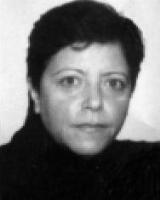
Convicted: Maria Licciardi
When Italian police raided what they believed was Maria Licciardi's hideout in June 2001, they expected a spartan fugitive's den. Instead, they found marble floors, a grand piano, and an outsize Jacuzzi — all tucked inside an attic bristling with surveillance cameras. The most powerful woman in the Neapolitan underworld had vanished again, as she always did, slipping back into the maze of streets where she had been born fifty years earlier. A fellow mafioso once told investigators that Maria Licciardi was more dangerous than Sicily's most-wanted fugitive, Matteo Messina Denaro. Italy's Interior Ministry called her the 'strategic head' of a criminal confederation controlling twenty rival Camorra clans. She brokered peace between warring gangsters, dispatched kill orders through a pentito who later testified that 'talking with Maria was the same as talking with Gennaro, the boss,' and in 1999 recalled an entire heroin shipment on quality-control grounds — a decision the Lo Russo clan defied, triggering at least eleven overdose deaths in a single month. She earned three nicknames: La Madrina, La Piccolina, and La Principessa. She earned each of them. This is the story of the woman who ran Naples.
Convicted: Fusako Shigenobu
On May 28, 2022, a 76-year-old woman in a black hat and gray suit walked out of a Tokyo prison and let her daughter drape a Palestinian keffiyeh around her shoulders. Cameras clicked. Supporters waved Palestinian flags. And Fusako Shigenobu, the woman Western media had dubbed 'the Empress of Terror,' blinked into the daylight after two decades behind bars. For thirty years before her arrest, she had been one of the world's most wanted fugitives: the founder of the Japanese Red Army, a group linked to bombings, hijackings, and one of the deadliest airport massacres in history. On May 30, 1972, three JRA militants opened fire with automatic weapons at Lod Airport near Tel Aviv, killing 26 people and wounding approximately 80 more in a crowded arrival hall. Shigenobu was never charged for that attack. Born in postwar Tokyo to a disgraced ultranationalist father, she transformed herself from a Kikkoman soy sauce office worker into a global revolutionary, building an armed network from the refugee camps of Beirut while raising a stateless daughter in the shadows. This is the story of how she got there, what she built, and what remains unanswered.
Defendant: Leila Khaled
Leila Khaled, born in 1944, is a Palestinian former militant and activist. She was a member of the Popular Front for the Liberation of Palestine (PFLP). Khaled is known for being the first woman to hijack an airplane. Her first hijacking was in 1969 on a flight from Rome to Athens, which was diverted to Damascus. A year later, she attempted another hijack on a flight from Amsterdam to New York, but this was thwarted by the air marshals on board.
Convicted: Doris Marie Payne
She was 86 years old, wearing an electronic ankle monitor from her previous arrest, and she was shoplifting $86 worth of merchandise from a Walmart near Atlanta. That is the last chapter, so far, in the seven-decade criminal career of Doris Marie Payne, a woman who once walked out of a Monte Carlo Cartier boutique with a half-million-dollar diamond hidden in the seam of her girdle. Born in the coal-scarred poverty of Slab Fork, West Virginia, in 1930, Payne became the most prolific jewel thief in American history: over $2 million stolen, 32 aliases, nine passports, ten Social Security numbers, and an FBI file reportedly six feet long. She wore designer clothes into the finest jewelry stores in Paris, Rome, Geneva, and Tokyo, charmed the clerks with a smile, and walked out richer. Judges called her "the Terminator." Interpol tracked her for decades. She expressed no remorse, ever. Now approaching 95, she lives as a free woman in Atlanta. A documentary about her life won an Audience Award at Tribeca. Halle Berry is reportedly attached to play her in a biopic. And through it all, Doris Payne has remained exactly what she always was: the best-dressed thief in the room.
Alleged Offender: Giulia Tofana (also spelled Toffana, Tophana, Tophania; possible true surname: Mangiardi, per modern scholarship)
A woman stands over a pot of soup, a small vial in her hand. The liquid she has just tipped into the broth is colorless, odorless, invisible. Then something breaks inside her. She pulls the bowl away from her husband and confesses everything. That single moment of conscience, recorded in court testimony from the 1659 Roman poison investigation, may have unraveled one of the most elaborate criminal networks in early modern history. At its center, at least according to legend, stood a Sicilian woman named Giulia Tofana, creator of a poison so perfectly engineered it mimicked natural illness, so cleverly packaged it passed as a devotional product bearing the image of a saint. Traditional accounts credit her with over 600 deaths, mostly husbands of women with nowhere else to turn. But modern scholarship tells a different story entirely: the woman behind the myth may have died quietly in her sleep around 1651, years before the trial that made her famous. Her real surname may not have been Tofana at all. And the network eventually prosecuted by Roman authorities may have been run by someone else. This is the true story of Giulia Tofana: part documented history, part deliberate mythology, and wholly extraordinary.
Accused: Onie Virginia Hill
On the evening of June 20, 1947, a .30-caliber carbine was pressed against the window of a Beverly Hills mansion and fired nine times. Benjamin "Bugsy" Siegel, reading the newspaper on the sofa inside, was dead before he hit the floor. His right eye was found fifteen feet away. His girlfriend, Virginia Hill, had flown to Paris four days earlier. She described it as a spontaneous vacation. Nobody believed her. Not the investigators. Not the mob. Not the men who had watched her move money across state lines, carry intelligence between crime families, and charm her way through two decades in the highest ranks of American organized crime. Born dirt-poor in rural Alabama in 1916, Hill had transformed herself from a seventeen-year-old shimmy dancer at a World's Fair restaurant into the only woman ever officially identified as a Mafia associate. The United States Senate called her a "central clearing house" for organized crime intelligence. Everyone else called her the Queen of the Mob. When her body was found beside an Austrian brook in March 1966, authorities ruled it a suicide. Bruises on her neck, an unidentified substance in her blood, and a diary full of mob secrets suggested the real story was considerably more complicated. It almost always was, with Virginia Hill.
Subject: Amanda Marie Knox
In a Florence courtroom on June 5, 2024, Amanda Knox wept. She had crossed the Atlantic for the first time in over a decade to stand before Italian judges on a slander charge she had carried like a stone since the night police interrogated her without a lawyer for fifty-three hours and she signed a statement accusing an innocent man. The court re-convicted her. She had already served the time. Seven months later, Italy's highest court upheld that conviction. It was the final word in a legal saga that had consumed nearly eighteen years of her life, begun when her British roommate Meredith Kercher was found stabbed to death in their shared Perugia apartment in November 2007. Knox was twenty years old. She would be tried four times, convicted twice for murder, acquitted twice, convicted again for slander, and acquitted of murder a final time by a court that cited "stunning flaws" in the original prosecution. Meredith Kercher's actual killer, Rudy Guede, served thirteen years and walked free in 2021. The question the world has argued about ever since is not simply whether Amanda Knox killed anyone. It is about what happens when a justice system, an international media frenzy, and a culture hungry for a villain fix their gaze on a young woman and refuse to look away.
Convicted: Locusta
Locusta, also known as Lucusta, was a notorious poison maker in the 1st-century Roman Empire. She was active during the final two reigns of the Julio-Claudian dynasty and is believed to have been involved in the assassinations of Claudius and Britannicus. Emperor Nero favored her and had her train other poisoners in his service. After Nero's death, Locusta was executed by his successor, Galba.