Claudia Berenice Ochoa Félix

Case Summary
In May 2014, a young woman named Yuriana Castillo Torres was kidnapped off the streets of Culiacán, Sinaloa, and murdered. The men who took her believed she was someone else: a glamorous social media star whose physical resemblance to Kim Kardashian had made her the most-talked-about woman in the narco underworld. The intended target, Claudia Ochoa Félix, was alive. For now. She had been born into the capital of Mexico's deadliest cartel territory, married a Sinaloa Cartel lieutenant, survived a car crash that killed her boyfriend, and allegedly fallen in love with the man who commanded the cartel's most feared assassination squad. By 2014, her Instagram account was a fever dream of gold-plated rifles, stacks of cash, and designer everything, and the world had decided she was the 'Empress of the Ántrax.' She said it was all lies. Mexican authorities said she was never under investigation. A respected journalist who knew the cartel better than almost anyone agreed she showed no signs of actual membership. Then, on a September morning in 2019, she was found dead in a private residence in her hometown. She was 32. The cause was accidental. Some people never believed it.
January 15, 1987, Culiacán, Sinaloa, Mexico(Age: 32)
September 14, 2019, Culiacán, Sinaloa, Mexico (Isla Musala neighborhood, Pontevedra private residence) (Pulmonary aspiration (bronchoaspiration/asphyxia) due to mixture of alcohol and drugs — ruled accidental, no foul play)
Related Cases

Convicted
Connection tags:
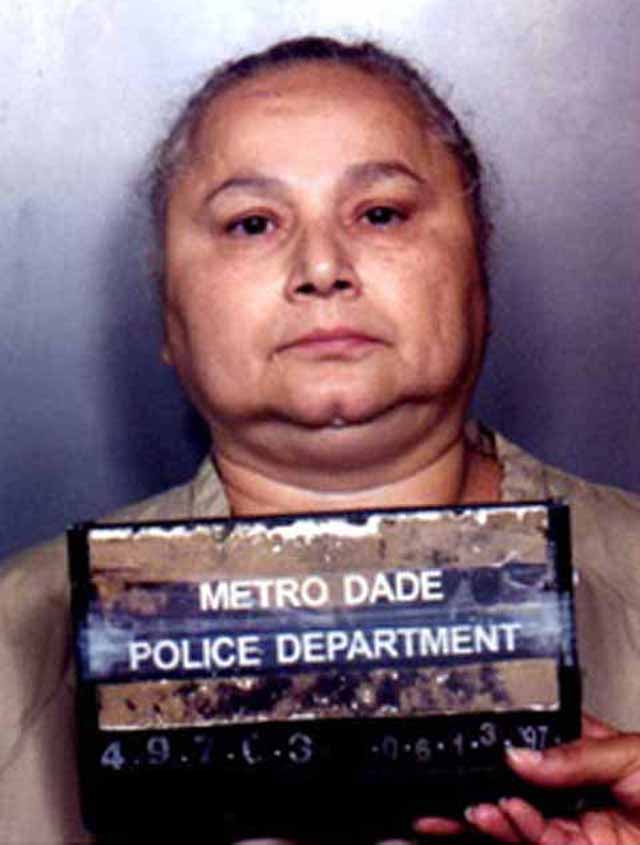
Convicted
Connection tags:

Accused
Connection tags:
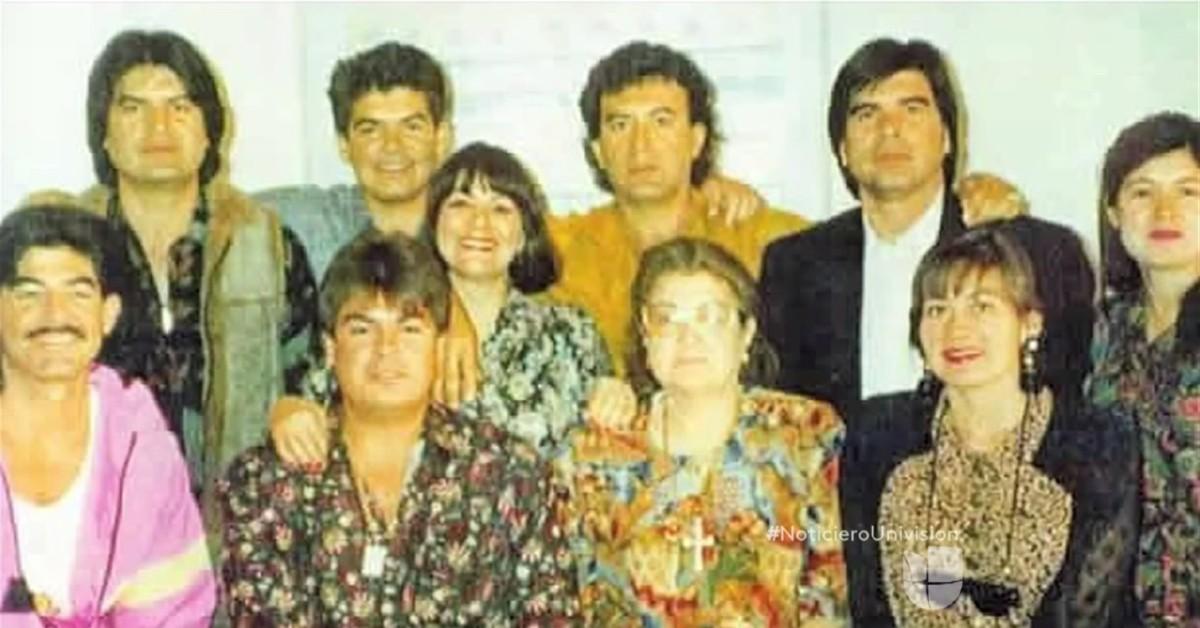
Alleged
Connection tags:

Convicted
Connection tags:
Convicted
Connection tags:
Case Details
The paramedics were called to a private residence in the Isla Musala neighborhood of Culiacán sometime in the early hours of September 14, 2019. The man who let them in had spent the night with Claudia Ochoa Félix. They had come from a nightclub. There had been whiskey, there had been other substances, and at some point in the deep hours of that Saturday morning, Claudia had stopped breathing. By the time the official report was filed at approximately 6:50 that evening, the Sinaloa State Attorney General, Juan José Ríos Estavillo, was standing before cameras to confirm what the necropsy had found: she had asphyxiated, aspirating vomit while intoxicated, a cause of death clinical enough to be found in any medical textbook and violent enough to render a 32-year-old woman unrecognizable from the figure she had cut just five years earlier, when her face was on every screen in the world and people were calling her the Empress of the Ántrax.
The story of Claudia Berenice Ochoa Félix begins in Culiacán, the capital of Sinaloa and a city whose geography, economy, and politics have been inseparable from organized crime for generations. She was born there on January 15, 1987, into a world where the Sinaloa Cartel was not simply a criminal organization but the invisible architecture of daily life. She grew up in a city where the richest men drove the best cars, where wealth announced itself loudly and without apology, and where certain last names opened doors that no legitimate profession could.
She married young. Her husband was Juan Carlos Félix Gastélum, known in cartel circles as El Chavo Félix, a lieutenant within the Sinaloa organization. They had three children together, two sons and a daughter, before eventually separating. El Chavo Félix would go on to marry Teresa Zambada, a daughter of Ismael Zambada García, the cartel's enduring patriarch known as El Mayo, a connection that illustrates the tight social and familial webs that bind cartel hierarchies together in ways that make outsider participation nearly impossible and insider defection nearly fatal.
After her marriage ended, Ochoa Félix became romantically involved with a man named Dorian Trinidad León Angulo, a cartel associate. In 2011, he died in a car accident while she was present. She survived. The details of that night have never been fully reported, but its aftermath left her as a widow of the narco world, alive where others were not, and soon to become entangled with someone far more consequential.
His name was José Rodrigo Aréchiga Gamboa, and he went by El Chino Ántrax. He was the founder and operational commander of Los Ántrax, the Sinaloa Cartel's primary enforcement and assassination unit, a squad that answered directly to El Mayo Zambada and was known for carrying out murders with a precision and ferocity that made it feared even within the cartel structure. Aréchiga Gamboa had cultivated his own social media presence, posting images of himself holding weapons, riding horses, and living extravagantly. He was also, beginning sometime in the early 2010s, romantically linked to Claudia Ochoa Félix.
By 2013, her social media accounts had begun to attract attention far beyond Sinaloa. Her Instagram and Twitter profiles were a curated spectacle: gold-plated AK-47s and AR-15s propped against luxury cars, stacks of American currency arranged as backgrounds for portraits of her children, private jets and yachts and designer bags piled high. The images read like a fever dream of narco excess, every post a flag planted in contested territory between self-promotion and self-destruction. The international press noticed. The comparisons to Kim Kardashian, whom she physically resembled to a striking degree, followed quickly. She was called the Kim Kardashian of organized crime in headlines across Mexico, Britain, and the United States.
Then, on December 30, 2013, Dutch police arrested El Chino Ántrax at Amsterdam Airport Schiphol. He had entered the Netherlands under a false name. The arrest came at the request of the United States, routed through Interpol, on drug trafficking charges. The man who led Los Ántrax was in handcuffs in an airport in Europe, and the question that immediately consumed the Mexican press was the same question it always asks when a cartel commander falls: who takes over?
The answer the media settled on, without any official confirmation, was Claudia Ochoa Félix. Reports began circulating in early 2014, picked up by outlets in Mexico and then abroad, claiming she had assumed control of Los Ántrax. The nickname that attached itself to her during those weeks, La Emperatriz de Los Ántrax, the Empress of the Ántrax, spread through social media faster than any correction could follow. Her follower counts climbed. Her photographs were reprinted in newspapers. She became, in the language of the internet, viral.
Then someone died in her place.
In May 2014, a young woman named Yuriana Castillo Torres was abducted from the streets of Culiacán. She was murdered. Reports indicated that the men who took her believed she was Ochoa Félix; the two women looked alike, and in a city where resemblance to the wrong person can be a death sentence, Castillo Torres paid the ultimate price for a face she could not control. The incident frightened people close to Ochoa Félix and made her own precarious position unmistakable.
One month later, she held a press conference.
It was June 2014, and Claudia Ochoa Félix stood before reporters in Culiacán with a lawyer at her side and one of her young children nearby. She was composed, direct, and visibly angry. She denied any involvement in organized crime, categorically and without qualification. She said her children were being bullied. She said her mother was suffering from anxiety. She said her physical safety was in danger. She claimed that the most incriminating social media accounts being attributed to her were operated by impersonators, and she stated that she had filed formal complaints against those accounts. On Twitter, she described the allegations against her as cowardly lies and slander.
What made the press conference unusual, in retrospect, was how well it was supported by the people whose job it was to know the truth. Javier Valdez, the investigative journalist based in Culiacán who had spent years documenting the inner workings of the Sinaloa Cartel with a granularity and courage that few reporters matched (he would be murdered in 2017, a loss that shook Mexican journalism to its foundation), stated at the time that there were no credible signs Ochoa Félix held any actual role within Los Ántrax. Mexican authorities confirmed she was not under criminal investigation. The DEA issued no indictment against her. No charges were ever filed, no assets ever seized, no warrant ever issued by any law enforcement body in Mexico or the United States.
The narrative had outrun the facts. It often does.
There is a particular kind of visibility that attaches to women in proximity to cartel power, a visibility that is both amplified and distorted by the social media age. Ochoa Félix had, undeniably, married a cartel lieutenant. She had been in a relationship with the man who ran the cartel's hit squad. Her brother, Sergio Ochoa, was reported to be the partner of Alejandrina Guzmán Salazar, a daughter of Joaquín El Chapo Guzmán, placing him in the social orbit of Los Chapitos, the Guzmán sons who inherited significant portions of the cartel's criminal infrastructure. These connections were real. They were also not, by themselves, evidence of her personal participation in criminal activity, a distinction the internet proved largely unwilling to make.
She continued to post. Her following, spread across Twitter, Instagram, and Facebook, eventually exceeded 200,000. The photographs evolved, as social media photographs always do, tracking the arc of her life in carefully curated fragments. Over the years following the press conference, the fever pitch around her name gradually cooled, replaced by newer scandals and newer faces from the narco world's inexhaustible supply of the photogenic and the dangerous.
But Culiacán had not finished with her.
On the night of September 13, 2019, she went out. The nightclub district of central Culiacán on a Friday night is exactly what it sounds like in a city like that: loud, expensive, operating under a set of unwritten rules that everyone understands and nobody articulates. She left with a companion, returned to the private residence on Isla Musala, in a development called Pontevedra, and the night continued. Whiskey. Other substances. The hours passed.
He couldn't wake her.
The necropsy performed at SEMEFO, the state forensic medical service, was unambiguous. Bronchoaspiration, the clinical term for what happens when a person in an unconscious or incapacitated state inhales vomit into the lungs: suffocation by the body's own reflexes, short-circuited by intoxication. The ruling was accidental. Homicide was ruled out. Foul play was ruled out. The body was returned to her family, and Claudia Berenice Ochoa Félix was buried at Parque Funeral San Martín, south of the city where she was born thirty-two years earlier.
The internet, predictably, did not accept the ruling. Comment sections filled with theories. She had been silenced because she knew too much. The companion in the house that night was never publicly identified. The timing, in a city where violence had again been escalating, felt suspicious to people inclined toward suspicion.
Six months later, those same theories gained a grim new dimension. José Rodrigo Aréchiga Gamboa, El Chino Ántrax, had pleaded guilty to U.S. federal drug trafficking charges in 2015 and received a sentence of roughly seven years and three months. He was released to house arrest in March 2020. In May 2020, he vanished. On May 15, 2020, his body was found in Sinaloa alongside two others, one of whom was his sister. The man who had once commanded the cartel's most feared killing unit had himself been killed, and his death opened every question that had been temporarily quieted about what he knew, who he had talked to, and what consequences had been waiting for him since the moment he stepped off that plane in Amsterdam.
What is true about Claudia Ochoa Félix is this: she was a woman born into a world that left her very few clean exits. She had married into cartel lineage. She had loved a man who built and commanded a death squad. She had survived circumstances, a car crash, a mistaken-identity murder that nearly caught her, the arrest of her partner, that would have broken or killed others. She had stood in front of cameras and told reporters that the story being told about her was wrong. And then she had died, alone with a stranger in the small hours of a September morning, in the same city that had produced her, in the state that had shaped her, of causes the authorities found unremarkable.
Her social media accounts went dark. Her children remained. The Sinaloa Cartel continued its business, as it always has, absorbing the living and the dead alike into its long, indifferent memory.
Whether she was the Empress of the Ántrax or a woman whose proximity to power was mistaken for power itself, Claudia Ochoa Félix left behind something that the narco world rarely allows: ambiguity. The truth of her life sits in the space between the gold-plated rifle and the press conference, between the official ruling and the unanswered questions, in the particular silence of a Culiacán morning when the paramedics arrived too late.
Timeline
Birth in the Heart of Sinaloa Cartel Territory
Claudia Berenice Ochoa Félix was born on January 15, 1987, in Culiacán, Sinaloa, Mexico — the capital of a state synonymous with the Sinaloa Cartel. Growing up in this environment would place her in close proximity to the cartel's social and familial networks from an early age.
Her birthplace and upbringing in Culiacán set the stage for her later connections to the Sinaloa Cartel's inner circle through marriage and romantic relationships.
Marriage to Sinaloa Cartel Lieutenant
Claudia Ochoa Félix married Juan Carlos Félix Gastélum, alias 'El Chavo Félix', a lieutenant within the Sinaloa Cartel. The couple had three children together — two sons and one daughter — before eventually separating. El Chavo Félix later married Teresa Zambada, a daughter of cartel boss Ismael 'El Mayo' Zambada, further cementing his cartel ties.
This marriage embedded Ochoa Félix within the upper social strata of the Sinaloa Cartel's familial network, a connection that would follow her throughout her life and fuel later media speculation.
Romantic Partner Dies in Car Accident
After separating from El Chavo Félix, Ochoa Félix became romantically involved with Dorian Trinidad León Angulo, a cartel associate. In 2011, León Angulo died in a car accident while Ochoa Félix was present in the vehicle; she survived the crash. The incident left her a survivor of a violent and dangerous social world.
The death of her partner underscored the perilous environment surrounding her and preceded her subsequent relationship with one of the Sinaloa Cartel's most feared enforcers.
Relationship with 'El Chino Ántrax' and Rise to Infamy
Ochoa Félix became romantically linked to José Rodrigo Aréchiga Gamboa, alias 'El Chino Ántrax', the founder and commander of Los Ántrax — the primary assassination and enforcement unit of the Sinaloa Cartel, answering directly to El Mayo Zambada. Her social media presence began flourishing during this period, showcasing a lavish narco lifestyle including custom pink and gold-plated AK-47s, sports cars, private jets, yachts, and cash-covered beds.
Her association with El Chino Ántrax and her extravagant social media activity brought her to international attention and earned her the nickname 'the Kim Kardashian of organized crime.'
El Chino Ántrax Arrested at Amsterdam Airport
On December 30, 2013, Dutch police arrested José Rodrigo Aréchiga Gamboa ('El Chino Ántrax') at Amsterdam Airport Schiphol after he entered the Netherlands under a false identity. The arrest was executed at the request of the United States via Interpol on drug trafficking charges. His capture immediately triggered speculation in Mexican and British media that Ochoa Félix had assumed command of Los Ántrax.
El Chino Ántrax's arrest was the pivotal event that thrust Ochoa Félix into the global spotlight as the alleged new leader of Los Ántrax, earning her the title 'La Emperatriz de Los Ántrax.'
Mistaken Identity Murder of Yuriana Castillo Torres
In May 2014, a woman named Yuriana Castillo Torres was kidnapped and murdered in Culiacán in what was reported as a case of mistaken identity — her abductors allegedly believed she was Ochoa Félix due to their striking physical resemblance. The killing sent a chilling signal about the real dangers Ochoa Félix faced, whether or not she held any formal cartel role.
The murder of a woman mistaken for her demonstrated that Ochoa Félix's public profile had made her a potential target, regardless of whether the allegations against her were true.
Press Conference Denying Cartel Involvement
In June 2014, Ochoa Félix held a formal press conference in Culiacán, flanked by her lawyer and one of her young children, categorically denying any involvement in organized crime or Los Ántrax. She stated that her children were being bullied at school, her mother was suffering severe anxiety, and her physical safety was at risk. She claimed most incriminating social media accounts were run by impersonators, filed a formal complaint against them, and on Twitter denounced the allegations as 'cowardly lies and slander.' Investigative journalist Javier Valdez, a recognized expert on the Sinaloa Cartel, stated there were no credible signs she was actually part of Los Ántrax, and Mexican authorities confirmed she was never under criminal investigation.
Her public denial — supported by the absence of any charges, indictments, or asset seizures from the DEA or Mexican federal authorities — remains the only official record of her response to the cartel allegations.
Rumors Surfaced of Los Ántrax Leadership
Rumors began circulating on social media that Claudia Ochoa Félix was a high-ranking leader of Los Ántrax, a murder squad of the Sinaloa Cartel. The claims spread rapidly across Mexican and British media outlets, though no official law enforcement agency ever confirmed them.
These unverified rumors transformed Ochoa Félix from a social media personality into an internationally recognized figure in narco-culture discourse.
Denial of Involvement Reiterated
Claudia Ochoa Félix denied her involvement in organized crime and any association with the Sinaloa Cartel, pushing back against the rapidly spreading media narrative. No law enforcement agency — including the DEA or Mexican federal authorities — ever filed charges, issued indictments, or executed asset seizures against her.
Her repeated denials, combined with the complete absence of any formal legal action against her, complicated the media narrative that she was a cartel leader.
Death by Bronchoaspiration in Culiacán
On the night of September 13–14, 2019, Ochoa Félix attended a nightclub in central Culiacán and returned to a private residence in the Isla Musala neighborhood with an unidentified male companion, where they continued drinking whiskey and using drugs. On the morning of September 14, her companion was unable to wake her and called paramedics; she was pronounced dead at the scene, with the official report filed at approximately 6:50 p.m. Sinaloa State Attorney General Juan José Ríos Estavillo confirmed the cause of death as bronchoaspiration — asphyxiation after aspirating vomit while intoxicated — ruling out homicide or foul play. She was 32 years old and was buried at Parque Funeral San Martín, south of Culiacán, survived by her three children.
Her accidental death closed the chapter on one of the most sensationalized figures in narco-culture history, though online speculation about assassination persisted — fueled further by the murder of El Chino Ántrax just eight months later in May 2020.
Crime Location
Photos
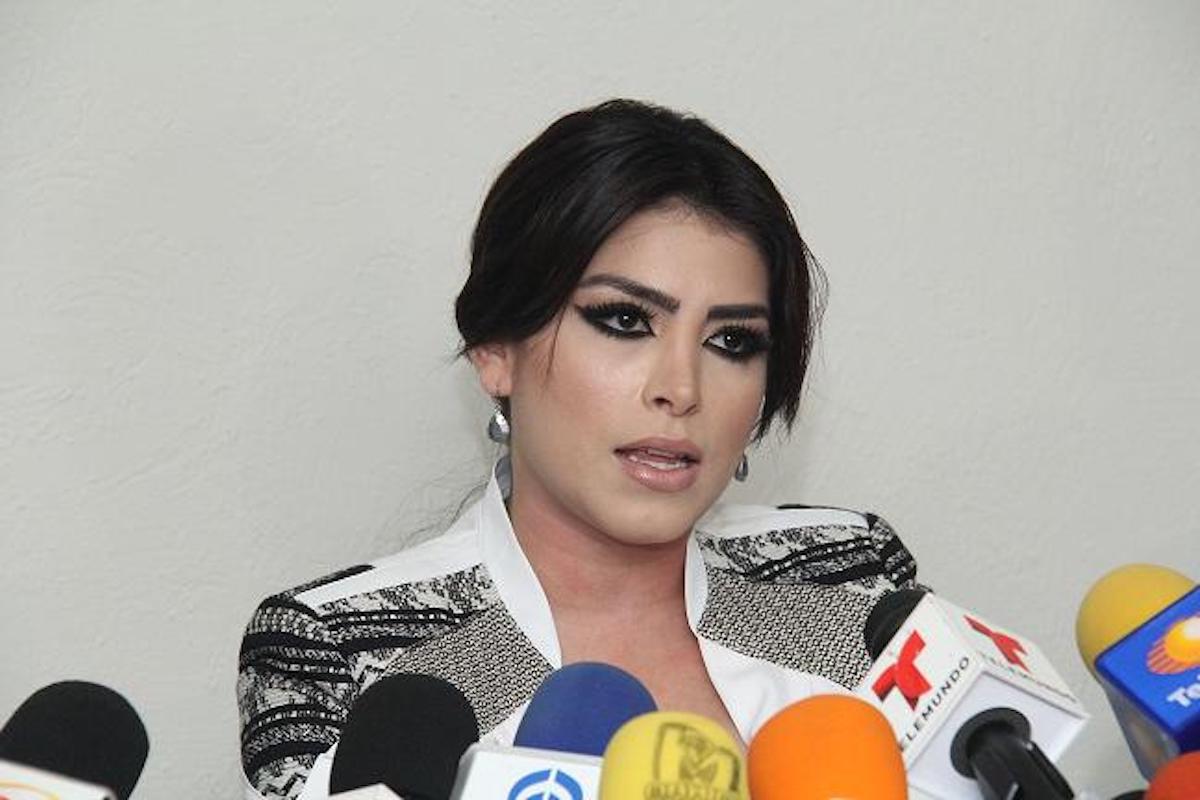
Claudia Ochoa Félix - Primary image
Sources
- Anthrax Empress Instagram Star Found Dead
- Meet the Mexican Kim Kardashian Who Heads Drug Cartel Hit Squad
- Narcoculture? Narco-trafficking as a semiosphere of anticulture
- Claudia Ochoa Félix — Wikipedia
- José Rodrigo Aréchiga Gamboa (El Chino Ántrax) — DEA / Court Records
- El Chino Ántrax Found Dead in Sinaloa After Going Missing
- Sinaloa State Attorney General Statement on Claudia Ochoa Félix Death
Frequently Asked Questions
Table of Contents
Case Summary
In May 2014, a young woman named Yuriana Castillo Torres was kidnapped off the streets of Culiacán, Sinaloa, and murdered. The men who took her believed she was someone else: a glamorous social media star whose physical resemblance to Kim Kardashian had made her the most-talked-about woman in the narco underworld. The intended target, Claudia Ochoa Félix, was alive. For now. She had been born into the capital of Mexico's deadliest cartel territory, married a Sinaloa Cartel lieutenant, survived a car crash that killed her boyfriend, and allegedly fallen in love with the man who commanded the cartel's most feared assassination squad. By 2014, her Instagram account was a fever dream of gold-plated rifles, stacks of cash, and designer everything, and the world had decided she was the 'Empress of the Ántrax.' She said it was all lies. Mexican authorities said she was never under investigation. A respected journalist who knew the cartel better than almost anyone agreed she showed no signs of actual membership. Then, on a September morning in 2019, she was found dead in a private residence in her hometown. She was 32. The cause was accidental. Some people never believed it.
January 15, 1987, Culiacán, Sinaloa, Mexico(Age: 32)
September 14, 2019, Culiacán, Sinaloa, Mexico (Isla Musala neighborhood, Pontevedra private residence) (Pulmonary aspiration (bronchoaspiration/asphyxia) due to mixture of alcohol and drugs — ruled accidental, no foul play)
Case Details
The paramedics were called to a private residence in the Isla Musala neighborhood of Culiacán sometime in the early hours of September 14, 2019. The man who let them in had spent the night with Claudia Ochoa Félix. They had come from a nightclub. There had been whiskey, there had been other substances, and at some point in the deep hours of that Saturday morning, Claudia had stopped breathing. By the time the official report was filed at approximately 6:50 that evening, the Sinaloa State Attorney General, Juan José Ríos Estavillo, was standing before cameras to confirm what the necropsy had found: she had asphyxiated, aspirating vomit while intoxicated, a cause of death clinical enough to be found in any medical textbook and violent enough to render a 32-year-old woman unrecognizable from the figure she had cut just five years earlier, when her face was on every screen in the world and people were calling her the Empress of the Ántrax.
The story of Claudia Berenice Ochoa Félix begins in Culiacán, the capital of Sinaloa and a city whose geography, economy, and politics have been inseparable from organized crime for generations. She was born there on January 15, 1987, into a world where the Sinaloa Cartel was not simply a criminal organization but the invisible architecture of daily life. She grew up in a city where the richest men drove the best cars, where wealth announced itself loudly and without apology, and where certain last names opened doors that no legitimate profession could.
She married young. Her husband was Juan Carlos Félix Gastélum, known in cartel circles as El Chavo Félix, a lieutenant within the Sinaloa organization. They had three children together, two sons and a daughter, before eventually separating. El Chavo Félix would go on to marry Teresa Zambada, a daughter of Ismael Zambada García, the cartel's enduring patriarch known as El Mayo, a connection that illustrates the tight social and familial webs that bind cartel hierarchies together in ways that make outsider participation nearly impossible and insider defection nearly fatal.
After her marriage ended, Ochoa Félix became romantically involved with a man named Dorian Trinidad León Angulo, a cartel associate. In 2011, he died in a car accident while she was present. She survived. The details of that night have never been fully reported, but its aftermath left her as a widow of the narco world, alive where others were not, and soon to become entangled with someone far more consequential.
His name was José Rodrigo Aréchiga Gamboa, and he went by El Chino Ántrax. He was the founder and operational commander of Los Ántrax, the Sinaloa Cartel's primary enforcement and assassination unit, a squad that answered directly to El Mayo Zambada and was known for carrying out murders with a precision and ferocity that made it feared even within the cartel structure. Aréchiga Gamboa had cultivated his own social media presence, posting images of himself holding weapons, riding horses, and living extravagantly. He was also, beginning sometime in the early 2010s, romantically linked to Claudia Ochoa Félix.
By 2013, her social media accounts had begun to attract attention far beyond Sinaloa. Her Instagram and Twitter profiles were a curated spectacle: gold-plated AK-47s and AR-15s propped against luxury cars, stacks of American currency arranged as backgrounds for portraits of her children, private jets and yachts and designer bags piled high. The images read like a fever dream of narco excess, every post a flag planted in contested territory between self-promotion and self-destruction. The international press noticed. The comparisons to Kim Kardashian, whom she physically resembled to a striking degree, followed quickly. She was called the Kim Kardashian of organized crime in headlines across Mexico, Britain, and the United States.
Then, on December 30, 2013, Dutch police arrested El Chino Ántrax at Amsterdam Airport Schiphol. He had entered the Netherlands under a false name. The arrest came at the request of the United States, routed through Interpol, on drug trafficking charges. The man who led Los Ántrax was in handcuffs in an airport in Europe, and the question that immediately consumed the Mexican press was the same question it always asks when a cartel commander falls: who takes over?
The answer the media settled on, without any official confirmation, was Claudia Ochoa Félix. Reports began circulating in early 2014, picked up by outlets in Mexico and then abroad, claiming she had assumed control of Los Ántrax. The nickname that attached itself to her during those weeks, La Emperatriz de Los Ántrax, the Empress of the Ántrax, spread through social media faster than any correction could follow. Her follower counts climbed. Her photographs were reprinted in newspapers. She became, in the language of the internet, viral.
Then someone died in her place.
In May 2014, a young woman named Yuriana Castillo Torres was abducted from the streets of Culiacán. She was murdered. Reports indicated that the men who took her believed she was Ochoa Félix; the two women looked alike, and in a city where resemblance to the wrong person can be a death sentence, Castillo Torres paid the ultimate price for a face she could not control. The incident frightened people close to Ochoa Félix and made her own precarious position unmistakable.
One month later, she held a press conference.
It was June 2014, and Claudia Ochoa Félix stood before reporters in Culiacán with a lawyer at her side and one of her young children nearby. She was composed, direct, and visibly angry. She denied any involvement in organized crime, categorically and without qualification. She said her children were being bullied. She said her mother was suffering from anxiety. She said her physical safety was in danger. She claimed that the most incriminating social media accounts being attributed to her were operated by impersonators, and she stated that she had filed formal complaints against those accounts. On Twitter, she described the allegations against her as cowardly lies and slander.
What made the press conference unusual, in retrospect, was how well it was supported by the people whose job it was to know the truth. Javier Valdez, the investigative journalist based in Culiacán who had spent years documenting the inner workings of the Sinaloa Cartel with a granularity and courage that few reporters matched (he would be murdered in 2017, a loss that shook Mexican journalism to its foundation), stated at the time that there were no credible signs Ochoa Félix held any actual role within Los Ántrax. Mexican authorities confirmed she was not under criminal investigation. The DEA issued no indictment against her. No charges were ever filed, no assets ever seized, no warrant ever issued by any law enforcement body in Mexico or the United States.
The narrative had outrun the facts. It often does.
There is a particular kind of visibility that attaches to women in proximity to cartel power, a visibility that is both amplified and distorted by the social media age. Ochoa Félix had, undeniably, married a cartel lieutenant. She had been in a relationship with the man who ran the cartel's hit squad. Her brother, Sergio Ochoa, was reported to be the partner of Alejandrina Guzmán Salazar, a daughter of Joaquín El Chapo Guzmán, placing him in the social orbit of Los Chapitos, the Guzmán sons who inherited significant portions of the cartel's criminal infrastructure. These connections were real. They were also not, by themselves, evidence of her personal participation in criminal activity, a distinction the internet proved largely unwilling to make.
She continued to post. Her following, spread across Twitter, Instagram, and Facebook, eventually exceeded 200,000. The photographs evolved, as social media photographs always do, tracking the arc of her life in carefully curated fragments. Over the years following the press conference, the fever pitch around her name gradually cooled, replaced by newer scandals and newer faces from the narco world's inexhaustible supply of the photogenic and the dangerous.
But Culiacán had not finished with her.
On the night of September 13, 2019, she went out. The nightclub district of central Culiacán on a Friday night is exactly what it sounds like in a city like that: loud, expensive, operating under a set of unwritten rules that everyone understands and nobody articulates. She left with a companion, returned to the private residence on Isla Musala, in a development called Pontevedra, and the night continued. Whiskey. Other substances. The hours passed.
He couldn't wake her.
The necropsy performed at SEMEFO, the state forensic medical service, was unambiguous. Bronchoaspiration, the clinical term for what happens when a person in an unconscious or incapacitated state inhales vomit into the lungs: suffocation by the body's own reflexes, short-circuited by intoxication. The ruling was accidental. Homicide was ruled out. Foul play was ruled out. The body was returned to her family, and Claudia Berenice Ochoa Félix was buried at Parque Funeral San Martín, south of the city where she was born thirty-two years earlier.
The internet, predictably, did not accept the ruling. Comment sections filled with theories. She had been silenced because she knew too much. The companion in the house that night was never publicly identified. The timing, in a city where violence had again been escalating, felt suspicious to people inclined toward suspicion.
Six months later, those same theories gained a grim new dimension. José Rodrigo Aréchiga Gamboa, El Chino Ántrax, had pleaded guilty to U.S. federal drug trafficking charges in 2015 and received a sentence of roughly seven years and three months. He was released to house arrest in March 2020. In May 2020, he vanished. On May 15, 2020, his body was found in Sinaloa alongside two others, one of whom was his sister. The man who had once commanded the cartel's most feared killing unit had himself been killed, and his death opened every question that had been temporarily quieted about what he knew, who he had talked to, and what consequences had been waiting for him since the moment he stepped off that plane in Amsterdam.
What is true about Claudia Ochoa Félix is this: she was a woman born into a world that left her very few clean exits. She had married into cartel lineage. She had loved a man who built and commanded a death squad. She had survived circumstances, a car crash, a mistaken-identity murder that nearly caught her, the arrest of her partner, that would have broken or killed others. She had stood in front of cameras and told reporters that the story being told about her was wrong. And then she had died, alone with a stranger in the small hours of a September morning, in the same city that had produced her, in the state that had shaped her, of causes the authorities found unremarkable.
Her social media accounts went dark. Her children remained. The Sinaloa Cartel continued its business, as it always has, absorbing the living and the dead alike into its long, indifferent memory.
Whether she was the Empress of the Ántrax or a woman whose proximity to power was mistaken for power itself, Claudia Ochoa Félix left behind something that the narco world rarely allows: ambiguity. The truth of her life sits in the space between the gold-plated rifle and the press conference, between the official ruling and the unanswered questions, in the particular silence of a Culiacán morning when the paramedics arrived too late.
Timeline
Birth in the Heart of Sinaloa Cartel Territory
Claudia Berenice Ochoa Félix was born on January 15, 1987, in Culiacán, Sinaloa, Mexico — the capital of a state synonymous with the Sinaloa Cartel. Growing up in this environment would place her in close proximity to the cartel's social and familial networks from an early age.
Her birthplace and upbringing in Culiacán set the stage for her later connections to the Sinaloa Cartel's inner circle through marriage and romantic relationships.
Marriage to Sinaloa Cartel Lieutenant
Claudia Ochoa Félix married Juan Carlos Félix Gastélum, alias 'El Chavo Félix', a lieutenant within the Sinaloa Cartel. The couple had three children together — two sons and one daughter — before eventually separating. El Chavo Félix later married Teresa Zambada, a daughter of cartel boss Ismael 'El Mayo' Zambada, further cementing his cartel ties.
This marriage embedded Ochoa Félix within the upper social strata of the Sinaloa Cartel's familial network, a connection that would follow her throughout her life and fuel later media speculation.
Romantic Partner Dies in Car Accident
After separating from El Chavo Félix, Ochoa Félix became romantically involved with Dorian Trinidad León Angulo, a cartel associate. In 2011, León Angulo died in a car accident while Ochoa Félix was present in the vehicle; she survived the crash. The incident left her a survivor of a violent and dangerous social world.
The death of her partner underscored the perilous environment surrounding her and preceded her subsequent relationship with one of the Sinaloa Cartel's most feared enforcers.
Relationship with 'El Chino Ántrax' and Rise to Infamy
Ochoa Félix became romantically linked to José Rodrigo Aréchiga Gamboa, alias 'El Chino Ántrax', the founder and commander of Los Ántrax — the primary assassination and enforcement unit of the Sinaloa Cartel, answering directly to El Mayo Zambada. Her social media presence began flourishing during this period, showcasing a lavish narco lifestyle including custom pink and gold-plated AK-47s, sports cars, private jets, yachts, and cash-covered beds.
Her association with El Chino Ántrax and her extravagant social media activity brought her to international attention and earned her the nickname 'the Kim Kardashian of organized crime.'
El Chino Ántrax Arrested at Amsterdam Airport
On December 30, 2013, Dutch police arrested José Rodrigo Aréchiga Gamboa ('El Chino Ántrax') at Amsterdam Airport Schiphol after he entered the Netherlands under a false identity. The arrest was executed at the request of the United States via Interpol on drug trafficking charges. His capture immediately triggered speculation in Mexican and British media that Ochoa Félix had assumed command of Los Ántrax.
El Chino Ántrax's arrest was the pivotal event that thrust Ochoa Félix into the global spotlight as the alleged new leader of Los Ántrax, earning her the title 'La Emperatriz de Los Ántrax.'
Mistaken Identity Murder of Yuriana Castillo Torres
In May 2014, a woman named Yuriana Castillo Torres was kidnapped and murdered in Culiacán in what was reported as a case of mistaken identity — her abductors allegedly believed she was Ochoa Félix due to their striking physical resemblance. The killing sent a chilling signal about the real dangers Ochoa Félix faced, whether or not she held any formal cartel role.
The murder of a woman mistaken for her demonstrated that Ochoa Félix's public profile had made her a potential target, regardless of whether the allegations against her were true.
Press Conference Denying Cartel Involvement
In June 2014, Ochoa Félix held a formal press conference in Culiacán, flanked by her lawyer and one of her young children, categorically denying any involvement in organized crime or Los Ántrax. She stated that her children were being bullied at school, her mother was suffering severe anxiety, and her physical safety was at risk. She claimed most incriminating social media accounts were run by impersonators, filed a formal complaint against them, and on Twitter denounced the allegations as 'cowardly lies and slander.' Investigative journalist Javier Valdez, a recognized expert on the Sinaloa Cartel, stated there were no credible signs she was actually part of Los Ántrax, and Mexican authorities confirmed she was never under criminal investigation.
Her public denial — supported by the absence of any charges, indictments, or asset seizures from the DEA or Mexican federal authorities — remains the only official record of her response to the cartel allegations.
Rumors Surfaced of Los Ántrax Leadership
Rumors began circulating on social media that Claudia Ochoa Félix was a high-ranking leader of Los Ántrax, a murder squad of the Sinaloa Cartel. The claims spread rapidly across Mexican and British media outlets, though no official law enforcement agency ever confirmed them.
These unverified rumors transformed Ochoa Félix from a social media personality into an internationally recognized figure in narco-culture discourse.
Denial of Involvement Reiterated
Claudia Ochoa Félix denied her involvement in organized crime and any association with the Sinaloa Cartel, pushing back against the rapidly spreading media narrative. No law enforcement agency — including the DEA or Mexican federal authorities — ever filed charges, issued indictments, or executed asset seizures against her.
Her repeated denials, combined with the complete absence of any formal legal action against her, complicated the media narrative that she was a cartel leader.
Death by Bronchoaspiration in Culiacán
On the night of September 13–14, 2019, Ochoa Félix attended a nightclub in central Culiacán and returned to a private residence in the Isla Musala neighborhood with an unidentified male companion, where they continued drinking whiskey and using drugs. On the morning of September 14, her companion was unable to wake her and called paramedics; she was pronounced dead at the scene, with the official report filed at approximately 6:50 p.m. Sinaloa State Attorney General Juan José Ríos Estavillo confirmed the cause of death as bronchoaspiration — asphyxiation after aspirating vomit while intoxicated — ruling out homicide or foul play. She was 32 years old and was buried at Parque Funeral San Martín, south of Culiacán, survived by her three children.
Her accidental death closed the chapter on one of the most sensationalized figures in narco-culture history, though online speculation about assassination persisted — fueled further by the murder of El Chino Ántrax just eight months later in May 2020.
Crime Location
Photos
Claudia Ochoa Félix - Primary image
Sources
- Anthrax Empress Instagram Star Found Dead
- Meet the Mexican Kim Kardashian Who Heads Drug Cartel Hit Squad
- Narcoculture? Narco-trafficking as a semiosphere of anticulture
- Claudia Ochoa Félix — Wikipedia
- José Rodrigo Aréchiga Gamboa (El Chino Ántrax) — DEA / Court Records
- El Chino Ántrax Found Dead in Sinaloa After Going Missing
- Sinaloa State Attorney General Statement on Claudia Ochoa Félix Death
Frequently Asked Questions
Related Cases
Convicted
Connection tags:
Convicted
Connection tags:
Accused
Connection tags:
Alleged
Connection tags:
Convicted
Connection tags:
Convicted
Connection tags:
Tags
Popular Culture
documentary (2015)
Various documentary segments and news magazine programs (Vice, Fusion, Univision) featured Ochoa Félix's social media imagery as emblematic of narco lifestyle branding.
book (2018)
Academic paper by Jacob Kopecky uses Ochoa Félix's Instagram photos with gold-plated AK-47s as primary examples of narco semiotic self-presentation.