Elena Kiejliches

Case Summary
Three days after her husband was shot to death inside their Staten Island home, Elena Kiejliches packed her two young children into the car and drove to Disney World. When she returned, she told authorities that Borys Kiejliches might have simply walked out on the marriage. What investigators eventually uncovered was something far darker: a calculated killing rooted in an eighteen-month affair with an aspiring rapper she had met at a Manhattan traffic light, a man she had showered with more than $85,000 in cash, jewelry, and gifts. The body of Borys Kiejliches, a jet-fuel magnate worth an estimated $3 million, turned up a month later in a marsh near the Belt Parkway, wrapped in carpet and stuffed in a cardboard barrel. Elena has maintained her innocence ever since, and her defense attorney still believes her. But a Staten Island jury did not. In 2002, she was sentenced to 22 years to life. This is the story of a marriage, a murder, and a cover-up that stretched from a quiet hilltop neighborhood all the way to a Florida theme park.
April 15, 1966, Russia (exact city unknown)(Age: 60)
Related Cases

Convicted
Connection tags:

Convicted
Connection tags:

Convicted
Connection tags:
Convicted
Connection tags:

Convicted
Connection tags:
Convicted
Connection tags:
Case Details
The body was found on a Tuesday in April, more than a month after the killing. In a marsh near Howard Beach, on the ragged edge where Brooklyn and Queens share a waterline, someone had dumped a cardboard barrel containing the remains of a man wrapped in carpet. The carpet, investigators would later learn, had come from a Land Rover. The man was Borys Kiejliches, a jet-fuel magnate who had built a $3 million fortune and settled his family in one of Staten Island's most exclusive neighborhoods. His wife had spent the past month telling anyone who asked that he might have simply left.
Todt Hill rises above the flatlands of Staten Island like a quiet rebuke to the borough's working-class reputation. The neighborhood sits atop the highest natural point on the Atlantic coast south of Maine, its winding streets lined with stone-gated estates and the kind of privacy that money buys without advertising itself. At 91 East Loop Road, Borys and Elena Kiejliches had built something that looked, from the outside, exactly like the American dream.
Elena had come a long way to get there. Born in Russia in 1966, she had immigrated to the United States and, in time, married Borys, a businessman whose jet-fuel company had made him genuinely wealthy. They had two children together: a son who was eight years old in the spring of 2000, and a daughter who had just turned five. Borys also had an adult son from a previous marriage. By any outward measure, the Kiejliches family had arrived.
The trouble with outward measures is what they conceal.
For eighteen months before Borys died, Elena had been conducting an affair with a man named Messiah Justice. She met him the way that only New York could arrange: at a traffic light on Seventh Avenue in Manhattan, a city of eight million souls where the right glance at the wrong moment can change everything. Justice was an aspiring rapper and, by the prosecution's characterization, a skilled con man. He was charismatic and attentive, and Elena fell hard.
She fell expensively, too. Over the course of their affair, Elena gave Justice approximately $50,000 in one cash installment and $35,000 in another. She bought him jewelry. She bought him cell phones. She attempted to purchase him a Rolls Royce with a sticker price of $100,000. These were not the expenditures of a woman conducting a casual dalliance; they were the expenditures of a woman who had convinced herself, or perhaps allowed herself to be convinced, that what she had found was worth any price.
What the prosecution argued happened next followed a grim logic. Borys discovered the affair. He threatened divorce, and with it, he threatened to leave Elena with nothing. A man worth $3 million, in a marriage of eight years, with assets that could be restructured and shielded: the financial calculus was not in Elena's favor. The prosecution's theory was that she decided to solve the problem before it could solve her.
On the night of March 24, 2000, while Borys slept, someone shot him.
What happened in the hours immediately following is where the two versions of this story diverge most sharply, and where the case against Elena Kiejliches both crystallizes and, depending on your reading, begins to soften.
The version Messiah Justice told prosecutors: Elena called him and said something terrible had happened. He drove to Staten Island. He found Borys dead. He helped wrap the body in carpet stripped from the family Land Rover. On March 25, he purchased a cardboard barrel. He transported the body to a marsh near the Belt Parkway, in the liminal territory where Brooklyn edges into Queens, and he dumped it.
The version Elena's defense offered: Justice arrived at the house, found Borys alive, followed him to the basement, struck him in the head, and shot him with a 9mm handgun. He then threatened Elena and her children, forcing her compliance in the cover-up under duress.
Both versions agree on one thing: Elena Kiejliches did not call the police that night.
Instead, she packed her children and drove to Florida.
The Disney World trip is the detail that lodges in the mind and refuses to leave. Three days after her husband died, Elena took her eight-year-old son and her five-year-old daughter to the happiest place on earth. Children that age ask questions. They notice absences. What she told them, what they understood, what they saw in their mother's face during those days in Orlando: none of that is part of the public record. What is part of the record is that she went, and she came back, and she told authorities her husband might have walked out on the marriage.
Meanwhile, the machinery of a missing-person investigation was turning. Borys's $125,000 Mercedes-Benz turned up abandoned near the Brighton Beach Boardwalk on April 9, 2000. His credit card records showed no activity after March 23. A man worth $3 million with a luxury car and a joint investment account at Salomon Smith Barney does not simply vanish into the Atlantic. Investigators knew it. They just needed to prove it.
Messiah Justice was arrested on May 5, 2000. Whatever loyalty he felt toward Elena Kiejliches dissolved quickly in the face of a murder charge. By May 11, he had entered a cooperation agreement with prosecutors. Elena was indicted by a Richmond County Grand Jury on May 12 and arrested three days later. The Surrogate's Court moved to block her from accessing a joint investment account worth approximately $1 million and from transferring the Staten Island residence. The assets would stay frozen while the legal proceedings ran their course.
Justice pleaded guilty to hindering prosecution and tampering with physical evidence, receiving a sentence of one to three years in prison. In exchange, he became the prosecution's star witness: the man who would sit across from Elena Kiejliches in a Staten Island courtroom and describe, in careful detail, what he said she had done.
The trial began on June 5, 2002, at the Staten Island Supreme Court in Richmond County. It lasted three weeks, concluding on June 25. The courtroom was the kind of venue where every detail of a marriage gets dissected under fluorescent lighting: the cash gifts totaling more than $85,000, the Rolls Royce that never materialized, the calls between Elena and Justice, the carpet from the Land Rover, the cardboard barrel, the marsh.
Elena's attorney, Mark J. Fonte, worked the defense with the materials available to him. He painted Justice as a professional manipulator, a con artist who had bled his client's wife dry and then, when cornered by investigators, constructed a narrative that placed all of the blame on her. The cooperation agreement gave Justice every incentive to lie. The physical evidence was circumstantial. And Elena's account, Fonte argued, was not implausible: she was a woman terrorized into silence by a violent man who held her children's safety above her head.
The jury returned a verdict of guilty on both counts: Murder in the Second Degree and Tampering with Physical Evidence.
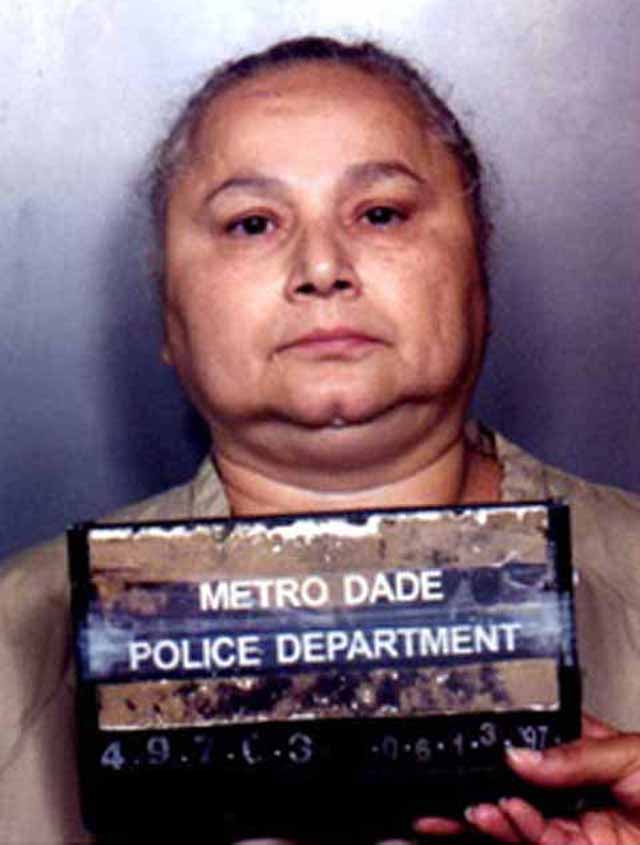
On September 24, 2002, Elena Kiejliches was sentenced to 22 years to life in prison. She was received at Bedford Hills Correctional Facility on October 21, 2002, assigned Department Identification Number 02G1032, and later transferred to Taconic Correctional Facility in Westchester County.
She appealed. In 2006, the New York Appellate Division, Second Department, issued its ruling in People v. Elena Kiejliches, finding the evidence legally sufficient to establish murder in the second degree beyond a reasonable doubt. The conviction stood. A federal judge subsequently denied her bid to overturn the conviction in 2012. Every door closed.
The personal losses accumulated alongside the legal ones. Her petition for visitation rights with her children was denied. As of 2004, she had not seen or heard from them. A woman who took her children to Disney World three days after their father died would spend the following decades unable to speak with those same children at all. Whatever the truth of the night of March 24, 2000, that particular consequence carries its own awful, separate weight.
She began to appear on television, and her reasoning for doing so was heartbreaking in its simplicity: she hoped her children might see her on the screen. She appeared on the Oxygen series "Snapped" (Season 1, Episode 4, aired 2004), on Oxygen's "New York Homicide" (Season 2, Episode 17, titled "From Moscow to Murder"), and on the Canadian series "Pretty Dangerous" in 2008. She is also featured in the book "Evil Wives." Mark Fonte has never recanted his belief in her innocence; his position anchors the "New York Homicide" segment titled "Was Elena Kiejliches Wrongfully Convicted?"
In November 2023, Scalawag Magazine published writing credited to Elena as co-author, her voice reaching out from Taconic into a world that had largely moved on. Her initial parole hearing was scheduled for February 2024, then rescheduled to May 2024. Her parole eligibility date was June 9, 2024. No confirmed public outcome of that hearing has been published.
What remains, after more than two decades, is the shape of a story that resists clean resolution. A man is dead, his body recovered from a marsh in a barrel, his Mercedes abandoned along a Brooklyn boardwalk. His killer was identified not by forensic evidence but by the testimony of the one person who unquestionably helped dispose of the remains and who had every legal incentive to shift the weight of blame onto someone else. A woman insists, from a correctional facility in Westchester, that she watched a man she trusted turn monstrous and then destroy her life twice: once in a basement, and once on a witness stand.
Borys Kiejliches is gone. His children grew up without both parents, shaped by an absence on one side and a verdict on the other. And somewhere inside Taconic, Elena Kiejliches writes, and waits, and maintains that the jury answered the wrong question.
Whether she is right is the question that has never quite gone away.
Timeline
Elena Born in Russia
Elena Kiejliches was born on April 15, 1966, in Russia, exact city unknown. She would later emigrate to the United States, eventually settling in the affluent Todt Hill neighborhood of Staten Island, New York, with her husband Borys Kiejliches, a jet-fuel magnate worth an estimated $3 million.
Establishes Elena's origins as a Russian émigré whose immigration to America and marriage into wealth would form the backdrop of the eventual murder case.
Affair with Messiah Justice Begins
Elena began an 18-month extramarital affair with Messiah Justice, an aspiring rapper and con artist she met at a traffic light on Seventh Avenue in Manhattan. Over the course of the relationship, she lavished him with an estimated $85,000 in cash, jewelry, cell phones, and attempted to purchase him a $100,000 Rolls Royce. Prosecutors would later argue that Borys discovered the affair and threatened to divorce Elena, leaving her financially destitute.
The affair provided the prosecution's central motive for murder — Elena allegedly feared losing access to her husband's fortune if he followed through on divorce threats.
Borys Kiejliches Murdered
On the night of March 24, 2000, Borys Kiejliches was murdered inside the family's home at 91 East Loop Road, Todt Hill, Staten Island. Prosecutors alleged that Elena shot him while he slept; Elena maintained that Messiah Justice arrived at the house, confronted Borys in the basement, struck him in the head, and shot him with a 9mm handgun before threatening her and her children into silence.
The murder itself was the central event of the entire case, with sharply conflicting accounts from Elena and her co-conspirator Messiah Justice defining the prosecution and defense narratives at trial.
Elena Takes Children to Disney World
The day after Borys's murder, Messiah Justice purchased a cardboard barrel and dumped Borys's body — wrapped in carpet from the family's Land Rover — in a marsh near the Belt Parkway on the Brooklyn-Queens border. Meanwhile, Elena took her two young children on a weekend trip to Disney World before returning to Staten Island to report her husband missing, telling authorities he may have walked out on the marriage voluntarily.
Elena's calculated decision to take a family vacation immediately after the murder and her deliberate misdirection of authorities demonstrated the premeditated concealment effort that prosecutors cited as evidence of guilt.
Borys's Body and Mercedes Discovered
Borys's $125,000 Mercedes-Benz was found abandoned near the Brighton Beach Boardwalk on April 9, 2000, with credit card records showing no activity after March 23, 2000. His body was subsequently discovered on April 25, 2000, in a marsh near Howard Beach, still wrapped in the carpet in which Messiah Justice had transported it.
The recovery of Borys's body and abandoned vehicle transformed the missing persons report into a homicide investigation and provided investigators with critical physical evidence linking Elena and Justice to the crime.
Messiah Justice Arrested and Cooperates
Messiah Justice was arrested on May 5, 2000. Initially denying involvement, he admitted to driving to Staten Island after Elena called him saying 'something terrible happened,' finding Borys dead, and helping dispose of the body. On May 11, 2000, he entered a cooperation agreement with prosecutors, pleading guilty to hindering prosecution and tampering with physical evidence in exchange for a sentence of 1–3 years in prison.
Justice's cooperation agreement transformed him into the star prosecution witness against Elena, and his detailed testimony about the night of the murder became the cornerstone of the state's case.
Elena Arrested and Indicted
Following a Richmond County Grand Jury indictment on May 12, 2000, Elena Kiejliches was arrested and charged with murder on May 15, 2000. Simultaneously, the Surrogate's Court moved to block Elena from accessing a joint Salomon Smith Barney investment account worth approximately $1,000,000 and from transferring the Staten Island residence pending the criminal proceedings.
Elena's arrest formally launched the criminal proceedings and the simultaneous financial freeze underscored the prosecution's theory that protecting her access to Borys's wealth was the driving motive for his killing.
Trial Begins at Staten Island Supreme Court
Elena's trial commenced on June 5, 2002, at the Staten Island Supreme Court (Richmond County). Messiah Justice testified that Elena had shot Borys herself while he slept, while the defense, led by attorney Mark J. Fonte, painted Justice as a manipulative con artist fabricating testimony to secure his own lenient deal with prosecutors.
The trial pitted two irreconcilable accounts of the murder against each other, with the jury ultimately having to decide whether Elena was a calculating killer or a coerced victim of her own lover's violence.
Jury Convicts Elena of Murder
On June 25, 2002, the jury found Elena Kiejliches guilty of Murder in the Second Degree and Tampering with Physical Evidence. The verdict rejected Elena's counter-narrative that Messiah Justice had independently killed Borys and coerced her into helping conceal the crime.
The guilty verdict on second-degree murder carried a mandatory minimum of 22 years to life, effectively ensuring Elena would spend decades in prison and lose all access to her children and the life she had built.
Sentenced; Appeals Denied; Parole Eligibility Reached
Elena was sentenced on September 24, 2002, to 22 years to life in prison and received at Bedford Hills Correctional Facility on October 21, 2002, later transferring to Taconic Correctional Facility. The New York Appellate Division, Second Department upheld her conviction in 2006, and a federal judge denied her bid to overturn the conviction in 2012. As of November 2023, Elena was co-authoring articles for Scalawag Magazine maintaining her innocence, with her parole eligibility date reaching June 9, 2024.
The sentencing and subsequent failed appeals closed off Elena's legal avenues for relief, while her continued public advocacy — including media appearances on Oxygen's Snapped and New York Homicide — kept her case in the public eye as she approached parole eligibility.
Crime Location
Sources
- People v. Elena Kiejliches — Appellate Division, Second Department (2006)
- People of NY v. Elena Kiejliches — Federal Habeas Denial (2012)
- Snapped — Season 1, Episode 4: Elena Kiejliches
- New York Homicide — Season 2, Episode 17: From Moscow to Murder
- Elena Kiejliches — Murderpedia Profile
- Elena Kiejliches writing feature — Scalawag Magazine
- Evil Wives
- Pretty Dangerous — Elena Kiejliches segment
- Oxygen.com — New York Homicide: From Moscow to Murder coverage
- Wikipedia: Snapped
Frequently Asked Questions
Table of Contents
Case Summary
Three days after her husband was shot to death inside their Staten Island home, Elena Kiejliches packed her two young children into the car and drove to Disney World. When she returned, she told authorities that Borys Kiejliches might have simply walked out on the marriage. What investigators eventually uncovered was something far darker: a calculated killing rooted in an eighteen-month affair with an aspiring rapper she had met at a Manhattan traffic light, a man she had showered with more than $85,000 in cash, jewelry, and gifts. The body of Borys Kiejliches, a jet-fuel magnate worth an estimated $3 million, turned up a month later in a marsh near the Belt Parkway, wrapped in carpet and stuffed in a cardboard barrel. Elena has maintained her innocence ever since, and her defense attorney still believes her. But a Staten Island jury did not. In 2002, she was sentenced to 22 years to life. This is the story of a marriage, a murder, and a cover-up that stretched from a quiet hilltop neighborhood all the way to a Florida theme park.
April 15, 1966, Russia (exact city unknown)(Age: 60)
Case Details
The body was found on a Tuesday in April, more than a month after the killing. In a marsh near Howard Beach, on the ragged edge where Brooklyn and Queens share a waterline, someone had dumped a cardboard barrel containing the remains of a man wrapped in carpet. The carpet, investigators would later learn, had come from a Land Rover. The man was Borys Kiejliches, a jet-fuel magnate who had built a $3 million fortune and settled his family in one of Staten Island's most exclusive neighborhoods. His wife had spent the past month telling anyone who asked that he might have simply left.
Todt Hill rises above the flatlands of Staten Island like a quiet rebuke to the borough's working-class reputation. The neighborhood sits atop the highest natural point on the Atlantic coast south of Maine, its winding streets lined with stone-gated estates and the kind of privacy that money buys without advertising itself. At 91 East Loop Road, Borys and Elena Kiejliches had built something that looked, from the outside, exactly like the American dream.
Elena had come a long way to get there. Born in Russia in 1966, she had immigrated to the United States and, in time, married Borys, a businessman whose jet-fuel company had made him genuinely wealthy. They had two children together: a son who was eight years old in the spring of 2000, and a daughter who had just turned five. Borys also had an adult son from a previous marriage. By any outward measure, the Kiejliches family had arrived.
The trouble with outward measures is what they conceal.
For eighteen months before Borys died, Elena had been conducting an affair with a man named Messiah Justice. She met him the way that only New York could arrange: at a traffic light on Seventh Avenue in Manhattan, a city of eight million souls where the right glance at the wrong moment can change everything. Justice was an aspiring rapper and, by the prosecution's characterization, a skilled con man. He was charismatic and attentive, and Elena fell hard.
She fell expensively, too. Over the course of their affair, Elena gave Justice approximately $50,000 in one cash installment and $35,000 in another. She bought him jewelry. She bought him cell phones. She attempted to purchase him a Rolls Royce with a sticker price of $100,000. These were not the expenditures of a woman conducting a casual dalliance; they were the expenditures of a woman who had convinced herself, or perhaps allowed herself to be convinced, that what she had found was worth any price.
What the prosecution argued happened next followed a grim logic. Borys discovered the affair. He threatened divorce, and with it, he threatened to leave Elena with nothing. A man worth $3 million, in a marriage of eight years, with assets that could be restructured and shielded: the financial calculus was not in Elena's favor. The prosecution's theory was that she decided to solve the problem before it could solve her.
On the night of March 24, 2000, while Borys slept, someone shot him.
What happened in the hours immediately following is where the two versions of this story diverge most sharply, and where the case against Elena Kiejliches both crystallizes and, depending on your reading, begins to soften.
The version Messiah Justice told prosecutors: Elena called him and said something terrible had happened. He drove to Staten Island. He found Borys dead. He helped wrap the body in carpet stripped from the family Land Rover. On March 25, he purchased a cardboard barrel. He transported the body to a marsh near the Belt Parkway, in the liminal territory where Brooklyn edges into Queens, and he dumped it.
The version Elena's defense offered: Justice arrived at the house, found Borys alive, followed him to the basement, struck him in the head, and shot him with a 9mm handgun. He then threatened Elena and her children, forcing her compliance in the cover-up under duress.
Both versions agree on one thing: Elena Kiejliches did not call the police that night.
Instead, she packed her children and drove to Florida.
The Disney World trip is the detail that lodges in the mind and refuses to leave. Three days after her husband died, Elena took her eight-year-old son and her five-year-old daughter to the happiest place on earth. Children that age ask questions. They notice absences. What she told them, what they understood, what they saw in their mother's face during those days in Orlando: none of that is part of the public record. What is part of the record is that she went, and she came back, and she told authorities her husband might have walked out on the marriage.
Meanwhile, the machinery of a missing-person investigation was turning. Borys's $125,000 Mercedes-Benz turned up abandoned near the Brighton Beach Boardwalk on April 9, 2000. His credit card records showed no activity after March 23. A man worth $3 million with a luxury car and a joint investment account at Salomon Smith Barney does not simply vanish into the Atlantic. Investigators knew it. They just needed to prove it.
Messiah Justice was arrested on May 5, 2000. Whatever loyalty he felt toward Elena Kiejliches dissolved quickly in the face of a murder charge. By May 11, he had entered a cooperation agreement with prosecutors. Elena was indicted by a Richmond County Grand Jury on May 12 and arrested three days later. The Surrogate's Court moved to block her from accessing a joint investment account worth approximately $1 million and from transferring the Staten Island residence. The assets would stay frozen while the legal proceedings ran their course.
Justice pleaded guilty to hindering prosecution and tampering with physical evidence, receiving a sentence of one to three years in prison. In exchange, he became the prosecution's star witness: the man who would sit across from Elena Kiejliches in a Staten Island courtroom and describe, in careful detail, what he said she had done.
The trial began on June 5, 2002, at the Staten Island Supreme Court in Richmond County. It lasted three weeks, concluding on June 25. The courtroom was the kind of venue where every detail of a marriage gets dissected under fluorescent lighting: the cash gifts totaling more than $85,000, the Rolls Royce that never materialized, the calls between Elena and Justice, the carpet from the Land Rover, the cardboard barrel, the marsh.
Elena's attorney, Mark J. Fonte, worked the defense with the materials available to him. He painted Justice as a professional manipulator, a con artist who had bled his client's wife dry and then, when cornered by investigators, constructed a narrative that placed all of the blame on her. The cooperation agreement gave Justice every incentive to lie. The physical evidence was circumstantial. And Elena's account, Fonte argued, was not implausible: she was a woman terrorized into silence by a violent man who held her children's safety above her head.
The jury returned a verdict of guilty on both counts: Murder in the Second Degree and Tampering with Physical Evidence.
On September 24, 2002, Elena Kiejliches was sentenced to 22 years to life in prison. She was received at Bedford Hills Correctional Facility on October 21, 2002, assigned Department Identification Number 02G1032, and later transferred to Taconic Correctional Facility in Westchester County.
She appealed. In 2006, the New York Appellate Division, Second Department, issued its ruling in People v. Elena Kiejliches, finding the evidence legally sufficient to establish murder in the second degree beyond a reasonable doubt. The conviction stood. A federal judge subsequently denied her bid to overturn the conviction in 2012. Every door closed.
The personal losses accumulated alongside the legal ones. Her petition for visitation rights with her children was denied. As of 2004, she had not seen or heard from them. A woman who took her children to Disney World three days after their father died would spend the following decades unable to speak with those same children at all. Whatever the truth of the night of March 24, 2000, that particular consequence carries its own awful, separate weight.
She began to appear on television, and her reasoning for doing so was heartbreaking in its simplicity: she hoped her children might see her on the screen. She appeared on the Oxygen series "Snapped" (Season 1, Episode 4, aired 2004), on Oxygen's "New York Homicide" (Season 2, Episode 17, titled "From Moscow to Murder"), and on the Canadian series "Pretty Dangerous" in 2008. She is also featured in the book "Evil Wives." Mark Fonte has never recanted his belief in her innocence; his position anchors the "New York Homicide" segment titled "Was Elena Kiejliches Wrongfully Convicted?"
In November 2023, Scalawag Magazine published writing credited to Elena as co-author, her voice reaching out from Taconic into a world that had largely moved on. Her initial parole hearing was scheduled for February 2024, then rescheduled to May 2024. Her parole eligibility date was June 9, 2024. No confirmed public outcome of that hearing has been published.
What remains, after more than two decades, is the shape of a story that resists clean resolution. A man is dead, his body recovered from a marsh in a barrel, his Mercedes abandoned along a Brooklyn boardwalk. His killer was identified not by forensic evidence but by the testimony of the one person who unquestionably helped dispose of the remains and who had every legal incentive to shift the weight of blame onto someone else. A woman insists, from a correctional facility in Westchester, that she watched a man she trusted turn monstrous and then destroy her life twice: once in a basement, and once on a witness stand.
Borys Kiejliches is gone. His children grew up without both parents, shaped by an absence on one side and a verdict on the other. And somewhere inside Taconic, Elena Kiejliches writes, and waits, and maintains that the jury answered the wrong question.
Whether she is right is the question that has never quite gone away.
Timeline
Elena Born in Russia
Elena Kiejliches was born on April 15, 1966, in Russia, exact city unknown. She would later emigrate to the United States, eventually settling in the affluent Todt Hill neighborhood of Staten Island, New York, with her husband Borys Kiejliches, a jet-fuel magnate worth an estimated $3 million.
Establishes Elena's origins as a Russian émigré whose immigration to America and marriage into wealth would form the backdrop of the eventual murder case.
Affair with Messiah Justice Begins
Elena began an 18-month extramarital affair with Messiah Justice, an aspiring rapper and con artist she met at a traffic light on Seventh Avenue in Manhattan. Over the course of the relationship, she lavished him with an estimated $85,000 in cash, jewelry, cell phones, and attempted to purchase him a $100,000 Rolls Royce. Prosecutors would later argue that Borys discovered the affair and threatened to divorce Elena, leaving her financially destitute.
The affair provided the prosecution's central motive for murder — Elena allegedly feared losing access to her husband's fortune if he followed through on divorce threats.
Borys Kiejliches Murdered
On the night of March 24, 2000, Borys Kiejliches was murdered inside the family's home at 91 East Loop Road, Todt Hill, Staten Island. Prosecutors alleged that Elena shot him while he slept; Elena maintained that Messiah Justice arrived at the house, confronted Borys in the basement, struck him in the head, and shot him with a 9mm handgun before threatening her and her children into silence.
The murder itself was the central event of the entire case, with sharply conflicting accounts from Elena and her co-conspirator Messiah Justice defining the prosecution and defense narratives at trial.
Elena Takes Children to Disney World
The day after Borys's murder, Messiah Justice purchased a cardboard barrel and dumped Borys's body — wrapped in carpet from the family's Land Rover — in a marsh near the Belt Parkway on the Brooklyn-Queens border. Meanwhile, Elena took her two young children on a weekend trip to Disney World before returning to Staten Island to report her husband missing, telling authorities he may have walked out on the marriage voluntarily.
Elena's calculated decision to take a family vacation immediately after the murder and her deliberate misdirection of authorities demonstrated the premeditated concealment effort that prosecutors cited as evidence of guilt.
Borys's Body and Mercedes Discovered
Borys's $125,000 Mercedes-Benz was found abandoned near the Brighton Beach Boardwalk on April 9, 2000, with credit card records showing no activity after March 23, 2000. His body was subsequently discovered on April 25, 2000, in a marsh near Howard Beach, still wrapped in the carpet in which Messiah Justice had transported it.
The recovery of Borys's body and abandoned vehicle transformed the missing persons report into a homicide investigation and provided investigators with critical physical evidence linking Elena and Justice to the crime.
Messiah Justice Arrested and Cooperates
Messiah Justice was arrested on May 5, 2000. Initially denying involvement, he admitted to driving to Staten Island after Elena called him saying 'something terrible happened,' finding Borys dead, and helping dispose of the body. On May 11, 2000, he entered a cooperation agreement with prosecutors, pleading guilty to hindering prosecution and tampering with physical evidence in exchange for a sentence of 1–3 years in prison.
Justice's cooperation agreement transformed him into the star prosecution witness against Elena, and his detailed testimony about the night of the murder became the cornerstone of the state's case.
Elena Arrested and Indicted
Following a Richmond County Grand Jury indictment on May 12, 2000, Elena Kiejliches was arrested and charged with murder on May 15, 2000. Simultaneously, the Surrogate's Court moved to block Elena from accessing a joint Salomon Smith Barney investment account worth approximately $1,000,000 and from transferring the Staten Island residence pending the criminal proceedings.
Elena's arrest formally launched the criminal proceedings and the simultaneous financial freeze underscored the prosecution's theory that protecting her access to Borys's wealth was the driving motive for his killing.
Trial Begins at Staten Island Supreme Court
Elena's trial commenced on June 5, 2002, at the Staten Island Supreme Court (Richmond County). Messiah Justice testified that Elena had shot Borys herself while he slept, while the defense, led by attorney Mark J. Fonte, painted Justice as a manipulative con artist fabricating testimony to secure his own lenient deal with prosecutors.
The trial pitted two irreconcilable accounts of the murder against each other, with the jury ultimately having to decide whether Elena was a calculating killer or a coerced victim of her own lover's violence.
Jury Convicts Elena of Murder
On June 25, 2002, the jury found Elena Kiejliches guilty of Murder in the Second Degree and Tampering with Physical Evidence. The verdict rejected Elena's counter-narrative that Messiah Justice had independently killed Borys and coerced her into helping conceal the crime.
The guilty verdict on second-degree murder carried a mandatory minimum of 22 years to life, effectively ensuring Elena would spend decades in prison and lose all access to her children and the life she had built.
Sentenced; Appeals Denied; Parole Eligibility Reached
Elena was sentenced on September 24, 2002, to 22 years to life in prison and received at Bedford Hills Correctional Facility on October 21, 2002, later transferring to Taconic Correctional Facility. The New York Appellate Division, Second Department upheld her conviction in 2006, and a federal judge denied her bid to overturn the conviction in 2012. As of November 2023, Elena was co-authoring articles for Scalawag Magazine maintaining her innocence, with her parole eligibility date reaching June 9, 2024.
The sentencing and subsequent failed appeals closed off Elena's legal avenues for relief, while her continued public advocacy — including media appearances on Oxygen's Snapped and New York Homicide — kept her case in the public eye as she approached parole eligibility.
Crime Location
Sources
- People v. Elena Kiejliches — Appellate Division, Second Department (2006)
- People of NY v. Elena Kiejliches — Federal Habeas Denial (2012)
- Snapped — Season 1, Episode 4: Elena Kiejliches
- New York Homicide — Season 2, Episode 17: From Moscow to Murder
- Elena Kiejliches — Murderpedia Profile
- Elena Kiejliches writing feature — Scalawag Magazine
- Evil Wives
- Pretty Dangerous — Elena Kiejliches segment
- Oxygen.com — New York Homicide: From Moscow to Murder coverage
- Wikipedia: Snapped
Frequently Asked Questions
Related Cases
Convicted
Connection tags:
Convicted
Connection tags:
Convicted
Connection tags:
Convicted
Connection tags:
Convicted
Connection tags:
Convicted
Connection tags:
Tags
Popular Culture
TV (2004)
Season 1, Episode 4 profiles Elena Kiejliches, covering her affair with Messiah Justice, the murder of husband Borys Kiejliches, and her conviction. Elena agreed to appear primarily hoping her children would see her on television.
TV ()
Season 2, Episode 17 of Oxygen's New York Homicide revisits the Kiejliches case, including a segment titled 'Was Elena Kiejliches Wrongfully Convicted?' featuring defense attorney Mark J. Fonte.
TV (2008)
Canadian true crime television series featured the Elena Kiejliches case in one of its episodes.
book ()
True crime book that references the Elena Kiejliches case as an example of a wife convicted of murdering her husband.