Stephanie St. Clair (also known as Stephanie Saint-Clair; later Stephanie St. Clair Hamid)
Case Summary
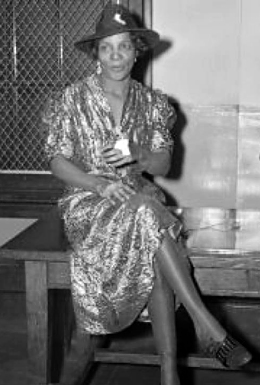
On October 23, 1935, a Bronx gangster named Dutch Schultz lay bleeding from four bullet wounds in a Newark chophouse, the victim of a Murder Inc. hit ordered by Lucky Luciano. As he drifted in and out of consciousness, a telegram arrived at his hospital bedside. It read: 'As ye sow, so shall ye reap.' It was signed 'Madame Queen of Policy.' The woman who sent it had survived a murder contract, a cellar full of coal dust, and a decade of all-out war with the most dangerous mobster in New York. She had done it all without the backing of any organized crime family, without the protection of the law, and without the privilege that white men in her industry took for granted. Stephanie St. Clair was a Black woman from Guadeloupe who had arrived in Harlem with nothing and built a half-million-dollar criminal empire, educated her neighbors about their constitutional rights, and exposed a corrupt police department before the world. She was, by any measure, one of the most remarkable figures in American organized crime history. Almost nobody knows her name.
December 24, 1897, Moule, Grand-Terre, Guadeloupe, French West Indies (disputed; some sources say Martinique or France; St. Clair herself claimed European France)(Age: 71)
December 1, 1969, New York (exact location disputed: some sources say Harlem; others say Central Islip, Long Island, NY, possibly a psychiatric facility) (Unknown; exact cause not recorded in contemporary press; died quietly around age 72)
Related Cases
Convicted
Connection tags:

Convicted
Connection tags:

Convicted
Connection tags:

Convicted
Connection tags:
Convicted
Connection tags:

Convicted
Connection tags:
Case Details
On the morning of October 24, 1935, readers of the New York Amsterdam News opened their papers to find an extraordinary item buried among the Schultz assassination coverage: a telegram, reproduced in full, sent to the dying gangster's hospital room. 'As ye sow, so shall ye reap,' it read. The sender identified herself as Madame Queen of Policy. The telegram made national headlines. It was a final, public act of contempt from a woman who had spent four years refusing to be broken by one of the most feared criminals in the country. It was pure Stephanie St. Clair.
She had crafted herself as carefully as any fiction. For most of her life, St. Clair insisted she was from metropolitan France, not the Caribbean. She spoke French with the authority of someone daring you to contradict her, and very few people did. The truth, recorded in her 1924 Declaration of Intention, was that she had been born on December 24, 1897, in Moule, Grand-Terre, Guadeloupe, to a single mother named Félicienne. The deliberate obscuring of this origin was not mere vanity. In a country where Blackness determined what doors opened and which ones slammed shut, St. Clair understood that ambiguity was armor.
She arrived in North America around 1911 or 1912, traveling first through Montreal, Canada, likely as part of a domestic worker recruitment scheme that funneled Caribbean women into service jobs in the north. Somewhere during the voyage and quarantine period, she taught herself English. By 1912, she was in Harlem, with nothing but fluency in French, Spanish, and English, and a mind that processed power structures the way a chess player processes the board.
Harlem in those years was the capital of Black America, electric with possibility and brutal with limitation. It was a neighborhood where ambition could not find an outlet in legitimate institutions: banks refused Black customers, law firms turned away Black clients, and the police served as an occupying force rather than a protection. The underground economy was not a moral failing of the community; it was the community's economic survival. Numbers banking, also called policy, was the mechanism by which cash circulated and small fortunes were built. Players bet on a sequence of numbers drawn daily, usually derived from some public source such as racetrack results. The odds were long and the house always profited. Anyone with the capital and the nerve to run the bank could get very rich.
St. Clair had the nerve. She also, by 1917, had $10,000 in savings, the origin of which she never fully disclosed. Some accounts place her in an early Harlem gang called the 40 Thieves, which ran extortion and theft operations. What is recorded is that she invested that ten thousand dollars into her own numbers banking operation and proceeded to build it with the discipline and precision of a corporate executive.
By the early 1920s, she employed between forty and fifty runners, ten comptrollers, and several bodyguards. At her peak, she earned an estimated $200,000 a year. Her personal fortune approached half a million dollars by 1930, a figure that translates to roughly eight million dollars today. She lived at 409 Edgecombe Avenue, on the stretch of Sugar Hill where the Harlem Renaissance concentrated its luminaries: W.E.B. Du Bois lived in that building, as did a young attorney named Thurgood Marshall, NAACP leader Walter White, and painter Aaron Douglas. St. Clair was not a peripheral figure in this world. She was its financier, its protector, and, in her own particular way, its conscience.
Because St. Clair did something unusual with her wealth and platform. She fought back against the institutions that preyed upon her community. She placed advertisements in the Amsterdam News that explained to Harlem residents their legal rights when stopped by police. She helped found the French Legal Society to support Black Caribbean immigrants navigating an unfamiliar legal system. She advocated loudly for voting rights and denounced police corruption in terms so specific and so damning that officers feared her more than they feared most men with guns.
That reputation for audacity served her well when the law finally caught up with her. On December 30, 1929, police arrested St. Clair on charges of possession of policy slips. On March 14, 1930, a court convicted her and sentenced her to eight months in the workhouse on Welfare Island in the East River. If the authorities expected imprisonment to humble her, they had badly misread the woman. The moment she was released, she walked directly into the Seabury Commission hearings, a wide-ranging investigation into NYPD corruption, and testified that she had paid police officers $6,600 in bribes. She named names. She provided specifics. The resulting scandal led to the suspension or dismissal of more than a dozen officers, including a lieutenant. It was a performance of institutional sabotage carried out with perfect composure.
The next threat to arrive in Harlem was more dangerous than any precinct captain. His name was Arthur Flegenheimer, though the world knew him as Dutch Schultz. A Bronx-based bootlegger who had built a fortune running beer during Prohibition, Schultz watched that business evaporate when Repeal came in 1933 and looked immediately for new revenue streams. Harlem's numbers racket represented tens of millions of dollars in annual profit. He wanted it.
Most of Harlem's numbers bankers looked at Schultz and his machine guns and his Murder Inc. connections and decided that paying protection was simply the cost of survival. St. Clair refused. So did her chief enforcer, a young man named Ellsworth Johnson, known throughout Harlem as Bumpy. The war that followed was genuinely savage. Schultz's men attacked runners, seized betting slips, and physically intimidated anyone connected to St. Clair's operation. She struck back by tipping off police to Schultz's illegal operations, orchestrating raids on his gambling fronts that cost him an estimated $12 million, and running an insurgent campaign against a man who had the full backing of the New York Italian crime families.
At least forty people died in the conflict. Schultz placed a murder contract on St. Clair's life. For a period in 1935, she was forced into hiding, and she later described crouching in a cellar, covered in coal dust, while his men searched for her above. She had built half a million dollars and a Harlem legend, and she was hiding under the earth to survive the consequences of refusing to surrender it.
On the night of October 23, 1935, four gunmen walked into the Palace Chophouse in Newark, New Jersey, and shot Dutch Schultz and three of his associates. The order had come from Lucky Luciano, who considered Schultz's erratic behavior (he had been threatening to assassinate special prosecutor Thomas Dewey) a liability to the entire New York underworld. Schultz died the following day. When St. Clair heard the news, she composed her telegram.
The line she chose, taken from the Book of Galatians, required no elaboration. She had preached exactly this kind of accountability for years, in newspaper columns and commission hearings and public speeches. She simply applied it to the man who had tried to kill her. The national press printed the telegram alongside coverage of Schultz's funeral. Madame Queen was briefly the most famous woman in American organized crime.
She did not rest long on that fame. After the Schultz war, she transitioned her criminal operations to Bumpy Johnson, who negotiated an accommodation with Lucky Luciano that would define Harlem's rackets for the next generation. St. Clair moved toward legitimate business, acquiring apartment buildings and investing her considerable fortune in real property. The community activist work intensified. She was, by the mid-1930s, something genuinely difficult to categorize: a former crime boss who had become a property owner and civil rights advocate, still feared, still respected, still entirely herself.
Then she married Sufi Abdul Hamid.
Hamid, born Eugene Brown in Lowell, Massachusetts, was one of Harlem's most flamboyant self-promoters. He ran employment campaigns targeting white-owned businesses that refused to hire Black workers, a legitimate grievance he pursued through methods that frequently tipped into anti-Semitic demagoguery. The press called him the Black Hitler, a label that obscured the complexity of his following while accurately capturing his rhetoric's uglier dimensions. He and St. Clair entered into a non-legal contract marriage in 1936. It was, from nearly every account, a disaster.
On January 18, 1938, St. Clair shot and wounded Hamid after discovering his affair with a woman known as Madame Fu Futtam, a fortune teller whose real name was Dorothy Matthews. The trial that followed stripped both parties bare. St. Clair's attorney methodically demolished Hamid's claims to the various titles and identities he had accumulated over the years, exposing him as a serial fabricator. None of it helped St. Clair. She was convicted of first-degree assault and possession of a concealed weapon.
At sentencing, Judge James G. Wallace told her she had been living by her wits all of her life. He was not wrong, and he did not mean it as a compliment. She was sentenced to two to ten years at Bedford Hills Correctional Facility for Women. As she was led from the courtroom, witnesses reported that she kissed her hand to freedom, a gesture that contained multitudes: defiance, grief, theater, and an absolute refusal to show anyone in that room that they had broken something in her.
She was released from Bedford Hills around 1942. The postwar years were quieter. She wrote occasional newspaper columns on civil rights and police brutality, continuing the advocacy work that had always run parallel to her criminal career. A 1960 New York Post profile described her as a prosperous business woman living lavishly in a four-story Harlem apartment she owned. Mayme Johnson, Bumpy Johnson's wife, later claimed St. Clair had retired to a mansion on Long Island.
Bumpy Johnson died of a heart attack in 1968. He collapsed in a Harlem restaurant called Wells, a fitting end for a man who had spent his life in motion. He was the last person alive who had been in the cellar with St. Clair, metaphorically speaking; the last link to the war years, to Dutch Schultz, to the Sugar Hill apartment and the policy slips and the Amsterdam News ads. Stephanie St. Clair died in December 1969, approximately one year after Johnson. She was around seventy-two years old. The exact circumstances of her death remain disputed: some sources place it in Harlem, others at a facility in Central Islip on Long Island. The press, which had once given full front-page coverage to her telegram to a dying gangster, recorded her death quietly, if at all.
She is buried at Trinity Church Cemetery and Mausoleum in Hamilton Heights, New York, not far from the neighborhood she spent five decades reshaping.
Scholars of organized crime and African American history have increasingly recognized St. Clair as genuinely singular. She was, by any serious assessment, the only Black woman to operate at the top tier of American organized crime during the twentieth century's first half. She did it without the structural support that Italian, Irish, or Jewish crime families provided their members. She fought the Mafia to a standstill and then testified against crooked cops and then shot her husband and then served her time and then wrote columns about civil rights. She was a criminal. She was also, in the same breath and with equal factual accuracy, a community institution.
Cicely Tyson played her in the 1997 film Hoodlum. Novella Nelson portrayed her in Francis Ford Coppola's The Cotton Club in 1984. In 2017, producer Tim Story acquired rights to her life story for an HBO film. She has appeared in graphic novels, comic book series, video games, and documentary series. The machinery of American pop culture has begun, belatedly, to understand what Harlem knew for fifty years: that Stephanie St. Clair was not a footnote to the story of organized crime in New York. She was one of its central characters, and the fact that history initially misplaced her says far more about history than it does about her.
Timeline
Birth in Guadeloupe
Stephanie St. Clair was born on December 24, 1897, in Moule, Grand-Terre, Guadeloupe, French West Indies, to a single mother named Félicienne. Throughout her life she deliberately obscured her Caribbean origins, claiming instead to be from metropolitan France. Her 1924 Declaration of Intention is the primary document confirming her Guadeloupean birthplace.
Her Caribbean origins and deliberate reinvention of her identity were central to her mystique and survival in a racially hostile New York society.
Arrival in Harlem
St. Clair arrived in North America around 1911–1912, traveling via Montreal, Canada — likely as part of a domestic worker recruitment scheme — before settling permanently in Harlem, New York. She reportedly learned English during the voyage and quarantine period. Her arrival marked the beginning of her transformation from a Caribbean immigrant into one of Harlem's most powerful figures.
Her immigration to Harlem set the stage for her rise in the numbers racket and her emergence as a community leader and advocate for Black Caribbean immigrants.
Investment in the Numbers Racket
After leading a local street gang called the '40 Thieves' in extortion and theft rackets, St. Clair invested $10,000 of her own savings into Harlem's illegal numbers (policy) racket in 1917. She built her operation methodically, eventually employing 40–50 runners, 10 comptrollers, and several bodyguards. At her peak she earned an estimated $200,000 a year, amassing a personal fortune of approximately $500,000 by 1930.
This investment launched one of the most powerful Black-owned criminal enterprises in American history, making St. Clair the de facto financial institution for thousands of Harlemites denied access to traditional banks.
Arrest on Policy Slip Charges
St. Clair was arrested on December 30, 1929, on charges of possession of policy slips — the paper records central to her illegal numbers operation. The arrest was widely seen as a product of the corrupt NYPD's selective enforcement, which targeted operators who refused to pay sufficient bribes. The case would ultimately backfire spectacularly on the police department.
Her arrest set in motion a chain of events that would expose systemic NYPD corruption and lead to the suspension or dismissal of more than a dozen officers.
Conviction and Sentencing to Welfare Island
On March 14, 1930, St. Clair was convicted of possession of policy slips and sentenced to eight months in the workhouse on Welfare Island (now Roosevelt Island), New York City. Rather than being silenced by her imprisonment, she emerged from incarceration more defiant than ever. Upon her release she immediately began cooperating with investigators examining police corruption.
Her imprisonment and subsequent testimony before the Seabury Commission transformed her from a criminal defendant into a celebrated whistleblower against NYPD corruption.
Seabury Commission Testimony Exposes NYPD Corruption
Following her release from Welfare Island, St. Clair testified before the Seabury Commission — a state investigation into rampant corruption in the New York City Police Department — revealing she had personally paid police officers $6,600 in bribes. Her detailed testimony led directly to the suspension or dismissal of more than a dozen NYPD officers, including a lieutenant. The testimony made national headlines and cemented her reputation as a fearless community advocate.
Her willingness to publicly expose police corruption at great personal risk established her as a civil rights figure as much as a criminal one, and demonstrated the systemic exploitation of Harlem's Black community by law enforcement.
War Against Dutch Schultz
When Bronx bootlegger and mob boss Dutch Schultz (Arthur Flegenheimer) muscled into Harlem's numbers racket in the early 1930s following the end of Prohibition, St. Clair and her chief enforcer Ellsworth 'Bumpy' Johnson refused to pay him protection money. The resulting turf war claimed at least 40 lives and saw St. Clair attack Schultz's betting shop fronts, tip off police to his operations, and orchestrate a raid that cost him an estimated $12 million. Schultz placed a murder contract on her life, forcing her briefly into hiding.
Her defiance of Dutch Schultz — one of the most feared organized crime figures of the era — was unprecedented and demonstrated that a Black woman could hold her own against the full force of the white mob.
Telegram to Dying Dutch Schultz
When Dutch Schultz was shot by rival gangsters on October 23, 1935, and lay dying in a Newark hospital, St. Clair sent him a now-legendary telegram reading: 'As ye sow, so shall ye reap,' signed 'Madame Queen of Policy.' The telegram made national headlines and was reprinted across the country. The message was a triumphant declaration that her years of resistance had been vindicated.
The telegram became one of the most iconic acts of defiance in American organized crime history, immortalizing St. Clair as the woman who outlasted the man who had tried to destroy her.
Shooting of Sufi Abdul Hamid
On January 18, 1938, St. Clair shot and wounded her estranged husband Sufi Abdul Hamid (born Eugene Brown) — a flamboyant Black separatist cult leader dubbed 'Black Hitler' by the press — after discovering his affair with a fortune teller known as Madame Fu Futtam (real name Dorothy Matthews). She was arrested, tried, and convicted of first-degree assault and possession of a concealed weapon. At sentencing, Judge James G. Wallace declared she had been 'living by her wits all of her life,' and she reportedly 'kissed her hand to freedom' as she was led from the courtroom.
The shooting and subsequent trial provided a dramatic public window into St. Clair's personal life and exposed the fraudulent background of Hamid, but it also resulted in her most serious incarceration.
Sentencing to Bedford Hills and Death in 1969
St. Clair was sentenced to 2–10 years at Bedford Hills Correctional Facility for Women in New York State for the shooting of Hamid, and was released around 1942. She largely withdrew from criminal enterprise, passing control of her operations to Bumpy Johnson, and spent her later decades as a property owner and civil rights columnist. She died quietly in December 1969 — approximately one year after Bumpy Johnson's own death — at around age 72, and is buried at Trinity Church Cemetery and Mausoleum in Hamilton Heights, New York.
Her final years and quiet death underscored the full arc of her extraordinary life — from Caribbean immigrant to Harlem's most powerful Black female gangster, civil rights advocate, and enduring legend of American organized crime history.
Crime Location
Photos
Stephanie St. Clair
Sources
- Stephanie St. Clair – BlackPast.org
- Stephanie St. Clair – Wikipedia
- Stephanie St. Clair – Wikimedia Commons Photograph
- Stephanie St. Clair Hamid in Custody – Getty Images
- The Harlem Numbers Racket and the Rise of Stephanie St. Clair
- Seabury Commission Testimony Records
- New York Post Interview – Stephanie St. Clair
- Gangsters of Harlem
- Madam Queen of Harlem: The Story of Stephanie St. Clair (Graphic Novel)
Frequently Asked Questions
Table of Contents
Case Summary
On October 23, 1935, a Bronx gangster named Dutch Schultz lay bleeding from four bullet wounds in a Newark chophouse, the victim of a Murder Inc. hit ordered by Lucky Luciano. As he drifted in and out of consciousness, a telegram arrived at his hospital bedside. It read: 'As ye sow, so shall ye reap.' It was signed 'Madame Queen of Policy.' The woman who sent it had survived a murder contract, a cellar full of coal dust, and a decade of all-out war with the most dangerous mobster in New York. She had done it all without the backing of any organized crime family, without the protection of the law, and without the privilege that white men in her industry took for granted. Stephanie St. Clair was a Black woman from Guadeloupe who had arrived in Harlem with nothing and built a half-million-dollar criminal empire, educated her neighbors about their constitutional rights, and exposed a corrupt police department before the world. She was, by any measure, one of the most remarkable figures in American organized crime history. Almost nobody knows her name.
December 24, 1897, Moule, Grand-Terre, Guadeloupe, French West Indies (disputed; some sources say Martinique or France; St. Clair herself claimed European France)(Age: 71)
December 1, 1969, New York (exact location disputed: some sources say Harlem; others say Central Islip, Long Island, NY, possibly a psychiatric facility) (Unknown; exact cause not recorded in contemporary press; died quietly around age 72)
Case Details
On the morning of October 24, 1935, readers of the New York Amsterdam News opened their papers to find an extraordinary item buried among the Schultz assassination coverage: a telegram, reproduced in full, sent to the dying gangster's hospital room. 'As ye sow, so shall ye reap,' it read. The sender identified herself as Madame Queen of Policy. The telegram made national headlines. It was a final, public act of contempt from a woman who had spent four years refusing to be broken by one of the most feared criminals in the country. It was pure Stephanie St. Clair.
She had crafted herself as carefully as any fiction. For most of her life, St. Clair insisted she was from metropolitan France, not the Caribbean. She spoke French with the authority of someone daring you to contradict her, and very few people did. The truth, recorded in her 1924 Declaration of Intention, was that she had been born on December 24, 1897, in Moule, Grand-Terre, Guadeloupe, to a single mother named Félicienne. The deliberate obscuring of this origin was not mere vanity. In a country where Blackness determined what doors opened and which ones slammed shut, St. Clair understood that ambiguity was armor.
She arrived in North America around 1911 or 1912, traveling first through Montreal, Canada, likely as part of a domestic worker recruitment scheme that funneled Caribbean women into service jobs in the north. Somewhere during the voyage and quarantine period, she taught herself English. By 1912, she was in Harlem, with nothing but fluency in French, Spanish, and English, and a mind that processed power structures the way a chess player processes the board.
Harlem in those years was the capital of Black America, electric with possibility and brutal with limitation. It was a neighborhood where ambition could not find an outlet in legitimate institutions: banks refused Black customers, law firms turned away Black clients, and the police served as an occupying force rather than a protection. The underground economy was not a moral failing of the community; it was the community's economic survival. Numbers banking, also called policy, was the mechanism by which cash circulated and small fortunes were built. Players bet on a sequence of numbers drawn daily, usually derived from some public source such as racetrack results. The odds were long and the house always profited. Anyone with the capital and the nerve to run the bank could get very rich.
St. Clair had the nerve. She also, by 1917, had $10,000 in savings, the origin of which she never fully disclosed. Some accounts place her in an early Harlem gang called the 40 Thieves, which ran extortion and theft operations. What is recorded is that she invested that ten thousand dollars into her own numbers banking operation and proceeded to build it with the discipline and precision of a corporate executive.
By the early 1920s, she employed between forty and fifty runners, ten comptrollers, and several bodyguards. At her peak, she earned an estimated $200,000 a year. Her personal fortune approached half a million dollars by 1930, a figure that translates to roughly eight million dollars today. She lived at 409 Edgecombe Avenue, on the stretch of Sugar Hill where the Harlem Renaissance concentrated its luminaries: W.E.B. Du Bois lived in that building, as did a young attorney named Thurgood Marshall, NAACP leader Walter White, and painter Aaron Douglas. St. Clair was not a peripheral figure in this world. She was its financier, its protector, and, in her own particular way, its conscience.
Because St. Clair did something unusual with her wealth and platform. She fought back against the institutions that preyed upon her community. She placed advertisements in the Amsterdam News that explained to Harlem residents their legal rights when stopped by police. She helped found the French Legal Society to support Black Caribbean immigrants navigating an unfamiliar legal system. She advocated loudly for voting rights and denounced police corruption in terms so specific and so damning that officers feared her more than they feared most men with guns.
That reputation for audacity served her well when the law finally caught up with her. On December 30, 1929, police arrested St. Clair on charges of possession of policy slips. On March 14, 1930, a court convicted her and sentenced her to eight months in the workhouse on Welfare Island in the East River. If the authorities expected imprisonment to humble her, they had badly misread the woman. The moment she was released, she walked directly into the Seabury Commission hearings, a wide-ranging investigation into NYPD corruption, and testified that she had paid police officers $6,600 in bribes. She named names. She provided specifics. The resulting scandal led to the suspension or dismissal of more than a dozen officers, including a lieutenant. It was a performance of institutional sabotage carried out with perfect composure.
The next threat to arrive in Harlem was more dangerous than any precinct captain. His name was Arthur Flegenheimer, though the world knew him as Dutch Schultz. A Bronx-based bootlegger who had built a fortune running beer during Prohibition, Schultz watched that business evaporate when Repeal came in 1933 and looked immediately for new revenue streams. Harlem's numbers racket represented tens of millions of dollars in annual profit. He wanted it.
Most of Harlem's numbers bankers looked at Schultz and his machine guns and his Murder Inc. connections and decided that paying protection was simply the cost of survival. St. Clair refused. So did her chief enforcer, a young man named Ellsworth Johnson, known throughout Harlem as Bumpy. The war that followed was genuinely savage. Schultz's men attacked runners, seized betting slips, and physically intimidated anyone connected to St. Clair's operation. She struck back by tipping off police to Schultz's illegal operations, orchestrating raids on his gambling fronts that cost him an estimated $12 million, and running an insurgent campaign against a man who had the full backing of the New York Italian crime families.
At least forty people died in the conflict. Schultz placed a murder contract on St. Clair's life. For a period in 1935, she was forced into hiding, and she later described crouching in a cellar, covered in coal dust, while his men searched for her above. She had built half a million dollars and a Harlem legend, and she was hiding under the earth to survive the consequences of refusing to surrender it.
On the night of October 23, 1935, four gunmen walked into the Palace Chophouse in Newark, New Jersey, and shot Dutch Schultz and three of his associates. The order had come from Lucky Luciano, who considered Schultz's erratic behavior (he had been threatening to assassinate special prosecutor Thomas Dewey) a liability to the entire New York underworld. Schultz died the following day. When St. Clair heard the news, she composed her telegram.
The line she chose, taken from the Book of Galatians, required no elaboration. She had preached exactly this kind of accountability for years, in newspaper columns and commission hearings and public speeches. She simply applied it to the man who had tried to kill her. The national press printed the telegram alongside coverage of Schultz's funeral. Madame Queen was briefly the most famous woman in American organized crime.
She did not rest long on that fame. After the Schultz war, she transitioned her criminal operations to Bumpy Johnson, who negotiated an accommodation with Lucky Luciano that would define Harlem's rackets for the next generation. St. Clair moved toward legitimate business, acquiring apartment buildings and investing her considerable fortune in real property. The community activist work intensified. She was, by the mid-1930s, something genuinely difficult to categorize: a former crime boss who had become a property owner and civil rights advocate, still feared, still respected, still entirely herself.
Then she married Sufi Abdul Hamid.
Hamid, born Eugene Brown in Lowell, Massachusetts, was one of Harlem's most flamboyant self-promoters. He ran employment campaigns targeting white-owned businesses that refused to hire Black workers, a legitimate grievance he pursued through methods that frequently tipped into anti-Semitic demagoguery. The press called him the Black Hitler, a label that obscured the complexity of his following while accurately capturing his rhetoric's uglier dimensions. He and St. Clair entered into a non-legal contract marriage in 1936. It was, from nearly every account, a disaster.
On January 18, 1938, St. Clair shot and wounded Hamid after discovering his affair with a woman known as Madame Fu Futtam, a fortune teller whose real name was Dorothy Matthews. The trial that followed stripped both parties bare. St. Clair's attorney methodically demolished Hamid's claims to the various titles and identities he had accumulated over the years, exposing him as a serial fabricator. None of it helped St. Clair. She was convicted of first-degree assault and possession of a concealed weapon.
At sentencing, Judge James G. Wallace told her she had been living by her wits all of her life. He was not wrong, and he did not mean it as a compliment. She was sentenced to two to ten years at Bedford Hills Correctional Facility for Women. As she was led from the courtroom, witnesses reported that she kissed her hand to freedom, a gesture that contained multitudes: defiance, grief, theater, and an absolute refusal to show anyone in that room that they had broken something in her.
She was released from Bedford Hills around 1942. The postwar years were quieter. She wrote occasional newspaper columns on civil rights and police brutality, continuing the advocacy work that had always run parallel to her criminal career. A 1960 New York Post profile described her as a prosperous business woman living lavishly in a four-story Harlem apartment she owned. Mayme Johnson, Bumpy Johnson's wife, later claimed St. Clair had retired to a mansion on Long Island.
Bumpy Johnson died of a heart attack in 1968. He collapsed in a Harlem restaurant called Wells, a fitting end for a man who had spent his life in motion. He was the last person alive who had been in the cellar with St. Clair, metaphorically speaking; the last link to the war years, to Dutch Schultz, to the Sugar Hill apartment and the policy slips and the Amsterdam News ads. Stephanie St. Clair died in December 1969, approximately one year after Johnson. She was around seventy-two years old. The exact circumstances of her death remain disputed: some sources place it in Harlem, others at a facility in Central Islip on Long Island. The press, which had once given full front-page coverage to her telegram to a dying gangster, recorded her death quietly, if at all.
She is buried at Trinity Church Cemetery and Mausoleum in Hamilton Heights, New York, not far from the neighborhood she spent five decades reshaping.
Scholars of organized crime and African American history have increasingly recognized St. Clair as genuinely singular. She was, by any serious assessment, the only Black woman to operate at the top tier of American organized crime during the twentieth century's first half. She did it without the structural support that Italian, Irish, or Jewish crime families provided their members. She fought the Mafia to a standstill and then testified against crooked cops and then shot her husband and then served her time and then wrote columns about civil rights. She was a criminal. She was also, in the same breath and with equal factual accuracy, a community institution.
Cicely Tyson played her in the 1997 film Hoodlum. Novella Nelson portrayed her in Francis Ford Coppola's The Cotton Club in 1984. In 2017, producer Tim Story acquired rights to her life story for an HBO film. She has appeared in graphic novels, comic book series, video games, and documentary series. The machinery of American pop culture has begun, belatedly, to understand what Harlem knew for fifty years: that Stephanie St. Clair was not a footnote to the story of organized crime in New York. She was one of its central characters, and the fact that history initially misplaced her says far more about history than it does about her.
Timeline
Birth in Guadeloupe
Stephanie St. Clair was born on December 24, 1897, in Moule, Grand-Terre, Guadeloupe, French West Indies, to a single mother named Félicienne. Throughout her life she deliberately obscured her Caribbean origins, claiming instead to be from metropolitan France. Her 1924 Declaration of Intention is the primary document confirming her Guadeloupean birthplace.
Her Caribbean origins and deliberate reinvention of her identity were central to her mystique and survival in a racially hostile New York society.
Arrival in Harlem
St. Clair arrived in North America around 1911–1912, traveling via Montreal, Canada — likely as part of a domestic worker recruitment scheme — before settling permanently in Harlem, New York. She reportedly learned English during the voyage and quarantine period. Her arrival marked the beginning of her transformation from a Caribbean immigrant into one of Harlem's most powerful figures.
Her immigration to Harlem set the stage for her rise in the numbers racket and her emergence as a community leader and advocate for Black Caribbean immigrants.
Investment in the Numbers Racket
After leading a local street gang called the '40 Thieves' in extortion and theft rackets, St. Clair invested $10,000 of her own savings into Harlem's illegal numbers (policy) racket in 1917. She built her operation methodically, eventually employing 40–50 runners, 10 comptrollers, and several bodyguards. At her peak she earned an estimated $200,000 a year, amassing a personal fortune of approximately $500,000 by 1930.
This investment launched one of the most powerful Black-owned criminal enterprises in American history, making St. Clair the de facto financial institution for thousands of Harlemites denied access to traditional banks.
Arrest on Policy Slip Charges
St. Clair was arrested on December 30, 1929, on charges of possession of policy slips — the paper records central to her illegal numbers operation. The arrest was widely seen as a product of the corrupt NYPD's selective enforcement, which targeted operators who refused to pay sufficient bribes. The case would ultimately backfire spectacularly on the police department.
Her arrest set in motion a chain of events that would expose systemic NYPD corruption and lead to the suspension or dismissal of more than a dozen officers.
Conviction and Sentencing to Welfare Island
On March 14, 1930, St. Clair was convicted of possession of policy slips and sentenced to eight months in the workhouse on Welfare Island (now Roosevelt Island), New York City. Rather than being silenced by her imprisonment, she emerged from incarceration more defiant than ever. Upon her release she immediately began cooperating with investigators examining police corruption.
Her imprisonment and subsequent testimony before the Seabury Commission transformed her from a criminal defendant into a celebrated whistleblower against NYPD corruption.
Seabury Commission Testimony Exposes NYPD Corruption
Following her release from Welfare Island, St. Clair testified before the Seabury Commission — a state investigation into rampant corruption in the New York City Police Department — revealing she had personally paid police officers $6,600 in bribes. Her detailed testimony led directly to the suspension or dismissal of more than a dozen NYPD officers, including a lieutenant. The testimony made national headlines and cemented her reputation as a fearless community advocate.
Her willingness to publicly expose police corruption at great personal risk established her as a civil rights figure as much as a criminal one, and demonstrated the systemic exploitation of Harlem's Black community by law enforcement.
War Against Dutch Schultz
When Bronx bootlegger and mob boss Dutch Schultz (Arthur Flegenheimer) muscled into Harlem's numbers racket in the early 1930s following the end of Prohibition, St. Clair and her chief enforcer Ellsworth 'Bumpy' Johnson refused to pay him protection money. The resulting turf war claimed at least 40 lives and saw St. Clair attack Schultz's betting shop fronts, tip off police to his operations, and orchestrate a raid that cost him an estimated $12 million. Schultz placed a murder contract on her life, forcing her briefly into hiding.
Her defiance of Dutch Schultz — one of the most feared organized crime figures of the era — was unprecedented and demonstrated that a Black woman could hold her own against the full force of the white mob.
Telegram to Dying Dutch Schultz
When Dutch Schultz was shot by rival gangsters on October 23, 1935, and lay dying in a Newark hospital, St. Clair sent him a now-legendary telegram reading: 'As ye sow, so shall ye reap,' signed 'Madame Queen of Policy.' The telegram made national headlines and was reprinted across the country. The message was a triumphant declaration that her years of resistance had been vindicated.
The telegram became one of the most iconic acts of defiance in American organized crime history, immortalizing St. Clair as the woman who outlasted the man who had tried to destroy her.
Shooting of Sufi Abdul Hamid
On January 18, 1938, St. Clair shot and wounded her estranged husband Sufi Abdul Hamid (born Eugene Brown) — a flamboyant Black separatist cult leader dubbed 'Black Hitler' by the press — after discovering his affair with a fortune teller known as Madame Fu Futtam (real name Dorothy Matthews). She was arrested, tried, and convicted of first-degree assault and possession of a concealed weapon. At sentencing, Judge James G. Wallace declared she had been 'living by her wits all of her life,' and she reportedly 'kissed her hand to freedom' as she was led from the courtroom.
The shooting and subsequent trial provided a dramatic public window into St. Clair's personal life and exposed the fraudulent background of Hamid, but it also resulted in her most serious incarceration.
Sentencing to Bedford Hills and Death in 1969
St. Clair was sentenced to 2–10 years at Bedford Hills Correctional Facility for Women in New York State for the shooting of Hamid, and was released around 1942. She largely withdrew from criminal enterprise, passing control of her operations to Bumpy Johnson, and spent her later decades as a property owner and civil rights columnist. She died quietly in December 1969 — approximately one year after Bumpy Johnson's own death — at around age 72, and is buried at Trinity Church Cemetery and Mausoleum in Hamilton Heights, New York.
Her final years and quiet death underscored the full arc of her extraordinary life — from Caribbean immigrant to Harlem's most powerful Black female gangster, civil rights advocate, and enduring legend of American organized crime history.
Crime Location
Photos
Stephanie St. Clair
Sources
- Stephanie St. Clair – BlackPast.org
- Stephanie St. Clair – Wikipedia
- Stephanie St. Clair – Wikimedia Commons Photograph
- Stephanie St. Clair Hamid in Custody – Getty Images
- The Harlem Numbers Racket and the Rise of Stephanie St. Clair
- Seabury Commission Testimony Records
- New York Post Interview – Stephanie St. Clair
- Gangsters of Harlem
- Madam Queen of Harlem: The Story of Stephanie St. Clair (Graphic Novel)
Frequently Asked Questions
Related Cases
Convicted
Connection tags:
Convicted
Connection tags:
Convicted
Connection tags:
Convicted
Connection tags:
Convicted
Connection tags:
Convicted
Connection tags:
Tags
Popular Culture
movie (1984)
Stephanie St. Clair portrayed by actress Novella Nelson in Francis Ford Coppola's film about Harlem's jazz age underworld.
movie (1997)
Stephanie St. Clair portrayed by Cicely Tyson in this crime drama depicting the Harlem numbers war between Bumpy Johnson and Dutch Schultz.
TV (2022)
History Channel docuseries featuring Stephanie St. Clair as a central figure in the story of Harlem's numbers racket and Prohibition-era crime.
TV (2020)
Stephanie St. Clair appears as a playable character in this Prohibition-era strategy video game developed by Romero Games.
book (2021)
Graphic novel retelling the life and criminal career of Stephanie St. Clair, Harlem's numbers queen.
book (2022)
Comic book series dramatizing the life of Madame Queen, her war with Dutch Schultz, and her role as a Harlem community figure.
TV (2017)
Producer Tim Story acquired rights to Stephanie St. Clair's life story in 2017 for a planned HBO biographical film.