Martha Helen Stewart (née Kostyra)

Case Summary
At 12:30 in the morning on March 4, 2005, Martha Stewart walked out of the Federal Prison Camp in Alderson, West Virginia. She was 63 years old. America's most famous homemaker, a woman who had watched her personal fortune touch $1.2 billion, had just served five months in federal prison for crimes that traced back to a single phone call and a stock sale that saved her exactly $45,673 in avoided losses. The story of how the most recognizable domestic brand in American history came undone involves ImClone Systems stock, a Merrill Lynch broker named Peter Bacanovic, a frightened assistant named Douglas Faneuil who became the government's star witness, and a prosecutor named James Comey who would one day lead the FBI. It involves a woman who grew up in working-class Nutley, New Jersey, modeled for Chanel at 15, navigated Wall Street in the 1960s, and built a media empire from scratch, only to lie to federal investigators over a transaction that, compared to her net worth, was pocket change. The crime was almost comically small. The cover-up was not. And the consequences reshaped one of the most iconic careers in American business history.
August 3, 1941, Jersey City, New Jersey, USA(Age: 85)
Related Cases
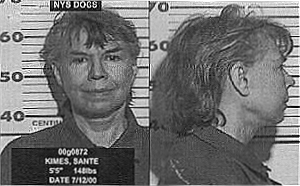
Convicted
Connection tags:

Convicted
Connection tags:
:max_bytes(150000):strip_icc():focal(749x0:751x2)/sherri-papinie-050125-6fed48fca2f5411e9f00a9c8037c330d.jpg)
Convicted
Connection tags:

Accused
Connection tags:

Convicted
Connection tags:

Accused
Connection tags:
Case Details
The call came on December 27, 2001. Martha Stewart was traveling, moving through an airport with the frictionless ease of the very wealthy, when her cell phone rang. On the other end was Douglas Faneuil, an assistant at Merrill Lynch. His message was brief: her broker, Peter Bacanovic, wanted her to know that ImClone Systems was going to be bad. ImClone's CEO, Samuel Waksal, was selling his shares. Martha should consider doing the same.
She sold. All 3,928 shares of ImClone stock, worth approximately $228,000. The transaction took minutes. It saved her an estimated $45,673 in losses. Then she boarded her plane and flew to Mexico for the holidays.
It was the most expensive $45,000 she would ever save.
Martha Helen Kostyra was born on August 3, 1941, in Jersey City, New Jersey, the second of six children born to Edward "Eddie" Kostyra, a pharmaceutical salesman, and Martha Ruszkowski Kostyra, a schoolteacher. The family was entirely of Polish heritage, and when Martha was three, they relocated to Nutley, New Jersey, a working-class suburb where the Kostyra children were raised with an emphasis on industry, precision, and self-reliance. She learned to cook and sew. She absorbed the rhythms of domestic life with a focus that bordered on intensity.
But Nutley was never the ceiling. By age 15, Martha was modeling, picking up work for clients that included Chanel. She babysat for the children of New York Yankees stars Mickey Mantle and Yogi Berra, navigating the world of celebrity with a composure that seemed to come naturally. She attended Barnard College and graduated with a double major in history and architectural history, a combination that would quietly inform her aesthetic sensibility for the rest of her life.
She married Andrew Stewart, a Yale Law student, in 1961. They had one daughter, Alexis, born in 1965, the same year Martha began working as a stockbroker on Wall Street. She held that position for roughly seven years, navigating a profession that was, in the mid-1960s, almost exclusively male. The experience gave her a literacy in markets and money that proved invaluable, and perhaps, in the end, fatally tempting.
By 1972, the Stewarts had relocated to Westport, Connecticut, and Martha had pivoted entirely. She launched a catering business from her home, turning the domestic into the professional in a way that felt almost revolutionary. The business grew into a reputation. The reputation grew into a book. Her first, "Entertaining," was published in 1982 and became a phenomenon. Over the next two decades she would publish more than 77 books, launch a magazine, anchor a television show, and build Martha Stewart Living Omnimedia, a company she founded in 1997 to consolidate her television, print, and merchandising operations into a single empire.
In 1999, MSLO went public on the New York Stock Exchange. The IPO was a sensation. At its peak, Martha Stewart's stake was valued at approximately $1.2 billion, making her America's first self-made female billionaire. The girl from Nutley had done something extraordinary: she had taken the ordinary fabric of domestic life, the cooking and cleaning and decorating and gardening, and transformed it into a publicly traded corporation.
She and Andrew separated in 1987 and divorced in 1990. The empire kept growing. Then came ImClone.
ImClone Systems was a biopharmaceutical company whose fortunes rested heavily on a cancer drug called Erbitux. In December 2001, the Food and Drug Administration was preparing to reject ImClone's application for Erbitux. Samuel Waksal, ImClone's CEO, knew this was coming. He began selling his shares and encouraged family members to do the same. The trades, conducted ahead of a material non-public event, were textbook insider trading.
Waksal was not the only one who received a warning. Martha Stewart's broker at Merrill Lynch, Peter Bacanovic, learned that Waksal was dumping stock. He instructed his assistant, Douglas Faneuil, to pass the information along to Stewart. Faneuil made the call. Stewart sold. On December 28, the FDA officially declined to review ImClone's application. The stock dropped sharply. Stewart, who had sold the day before, avoided losses of $45,673.
Federal investigators noticed. The pattern of trades, particularly by those with connections to Waksal, was difficult to ignore. The SEC opened an inquiry. Waksal was arrested in June 2002 and ultimately pleaded guilty to insider trading and other charges.
Stewart and Bacanovic initially claimed the sale had nothing to do with any tip. Their story was that the two had a pre-existing agreement: if ImClone shares fell below $60, she would sell automatically. Investigators found no evidence that such an agreement existed before the December trade. Faneuil, pressed by prosecutors and facing his own legal exposure, told the truth. He testified that he had relayed the Waksal information directly, and that the stop-loss story was constructed after the fact.
The cover-up, as prosecutors framed it, was the real crime. The underlying stock sale was a civil matter; the lying to federal investigators was something else entirely.
On June 4, 2003, a federal grand jury in Manhattan handed down a nine-count indictment against Martha Stewart and Peter Bacanovic. The charges included securities fraud, obstruction of justice, and conspiracy. Stewart resigned as CEO and Chairwoman of MSLO on the same day, though she retained the title of Chief Creative Officer. Her company's stock, already battered by months of mounting scrutiny, fell further.
The lead prosecutor was James Comey, then the U.S. Attorney for the Southern District of New York. Comey's office had chosen to pursue the case not because the underlying trade was catastrophic in scale, but because the subsequent lying to investigators was deliberate and documented. The message was clear: the cover-up would not be excused simply because the underlying sum was small.
Stewart's trial began in January 2004 before U.S. District Judge Miriam Goldman Cedarbaum in the Southern District of New York. The courtroom drew journalists from every major outlet. Cameras waited on the courthouse steps. Inside, Douglas Faneuil took the stand and walked the jury through the sequence of events with unsettling calm. He described the phone call, the message about Waksal's trades, and the later construction of the stop-loss story he said had never been real. His testimony was specific. His credibility held.
Stewart did not testify in her own defense.
The jury deliberated for three days. On March 5, 2004, they returned their verdict: guilty on four counts, including conspiracy, obstruction of an agency proceeding, and making false statements to federal investigators. Judge Cedarbaum dismissed the securities fraud count on legal grounds, but the convictions that remained were federal felonies. Real ones, with real consequences.
The sentencing came on July 16, 2004. Stewart addressed the court with the composure that had become her public signature, steady and controlled even as the walls closed in. Judge Cedarbaum sentenced her to five months in federal prison, five months of home confinement with electronic monitoring, and two years of supervised release. She was fined $30,000 and assessed an additional $400. Bacanovic received the same prison term and was fined $4,000.
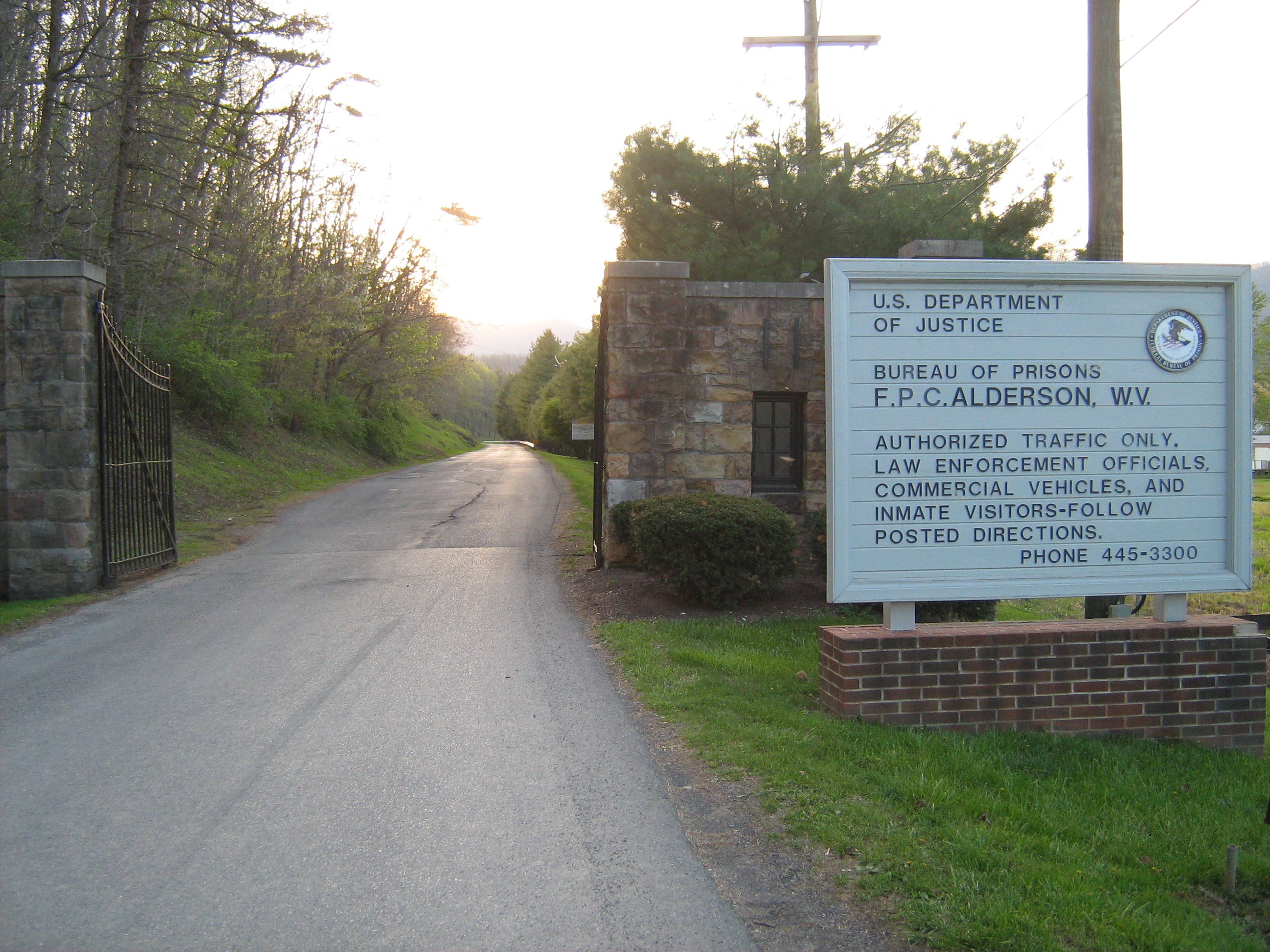
Stewart's defense team planned to appeal, and she could have remained free during that process. She chose not to wait. She elected to report immediately, reasoning that she wanted the time served and finished. On October 8, 2004, she reported to the Federal Prison Camp in Alderson, West Virginia, a minimum-security facility tucked into the Appalachian foothills that inmates had long nicknamed "Camp Cupcake." The nickname was ironic in the way such nicknames always are. It was still a federal penitentiary.
She was released at 12:30 AM on March 4, 2005. The hour was not accidental; the pre-dawn exit sidestepped the camera banks that would have gathered for a daylight release. She returned to her Bedford, New York estate, where the next five months passed under electronic monitoring. The ankle bracelet was real. The confinement was real.
In January 2006, the U.S. Court of Appeals for the Second Circuit upheld her conviction in full. There was no legal reversal, no procedural rescue. The felony stood.
The civil consequences followed in August 2006, when the SEC settled its related case against Stewart. She agreed to pay $195,081 in total: the avoided losses, plus interest, plus a civil penalty calculated at three times the original amount. She also accepted a five-year bar from serving as a director or in senior officer roles at any public company. The woman who had once rung the opening bell at the New York Stock Exchange was prohibited from running one.
The international ramifications were quieter but equally real. In October 2005, Canadian immigration authorities found her inadmissible under the Immigration and Refugee Protection Act. In June 2008, the United Kingdom's Border Agency denied her entry due to the criminal conviction. Borders, like consequences, have a way of persisting.
What happened next defied the conventional arc of public disgrace. Martha Stewart came back. "The Martha Stewart Show" launched in 2005 and ran until 2012. She starred in "The Apprentice: Martha Stewart" on NBC in 2005. New product lines followed, new partnerships, new platforms. She was inducted into the New Jersey Hall of Fame in 2018 and the Licensing International Hall of Fame in 2020. By any reasonable measure, she rebuilt.
Martha Stewart Living Omnimedia, the company she had constructed to a peak valuation near $2 billion, was acquired by Sequential Brands in 2015 for approximately $350 million; the gap between those two numbers tells its own story about what a felony conviction does to a brand built on trust. But Stewart survived the acquisition, continuing as Chief Creative Officer, and remained stubbornly, defiantly present in American culture.
In October 2024, Netflix released "Martha," a documentary directed by R.J. Cutler, drawn from hundreds of hours of interviews and Stewart's own private archives. She watched the final cut and objected publicly. The director, she said, had focused too heavily on the trial and used camera angles she found unflattering. She wanted a second version. Even at 83, she was not finished editing her own story.
That instinct, the refusal to let someone else control the frame, may be the most consistent thread running through her life. She arrived in Nutley as the daughter of a pharmaceutical salesman and left it as something else entirely: a Barnard graduate, a Wall Street broker, a caterer, an author, a television host, a billionaire. Then a convicted felon. Then, somehow, a cultural institution again.
The $45,673 she avoided losing on that December morning cost her a great deal more than it saved. It cost her five months in a federal prison camp, five months in an ankle bracelet, a felony record, years of restricted corporate authority, and the distinction of being America's first self-made female billionaire, a title the scandal permanently complicated. What it did not cost her was her name. That, for better and worse, remains the most durable thing she ever built.
Timeline
Birth & Early Life
Martha Helen Kostyra is born in Jersey City, New Jersey, the second of six children of Polish heritage. Her family soon relocated to Nutley, New Jersey, where she would grow up, begin modeling at age 15 for clients including Chanel, and babysit for the children of Yankees legends Mickey Mantle and Yogi Berra.
Established the working-class immigrant roots and early entrepreneurial drive that would define her eventual rise to a media empire.
Marriage & Career Beginnings
Martha marries Andrew Stewart, a Yale Law student, and later graduates from Barnard College with a double major in history and architectural history. She subsequently works as a Wall Street stockbroker from approximately 1965 to 1972, gaining financial acumen before pivoting entirely to domestic entrepreneurship.
Her Wall Street experience gave her a sophisticated understanding of markets and investing — knowledge that would later factor into her insider trading case.
Catering Business & First Book
Having launched a catering business in Westport, Connecticut in 1972, Stewart publishes her first book, 'Entertaining,' in 1982, which becomes a bestseller and establishes her as America's premier domestic authority. The book is the first of over 77 titles and marks the formal beginning of her media brand.
Transformed a local catering operation into a national brand, laying the commercial foundation for Martha Stewart Living Omnimedia.
MSLO Goes Public
Martha Stewart Living Omnimedia, founded in 1997 to consolidate her television, print, and merchandising ventures, goes public on the New York Stock Exchange. On the first day of trading, Stewart's shares are valued at approximately $1.2 billion, making her America's first self-made female billionaire.
Cemented Stewart's status as one of the most powerful businesswomen in America and created the high-profile public company at the center of her later legal troubles.
Insider Stock Sale
Stewart sells all 3,928 of her ImClone Systems shares — worth approximately $228,000 — after receiving a tip from her Merrill Lynch broker Peter Bacanovic that ImClone CEO Samuel Waksal was dumping his own shares ahead of an adverse FDA ruling. The timely sale allows Stewart to avoid losses later estimated at $45,673.
This single transaction, avoiding a relatively modest loss, set in motion a federal investigation that would ultimately destroy billions in company value and land Stewart in federal prison.
Federal Indictment
A federal grand jury in Manhattan, under the direction of U.S. Attorney James Comey, indicts Stewart and her broker Peter Bacanovic on nine criminal counts including securities fraud, obstruction of justice, and conspiracy. Stewart resigns as CEO and Chairwoman of MSLO on the same day, though she retains her role as Chief Creative Officer.
The indictment marked the government's aggressive decision to prosecute a celebrity defendant, sending a signal about white-collar enforcement in the post-Enron era.
Criminal Trial Begins
Stewart's criminal trial opens before U.S. District Judge Miriam Goldman Cedarbaum in the Southern District of New York. The government's star witness, Douglas Faneuil — Bacanovic's assistant at Merrill Lynch — testifies that Stewart was directly tipped about the Waksal stock sales, directly contradicting her defense.
Faneuil's testimony was the linchpin of the prosecution's case, providing firsthand evidence that the stock tip was deliberate and not coincidental.
Guilty Verdict
After a six-week trial and three days of jury deliberation, Stewart is found guilty on counts of conspiracy, obstruction of an agency proceeding, and making false statements to federal investigators. Judge Cedarbaum dismisses the securities fraud count, but the remaining convictions expose Stewart to potential imprisonment.
The verdict demonstrated that lying to investigators — not the underlying trade itself — was the crime that ultimately brought down one of America's most recognizable figures.
Sentencing Hearing
Judge Cedarbaum sentences Stewart to five months in federal prison, five months of home confinement with electronic monitoring, two years of supervised release, and a $30,000 fine. Co-defendant Peter Bacanovic receives an identical prison term and is fined $4,000.
The relatively lenient sentence — at the minimum end of federal guidelines — was nonetheless a historic moment: a self-made billionaire receiving a federal prison term over a $45,673 avoided loss.
Appeals Court Upholds Conviction & SEC Settlement
The U.S. Court of Appeals for the Second Circuit upholds Stewart's conviction in full, affirming the jury's verdict and closing her final avenue for overturning the felony. Later in 2006, Stewart separately settles the SEC's civil case, agreeing to pay $195,081 in disgorgement, interest, and penalties, and accepting a five-year bar from serving as a director or senior officer of any public company.
The appellate ruling and SEC settlement permanently closed the legal chapter, leaving Stewart with an enduring federal felony conviction that would later bar her from entering the United Kingdom and Canada.
Crime Location
Photos
Alderson Federal Prison Camp entrance

Alexis and Martha
Martha Stewart (48926315347) (cropped)
Martha Stewart David Shankbone 2010

Martha Stewart at Met Opera

martha stewart prison - Primary image

martha stewart prison - Image 7
Sources
- United States v. Stewart, 305 F. Supp. 2d 368 (S.D.N.Y. 2004)
- United States v. Stewart, 433 F.3d 273 (2d Cir. 2006)
- SEC v. Martha Stewart and Peter Bacanovic — Litigation Release
- Martha Stewart Convicted of All Charges
- Martha Stewart Sentenced to 5 Months in Prison
- Martha Stewart Reports to Prison in West Virginia
- Martha Stewart: Just Desserts — The Unauthorized Biography
- Martha Stewart: A Biography
- ImClone Insider Trading Scandal Explained
- Martha (Documentary)
- Martha Stewart Living Omnimedia IPO and Company History
- Wikipedia: Martha Stewart
Frequently Asked Questions
Table of Contents
Case Summary
At 12:30 in the morning on March 4, 2005, Martha Stewart walked out of the Federal Prison Camp in Alderson, West Virginia. She was 63 years old. America's most famous homemaker, a woman who had watched her personal fortune touch $1.2 billion, had just served five months in federal prison for crimes that traced back to a single phone call and a stock sale that saved her exactly $45,673 in avoided losses. The story of how the most recognizable domestic brand in American history came undone involves ImClone Systems stock, a Merrill Lynch broker named Peter Bacanovic, a frightened assistant named Douglas Faneuil who became the government's star witness, and a prosecutor named James Comey who would one day lead the FBI. It involves a woman who grew up in working-class Nutley, New Jersey, modeled for Chanel at 15, navigated Wall Street in the 1960s, and built a media empire from scratch, only to lie to federal investigators over a transaction that, compared to her net worth, was pocket change. The crime was almost comically small. The cover-up was not. And the consequences reshaped one of the most iconic careers in American business history.
August 3, 1941, Jersey City, New Jersey, USA(Age: 85)
Case Details
The call came on December 27, 2001. Martha Stewart was traveling, moving through an airport with the frictionless ease of the very wealthy, when her cell phone rang. On the other end was Douglas Faneuil, an assistant at Merrill Lynch. His message was brief: her broker, Peter Bacanovic, wanted her to know that ImClone Systems was going to be bad. ImClone's CEO, Samuel Waksal, was selling his shares. Martha should consider doing the same.
She sold. All 3,928 shares of ImClone stock, worth approximately $228,000. The transaction took minutes. It saved her an estimated $45,673 in losses. Then she boarded her plane and flew to Mexico for the holidays.
It was the most expensive $45,000 she would ever save.
Martha Helen Kostyra was born on August 3, 1941, in Jersey City, New Jersey, the second of six children born to Edward "Eddie" Kostyra, a pharmaceutical salesman, and Martha Ruszkowski Kostyra, a schoolteacher. The family was entirely of Polish heritage, and when Martha was three, they relocated to Nutley, New Jersey, a working-class suburb where the Kostyra children were raised with an emphasis on industry, precision, and self-reliance. She learned to cook and sew. She absorbed the rhythms of domestic life with a focus that bordered on intensity.
But Nutley was never the ceiling. By age 15, Martha was modeling, picking up work for clients that included Chanel. She babysat for the children of New York Yankees stars Mickey Mantle and Yogi Berra, navigating the world of celebrity with a composure that seemed to come naturally. She attended Barnard College and graduated with a double major in history and architectural history, a combination that would quietly inform her aesthetic sensibility for the rest of her life.
She married Andrew Stewart, a Yale Law student, in 1961. They had one daughter, Alexis, born in 1965, the same year Martha began working as a stockbroker on Wall Street. She held that position for roughly seven years, navigating a profession that was, in the mid-1960s, almost exclusively male. The experience gave her a literacy in markets and money that proved invaluable, and perhaps, in the end, fatally tempting.
By 1972, the Stewarts had relocated to Westport, Connecticut, and Martha had pivoted entirely. She launched a catering business from her home, turning the domestic into the professional in a way that felt almost revolutionary. The business grew into a reputation. The reputation grew into a book. Her first, "Entertaining," was published in 1982 and became a phenomenon. Over the next two decades she would publish more than 77 books, launch a magazine, anchor a television show, and build Martha Stewart Living Omnimedia, a company she founded in 1997 to consolidate her television, print, and merchandising operations into a single empire.
In 1999, MSLO went public on the New York Stock Exchange. The IPO was a sensation. At its peak, Martha Stewart's stake was valued at approximately $1.2 billion, making her America's first self-made female billionaire. The girl from Nutley had done something extraordinary: she had taken the ordinary fabric of domestic life, the cooking and cleaning and decorating and gardening, and transformed it into a publicly traded corporation.
She and Andrew separated in 1987 and divorced in 1990. The empire kept growing. Then came ImClone.
ImClone Systems was a biopharmaceutical company whose fortunes rested heavily on a cancer drug called Erbitux. In December 2001, the Food and Drug Administration was preparing to reject ImClone's application for Erbitux. Samuel Waksal, ImClone's CEO, knew this was coming. He began selling his shares and encouraged family members to do the same. The trades, conducted ahead of a material non-public event, were textbook insider trading.
Waksal was not the only one who received a warning. Martha Stewart's broker at Merrill Lynch, Peter Bacanovic, learned that Waksal was dumping stock. He instructed his assistant, Douglas Faneuil, to pass the information along to Stewart. Faneuil made the call. Stewart sold. On December 28, the FDA officially declined to review ImClone's application. The stock dropped sharply. Stewart, who had sold the day before, avoided losses of $45,673.
Federal investigators noticed. The pattern of trades, particularly by those with connections to Waksal, was difficult to ignore. The SEC opened an inquiry. Waksal was arrested in June 2002 and ultimately pleaded guilty to insider trading and other charges.
Stewart and Bacanovic initially claimed the sale had nothing to do with any tip. Their story was that the two had a pre-existing agreement: if ImClone shares fell below $60, she would sell automatically. Investigators found no evidence that such an agreement existed before the December trade. Faneuil, pressed by prosecutors and facing his own legal exposure, told the truth. He testified that he had relayed the Waksal information directly, and that the stop-loss story was constructed after the fact.
The cover-up, as prosecutors framed it, was the real crime. The underlying stock sale was a civil matter; the lying to federal investigators was something else entirely.
On June 4, 2003, a federal grand jury in Manhattan handed down a nine-count indictment against Martha Stewart and Peter Bacanovic. The charges included securities fraud, obstruction of justice, and conspiracy. Stewart resigned as CEO and Chairwoman of MSLO on the same day, though she retained the title of Chief Creative Officer. Her company's stock, already battered by months of mounting scrutiny, fell further.
The lead prosecutor was James Comey, then the U.S. Attorney for the Southern District of New York. Comey's office had chosen to pursue the case not because the underlying trade was catastrophic in scale, but because the subsequent lying to investigators was deliberate and documented. The message was clear: the cover-up would not be excused simply because the underlying sum was small.
Stewart's trial began in January 2004 before U.S. District Judge Miriam Goldman Cedarbaum in the Southern District of New York. The courtroom drew journalists from every major outlet. Cameras waited on the courthouse steps. Inside, Douglas Faneuil took the stand and walked the jury through the sequence of events with unsettling calm. He described the phone call, the message about Waksal's trades, and the later construction of the stop-loss story he said had never been real. His testimony was specific. His credibility held.
Stewart did not testify in her own defense.
The jury deliberated for three days. On March 5, 2004, they returned their verdict: guilty on four counts, including conspiracy, obstruction of an agency proceeding, and making false statements to federal investigators. Judge Cedarbaum dismissed the securities fraud count on legal grounds, but the convictions that remained were federal felonies. Real ones, with real consequences.
The sentencing came on July 16, 2004. Stewart addressed the court with the composure that had become her public signature, steady and controlled even as the walls closed in. Judge Cedarbaum sentenced her to five months in federal prison, five months of home confinement with electronic monitoring, and two years of supervised release. She was fined $30,000 and assessed an additional $400. Bacanovic received the same prison term and was fined $4,000.
Stewart's defense team planned to appeal, and she could have remained free during that process. She chose not to wait. She elected to report immediately, reasoning that she wanted the time served and finished. On October 8, 2004, she reported to the Federal Prison Camp in Alderson, West Virginia, a minimum-security facility tucked into the Appalachian foothills that inmates had long nicknamed "Camp Cupcake." The nickname was ironic in the way such nicknames always are. It was still a federal penitentiary.
She was released at 12:30 AM on March 4, 2005. The hour was not accidental; the pre-dawn exit sidestepped the camera banks that would have gathered for a daylight release. She returned to her Bedford, New York estate, where the next five months passed under electronic monitoring. The ankle bracelet was real. The confinement was real.
In January 2006, the U.S. Court of Appeals for the Second Circuit upheld her conviction in full. There was no legal reversal, no procedural rescue. The felony stood.
The civil consequences followed in August 2006, when the SEC settled its related case against Stewart. She agreed to pay $195,081 in total: the avoided losses, plus interest, plus a civil penalty calculated at three times the original amount. She also accepted a five-year bar from serving as a director or in senior officer roles at any public company. The woman who had once rung the opening bell at the New York Stock Exchange was prohibited from running one.
The international ramifications were quieter but equally real. In October 2005, Canadian immigration authorities found her inadmissible under the Immigration and Refugee Protection Act. In June 2008, the United Kingdom's Border Agency denied her entry due to the criminal conviction. Borders, like consequences, have a way of persisting.
What happened next defied the conventional arc of public disgrace. Martha Stewart came back. "The Martha Stewart Show" launched in 2005 and ran until 2012. She starred in "The Apprentice: Martha Stewart" on NBC in 2005. New product lines followed, new partnerships, new platforms. She was inducted into the New Jersey Hall of Fame in 2018 and the Licensing International Hall of Fame in 2020. By any reasonable measure, she rebuilt.
Martha Stewart Living Omnimedia, the company she had constructed to a peak valuation near $2 billion, was acquired by Sequential Brands in 2015 for approximately $350 million; the gap between those two numbers tells its own story about what a felony conviction does to a brand built on trust. But Stewart survived the acquisition, continuing as Chief Creative Officer, and remained stubbornly, defiantly present in American culture.
In October 2024, Netflix released "Martha," a documentary directed by R.J. Cutler, drawn from hundreds of hours of interviews and Stewart's own private archives. She watched the final cut and objected publicly. The director, she said, had focused too heavily on the trial and used camera angles she found unflattering. She wanted a second version. Even at 83, she was not finished editing her own story.
That instinct, the refusal to let someone else control the frame, may be the most consistent thread running through her life. She arrived in Nutley as the daughter of a pharmaceutical salesman and left it as something else entirely: a Barnard graduate, a Wall Street broker, a caterer, an author, a television host, a billionaire. Then a convicted felon. Then, somehow, a cultural institution again.
The $45,673 she avoided losing on that December morning cost her a great deal more than it saved. It cost her five months in a federal prison camp, five months in an ankle bracelet, a felony record, years of restricted corporate authority, and the distinction of being America's first self-made female billionaire, a title the scandal permanently complicated. What it did not cost her was her name. That, for better and worse, remains the most durable thing she ever built.
Timeline
Birth & Early Life
Martha Helen Kostyra is born in Jersey City, New Jersey, the second of six children of Polish heritage. Her family soon relocated to Nutley, New Jersey, where she would grow up, begin modeling at age 15 for clients including Chanel, and babysit for the children of Yankees legends Mickey Mantle and Yogi Berra.
Established the working-class immigrant roots and early entrepreneurial drive that would define her eventual rise to a media empire.
Marriage & Career Beginnings
Martha marries Andrew Stewart, a Yale Law student, and later graduates from Barnard College with a double major in history and architectural history. She subsequently works as a Wall Street stockbroker from approximately 1965 to 1972, gaining financial acumen before pivoting entirely to domestic entrepreneurship.
Her Wall Street experience gave her a sophisticated understanding of markets and investing — knowledge that would later factor into her insider trading case.
Catering Business & First Book
Having launched a catering business in Westport, Connecticut in 1972, Stewart publishes her first book, 'Entertaining,' in 1982, which becomes a bestseller and establishes her as America's premier domestic authority. The book is the first of over 77 titles and marks the formal beginning of her media brand.
Transformed a local catering operation into a national brand, laying the commercial foundation for Martha Stewart Living Omnimedia.
MSLO Goes Public
Martha Stewart Living Omnimedia, founded in 1997 to consolidate her television, print, and merchandising ventures, goes public on the New York Stock Exchange. On the first day of trading, Stewart's shares are valued at approximately $1.2 billion, making her America's first self-made female billionaire.
Cemented Stewart's status as one of the most powerful businesswomen in America and created the high-profile public company at the center of her later legal troubles.
Insider Stock Sale
Stewart sells all 3,928 of her ImClone Systems shares — worth approximately $228,000 — after receiving a tip from her Merrill Lynch broker Peter Bacanovic that ImClone CEO Samuel Waksal was dumping his own shares ahead of an adverse FDA ruling. The timely sale allows Stewart to avoid losses later estimated at $45,673.
This single transaction, avoiding a relatively modest loss, set in motion a federal investigation that would ultimately destroy billions in company value and land Stewart in federal prison.
Federal Indictment
A federal grand jury in Manhattan, under the direction of U.S. Attorney James Comey, indicts Stewart and her broker Peter Bacanovic on nine criminal counts including securities fraud, obstruction of justice, and conspiracy. Stewart resigns as CEO and Chairwoman of MSLO on the same day, though she retains her role as Chief Creative Officer.
The indictment marked the government's aggressive decision to prosecute a celebrity defendant, sending a signal about white-collar enforcement in the post-Enron era.
Criminal Trial Begins
Stewart's criminal trial opens before U.S. District Judge Miriam Goldman Cedarbaum in the Southern District of New York. The government's star witness, Douglas Faneuil — Bacanovic's assistant at Merrill Lynch — testifies that Stewart was directly tipped about the Waksal stock sales, directly contradicting her defense.
Faneuil's testimony was the linchpin of the prosecution's case, providing firsthand evidence that the stock tip was deliberate and not coincidental.
Guilty Verdict
After a six-week trial and three days of jury deliberation, Stewart is found guilty on counts of conspiracy, obstruction of an agency proceeding, and making false statements to federal investigators. Judge Cedarbaum dismisses the securities fraud count, but the remaining convictions expose Stewart to potential imprisonment.
The verdict demonstrated that lying to investigators — not the underlying trade itself — was the crime that ultimately brought down one of America's most recognizable figures.
Sentencing Hearing
Judge Cedarbaum sentences Stewart to five months in federal prison, five months of home confinement with electronic monitoring, two years of supervised release, and a $30,000 fine. Co-defendant Peter Bacanovic receives an identical prison term and is fined $4,000.
The relatively lenient sentence — at the minimum end of federal guidelines — was nonetheless a historic moment: a self-made billionaire receiving a federal prison term over a $45,673 avoided loss.
Appeals Court Upholds Conviction & SEC Settlement
The U.S. Court of Appeals for the Second Circuit upholds Stewart's conviction in full, affirming the jury's verdict and closing her final avenue for overturning the felony. Later in 2006, Stewart separately settles the SEC's civil case, agreeing to pay $195,081 in disgorgement, interest, and penalties, and accepting a five-year bar from serving as a director or senior officer of any public company.
The appellate ruling and SEC settlement permanently closed the legal chapter, leaving Stewart with an enduring federal felony conviction that would later bar her from entering the United Kingdom and Canada.
Crime Location
Photos
Alderson Federal Prison Camp entrance
Alexis and Martha
Martha Stewart (48926315347) (cropped)
Martha Stewart David Shankbone 2010
Martha Stewart at Met Opera
martha stewart prison - Primary image
martha stewart prison - Image 7
Sources
- United States v. Stewart, 305 F. Supp. 2d 368 (S.D.N.Y. 2004)
- United States v. Stewart, 433 F.3d 273 (2d Cir. 2006)
- SEC v. Martha Stewart and Peter Bacanovic — Litigation Release
- Martha Stewart Convicted of All Charges
- Martha Stewart Sentenced to 5 Months in Prison
- Martha Stewart Reports to Prison in West Virginia
- Martha Stewart: Just Desserts — The Unauthorized Biography
- Martha Stewart: A Biography
- ImClone Insider Trading Scandal Explained
- Martha (Documentary)
- Martha Stewart Living Omnimedia IPO and Company History
- Wikipedia: Martha Stewart
Frequently Asked Questions
Related Cases
Convicted
Connection tags:
Convicted
Connection tags:
Convicted
Connection tags:
Accused
Connection tags:
Convicted
Connection tags:
Accused
Connection tags:
Tags
Popular Culture
documentary (2024)
Netflix documentary directed by R.J. Cutler, drawn from hundreds of hours of interviews with Stewart and her private archives, covering her life, career, and the insider trading trial. Stewart publicly criticized the final cut for over-emphasizing the legal proceedings.
TV (2005)
NBC reality competition series hosted by Martha Stewart, modeled on Donald Trump's The Apprentice, marking her high-profile return to television shortly after her prison release.
TV (2005)
Syndicated daytime talk and lifestyle show (later titled 'Martha' on Hallmark Channel) that ran from 2005 to 2012, representing Stewart's successful post-conviction television comeback.
TV (1993)
Long-running syndicated lifestyle television program hosted by Stewart that ran from 1993 to 2004, establishing her as America's premier domestic authority before her legal troubles.
TV (2004)
SNL featured multiple parody sketches of Martha Stewart during and after her trial, most notably with Ana Gasteyer and later Kristen Wiig portraying her, satirizing her prison sentence and domestic perfectionism.
TV (2005)
CBS television movie dramatizing Martha Stewart's imprisonment at the Federal Prison Camp in Alderson, West Virginia, starring Cybill Shepherd as Martha Stewart.
TV (2003)
NBC television movie starring Cybill Shepherd as Martha Stewart, dramatizing her rise from catering entrepreneur to media mogul, produced during the height of her legal controversy.
book (1997)
Unauthorized biography by Jerry Oppenheimer examining Martha Stewart's personal history, business practices, and personality, which preceded but foreshadowed later public scrutiny of her conduct.