Arizona Donnie Clark Barker (Kate 'Ma' Barker)

Case Summary
On the morning of January 16, 1935, fourteen FBI agents surrounded a lakeside cottage in Ocklawaha, Florida, and opened fire on a sixty-one-year-old grandmother. The gun battle lasted nearly six hours. When it ended, Kate 'Ma' Barker lay dead from a single bullet to the head, a Thompson submachine gun at her feet. J. Edgar Hoover would declare her 'the most vicious, dangerous, and resourceful criminal brain of the last decade.' There was just one problem: she had never been arrested. Not once. Not ever. Her surviving criminal associates were blunt about it. Alvin Karpis, the actual architect of the Barker-Karpis Gang's operations, put it plainly: she 'couldn't plan breakfast.' So who was the real Ma Barker? A ruthless criminal mastermind? A devoted mother who looked the other way? Or a convenient legend, constructed by a powerful federal agency that needed to justify killing an old woman in a Florida cottage? The truth is stranger, darker, and far more human than any of those answers.
October 8, 1873, Ash Grove, Missouri, USA(Age: 61)
January 16, 1935, Ocklawaha, Marion County, Florida, USA (Lake Weir cottage) (Gunshot wound — killed in FBI shootout (single bullet wound to the head per post-mortem accounts; Fred Barker's body was riddled with multiple wounds))
Related Cases

Convicted
Connection tags:

Accused
Connection tags:

Convicted
Connection tags:
Convicted
Connection tags:

Accused
Connection tags:
Convicted
Connection tags:
Case Details
The sun had not yet risen over Lake Weir when the agents took their positions. It was January 16, 1935, a Thursday, cold enough by Florida standards to make your breath visible. Fourteen men from the Federal Bureau of Investigation fanned out through the palmettos and live oaks surrounding a two-story white clapboard cottage on the lake's edge near Ocklawaha, Marion County. Inside slept Kate Barker, sixty-one years old, and her youngest son Fred, thirty-three. The agents called out demands to surrender. What came back was gunfire.
For the next four to six hours, an estimated seven hundred to two thousand rounds tore through the morning air. Neighbors took cover. Tourists, drawn by the noise, set up to watch from the far shore. The cottage walls splintered. When the firing finally stopped, both occupants were dead. Fred's body was riddled with bullets. His mother had been struck once, in the head.
A Thompson submachine gun lay near her body.
J. Edgar Hoover would make certain the world noticed that gun.
Arizona Donnie Clark was born on October 8, 1873, in Ash Grove, Missouri, the daughter of John and Emaline Parker Clark, Scotch-Irish farming people of modest means. The family called her Arrie. There is nothing in the historical record to distinguish her childhood from thousands of others in rural postbellum Missouri: hard work, poverty, church, the rhythms of agricultural life. Whatever darkness was coming had not yet announced itself.
She married George E. Barker on September 14, 1892, in Lawrence County. George was ten years her senior. Over the following decade, the couple had four sons: Herman in 1893, Lloyd in 1897, Arthur (known as Doc) in 1899, and Fred in 1901, all born in Aurora, Missouri. The family moved to Webb City around 1904, and eventually to Tulsa, Oklahoma, around 1915.
It was in Tulsa that things began to unravel.
The Barker boys fell in with the Central Park Gang, a collection of young men from the rougher neighborhoods who progressed from petty theft to robbery with a kind of grim inevitability. By 1910, the boys were already in trouble with the law. By 1923, all four were either in jails or reformatories at various points. Kate visited them. She wrote letters. She lobbied authorities, petitioned governors, and argued her sons' cases to anyone who would listen. Whether she was a mother in denial or a mother who understood exactly what her sons were and chose them anyway is a question that historians have never satisfactorily resolved.
Then came 1927, the year everything collapsed at once.
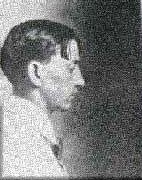
Herman, the eldest, had been robbing a store in Newton, Kansas, when a police officer named J. Marshall Pyle confronted him. Herman shot Pyle point-blank and fled, only to be cornered shortly afterward. Rather than surrender, he turned his gun on himself. He was thirty-four. George Barker, who had endured two decades of raising criminals and one decade of watching them cycle through courtrooms and prison cells, finally walked away. He would spend his remaining years operating a gas station in Joplin, Missouri, a quiet ending to a chaotic story.
Kate was alone now, with three sons still breathing behind prison walls and no husband to share the weight of it. From 1928 to 1931, she lived in conditions described by those who knew her as genuine poverty, a dirt-floor shack in Tulsa. By 1930, census records show her living with a man named Arthur W. Dunlop, listed as his wife. Dunlop was unemployed. Kate was fifty-six years old and starting over.
Then, in 1931, Fred came home.
He had served time at the Kansas State Penitentiary in Lansing, and while there he had found the partner who would define the next chapter of his life: Alvin Francis Karpavicz, known to the criminal world as Alvin Karpis and to law enforcement as 'Creepy.' Karpis was cold, calculating, meticulous about planning and paranoid about security. He was, by virtually every account including his own, the operational mind of what would become the Barker-Karpis Gang. Fred was loyal and dangerous. Together, they were efficient.
They needed a place to operate from, a domestic front that would let them move around the Midwest without attracting attention. Kate provided it. She cooked. She kept house. She gave the gang the appearance of family normalcy in rooming houses and rented cottages from Minnesota to Arkansas. Whether she attended planning sessions, gave orders, or simply sat in the next room while her son and Karpis plotted their next score is something that no surviving evidence conclusively answers.
What is certain is that she was present, she knew, and she stayed.
The first serious trouble arrived quickly. On December 19, 1931, the gang killed Sheriff C. Roy Kelly in West Plains, Missouri, during the aftermath of a robbery. The heat was immediate. Kate, Fred, Karpis, and Dunlop fled. A wanted poster went out offering one hundred dollars for 'Old Lady Arrie Barker' as an accomplice. It was the first time law enforcement had placed her name on a formal document. She had never been arrested.
Dunlop did not survive the flight for long. The gang suspected him of talking to authorities. His naked body was found near Webster, Wisconsin, a single bullet wound to the head. A bloody woman's glove lay at the scene. Kate was suspected of involvement in his death. No charges were ever filed.
Doc joined them in 1932, released from an Oklahoma life sentence through what was widely reported to involve the bribery of a state senator. At its peak, the Barker-Karpis Gang numbered twenty-five or more associates and operated across the Midwest with a professionalism that frustrated investigators. They robbed banks. They killed lawmen. And then, in the summer of 1933, they graduated to something that would put them permanently at the top of the FBI's list.
On June 15, 1933, they kidnapped William A. Hamm Jr., the president of the Hamm Brewing Company, from a St. Paul, Minnesota, street corner in broad daylight. The ransom demand was one hundred thousand dollars. It was paid. Hamm was released unharmed.
The Hamm kidnapping was audacious. The Edward Bremer kidnapping, seven months later, was reckless.
On January 17, 1934, banker Edward George Bremer Jr. was taken from his car on a St. Paul street as he dropped his daughter off at school. Bremer was well-connected; his family had ties to President Roosevelt. The ransom demand was two hundred thousand dollars. It was paid. Bremer was released. But the FBI, now personally invested under Hoover's direction, began pulling the threads of the gang's network with a patience that would prove fatal to the Barkers.
The gang scattered. Some members underwent surgery to alter their fingerprints. Kate and Fred drove south, eventually settling into a two-story lakeside cottage on Lake Weir in Ocklawaha, Florida. Kate told the locals her name was Mrs. Kate Blackburn. She liked jigsaw puzzles. She attended church. She listened to the radio. By any outward measure, she was simply an older woman enjoying the Florida winter with her son.
On January 8, 1935, Doc Barker was arrested in Chicago. Agents searching his possessions found a map with Lake Weir circled. A gang associate named Byron Bolton, now cooperating with the FBI, told agents that Ma and Fred were hiding near a local alligator the residents called Gator Joe. The bureau had its address.
Eight days later, Special Agent in Charge Earl J. Connelley led fourteen agents to the edge of Lake Weir before dawn.
The gun battle that followed entered the historical record as the longest firefight in FBI history. When neighbors and curious locals gathered to watch from across the water, the spectacle had an almost carnival quality: this elderly woman and her son, holed up in a Florida cottage, trading machine-gun fire with the entire apparatus of federal law enforcement while tourists looked on. Inside the cottage, the walls were coming apart around them. Outside, the agents maintained their positions and kept firing.
Neither Barker came out.
When agents finally entered the cottage, they found Fred's body bearing the marks of a sustained assault. Kate had been killed by a single bullet to the head. The Thompson submachine gun lay near her. Crime scene photographs taken by Special Agent Tom McDade captured the gun at her feet. Some historians have since suggested, carefully and without definitive evidence, that the wound's nature and the gun's position may indicate she fired that last round herself. The FBI never explored the question publicly.
Hoover had a different story to tell.
In the weeks and months that followed, the director described Kate Barker as the genius behind the gang, the architect of every kidnapping and robbery, the spider at the center of a criminal web. He called her 'the most vicious, dangerous, and resourceful criminal brain of the last decade.' The press repeated the characterization. The public absorbed it.
The men who had actually worked with her pushed back, bluntly and consistently. Karpis, who would eventually serve thirty-three years at Alcatraz as its longest-tenured inmate before being paroled in 1969, was dismissive. She 'couldn't plan breakfast,' he said. Harvey Bailey, a convicted bank robber who knew the gang's operations, offered almost the identical phrase. The Encyclopedia of Oklahoma History, reviewing the historical record decades later, reached the same conclusion: Kate Barker was never arrested, never formally charged with any crime, and her reputation as a criminal mastermind was, in large part, a construction.
What Hoover needed, historians have argued, was justification. The FBI had shot and killed a sixty-one-year-old woman in a cottage on a Florida lake. The agency was young, its authority still being established, its public image carefully managed. A grandmother is a difficult headline. A crime boss is a trophy.
The bodies of Kate and Fred Barker were taken to the Pyle Mortuary in Ocala, where they were put on public display and drew crowds of curious Floridians for days. No family member came forward to claim them. They remained at the mortuary for approximately eight months before finally being buried on October 1, 1935, alongside Herman at the Williams Timberhill Cemetery in Welch, Craig County, Oklahoma.
Of her four sons, not one died peacefully. Herman had shot himself in 1927. Fred was killed with her at Lake Weir. Doc was shot and killed during an escape attempt at Alcatraz in 1939. Lloyd, who had spent twenty-five years in Leavenworth on a mail robbery conviction and was released in 1947, was shot and killed by his own wife in 1949.
Kate herself has never been entirely put to rest, not really. The cottage where she died was saved from demolition in 2016, floated across Lake Weir on pontoons, and relocated to the Carney Island Recreation and Conservation Area in Marion County, where it now stands as a museum. On January 16, 2025, the ninetieth anniversary of the gun battle, the Society of Former Special Agents of the FBI unveiled a commemorative plaque at the site.
She became, predictably, a pop culture figure: Shelley Winters played her twice, once in a 1966 Batman episode and again in Roger Corman's 1970 film 'Bloody Mama,' which gave a young Robert De Niro one of his earliest screen roles as Fred. The 1977 Boney M. disco hit 'Ma Baker' carried the legend onto dancefloors worldwide.
But the real Kate Barker resists easy categorization. She was not innocent. She traveled with killers, used false names, and lived on criminal proceeds while her sons murdered sheriffs and terrorized the Midwest. She worked ferociously to secure their releases from prison and then watched them go straight back to crime. She was, at minimum, complicit.
She was also never charged, never tried, never convicted.
What died at Lake Weir that January morning was, in some ways, more complicated than what Hoover described. Not a criminal mastermind. Not an innocent bystander. Something harder to prosecute and harder to forget: a mother who chose her sons over everything else, and paid a price that no jury ever had the chance to set.
Timeline
Birth of Arizona Donnie Clark
Arizona Donnie Clark — later known as Kate 'Ma' Barker — was born on October 8, 1873, in Ash Grove, Missouri, to Scotch-Irish parents John and Emaline (Parker) Clark. Known in childhood as 'Arrie,' she would grow up in rural Missouri before marrying into the family name that would become synonymous with Depression-era crime.
Establishes the origins of one of the most mythologized figures in American criminal history, whose rural Missouri upbringing shaped her fierce, protective attachment to her sons.
Marriage to George Barker
Arizona Donnie Clark married George E. Barker on September 14, 1892, in Lawrence County (Ash Grove), Missouri. George was ten years her senior, and together they would have four sons — Herman (1893), Lloyd (1897), Arthur 'Doc' (1899), and Fred (1901) — all born in Aurora, Missouri.
The marriage produced the four Barker brothers whose criminal careers would define Ma Barker's legacy and ultimately lead to her death.
Barker Boys Enter a Life of Crime
By 1910, the Barker sons had begun committing crimes, and after the family relocated to Tulsa, Oklahoma around 1915, the boys joined the local Central Park Gang and escalated their criminal activity. By 1923, all four Barker sons were either incarcerated or in reformatories, leaving Ma Barker to navigate the legal system on their behalf.
This period established the pattern of Ma Barker working tirelessly — and allegedly using any means available, including bribery — to secure her sons' releases from custody.
Herman Barker's Suicide; Family Fractures
In 1927, eldest son Herman committed suicide after shooting a police officer point-blank during a robbery in Kansas, marking the first violent death among the Barker boys. Around this same period, husband George Barker abandoned the family entirely, eventually settling in Joplin, Missouri, where he operated a gas station.
Herman's death and George's abandonment left Ma Barker alone and impoverished, deepening her dependency on — and fierce loyalty to — her surviving criminal sons.
Barker–Karpis Gang Formed; Sheriff Murdered
In 1931, Fred Barker was paroled from Kansas State Penitentiary, where he had befriended Alvin 'Creepy' Karpis, and together they formed the Barker–Karpis Gang. On December 19, 1931, the gang murdered Sheriff C. Roy Kelly in West Plains, Missouri, forcing Ma Barker, Fred, Karpis, and companion Arthur Dunlop to flee — with a wanted poster subsequently issued offering $100 for 'Old Lady Arrie Barker' as an accomplice.
The murder of Sheriff Kelly and the formation of the Barker–Karpis Gang marked Ma Barker's formal entry into the orbit of federal law enforcement scrutiny and launched the gang's violent Midwest crime spree.
Hamm Brewing Heir Kidnapped for $100,000 Ransom
On June 15, 1933, the Barker–Karpis Gang kidnapped William A. Hamm Jr., president of the Hamm Brewing Company, in St. Paul, Minnesota, and collected a $100,000 ransom for his release. The audacious kidnapping elevated the gang to the top of the FBI's 'Public Enemy' list and drew intense federal investigative resources.
The Hamm kidnapping was the gang's most high-profile crime to that point and signaled a dangerous escalation from bank robbery to federal kidnapping offenses, dramatically increasing law enforcement pressure.
Bremer Banker Kidnapping Nets $200,000
On January 17, 1934, the Barker–Karpis Gang kidnapped prominent St. Paul banker Edward George Bremer Jr. and extorted a $200,000 ransom — the largest ransom collected by any American gang up to that time. The kidnapping enraged FBI Director J. Edgar Hoover and made the gang the most wanted criminal organization in the United States.
The Bremer kidnapping proved to be the gang's undoing: the massive FBI manhunt it triggered, combined with the forensic tracing of ransom bills, ultimately led agents directly to Ma and Fred Barker's Florida hideout.
Arthur 'Doc' Barker Arrested; Map Reveals Hideout
On January 8, 1935, FBI agents arrested Arthur 'Doc' Barker in Chicago, discovering among his possessions a map with Lake Weir, Florida, circled. A gang associate, Byron Bolton, confirmed to agents that Ma Barker and Fred were hiding near the lake — specifically near a local alligator known as 'Gator Joe' — providing the FBI with the precise location of their final refuge.
Doc Barker's arrest and the map found on him were the decisive intelligence break that directed 14 FBI agents to the Lake Weir cottage, sealing the fate of both Ma and Fred Barker.
FBI Siege and Death at Lake Weir Cottage
Before dawn on January 16, 1935, fourteen FBI agents led by Special Agent in Charge Earl J. Connelley surrounded the two-story lakeside cottage in Ocklawaha, Marion County, Florida, where Ma and Fred Barker were hiding under the alias 'Mrs. Kate Blackburn.' After demands to surrender were met with machine-gun fire, a battle lasting approximately four to six hours erupted — the longest gun battle in FBI history — with an estimated 700 to 2,000 rounds exchanged while spectators reportedly gathered nearby. Both Ma Barker and Fred Barker were killed: Fred's body was riddled with bullets, while Ma died from a single gunshot wound to the head, with a Thompson submachine gun found near her body.
The Lake Weir shootout ended the Barker–Karpis Gang's reign of terror and gave J. Edgar Hoover his most dramatic 'Public Enemy' victory, though the circumstances of Ma Barker's death — and her true role in the gang — remain disputed to this day.
Bodies Buried; Hoover's Legacy Contested
After lying unclaimed at Pyle Mortuary in Ocala, Florida — where they were displayed for public viewing and attracted crowds of tourists — the bodies of Ma and Fred Barker were finally buried on October 1, 1935, alongside Herman Barker at Williams Timberhill Cemetery in Welch, Craig County, Oklahoma. J. Edgar Hoover's public declaration that Ma Barker was 'the most vicious, dangerous, and resourceful criminal brain of the last decade' was sharply contradicted by Alvin Karpis, who stated she 'couldn't plan breakfast,' and by historians who noted she was never arrested or formally charged with any crime in her lifetime.
The posthumous burial and Hoover's contested characterization cemented the enduring historical debate over Ma Barker's true role: domestic cover provider and fiercely loyal mother, or FBI-manufactured 'criminal mastermind' whose legend was fabricated to justify her killing.
Crime Location
Photos
The Florida Lake Weir cottage where Ma and Fred Barker were killed, alongside the cache of weapons recovered by agents after the January 16, 1935 firefight in Ocklawaha, Florida.

Ma Barker

Alvin Karpis

Arthur Barker

Barker Cottage on Lake Weir in Florida

Eddie Green

Fred-barker1
Herman Barker
Sources
- Ma Barker — FBI History
- Kate 'Ma' Barker — U.S. Postal Inspection Service History Spotlight
- Ma Barker — Wikipedia
- The Alvin Karpis Story
- Public Enemies: America's Greatest Crime Wave and the Birth of the FBI, 1933–34
- Kate Barker (Ma Barker) — Encyclopedia of Oklahoma History and Culture
- Barker–Karpis Gang FBI Case File
- Bradford–Ma Barker House Preservation — Marion County
Frequently Asked Questions
Table of Contents
Case Summary
On the morning of January 16, 1935, fourteen FBI agents surrounded a lakeside cottage in Ocklawaha, Florida, and opened fire on a sixty-one-year-old grandmother. The gun battle lasted nearly six hours. When it ended, Kate 'Ma' Barker lay dead from a single bullet to the head, a Thompson submachine gun at her feet. J. Edgar Hoover would declare her 'the most vicious, dangerous, and resourceful criminal brain of the last decade.' There was just one problem: she had never been arrested. Not once. Not ever. Her surviving criminal associates were blunt about it. Alvin Karpis, the actual architect of the Barker-Karpis Gang's operations, put it plainly: she 'couldn't plan breakfast.' So who was the real Ma Barker? A ruthless criminal mastermind? A devoted mother who looked the other way? Or a convenient legend, constructed by a powerful federal agency that needed to justify killing an old woman in a Florida cottage? The truth is stranger, darker, and far more human than any of those answers.
October 8, 1873, Ash Grove, Missouri, USA(Age: 61)
January 16, 1935, Ocklawaha, Marion County, Florida, USA (Lake Weir cottage) (Gunshot wound — killed in FBI shootout (single bullet wound to the head per post-mortem accounts; Fred Barker's body was riddled with multiple wounds))
Case Details
The sun had not yet risen over Lake Weir when the agents took their positions. It was January 16, 1935, a Thursday, cold enough by Florida standards to make your breath visible. Fourteen men from the Federal Bureau of Investigation fanned out through the palmettos and live oaks surrounding a two-story white clapboard cottage on the lake's edge near Ocklawaha, Marion County. Inside slept Kate Barker, sixty-one years old, and her youngest son Fred, thirty-three. The agents called out demands to surrender. What came back was gunfire.
For the next four to six hours, an estimated seven hundred to two thousand rounds tore through the morning air. Neighbors took cover. Tourists, drawn by the noise, set up to watch from the far shore. The cottage walls splintered. When the firing finally stopped, both occupants were dead. Fred's body was riddled with bullets. His mother had been struck once, in the head.
A Thompson submachine gun lay near her body.
J. Edgar Hoover would make certain the world noticed that gun.
Arizona Donnie Clark was born on October 8, 1873, in Ash Grove, Missouri, the daughter of John and Emaline Parker Clark, Scotch-Irish farming people of modest means. The family called her Arrie. There is nothing in the historical record to distinguish her childhood from thousands of others in rural postbellum Missouri: hard work, poverty, church, the rhythms of agricultural life. Whatever darkness was coming had not yet announced itself.
She married George E. Barker on September 14, 1892, in Lawrence County. George was ten years her senior. Over the following decade, the couple had four sons: Herman in 1893, Lloyd in 1897, Arthur (known as Doc) in 1899, and Fred in 1901, all born in Aurora, Missouri. The family moved to Webb City around 1904, and eventually to Tulsa, Oklahoma, around 1915.
It was in Tulsa that things began to unravel.
The Barker boys fell in with the Central Park Gang, a collection of young men from the rougher neighborhoods who progressed from petty theft to robbery with a kind of grim inevitability. By 1910, the boys were already in trouble with the law. By 1923, all four were either in jails or reformatories at various points. Kate visited them. She wrote letters. She lobbied authorities, petitioned governors, and argued her sons' cases to anyone who would listen. Whether she was a mother in denial or a mother who understood exactly what her sons were and chose them anyway is a question that historians have never satisfactorily resolved.
Then came 1927, the year everything collapsed at once.
Herman, the eldest, had been robbing a store in Newton, Kansas, when a police officer named J. Marshall Pyle confronted him. Herman shot Pyle point-blank and fled, only to be cornered shortly afterward. Rather than surrender, he turned his gun on himself. He was thirty-four. George Barker, who had endured two decades of raising criminals and one decade of watching them cycle through courtrooms and prison cells, finally walked away. He would spend his remaining years operating a gas station in Joplin, Missouri, a quiet ending to a chaotic story.
Kate was alone now, with three sons still breathing behind prison walls and no husband to share the weight of it. From 1928 to 1931, she lived in conditions described by those who knew her as genuine poverty, a dirt-floor shack in Tulsa. By 1930, census records show her living with a man named Arthur W. Dunlop, listed as his wife. Dunlop was unemployed. Kate was fifty-six years old and starting over.
Then, in 1931, Fred came home.
He had served time at the Kansas State Penitentiary in Lansing, and while there he had found the partner who would define the next chapter of his life: Alvin Francis Karpavicz, known to the criminal world as Alvin Karpis and to law enforcement as 'Creepy.' Karpis was cold, calculating, meticulous about planning and paranoid about security. He was, by virtually every account including his own, the operational mind of what would become the Barker-Karpis Gang. Fred was loyal and dangerous. Together, they were efficient.
They needed a place to operate from, a domestic front that would let them move around the Midwest without attracting attention. Kate provided it. She cooked. She kept house. She gave the gang the appearance of family normalcy in rooming houses and rented cottages from Minnesota to Arkansas. Whether she attended planning sessions, gave orders, or simply sat in the next room while her son and Karpis plotted their next score is something that no surviving evidence conclusively answers.
What is certain is that she was present, she knew, and she stayed.
The first serious trouble arrived quickly. On December 19, 1931, the gang killed Sheriff C. Roy Kelly in West Plains, Missouri, during the aftermath of a robbery. The heat was immediate. Kate, Fred, Karpis, and Dunlop fled. A wanted poster went out offering one hundred dollars for 'Old Lady Arrie Barker' as an accomplice. It was the first time law enforcement had placed her name on a formal document. She had never been arrested.
Dunlop did not survive the flight for long. The gang suspected him of talking to authorities. His naked body was found near Webster, Wisconsin, a single bullet wound to the head. A bloody woman's glove lay at the scene. Kate was suspected of involvement in his death. No charges were ever filed.
Doc joined them in 1932, released from an Oklahoma life sentence through what was widely reported to involve the bribery of a state senator. At its peak, the Barker-Karpis Gang numbered twenty-five or more associates and operated across the Midwest with a professionalism that frustrated investigators. They robbed banks. They killed lawmen. And then, in the summer of 1933, they graduated to something that would put them permanently at the top of the FBI's list.
On June 15, 1933, they kidnapped William A. Hamm Jr., the president of the Hamm Brewing Company, from a St. Paul, Minnesota, street corner in broad daylight. The ransom demand was one hundred thousand dollars. It was paid. Hamm was released unharmed.
The Hamm kidnapping was audacious. The Edward Bremer kidnapping, seven months later, was reckless.
On January 17, 1934, banker Edward George Bremer Jr. was taken from his car on a St. Paul street as he dropped his daughter off at school. Bremer was well-connected; his family had ties to President Roosevelt. The ransom demand was two hundred thousand dollars. It was paid. Bremer was released. But the FBI, now personally invested under Hoover's direction, began pulling the threads of the gang's network with a patience that would prove fatal to the Barkers.
The gang scattered. Some members underwent surgery to alter their fingerprints. Kate and Fred drove south, eventually settling into a two-story lakeside cottage on Lake Weir in Ocklawaha, Florida. Kate told the locals her name was Mrs. Kate Blackburn. She liked jigsaw puzzles. She attended church. She listened to the radio. By any outward measure, she was simply an older woman enjoying the Florida winter with her son.
On January 8, 1935, Doc Barker was arrested in Chicago. Agents searching his possessions found a map with Lake Weir circled. A gang associate named Byron Bolton, now cooperating with the FBI, told agents that Ma and Fred were hiding near a local alligator the residents called Gator Joe. The bureau had its address.
Eight days later, Special Agent in Charge Earl J. Connelley led fourteen agents to the edge of Lake Weir before dawn.
The gun battle that followed entered the historical record as the longest firefight in FBI history. When neighbors and curious locals gathered to watch from across the water, the spectacle had an almost carnival quality: this elderly woman and her son, holed up in a Florida cottage, trading machine-gun fire with the entire apparatus of federal law enforcement while tourists looked on. Inside the cottage, the walls were coming apart around them. Outside, the agents maintained their positions and kept firing.
Neither Barker came out.
When agents finally entered the cottage, they found Fred's body bearing the marks of a sustained assault. Kate had been killed by a single bullet to the head. The Thompson submachine gun lay near her. Crime scene photographs taken by Special Agent Tom McDade captured the gun at her feet. Some historians have since suggested, carefully and without definitive evidence, that the wound's nature and the gun's position may indicate she fired that last round herself. The FBI never explored the question publicly.
Hoover had a different story to tell.
In the weeks and months that followed, the director described Kate Barker as the genius behind the gang, the architect of every kidnapping and robbery, the spider at the center of a criminal web. He called her 'the most vicious, dangerous, and resourceful criminal brain of the last decade.' The press repeated the characterization. The public absorbed it.
The men who had actually worked with her pushed back, bluntly and consistently. Karpis, who would eventually serve thirty-three years at Alcatraz as its longest-tenured inmate before being paroled in 1969, was dismissive. She 'couldn't plan breakfast,' he said. Harvey Bailey, a convicted bank robber who knew the gang's operations, offered almost the identical phrase. The Encyclopedia of Oklahoma History, reviewing the historical record decades later, reached the same conclusion: Kate Barker was never arrested, never formally charged with any crime, and her reputation as a criminal mastermind was, in large part, a construction.
What Hoover needed, historians have argued, was justification. The FBI had shot and killed a sixty-one-year-old woman in a cottage on a Florida lake. The agency was young, its authority still being established, its public image carefully managed. A grandmother is a difficult headline. A crime boss is a trophy.
The bodies of Kate and Fred Barker were taken to the Pyle Mortuary in Ocala, where they were put on public display and drew crowds of curious Floridians for days. No family member came forward to claim them. They remained at the mortuary for approximately eight months before finally being buried on October 1, 1935, alongside Herman at the Williams Timberhill Cemetery in Welch, Craig County, Oklahoma.
Of her four sons, not one died peacefully. Herman had shot himself in 1927. Fred was killed with her at Lake Weir. Doc was shot and killed during an escape attempt at Alcatraz in 1939. Lloyd, who had spent twenty-five years in Leavenworth on a mail robbery conviction and was released in 1947, was shot and killed by his own wife in 1949.
Kate herself has never been entirely put to rest, not really. The cottage where she died was saved from demolition in 2016, floated across Lake Weir on pontoons, and relocated to the Carney Island Recreation and Conservation Area in Marion County, where it now stands as a museum. On January 16, 2025, the ninetieth anniversary of the gun battle, the Society of Former Special Agents of the FBI unveiled a commemorative plaque at the site.
She became, predictably, a pop culture figure: Shelley Winters played her twice, once in a 1966 Batman episode and again in Roger Corman's 1970 film 'Bloody Mama,' which gave a young Robert De Niro one of his earliest screen roles as Fred. The 1977 Boney M. disco hit 'Ma Baker' carried the legend onto dancefloors worldwide.
But the real Kate Barker resists easy categorization. She was not innocent. She traveled with killers, used false names, and lived on criminal proceeds while her sons murdered sheriffs and terrorized the Midwest. She worked ferociously to secure their releases from prison and then watched them go straight back to crime. She was, at minimum, complicit.
She was also never charged, never tried, never convicted.
What died at Lake Weir that January morning was, in some ways, more complicated than what Hoover described. Not a criminal mastermind. Not an innocent bystander. Something harder to prosecute and harder to forget: a mother who chose her sons over everything else, and paid a price that no jury ever had the chance to set.
Timeline
Birth of Arizona Donnie Clark
Arizona Donnie Clark — later known as Kate 'Ma' Barker — was born on October 8, 1873, in Ash Grove, Missouri, to Scotch-Irish parents John and Emaline (Parker) Clark. Known in childhood as 'Arrie,' she would grow up in rural Missouri before marrying into the family name that would become synonymous with Depression-era crime.
Establishes the origins of one of the most mythologized figures in American criminal history, whose rural Missouri upbringing shaped her fierce, protective attachment to her sons.
Marriage to George Barker
Arizona Donnie Clark married George E. Barker on September 14, 1892, in Lawrence County (Ash Grove), Missouri. George was ten years her senior, and together they would have four sons — Herman (1893), Lloyd (1897), Arthur 'Doc' (1899), and Fred (1901) — all born in Aurora, Missouri.
The marriage produced the four Barker brothers whose criminal careers would define Ma Barker's legacy and ultimately lead to her death.
Barker Boys Enter a Life of Crime
By 1910, the Barker sons had begun committing crimes, and after the family relocated to Tulsa, Oklahoma around 1915, the boys joined the local Central Park Gang and escalated their criminal activity. By 1923, all four Barker sons were either incarcerated or in reformatories, leaving Ma Barker to navigate the legal system on their behalf.
This period established the pattern of Ma Barker working tirelessly — and allegedly using any means available, including bribery — to secure her sons' releases from custody.
Herman Barker's Suicide; Family Fractures
In 1927, eldest son Herman committed suicide after shooting a police officer point-blank during a robbery in Kansas, marking the first violent death among the Barker boys. Around this same period, husband George Barker abandoned the family entirely, eventually settling in Joplin, Missouri, where he operated a gas station.
Herman's death and George's abandonment left Ma Barker alone and impoverished, deepening her dependency on — and fierce loyalty to — her surviving criminal sons.
Barker–Karpis Gang Formed; Sheriff Murdered
In 1931, Fred Barker was paroled from Kansas State Penitentiary, where he had befriended Alvin 'Creepy' Karpis, and together they formed the Barker–Karpis Gang. On December 19, 1931, the gang murdered Sheriff C. Roy Kelly in West Plains, Missouri, forcing Ma Barker, Fred, Karpis, and companion Arthur Dunlop to flee — with a wanted poster subsequently issued offering $100 for 'Old Lady Arrie Barker' as an accomplice.
The murder of Sheriff Kelly and the formation of the Barker–Karpis Gang marked Ma Barker's formal entry into the orbit of federal law enforcement scrutiny and launched the gang's violent Midwest crime spree.
Hamm Brewing Heir Kidnapped for $100,000 Ransom
On June 15, 1933, the Barker–Karpis Gang kidnapped William A. Hamm Jr., president of the Hamm Brewing Company, in St. Paul, Minnesota, and collected a $100,000 ransom for his release. The audacious kidnapping elevated the gang to the top of the FBI's 'Public Enemy' list and drew intense federal investigative resources.
The Hamm kidnapping was the gang's most high-profile crime to that point and signaled a dangerous escalation from bank robbery to federal kidnapping offenses, dramatically increasing law enforcement pressure.
Bremer Banker Kidnapping Nets $200,000
On January 17, 1934, the Barker–Karpis Gang kidnapped prominent St. Paul banker Edward George Bremer Jr. and extorted a $200,000 ransom — the largest ransom collected by any American gang up to that time. The kidnapping enraged FBI Director J. Edgar Hoover and made the gang the most wanted criminal organization in the United States.
The Bremer kidnapping proved to be the gang's undoing: the massive FBI manhunt it triggered, combined with the forensic tracing of ransom bills, ultimately led agents directly to Ma and Fred Barker's Florida hideout.
Arthur 'Doc' Barker Arrested; Map Reveals Hideout
On January 8, 1935, FBI agents arrested Arthur 'Doc' Barker in Chicago, discovering among his possessions a map with Lake Weir, Florida, circled. A gang associate, Byron Bolton, confirmed to agents that Ma Barker and Fred were hiding near the lake — specifically near a local alligator known as 'Gator Joe' — providing the FBI with the precise location of their final refuge.
Doc Barker's arrest and the map found on him were the decisive intelligence break that directed 14 FBI agents to the Lake Weir cottage, sealing the fate of both Ma and Fred Barker.
FBI Siege and Death at Lake Weir Cottage
Before dawn on January 16, 1935, fourteen FBI agents led by Special Agent in Charge Earl J. Connelley surrounded the two-story lakeside cottage in Ocklawaha, Marion County, Florida, where Ma and Fred Barker were hiding under the alias 'Mrs. Kate Blackburn.' After demands to surrender were met with machine-gun fire, a battle lasting approximately four to six hours erupted — the longest gun battle in FBI history — with an estimated 700 to 2,000 rounds exchanged while spectators reportedly gathered nearby. Both Ma Barker and Fred Barker were killed: Fred's body was riddled with bullets, while Ma died from a single gunshot wound to the head, with a Thompson submachine gun found near her body.
The Lake Weir shootout ended the Barker–Karpis Gang's reign of terror and gave J. Edgar Hoover his most dramatic 'Public Enemy' victory, though the circumstances of Ma Barker's death — and her true role in the gang — remain disputed to this day.
Bodies Buried; Hoover's Legacy Contested
After lying unclaimed at Pyle Mortuary in Ocala, Florida — where they were displayed for public viewing and attracted crowds of tourists — the bodies of Ma and Fred Barker were finally buried on October 1, 1935, alongside Herman Barker at Williams Timberhill Cemetery in Welch, Craig County, Oklahoma. J. Edgar Hoover's public declaration that Ma Barker was 'the most vicious, dangerous, and resourceful criminal brain of the last decade' was sharply contradicted by Alvin Karpis, who stated she 'couldn't plan breakfast,' and by historians who noted she was never arrested or formally charged with any crime in her lifetime.
The posthumous burial and Hoover's contested characterization cemented the enduring historical debate over Ma Barker's true role: domestic cover provider and fiercely loyal mother, or FBI-manufactured 'criminal mastermind' whose legend was fabricated to justify her killing.
Crime Location
Photos
The Florida Lake Weir cottage where Ma and Fred Barker were killed, alongside the cache of weapons recovered by agents after the January 16, 1935 firefight in Ocklawaha, Florida.
Ma Barker
Alvin Karpis
Arthur Barker
Barker Cottage on Lake Weir in Florida
Eddie Green
Fred-barker1
Herman Barker
Sources
- Ma Barker — FBI History
- Kate 'Ma' Barker — U.S. Postal Inspection Service History Spotlight
- Ma Barker — Wikipedia
- The Alvin Karpis Story
- Public Enemies: America's Greatest Crime Wave and the Birth of the FBI, 1933–34
- Kate Barker (Ma Barker) — Encyclopedia of Oklahoma History and Culture
- Barker–Karpis Gang FBI Case File
- Bradford–Ma Barker House Preservation — Marion County
Frequently Asked Questions
Related Cases
Convicted
Connection tags:
Accused
Connection tags:
Convicted
Connection tags:
Convicted
Connection tags:
Accused
Connection tags:
Convicted
Connection tags:
Tags
Popular Culture
movie (1960)
Low-budget crime film dramatizing Ma Barker and her sons' criminal careers, starring Lurene Tuttle as Ma Barker; one of the earliest cinematic portrayals of the gang.
movie (1970)
Roger Corman exploitation film starring Shelley Winters as Ma Barker and a young Robert De Niro as Fred Barker; depicts Ma as a violent, domineering criminal matriarch.
TV (1966)
ABC Batman TV series villain 'Ma Parker,' a thinly veiled Ma Barker parody played by Shelley Winters, who runs a criminal gang with her sons from behind prison walls.
other (1977)
Disco hit by Boney M. loosely inspired by Ma Barker's legend, portraying her as a gun-toting criminal matriarch; became an international chart success and cemented the mythologized version of Ma Barker in popular consciousness.
movie (2009)
Michael Mann crime film focusing on John Dillinger and the FBI's 1930s war on gangsters; references the broader public enemy era in which Ma Barker and the Barker–Karpis Gang operated.
documentary (2012)
Investigative documentary episode examining Ma Barker's true role in the Barker–Karpis Gang, questioning Hoover's mastermind narrative and presenting historian perspectives.