Sante Kimes
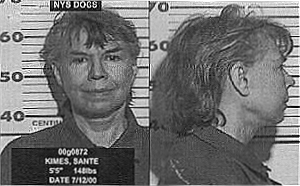
Case Summary
When New York City police stopped Sante Kimes and her son Kenny on an unrelated bad-check warrant on July 5, 1998, they expected a routine collar. What they found inside the car rewrote the definition of premeditation: two loaded pistols, plastic handcuffs, wigs, fright masks, syringes, a date-rape drug, an empty stun gun box, thirty thousand dollars in cash, a forged deed to a $7.7 million Manhattan mansion, and fifteen notebooks in which Sante had carefully practiced forging an 82-year-old woman's signature. Irene Silverman, the socialite who had rented a room to Kenny just weeks earlier, was already gone. Her body has never been found. It was the ending of a story that had begun decades earlier in the dust of Oklahoma City, wound through con jobs and slave-keeping and a White House party crasher and insurance fires, and arrived at last at the feet of a woman a judge would call 'a sociopath and a degenerate.' Sante Kimes was 64 years old and had not yet finished.
July 24, 1934, Oklahoma City, Oklahoma, USA(Age: 79)
May 19, 2014, Bedford Hills Correctional Facility, Westchester County, New York, USA (Natural causes (found unresponsive in her prison cell))
Related Cases

Convicted
Connection tags:

Accused
Connection tags:

Accused
Connection tags:

Convicted
Connection tags:

Convicted
Connection tags:

Accused
Connection tags:
Case Details
The notebooks were the thing that stopped detectives cold. Fifteen of them, filled in Sante Kimes's careful handwriting: the daily schedule of an 82-year-old woman named Irene Silverman, her social security number, her phone habits, her household routines, and page after page of Sante practicing the old woman's signature until she could reproduce it without thinking. When New York police popped the trunk and searched the car on the evening of July 5, 1998, they had stopped Sante and her son Kenneth Jr. on a warrant for a bad check written on a Lincoln Town Car in Utah. What they uncovered instead was a blueprint for murder.
Also in the car: two loaded pistols. Plastic handcuffs. Wigs and fright masks. Thirty thousand dollars cash. Syringes. A substance identified as a date-rape drug. An empty stun gun box. The keys to a Manhattan townhouse that did not belong to them. A forged deed transferring Silverman's $7.7 million home to a Kimes shell corporation. Cassette tapes of Silverman's intercepted phone calls. It was, as one detective would later describe it, a portable crime scene.
Irene Silverman had been missing since that same morning. She was never found.
To understand how a 64-year-old grandmother arrived at that moment, you have to go back to Oklahoma City in 1934, and to a girl born Sandra Louise Singhrs, the third of four children of a Punjabi-Indian herbalist named Prama Mahendra Singhrs and his Irish-American wife, Mary Gertrude Van Horn. The family was poor and itinerant. When Sandra was five, her father died of heart disease, and the world she had known dissolved. She was eventually adopted by Edwin and Mary Chambers, took their name, and landed in Carson City, Nevada, where she became a cheerleader and learned early that charm was a form of currency.
She married three times. The second marriage, to a man named Edward Walker in 1956, produced a son, Kent, who would later write a memoir called "Son of a Grifter" that remains one of the most revealing portraits of his mother ever published. That marriage ended in divorce in 1961. The third, and defining, union was with Kenneth Kimes Sr., a self-made millionaire who had built a fortune in the motel business. Together they collected homes in Las Vegas, California, Hawaii, and the Bahamas, and together they collected something else: a criminal record that read like the index of a con artist's handbook.
Sante had been stealing since long before she met Kenneth Sr. She had a particular affection for furs, walking out of boutiques draped in mink coats she had no intention of paying for. She ran insurance fraud schemes involving arson. She forged documents, impersonated actress Elizabeth Taylor (a resemblance she cultivated deliberately), and in 1974, she and Kenneth Sr. crashed a White House reception during the Ford Administration. They were escorted out. No charges were filed. It was typical: Sante existed in a perpetual condition of near-consequence, always at the edge of arrest and always managing to step back.
The first time the edge finally caught her was 1985. FBI agents investigating the Kimes family homes in Las Vegas, Palm Springs, and Hawaii found something that crossed into a different category of crime entirely. Sante had been enslaving undocumented Mexican immigrant women, luring them with promises of legitimate domestic work and then confiscating their documents, isolating them, and forcing them to work as household servants without pay or freedom of movement. It was a federal case of human trafficking before that phrase existed in the legal lexicon. Kenneth Sr. took a plea deal. Sante was convicted in 1986 of illegally transporting and keeping the women as prisoners and served approximately three years in federal prison, released in 1989.
She emerged apparently unchanged.
Kenneth Kimes Sr. died on March 28, 1994, of a brain aneurysm. He left behind considerable wealth and a wife whose criminal instincts, without his moderating presence (such as it was), now accelerated. Sante turned increasingly to her younger son, Kenneth Jr., born in 1975. Kenny was handsome and physically imposing, raised in the Kimes orbit of luxury and moral vacancy, constitutionally incapable of refusing his mother anything. Their relationship was observed by everyone who knew them as something beyond the ordinary bond of parent and child: symbiotic, consuming, and profoundly dangerous.
The first known murder was David Kazdin, a 63-year-old Los Angeles businessman who had the misfortune of being a longtime family friend and a man with a forged signature on a document. Sante had used his name on a fraudulent $280,000 mortgage loan application. When Kazdin discovered the forgery and threatened to go to the authorities, the Kimeses' response was precise and permanent. On March 9, 1998, Kenny drove to Kazdin's home in Los Angeles and shot him once in the back of the head. His body was found five days later, on March 14, in a dumpster near Los Angeles International Airport.
The Silverman scheme was already in motion before Kazdin's body was cold.
Irene Silverman was exactly the kind of target Sante selected: wealthy, elderly, socially prominent, and living alone. A former Radio City Music Hall Rockette who had become a Manhattan socialite, Silverman occupied a four-story townhouse at 20 East 65th Street worth $7.7 million. She was 82 years old, sharp, warm, and, as it happened, trusting enough to rent out a room in her home to a well-mannered young man who called himself Manny Guerrin. Manny Guerrin was Kenny Kimes, and the plan, documented in obsessive detail in those fifteen notebooks, was to murder Silverman, steal her identity, forge a deed transferring her property to a Kimes shell company, and liquidate the asset before anyone noticed she was gone.
Kenny moved into the townhouse in June 1998. Sante surveilled from the outside, filling the notebooks, mapping Silverman's patterns, drilling her own handwriting until the signature was perfect. Silverman, who kept a diary herself, had written that she found her new tenant strange, that something about him unsettled her. She told friends. No one moved fast enough.
On the morning of July 5, 1998, Irene Silverman disappeared. That evening, the Kimeses were stopped for the bad check warrant several blocks away, still in possession of everything described in those notebooks plus the weapons, the drugs, the handcuffs, and the forged deed. Kenny would confess years later, during his testimony against his mother, that he had strangled Silverman after Sante used a stun gun to subdue her, and that her body had been disposed of in a dumpster in Hoboken, New Jersey. It was never recovered.
The trial that followed was historic. Prosecutors in Manhattan faced a murder case with no body, no confession entered at trial, no physical forensic evidence tying the defendants to the act of killing. What they had were the notebooks, the forged deed, the stolen keys, the intercepted calls, and a mountain of circumstantial evidence so dense and interlocking that the defense had almost nowhere to stand. Judge Rena Uviller presided over proceedings that opened on February 15, 2000. Sante arrived each day in what observers described as a performance: attentive, composed, occasionally weeping at strategic moments, dressed with the careful attention to appearance she had maintained her entire life.
The jury was not persuaded by the performance. They voted unanimously to convict on the first poll. On May 18, 2000, Sante was found guilty on 58 criminal counts; Kenny on 60. Together they faced 118 charges, including murder, robbery, burglary, conspiracy, grand larceny, illegal weapons possession, forgery, and eavesdropping.
At sentencing, Sante addressed the court for an extended period, comparing her trial to the Salem Witch Trials and accusing prosecutors of murdering the Constitution. It was a speech that impressed no one in the room. Judge Uviller called her a sociopath and a degenerate before imposing the maximum sentence: 120 years and 8 months. Her projected release date was entered into the record as March 3, 2119. Kenny received 125 years and 4 months.
Sante had been in prison before. She adapted. What she could not tolerate was the possibility of extradition to California, where both she and Kenny faced charges in the Kazdin murder and the possibility of the death penalty. In October 2000, Kenny, being interviewed at Clinton Correctional Facility by Court TV reporter Maria Zone, pressed a ballpoint pen to Zone's throat and held her hostage for approximately four hours, demanding that his mother not be sent to California. Prison officials eventually overpowered him. Zone was released unharmed.
The hostage incident, paradoxically, produced the one outcome Kenny had tried to prevent through force. Negotiations followed, and in 2003, Kenny agreed to plead guilty to David Kazdin's murder and testify against his mother in exchange for both of them being spared the death penalty. He testified that he had shot Kazdin at close range and disposed of the body with an accomplice recruited from a homeless shelter. On the witness stand, according to those present, he wept.
Sante was extradited to California in June 2001 and tried separately for the Kazdin murder. She maintained throughout that Kenny had confessed only to save himself from lethal injection, that she was innocent, that she had been betrayed by her own son. In July 2004, a California jury disagreed. She was convicted and sentenced to life. The sentencing judge described her as one of the most evil individuals encountered in a career on the bench.
There were other names attached to the Kimes file that never made it to a courtroom. Syed Bilal Ahmed, a 46-year-old Bahamian banker, was found dead on September 4, 1996, in circumstances investigators found suspicious. Kenny later confessed to his murder as well, claiming Ahmed had been drugged, drowned in a bathtub, and his body dumped at sea. No charges were ever filed. There was also Elmer Holmgren, a man who had worked for the Kimes family in Las Vegas and simply vanished; his son was still seeking answers decades later. The case file on Holmgren remained open and cold.
Sante Kimes died on the night of May 19, 2014, found unresponsive in her cell at Bedford Hills Correctional Facility for Women in Westchester County, New York. She was 79 years old. The cause of death was listed as natural causes. There was no drama in the end, no final statement, no audience. A woman who had spent six decades demanding attention from the world went out quietly in a prison cell in the dark.
Kenneth Jr. remains incarcerated at Richard J. Donovan Correctional Facility near San Diego. In November 2024, he gave a rare interview to CNN, still speaking, still explaining. His elder half-brother Kent Walker, the son Sante largely abandoned in favor of Kenny, wrote in his memoir that growing up in the Kimes family meant learning that love was a transaction and loyalty a weapon. His book remains the most honest accounting of what it cost to be close to Sante Kimes.
What the Kimes case left behind, beyond the bodies and the broken lives, was a legal milestone: the Silverman conviction stands as a landmark precedent for prosecuting murder without a body, establishing that the absence of a corpse does not preclude justice when the evidence of a life taken is sufficiently overwhelming. It also left a question that no notebook and no confession has fully answered: how many others, known and unknown, were absorbed into the wreckage of a woman who saw other human beings primarily as obstacles to be removed or instruments to be used. The full ledger of Sante Kimes may never be complete.
Timeline
Birth and Turbulent Early Life
Sandra Louise Singhrs was born in Oklahoma City, Oklahoma, to a Punjabi-Indian immigrant herbalist father and an Irish-American mother. Her father died when she was five, and she was subsequently adopted by Edwin and Mary Chambers, eventually settling in Carson City, Nevada, where she became a high school cheerleader. These unstable early years laid the groundwork for a lifetime of reinvention, deception, and assumed identities.
Her chaotic upbringing — including the loss of her biological father, adoption, and repeated name changes — established the pattern of identity manipulation that would define her criminal career for decades.
Federal Conviction for Enslaving Immigrant Women
Following a 1985 FBI arrest in La Jolla and Las Vegas, Sante Kimes was convicted on federal charges of illegally transporting and keeping undocumented Mexican women as household slaves in her homes in Las Vegas, Hawaii, and Palm Springs. Her husband Kenneth Kimes Sr. took a plea deal, while Sante was convicted and served approximately three years in federal prison before being released in 1989. The case was a significant early legal milestone in prosecuting modern domestic slavery.
This conviction marked Sante's first major federal prosecution and established her as a serious and calculating criminal, foreshadowing the escalating violence of her later crimes.
Death of Kenneth Kimes Sr. and Criminal Escalation
Sante's wealthy husband and criminal enabler, Kenneth Kimes Sr., died of a brain aneurysm on March 28, 1994, leaving Sante without her primary financial patron. Rather than retreating, Sante escalated her criminal activities, pivoting toward fraud, forgery, and ultimately murder in a partnership with her son Kenny Jr. The duo began an increasingly dangerous series of schemes targeting wealthy individuals.
The death of Kenneth Sr. removed a stabilizing financial influence and marked the beginning of Sante and Kenny Jr.'s lethal criminal partnership, which would eventually claim multiple lives.
Murder of David Kazdin Near LAX
The body of 63-year-old Los Angeles businessman David Kazdin was discovered in a dumpster near Los Angeles International Airport on March 14, 1998; he had been shot in the back of the head on or around March 9, 1998. Kazdin had discovered that Sante had forged his signature on a $280,000 mortgage loan application and had threatened to expose her. Kenneth Jr. later confessed that he carried out the killing at his mother's direction.
The Kazdin murder demonstrated the lethal lengths Sante would go to protect her financial schemes and represented the first confirmed killing in her escalating criminal partnership with her son.
Arrest in New York City — Silverman Case
Sante and Kenny Kimes were arrested on July 5, 1998, in New York City — initially on an unrelated bad-check warrant for a Lincoln Town Car purchased in Utah — on the very day that 82-year-old socialite Irene Silverman was reported missing from her Manhattan townhouse at 20 East 65th Street. Police found in their car two loaded pistols, plastic handcuffs, wigs, fright masks, $30,000 in cash, syringes, a date-rape drug substance, Silverman's keys, recordings of her phone calls, and a forged deed to her $7.7 million property. Fifteen notebooks detailing the elaborate scheme to murder Silverman, steal her identity, and fraudulently transfer her mansion were also recovered.
The arrest and the extraordinary cache of evidence found in the Kimeses' car effectively cracked open one of the most meticulously planned murder-for-property schemes in American true crime history, despite Silverman's body never being recovered.
Historic Silverman Murder Trial Begins
The trial of Sante and Kenneth Kimes Jr. for the murder of Irene Silverman opened on February 15, 2000, before Judge Rena Uviller in Manhattan, becoming a landmark case in American legal history. The prosecution proceeded with a murder conviction despite the absence of a body, no confession at trial, and no physical forensic evidence — relying instead on the notebooks, circumstantial evidence, and witness testimony. The jury voted unanimously on the first poll to convict.
The Silverman trial set a historic legal precedent by securing a murder conviction without a body, confession, or forensic evidence, demonstrating that meticulous documentary evidence and circumstantial proof could meet the standard of proof beyond a reasonable doubt.
Conviction on 58 Counts — Silverman Murder
On May 18, 2000, Sante Kimes was found guilty on 58 criminal counts and Kenneth Jr. on 60 counts, totaling 118 combined charges including murder, robbery, burglary, conspiracy, grand larceny, illegal weapons possession, forgery, and eavesdropping. At sentencing, Sante delivered a prolonged courtroom speech comparing the proceedings to the Salem Witch Trials and accusing prosecutors of 'murdering the Constitution.' Judge Uviller called her 'a sociopath and a degenerate' before imposing the maximum sentence of 120 years and 8 months — with a projected release date of March 3, 2119.
The sweeping conviction and extraordinary sentence effectively ensured Sante would die in prison, and her defiant courtroom performance cemented her notoriety as one of America's most brazen convicted murderers.
Kenneth Jr. Takes Court TV Reporter Hostage
In October 2000, while being interviewed at Clinton Correctional Facility, Kenneth Kimes Jr. took Court TV reporter Maria Zone hostage for approximately four hours, holding a ballpoint pen to her throat and demanding that his mother not be extradited to California, where both faced the death penalty for the Kazdin murder. Zone was released unharmed after prison officials overpowered Kimes. The incident ultimately led Kenneth Jr. to negotiate a plea deal in which he agreed to testify against his mother in exchange for both being spared the death penalty.
The hostage incident was a dramatic turning point that fractured the mother-son criminal alliance: Kenny's subsequent plea deal and testimony against Sante became the cornerstone of her California prosecution for the Kazdin murder.
California Conviction for Kazdin Murder
After being extradited to California in June 2001, Sante was tried separately for the murder of David Kazdin and convicted in July 2004, with Kenneth Jr.'s tearful courtroom testimony serving as a key element of the prosecution's case. The sentencing judge called her 'one of the most evil individuals' encountered on the bench and imposed a sentence of life in prison, to run consecutively with her New York sentence. Sante maintained her innocence throughout, insisting Kenny had confessed only to avoid the death penalty.
The Kazdin conviction added a second life sentence and definitively closed the door on any possibility of Sante ever leaving prison, while also cementing Kenny Jr.'s role as a witness against his own mother — a profound rupture in their decades-long criminal bond.
Death at Bedford Hills Correctional Facility
Sante Kimes was found unresponsive in her cell at Bedford Hills Correctional Facility for Women in Westchester County, New York, on the night of May 19, 2014, and was pronounced dead of natural causes at age 79. She had spent the final sixteen years of her life incarcerated, serving consecutive life sentences for two murders while maintaining her innocence in public statements. Her son Kenneth Kimes Jr. remains incarcerated at Richard J. Donovan Correctional Facility near San Diego, California.
Sante's death in prison closed the chapter on one of America's most sensational mother-son criminal partnerships, leaving behind a legacy of multiple murders, groundbreaking legal precedents, and enduring media fascination documented in books, TV movies, and documentary coverage through 2024.
Crime Location
Photos
Sante Krimes
Sources
- Son of a Grifter: The Twisted Tale of Sante and Kenny Kimes
- Kenneth Kimes speaks from prison about murders he committed with mother Sante
- Sante Kimes — Murderpedia Photo Gallery Page 1
- Sante Kimes — Murderpedia Photo Gallery Page 2
- Courtroom Sketch — Kimes Silverman Trial (2000)
- Kenneth Kimes Jr. testifies against mother Sante Kimes — Kazdin murder trial
- NYPD Mugshot of Sante Kimes (July 1998)
- Getty Images Editorial Archive — Sante Kimes
- Sante Kimes — Wikipedia
Frequently Asked Questions
Table of Contents
Case Summary
When New York City police stopped Sante Kimes and her son Kenny on an unrelated bad-check warrant on July 5, 1998, they expected a routine collar. What they found inside the car rewrote the definition of premeditation: two loaded pistols, plastic handcuffs, wigs, fright masks, syringes, a date-rape drug, an empty stun gun box, thirty thousand dollars in cash, a forged deed to a $7.7 million Manhattan mansion, and fifteen notebooks in which Sante had carefully practiced forging an 82-year-old woman's signature. Irene Silverman, the socialite who had rented a room to Kenny just weeks earlier, was already gone. Her body has never been found. It was the ending of a story that had begun decades earlier in the dust of Oklahoma City, wound through con jobs and slave-keeping and a White House party crasher and insurance fires, and arrived at last at the feet of a woman a judge would call 'a sociopath and a degenerate.' Sante Kimes was 64 years old and had not yet finished.
July 24, 1934, Oklahoma City, Oklahoma, USA(Age: 79)
May 19, 2014, Bedford Hills Correctional Facility, Westchester County, New York, USA (Natural causes (found unresponsive in her prison cell))
Case Details
The notebooks were the thing that stopped detectives cold. Fifteen of them, filled in Sante Kimes's careful handwriting: the daily schedule of an 82-year-old woman named Irene Silverman, her social security number, her phone habits, her household routines, and page after page of Sante practicing the old woman's signature until she could reproduce it without thinking. When New York police popped the trunk and searched the car on the evening of July 5, 1998, they had stopped Sante and her son Kenneth Jr. on a warrant for a bad check written on a Lincoln Town Car in Utah. What they uncovered instead was a blueprint for murder.
Also in the car: two loaded pistols. Plastic handcuffs. Wigs and fright masks. Thirty thousand dollars cash. Syringes. A substance identified as a date-rape drug. An empty stun gun box. The keys to a Manhattan townhouse that did not belong to them. A forged deed transferring Silverman's $7.7 million home to a Kimes shell corporation. Cassette tapes of Silverman's intercepted phone calls. It was, as one detective would later describe it, a portable crime scene.
Irene Silverman had been missing since that same morning. She was never found.
To understand how a 64-year-old grandmother arrived at that moment, you have to go back to Oklahoma City in 1934, and to a girl born Sandra Louise Singhrs, the third of four children of a Punjabi-Indian herbalist named Prama Mahendra Singhrs and his Irish-American wife, Mary Gertrude Van Horn. The family was poor and itinerant. When Sandra was five, her father died of heart disease, and the world she had known dissolved. She was eventually adopted by Edwin and Mary Chambers, took their name, and landed in Carson City, Nevada, where she became a cheerleader and learned early that charm was a form of currency.
She married three times. The second marriage, to a man named Edward Walker in 1956, produced a son, Kent, who would later write a memoir called "Son of a Grifter" that remains one of the most revealing portraits of his mother ever published. That marriage ended in divorce in 1961. The third, and defining, union was with Kenneth Kimes Sr., a self-made millionaire who had built a fortune in the motel business. Together they collected homes in Las Vegas, California, Hawaii, and the Bahamas, and together they collected something else: a criminal record that read like the index of a con artist's handbook.
Sante had been stealing since long before she met Kenneth Sr. She had a particular affection for furs, walking out of boutiques draped in mink coats she had no intention of paying for. She ran insurance fraud schemes involving arson. She forged documents, impersonated actress Elizabeth Taylor (a resemblance she cultivated deliberately), and in 1974, she and Kenneth Sr. crashed a White House reception during the Ford Administration. They were escorted out. No charges were filed. It was typical: Sante existed in a perpetual condition of near-consequence, always at the edge of arrest and always managing to step back.
The first time the edge finally caught her was 1985. FBI agents investigating the Kimes family homes in Las Vegas, Palm Springs, and Hawaii found something that crossed into a different category of crime entirely. Sante had been enslaving undocumented Mexican immigrant women, luring them with promises of legitimate domestic work and then confiscating their documents, isolating them, and forcing them to work as household servants without pay or freedom of movement. It was a federal case of human trafficking before that phrase existed in the legal lexicon. Kenneth Sr. took a plea deal. Sante was convicted in 1986 of illegally transporting and keeping the women as prisoners and served approximately three years in federal prison, released in 1989.
She emerged apparently unchanged.
Kenneth Kimes Sr. died on March 28, 1994, of a brain aneurysm. He left behind considerable wealth and a wife whose criminal instincts, without his moderating presence (such as it was), now accelerated. Sante turned increasingly to her younger son, Kenneth Jr., born in 1975. Kenny was handsome and physically imposing, raised in the Kimes orbit of luxury and moral vacancy, constitutionally incapable of refusing his mother anything. Their relationship was observed by everyone who knew them as something beyond the ordinary bond of parent and child: symbiotic, consuming, and profoundly dangerous.
The first known murder was David Kazdin, a 63-year-old Los Angeles businessman who had the misfortune of being a longtime family friend and a man with a forged signature on a document. Sante had used his name on a fraudulent $280,000 mortgage loan application. When Kazdin discovered the forgery and threatened to go to the authorities, the Kimeses' response was precise and permanent. On March 9, 1998, Kenny drove to Kazdin's home in Los Angeles and shot him once in the back of the head. His body was found five days later, on March 14, in a dumpster near Los Angeles International Airport.
The Silverman scheme was already in motion before Kazdin's body was cold.
Irene Silverman was exactly the kind of target Sante selected: wealthy, elderly, socially prominent, and living alone. A former Radio City Music Hall Rockette who had become a Manhattan socialite, Silverman occupied a four-story townhouse at 20 East 65th Street worth $7.7 million. She was 82 years old, sharp, warm, and, as it happened, trusting enough to rent out a room in her home to a well-mannered young man who called himself Manny Guerrin. Manny Guerrin was Kenny Kimes, and the plan, documented in obsessive detail in those fifteen notebooks, was to murder Silverman, steal her identity, forge a deed transferring her property to a Kimes shell company, and liquidate the asset before anyone noticed she was gone.
Kenny moved into the townhouse in June 1998. Sante surveilled from the outside, filling the notebooks, mapping Silverman's patterns, drilling her own handwriting until the signature was perfect. Silverman, who kept a diary herself, had written that she found her new tenant strange, that something about him unsettled her. She told friends. No one moved fast enough.
On the morning of July 5, 1998, Irene Silverman disappeared. That evening, the Kimeses were stopped for the bad check warrant several blocks away, still in possession of everything described in those notebooks plus the weapons, the drugs, the handcuffs, and the forged deed. Kenny would confess years later, during his testimony against his mother, that he had strangled Silverman after Sante used a stun gun to subdue her, and that her body had been disposed of in a dumpster in Hoboken, New Jersey. It was never recovered.
The trial that followed was historic. Prosecutors in Manhattan faced a murder case with no body, no confession entered at trial, no physical forensic evidence tying the defendants to the act of killing. What they had were the notebooks, the forged deed, the stolen keys, the intercepted calls, and a mountain of circumstantial evidence so dense and interlocking that the defense had almost nowhere to stand. Judge Rena Uviller presided over proceedings that opened on February 15, 2000. Sante arrived each day in what observers described as a performance: attentive, composed, occasionally weeping at strategic moments, dressed with the careful attention to appearance she had maintained her entire life.
The jury was not persuaded by the performance. They voted unanimously to convict on the first poll. On May 18, 2000, Sante was found guilty on 58 criminal counts; Kenny on 60. Together they faced 118 charges, including murder, robbery, burglary, conspiracy, grand larceny, illegal weapons possession, forgery, and eavesdropping.
At sentencing, Sante addressed the court for an extended period, comparing her trial to the Salem Witch Trials and accusing prosecutors of murdering the Constitution. It was a speech that impressed no one in the room. Judge Uviller called her a sociopath and a degenerate before imposing the maximum sentence: 120 years and 8 months. Her projected release date was entered into the record as March 3, 2119. Kenny received 125 years and 4 months.
Sante had been in prison before. She adapted. What she could not tolerate was the possibility of extradition to California, where both she and Kenny faced charges in the Kazdin murder and the possibility of the death penalty. In October 2000, Kenny, being interviewed at Clinton Correctional Facility by Court TV reporter Maria Zone, pressed a ballpoint pen to Zone's throat and held her hostage for approximately four hours, demanding that his mother not be sent to California. Prison officials eventually overpowered him. Zone was released unharmed.
The hostage incident, paradoxically, produced the one outcome Kenny had tried to prevent through force. Negotiations followed, and in 2003, Kenny agreed to plead guilty to David Kazdin's murder and testify against his mother in exchange for both of them being spared the death penalty. He testified that he had shot Kazdin at close range and disposed of the body with an accomplice recruited from a homeless shelter. On the witness stand, according to those present, he wept.
Sante was extradited to California in June 2001 and tried separately for the Kazdin murder. She maintained throughout that Kenny had confessed only to save himself from lethal injection, that she was innocent, that she had been betrayed by her own son. In July 2004, a California jury disagreed. She was convicted and sentenced to life. The sentencing judge described her as one of the most evil individuals encountered in a career on the bench.
There were other names attached to the Kimes file that never made it to a courtroom. Syed Bilal Ahmed, a 46-year-old Bahamian banker, was found dead on September 4, 1996, in circumstances investigators found suspicious. Kenny later confessed to his murder as well, claiming Ahmed had been drugged, drowned in a bathtub, and his body dumped at sea. No charges were ever filed. There was also Elmer Holmgren, a man who had worked for the Kimes family in Las Vegas and simply vanished; his son was still seeking answers decades later. The case file on Holmgren remained open and cold.
Sante Kimes died on the night of May 19, 2014, found unresponsive in her cell at Bedford Hills Correctional Facility for Women in Westchester County, New York. She was 79 years old. The cause of death was listed as natural causes. There was no drama in the end, no final statement, no audience. A woman who had spent six decades demanding attention from the world went out quietly in a prison cell in the dark.
Kenneth Jr. remains incarcerated at Richard J. Donovan Correctional Facility near San Diego. In November 2024, he gave a rare interview to CNN, still speaking, still explaining. His elder half-brother Kent Walker, the son Sante largely abandoned in favor of Kenny, wrote in his memoir that growing up in the Kimes family meant learning that love was a transaction and loyalty a weapon. His book remains the most honest accounting of what it cost to be close to Sante Kimes.
What the Kimes case left behind, beyond the bodies and the broken lives, was a legal milestone: the Silverman conviction stands as a landmark precedent for prosecuting murder without a body, establishing that the absence of a corpse does not preclude justice when the evidence of a life taken is sufficiently overwhelming. It also left a question that no notebook and no confession has fully answered: how many others, known and unknown, were absorbed into the wreckage of a woman who saw other human beings primarily as obstacles to be removed or instruments to be used. The full ledger of Sante Kimes may never be complete.
Timeline
Birth and Turbulent Early Life
Sandra Louise Singhrs was born in Oklahoma City, Oklahoma, to a Punjabi-Indian immigrant herbalist father and an Irish-American mother. Her father died when she was five, and she was subsequently adopted by Edwin and Mary Chambers, eventually settling in Carson City, Nevada, where she became a high school cheerleader. These unstable early years laid the groundwork for a lifetime of reinvention, deception, and assumed identities.
Her chaotic upbringing — including the loss of her biological father, adoption, and repeated name changes — established the pattern of identity manipulation that would define her criminal career for decades.
Federal Conviction for Enslaving Immigrant Women
Following a 1985 FBI arrest in La Jolla and Las Vegas, Sante Kimes was convicted on federal charges of illegally transporting and keeping undocumented Mexican women as household slaves in her homes in Las Vegas, Hawaii, and Palm Springs. Her husband Kenneth Kimes Sr. took a plea deal, while Sante was convicted and served approximately three years in federal prison before being released in 1989. The case was a significant early legal milestone in prosecuting modern domestic slavery.
This conviction marked Sante's first major federal prosecution and established her as a serious and calculating criminal, foreshadowing the escalating violence of her later crimes.
Death of Kenneth Kimes Sr. and Criminal Escalation
Sante's wealthy husband and criminal enabler, Kenneth Kimes Sr., died of a brain aneurysm on March 28, 1994, leaving Sante without her primary financial patron. Rather than retreating, Sante escalated her criminal activities, pivoting toward fraud, forgery, and ultimately murder in a partnership with her son Kenny Jr. The duo began an increasingly dangerous series of schemes targeting wealthy individuals.
The death of Kenneth Sr. removed a stabilizing financial influence and marked the beginning of Sante and Kenny Jr.'s lethal criminal partnership, which would eventually claim multiple lives.
Murder of David Kazdin Near LAX
The body of 63-year-old Los Angeles businessman David Kazdin was discovered in a dumpster near Los Angeles International Airport on March 14, 1998; he had been shot in the back of the head on or around March 9, 1998. Kazdin had discovered that Sante had forged his signature on a $280,000 mortgage loan application and had threatened to expose her. Kenneth Jr. later confessed that he carried out the killing at his mother's direction.
The Kazdin murder demonstrated the lethal lengths Sante would go to protect her financial schemes and represented the first confirmed killing in her escalating criminal partnership with her son.
Arrest in New York City — Silverman Case
Sante and Kenny Kimes were arrested on July 5, 1998, in New York City — initially on an unrelated bad-check warrant for a Lincoln Town Car purchased in Utah — on the very day that 82-year-old socialite Irene Silverman was reported missing from her Manhattan townhouse at 20 East 65th Street. Police found in their car two loaded pistols, plastic handcuffs, wigs, fright masks, $30,000 in cash, syringes, a date-rape drug substance, Silverman's keys, recordings of her phone calls, and a forged deed to her $7.7 million property. Fifteen notebooks detailing the elaborate scheme to murder Silverman, steal her identity, and fraudulently transfer her mansion were also recovered.
The arrest and the extraordinary cache of evidence found in the Kimeses' car effectively cracked open one of the most meticulously planned murder-for-property schemes in American true crime history, despite Silverman's body never being recovered.
Historic Silverman Murder Trial Begins
The trial of Sante and Kenneth Kimes Jr. for the murder of Irene Silverman opened on February 15, 2000, before Judge Rena Uviller in Manhattan, becoming a landmark case in American legal history. The prosecution proceeded with a murder conviction despite the absence of a body, no confession at trial, and no physical forensic evidence — relying instead on the notebooks, circumstantial evidence, and witness testimony. The jury voted unanimously on the first poll to convict.
The Silverman trial set a historic legal precedent by securing a murder conviction without a body, confession, or forensic evidence, demonstrating that meticulous documentary evidence and circumstantial proof could meet the standard of proof beyond a reasonable doubt.
Conviction on 58 Counts — Silverman Murder
On May 18, 2000, Sante Kimes was found guilty on 58 criminal counts and Kenneth Jr. on 60 counts, totaling 118 combined charges including murder, robbery, burglary, conspiracy, grand larceny, illegal weapons possession, forgery, and eavesdropping. At sentencing, Sante delivered a prolonged courtroom speech comparing the proceedings to the Salem Witch Trials and accusing prosecutors of 'murdering the Constitution.' Judge Uviller called her 'a sociopath and a degenerate' before imposing the maximum sentence of 120 years and 8 months — with a projected release date of March 3, 2119.
The sweeping conviction and extraordinary sentence effectively ensured Sante would die in prison, and her defiant courtroom performance cemented her notoriety as one of America's most brazen convicted murderers.
Kenneth Jr. Takes Court TV Reporter Hostage
In October 2000, while being interviewed at Clinton Correctional Facility, Kenneth Kimes Jr. took Court TV reporter Maria Zone hostage for approximately four hours, holding a ballpoint pen to her throat and demanding that his mother not be extradited to California, where both faced the death penalty for the Kazdin murder. Zone was released unharmed after prison officials overpowered Kimes. The incident ultimately led Kenneth Jr. to negotiate a plea deal in which he agreed to testify against his mother in exchange for both being spared the death penalty.
The hostage incident was a dramatic turning point that fractured the mother-son criminal alliance: Kenny's subsequent plea deal and testimony against Sante became the cornerstone of her California prosecution for the Kazdin murder.
California Conviction for Kazdin Murder
After being extradited to California in June 2001, Sante was tried separately for the murder of David Kazdin and convicted in July 2004, with Kenneth Jr.'s tearful courtroom testimony serving as a key element of the prosecution's case. The sentencing judge called her 'one of the most evil individuals' encountered on the bench and imposed a sentence of life in prison, to run consecutively with her New York sentence. Sante maintained her innocence throughout, insisting Kenny had confessed only to avoid the death penalty.
The Kazdin conviction added a second life sentence and definitively closed the door on any possibility of Sante ever leaving prison, while also cementing Kenny Jr.'s role as a witness against his own mother — a profound rupture in their decades-long criminal bond.
Death at Bedford Hills Correctional Facility
Sante Kimes was found unresponsive in her cell at Bedford Hills Correctional Facility for Women in Westchester County, New York, on the night of May 19, 2014, and was pronounced dead of natural causes at age 79. She had spent the final sixteen years of her life incarcerated, serving consecutive life sentences for two murders while maintaining her innocence in public statements. Her son Kenneth Kimes Jr. remains incarcerated at Richard J. Donovan Correctional Facility near San Diego, California.
Sante's death in prison closed the chapter on one of America's most sensational mother-son criminal partnerships, leaving behind a legacy of multiple murders, groundbreaking legal precedents, and enduring media fascination documented in books, TV movies, and documentary coverage through 2024.
Crime Location
Photos
Sante Krimes
Sources
- Son of a Grifter: The Twisted Tale of Sante and Kenny Kimes
- Kenneth Kimes speaks from prison about murders he committed with mother Sante
- Sante Kimes — Murderpedia Photo Gallery Page 1
- Sante Kimes — Murderpedia Photo Gallery Page 2
- Courtroom Sketch — Kimes Silverman Trial (2000)
- Kenneth Kimes Jr. testifies against mother Sante Kimes — Kazdin murder trial
- NYPD Mugshot of Sante Kimes (July 1998)
- Getty Images Editorial Archive — Sante Kimes
- Sante Kimes — Wikipedia
Frequently Asked Questions
Related Cases
Convicted
Connection tags:
Accused
Connection tags:
Accused
Connection tags:
Convicted
Connection tags:
Convicted
Connection tags:
Accused
Connection tags:
Tags
Popular Culture
movie (2001)
TV movie starring Mary Tyler Moore as Sante Kimes and Jean-Pierre Bergeron as Kenny Kimes, dramatizing their criminal partnership and the Irene Silverman murder.
movie (2006)
Lifetime TV movie starring Judy Davis as Sante Kimes, dramatizing the Silverman murder case and the mother-son criminal duo.
book (2001)
Memoir by Sante's estranged elder son Kent Walker, providing a firsthand account of growing up with Sante Kimes and the family's decades-long criminal enterprise.
TV (2020)
Oxygen network's true crime series 'Snapped' featured an episode profiling Sante Kimes and her criminal career.
TV (2000)
NBC's Dateline covered the Sante and Kenny Kimes case, including the Irene Silverman murder trial and conviction.
TV (2024)
Rare November 2024 CNN interview with Kenneth Kimes Jr. from Richard J. Donovan Correctional Facility near San Diego, reflecting on the murders he committed with his mother.