Sherri Louise Graeff-Papini
:max_bytes(150000):strip_icc():focal(749x0:751x2)/sherri-papinie-050125-6fed48fca2f5411e9f00a9c8037c330d.jpg)
Case Summary
On Thanksgiving morning 2016, a motorist on a desolate stretch of California interstate spotted a small, trembling figure bound by restraints — a young mother, barely 87 pounds, branded with a burn mark and shorn of her hair. The nation wept. Then it seethed. Sherri Papini's story of abduction by two armed Hispanic women became a media sensation, a missing-person case that swallowed millions in investigative resources and detonated fear across Latino communities nationwide. FBI sketch artists disseminated her descriptions of the alleged kidnappers around the world. The California Victim Compensation Board cut her 35 separate checks. Her husband stood beside her, steadfast. But from the beginning, detectives noticed the details didn't quite fit — and a strand of male DNA clinging to her clothing would, years later, unravel everything. What investigators eventually uncovered wasn't a kidnapping. It was a 22-day escape to an ex-boyfriend's apartment in Costa Mesa, complete with self-inflicted wounds, a wood-burning brand from Hobby Lobby, and a web of prepaid-phone deception that had been spinning since at least December 2015. This is the story of how a California mother staged one of the most elaborate hoaxes in modern American law enforcement history — and why, even after conviction, she refuses to stop rewriting it.
June 11, 1982, Mount Shasta, California, USA(Age: 44)
Related Cases

Accused
Connection tags:
Convicted
Connection tags:

Convicted
Connection tags:

Convicted
Connection tags:

Accused
Connection tags:

Accused
Connection tags:
Case Details
The call came in on the evening of November 2, 2016. Keith Papini had arrived home to their Mountain Gate subdivision outside Redding, California, to find his two young children still waiting at daycare — waiting for a mother who never came. His wife, Sherri, had gone for a jog that afternoon along a route she knew well, a stretch of road near their home in the oak-studded hills of Shasta County. Her phone had been found on the ground, her earbuds scattered nearby. There was no sign of struggle. There was no sign of Sherri.
What followed was the kind of search that consumes a community. Helicopters swept the ridgelines. Ground crews combed the brush. Keith Papini's anguished press appearances — a father of two, raw-eyed and desperate — played on every local newscast. The Redding community donated money, time, and prayer. Social media erupted with the hashtag and the photo: Sherri Papini, blue-eyed and blonde, smiling in the way that photographs do when they become missing-person flyers.
Twenty-two days later, on Thanksgiving morning, November 24, 2016, a motorist traveling County Road 17 near Interstate 5 in Yolo County — 146 miles south of Redding — found her. She was bound. She weighed 87 pounds. Her hair had been roughly cut off. Her nose was swollen. Her right shoulder bore a fresh burn in the shape of a brand. The nation exhaled, and then wept.
Sherri Papini was alive.
She told investigators a story that was equal parts terrifying and cinematic. Two Hispanic women, she said, had forced her into a dark SUV at gunpoint near her jogging route. They had held her captive for three weeks, tortured her, and threatened to sell her into human trafficking. She described her captors in vivid detail to FBI sketch artists — the images were disseminated worldwide, translated into a global manhunt. Her account was specific, emotive, and utterly convincing to a grieving public that needed a villain.
But in the FBI's Sacramento field office, the relief was already starting to curdle into something else.
Investigators noted inconsistencies almost immediately — details that shifted slightly in the retelling, a chronology that bent when pressed. And there was something else: DNA recovered from Sherri's clothing. Male DNA. Unknown. It was uploaded to CODIS, the national database, and returned no match. The case stayed open, the questions stayed quiet, and Sherri Papini returned to her life in Redding — to Keith, to her children, to the sympathy of a nation.
The California Victim Compensation Board began cutting her checks. Thirty-five of them, over the following four years, totaling more than $30,000. Therapist visits. Ambulance transport. The ordinary-seeming costs of surviving an extraordinary trauma. No one yet had reason to question it.
Sherri Louise Graeff was born on June 11, 1982, in Mount Shasta, California — a small, mountain-shadowed town at the northern end of the Sacramento Valley. She grew up and attended Central Valley High School in the Redding area, and by her early twenties had built the kind of life that looks uncomplicated from the outside: she married Keith Papini in October 2009, and together they had a son and a daughter, settling into a house in the Mountain Gate community east of Redding. She was, by every suburban metric, a wife, a mother, a neighbor. A woman who jogged.
But beneath the surface, something had long been quietly pulling in another direction. By at least December 2015 — nearly a full year before her disappearance — Sherri Papini had been in covert contact with a former boyfriend named James Reyes, communicating through prepaid phones that left no trail on the family's shared accounts. Whatever she told Reyes about her life with Keith — and what she told investigators years later was that the marriage was emotionally abusive — it was enough to set in motion a plan so strange, so reckless, and so specific in its cruelty that it still defies easy explanation.
On November 2, 2016, Reyes drove north from his apartment in Costa Mesa, in Orange County, to Redding. He came in a rental car. Sherri left her children's daycare pickup to fate, dropped her phone and earbuds on the jogging path — a staged tableau of disappearance — and got in.
For the next three weeks, she lived voluntarily in Reyes's Costa Mesa apartment. According to his later account to federal investigators, she did not leave under duress. She was not chained. She was not trafficked. She was, in the language of the eventual FBI investigation, a woman who had decided to run.
But she had also decided to come back — and she needed the injuries to match the story.
What happened in those final days before her Thanksgiving discovery is among the most disturbing elements of the case. Reyes told investigators that Sherri had asked him to hurt her. To hold a hockey stick for her to run into. To pelt her with hockey pucks. To brand her right shoulder using a wood-burning tool purchased at Hobby Lobby. He complied. He said they did not have sex. He said he dropped her on the side of that Yolo County road, bound and battered, before driving back south in the rental car, becoming once again just a man in Costa Mesa with an ordinary life and an extraordinary secret.
For nearly four years, the secret held.
Then, in 2020, the California Department of Justice deployed familial DNA search technology — a forensic method that can identify relatives of an unknown DNA contributor — against the male sample recovered from Sherri's clothing. The results pointed to a family member of James Reyes. FBI agents collected Reyes's DNA from his trash. It matched. On August 10, 2020, investigators sat down with Reyes and, in a matter of hours, watched the entire architecture of Sherri Papini's story collapse.
When agents then confronted Sherri with the DNA evidence, she denied everything. She maintained her story of the two Hispanic women, the dark SUV, the trafficking threats. She continued, even then, to collect money from the California Victim Compensation Board. The checks kept coming — 35 payments over four years — while federal prosecutors built a case.
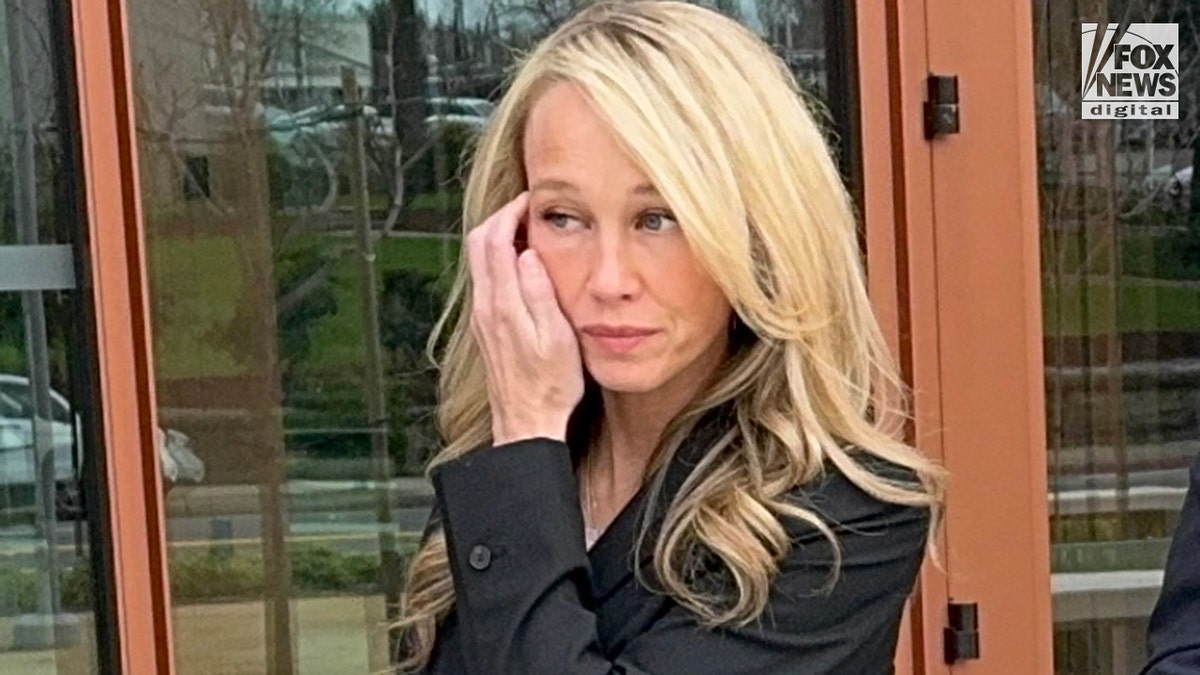
On March 3, 2022, FBI agents found Sherri Papini not in hiding, not fleeing — but sitting with her children at their piano lesson in Redding, California. They arrested her there. By 7:38 that evening, she was booked into Sacramento County Jail. The bond was set at $120,000. She was required, upon release five days later, to surrender her passport and undergo psychiatric treatment.
On the day of her arrest, Keith Papini left her.
Six weeks later, on April 18, 2022, Sherri Papini appeared in United States District Court in Sacramento and pleaded guilty to one count of mail fraud and one count of making false statements to a federal law enforcement officer. The original indictment had contained 35 counts; 33 were dropped as part of the deal. In April, Keith filed for divorce and sought sole custody of their children. He was granted full custody, though Sherri would later be permitted limited visitation — reportedly once per month as of 2025.
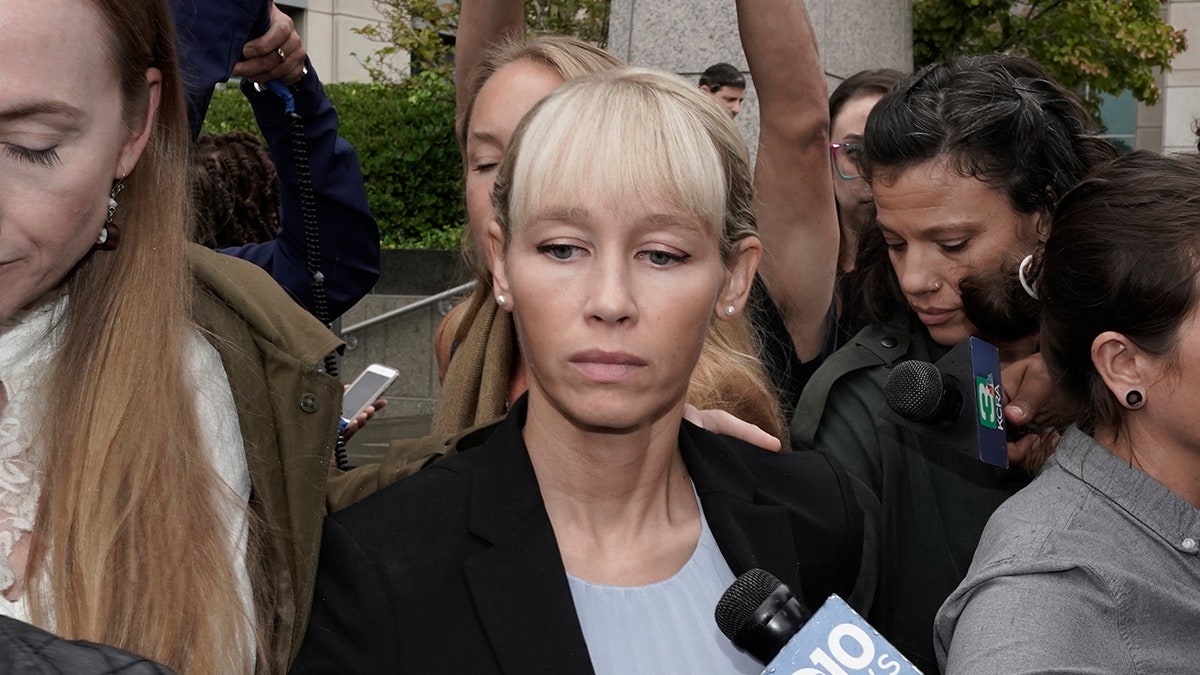
The sentencing came on September 19, 2022, before U.S. District Judge William Shubb. Sherri wore muted colors and spoke briefly. Her statement lasted less than a minute. "I am guilty of lying," she told the courtroom. "I am guilty of dishonor." Both Judge Shubb and Assistant U.S. Attorney Veronica Alegria noted afterward that even this moment felt like performance — that her words, stripped of context and accountability, constituted one more act of calculated presentation rather than genuine reckoning.
Shubb sentenced her to 18 months in federal prison at FCI Victorville — more than double the eight months federal prosecutors had requested, and a world removed from the one month of incarceration plus seven months of home detention her defense had sought. He also ordered 36 months of supervised release and $309,902 in restitution. She reported to Victorville on November 8, 2022.
She served roughly nine months before being transferred to community confinement — a halfway house in Sacramento — in late August 2023. Her full release date was October 29, 2023. As of early 2024, she had not paid a single dollar of the $309,902 she owed. The federal government filed a writ of garnishment in March 2024, believing she held property at a law firm called Kinney & Kinney that could satisfy the debt. With a 10 percent litigation surcharge, the total had grown to approximately $340,000.
The damage Sherri Papini caused radiates outward in concentric rings. Shasta County law enforcement spent conservatively more than $150,000 pursuing a kidnapping that never happened. Two fabricated Hispanic women — conjured from nothing and rendered into FBI sketches distributed worldwide — spread fear through Latino communities across California and beyond, attaching suspicion to an entire demographic based solely on one woman's lie. James Reyes, who cooperated fully with investigators and was never charged with any crime, found his name and face attached to headlines around the world. Sherri's former mother-in-law sued her to recover $50,000 she had loaned for the legal defense. Her children lost the daily presence of their mother. Keith Papini lost five years of his life to a marriage built on secrets he couldn't have imagined.
And then, in the remarkable second act that no one who followed the case closely could have predicted, Sherri Papini began rewriting the story again.
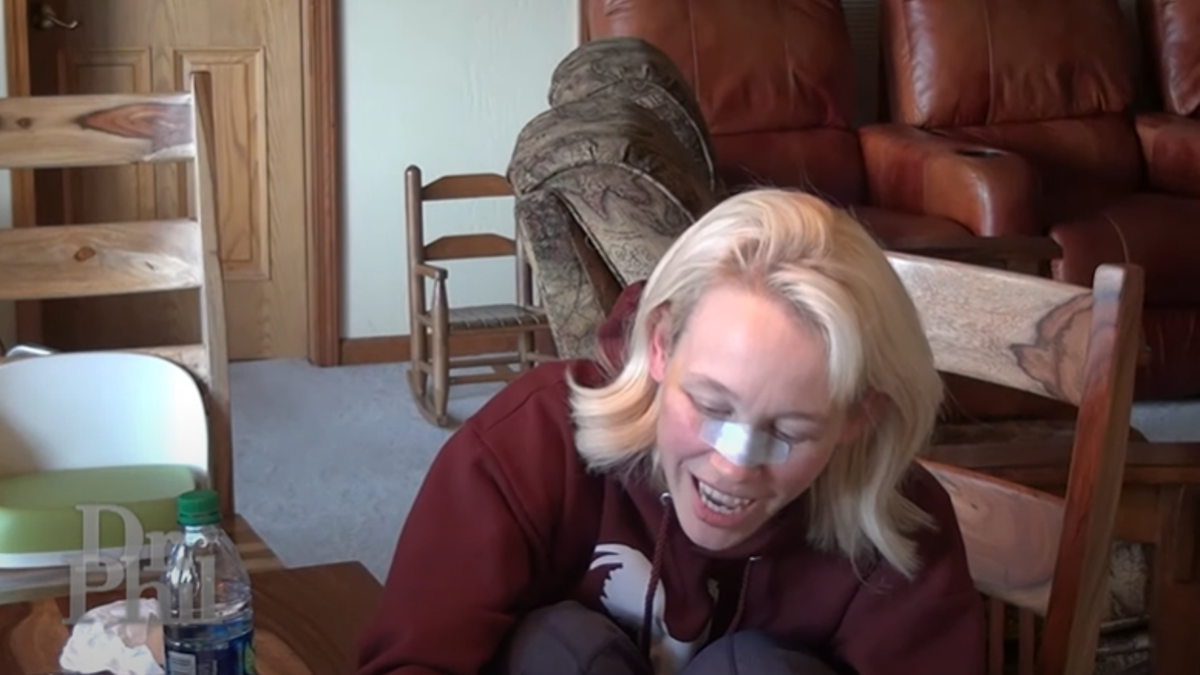
In May 2025, she appeared in a four-part Investigation Discovery docuseries titled "Sherri Papini: Caught in the Lie," in which she reversed the narrative she had pleaded guilty to and claimed she had, in fact, been abducted — not by two Hispanic women, but by James Reyes himself, whom she now portrays as her true captor and abuser. She took a polygraph test on camera. On June 26, 2025, she self-published a book titled "Sherri Papini Doesn't Exist," in which she claims Reyes abducted her, alleges that her marriage to Keith was emotionally abusive, and explains her guilty plea with a logic that leaves investigators cold: "I lied about the identity of my captor," she writes, adding that she kept the truth hidden because "prison was far safer than the consequences that I would suffer if my ex-husband found out I was having an emotional affair."
James Reyes denied every allegation. The Shasta County Sheriff's Office issued a statement noting that Reyes had been "interviewed extensively" and that authorities stand by the original findings. No new charges were filed.
In the spring of 2025, Sherri Papini appeared in Shasta County court fighting an eviction from a Shingletown home owned by a new boyfriend. She filed a temporary restraining order against a woman who claimed Papini had become involved with her longtime partner; that order was dismissed on June 4, 2025. She told Inside Edition that she struggles to find employment because her face is recognized worldwide. She told a camera that she is fighting to see her children more.
In June 2024, Hulu released a three-part docuseries called "Perfect Wife: The Mysterious Disappearance of Sherri Papini." She did not participate. In 2023, Lifetime aired a dramatization starring Jaime King. In 2024, Eminem name-dropped her in his song "Houdini." The case has become, in the strange taxonomy of American true crime, a kind of cultural shorthand — for the credulity of public sympathy, for the ruthlessness of a particular kind of self-preservation, for the way a well-constructed lie can hollow out an entire community's trust.
What remains genuinely difficult to resolve — the question that lingers even after the guilty plea, even after the sentencing, even after the docuseries and the book and the eviction hearings — is the matter of motive. Not motive in the legal sense, which was straightforwardly established: she wanted to escape her marriage, she wanted money, she wanted to avoid accountability. But motive in the deeper, more unsettling sense. What does it require of a person to plan, in meticulous detail, their own suffering? To ask someone who once loved them to swing a hockey stick? To press a burning tool to their own shoulder and hold still?
Sherri Papini insists she is still explaining herself. The rest of us are still trying to understand her. And somewhere in Shasta County, two children are growing up in the long shadow of a story their mother told — and then told differently — and may never stop telling.
Timeline
Birth & Early Life
Sherri Louise Graeff was born on June 11, 1982, in Mount Shasta, California, and grew up in the Redding area, attending Central Valley High School. Her early life in Shasta County would later form the backdrop for one of the most elaborate missing-persons hoaxes in American history.
Establishes her roots in the community she would later deceive on a massive scale.
Marriage to Keith Papini
Sherri Graeff married Keith Papini in October 2009, and the couple settled in the Mountain Gate area of Redding, Shasta County, California. They had two children together — a son and a daughter — and Sherri cultivated a public image as a devoted wife and mother.
Established the domestic context she would later claim she was fleeing, and created the sympathetic 'Super Mom' persona that made her disappearance a national story.
Secret Contact with Ex-Boyfriend
Investigators later determined that Sherri Papini had been in covert communication with her ex-boyfriend James Reyes using prepaid phones since at least December 2015 — nearly a full year before her staged disappearance. The two coordinated the details of her plan to leave her marriage while constructing a cover story of abduction.
Revealed the premeditated nature of the hoax and the extended timeline of deception predating the disappearance.
Staged Disappearance
On November 2, 2016, Keith Papini reported Sherri missing after she failed to pick up their children from daycare and did not return from a jog near their Redding home. In reality, Reyes had driven a rental car to Redding and collected Papini, after which she voluntarily traveled to his apartment in Costa Mesa, Orange County, approximately 500 miles away.
Triggered a massive 22-day multi-state search that consumed enormous law enforcement resources and terrified the Redding community.
Self-Inflicted Injuries & Branding
During the approximately three weeks Papini spent at Reyes's Costa Mesa apartment, she orchestrated her own injuries to fabricate evidence of captivity. At her request, Reyes struck her with a hockey stick, pelted her with hockey pucks, cut off her hair, and branded her right shoulder using a wood-burning tool purchased at Hobby Lobby — all designed to make her injuries appear consistent with violent abduction.
Demonstrated the extraordinary lengths Papini went to in staging the hoax, and provided the physical 'evidence' that lent her story credibility with the public and media.
Reappearance on Thanksgiving
On Thanksgiving Day, Papini was found bound on County Road 17 near Interstate 5 in Yolo County, approximately 146 miles south of Redding, weighing only 87 pounds with bruising, a swollen nose, shorn hair, and a brand on her right shoulder. She told law enforcement she had been abducted at gunpoint by two Hispanic women in a dark SUV, held captive, tortured, and threatened with being sold into human trafficking.
Her false description of Hispanic female abductors sparked widespread fear in Latino communities and sent investigators on a years-long international manhunt for perpetrators who did not exist.
FBI Sketch & Fraudulent Victim Compensation
Papini provided detailed descriptions to an FBI sketch artist, and the resulting composite images of two fictitious Hispanic women were disseminated worldwide. Simultaneously, she began filing claims with the California Victim Compensation Board, ultimately receiving approximately 35 payments totaling over $30,000 between 2017 and 2021 for therapist visits, ambulance transport, and related expenses.
The fraudulent victim compensation claims formed the basis of the federal mail fraud charge, while the false sketches directed international investigative resources toward innocent people.
Familial DNA Breakthrough
After years of dead ends, the California DOJ used familial DNA search technology to link male DNA found on Papini's clothing to a relative of James Reyes; FBI agents then collected Reyes's DNA from his trash to confirm the match. On August 10, 2020, investigators interviewed Reyes, who admitted Papini had contacted him seeking to 'run away' from her marriage and had stayed voluntarily at his apartment — and that he had inflicted her injuries at her explicit request.
The familial DNA match was the pivotal forensic breakthrough that unraveled the entire hoax after nearly four years of investigation.
Federal Arrest
FBI agents arrested Sherri Papini on March 3, 2022, at her children's piano lesson in Redding on federal charges of making false statements to a federal law enforcement officer and engaging in mail fraud — two counts drawn from an original 35-count indictment. She was booked into Sacramento County Jail at 7:38 p.m. and released five days later on a $120,000 bond, required to surrender her passport and undergo psychiatric treatment.
The arrest, made in front of her children, marked the public collapse of a six-year deception and the end of her marriage — Keith Papini separated from her the same day.
Guilty Plea
On April 18, 2022, Papini pleaded guilty in U.S. District Court in Sacramento to one count of mail fraud and one count of making false statements to federal investigators, with the remaining 33 counts dropped as part of the plea agreement. Days later, Keith Papini filed for divorce and sought sole custody of their two children, which he was ultimately awarded.
The guilty plea was a formal admission that the kidnapping was fabricated, though prosecutors and the judge would later note she showed little genuine remorse.
Sentencing to Federal Prison
U.S. District Judge William Shubb sentenced Papini to 18 months in federal prison at FCI Victorville — more than double the 8 months prosecutors had requested — along with 36 months of supervised release and $309,902 in restitution. In her statement to the court, Papini said only, 'I am guilty of lying. I am guilty of dishonor,' remarks both the judge and the prosecutor characterized as continued manipulation rather than genuine accountability.
The above-guidelines sentence signaled the court's view that the hoax caused serious, lasting harm — to law enforcement, to the Latino community falsely implicated, and to the integrity of the justice system.
Release from Prison & Ongoing Restitution Evasion
After serving approximately nine to ten months of her 18-month sentence, Papini was released from FCI Victorville to a Sacramento halfway house in late August 2023, with full release on October 29, 2023. As of early 2024 she had paid none of the $309,902 in restitution owed, prompting the government to file a writ of garnishment in March 2024; the total debt rose to approximately $340,000 with a litigation surcharge.
Her failure to pay restitution extended the legal consequences of the hoax and demonstrated that the financial harm to victims and agencies remained unaddressed years after her conviction.
Public Reversal & New Claims of Victimhood
In the Investigation Discovery docuseries 'Sherri Papini: Caught in the Lie,' which premiered May 26, 2025, Papini reversed her guilty plea narrative and claimed she was actually abducted by James Reyes — not two Hispanic women — recasting herself as a victim of her ex-boyfriend and her former marriage. She followed the series with a self-published book, 'Sherri Papini Doesn't Exist' (June 26, 2025), in which she admitted, 'I lied about the identity of my captor,' while Reyes denied all new allegations and was never charged with any crime.
The media campaign represented a new phase of reputational rehabilitation that authorities and legal observers widely criticized as a continuation of the same pattern of manipulation that defined the original hoax.
Crime Location
Photos

Sherri Papini interrogation

Sherri Papini - Primary image
Sherri Papini - Reference image 11
Sherri Papini - Reference image 33
Sherri Papini - Reference image 34
Sherri Papini - Reference image 35

Sherri Papini - Reference image 37

Sherri Papini - Reference image 41
Sources
- Sherri Papini - Wikipedia
- Sherri Papini Pleads Guilty to Faking Her Own Kidnapping
- Sherri Papini Sentenced to 18 Months in Prison for Faking Kidnapping
- Perfect Wife: The Mysterious Disappearance of Sherri Papini (Hulu Docuseries)
- Sherri Papini: Caught in the Lie (Investigation Discovery Docuseries)
- Sherri Papini Doesn't Exist (Book)
- United States v. Sherri Papini - Court Docket
- FBI Press Release: Sherri Papini Arrested on Federal Charges
- Sherri Papini Sentencing: 'I Am Guilty of Lying'
- Government Files Writ of Garnishment Against Papini Over Unpaid Restitution
Frequently Asked Questions
Table of Contents
Case Summary
On Thanksgiving morning 2016, a motorist on a desolate stretch of California interstate spotted a small, trembling figure bound by restraints — a young mother, barely 87 pounds, branded with a burn mark and shorn of her hair. The nation wept. Then it seethed. Sherri Papini's story of abduction by two armed Hispanic women became a media sensation, a missing-person case that swallowed millions in investigative resources and detonated fear across Latino communities nationwide. FBI sketch artists disseminated her descriptions of the alleged kidnappers around the world. The California Victim Compensation Board cut her 35 separate checks. Her husband stood beside her, steadfast. But from the beginning, detectives noticed the details didn't quite fit — and a strand of male DNA clinging to her clothing would, years later, unravel everything. What investigators eventually uncovered wasn't a kidnapping. It was a 22-day escape to an ex-boyfriend's apartment in Costa Mesa, complete with self-inflicted wounds, a wood-burning brand from Hobby Lobby, and a web of prepaid-phone deception that had been spinning since at least December 2015. This is the story of how a California mother staged one of the most elaborate hoaxes in modern American law enforcement history — and why, even after conviction, she refuses to stop rewriting it.
June 11, 1982, Mount Shasta, California, USA(Age: 44)
Case Details
The call came in on the evening of November 2, 2016. Keith Papini had arrived home to their Mountain Gate subdivision outside Redding, California, to find his two young children still waiting at daycare — waiting for a mother who never came. His wife, Sherri, had gone for a jog that afternoon along a route she knew well, a stretch of road near their home in the oak-studded hills of Shasta County. Her phone had been found on the ground, her earbuds scattered nearby. There was no sign of struggle. There was no sign of Sherri.
What followed was the kind of search that consumes a community. Helicopters swept the ridgelines. Ground crews combed the brush. Keith Papini's anguished press appearances — a father of two, raw-eyed and desperate — played on every local newscast. The Redding community donated money, time, and prayer. Social media erupted with the hashtag and the photo: Sherri Papini, blue-eyed and blonde, smiling in the way that photographs do when they become missing-person flyers.
Twenty-two days later, on Thanksgiving morning, November 24, 2016, a motorist traveling County Road 17 near Interstate 5 in Yolo County — 146 miles south of Redding — found her. She was bound. She weighed 87 pounds. Her hair had been roughly cut off. Her nose was swollen. Her right shoulder bore a fresh burn in the shape of a brand. The nation exhaled, and then wept.
Sherri Papini was alive.
She told investigators a story that was equal parts terrifying and cinematic. Two Hispanic women, she said, had forced her into a dark SUV at gunpoint near her jogging route. They had held her captive for three weeks, tortured her, and threatened to sell her into human trafficking. She described her captors in vivid detail to FBI sketch artists — the images were disseminated worldwide, translated into a global manhunt. Her account was specific, emotive, and utterly convincing to a grieving public that needed a villain.
But in the FBI's Sacramento field office, the relief was already starting to curdle into something else.
Investigators noted inconsistencies almost immediately — details that shifted slightly in the retelling, a chronology that bent when pressed. And there was something else: DNA recovered from Sherri's clothing. Male DNA. Unknown. It was uploaded to CODIS, the national database, and returned no match. The case stayed open, the questions stayed quiet, and Sherri Papini returned to her life in Redding — to Keith, to her children, to the sympathy of a nation.
The California Victim Compensation Board began cutting her checks. Thirty-five of them, over the following four years, totaling more than $30,000. Therapist visits. Ambulance transport. The ordinary-seeming costs of surviving an extraordinary trauma. No one yet had reason to question it.
Sherri Louise Graeff was born on June 11, 1982, in Mount Shasta, California — a small, mountain-shadowed town at the northern end of the Sacramento Valley. She grew up and attended Central Valley High School in the Redding area, and by her early twenties had built the kind of life that looks uncomplicated from the outside: she married Keith Papini in October 2009, and together they had a son and a daughter, settling into a house in the Mountain Gate community east of Redding. She was, by every suburban metric, a wife, a mother, a neighbor. A woman who jogged.
But beneath the surface, something had long been quietly pulling in another direction. By at least December 2015 — nearly a full year before her disappearance — Sherri Papini had been in covert contact with a former boyfriend named James Reyes, communicating through prepaid phones that left no trail on the family's shared accounts. Whatever she told Reyes about her life with Keith — and what she told investigators years later was that the marriage was emotionally abusive — it was enough to set in motion a plan so strange, so reckless, and so specific in its cruelty that it still defies easy explanation.
On November 2, 2016, Reyes drove north from his apartment in Costa Mesa, in Orange County, to Redding. He came in a rental car. Sherri left her children's daycare pickup to fate, dropped her phone and earbuds on the jogging path — a staged tableau of disappearance — and got in.
For the next three weeks, she lived voluntarily in Reyes's Costa Mesa apartment. According to his later account to federal investigators, she did not leave under duress. She was not chained. She was not trafficked. She was, in the language of the eventual FBI investigation, a woman who had decided to run.
But she had also decided to come back — and she needed the injuries to match the story.
What happened in those final days before her Thanksgiving discovery is among the most disturbing elements of the case. Reyes told investigators that Sherri had asked him to hurt her. To hold a hockey stick for her to run into. To pelt her with hockey pucks. To brand her right shoulder using a wood-burning tool purchased at Hobby Lobby. He complied. He said they did not have sex. He said he dropped her on the side of that Yolo County road, bound and battered, before driving back south in the rental car, becoming once again just a man in Costa Mesa with an ordinary life and an extraordinary secret.
For nearly four years, the secret held.
Then, in 2020, the California Department of Justice deployed familial DNA search technology — a forensic method that can identify relatives of an unknown DNA contributor — against the male sample recovered from Sherri's clothing. The results pointed to a family member of James Reyes. FBI agents collected Reyes's DNA from his trash. It matched. On August 10, 2020, investigators sat down with Reyes and, in a matter of hours, watched the entire architecture of Sherri Papini's story collapse.
When agents then confronted Sherri with the DNA evidence, she denied everything. She maintained her story of the two Hispanic women, the dark SUV, the trafficking threats. She continued, even then, to collect money from the California Victim Compensation Board. The checks kept coming — 35 payments over four years — while federal prosecutors built a case.
On March 3, 2022, FBI agents found Sherri Papini not in hiding, not fleeing — but sitting with her children at their piano lesson in Redding, California. They arrested her there. By 7:38 that evening, she was booked into Sacramento County Jail. The bond was set at $120,000. She was required, upon release five days later, to surrender her passport and undergo psychiatric treatment.
On the day of her arrest, Keith Papini left her.
Six weeks later, on April 18, 2022, Sherri Papini appeared in United States District Court in Sacramento and pleaded guilty to one count of mail fraud and one count of making false statements to a federal law enforcement officer. The original indictment had contained 35 counts; 33 were dropped as part of the deal. In April, Keith filed for divorce and sought sole custody of their children. He was granted full custody, though Sherri would later be permitted limited visitation — reportedly once per month as of 2025.
The sentencing came on September 19, 2022, before U.S. District Judge William Shubb. Sherri wore muted colors and spoke briefly. Her statement lasted less than a minute. "I am guilty of lying," she told the courtroom. "I am guilty of dishonor." Both Judge Shubb and Assistant U.S. Attorney Veronica Alegria noted afterward that even this moment felt like performance — that her words, stripped of context and accountability, constituted one more act of calculated presentation rather than genuine reckoning.
Shubb sentenced her to 18 months in federal prison at FCI Victorville — more than double the eight months federal prosecutors had requested, and a world removed from the one month of incarceration plus seven months of home detention her defense had sought. He also ordered 36 months of supervised release and $309,902 in restitution. She reported to Victorville on November 8, 2022.
She served roughly nine months before being transferred to community confinement — a halfway house in Sacramento — in late August 2023. Her full release date was October 29, 2023. As of early 2024, she had not paid a single dollar of the $309,902 she owed. The federal government filed a writ of garnishment in March 2024, believing she held property at a law firm called Kinney & Kinney that could satisfy the debt. With a 10 percent litigation surcharge, the total had grown to approximately $340,000.
The damage Sherri Papini caused radiates outward in concentric rings. Shasta County law enforcement spent conservatively more than $150,000 pursuing a kidnapping that never happened. Two fabricated Hispanic women — conjured from nothing and rendered into FBI sketches distributed worldwide — spread fear through Latino communities across California and beyond, attaching suspicion to an entire demographic based solely on one woman's lie. James Reyes, who cooperated fully with investigators and was never charged with any crime, found his name and face attached to headlines around the world. Sherri's former mother-in-law sued her to recover $50,000 she had loaned for the legal defense. Her children lost the daily presence of their mother. Keith Papini lost five years of his life to a marriage built on secrets he couldn't have imagined.
And then, in the remarkable second act that no one who followed the case closely could have predicted, Sherri Papini began rewriting the story again.
In May 2025, she appeared in a four-part Investigation Discovery docuseries titled "Sherri Papini: Caught in the Lie," in which she reversed the narrative she had pleaded guilty to and claimed she had, in fact, been abducted — not by two Hispanic women, but by James Reyes himself, whom she now portrays as her true captor and abuser. She took a polygraph test on camera. On June 26, 2025, she self-published a book titled "Sherri Papini Doesn't Exist," in which she claims Reyes abducted her, alleges that her marriage to Keith was emotionally abusive, and explains her guilty plea with a logic that leaves investigators cold: "I lied about the identity of my captor," she writes, adding that she kept the truth hidden because "prison was far safer than the consequences that I would suffer if my ex-husband found out I was having an emotional affair."
James Reyes denied every allegation. The Shasta County Sheriff's Office issued a statement noting that Reyes had been "interviewed extensively" and that authorities stand by the original findings. No new charges were filed.
In the spring of 2025, Sherri Papini appeared in Shasta County court fighting an eviction from a Shingletown home owned by a new boyfriend. She filed a temporary restraining order against a woman who claimed Papini had become involved with her longtime partner; that order was dismissed on June 4, 2025. She told Inside Edition that she struggles to find employment because her face is recognized worldwide. She told a camera that she is fighting to see her children more.
In June 2024, Hulu released a three-part docuseries called "Perfect Wife: The Mysterious Disappearance of Sherri Papini." She did not participate. In 2023, Lifetime aired a dramatization starring Jaime King. In 2024, Eminem name-dropped her in his song "Houdini." The case has become, in the strange taxonomy of American true crime, a kind of cultural shorthand — for the credulity of public sympathy, for the ruthlessness of a particular kind of self-preservation, for the way a well-constructed lie can hollow out an entire community's trust.
What remains genuinely difficult to resolve — the question that lingers even after the guilty plea, even after the sentencing, even after the docuseries and the book and the eviction hearings — is the matter of motive. Not motive in the legal sense, which was straightforwardly established: she wanted to escape her marriage, she wanted money, she wanted to avoid accountability. But motive in the deeper, more unsettling sense. What does it require of a person to plan, in meticulous detail, their own suffering? To ask someone who once loved them to swing a hockey stick? To press a burning tool to their own shoulder and hold still?
Sherri Papini insists she is still explaining herself. The rest of us are still trying to understand her. And somewhere in Shasta County, two children are growing up in the long shadow of a story their mother told — and then told differently — and may never stop telling.
Timeline
Birth & Early Life
Sherri Louise Graeff was born on June 11, 1982, in Mount Shasta, California, and grew up in the Redding area, attending Central Valley High School. Her early life in Shasta County would later form the backdrop for one of the most elaborate missing-persons hoaxes in American history.
Establishes her roots in the community she would later deceive on a massive scale.
Marriage to Keith Papini
Sherri Graeff married Keith Papini in October 2009, and the couple settled in the Mountain Gate area of Redding, Shasta County, California. They had two children together — a son and a daughter — and Sherri cultivated a public image as a devoted wife and mother.
Established the domestic context she would later claim she was fleeing, and created the sympathetic 'Super Mom' persona that made her disappearance a national story.
Secret Contact with Ex-Boyfriend
Investigators later determined that Sherri Papini had been in covert communication with her ex-boyfriend James Reyes using prepaid phones since at least December 2015 — nearly a full year before her staged disappearance. The two coordinated the details of her plan to leave her marriage while constructing a cover story of abduction.
Revealed the premeditated nature of the hoax and the extended timeline of deception predating the disappearance.
Staged Disappearance
On November 2, 2016, Keith Papini reported Sherri missing after she failed to pick up their children from daycare and did not return from a jog near their Redding home. In reality, Reyes had driven a rental car to Redding and collected Papini, after which she voluntarily traveled to his apartment in Costa Mesa, Orange County, approximately 500 miles away.
Triggered a massive 22-day multi-state search that consumed enormous law enforcement resources and terrified the Redding community.
Self-Inflicted Injuries & Branding
During the approximately three weeks Papini spent at Reyes's Costa Mesa apartment, she orchestrated her own injuries to fabricate evidence of captivity. At her request, Reyes struck her with a hockey stick, pelted her with hockey pucks, cut off her hair, and branded her right shoulder using a wood-burning tool purchased at Hobby Lobby — all designed to make her injuries appear consistent with violent abduction.
Demonstrated the extraordinary lengths Papini went to in staging the hoax, and provided the physical 'evidence' that lent her story credibility with the public and media.
Reappearance on Thanksgiving
On Thanksgiving Day, Papini was found bound on County Road 17 near Interstate 5 in Yolo County, approximately 146 miles south of Redding, weighing only 87 pounds with bruising, a swollen nose, shorn hair, and a brand on her right shoulder. She told law enforcement she had been abducted at gunpoint by two Hispanic women in a dark SUV, held captive, tortured, and threatened with being sold into human trafficking.
Her false description of Hispanic female abductors sparked widespread fear in Latino communities and sent investigators on a years-long international manhunt for perpetrators who did not exist.
FBI Sketch & Fraudulent Victim Compensation
Papini provided detailed descriptions to an FBI sketch artist, and the resulting composite images of two fictitious Hispanic women were disseminated worldwide. Simultaneously, she began filing claims with the California Victim Compensation Board, ultimately receiving approximately 35 payments totaling over $30,000 between 2017 and 2021 for therapist visits, ambulance transport, and related expenses.
The fraudulent victim compensation claims formed the basis of the federal mail fraud charge, while the false sketches directed international investigative resources toward innocent people.
Familial DNA Breakthrough
After years of dead ends, the California DOJ used familial DNA search technology to link male DNA found on Papini's clothing to a relative of James Reyes; FBI agents then collected Reyes's DNA from his trash to confirm the match. On August 10, 2020, investigators interviewed Reyes, who admitted Papini had contacted him seeking to 'run away' from her marriage and had stayed voluntarily at his apartment — and that he had inflicted her injuries at her explicit request.
The familial DNA match was the pivotal forensic breakthrough that unraveled the entire hoax after nearly four years of investigation.
Federal Arrest
FBI agents arrested Sherri Papini on March 3, 2022, at her children's piano lesson in Redding on federal charges of making false statements to a federal law enforcement officer and engaging in mail fraud — two counts drawn from an original 35-count indictment. She was booked into Sacramento County Jail at 7:38 p.m. and released five days later on a $120,000 bond, required to surrender her passport and undergo psychiatric treatment.
The arrest, made in front of her children, marked the public collapse of a six-year deception and the end of her marriage — Keith Papini separated from her the same day.
Guilty Plea
On April 18, 2022, Papini pleaded guilty in U.S. District Court in Sacramento to one count of mail fraud and one count of making false statements to federal investigators, with the remaining 33 counts dropped as part of the plea agreement. Days later, Keith Papini filed for divorce and sought sole custody of their two children, which he was ultimately awarded.
The guilty plea was a formal admission that the kidnapping was fabricated, though prosecutors and the judge would later note she showed little genuine remorse.
Sentencing to Federal Prison
U.S. District Judge William Shubb sentenced Papini to 18 months in federal prison at FCI Victorville — more than double the 8 months prosecutors had requested — along with 36 months of supervised release and $309,902 in restitution. In her statement to the court, Papini said only, 'I am guilty of lying. I am guilty of dishonor,' remarks both the judge and the prosecutor characterized as continued manipulation rather than genuine accountability.
The above-guidelines sentence signaled the court's view that the hoax caused serious, lasting harm — to law enforcement, to the Latino community falsely implicated, and to the integrity of the justice system.
Release from Prison & Ongoing Restitution Evasion
After serving approximately nine to ten months of her 18-month sentence, Papini was released from FCI Victorville to a Sacramento halfway house in late August 2023, with full release on October 29, 2023. As of early 2024 she had paid none of the $309,902 in restitution owed, prompting the government to file a writ of garnishment in March 2024; the total debt rose to approximately $340,000 with a litigation surcharge.
Her failure to pay restitution extended the legal consequences of the hoax and demonstrated that the financial harm to victims and agencies remained unaddressed years after her conviction.
Public Reversal & New Claims of Victimhood
In the Investigation Discovery docuseries 'Sherri Papini: Caught in the Lie,' which premiered May 26, 2025, Papini reversed her guilty plea narrative and claimed she was actually abducted by James Reyes — not two Hispanic women — recasting herself as a victim of her ex-boyfriend and her former marriage. She followed the series with a self-published book, 'Sherri Papini Doesn't Exist' (June 26, 2025), in which she admitted, 'I lied about the identity of my captor,' while Reyes denied all new allegations and was never charged with any crime.
The media campaign represented a new phase of reputational rehabilitation that authorities and legal observers widely criticized as a continuation of the same pattern of manipulation that defined the original hoax.
Crime Location
Photos
Sherri Papini interrogation
Sherri Papini - Primary image
Sherri Papini - Reference image 11
Sherri Papini - Reference image 33
Sherri Papini - Reference image 34
Sherri Papini - Reference image 35
Sherri Papini - Reference image 37
Sherri Papini - Reference image 41
Sources
- Sherri Papini - Wikipedia
- Sherri Papini Pleads Guilty to Faking Her Own Kidnapping
- Sherri Papini Sentenced to 18 Months in Prison for Faking Kidnapping
- Perfect Wife: The Mysterious Disappearance of Sherri Papini (Hulu Docuseries)
- Sherri Papini: Caught in the Lie (Investigation Discovery Docuseries)
- Sherri Papini Doesn't Exist (Book)
- United States v. Sherri Papini - Court Docket
- FBI Press Release: Sherri Papini Arrested on Federal Charges
- Sherri Papini Sentencing: 'I Am Guilty of Lying'
- Government Files Writ of Garnishment Against Papini Over Unpaid Restitution
Frequently Asked Questions
Related Cases
Accused
Connection tags:
Convicted
Connection tags:
Convicted
Connection tags:
Convicted
Connection tags:
Accused
Connection tags:
Accused
Connection tags:
Tags
Popular Culture
documentary (2024)
Three-part Hulu docuseries examining the full arc of the Papini kidnapping hoax, from her 2016 disappearance through conviction and sentencing. Papini declined to participate.
documentary (2025)
Four-part Investigation Discovery docuseries featuring Papini's first post-conviction public interviews, in which she claims ex-boyfriend James Reyes was her real abductor and takes a polygraph test.
book (2025)
Papini's self-published memoir recounting her version of events, alleging Reyes abducted her, describing an emotionally abusive marriage, and explaining her decision to lie about her captor's identity.
TV (2024)
Eminem references the Sherri Papini kidnapping hoax in this song from his 2024 album 'The Death of Slim Shady (Coup de Grâce),' using her case as a cultural shorthand for deception.
movie (2023)
Lifetime television dramatization of the Papini kidnapping hoax starring Jaime King, depicting the 22-day disappearance, investigation, and unraveling of her false story.