Phoolan Devi
Case Summary
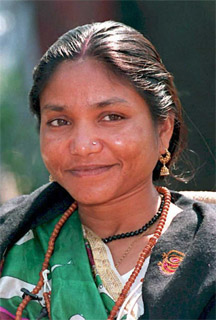
At 1:30 on a July afternoon in 2001, three masked gunmen opened fire outside a government residence on Ashoka Road in New Delhi. Nine bullets found their mark. The target was Phoolan Devi, 37, a sitting Member of Parliament who had once been the most wanted woman in India, hunted across three states for a massacre that left twenty men dead on the banks of a river in Uttar Pradesh. She had been a child bride, a gang rape survivor, a feared dacoit who robbed from the rich and shared with the poor, and a democratically elected lawmaker. The arc of her life was so extreme that it seemed impossible any single person could have lived it. The man who would claim responsibility for her killing, a Thakur named Sher Singh Rana, said he did it to avenge the 1981 Behmai massacre. The Behmai case itself would not reach a verdict until February 14, 2024, exactly forty-three years after the killings that defined her legend. This is the story of a woman born at the very bottom of one of the world's most stratified societies, who refused to stay there, whatever the cost.
August 10, 1963, Gorha Ka Purwa, Uttar Pradesh, India(Age: 37)
July 25, 2001, 44 Ashoka Road, New Delhi, India (Assassination — shot nine times by three masked gunmen outside her residence)
Related Cases
Convicted
Connection tags:

Alleged
Connection tags:

Convicted
Connection tags:

Convicted
Connection tags:
Convicted
Connection tags:
Convicted
Connection tags:
Case Details
She came home just after lunch on July 25, 2001, climbing out of her car at 44 Ashoka Road in the heart of New Delhi, the kind of leafy government address assigned to Members of Parliament. The monsoon season had settled over the capital; the air was heavy, the light flat and gray. Phoolan Devi, 37, had spent the morning in Parliament. She was in her second term as a Member for Mirzapur, Uttar Pradesh, representing the Samajwadi Party, and whatever else history had made of her, she was a working lawmaker on an ordinary Thursday.
Three masked men were waiting.
At 1:30 p.m., they opened fire. Nine bullets. She was still near the gate when she fell. Witnesses described screaming, running, the sound of engines accelerating away. By the time she reached Ram Manohar Lohia Hospital, she was already gone. The woman who had survived gang rape, eleven years in prison without trial, and the improbable transformation from the most wanted criminal in India into a democratically elected politician had been killed in less than a minute, in broad daylight, outside her own front door.
India went quiet, then furious.
She had been born on August 10, 1963, in Gorha Ka Purwa, a village in Uttar Pradesh, into a family of the Mallah subcaste: fishermen who occupied one of the lowest rungs of the Hindu caste hierarchy. Her father had been cheated out of his share of family land by his own relatives. Phoolan grew up watching her parents absorb that injustice, learning the particular hopelessness of grievances that have no legal remedy when you are poor and low-caste in rural India. It was a lesson that would shape everything she did, and everything that was done to her.
At eleven years old, she was married to a man named Puttilal, many years her senior, in an arrangement designed to resolve a dispute between families. The marriage was an ordeal. She endured repeated abuse before she finally left him, an act her community considered scandalous, an affront to the established order. She returned to her village carrying the stigma of a woman who had defied her husband. The village was not kind about it.
In 1979, when she was around sixteen, she was arrested on robbery charges she insisted were fabricated. What happened in custody was worse than the arrest. She was beaten and raped by police officers. The state, which was supposed to protect her, had already failed her twice: once by enforcing caste arrangements that left her family landless, and once by delivering her into the hands of the men who wore its uniform.
When she emerged from custody, the distinction between the legitimate world and the criminal one had become, for her, essentially meaningless. The legitimate world had offered her only exploitation and violence. The other world would at least let her fight back.
She was kidnapped into a dacoit gang operating in the Chambal Valley, the rugged canyon country along the borders of Uttar Pradesh and Madhya Pradesh that had sheltered outlaws for generations. The gang's leader, Babu Gujjar, abused her. His second-in-command, a man named Vikram Mallah, did not. Vikram killed Gujjar, took over the gang, and became Phoolan's partner and protector. He taught her to handle firearms. Under his instruction, she learned that a weapon was the only currency that moved freely across caste lines.
Together, Phoolan and Vikram led the gang on raids across the valley: robbing high-caste villages, holding up trains, redistributing what they took among the rural poor. In the communities that had no reason to love the upper castes or the police, she became a legend. The newspapers gave her names: the Bandit Queen, the Beautiful Bandit. She was barely eighteen. Among Mallah and other low-caste communities across Uttar Pradesh and Madhya Pradesh, she was something closer to a saint.
The fairy tale, if it could be called that, ended in August 1980. Two Thakur brothers named Sri Ram and Lala Ram ambushed the gang, shot Vikram Mallah dead, and took Phoolan to the village of Behmai. She was held there for approximately three weeks. During that time, she was gang-raped, repeatedly, and paraded through the village. It was a punishment designed to remind her what she was and what they were.
She escaped. She rebuilt. And then, on February 14, 1981, she came back.
The details of the Behmai massacre have been reconstructed from survivor accounts and police records. Phoolan Devi's gang arrived at the village disguised as police officers. They were looking for Sri Ram and Lala Ram. When the brothers could not be located, the men of the village were gathered and marched toward the Yamuna River. Approximately twenty Thakur men were lined up and shot. Seventeen were confirmed dead; six others were wounded. Phoolan Devi, who was present that night, always denied that she personally ordered or carried out the killings. The question of exactly who gave which order remained legally unresolved for the rest of her life, and for more than two decades beyond it.
The massacre triggered a manhunt of unusual intensity. The Chief Minister of Uttar Pradesh resigned under political pressure. The state governments of Uttar Pradesh, Madhya Pradesh, and Rajasthan mobilized their forces across the entire region. Prime Minister Indira Gandhi demanded results. Phoolan Devi was now the subject of national outrage, political crisis, and, among certain communities, intensifying reverence. She moved through the ravines, her gang shrinking as the pressure mounted, her name growing larger the harder they tried to catch her.
She surrendered on February 12, 1983, in Bhind, Madhya Pradesh, before a crowd of eight to ten thousand people. Chief Minister Arjun Singh presided over the ceremony. Phoolan Devi had negotiated her terms: no death penalty, a maximum sentence of eight years, imprisonment in Madhya Pradesh rather than Uttar Pradesh, no handcuffs, land for her family, and a government job for her brother. She laid down her rifle in a ceremony that was part theater, part genuine political event, and wholly unlike any surrender India had ever witnessed.
The prison years were brutal in a different register. She was held at Gwalior and then Jabalpur, and no trial came. Eight years passed, then ten, then eleven. She suffered tuberculosis. Ovarian cysts were diagnosed. She underwent a hysterectomy. The negotiated eight-year cap on her sentence was never honored; it was simply disregarded by successive governments. She faced twenty-two counts of murder and twenty-six additional charges, forty-eight serious criminal counts in total, none of which went to trial while she sat in her cell.
In 1994, the Uttar Pradesh government under Chief Minister Mulayam Singh Yadav moved to withdraw cases against her in what officials called the "public interest." She was released on parole. A trial court overturned that withdrawal, the Allahabad High Court upheld the lower court, and in December 1996 the Supreme Court rejected her plea to dismiss all charges. The legal machinery that had imprisoned her without trial for eleven years now ground forward without resolution.
She married Umed Singh in 1994 and converted to Buddhism, both of them stepping outside the Hindu caste system that had defined and constrained her entire life. She dictated her autobiography, published as "I, Phoolan Devi: The Autobiography of India's Bandit Queen." Shekhar Kapur's 1994 film "Bandit Queen," starring Seema Biswas, premiered at Cannes to international acclaim and earned a 97% rating on Rotten Tomatoes. Phoolan herself objected strenuously to its portrayal, calling it inaccurate. She withdrew her legal opposition after Channel 4, the film's producer, paid her £40,000. It was not the last time she would accept an imperfect settlement from a world that had rarely offered her better.
In 1996, she ran for Parliament from Mirzapur on the Samajwadi Party ticket. She won. She was the first low-caste woman elected to Parliament in Indian history. She lost her seat in 1998, won it back in 1999, and was in the second year of her second term when the gunmen came to Ashoka Road.
Days after her death, a man named Sher Singh Rana, whose real name was Pankaj Singh Pundir, surrendered to police in Dehradun. He was a Thakur. He said he had killed Phoolan Devi to avenge the Behmai massacre, and he expressed no remorse. He was charged and imprisoned in Tihar, one of India's most secure facilities. In February 2004, he escaped. He was re-arrested in Kolkata in 2006. In August 2014, a Delhi court convicted him under Sections 302, 307, and 34 of the Indian Penal Code: murder, attempted murder, and common intention. He was sentenced to life imprisonment and fined one hundred thousand rupees. Ten co-accused were acquitted for lack of evidence. In 2016, the Delhi High Court granted him bail pending his appeal, and the legal process continued its slow, inconclusive turn.
The Behmai massacre case outlasted nearly everyone connected to it. Of the approximately thirty-four to thirty-six people originally charged, almost all died before the case reached a verdict. On February 14, 2024, exactly forty-three years after the massacre, the Anti-Dacoity Court of Kanpur Dehat under Judge Amit Malviya delivered its findings. One surviving gang member, Shyam Babu Kewat, then sixty-five years old, was convicted and sentenced to life imprisonment with a fine of fifty thousand rupees. A co-accused named Vishwanath was acquitted for lack of evidence. One accused, Man Singh, remains at large. The charges against Phoolan Devi herself were never resolved; she died in 2001 before a single day of her Behmai trial had begun.
What remains is contested and immense. Phoolan Devi was accused of mass murder. She was also a child bride, a police rape survivor, and a woman who endured horrors that the state had both failed to prevent and in some cases directly perpetrated. She became a political force by making herself impossible to ignore. She was thirty-seven when she was killed, which is, when you trace the entire arc of her life, an almost incomprehensible thought. The Mallah and Nishad communities of Uttar Pradesh commemorate her every year on the anniversaries of her birth and death. Statues have been announced. Her name is invoked regularly in debates about caste, gender, and political violence that remain fiercely alive in contemporary India.
The Behmai massacre produced forty-three years of litigation and one conviction. The assassination of Phoolan Devi produced a life sentence that is currently under appeal. Neither verdict has resolved the deeper questions her life raised: about who is permitted to use violence, who is punished for it, and whether justice and the law are, in a country like India, always the same thing.
They are not.
Timeline
Birth into Caste Poverty
Phoolan Devi was born into a poor Mallah (fisherman subcaste) family in Gorha Ka Purwa, Uttar Pradesh — one of the lowest rungs of India's caste hierarchy. Her father had been cheated out of his land by his own relatives, instilling in Phoolan from childhood a fierce and visceral sense of injustice that would define her entire life.
Her birth circumstances — extreme poverty, low caste, and familial land dispossession — established the social conditions that drove her eventual rebellion against upper-caste authority.
Child Marriage and Abuse
At approximately eleven years old, Phoolan was married off to Puttilal, a man many years her senior. She endured sustained physical and sexual abuse at his hands, and eventually fled him — an act her own family regarded as deeply shameful and disgraceful.
Her escape from a brutal forced marriage marked her first act of defiance against patriarchal and caste-based oppression, setting the pattern for her future resistance.
Police Arrest, Beating, and Rape
In 1979, Phoolan was arrested on what she maintained were fraudulent robbery charges orchestrated by upper-caste enemies. While in police custody, she was beaten and gang-raped by officers — an atrocity that she later cited as a pivotal radicalizing experience that pushed her toward the dacoit life.
State-sanctioned violence against her crystallized her hatred of authority and upper-caste power structures, and directly preceded her entry into the dacoit underworld of the Chambal Valley.
Rise as Dacoit Leader with Vikram Mallah
After being kidnapped into a dacoit gang, Phoolan was protected by second-in-command Vikram Mallah, who killed the abusive gang leader Babu Gujjar and took Phoolan as his partner. Vikram taught her to use firearms, and together they led raids on high-caste villages and robbed trains across the Chambal Valley, making Phoolan a celebrated 'Robin Hood' figure — the 'Beautiful Bandit' — among low-caste communities.
This period transformed Phoolan from a victim of caste violence into an armed insurgent leader, and forged her legendary status as a champion of the oppressed.
Abduction to Behmai and Gang-Rape
In August 1980, upper-caste Thakur brothers Sri Ram and Lala Ram murdered Vikram Mallah and abducted Phoolan to Behmai village, where she was held captive for approximately three weeks and gang-raped repeatedly by Thakur men. This act of brutal revenge by upper-caste rivals became the direct catalyst for the massacre that followed months later.
The Behmai captivity represented the nadir of Phoolan's suffering and provided the motive for the single most notorious event of her criminal career — the Valentine's Day massacre.
Behmai Massacre
On Valentine's Day 1981, Phoolan Devi's gang — disguised as police officers — stormed Behmai village seeking Sri Ram and Lala Ram. When the brothers could not be found, approximately 20 Thakur men were marched to the riverbank and shot dead, with six survivors wounded. Phoolan denied personally ordering or carrying out the killings, but the massacre triggered a massive three-state police manhunt and caused the Chief Minister of Uttar Pradesh to resign.
The Behmai massacre was the defining event of Phoolan's criminal career, transforming her from a regional dacoit into a national figure and prompting Prime Minister Indira Gandhi to demand her capture.
Public Surrender at Bhind
After nearly two years as India's most-wanted fugitive, Phoolan Devi surrendered in a large public ceremony at Bhind, Madhya Pradesh, before Chief Minister Arjun Singh and a crowd of approximately 8,000–10,000 people. Her negotiated surrender terms included no death penalty, a maximum 8-year sentence, imprisonment in Madhya Pradesh rather than Uttar Pradesh, no handcuffs, land for her family, and a government job for her brother. She faced 48 serious criminal charges including 22 counts of murder.
The surrender was a carefully staged political spectacle that reflected her enormous popular support among low-caste communities and signaled the beginning of a decade-long legal limbo.
Eleven Years Imprisoned Without Trial
Despite the negotiated 8-year sentence cap, Phoolan was held for over 11 years at Gwalior and Jabalpur prisons without ever standing trial. During her incarceration she suffered tuberculosis, ovarian cysts, and underwent a hysterectomy. Formal charges in the Behmai case were not even framed until August 2012 — more than a decade after her death.
Her prolonged detention without trial became a cause célèbre illustrating the failures of India's criminal justice system and the particular vulnerability of low-caste women within it.
Release, Marriage, and Political Emergence
Released on parole in 1994 after the Uttar Pradesh government under Mulayam Singh Yadav moved to withdraw cases against her, Phoolan married Umed Singh and the couple converted to Buddhism to escape the Hindu caste hierarchy. She dictated her autobiography, published as 'I, Phoolan Devi: The Autobiography of India's Bandit Queen,' and began preparing for a political career. In 1996 she was elected Member of Parliament for Mirzapur, representing the Samajwadi Party — becoming the first low-caste woman to hold such a distinction.
Her transformation from convicted dacoit to elected parliamentarian was one of the most remarkable political rehabilitations in modern Indian history, and demonstrated her enduring mass support among marginalized communities.
Assassination Outside Parliament Residence
At 13:30 IST on July 25, 2001, as Phoolan returned home from a morning session of Parliament, three masked gunmen shot her nine times outside her residence at 44 Ashoka Road, New Delhi. She was rushed to Lohia Hospital and pronounced dead on arrival at age 37. Days later, Sher Singh Rana — a Thakur man — surrendered to police in Dehradun claiming he killed her to avenge the 1981 Behmai massacre. In August 2014, a Delhi court convicted Rana of murder and sentenced him to life imprisonment.
Her assassination underscored that the caste vengeance which had shaped her entire life ultimately claimed it — and that her death, like her life, became a flashpoint in India's unresolved conflicts over caste, justice, and power.
Crime Location
Photos
Non-free picture of Phoolan Devi

(A) cow dung cooking fuel cakes being produced at Chunar, Uttar Pradesh India

Seema in streer patra
Sources
- Phoolan Devi — Wikipedia
- I, Phoolan Devi: The Autobiography of India's Bandit Queen
- Phoolan Devi: A Subaltern Icon and an Emblem of Empowerment
- Phoolan Devi Getty Images Archive
- Phoolan Devi Surrender Ceremony, Bhind 1983
- All That's Interesting: Phoolan Devi
- Sher Singh Rana convicted for Phoolan Devi murder
- Behmai Massacre Verdict — Anti-Dacoity Court Kanpur Dehat
Frequently Asked Questions
Table of Contents
Case Summary
At 1:30 on a July afternoon in 2001, three masked gunmen opened fire outside a government residence on Ashoka Road in New Delhi. Nine bullets found their mark. The target was Phoolan Devi, 37, a sitting Member of Parliament who had once been the most wanted woman in India, hunted across three states for a massacre that left twenty men dead on the banks of a river in Uttar Pradesh. She had been a child bride, a gang rape survivor, a feared dacoit who robbed from the rich and shared with the poor, and a democratically elected lawmaker. The arc of her life was so extreme that it seemed impossible any single person could have lived it. The man who would claim responsibility for her killing, a Thakur named Sher Singh Rana, said he did it to avenge the 1981 Behmai massacre. The Behmai case itself would not reach a verdict until February 14, 2024, exactly forty-three years after the killings that defined her legend. This is the story of a woman born at the very bottom of one of the world's most stratified societies, who refused to stay there, whatever the cost.
August 10, 1963, Gorha Ka Purwa, Uttar Pradesh, India(Age: 37)
July 25, 2001, 44 Ashoka Road, New Delhi, India (Assassination — shot nine times by three masked gunmen outside her residence)
Case Details
She came home just after lunch on July 25, 2001, climbing out of her car at 44 Ashoka Road in the heart of New Delhi, the kind of leafy government address assigned to Members of Parliament. The monsoon season had settled over the capital; the air was heavy, the light flat and gray. Phoolan Devi, 37, had spent the morning in Parliament. She was in her second term as a Member for Mirzapur, Uttar Pradesh, representing the Samajwadi Party, and whatever else history had made of her, she was a working lawmaker on an ordinary Thursday.
Three masked men were waiting.
At 1:30 p.m., they opened fire. Nine bullets. She was still near the gate when she fell. Witnesses described screaming, running, the sound of engines accelerating away. By the time she reached Ram Manohar Lohia Hospital, she was already gone. The woman who had survived gang rape, eleven years in prison without trial, and the improbable transformation from the most wanted criminal in India into a democratically elected politician had been killed in less than a minute, in broad daylight, outside her own front door.
India went quiet, then furious.
She had been born on August 10, 1963, in Gorha Ka Purwa, a village in Uttar Pradesh, into a family of the Mallah subcaste: fishermen who occupied one of the lowest rungs of the Hindu caste hierarchy. Her father had been cheated out of his share of family land by his own relatives. Phoolan grew up watching her parents absorb that injustice, learning the particular hopelessness of grievances that have no legal remedy when you are poor and low-caste in rural India. It was a lesson that would shape everything she did, and everything that was done to her.
At eleven years old, she was married to a man named Puttilal, many years her senior, in an arrangement designed to resolve a dispute between families. The marriage was an ordeal. She endured repeated abuse before she finally left him, an act her community considered scandalous, an affront to the established order. She returned to her village carrying the stigma of a woman who had defied her husband. The village was not kind about it.
In 1979, when she was around sixteen, she was arrested on robbery charges she insisted were fabricated. What happened in custody was worse than the arrest. She was beaten and raped by police officers. The state, which was supposed to protect her, had already failed her twice: once by enforcing caste arrangements that left her family landless, and once by delivering her into the hands of the men who wore its uniform.
When she emerged from custody, the distinction between the legitimate world and the criminal one had become, for her, essentially meaningless. The legitimate world had offered her only exploitation and violence. The other world would at least let her fight back.
She was kidnapped into a dacoit gang operating in the Chambal Valley, the rugged canyon country along the borders of Uttar Pradesh and Madhya Pradesh that had sheltered outlaws for generations. The gang's leader, Babu Gujjar, abused her. His second-in-command, a man named Vikram Mallah, did not. Vikram killed Gujjar, took over the gang, and became Phoolan's partner and protector. He taught her to handle firearms. Under his instruction, she learned that a weapon was the only currency that moved freely across caste lines.
Together, Phoolan and Vikram led the gang on raids across the valley: robbing high-caste villages, holding up trains, redistributing what they took among the rural poor. In the communities that had no reason to love the upper castes or the police, she became a legend. The newspapers gave her names: the Bandit Queen, the Beautiful Bandit. She was barely eighteen. Among Mallah and other low-caste communities across Uttar Pradesh and Madhya Pradesh, she was something closer to a saint.
The fairy tale, if it could be called that, ended in August 1980. Two Thakur brothers named Sri Ram and Lala Ram ambushed the gang, shot Vikram Mallah dead, and took Phoolan to the village of Behmai. She was held there for approximately three weeks. During that time, she was gang-raped, repeatedly, and paraded through the village. It was a punishment designed to remind her what she was and what they were.
She escaped. She rebuilt. And then, on February 14, 1981, she came back.
The details of the Behmai massacre have been reconstructed from survivor accounts and police records. Phoolan Devi's gang arrived at the village disguised as police officers. They were looking for Sri Ram and Lala Ram. When the brothers could not be located, the men of the village were gathered and marched toward the Yamuna River. Approximately twenty Thakur men were lined up and shot. Seventeen were confirmed dead; six others were wounded. Phoolan Devi, who was present that night, always denied that she personally ordered or carried out the killings. The question of exactly who gave which order remained legally unresolved for the rest of her life, and for more than two decades beyond it.
The massacre triggered a manhunt of unusual intensity. The Chief Minister of Uttar Pradesh resigned under political pressure. The state governments of Uttar Pradesh, Madhya Pradesh, and Rajasthan mobilized their forces across the entire region. Prime Minister Indira Gandhi demanded results. Phoolan Devi was now the subject of national outrage, political crisis, and, among certain communities, intensifying reverence. She moved through the ravines, her gang shrinking as the pressure mounted, her name growing larger the harder they tried to catch her.
She surrendered on February 12, 1983, in Bhind, Madhya Pradesh, before a crowd of eight to ten thousand people. Chief Minister Arjun Singh presided over the ceremony. Phoolan Devi had negotiated her terms: no death penalty, a maximum sentence of eight years, imprisonment in Madhya Pradesh rather than Uttar Pradesh, no handcuffs, land for her family, and a government job for her brother. She laid down her rifle in a ceremony that was part theater, part genuine political event, and wholly unlike any surrender India had ever witnessed.
The prison years were brutal in a different register. She was held at Gwalior and then Jabalpur, and no trial came. Eight years passed, then ten, then eleven. She suffered tuberculosis. Ovarian cysts were diagnosed. She underwent a hysterectomy. The negotiated eight-year cap on her sentence was never honored; it was simply disregarded by successive governments. She faced twenty-two counts of murder and twenty-six additional charges, forty-eight serious criminal counts in total, none of which went to trial while she sat in her cell.
In 1994, the Uttar Pradesh government under Chief Minister Mulayam Singh Yadav moved to withdraw cases against her in what officials called the "public interest." She was released on parole. A trial court overturned that withdrawal, the Allahabad High Court upheld the lower court, and in December 1996 the Supreme Court rejected her plea to dismiss all charges. The legal machinery that had imprisoned her without trial for eleven years now ground forward without resolution.
She married Umed Singh in 1994 and converted to Buddhism, both of them stepping outside the Hindu caste system that had defined and constrained her entire life. She dictated her autobiography, published as "I, Phoolan Devi: The Autobiography of India's Bandit Queen." Shekhar Kapur's 1994 film "Bandit Queen," starring Seema Biswas, premiered at Cannes to international acclaim and earned a 97% rating on Rotten Tomatoes. Phoolan herself objected strenuously to its portrayal, calling it inaccurate. She withdrew her legal opposition after Channel 4, the film's producer, paid her £40,000. It was not the last time she would accept an imperfect settlement from a world that had rarely offered her better.
In 1996, she ran for Parliament from Mirzapur on the Samajwadi Party ticket. She won. She was the first low-caste woman elected to Parliament in Indian history. She lost her seat in 1998, won it back in 1999, and was in the second year of her second term when the gunmen came to Ashoka Road.
Days after her death, a man named Sher Singh Rana, whose real name was Pankaj Singh Pundir, surrendered to police in Dehradun. He was a Thakur. He said he had killed Phoolan Devi to avenge the Behmai massacre, and he expressed no remorse. He was charged and imprisoned in Tihar, one of India's most secure facilities. In February 2004, he escaped. He was re-arrested in Kolkata in 2006. In August 2014, a Delhi court convicted him under Sections 302, 307, and 34 of the Indian Penal Code: murder, attempted murder, and common intention. He was sentenced to life imprisonment and fined one hundred thousand rupees. Ten co-accused were acquitted for lack of evidence. In 2016, the Delhi High Court granted him bail pending his appeal, and the legal process continued its slow, inconclusive turn.
The Behmai massacre case outlasted nearly everyone connected to it. Of the approximately thirty-four to thirty-six people originally charged, almost all died before the case reached a verdict. On February 14, 2024, exactly forty-three years after the massacre, the Anti-Dacoity Court of Kanpur Dehat under Judge Amit Malviya delivered its findings. One surviving gang member, Shyam Babu Kewat, then sixty-five years old, was convicted and sentenced to life imprisonment with a fine of fifty thousand rupees. A co-accused named Vishwanath was acquitted for lack of evidence. One accused, Man Singh, remains at large. The charges against Phoolan Devi herself were never resolved; she died in 2001 before a single day of her Behmai trial had begun.
What remains is contested and immense. Phoolan Devi was accused of mass murder. She was also a child bride, a police rape survivor, and a woman who endured horrors that the state had both failed to prevent and in some cases directly perpetrated. She became a political force by making herself impossible to ignore. She was thirty-seven when she was killed, which is, when you trace the entire arc of her life, an almost incomprehensible thought. The Mallah and Nishad communities of Uttar Pradesh commemorate her every year on the anniversaries of her birth and death. Statues have been announced. Her name is invoked regularly in debates about caste, gender, and political violence that remain fiercely alive in contemporary India.
The Behmai massacre produced forty-three years of litigation and one conviction. The assassination of Phoolan Devi produced a life sentence that is currently under appeal. Neither verdict has resolved the deeper questions her life raised: about who is permitted to use violence, who is punished for it, and whether justice and the law are, in a country like India, always the same thing.
They are not.
Timeline
Birth into Caste Poverty
Phoolan Devi was born into a poor Mallah (fisherman subcaste) family in Gorha Ka Purwa, Uttar Pradesh — one of the lowest rungs of India's caste hierarchy. Her father had been cheated out of his land by his own relatives, instilling in Phoolan from childhood a fierce and visceral sense of injustice that would define her entire life.
Her birth circumstances — extreme poverty, low caste, and familial land dispossession — established the social conditions that drove her eventual rebellion against upper-caste authority.
Child Marriage and Abuse
At approximately eleven years old, Phoolan was married off to Puttilal, a man many years her senior. She endured sustained physical and sexual abuse at his hands, and eventually fled him — an act her own family regarded as deeply shameful and disgraceful.
Her escape from a brutal forced marriage marked her first act of defiance against patriarchal and caste-based oppression, setting the pattern for her future resistance.
Police Arrest, Beating, and Rape
In 1979, Phoolan was arrested on what she maintained were fraudulent robbery charges orchestrated by upper-caste enemies. While in police custody, she was beaten and gang-raped by officers — an atrocity that she later cited as a pivotal radicalizing experience that pushed her toward the dacoit life.
State-sanctioned violence against her crystallized her hatred of authority and upper-caste power structures, and directly preceded her entry into the dacoit underworld of the Chambal Valley.
Rise as Dacoit Leader with Vikram Mallah
After being kidnapped into a dacoit gang, Phoolan was protected by second-in-command Vikram Mallah, who killed the abusive gang leader Babu Gujjar and took Phoolan as his partner. Vikram taught her to use firearms, and together they led raids on high-caste villages and robbed trains across the Chambal Valley, making Phoolan a celebrated 'Robin Hood' figure — the 'Beautiful Bandit' — among low-caste communities.
This period transformed Phoolan from a victim of caste violence into an armed insurgent leader, and forged her legendary status as a champion of the oppressed.
Abduction to Behmai and Gang-Rape
In August 1980, upper-caste Thakur brothers Sri Ram and Lala Ram murdered Vikram Mallah and abducted Phoolan to Behmai village, where she was held captive for approximately three weeks and gang-raped repeatedly by Thakur men. This act of brutal revenge by upper-caste rivals became the direct catalyst for the massacre that followed months later.
The Behmai captivity represented the nadir of Phoolan's suffering and provided the motive for the single most notorious event of her criminal career — the Valentine's Day massacre.
Behmai Massacre
On Valentine's Day 1981, Phoolan Devi's gang — disguised as police officers — stormed Behmai village seeking Sri Ram and Lala Ram. When the brothers could not be found, approximately 20 Thakur men were marched to the riverbank and shot dead, with six survivors wounded. Phoolan denied personally ordering or carrying out the killings, but the massacre triggered a massive three-state police manhunt and caused the Chief Minister of Uttar Pradesh to resign.
The Behmai massacre was the defining event of Phoolan's criminal career, transforming her from a regional dacoit into a national figure and prompting Prime Minister Indira Gandhi to demand her capture.
Public Surrender at Bhind
After nearly two years as India's most-wanted fugitive, Phoolan Devi surrendered in a large public ceremony at Bhind, Madhya Pradesh, before Chief Minister Arjun Singh and a crowd of approximately 8,000–10,000 people. Her negotiated surrender terms included no death penalty, a maximum 8-year sentence, imprisonment in Madhya Pradesh rather than Uttar Pradesh, no handcuffs, land for her family, and a government job for her brother. She faced 48 serious criminal charges including 22 counts of murder.
The surrender was a carefully staged political spectacle that reflected her enormous popular support among low-caste communities and signaled the beginning of a decade-long legal limbo.
Eleven Years Imprisoned Without Trial
Despite the negotiated 8-year sentence cap, Phoolan was held for over 11 years at Gwalior and Jabalpur prisons without ever standing trial. During her incarceration she suffered tuberculosis, ovarian cysts, and underwent a hysterectomy. Formal charges in the Behmai case were not even framed until August 2012 — more than a decade after her death.
Her prolonged detention without trial became a cause célèbre illustrating the failures of India's criminal justice system and the particular vulnerability of low-caste women within it.
Release, Marriage, and Political Emergence
Released on parole in 1994 after the Uttar Pradesh government under Mulayam Singh Yadav moved to withdraw cases against her, Phoolan married Umed Singh and the couple converted to Buddhism to escape the Hindu caste hierarchy. She dictated her autobiography, published as 'I, Phoolan Devi: The Autobiography of India's Bandit Queen,' and began preparing for a political career. In 1996 she was elected Member of Parliament for Mirzapur, representing the Samajwadi Party — becoming the first low-caste woman to hold such a distinction.
Her transformation from convicted dacoit to elected parliamentarian was one of the most remarkable political rehabilitations in modern Indian history, and demonstrated her enduring mass support among marginalized communities.
Assassination Outside Parliament Residence
At 13:30 IST on July 25, 2001, as Phoolan returned home from a morning session of Parliament, three masked gunmen shot her nine times outside her residence at 44 Ashoka Road, New Delhi. She was rushed to Lohia Hospital and pronounced dead on arrival at age 37. Days later, Sher Singh Rana — a Thakur man — surrendered to police in Dehradun claiming he killed her to avenge the 1981 Behmai massacre. In August 2014, a Delhi court convicted Rana of murder and sentenced him to life imprisonment.
Her assassination underscored that the caste vengeance which had shaped her entire life ultimately claimed it — and that her death, like her life, became a flashpoint in India's unresolved conflicts over caste, justice, and power.
Crime Location
Photos
Non-free picture of Phoolan Devi
(A) cow dung cooking fuel cakes being produced at Chunar, Uttar Pradesh India
Seema in streer patra
Sources
- Phoolan Devi — Wikipedia
- I, Phoolan Devi: The Autobiography of India's Bandit Queen
- Phoolan Devi: A Subaltern Icon and an Emblem of Empowerment
- Phoolan Devi Getty Images Archive
- Phoolan Devi Surrender Ceremony, Bhind 1983
- All That's Interesting: Phoolan Devi
- Sher Singh Rana convicted for Phoolan Devi murder
- Behmai Massacre Verdict — Anti-Dacoity Court Kanpur Dehat
Frequently Asked Questions
Related Cases
Convicted
Connection tags:
Alleged
Connection tags:
Convicted
Connection tags:
Convicted
Connection tags:
Convicted
Connection tags:
Convicted
Connection tags:
Tags
Popular Culture
movie (1994)
Internationally acclaimed biographical film directed by Shekhar Kapur, starring Seema Biswas as Phoolan Devi. Premiered at Cannes Film Festival; holds 97% on Rotten Tomatoes. Phoolan Devi strongly objected to its portrayal and eventually withdrew legal objections after receiving £40,000 from producer Channel 4.
book (1996)
Phoolan Devi's own dictated autobiography, co-written with Marie-Thérèse Cuny and Paul Rambali, offering her first-person account of her life from childhood abuse to dacoit years, surrender, imprisonment, and political career.
movie (1985)
Earlier Indian biographical film about Phoolan Devi's life as a dacoit, released before her political career, depicting her as a folk heroine of the Chambal Valley.