Sara Jane Moore
Case Summary
On September 22, 1975, a 45-year-old woman with a new .38-caliber revolver stood in the crowd outside San Francisco's St. Francis Hotel and fired one shot at the President of the United States. The bullet missed Gerald Ford's head by five inches. The day before, police had already arrested Sara Jane Moore on an illegal weapons charge and confiscated her gun; she walked free, bought a replacement the next morning, and tried anyway. She was not a trained operative, not a seasoned radical, not a career criminal. She was a five-times-married West Virginia bookkeeper who had somehow become simultaneously an FBI informant and a spy against the FBI, a woman so consumed by the revolutionary fervor of 1970s San Francisco that she convinced herself murdering a president would ignite a leftist uprising. She was wrong about nearly everything. But she came terrifyingly close to being right about one thing: five more inches, and American history changes. Sara Jane Moore died on September 24, 2025, in a nursing home in Franklin, Tennessee, at age 95, two days after the 50th anniversary of her attempt. This is the story of how an ordinary woman walked to the edge of history and pulled the trigger.
February 15, 1930, Charleston, West Virginia, USA(Age: 95)
September 24, 2025, Franklin, Tennessee, USA (Natural causes (bedridden for 15 months following a fall; died in nursing facility))
Related Cases
Convicted
Connection tags:

Accused
Connection tags:

Convicted
Connection tags:

Convicted
Connection tags:

Convicted
Connection tags:

Convicted
Connection tags:
Case Details
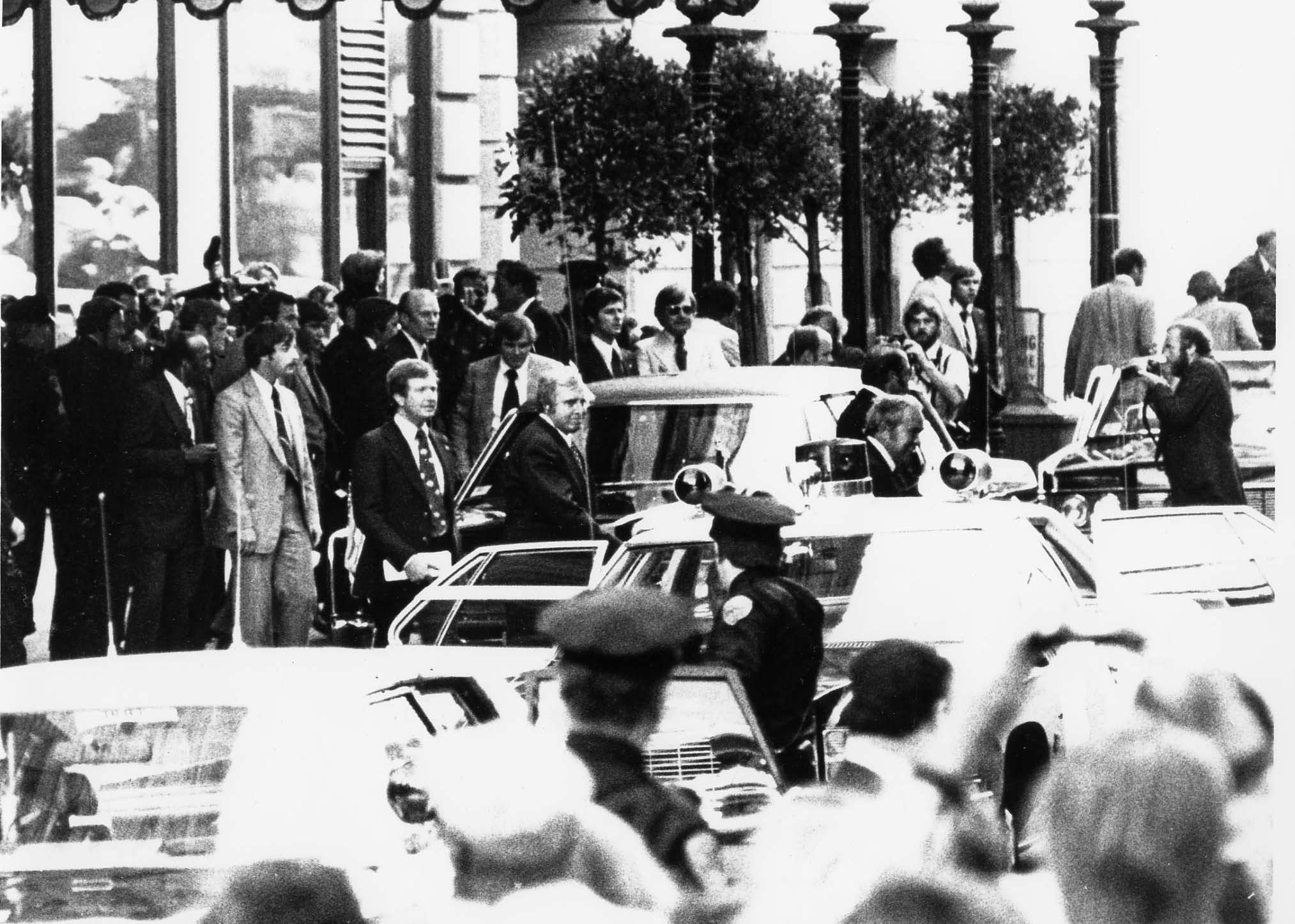
The shot cracked through the midday air at 3:30 p.m. on September 22, 1975, and for one lurching second the crowd outside San Francisco's St. Francis Hotel simply froze. President Gerald Ford, who had just walked through the hotel's front entrance after delivering a speech to the World Affairs Council, was forty feet away. The bullet passed through the wall above the doorway and missed his head by five inches. A fragment ricocheted and tore into the groin of a forty-two-year-old taxi driver named John Ludwig, who crumpled to the pavement. Secret Service agents threw themselves at the president. And in the crowd, a retired Marine named Oliver Sipple heard the shot, turned, and grabbed the arm of a middle-aged woman in a blue dress as she raised her weapon for a second shot. He twisted her wrist. The second round went wide.
The woman was Sara Jane Moore. She was forty-five years old. She had bought the gun that morning.
To understand how Sara Jane Moore arrived at that moment on a San Francisco sidewalk, you have to go back to Charleston, West Virginia, where she was born Sara Jane Kahn on February 15, 1930. Her father, Olaf Kahn, was a control engineer for DuPont, the grandson of German Jewish immigrants; her mother, Ruth Moore Kahn, played violin with the Charleston Symphony. It was a stable, cultivated, middle-class household. Sara attended Lincoln Junior High and graduated from Stonewall Jackson High School in 1947, where she played flute in the school band and performed in theatrical productions. There was nothing in her early biography to suggest what was coming.
She studied nursing at St. Francis Hospital and in 1949 enlisted in the Women's Army Corps. She trained as an accountant and bookkeeper. She liked to be called Sally. Over the following decades she married five times: a physician named Dr. Willard J. Carmel Jr., then Sydney L. Manning, then John Aalberg, then Wallace Anderson. She had four children. The marriages dissolved, one after another, but Moore kept moving, kept reinventing. By the early 1970s she had landed in the San Francisco Bay Area, and the Bay Area of the early 1970s was a different world entirely.
The city was still reverberating from the convulsions of the previous decade. The antiwar movement had curdled into something harder and more desperate in some corners. Radical groups proliferated. The Symbionese Liberation Army kidnapped nineteen-year-old Patricia Hearst in February 1974 and demanded, among other things, that her father's company distribute food to the poor. Randolph Hearst complied partially, funding a program called People In Need, a massive food distribution effort organized to meet the SLA's ransom conditions. Moore volunteered as a bookkeeper. She was good at the work. She was also, by this point, entirely transfixed by the story of Patricia Hearst, fascinated in a way that crossed ordinary curiosity into something closer to obsession.
What Moore's colleagues at People In Need did not know, and what the radical groups she had begun frequenting did not know either, was that she was simultaneously feeding information to the FBI. She had become an informant, embedded in the left-wing organizations that Bureau agents were monitoring across the Bay Area. But the arrangement was more complicated than that. Moore was also passing information about FBI agents back to the radical groups themselves. She was, in the plainest terms, a double agent: working both sides, trusted by neither, and seemingly thriving in the chaos of the position. Whether this reflected ideological conviction, a personality drawn to subterfuge, or simply a woman who had lost her moorings entirely is a question her biography never quite resolves.
By the summer of 1975 she had fallen in with a group called Tribal Thumb, a twenty-five-member organization led by an ex-convict named Earl Satcher. The group's members reportedly worked to persuade Moore that assassinating President Ford would serve as a catalyst, a spark that would ignite the revolutionary uprising the American left had been promising for years. Moore absorbed this logic. She accepted it. She began to plan.
Ford had already survived one assassination attempt that September. On September 5, 1975, in Sacramento, Lynette "Squeaky" Fromme, a devoted follower of Charles Manson, had pointed a .45-caliber pistol at the president in Capitol Park. The weapon had no round in the chamber; it did not fire. Fromme was arrested immediately. The two attempts shared only the target and the month; Moore and Fromme had no connection to each other, no coordination, no awareness of each other's plans. They are, nevertheless, linked forever in the historical record as the only two women who have attempted to assassinate an American president.
The day before Moore's attempt, on September 21, 1975, San Francisco police arrested her on an illegal handgun charge. They confiscated her .44-caliber Charter Arms Bulldog revolver and 113 rounds of ammunition. She was processed, charged, and released. The following morning she walked into a gun shop and purchased a .38-caliber revolver. Then she went to the St. Francis Hotel and waited for the president.
Ford emerged at 3:30 p.m. Moore raised the weapon. She fired once. Oliver Sipple, standing near her in the crowd, reacted faster than anyone else. He grabbed her arm as she aimed for a second shot and pushed it aside. The second bullet struck the pavement. U.S. District Judge Samuel Conti would later observe, at Moore's sentencing, that the only reason Ford survived the first shot was the faulty sight on her newly purchased gun.
Moore was taken into custody immediately. She offered no resistance. She was calm in a way that unnerved the agents around her, not the calm of shock but the calm of someone who had known how this would end and had made peace with it.
She pleaded guilty to charges of attempted assassination on December 12, 1975. At her sentencing hearing on January 15, 1976, before Judge Conti, she was asked if she had anything to say. She did. "I am not sorry I tried," she told the court, "because at the time it seemed a correct expression of my anger." Judge Conti sentenced her to life in prison. She was forty-five years old.
Moore was sent first to the Federal Prison Camp at Alderson, West Virginia, the same facility where Fromme was serving her sentence, though the two women's paths apparently did not intersect in any meaningful way. Prison suited Moore less well than she had expected. In February 1979, she scaled a twelve-foot fence with another inmate, a woman named Marlene Martino, and escaped. They were captured several hours later near White Sulphur Springs. Following the escape, authorities transferred Moore to the Federal Correctional Institution in Dublin, California, where she eventually became the lead inmate operating accountant in the UNICOR prison industries program, earning $1.25 an hour doing the work she had always done best.
She settled into the rhythms of institutional life. Years passed. Gerald Ford left the White House in January 1977, defeated by Jimmy Carter. The 1970s ended. The Bay Area radicalism that had drawn Moore in faded and dispersed. Tribal Thumb dissolved. Earl Satcher receded from history. Moore remained, working her ledgers in Dublin, California, growing older.
On December 26, 2006, Gerald Ford died at his home in Rancho Mirage, California. He was ninety-three. He had outlived his presidency by nearly thirty years and his would-be assassin's relevance by almost as long. A little over a year later, on December 31, 2007, Sara Jane Moore was released on parole. She was seventy-seven years old and had served thirty-two years of her life sentence. She changed her name and moved to North Carolina.
She did not disappear quietly. On May 28, 2009, she appeared on NBC's Today show, her first television interview since her release, attempting to explain the woman she had been. In September 2015, she sat down with CNN on the fortieth anniversary of the attempt, and briefly, startlingly, defended it before walking the statement back into something more like remorse. She told interviewers that she had been "blinded by her radical political views." She said she was sorry. The apologies had a rehearsed quality that journalists noted without quite knowing what to make of.
Meanwhile, in the years after her release, Moore had married again, for a fifth time, to a clinical psychologist named Philip Chase. When Chase died in 2018, the terms of his will created a controversy: the document had been modified, and Moore had reportedly urged Chase to disinherit his children. The matter was reported but never fully resolved in public.
In February 2019, at age eighty-nine, Moore was arrested at JFK International Airport. She had traveled to Israel without permission, a violation of the terms of her lifetime parole. She was re-imprisoned and held until August 2019, when she was released again. She was, by then, one of the oldest federal parolees in the country.
She spent her final years in a nursing facility in Franklin, Tennessee. In 2024, from her bed, she gave an interview about the assassination attempt against Donald Trump in Butler, Pennsylvania, offering the peculiar perspective of someone who had once stood in a crowd with a gun. She was ninety-four years old.
Sara Jane Moore died on September 24, 2025, at age ninety-five, of natural causes. She had been bedridden for fifteen months following a fall. She died two days after the fiftieth anniversary of the moment she fired at Gerald Ford. She was survived by estranged family members.
Her story has been told in Geri Spieler's 2009 biography, "Taking Aim at the President," drawn from twenty-eight years of correspondence between Spieler and Moore. She is a character in Stephen Sondheim and John Weidman's musical "Assassins." She is preserved in the historical record as one half of an almost incomprehensible footnote: two unconnected women, three weeks apart, both aiming at the same president in the same state, both failing.
What remains most striking about Moore is not the politics or the paranoia or the prison escape, but the sheer mundane improbability of her. She was a bookkeeper from West Virginia. She played flute in high school. She raised four children. She filed tax returns and balanced ledgers and navigated five marriages and somehow, in the crucible of 1970s San Francisco, became the kind of person who bought a gun on a Monday morning and fired it at the President of the United States before lunch. The radicalism that consumed her is long gone. The men who cultivated it, who reportedly guided her toward that sidewalk outside the St. Francis Hotel, scattered into history without consequence. Oliver Sipple, who saved Ford's life, died in 1989, largely forgotten. John Ludwig, the taxi driver wounded by the ricochet, recovered and returned to his cab.
Five inches. That is the margin by which American history did not change on September 22, 1975. Five inches, and a faulty gun sight, and a former Marine who happened to be standing in the right place. Sara Jane Moore spent fifty years living with that distance, explaining it, apologizing for it, occasionally defending it. In the end, she outlived nearly everyone connected to that afternoon, and died, bedridden and ninety-five, two days after the anniversary she could never escape.
Timeline
Birth and Early Life
Sara Jane Kahn was born in Charleston, West Virginia, to Olaf Kahn, a DuPont control engineer, and Ruth Moore Kahn, a violinist with the Charleston Symphony. Her paternal grandparents were German Jewish immigrants, and she grew up in a middle-class household, later graduating from Stonewall Jackson High School in 1947 where she played flute and participated in theatrical productions.
Her privileged but unstable upbringing — marked by five eventual marriages and a restless identity — laid the psychological groundwork for the extreme ideological transformation she would undergo decades later.
FBI Double Agent Activity
Moore became a volunteer bookkeeper for People In Need (PIN), a food distribution organization created by Randolph Hearst following the 1974 SLA kidnapping of Patricia Hearst, developing an obsessive fascination with the heiress. Simultaneously, she served as an FBI informant embedded in radical left-wing Bay Area groups while also feeding information about FBI agents back to those same radical organizations, effectively operating as a dangerous double agent.
Her dual role as FBI informant and radical sympathizer placed her at the volatile intersection of law enforcement and revolutionary politics, ultimately radicalizing her to the point of planning a presidential assassination.
Gun Confiscated Day Before Attack
San Francisco police arrested Moore on an illegal handgun charge and confiscated her .44-caliber Charter Arms Bulldog revolver along with 113 rounds of ammunition — just one day before President Ford's scheduled appearance at the St. Francis Hotel. Moore was released without being held, and the following morning she purchased a new .38-caliber revolver to replace the confiscated weapon.
This catastrophic law enforcement failure — releasing a known radical who had already been flagged as a threat — directly enabled the assassination attempt that occurred less than 24 hours later.
Assassination Attempt on President Ford
Moore fired one shot at President Gerald Ford as he exited the St. Francis Hotel in San Francisco, from approximately 40 feet away; the bullet missed Ford's head by five inches, passing through the wall above the doorway and wounding taxi driver John Ludwig, 42, in the groin. Former Marine Oliver Sipple heard the shot and grabbed Moore's arm as she raised her weapon for a second shot, deflecting the round and preventing another attempt.
The attempt made Moore and Lynette 'Squeaky' Fromme — who had targeted Ford just 17 days earlier — the only two women in American history to attempt the assassination of a U.S. president.
Arrest Following Assassination Attempt
Moore was immediately apprehended at the scene outside the St. Francis Hotel in San Francisco moments after firing at President Ford. She was taken into federal custody and charged with attempted assassination of the President of the United States.
Her immediate capture at the scene, with witnesses present and the weapon in hand, ensured an airtight evidentiary case that left little room for a contested defense.
Guilty Plea Entered
Moore pleaded guilty to charges of attempted assassination of the President of the United States before U.S. District Judge Samuel Conti in federal court. Rather than mounting a defense, she accepted full responsibility for the shooting outside the St. Francis Hotel.
Her guilty plea bypassed a potentially lengthy and highly publicized trial, accelerating the path to sentencing and foreclosing any possibility of arguing diminished capacity or political justification.
Life Sentence Imposed
U.S. District Judge Samuel Conti sentenced Moore to life in prison, noting that the only reason President Ford survived was the faulty sight on Moore's revolver. At sentencing, Moore defiantly stated she was not sorry she tried because 'at the time it seemed a correct expression of my anger.'
Judge Conti's observation about the faulty gun sight underscored how close Ford came to death, and Moore's unrepentant statement at sentencing cemented her public image as an unrehabilitated radical.
Prison Escape and Recapture
Moore escaped from the Federal Prison Camp in Alderson, West Virginia — the same facility housing Lynette Fromme — by scaling a 12-foot fence alongside fellow inmate Marlene Martino. The two escapees were captured several hours later near White Sulphur Springs, West Virginia, and Moore was subsequently transferred to the Federal Correctional Institution in Dublin, California.
The brazen escape attempt demonstrated Moore's continued defiance of authority and resulted in her transfer to a higher-security facility, where she would eventually work as the Lead Inmate Operating Accountant in the UNICOR program.
Parole and Re-Imprisonment for Parole Violation
Moore was released on parole on December 31, 2007, at age 77, after serving 32 years of her life sentence — just over a year after President Gerald Ford's death on December 26, 2006. In February 2019, at age 89, she was arrested at JFK International Airport after returning from Israel, having violated the terms of her lifetime parole by leaving the country without permission; she was re-imprisoned and subsequently released in August 2019.
Her parole violation at age 89 — traveling internationally without authorization — demonstrated a persistent disregard for legal boundaries that had defined her entire adult life.
Death at Age 95
Sara Jane Moore died of natural causes in a nursing facility in Franklin, Tennessee, at age 95, two days after the 50th anniversary of her assassination attempt on President Ford. She had been bedridden for 15 months following a fall, and was survived by estranged family members.
Her death closed the final chapter on one of the most bizarre and ideologically fractured assassination attempts in American history, occurring with grim symmetry just 48 hours after the half-century mark of the crime that defined her life.
Crime Location
Photos
AV89-26-14 600d

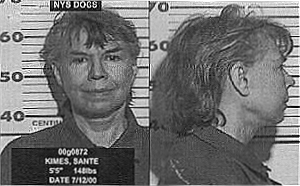
Mugshot of Sara Jane Moore

Sara Jane Moore's High School Yearbook Photo (1947)
Sources
- Taking Aim at the President: The Remarkable Story of the Woman Who Shot at Gerald Ford
- Sara Jane Moore Wikipedia Entry
- Woman Who Shot at Ford Is Paroled After 32 Years
- Sara Jane Moore Interview on CNN
- Gerald R. Ford Presidential Library and Museum — Ford Assassination Attempt Records
- Sara Jane Moore Today Show Interview
- Woman Who Tried to Kill Ford Arrested at JFK Airport
- Assassins (Original Broadway Cast Recording)
Frequently Asked Questions
Table of Contents
Case Summary
On September 22, 1975, a 45-year-old woman with a new .38-caliber revolver stood in the crowd outside San Francisco's St. Francis Hotel and fired one shot at the President of the United States. The bullet missed Gerald Ford's head by five inches. The day before, police had already arrested Sara Jane Moore on an illegal weapons charge and confiscated her gun; she walked free, bought a replacement the next morning, and tried anyway. She was not a trained operative, not a seasoned radical, not a career criminal. She was a five-times-married West Virginia bookkeeper who had somehow become simultaneously an FBI informant and a spy against the FBI, a woman so consumed by the revolutionary fervor of 1970s San Francisco that she convinced herself murdering a president would ignite a leftist uprising. She was wrong about nearly everything. But she came terrifyingly close to being right about one thing: five more inches, and American history changes. Sara Jane Moore died on September 24, 2025, in a nursing home in Franklin, Tennessee, at age 95, two days after the 50th anniversary of her attempt. This is the story of how an ordinary woman walked to the edge of history and pulled the trigger.
February 15, 1930, Charleston, West Virginia, USA(Age: 95)
September 24, 2025, Franklin, Tennessee, USA (Natural causes (bedridden for 15 months following a fall; died in nursing facility))
Case Details
The shot cracked through the midday air at 3:30 p.m. on September 22, 1975, and for one lurching second the crowd outside San Francisco's St. Francis Hotel simply froze. President Gerald Ford, who had just walked through the hotel's front entrance after delivering a speech to the World Affairs Council, was forty feet away. The bullet passed through the wall above the doorway and missed his head by five inches. A fragment ricocheted and tore into the groin of a forty-two-year-old taxi driver named John Ludwig, who crumpled to the pavement. Secret Service agents threw themselves at the president. And in the crowd, a retired Marine named Oliver Sipple heard the shot, turned, and grabbed the arm of a middle-aged woman in a blue dress as she raised her weapon for a second shot. He twisted her wrist. The second round went wide.
The woman was Sara Jane Moore. She was forty-five years old. She had bought the gun that morning.
To understand how Sara Jane Moore arrived at that moment on a San Francisco sidewalk, you have to go back to Charleston, West Virginia, where she was born Sara Jane Kahn on February 15, 1930. Her father, Olaf Kahn, was a control engineer for DuPont, the grandson of German Jewish immigrants; her mother, Ruth Moore Kahn, played violin with the Charleston Symphony. It was a stable, cultivated, middle-class household. Sara attended Lincoln Junior High and graduated from Stonewall Jackson High School in 1947, where she played flute in the school band and performed in theatrical productions. There was nothing in her early biography to suggest what was coming.
She studied nursing at St. Francis Hospital and in 1949 enlisted in the Women's Army Corps. She trained as an accountant and bookkeeper. She liked to be called Sally. Over the following decades she married five times: a physician named Dr. Willard J. Carmel Jr., then Sydney L. Manning, then John Aalberg, then Wallace Anderson. She had four children. The marriages dissolved, one after another, but Moore kept moving, kept reinventing. By the early 1970s she had landed in the San Francisco Bay Area, and the Bay Area of the early 1970s was a different world entirely.
The city was still reverberating from the convulsions of the previous decade. The antiwar movement had curdled into something harder and more desperate in some corners. Radical groups proliferated. The Symbionese Liberation Army kidnapped nineteen-year-old Patricia Hearst in February 1974 and demanded, among other things, that her father's company distribute food to the poor. Randolph Hearst complied partially, funding a program called People In Need, a massive food distribution effort organized to meet the SLA's ransom conditions. Moore volunteered as a bookkeeper. She was good at the work. She was also, by this point, entirely transfixed by the story of Patricia Hearst, fascinated in a way that crossed ordinary curiosity into something closer to obsession.
What Moore's colleagues at People In Need did not know, and what the radical groups she had begun frequenting did not know either, was that she was simultaneously feeding information to the FBI. She had become an informant, embedded in the left-wing organizations that Bureau agents were monitoring across the Bay Area. But the arrangement was more complicated than that. Moore was also passing information about FBI agents back to the radical groups themselves. She was, in the plainest terms, a double agent: working both sides, trusted by neither, and seemingly thriving in the chaos of the position. Whether this reflected ideological conviction, a personality drawn to subterfuge, or simply a woman who had lost her moorings entirely is a question her biography never quite resolves.
By the summer of 1975 she had fallen in with a group called Tribal Thumb, a twenty-five-member organization led by an ex-convict named Earl Satcher. The group's members reportedly worked to persuade Moore that assassinating President Ford would serve as a catalyst, a spark that would ignite the revolutionary uprising the American left had been promising for years. Moore absorbed this logic. She accepted it. She began to plan.
Ford had already survived one assassination attempt that September. On September 5, 1975, in Sacramento, Lynette "Squeaky" Fromme, a devoted follower of Charles Manson, had pointed a .45-caliber pistol at the president in Capitol Park. The weapon had no round in the chamber; it did not fire. Fromme was arrested immediately. The two attempts shared only the target and the month; Moore and Fromme had no connection to each other, no coordination, no awareness of each other's plans. They are, nevertheless, linked forever in the historical record as the only two women who have attempted to assassinate an American president.
The day before Moore's attempt, on September 21, 1975, San Francisco police arrested her on an illegal handgun charge. They confiscated her .44-caliber Charter Arms Bulldog revolver and 113 rounds of ammunition. She was processed, charged, and released. The following morning she walked into a gun shop and purchased a .38-caliber revolver. Then she went to the St. Francis Hotel and waited for the president.
Ford emerged at 3:30 p.m. Moore raised the weapon. She fired once. Oliver Sipple, standing near her in the crowd, reacted faster than anyone else. He grabbed her arm as she aimed for a second shot and pushed it aside. The second bullet struck the pavement. U.S. District Judge Samuel Conti would later observe, at Moore's sentencing, that the only reason Ford survived the first shot was the faulty sight on her newly purchased gun.
Moore was taken into custody immediately. She offered no resistance. She was calm in a way that unnerved the agents around her, not the calm of shock but the calm of someone who had known how this would end and had made peace with it.
She pleaded guilty to charges of attempted assassination on December 12, 1975. At her sentencing hearing on January 15, 1976, before Judge Conti, she was asked if she had anything to say. She did. "I am not sorry I tried," she told the court, "because at the time it seemed a correct expression of my anger." Judge Conti sentenced her to life in prison. She was forty-five years old.
Moore was sent first to the Federal Prison Camp at Alderson, West Virginia, the same facility where Fromme was serving her sentence, though the two women's paths apparently did not intersect in any meaningful way. Prison suited Moore less well than she had expected. In February 1979, she scaled a twelve-foot fence with another inmate, a woman named Marlene Martino, and escaped. They were captured several hours later near White Sulphur Springs. Following the escape, authorities transferred Moore to the Federal Correctional Institution in Dublin, California, where she eventually became the lead inmate operating accountant in the UNICOR prison industries program, earning $1.25 an hour doing the work she had always done best.
She settled into the rhythms of institutional life. Years passed. Gerald Ford left the White House in January 1977, defeated by Jimmy Carter. The 1970s ended. The Bay Area radicalism that had drawn Moore in faded and dispersed. Tribal Thumb dissolved. Earl Satcher receded from history. Moore remained, working her ledgers in Dublin, California, growing older.
On December 26, 2006, Gerald Ford died at his home in Rancho Mirage, California. He was ninety-three. He had outlived his presidency by nearly thirty years and his would-be assassin's relevance by almost as long. A little over a year later, on December 31, 2007, Sara Jane Moore was released on parole. She was seventy-seven years old and had served thirty-two years of her life sentence. She changed her name and moved to North Carolina.
She did not disappear quietly. On May 28, 2009, she appeared on NBC's Today show, her first television interview since her release, attempting to explain the woman she had been. In September 2015, she sat down with CNN on the fortieth anniversary of the attempt, and briefly, startlingly, defended it before walking the statement back into something more like remorse. She told interviewers that she had been "blinded by her radical political views." She said she was sorry. The apologies had a rehearsed quality that journalists noted without quite knowing what to make of.
Meanwhile, in the years after her release, Moore had married again, for a fifth time, to a clinical psychologist named Philip Chase. When Chase died in 2018, the terms of his will created a controversy: the document had been modified, and Moore had reportedly urged Chase to disinherit his children. The matter was reported but never fully resolved in public.
In February 2019, at age eighty-nine, Moore was arrested at JFK International Airport. She had traveled to Israel without permission, a violation of the terms of her lifetime parole. She was re-imprisoned and held until August 2019, when she was released again. She was, by then, one of the oldest federal parolees in the country.
She spent her final years in a nursing facility in Franklin, Tennessee. In 2024, from her bed, she gave an interview about the assassination attempt against Donald Trump in Butler, Pennsylvania, offering the peculiar perspective of someone who had once stood in a crowd with a gun. She was ninety-four years old.
Sara Jane Moore died on September 24, 2025, at age ninety-five, of natural causes. She had been bedridden for fifteen months following a fall. She died two days after the fiftieth anniversary of the moment she fired at Gerald Ford. She was survived by estranged family members.
Her story has been told in Geri Spieler's 2009 biography, "Taking Aim at the President," drawn from twenty-eight years of correspondence between Spieler and Moore. She is a character in Stephen Sondheim and John Weidman's musical "Assassins." She is preserved in the historical record as one half of an almost incomprehensible footnote: two unconnected women, three weeks apart, both aiming at the same president in the same state, both failing.
What remains most striking about Moore is not the politics or the paranoia or the prison escape, but the sheer mundane improbability of her. She was a bookkeeper from West Virginia. She played flute in high school. She raised four children. She filed tax returns and balanced ledgers and navigated five marriages and somehow, in the crucible of 1970s San Francisco, became the kind of person who bought a gun on a Monday morning and fired it at the President of the United States before lunch. The radicalism that consumed her is long gone. The men who cultivated it, who reportedly guided her toward that sidewalk outside the St. Francis Hotel, scattered into history without consequence. Oliver Sipple, who saved Ford's life, died in 1989, largely forgotten. John Ludwig, the taxi driver wounded by the ricochet, recovered and returned to his cab.
Five inches. That is the margin by which American history did not change on September 22, 1975. Five inches, and a faulty gun sight, and a former Marine who happened to be standing in the right place. Sara Jane Moore spent fifty years living with that distance, explaining it, apologizing for it, occasionally defending it. In the end, she outlived nearly everyone connected to that afternoon, and died, bedridden and ninety-five, two days after the anniversary she could never escape.
Timeline
Birth and Early Life
Sara Jane Kahn was born in Charleston, West Virginia, to Olaf Kahn, a DuPont control engineer, and Ruth Moore Kahn, a violinist with the Charleston Symphony. Her paternal grandparents were German Jewish immigrants, and she grew up in a middle-class household, later graduating from Stonewall Jackson High School in 1947 where she played flute and participated in theatrical productions.
Her privileged but unstable upbringing — marked by five eventual marriages and a restless identity — laid the psychological groundwork for the extreme ideological transformation she would undergo decades later.
FBI Double Agent Activity
Moore became a volunteer bookkeeper for People In Need (PIN), a food distribution organization created by Randolph Hearst following the 1974 SLA kidnapping of Patricia Hearst, developing an obsessive fascination with the heiress. Simultaneously, she served as an FBI informant embedded in radical left-wing Bay Area groups while also feeding information about FBI agents back to those same radical organizations, effectively operating as a dangerous double agent.
Her dual role as FBI informant and radical sympathizer placed her at the volatile intersection of law enforcement and revolutionary politics, ultimately radicalizing her to the point of planning a presidential assassination.
Gun Confiscated Day Before Attack
San Francisco police arrested Moore on an illegal handgun charge and confiscated her .44-caliber Charter Arms Bulldog revolver along with 113 rounds of ammunition — just one day before President Ford's scheduled appearance at the St. Francis Hotel. Moore was released without being held, and the following morning she purchased a new .38-caliber revolver to replace the confiscated weapon.
This catastrophic law enforcement failure — releasing a known radical who had already been flagged as a threat — directly enabled the assassination attempt that occurred less than 24 hours later.
Assassination Attempt on President Ford
Moore fired one shot at President Gerald Ford as he exited the St. Francis Hotel in San Francisco, from approximately 40 feet away; the bullet missed Ford's head by five inches, passing through the wall above the doorway and wounding taxi driver John Ludwig, 42, in the groin. Former Marine Oliver Sipple heard the shot and grabbed Moore's arm as she raised her weapon for a second shot, deflecting the round and preventing another attempt.
The attempt made Moore and Lynette 'Squeaky' Fromme — who had targeted Ford just 17 days earlier — the only two women in American history to attempt the assassination of a U.S. president.
Arrest Following Assassination Attempt
Moore was immediately apprehended at the scene outside the St. Francis Hotel in San Francisco moments after firing at President Ford. She was taken into federal custody and charged with attempted assassination of the President of the United States.
Her immediate capture at the scene, with witnesses present and the weapon in hand, ensured an airtight evidentiary case that left little room for a contested defense.
Guilty Plea Entered
Moore pleaded guilty to charges of attempted assassination of the President of the United States before U.S. District Judge Samuel Conti in federal court. Rather than mounting a defense, she accepted full responsibility for the shooting outside the St. Francis Hotel.
Her guilty plea bypassed a potentially lengthy and highly publicized trial, accelerating the path to sentencing and foreclosing any possibility of arguing diminished capacity or political justification.
Life Sentence Imposed
U.S. District Judge Samuel Conti sentenced Moore to life in prison, noting that the only reason President Ford survived was the faulty sight on Moore's revolver. At sentencing, Moore defiantly stated she was not sorry she tried because 'at the time it seemed a correct expression of my anger.'
Judge Conti's observation about the faulty gun sight underscored how close Ford came to death, and Moore's unrepentant statement at sentencing cemented her public image as an unrehabilitated radical.
Prison Escape and Recapture
Moore escaped from the Federal Prison Camp in Alderson, West Virginia — the same facility housing Lynette Fromme — by scaling a 12-foot fence alongside fellow inmate Marlene Martino. The two escapees were captured several hours later near White Sulphur Springs, West Virginia, and Moore was subsequently transferred to the Federal Correctional Institution in Dublin, California.
The brazen escape attempt demonstrated Moore's continued defiance of authority and resulted in her transfer to a higher-security facility, where she would eventually work as the Lead Inmate Operating Accountant in the UNICOR program.
Parole and Re-Imprisonment for Parole Violation
Moore was released on parole on December 31, 2007, at age 77, after serving 32 years of her life sentence — just over a year after President Gerald Ford's death on December 26, 2006. In February 2019, at age 89, she was arrested at JFK International Airport after returning from Israel, having violated the terms of her lifetime parole by leaving the country without permission; she was re-imprisoned and subsequently released in August 2019.
Her parole violation at age 89 — traveling internationally without authorization — demonstrated a persistent disregard for legal boundaries that had defined her entire adult life.
Death at Age 95
Sara Jane Moore died of natural causes in a nursing facility in Franklin, Tennessee, at age 95, two days after the 50th anniversary of her assassination attempt on President Ford. She had been bedridden for 15 months following a fall, and was survived by estranged family members.
Her death closed the final chapter on one of the most bizarre and ideologically fractured assassination attempts in American history, occurring with grim symmetry just 48 hours after the half-century mark of the crime that defined her life.
Crime Location
Photos
AV89-26-14 600d
Mugshot of Sara Jane Moore
Sara Jane Moore's High School Yearbook Photo (1947)
Sources
- Taking Aim at the President: The Remarkable Story of the Woman Who Shot at Gerald Ford
- Sara Jane Moore Wikipedia Entry
- Woman Who Shot at Ford Is Paroled After 32 Years
- Sara Jane Moore Interview on CNN
- Gerald R. Ford Presidential Library and Museum — Ford Assassination Attempt Records
- Sara Jane Moore Today Show Interview
- Woman Who Tried to Kill Ford Arrested at JFK Airport
- Assassins (Original Broadway Cast Recording)
Frequently Asked Questions
Related Cases
Convicted
Connection tags:
Accused
Connection tags:
Convicted
Connection tags:
Convicted
Connection tags:
Convicted
Connection tags:
Convicted
Connection tags:
Tags
Popular Culture
TV (1991)
Sara Jane Moore is a featured character in Stephen Sondheim and John Weidman's acclaimed musical 'Assassins,' which dramatizes the lives and motivations of those who attempted or succeeded in assassinating U.S. presidents. The show debuted Off-Broadway in 1990 and on Broadway in 2004.
book (2009)
A biography of Sara Jane Moore written by journalist Geri Spieler, based on 28 years of correspondence with Moore. The book details her radicalization, double-agent activities, and the 1975 assassination attempt on Gerald Ford.
TV (2015)
Sara Jane Moore appeared live on CNN on September 22, 2015 — the 40th anniversary of her assassination attempt — briefly defending her actions and discussing her life after prison.
TV (2009)
Moore's first television interview since her 2007 parole, appearing on NBC's Today show on May 28, 2009, to discuss the Ford assassination attempt and her post-prison life.
documentary (2020)
Various documentary productions covering the dual 1975 assassination attempts on President Gerald Ford — by Lynette 'Squeaky' Fromme and Sara Jane Moore — have featured Moore's story as part of broader examinations of presidential security and political violence.