Ruth Ellis (née Neilson)
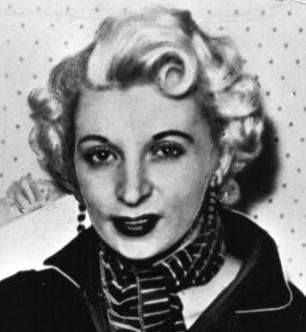
Case Summary
"It is obvious when I shot him I intended to kill him." With those eleven words, spoken calmly before a packed courtroom at the Old Bailey, Ruth Ellis handed the jury everything they needed. They deliberated for less than twenty-five minutes. Six weeks later, at nine o'clock on the morning of 13 July 1955, she walked to the gallows at Holloway Prison and became the last woman ever executed in the United Kingdom. She was twenty-eight years old.
But the story of how a Welsh-born nightclub manageress came to fire four bullets into her racing-driver lover outside a Hampstead pub on Easter Sunday is not a simple story of jealousy and rage. It is a story of sustained beatings, a miscarriage caused by a punch to the stomach, a secret weapon supplier who was never charged with a crime, and a justice system that hanged a deeply traumatized woman without once telling the jury what she had endured. Seven decades later, her grandchildren are still fighting to clear her name. The question hanging over the case has never been whether Ruth Ellis pulled the trigger. It has always been whether Britain should have pulled the lever.
October 9, 1926, Rhyl, Denbighshire, Wales, United Kingdom(Age: 28)
July 13, 1955, HM Prison Holloway, Islington, London, England, United Kingdom (Judicial hanging — official cause recorded as 'Injuries to the central nervous system consequent upon judicial hanging')
Related Cases

Convicted
Connection tags:
Convicted
Connection tags:

Convicted
Connection tags:

Convicted
Connection tags:

Convicted
Connection tags:
Convicted
Connection tags:
Case Details
The evening was cold and clear over Hampstead when David Blakely pushed open the door of the Magdala public house on South Hill Park and stepped out into the night. It was Easter Sunday, 10 April 1955, and Blakely had been drinking inside with his friend Clive Gunnell. He was walking toward his van when he saw her.
Ruth Ellis was standing on the pavement, still and pale as chalk in her dark coat, a Smith and Wesson revolver in her hand. She had been waiting.
What followed lasted only seconds. She fired. She fired again. Blakely tried to run; she pursued him around the vehicle, firing again and again. Four bullets struck him. A fifth missed. A sixth ricocheted off the pavement and tore through the hand of a passing bystander named Gladys Yule. Blakely collapsed and died on the street. An off-duty policeman named Alan Thompson arrived within moments and took the gun from Ellis's outstretched hand. She offered no resistance. She said almost nothing.
It was, by any legal measure, an open-and-shut case. Ruth Ellis was charged with murder and, seventy-four days later, she was dead. What the law never adequately examined was the life that had brought her to that pavement.
She was born Ruth Hornby on 9 October 1926 in Rhyl, Denbighshire, the fifth of six children. Her father later changed the family surname to Neilson. The household she grew up in was defined by poverty and, according to later accounts, by abuse: Ruth herself described suffering sexual and physical harm in childhood. School ended at fourteen. By seventeen, she had gravitated to London, drawn by the same promise of reinvention that the city has always offered to those escaping something.
She found work in the nightclub world of wartime and postwar Soho, first as a hostess, then as a nude model. It was skilled labor of a particular kind: she learned how to be whatever a room needed, how to hold attention, how to keep men comfortable. She was blonde, vivid, and possessed of a composure that read as confidence to those who did not look closely enough.
In 1950, she married George Johnston Ellis, a forty-one-year-old dentist she met through the club circuit. The marriage was a disaster almost immediately. George Ellis was a violent, possessive alcoholic. Their daughter Georgina was born in 1951; George refused to acknowledge the child as his. Ruth eventually separated from him and they later divorced. The marriage left her with two children: Andy, born before the wedding from an earlier relationship, and Georgina. She raised them largely alone.
By 1953, Ruth had become the manager of the Little Club, a fashionable members' bar on Brompton Road in Knightsbridge that attracted the motor racing crowd. She was good at the job. She was also, at twenty-six, a woman who had learned to survive by reading men correctly and positioning herself accordingly. The Little Club was where she met David Drummond Moffat Blakely.
Blakely was twenty-five, from a comfortable upper-middle-class background, handsome in the careless way of men who have never had to work particularly hard to be liked. He was passionate about motor racing and was attempting to build a career as a driver. He moved into the flat above the club and into Ruth's life simultaneously. What followed was two years of the kind of relationship that corrodes a person from the inside.
The violence was not incidental to their time together. It was structural. Blakely beat Ellis repeatedly. He was also capable of extraordinary charm, and the cycle of cruelty and tenderness kept her bound to him in a way that anyone who has studied coercive relationships will recognize. She was also, during this period, maintaining a parallel relationship with Desmond Cussen, a former RAF Lancaster bomber pilot who had become an accountant and who adored her with a devotion Blakely never matched. Ellis and Cussen even lived together at one point, at his flat at 20 Goodwood Court in Devonshire Street. The three-way entanglement was chronically unstable, each party jealous of the others in different ways.
In January 1955, Blakely punched Ruth Ellis in the stomach during an argument. She was pregnant with his child. She miscarried. He was aware of the pregnancy when he struck her.
This fact was never presented to the jury at her murder trial.
Through the early weeks of 1955, Blakely began to withdraw from the relationship and spend increasing amounts of time with a couple named the Findlaters, with whom he stayed in Hampstead. Ellis's attempts to reach him were met with silence or contempt. She turned up at the Findlaters' address repeatedly; she telephoned constantly. Whatever clinical framework one might apply today, the picture is of a woman in acute psychological crisis following a traumatic pregnancy loss, pursuing a man who had caused that loss and who was now discarding her.
On the evening of 10 April 1955, she went to South Hill Park and waited outside the Magdala pub. She had a gun.
Where the gun came from became the most unsettling postscript to the entire case. The night before her execution, Ellis confided to her solicitor, Victor Mishcon, that it was Desmond Cussen who had supplied the revolver, that he had personally taught her to use it the weekend before the shooting, and that he had driven her to Hampstead that Easter Sunday. None of this information was ever presented at trial. Cussen was never charged with any offense related to the killing. He emigrated to Australia and died in 1991.
The trial itself lasted two days: 20 and 21 June 1955, at the Old Bailey's Number One Court, before Mr. Justice Havers. Christmas Humphreys prosecuted; Aubrey Melford Stevenson led the defense. The defense attempted to argue provocation, but it was a weak case by design, partly because Ruth Ellis herself refused to minimize what she had done or pretend to emotions she did not publicly claim.
The decisive moment came during cross-examination. Christmas Humphreys asked Ellis a single, precise question: what did she intend when she fired the gun at David Blakely?
"It is obvious when I shot him I intended to kill him," she replied.
The jury was out for twenty-three minutes. The verdict was murder. The sentence was death.
Fifty thousand people signed a petition requesting clemency. Home Secretary Gwilym Lloyd George rejected it. Ellis herself declined to appeal and expressed, in the peculiar register of someone who has stopped fighting, that she felt she deserved to die for what she had done. Those closest to her believed she was broken rather than resolved; that the woman who walked so calmly to her end was not at peace but simply finished.
At nine o'clock on the morning of 13 July 1955, Ruth Ellis was hanged at Holloway Prison by the Crown's chief executioner, Albert Pierrepoint. The official cause of death was recorded as "injuries to the central nervous system consequent upon judicial hanging." An inquest was held the same morning; her brother identified the body. She was twenty-eight years old. Outside the prison gates, a crowd had gathered. Some wept. Some held signs. A prison notice confirming the execution was posted at the gate, as custom required.
She was buried within the prison grounds. In the early 1970s, when Holloway was rebuilt, her remains were exhumed and reinterred at St Mary's Church in Amersham, Buckinghamshire. The headstone reads: "Ruth Hornby 1926-1955." The name is her birth name, reclaimed. She is buried approximately three miles from where David Blakely lies.
Albert Pierrepoint, who hanged her, later became a vocal opponent of capital punishment. He wrote in his memoir that he did not believe execution deterred crime by a single instance. Whether his time at the Holloway gallows contributed to that view, he did not say explicitly. But he remembered Ruth Ellis.
The legal fallout was profound and, in retrospect, swift. Capital punishment for murder was suspended in 1965 and permanently abolished in 1969. In the two years immediately following Ellis's execution, Parliament passed the Homicide Act 1957, which introduced the defenses of diminished responsibility and provocation into English law. Had either defense existed in 1955, applied to a woman who had suffered sustained domestic abuse, lost a pregnancy to her abuser's fist, and suffered a documented psychological collapse in the months before the shooting, the outcome of her trial would almost certainly have been different. Manslaughter, not murder. Prison, not the gallows.
In 2003, Ellis's sister Muriel Jakubait and her daughter Georgina brought the case to the Criminal Cases Review Commission, which referred it to the Court of Appeal. On 16 September 2003, a panel of three judges (Lord Justice Kay, Mr. Justice Silber, and Mr. Justice Leveson, who would later become the Leveson of the press inquiry) heard arguments. They rejected the appeal the following day, ruling that Ellis had been correctly convicted under the law as it existed in 1955, and declining to substitute a manslaughter verdict. The law had changed; the conviction had not.
In October 2025, four of Ruth Ellis's six grandchildren filed a formal application with Justice Secretary David Lammy for a posthumous conditional pardon, represented by the law firm Mishcon de Reya (a coincidence of names that would have startled Victor Mishcon, who had taken her final confession sixty years earlier). Barristers Alex Bailin KC and Jessica Jones of Matrix Chambers prepared the application. It argues that the failure to present evidence of sustained domestic abuse, the suppressed information about the miscarriage, and Desmond Cussen's role in arming and driving Ellis to the scene together constitute grounds for the Royal Prerogative of Mercy. A conditional pardon would not erase the conviction but would formally declare the execution unjust.
As of early 2026, the application remains pending.
Ruth Ellis appeared, uncredited, in a 1951 film comedy called "Lady Godiva Rides Again," a brief and forgotten bit of work from a life she was still assembling. Miranda Richardson played her in the 1985 film "Dance with a Stranger," a performance of controlled devastation that introduced the case to a new generation. Lucy Boynton portrayed her in ITV's four-part series "A Cruel Love: The Ruth Ellis Story," broadcast in March 2025, seventy years after Blakely's death.
Her daughter Georgina, born in 1951, never recovered from the trauma of her mother's execution and died young. Her son Andy lived longer, carrying the same history. Her grandchildren are still in court.
The question the British legal system has circled for seven decades is not whether Ruth Ellis committed the act she was hanged for. She did, and she said so herself with devastating clarity. The question is whether a state that failed to protect her from a man who beat her and killed her unborn child, that withheld that violence from the jury, that refused to hear the full story of how she came to be standing on that Hampstead pavement with a revolver in her hand, whether that state had any moral authority to put a rope around her neck at nine o'clock on a July morning and call it justice.
The headstone says Ruth Hornby. The name she was born with, before the marriages and the nightclubs and the flashbulbs and the Old Bailey and the gallows. Somebody thought that mattered. Somebody was right.
Timeline
Birth of Ruth Neilson
Ruth Neilson was born on 9 October 1926 in Rhyl, Denbighshire, Wales, the fifth of six children. Her family's original surname was Hornby before her father changed it to Neilson. She endured sexual and physical abuse from childhood, which shaped her turbulent early life.
Her difficult origins and abuse as a child established the pattern of exploitation and violence that would define her adult relationships and ultimately lead to the events of 1955.
Marriage to George Ellis
Ruth married 41-year-old dentist George Johnston Ellis at a register office in Tonbridge, Kent. George proved to be a violent, possessive alcoholic who subjected Ruth to sustained abuse. The marriage effectively collapsed after Ruth gave birth to their daughter Georgina in 1951, whom George refused to acknowledge, and the couple later divorced.
The failed marriage cemented a recurring pattern in Ruth's life of forming relationships with violent, controlling men, and left her as a single mother navigating London's nightclub scene.
Becomes Manager of The Little Club
Ruth Ellis became the manager of The Little Club on Brompton Road, Knightsbridge, a venue popular with the motor racing fraternity. It was here that she met 25-year-old racing driver David Blakely, who would become her obsessive and abusive lover. Blakely eventually moved into her flat above the club, and their volatile relationship began in earnest.
The Little Club was the crucible of the fatal relationship between Ellis and Blakely, and her managerial role gave her both social status and proximity to the man who would become her victim.
Blakely's Assault Causes Miscarriage
In January 1955, David Blakely punched Ruth Ellis in the stomach during a violent altercation, knowing she was pregnant with his child. The assault caused her to miscarry. This brutal act deepened Ellis's psychological trauma and intensified the destructive cycle of their relationship in the weeks leading up to the shooting.
The miscarriage-inducing assault was a pivotal act of violence that was never disclosed to the jury at Ellis's trial; had it been presented, it may have supported a defense of provocation or diminished responsibility.
Murder of David Blakely
On Easter Sunday, Ellis tracked Blakely to the Magdala public house on South Hill Park, Hampstead, and at approximately 9:30 p.m. shot him four times as he left with his friend Clive Gunnell. A bystander, Gladys Yule, was wounded in the hand by a ricocheting bullet. Ellis was immediately arrested by an off-duty police officer at the scene.
The public and premeditated nature of the shooting — witnessed by multiple bystanders — made acquittal virtually impossible and shocked the nation, setting the stage for a landmark legal and humanitarian controversy.
Trial at the Old Bailey
Ellis's trial opened on 20 June 1955 at the Old Bailey's Number One Court before Mr Justice Havers, with Christmas Humphreys prosecuting and Aubrey Melford Stevenson leading the defence. When asked what she intended when she fired at Blakely, Ellis replied: 'It is obvious when I shot him I intended to kill him.' The jury convicted her in under 25 minutes on 21 June 1955, and she was sentenced to death.
The trial lasted just two days, and Ellis's own damning admission effectively sealed her fate; critically, the jury was never told about Blakely's sustained domestic violence or the miscarriage he had caused.
Conviction and Death Sentence
After deliberating for less than 25 minutes, the jury returned a unanimous guilty verdict of murder against Ruth Ellis. Mr Justice Havers sentenced her to death by hanging. The speed of the verdict and the absence of any mitigating evidence regarding Blakely's violence drew immediate public concern.
The death sentence galvanised public opposition to capital punishment in Britain and prompted a petition of approximately 50,000 signatures calling for clemency, which was ultimately rejected by Home Secretary Gwilym Lloyd George.
Ellis Reveals Cussen's Role to Solicitor
The day before her execution, Ellis confided to her solicitor Victor Mishcon that Desmond Cussen — her other lover — had supplied her with the revolver, personally taught her to use it the weekend before the murder, and driven her to the Magdala public house on the night of the shooting. This crucial information had never been presented at trial and implicated Cussen as a potential accessory.
Cussen's alleged role in arming and transporting Ellis fundamentally altered the understanding of the crime's premeditation and raised serious questions about whether justice had been fully served; Cussen was never charged.
Execution at HM Prison Holloway
Ruth Ellis was hanged at HM Prison Holloway at 9:00 a.m. on 13 July 1955, by executioner Albert Pierrepoint. She was 28 years old. An inquest was held the same morning by Coroner J. Milner Helme, and her brother made formal identification of her body; the official cause of death was recorded as 'injuries to the central nervous system consequent upon judicial hanging.'
Ruth Ellis became the last woman to be executed in the United Kingdom; her death accelerated public and parliamentary pressure that led to the suspension of capital punishment for murder in 1965 and its permanent abolition in 1969.
Court of Appeal Rejects Posthumous Appeal
Following a referral by the Criminal Cases Review Commission, the Court of Appeal — comprising Lord Justice Kay, Mr Justice Silber, and Mr Justice Leveson — heard arguments on 16–17 September 2003 brought by Ellis's sister Muriel Jakubait and daughter Georgina. The court rejected the appeal, ruling that Ellis had been correctly convicted under the law as it stood in 1955 and declining to substitute a manslaughter verdict. The case was referred back to history as a lawful, if deeply unjust, execution.
The failed appeal underscored that Ellis's conviction was technically lawful under 1955 law, but also highlighted the absence of modern defences such as diminished responsibility and provocation — defences introduced by the Homicide Act 1957, just two years after her death.
Crime Location
Photos
Ruth Ellis

The Magdala, Hampstead Heath

The unmarked grave of Ruth Ellis, St Mary's Cemetery, Amersham, July 2022 01
Sources
- Ruth Ellis — Wikipedia
- Ruth Ellis Photo Archive
- Ruth Ellis Execution Day — Getty Images Editorial Gallery
- Ruth Ellis — Murderpedia Photo Gallery 1
- Ruth Ellis — Murderpedia Photo Gallery 2
- Ruth Ellis — Murderpedia Photo Gallery 3
- Ruth Ellis — Murderpedia Photo Gallery 4
- Ruth Ellis — Alamy Stock Photo
- Court of Appeal Judgment — R v Ellis (2003)
- Homicide Act 1957
- Murder (Abolition of Death Penalty) Act 1965
- Posthumous Pardon Application to Justice Secretary David Lammy (2025)
Frequently Asked Questions
Table of Contents
Case Summary
"It is obvious when I shot him I intended to kill him." With those eleven words, spoken calmly before a packed courtroom at the Old Bailey, Ruth Ellis handed the jury everything they needed. They deliberated for less than twenty-five minutes. Six weeks later, at nine o'clock on the morning of 13 July 1955, she walked to the gallows at Holloway Prison and became the last woman ever executed in the United Kingdom. She was twenty-eight years old.
But the story of how a Welsh-born nightclub manageress came to fire four bullets into her racing-driver lover outside a Hampstead pub on Easter Sunday is not a simple story of jealousy and rage. It is a story of sustained beatings, a miscarriage caused by a punch to the stomach, a secret weapon supplier who was never charged with a crime, and a justice system that hanged a deeply traumatized woman without once telling the jury what she had endured. Seven decades later, her grandchildren are still fighting to clear her name. The question hanging over the case has never been whether Ruth Ellis pulled the trigger. It has always been whether Britain should have pulled the lever.
October 9, 1926, Rhyl, Denbighshire, Wales, United Kingdom(Age: 28)
July 13, 1955, HM Prison Holloway, Islington, London, England, United Kingdom (Judicial hanging — official cause recorded as 'Injuries to the central nervous system consequent upon judicial hanging')
Case Details
The evening was cold and clear over Hampstead when David Blakely pushed open the door of the Magdala public house on South Hill Park and stepped out into the night. It was Easter Sunday, 10 April 1955, and Blakely had been drinking inside with his friend Clive Gunnell. He was walking toward his van when he saw her.
Ruth Ellis was standing on the pavement, still and pale as chalk in her dark coat, a Smith and Wesson revolver in her hand. She had been waiting.
What followed lasted only seconds. She fired. She fired again. Blakely tried to run; she pursued him around the vehicle, firing again and again. Four bullets struck him. A fifth missed. A sixth ricocheted off the pavement and tore through the hand of a passing bystander named Gladys Yule. Blakely collapsed and died on the street. An off-duty policeman named Alan Thompson arrived within moments and took the gun from Ellis's outstretched hand. She offered no resistance. She said almost nothing.
It was, by any legal measure, an open-and-shut case. Ruth Ellis was charged with murder and, seventy-four days later, she was dead. What the law never adequately examined was the life that had brought her to that pavement.
She was born Ruth Hornby on 9 October 1926 in Rhyl, Denbighshire, the fifth of six children. Her father later changed the family surname to Neilson. The household she grew up in was defined by poverty and, according to later accounts, by abuse: Ruth herself described suffering sexual and physical harm in childhood. School ended at fourteen. By seventeen, she had gravitated to London, drawn by the same promise of reinvention that the city has always offered to those escaping something.
She found work in the nightclub world of wartime and postwar Soho, first as a hostess, then as a nude model. It was skilled labor of a particular kind: she learned how to be whatever a room needed, how to hold attention, how to keep men comfortable. She was blonde, vivid, and possessed of a composure that read as confidence to those who did not look closely enough.
In 1950, she married George Johnston Ellis, a forty-one-year-old dentist she met through the club circuit. The marriage was a disaster almost immediately. George Ellis was a violent, possessive alcoholic. Their daughter Georgina was born in 1951; George refused to acknowledge the child as his. Ruth eventually separated from him and they later divorced. The marriage left her with two children: Andy, born before the wedding from an earlier relationship, and Georgina. She raised them largely alone.
By 1953, Ruth had become the manager of the Little Club, a fashionable members' bar on Brompton Road in Knightsbridge that attracted the motor racing crowd. She was good at the job. She was also, at twenty-six, a woman who had learned to survive by reading men correctly and positioning herself accordingly. The Little Club was where she met David Drummond Moffat Blakely.
Blakely was twenty-five, from a comfortable upper-middle-class background, handsome in the careless way of men who have never had to work particularly hard to be liked. He was passionate about motor racing and was attempting to build a career as a driver. He moved into the flat above the club and into Ruth's life simultaneously. What followed was two years of the kind of relationship that corrodes a person from the inside.
The violence was not incidental to their time together. It was structural. Blakely beat Ellis repeatedly. He was also capable of extraordinary charm, and the cycle of cruelty and tenderness kept her bound to him in a way that anyone who has studied coercive relationships will recognize. She was also, during this period, maintaining a parallel relationship with Desmond Cussen, a former RAF Lancaster bomber pilot who had become an accountant and who adored her with a devotion Blakely never matched. Ellis and Cussen even lived together at one point, at his flat at 20 Goodwood Court in Devonshire Street. The three-way entanglement was chronically unstable, each party jealous of the others in different ways.
In January 1955, Blakely punched Ruth Ellis in the stomach during an argument. She was pregnant with his child. She miscarried. He was aware of the pregnancy when he struck her.
This fact was never presented to the jury at her murder trial.
Through the early weeks of 1955, Blakely began to withdraw from the relationship and spend increasing amounts of time with a couple named the Findlaters, with whom he stayed in Hampstead. Ellis's attempts to reach him were met with silence or contempt. She turned up at the Findlaters' address repeatedly; she telephoned constantly. Whatever clinical framework one might apply today, the picture is of a woman in acute psychological crisis following a traumatic pregnancy loss, pursuing a man who had caused that loss and who was now discarding her.
On the evening of 10 April 1955, she went to South Hill Park and waited outside the Magdala pub. She had a gun.
Where the gun came from became the most unsettling postscript to the entire case. The night before her execution, Ellis confided to her solicitor, Victor Mishcon, that it was Desmond Cussen who had supplied the revolver, that he had personally taught her to use it the weekend before the shooting, and that he had driven her to Hampstead that Easter Sunday. None of this information was ever presented at trial. Cussen was never charged with any offense related to the killing. He emigrated to Australia and died in 1991.
The trial itself lasted two days: 20 and 21 June 1955, at the Old Bailey's Number One Court, before Mr. Justice Havers. Christmas Humphreys prosecuted; Aubrey Melford Stevenson led the defense. The defense attempted to argue provocation, but it was a weak case by design, partly because Ruth Ellis herself refused to minimize what she had done or pretend to emotions she did not publicly claim.
The decisive moment came during cross-examination. Christmas Humphreys asked Ellis a single, precise question: what did she intend when she fired the gun at David Blakely?
"It is obvious when I shot him I intended to kill him," she replied.
The jury was out for twenty-three minutes. The verdict was murder. The sentence was death.
Fifty thousand people signed a petition requesting clemency. Home Secretary Gwilym Lloyd George rejected it. Ellis herself declined to appeal and expressed, in the peculiar register of someone who has stopped fighting, that she felt she deserved to die for what she had done. Those closest to her believed she was broken rather than resolved; that the woman who walked so calmly to her end was not at peace but simply finished.
At nine o'clock on the morning of 13 July 1955, Ruth Ellis was hanged at Holloway Prison by the Crown's chief executioner, Albert Pierrepoint. The official cause of death was recorded as "injuries to the central nervous system consequent upon judicial hanging." An inquest was held the same morning; her brother identified the body. She was twenty-eight years old. Outside the prison gates, a crowd had gathered. Some wept. Some held signs. A prison notice confirming the execution was posted at the gate, as custom required.
She was buried within the prison grounds. In the early 1970s, when Holloway was rebuilt, her remains were exhumed and reinterred at St Mary's Church in Amersham, Buckinghamshire. The headstone reads: "Ruth Hornby 1926-1955." The name is her birth name, reclaimed. She is buried approximately three miles from where David Blakely lies.
Albert Pierrepoint, who hanged her, later became a vocal opponent of capital punishment. He wrote in his memoir that he did not believe execution deterred crime by a single instance. Whether his time at the Holloway gallows contributed to that view, he did not say explicitly. But he remembered Ruth Ellis.
The legal fallout was profound and, in retrospect, swift. Capital punishment for murder was suspended in 1965 and permanently abolished in 1969. In the two years immediately following Ellis's execution, Parliament passed the Homicide Act 1957, which introduced the defenses of diminished responsibility and provocation into English law. Had either defense existed in 1955, applied to a woman who had suffered sustained domestic abuse, lost a pregnancy to her abuser's fist, and suffered a documented psychological collapse in the months before the shooting, the outcome of her trial would almost certainly have been different. Manslaughter, not murder. Prison, not the gallows.
In 2003, Ellis's sister Muriel Jakubait and her daughter Georgina brought the case to the Criminal Cases Review Commission, which referred it to the Court of Appeal. On 16 September 2003, a panel of three judges (Lord Justice Kay, Mr. Justice Silber, and Mr. Justice Leveson, who would later become the Leveson of the press inquiry) heard arguments. They rejected the appeal the following day, ruling that Ellis had been correctly convicted under the law as it existed in 1955, and declining to substitute a manslaughter verdict. The law had changed; the conviction had not.
In October 2025, four of Ruth Ellis's six grandchildren filed a formal application with Justice Secretary David Lammy for a posthumous conditional pardon, represented by the law firm Mishcon de Reya (a coincidence of names that would have startled Victor Mishcon, who had taken her final confession sixty years earlier). Barristers Alex Bailin KC and Jessica Jones of Matrix Chambers prepared the application. It argues that the failure to present evidence of sustained domestic abuse, the suppressed information about the miscarriage, and Desmond Cussen's role in arming and driving Ellis to the scene together constitute grounds for the Royal Prerogative of Mercy. A conditional pardon would not erase the conviction but would formally declare the execution unjust.
As of early 2026, the application remains pending.
Ruth Ellis appeared, uncredited, in a 1951 film comedy called "Lady Godiva Rides Again," a brief and forgotten bit of work from a life she was still assembling. Miranda Richardson played her in the 1985 film "Dance with a Stranger," a performance of controlled devastation that introduced the case to a new generation. Lucy Boynton portrayed her in ITV's four-part series "A Cruel Love: The Ruth Ellis Story," broadcast in March 2025, seventy years after Blakely's death.
Her daughter Georgina, born in 1951, never recovered from the trauma of her mother's execution and died young. Her son Andy lived longer, carrying the same history. Her grandchildren are still in court.
The question the British legal system has circled for seven decades is not whether Ruth Ellis committed the act she was hanged for. She did, and she said so herself with devastating clarity. The question is whether a state that failed to protect her from a man who beat her and killed her unborn child, that withheld that violence from the jury, that refused to hear the full story of how she came to be standing on that Hampstead pavement with a revolver in her hand, whether that state had any moral authority to put a rope around her neck at nine o'clock on a July morning and call it justice.
The headstone says Ruth Hornby. The name she was born with, before the marriages and the nightclubs and the flashbulbs and the Old Bailey and the gallows. Somebody thought that mattered. Somebody was right.
Timeline
Birth of Ruth Neilson
Ruth Neilson was born on 9 October 1926 in Rhyl, Denbighshire, Wales, the fifth of six children. Her family's original surname was Hornby before her father changed it to Neilson. She endured sexual and physical abuse from childhood, which shaped her turbulent early life.
Her difficult origins and abuse as a child established the pattern of exploitation and violence that would define her adult relationships and ultimately lead to the events of 1955.
Marriage to George Ellis
Ruth married 41-year-old dentist George Johnston Ellis at a register office in Tonbridge, Kent. George proved to be a violent, possessive alcoholic who subjected Ruth to sustained abuse. The marriage effectively collapsed after Ruth gave birth to their daughter Georgina in 1951, whom George refused to acknowledge, and the couple later divorced.
The failed marriage cemented a recurring pattern in Ruth's life of forming relationships with violent, controlling men, and left her as a single mother navigating London's nightclub scene.
Becomes Manager of The Little Club
Ruth Ellis became the manager of The Little Club on Brompton Road, Knightsbridge, a venue popular with the motor racing fraternity. It was here that she met 25-year-old racing driver David Blakely, who would become her obsessive and abusive lover. Blakely eventually moved into her flat above the club, and their volatile relationship began in earnest.
The Little Club was the crucible of the fatal relationship between Ellis and Blakely, and her managerial role gave her both social status and proximity to the man who would become her victim.
Blakely's Assault Causes Miscarriage
In January 1955, David Blakely punched Ruth Ellis in the stomach during a violent altercation, knowing she was pregnant with his child. The assault caused her to miscarry. This brutal act deepened Ellis's psychological trauma and intensified the destructive cycle of their relationship in the weeks leading up to the shooting.
The miscarriage-inducing assault was a pivotal act of violence that was never disclosed to the jury at Ellis's trial; had it been presented, it may have supported a defense of provocation or diminished responsibility.
Murder of David Blakely
On Easter Sunday, Ellis tracked Blakely to the Magdala public house on South Hill Park, Hampstead, and at approximately 9:30 p.m. shot him four times as he left with his friend Clive Gunnell. A bystander, Gladys Yule, was wounded in the hand by a ricocheting bullet. Ellis was immediately arrested by an off-duty police officer at the scene.
The public and premeditated nature of the shooting — witnessed by multiple bystanders — made acquittal virtually impossible and shocked the nation, setting the stage for a landmark legal and humanitarian controversy.
Trial at the Old Bailey
Ellis's trial opened on 20 June 1955 at the Old Bailey's Number One Court before Mr Justice Havers, with Christmas Humphreys prosecuting and Aubrey Melford Stevenson leading the defence. When asked what she intended when she fired at Blakely, Ellis replied: 'It is obvious when I shot him I intended to kill him.' The jury convicted her in under 25 minutes on 21 June 1955, and she was sentenced to death.
The trial lasted just two days, and Ellis's own damning admission effectively sealed her fate; critically, the jury was never told about Blakely's sustained domestic violence or the miscarriage he had caused.
Conviction and Death Sentence
After deliberating for less than 25 minutes, the jury returned a unanimous guilty verdict of murder against Ruth Ellis. Mr Justice Havers sentenced her to death by hanging. The speed of the verdict and the absence of any mitigating evidence regarding Blakely's violence drew immediate public concern.
The death sentence galvanised public opposition to capital punishment in Britain and prompted a petition of approximately 50,000 signatures calling for clemency, which was ultimately rejected by Home Secretary Gwilym Lloyd George.
Ellis Reveals Cussen's Role to Solicitor
The day before her execution, Ellis confided to her solicitor Victor Mishcon that Desmond Cussen — her other lover — had supplied her with the revolver, personally taught her to use it the weekend before the murder, and driven her to the Magdala public house on the night of the shooting. This crucial information had never been presented at trial and implicated Cussen as a potential accessory.
Cussen's alleged role in arming and transporting Ellis fundamentally altered the understanding of the crime's premeditation and raised serious questions about whether justice had been fully served; Cussen was never charged.
Execution at HM Prison Holloway
Ruth Ellis was hanged at HM Prison Holloway at 9:00 a.m. on 13 July 1955, by executioner Albert Pierrepoint. She was 28 years old. An inquest was held the same morning by Coroner J. Milner Helme, and her brother made formal identification of her body; the official cause of death was recorded as 'injuries to the central nervous system consequent upon judicial hanging.'
Ruth Ellis became the last woman to be executed in the United Kingdom; her death accelerated public and parliamentary pressure that led to the suspension of capital punishment for murder in 1965 and its permanent abolition in 1969.
Court of Appeal Rejects Posthumous Appeal
Following a referral by the Criminal Cases Review Commission, the Court of Appeal — comprising Lord Justice Kay, Mr Justice Silber, and Mr Justice Leveson — heard arguments on 16–17 September 2003 brought by Ellis's sister Muriel Jakubait and daughter Georgina. The court rejected the appeal, ruling that Ellis had been correctly convicted under the law as it stood in 1955 and declining to substitute a manslaughter verdict. The case was referred back to history as a lawful, if deeply unjust, execution.
The failed appeal underscored that Ellis's conviction was technically lawful under 1955 law, but also highlighted the absence of modern defences such as diminished responsibility and provocation — defences introduced by the Homicide Act 1957, just two years after her death.
Crime Location
Photos
Ruth Ellis
The Magdala, Hampstead Heath
The unmarked grave of Ruth Ellis, St Mary's Cemetery, Amersham, July 2022 01
Sources
- Ruth Ellis — Wikipedia
- Ruth Ellis Photo Archive
- Ruth Ellis Execution Day — Getty Images Editorial Gallery
- Ruth Ellis — Murderpedia Photo Gallery 1
- Ruth Ellis — Murderpedia Photo Gallery 2
- Ruth Ellis — Murderpedia Photo Gallery 3
- Ruth Ellis — Murderpedia Photo Gallery 4
- Ruth Ellis — Alamy Stock Photo
- Court of Appeal Judgment — R v Ellis (2003)
- Homicide Act 1957
- Murder (Abolition of Death Penalty) Act 1965
- Posthumous Pardon Application to Justice Secretary David Lammy (2025)
Frequently Asked Questions
Related Cases
Convicted
Connection tags:
Convicted
Connection tags:
Convicted
Connection tags:
Convicted
Connection tags:
Convicted
Connection tags:
Convicted
Connection tags:
Tags
Popular Culture
movie (1985)
British biographical drama directed by Mike Newell, starring Miranda Richardson as Ruth Ellis and Rupert Everett as David Blakely, dramatizing Ellis's volatile relationship with Blakely and the events leading to the shooting.
TV (2025)
ITV four-part drama series starring Lucy Boynton as Ruth Ellis, airing from March 2025, exploring Ellis's life, abusive relationship with David Blakely, trial, and execution.
movie (1951)
British comedy film in which Ruth Ellis made an uncredited film appearance, one of her few recorded on-screen roles prior to her notoriety.
podcast (2026)
NPR's 'State of the World' featured a segment on Ruth Ellis's case and the ongoing posthumous pardon campaign in January 2026.