Karla Faye Tucker

Case Summary
When Houston homicide detectives arrived at Jerry Lynn Dean's apartment in the predawn hours of June 13, 1983, they found a pickaxe still lodged in Deborah Thornton's chest. Both victims had been hacked to death in what investigators later described as one of the most savage double homicides they had encountered. The woman who swung that pickaxe was twenty-three years old and weighed barely over a hundred pounds. Her name was Karla Faye Tucker.
Fourteen years later, she would become the first woman executed in Texas since 1863, and only the second woman executed in the United States since the reinstatement of capital punishment. By then, Pope John Paul II had pleaded for her life. So had Pat Robertson, Newt Gingrich, and the brother of one of her victims. Governor George W. Bush said no anyway.
The story of Karla Faye Tucker is many things at once: a portrait of catastrophic childhood neglect, a chronicle of breathtaking violence, and one of the most polarizing death penalty cases in American history. It is a story about who we decide deserves to die, and whether a person can become someone genuinely new behind bars. It has no clean ending and no comfortable moral. But it begins, as these stories so often do, with a girl nobody saved in time.
November 18, 1959, Houston, Texas, USA(Age: 38)
February 3, 1998, Huntsville Unit, Huntsville, Texas, USA (Execution by lethal injection (sodium thiopental, pancuronium bromide, and potassium chloride))
Related Cases

Convicted
Connection tags:
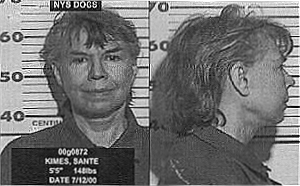
Convicted
Connection tags:
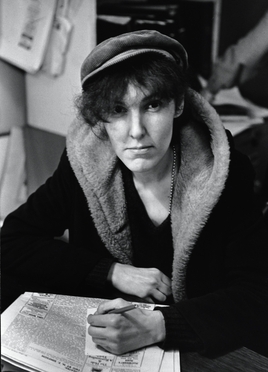
Convicted
Connection tags:

Convicted
Connection tags:
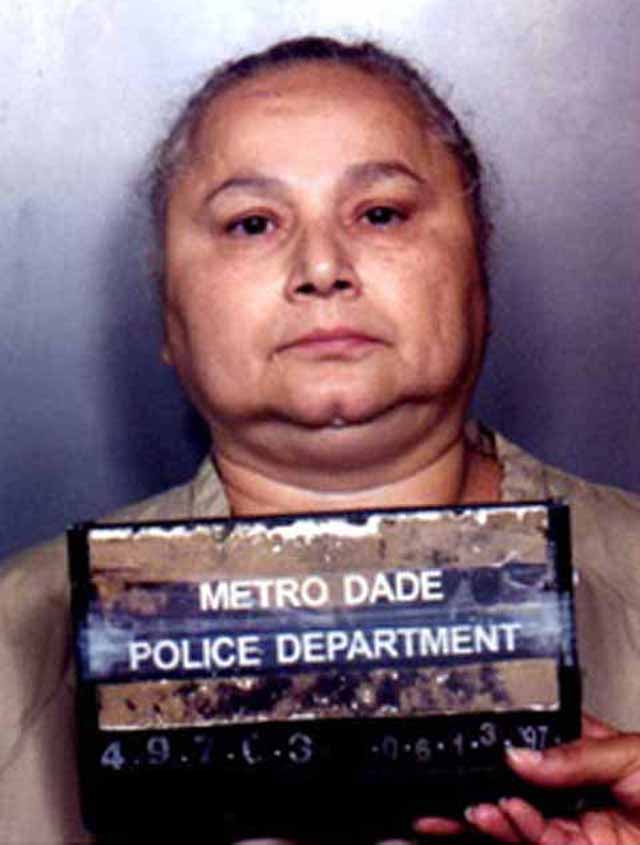
Convicted
Connection tags:

Accused
Connection tags:
Case Details
The pickaxe was still in her chest when they found her.
Houston homicide detectives arrived at Jerry Lynn Dean's apartment in the early morning hours of June 13, 1983, and what they encountered there stayed with them. Dean, twenty-seven years old, had been struck with a ball-peen hammer and then attacked with a pickaxe, the wounds so numerous and so savage that the medical examiner would lose count. His companion, Deborah Ruth Thornton, thirty-two years old, had been similarly attacked. She had been sleeping in Dean's apartment, someone he had met at a party just hours before. The pickaxe was still lodged in her chest when officers entered the room, left there by whoever had last swung it.
The scene spoke of something beyond rage.
It would take more than a month for investigators to make their arrests. When they did, one of the killers turned out to be a young woman named Karla Faye Tucker. She was twenty-three years old.
Karla Faye Tucker was born on November 18, 1959, the youngest of three sisters in a Houston household that held very little warmth. Her mother, Carolyn, was a devoted rock groupie who spent her time orbiting bands like the Allman Brothers, the Marshall Tucker Band, and the Eagles. Her biological father was reportedly a Houston firefighter of Greek ethnicity, though Tucker was raised under the name of her mother's husband, Larry Tucker, a longshoreman. The marriage was troubled, ending in divorce when Karla was ten. During those proceedings, she learned the truth: she had been the product of an affair. The man she called father was not her father.
By the time that information landed, it was almost beside the point. Karla Tucker had already been abandoned in more ways than one.
She was experimenting with drugs at eight. By eleven, she was using heroin. By twelve, she was sexually active. Her mother did not protect her from any of this; in some ways, Carolyn Tucker opened the doors herself. She brought her daughter along on the concert circuit, into hotel rooms and backstage corridors, into a world where men had money and girls had uses. Karla was fourteen when her mother introduced her to prostitution. She dropped out of school in the seventh grade and never returned.
At sixteen, she married briefly. His name was Stephen Griffith, a mechanic, and the marriage eventually dissolved as most things in her life had dissolved. By the early 1980s, Tucker had found her way into Houston's Harley-Davidson biker subculture, a world of hard substances and harder weekends. She was consuming a rotating cocktail: heroin, methadone, Valium, rum, tequila, marijuana. Friends described her as warm and magnetic when she was sober, a personality that could light up a room. The substances burned through that warmth steadily and reliably.
It was in this world that she met Daniel Ryan Garrett, an older man with a temper and no particular future. They became a couple. Their social circle overlapped with a man named Jerry Lynn Dean, whom Tucker knew and intensely disliked. By 1983, the relationship between Tucker and Dean had calcified into mutual contempt. Dean, meanwhile, had been working on a motorcycle in his apartment. That motorcycle would serve as the original reason for what happened next.
On the night of June 12 into the early morning of June 13, 1983, Tucker and Garrett had been awake for what felt like days. The specific cocktail they had consumed included methadone, Valium, heroin, marijuana, rum, and tequila. A third associate, James Liebrandt, was with them. Sometime around 3:00 a.m., the three drove to Dean's apartment with a plan: steal the motorcycle.
What followed unfolded with the terrible momentum of a night with no guardrails.
Dean woke up. Garrett attacked him with a ball-peen hammer. Tucker participated in the killing, taking up a pickaxe and using it. When she went into the next room and found Deborah Thornton, who had been hiding in fear, Tucker used the pickaxe on her too. Thornton was thirty-two years old. She had gone home with Dean after a party that same evening, fallen asleep in his apartment, and now could not get out. She had no prior connection to Tucker, no history with Garrett, no part in whatever grievance had brought these two people to this address. She was simply there.
When police arrived, the pickaxe was still lodged in Thornton's chest.
Tucker and Garrett did not stay quiet about what they had done. Over the following weeks, they talked, boasting to acquaintances in the biker community with what investigators later described as chilling nonchalance. They described the killings as though recounting a weekend ride. One of those acquaintances eventually made a decision that changed everything: Garrett's own brother, Doug, came forward and agreed to wear a hidden recording device. The resulting recordings proved critical. Tucker and Garrett were arrested on July 20, 1983, six weeks after the murders. A grand jury indicted them for both deaths in September of that year.
Tucker's trial began on April 11, 1984, in a Houston courtroom. She was represented by defense counsel who advised her to plead not guilty, though she later acknowledged she was fully culpable. A jury of eight women and four men, presided over by a female judge, heard the evidence against her. The murder charge related to Deborah Thornton was ultimately dropped after Tucker testified against Garrett in his separate proceedings. The defense called no witnesses on her behalf.
The jury deliberated and returned on April 25, 1984: guilty of the murder of Jerry Lynn Dean. The recommended sentence was death by lethal injection.
Garrett was tried separately, convicted, and also sentenced to death. He never faced execution. He died in prison of liver disease, sometime around 1993 or 1994. For Tucker, the sentence held.
She was assigned to the Mountain View Unit in Gatesville, Texas, the state's female death row facility. Her inmate number was 777. She was twenty-four years old.
What happened to Karla Faye Tucker during the next fourteen years has been told and retold, interpreted and contested. She converted to Christianity in October 1983, before her trial had even concluded, after picking up a Bible in the Harris County Jail and reading it through. By her own account, the conversion was total and immediate. Whether one believes that or not, the record of her behavior on death row is consistent: corrections officers described her as a model prisoner, someone who mentored younger inmates and showed no signs of manipulation or performance. In 1995, she married Dana Lane Brown, a prison minister and reverend who had been visiting her on death row. Those who observed the relationship described it as genuine.
By the mid-1990s, her story had begun reaching outside the walls of Mountain View. Journalists wrote about her. Documentarians came with cameras. As 1998 approached and her execution date crystallized, a coalition of advocates unlike almost anything the death penalty had generated before began to form around her name.
Pope John Paul II appealed for her life. The World Council of Churches issued a statement. Romano Prodi, then the Prime Minister of Italy, weighed in. United Nations human rights commissioner Bacre Waly Ndiaye raised the case internationally. Closer to home, televangelist Pat Robertson and House Speaker Newt Gingrich, neither of them known for opposing capital punishment, publicly called for clemency. Sister Helen Prejean advocated for Tucker. Bianca Jagger joined the chorus.
Most remarkably, Ronald Carlson, the brother of Deborah Thornton, one of the two people Tucker had killed, came to believe her execution would be wrong. He said Tucker had found genuine redemption. He said he had forgiven her.
The arguments against execution were varied: her gender, the rarity of executing women, the transformation she had apparently undergone, broader objections to capital punishment itself. The arguments in favor were simpler. Jerry Lynn Dean and Deborah Thornton were dead, killed with a pickaxe in an apartment they could not escape, and the jury had spoken.
On February 2, 1998, the Texas Board of Pardons and Paroles voted to reject Tucker's petition for commutation to life in prison. On February 3, Governor George W. Bush declined to grant a thirty-day stay of execution. The U.S. Supreme Court denied three separate legal challenges that same day, without comment or dissent.
The lethal injection began at 6:37 p.m. on February 3, 1998, at the Huntsville Unit, known locally as the Walls Unit. Tucker's last words were directed upward. "I am going to be face to face with Jesus now," she said. "I will see you all when you get there." She was pronounced dead at 6:45 p.m., eight minutes after the drugs entered her bloodstream.
She was thirty-eight years old. She became the first woman executed in Texas since Chipita Rodriguez had been hanged in 1863, and only the second woman executed in the United States since the reinstatement of capital punishment in 1976, following Velma Barfield's execution in North Carolina in 1984. She was buried at Forest Park Lawndale Cemetery in Houston, the city where her life had begun.
The ripples from that Tuesday evening spread in unexpected directions.
Fred Allen, the captain of the Huntsville prison's Death House Team, had overseen more than 120 executions before Tucker's. Within days of her execution, something broke in him. He resigned from his position, forfeiting his pension, and later spoke publicly about how Tucker's death had shattered his ability to continue. He became an outspoken opponent of capital punishment, a reversal that surprised colleagues who had worked alongside him for years.
Then there was George W. Bush. Journalist Tucker Carlson, writing about Bush in 1999 as the governor prepared a presidential run, alleged that Bush had privately mocked Tucker. According to Carlson's account, Bush had pursed his lips and mimicked Tucker's televised plea to Larry King, the interview in which she had asked publicly for her life. Bush denied the characterization. The allegation became one of those political flash points that never fully resolved, a piece of evidence in a larger argument about the man who sought the presidency.
Tucker's case has drawn artists and storytellers ever since. A 2002 television film, "Crossed Over," starred Jennifer Jason Leigh and Diane Keaton. Musician and playwright Steve Earle wrote an off-Broadway play about her. In 2024, Mark Beaver published "The Ballad of Karla Faye Tucker," which won the Georgia Author of the Year Award for Biography.
What none of them can fully resolve is the question her case posed so starkly. The woman executed on February 3, 1998, was not the same person who had swung that pickaxe in 1983. She had said so. The prison staff had said so. Ronald Carlson, whose sister lay dead because of her, had said so. Whether transformation earns anything within the machinery of capital justice, whether a person's capacity to become someone new has any legal weight against the finality of what they once did, remains a question American law has declined to answer cleanly.
Jerry Lynn Dean and Deborah Thornton were still dead. Karla Faye Tucker was still dead. And in the space between those facts, the argument continues.
Timeline
Birth and Troubled Childhood Begins
Karla Faye Tucker is born in Houston, Texas, the youngest of three sisters. She would later learn she was the product of an extramarital affair, and her childhood was marked by severe neglect — by age 8 she was experimenting with drugs, and by age 11 she was using heroin.
Tucker's chaotic upbringing, including her mother's introduction of her to prostitution at age 14 and her dropping out of school in 7th grade, laid the foundation for the trajectory that would lead to the 1983 murders.
Mother Introduces Tucker to Prostitution
At approximately age 14, Tucker's mother Carolyn — a rock groupie — introduced her daughter to prostitution while accompanying bands including the Allman Brothers Band, the Marshall Tucker Band, and the Eagles on concert tours. Tucker continued heavy drug use and prostitution throughout her teens with no parental intervention.
This period of exploitation cemented Tucker's immersion in a world of substance abuse and criminality, and was later cited by advocates as critical context for understanding her path to violence.
Brief First Marriage
At approximately age 16, Tucker briefly married a mechanic named Stephen Griffith. The marriage eventually ended in divorce, leaving Tucker further adrift within Houston's biker and drug subcultures.
The failed marriage marked one of Tucker's few attempts at conventional life before she fully entered the Harley-Davidson biker subculture where she would meet her co-conspirator Daniel Ryan Garrett.
Multi-Day Drug Binge Precedes Murders
Tucker, Garrett, and associate James Liebrandt embarked on a prolonged drug binge consuming a cocktail of methadone, Valium, heroin, marijuana, rum, tequila, and other substances in the days leading up to June 13, 1983. The group began planning to break into Jerry Lynn Dean's Houston apartment to steal a motorcycle he was restoring.
The multi-day intoxication was central to Tucker's later legal defense and public narrative, though the jury ultimately rejected diminished capacity as a mitigating factor sufficient to spare her life.
Murders of Jerry Lynn Dean and Deborah Thornton
At approximately 3:00 a.m., Tucker and Garrett broke into Dean's Houston apartment and attacked him with a ball-peen hammer and a pickaxe, killing him. A second victim, Deborah Ruth Thornton — who had just met Dean at a party and was asleep in his apartment — was also killed with the pickaxe, which was found still embedded in her chest when police arrived.
The brutal nature of the double murder, and Tucker's later admission that she experienced a sexual thrill from the killings, made the case notorious and directly led to her death sentence.
Arrest Following Tip from Garrett's Brother
Tucker and Garrett were arrested on July 20, 1983, after police were tipped off by Garrett's brother Doug, who wore a hidden recording device to gather incriminating statements. Tucker and Garrett had been openly bragging about the killings to acquaintances in the weeks following the murders.
The arrests were made possible by Tucker and Garrett's own reckless boasting, and the recorded evidence obtained through Doug Garrett's cooperation became a cornerstone of the prosecution's case.
Conversion to Christianity on Death Row
While awaiting trial in jail, Tucker converted to Christianity in October 1983 after reading a Bible left in her cell. She later described the conversion as a profound spiritual transformation, and it became the defining element of her public identity and the global clemency campaign that would surround her execution.
Tucker's sincere and well-documented religious conversion generated unprecedented international support for clemency, drawing advocates from Pope John Paul II to televangelist Pat Robertson, and made her case a landmark debate on redemption and capital punishment.
Trial Begins — Tucker Pleads Not Guilty
Tucker's trial began on April 11, 1984, before a jury of 8 women and 4 men, presided over by a female judge. On attorney advice, Tucker entered a not guilty plea despite later acknowledging full guilt; the defense called no witnesses, and the murder charge related to Thornton was dropped after Tucker testified against Garrett.
The decision to call no defense witnesses and rely solely on Tucker's testimony against Garrett reflected a legal strategy that ultimately failed to sway the jury, which deliberated briefly before returning a guilty verdict.
Conviction and Death Sentence Imposed
The jury found Tucker guilty of the first-degree murder of Jerry Lynn Dean and recommended death by lethal injection. She was formally sentenced to death and transferred to female death row at the Mountain View Unit in Gatesville, Texas, where she became TDCJ Death Row Inmate #777.
Tucker's death sentence set the stage for a 14-year legal battle and transformed her into one of the most publicly debated figures in the history of American capital punishment, particularly regarding gender and redemption.
Global Clemency Campaign Fails — Execution Carried Out
After the Texas Board of Pardons and Paroles rejected her commutation request on February 2, 1998, and Governor George W. Bush declined a 30-day stay, Tucker was executed by lethal injection at the Huntsville Unit at 6:37 p.m. CST, pronounced dead at 6:45 p.m. Her last words included: 'I am going to be face to face with Jesus now.' She was the first woman executed in Texas since 1863.
Tucker's execution ended a massive international campaign backed by Pope John Paul II, Newt Gingrich, Pat Robertson, and even the brother of one of her victims, and prompted prison execution team captain Fred Allen to resign and reverse his position on capital punishment.
Crime Location
Photos
Karla Faye Tucker mugshot

Entrance to TDCJ Mountain View Unit

HuntsvilleUnitHuntsvilleTX

Sources
- Karla Faye Tucker — Murderpedia Entry
- Karla Faye Tucker — Wikipedia
- Texas Department of Criminal Justice — Executed Offenders: Karla Faye Tucker
- The Ballad of Karla Faye Tucker
- Crossed Over: A Murder, A Memoir
- Tucker Carlson's GQ Profile of George W. Bush
- Getty Images — Karla Faye Tucker Editorial Archive
- A Question of Mercy (TV Documentary)
Frequently Asked Questions
Table of Contents
Case Summary
When Houston homicide detectives arrived at Jerry Lynn Dean's apartment in the predawn hours of June 13, 1983, they found a pickaxe still lodged in Deborah Thornton's chest. Both victims had been hacked to death in what investigators later described as one of the most savage double homicides they had encountered. The woman who swung that pickaxe was twenty-three years old and weighed barely over a hundred pounds. Her name was Karla Faye Tucker.
Fourteen years later, she would become the first woman executed in Texas since 1863, and only the second woman executed in the United States since the reinstatement of capital punishment. By then, Pope John Paul II had pleaded for her life. So had Pat Robertson, Newt Gingrich, and the brother of one of her victims. Governor George W. Bush said no anyway.
The story of Karla Faye Tucker is many things at once: a portrait of catastrophic childhood neglect, a chronicle of breathtaking violence, and one of the most polarizing death penalty cases in American history. It is a story about who we decide deserves to die, and whether a person can become someone genuinely new behind bars. It has no clean ending and no comfortable moral. But it begins, as these stories so often do, with a girl nobody saved in time.
November 18, 1959, Houston, Texas, USA(Age: 38)
February 3, 1998, Huntsville Unit, Huntsville, Texas, USA (Execution by lethal injection (sodium thiopental, pancuronium bromide, and potassium chloride))
Case Details
The pickaxe was still in her chest when they found her.
Houston homicide detectives arrived at Jerry Lynn Dean's apartment in the early morning hours of June 13, 1983, and what they encountered there stayed with them. Dean, twenty-seven years old, had been struck with a ball-peen hammer and then attacked with a pickaxe, the wounds so numerous and so savage that the medical examiner would lose count. His companion, Deborah Ruth Thornton, thirty-two years old, had been similarly attacked. She had been sleeping in Dean's apartment, someone he had met at a party just hours before. The pickaxe was still lodged in her chest when officers entered the room, left there by whoever had last swung it.
The scene spoke of something beyond rage.
It would take more than a month for investigators to make their arrests. When they did, one of the killers turned out to be a young woman named Karla Faye Tucker. She was twenty-three years old.
Karla Faye Tucker was born on November 18, 1959, the youngest of three sisters in a Houston household that held very little warmth. Her mother, Carolyn, was a devoted rock groupie who spent her time orbiting bands like the Allman Brothers, the Marshall Tucker Band, and the Eagles. Her biological father was reportedly a Houston firefighter of Greek ethnicity, though Tucker was raised under the name of her mother's husband, Larry Tucker, a longshoreman. The marriage was troubled, ending in divorce when Karla was ten. During those proceedings, she learned the truth: she had been the product of an affair. The man she called father was not her father.
By the time that information landed, it was almost beside the point. Karla Tucker had already been abandoned in more ways than one.
She was experimenting with drugs at eight. By eleven, she was using heroin. By twelve, she was sexually active. Her mother did not protect her from any of this; in some ways, Carolyn Tucker opened the doors herself. She brought her daughter along on the concert circuit, into hotel rooms and backstage corridors, into a world where men had money and girls had uses. Karla was fourteen when her mother introduced her to prostitution. She dropped out of school in the seventh grade and never returned.
At sixteen, she married briefly. His name was Stephen Griffith, a mechanic, and the marriage eventually dissolved as most things in her life had dissolved. By the early 1980s, Tucker had found her way into Houston's Harley-Davidson biker subculture, a world of hard substances and harder weekends. She was consuming a rotating cocktail: heroin, methadone, Valium, rum, tequila, marijuana. Friends described her as warm and magnetic when she was sober, a personality that could light up a room. The substances burned through that warmth steadily and reliably.
It was in this world that she met Daniel Ryan Garrett, an older man with a temper and no particular future. They became a couple. Their social circle overlapped with a man named Jerry Lynn Dean, whom Tucker knew and intensely disliked. By 1983, the relationship between Tucker and Dean had calcified into mutual contempt. Dean, meanwhile, had been working on a motorcycle in his apartment. That motorcycle would serve as the original reason for what happened next.
On the night of June 12 into the early morning of June 13, 1983, Tucker and Garrett had been awake for what felt like days. The specific cocktail they had consumed included methadone, Valium, heroin, marijuana, rum, and tequila. A third associate, James Liebrandt, was with them. Sometime around 3:00 a.m., the three drove to Dean's apartment with a plan: steal the motorcycle.
What followed unfolded with the terrible momentum of a night with no guardrails.
Dean woke up. Garrett attacked him with a ball-peen hammer. Tucker participated in the killing, taking up a pickaxe and using it. When she went into the next room and found Deborah Thornton, who had been hiding in fear, Tucker used the pickaxe on her too. Thornton was thirty-two years old. She had gone home with Dean after a party that same evening, fallen asleep in his apartment, and now could not get out. She had no prior connection to Tucker, no history with Garrett, no part in whatever grievance had brought these two people to this address. She was simply there.
When police arrived, the pickaxe was still lodged in Thornton's chest.
Tucker and Garrett did not stay quiet about what they had done. Over the following weeks, they talked, boasting to acquaintances in the biker community with what investigators later described as chilling nonchalance. They described the killings as though recounting a weekend ride. One of those acquaintances eventually made a decision that changed everything: Garrett's own brother, Doug, came forward and agreed to wear a hidden recording device. The resulting recordings proved critical. Tucker and Garrett were arrested on July 20, 1983, six weeks after the murders. A grand jury indicted them for both deaths in September of that year.
Tucker's trial began on April 11, 1984, in a Houston courtroom. She was represented by defense counsel who advised her to plead not guilty, though she later acknowledged she was fully culpable. A jury of eight women and four men, presided over by a female judge, heard the evidence against her. The murder charge related to Deborah Thornton was ultimately dropped after Tucker testified against Garrett in his separate proceedings. The defense called no witnesses on her behalf.
The jury deliberated and returned on April 25, 1984: guilty of the murder of Jerry Lynn Dean. The recommended sentence was death by lethal injection.
Garrett was tried separately, convicted, and also sentenced to death. He never faced execution. He died in prison of liver disease, sometime around 1993 or 1994. For Tucker, the sentence held.
She was assigned to the Mountain View Unit in Gatesville, Texas, the state's female death row facility. Her inmate number was 777. She was twenty-four years old.
What happened to Karla Faye Tucker during the next fourteen years has been told and retold, interpreted and contested. She converted to Christianity in October 1983, before her trial had even concluded, after picking up a Bible in the Harris County Jail and reading it through. By her own account, the conversion was total and immediate. Whether one believes that or not, the record of her behavior on death row is consistent: corrections officers described her as a model prisoner, someone who mentored younger inmates and showed no signs of manipulation or performance. In 1995, she married Dana Lane Brown, a prison minister and reverend who had been visiting her on death row. Those who observed the relationship described it as genuine.
By the mid-1990s, her story had begun reaching outside the walls of Mountain View. Journalists wrote about her. Documentarians came with cameras. As 1998 approached and her execution date crystallized, a coalition of advocates unlike almost anything the death penalty had generated before began to form around her name.
Pope John Paul II appealed for her life. The World Council of Churches issued a statement. Romano Prodi, then the Prime Minister of Italy, weighed in. United Nations human rights commissioner Bacre Waly Ndiaye raised the case internationally. Closer to home, televangelist Pat Robertson and House Speaker Newt Gingrich, neither of them known for opposing capital punishment, publicly called for clemency. Sister Helen Prejean advocated for Tucker. Bianca Jagger joined the chorus.
Most remarkably, Ronald Carlson, the brother of Deborah Thornton, one of the two people Tucker had killed, came to believe her execution would be wrong. He said Tucker had found genuine redemption. He said he had forgiven her.
The arguments against execution were varied: her gender, the rarity of executing women, the transformation she had apparently undergone, broader objections to capital punishment itself. The arguments in favor were simpler. Jerry Lynn Dean and Deborah Thornton were dead, killed with a pickaxe in an apartment they could not escape, and the jury had spoken.
On February 2, 1998, the Texas Board of Pardons and Paroles voted to reject Tucker's petition for commutation to life in prison. On February 3, Governor George W. Bush declined to grant a thirty-day stay of execution. The U.S. Supreme Court denied three separate legal challenges that same day, without comment or dissent.
The lethal injection began at 6:37 p.m. on February 3, 1998, at the Huntsville Unit, known locally as the Walls Unit. Tucker's last words were directed upward. "I am going to be face to face with Jesus now," she said. "I will see you all when you get there." She was pronounced dead at 6:45 p.m., eight minutes after the drugs entered her bloodstream.
She was thirty-eight years old. She became the first woman executed in Texas since Chipita Rodriguez had been hanged in 1863, and only the second woman executed in the United States since the reinstatement of capital punishment in 1976, following Velma Barfield's execution in North Carolina in 1984. She was buried at Forest Park Lawndale Cemetery in Houston, the city where her life had begun.
The ripples from that Tuesday evening spread in unexpected directions.
Fred Allen, the captain of the Huntsville prison's Death House Team, had overseen more than 120 executions before Tucker's. Within days of her execution, something broke in him. He resigned from his position, forfeiting his pension, and later spoke publicly about how Tucker's death had shattered his ability to continue. He became an outspoken opponent of capital punishment, a reversal that surprised colleagues who had worked alongside him for years.
Then there was George W. Bush. Journalist Tucker Carlson, writing about Bush in 1999 as the governor prepared a presidential run, alleged that Bush had privately mocked Tucker. According to Carlson's account, Bush had pursed his lips and mimicked Tucker's televised plea to Larry King, the interview in which she had asked publicly for her life. Bush denied the characterization. The allegation became one of those political flash points that never fully resolved, a piece of evidence in a larger argument about the man who sought the presidency.
Tucker's case has drawn artists and storytellers ever since. A 2002 television film, "Crossed Over," starred Jennifer Jason Leigh and Diane Keaton. Musician and playwright Steve Earle wrote an off-Broadway play about her. In 2024, Mark Beaver published "The Ballad of Karla Faye Tucker," which won the Georgia Author of the Year Award for Biography.
What none of them can fully resolve is the question her case posed so starkly. The woman executed on February 3, 1998, was not the same person who had swung that pickaxe in 1983. She had said so. The prison staff had said so. Ronald Carlson, whose sister lay dead because of her, had said so. Whether transformation earns anything within the machinery of capital justice, whether a person's capacity to become someone new has any legal weight against the finality of what they once did, remains a question American law has declined to answer cleanly.
Jerry Lynn Dean and Deborah Thornton were still dead. Karla Faye Tucker was still dead. And in the space between those facts, the argument continues.
Timeline
Birth and Troubled Childhood Begins
Karla Faye Tucker is born in Houston, Texas, the youngest of three sisters. She would later learn she was the product of an extramarital affair, and her childhood was marked by severe neglect — by age 8 she was experimenting with drugs, and by age 11 she was using heroin.
Tucker's chaotic upbringing, including her mother's introduction of her to prostitution at age 14 and her dropping out of school in 7th grade, laid the foundation for the trajectory that would lead to the 1983 murders.
Mother Introduces Tucker to Prostitution
At approximately age 14, Tucker's mother Carolyn — a rock groupie — introduced her daughter to prostitution while accompanying bands including the Allman Brothers Band, the Marshall Tucker Band, and the Eagles on concert tours. Tucker continued heavy drug use and prostitution throughout her teens with no parental intervention.
This period of exploitation cemented Tucker's immersion in a world of substance abuse and criminality, and was later cited by advocates as critical context for understanding her path to violence.
Brief First Marriage
At approximately age 16, Tucker briefly married a mechanic named Stephen Griffith. The marriage eventually ended in divorce, leaving Tucker further adrift within Houston's biker and drug subcultures.
The failed marriage marked one of Tucker's few attempts at conventional life before she fully entered the Harley-Davidson biker subculture where she would meet her co-conspirator Daniel Ryan Garrett.
Multi-Day Drug Binge Precedes Murders
Tucker, Garrett, and associate James Liebrandt embarked on a prolonged drug binge consuming a cocktail of methadone, Valium, heroin, marijuana, rum, tequila, and other substances in the days leading up to June 13, 1983. The group began planning to break into Jerry Lynn Dean's Houston apartment to steal a motorcycle he was restoring.
The multi-day intoxication was central to Tucker's later legal defense and public narrative, though the jury ultimately rejected diminished capacity as a mitigating factor sufficient to spare her life.
Murders of Jerry Lynn Dean and Deborah Thornton
At approximately 3:00 a.m., Tucker and Garrett broke into Dean's Houston apartment and attacked him with a ball-peen hammer and a pickaxe, killing him. A second victim, Deborah Ruth Thornton — who had just met Dean at a party and was asleep in his apartment — was also killed with the pickaxe, which was found still embedded in her chest when police arrived.
The brutal nature of the double murder, and Tucker's later admission that she experienced a sexual thrill from the killings, made the case notorious and directly led to her death sentence.
Arrest Following Tip from Garrett's Brother
Tucker and Garrett were arrested on July 20, 1983, after police were tipped off by Garrett's brother Doug, who wore a hidden recording device to gather incriminating statements. Tucker and Garrett had been openly bragging about the killings to acquaintances in the weeks following the murders.
The arrests were made possible by Tucker and Garrett's own reckless boasting, and the recorded evidence obtained through Doug Garrett's cooperation became a cornerstone of the prosecution's case.
Conversion to Christianity on Death Row
While awaiting trial in jail, Tucker converted to Christianity in October 1983 after reading a Bible left in her cell. She later described the conversion as a profound spiritual transformation, and it became the defining element of her public identity and the global clemency campaign that would surround her execution.
Tucker's sincere and well-documented religious conversion generated unprecedented international support for clemency, drawing advocates from Pope John Paul II to televangelist Pat Robertson, and made her case a landmark debate on redemption and capital punishment.
Trial Begins — Tucker Pleads Not Guilty
Tucker's trial began on April 11, 1984, before a jury of 8 women and 4 men, presided over by a female judge. On attorney advice, Tucker entered a not guilty plea despite later acknowledging full guilt; the defense called no witnesses, and the murder charge related to Thornton was dropped after Tucker testified against Garrett.
The decision to call no defense witnesses and rely solely on Tucker's testimony against Garrett reflected a legal strategy that ultimately failed to sway the jury, which deliberated briefly before returning a guilty verdict.
Conviction and Death Sentence Imposed
The jury found Tucker guilty of the first-degree murder of Jerry Lynn Dean and recommended death by lethal injection. She was formally sentenced to death and transferred to female death row at the Mountain View Unit in Gatesville, Texas, where she became TDCJ Death Row Inmate #777.
Tucker's death sentence set the stage for a 14-year legal battle and transformed her into one of the most publicly debated figures in the history of American capital punishment, particularly regarding gender and redemption.
Global Clemency Campaign Fails — Execution Carried Out
After the Texas Board of Pardons and Paroles rejected her commutation request on February 2, 1998, and Governor George W. Bush declined a 30-day stay, Tucker was executed by lethal injection at the Huntsville Unit at 6:37 p.m. CST, pronounced dead at 6:45 p.m. Her last words included: 'I am going to be face to face with Jesus now.' She was the first woman executed in Texas since 1863.
Tucker's execution ended a massive international campaign backed by Pope John Paul II, Newt Gingrich, Pat Robertson, and even the brother of one of her victims, and prompted prison execution team captain Fred Allen to resign and reverse his position on capital punishment.
Crime Location
Photos
Karla Faye Tucker mugshot
Entrance to TDCJ Mountain View Unit
HuntsvilleUnitHuntsvilleTX
Sources
- Karla Faye Tucker — Murderpedia Entry
- Karla Faye Tucker — Wikipedia
- Texas Department of Criminal Justice — Executed Offenders: Karla Faye Tucker
- The Ballad of Karla Faye Tucker
- Crossed Over: A Murder, A Memoir
- Tucker Carlson's GQ Profile of George W. Bush
- Getty Images — Karla Faye Tucker Editorial Archive
- A Question of Mercy (TV Documentary)
Frequently Asked Questions
Related Cases
Convicted
Connection tags:
Convicted
Connection tags:
Convicted
Connection tags:
Convicted
Connection tags:
Convicted
Connection tags:
Accused
Connection tags:
Tags
Popular Culture
documentary (1998)
TV documentary examining Tucker's case, her religious conversion, and the international clemency movement surrounding her execution
TV (2002)
Lifetime television film based on Beverly Lowry's memoir about her friendship with Tucker on death row; starred Jennifer Jason Leigh as Tucker and Diane Keaton as Lowry
documentary (2004)
Documentary film examining Tucker's life, crimes, faith journey, and execution
TV (2000)
Off-Broadway theatrical production written by musician and activist Steve Earle, dramatizing Tucker's life and execution
book (2024)
Biography by Mark Beaver exploring Tucker's life, crimes, and legacy; winner of the 2024 Georgia Author of the Year Award for Biography
book (1993)
Sister Helen Prejean, who advocated for Tucker's clemency, authored this landmark anti-death penalty memoir, giving context to her later involvement in the Tucker case