Rosemary Pauline West (née Letts; also known as Jennifer Jones since 2020)
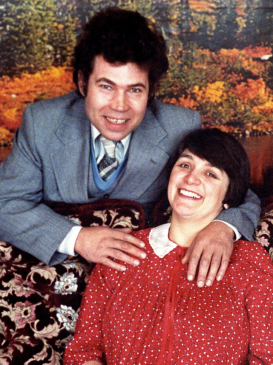
Case Summary
In February 1994, police arrived at 25 Cromwell Street, Gloucester, looking for a missing teenage girl. What they found instead would stop Britain cold: nine sets of human remains buried beneath the floorboards and garden of a nondescript terraced house — and that was only the beginning. Rosemary West, a 40-year-old mother of eight, sat at the center of it all. She had helped lure young women and girls to that house. She had participated in their torture, their sexual abuse, their deaths. She had then gone on living there — cooking meals, watching television, raising children — while the bodies of ten victims, including her own stepdaughter and her own teenage daughter, rotted in the earth beneath her feet. On 22 November 1995, a jury took less than two days to convict her on all ten counts of murder. The judge said she should never be freed. He was right. Thirty years later, Rose West — now calling herself Jennifer Jones — remains in a prison cell, in declining health, largely alone, still insisting she is innocent. This is the story of how ordinary evil hides in plain sight.
November 29, 1953, Northam, Devon, England, United Kingdom(Age: 41)
January 1, 1995
Related Cases

Convicted
Connection tags:

Convicted
Connection tags:

Convicted
Connection tags:

Convicted
Connection tags:

Accused
Connection tags:

Convicted
Connection tags:
Case Details
The wrecking ball swung into 25 Cromwell Street on a grey Gloucester morning in October 1996, and for a moment the crowd that had gathered on the pavement went silent. They watched a Victorian terraced house — three storeys, a bay window, an unremarkable front door painted a forgettable shade — collapse inward on itself. Dust rose into the autumn sky. Everything that remained of the structure was hauled away and incinerated. Even the bricks were destroyed. The city wanted nothing left. What had happened inside those walls was considered so contaminating, so utterly beyond the pale of human decency, that the building itself had to be erased from the earth. In its place, the council laid a narrow pedestrian walkway. There is no plaque. No memorial. No marker of any kind. The official position, it seemed, was that the best response to what had occurred at 25 Cromwell Street was to pretend the address had never existed at all.
But the dead do not disappear so easily.
Rosemary Pauline Letts was born on 29 November 1953 in Northam, Devon, the fifth of seven children in a household held together by little more than habit and fear. Her father, Bill Letts, was a diagnosed schizophrenic whose rages were a fixed feature of family life — a man who demanded military discipline and enforced it with his fists. Her mother, Daisy, suffered from severe depression so debilitating that she underwent electroconvulsive therapy during her pregnancy with Rose, a treatment that some researchers have speculated may have affected the developing child. Whether it did or not, what Rose absorbed in childhood was a curriculum of violence, domination, and submission — lessons she would one day teach others at terrible cost.
She was not an easy child. Described by schoolteachers as slow, by neighbours as odd, Rose developed an early and pronounced interest in sex that alarmed the adults around her. She was fifteen years old in early 1969 when she met Frederick Walter Stephen West at a bus stop in Cheltenham. Fred was twenty-seven, a labourer of leonine charm and sociopathic flexibility, a man who could make almost anything seem reasonable. He had two children from his first marriage to Catherine 'Rena' Costello — a daughter, Anne Marie, and a stepdaughter, Charmaine — and a history of convictions for petty theft and abuse. Rose left her job at a bakery and moved in as the children's nanny. Her parents were horrified. They could not have known that horror, in this instance, was an entirely inadequate word.
The two found in each other something that ordinary people spend their lives avoiding: a perfect, lethal symmetry. Fred's appetites were monstrous, but he was skilled at concealment, at charm, at making the monstrous seem mundane. Rose was different — more volatile, more openly sadistic, possessed of a cruelty that could ignite without warning. Together, they formed something that criminologists would later struggle to categorise. They were not one dominant partner and one compliant accomplice. They were collaborators.
In the spring of 1971, Fred West was serving a prison sentence for petty theft. Rose was left alone at the couple's home at Midland Road, Gloucester, with two small children. One of them, Charmaine — eight years old, dark-haired, described by those who knew her as a spirited and wilful child — did not survive Rose's care. The precise circumstances of Charmaine West's death were never fully established in court. What is known is that Rose killed her. When Fred was released from prison on 24 June 1971, he buried the body beneath the kitchen floor of the Midland Road house. Charmaine's mother, Rena Costello, came looking for her daughter the following year. She never left Gloucester alive. Fred murdered her too, and buried her in a field at Letterbox Field, Much Marcle. He did not tell Rose — at least, not right away.
Rose and Fred married on 29 January 1972. On the marriage certificate, Fred described himself as a bachelor. It was, in its way, a small lie amid much larger ones.
By the early 1970s the couple had moved to 25 Cromwell Street, a large, somewhat dilapidated terraced house in a quiet part of Gloucester. They took in lodgers. Fred converted the cellar. Rose, already working as a prostitute from a room in the house while Fred sometimes watched through a peephole, was pregnant with their second child. To outward appearances they were an unconventional but essentially unremarkable working-class couple — sociable, even — known in the neighbourhood, remembered by some with a shrug. The house was always busy. Always full of young people.
That was the point.
In late 1972, the Wests abducted Caroline Owens, a seventeen-year-old who had been employed by them as a nanny. They imprisoned her, sexually assaulted her, and threatened to kill her and bury her 'under the patio' with 'hundreds of others' if she went to the police. She escaped. She did go to the police. On 12 January 1973, at Gloucester Magistrates Court, Fred and Rose West were convicted of indecent assault and actual bodily harm. The penalty: a fine of fifty pounds each. They walked out of court and went home to Cromwell Street. Caroline Owens, who had told the truth and done everything right, lived with the knowledge of what she had narrowly escaped for the next two decades. The women who came after her were not so fortunate.
The names that would eventually be read aloud in a Winchester courtroom form a litany that is almost unbearable in its particularity. Lynda Gough, nineteen, a seamstress. Carol Ann Cooper, fifteen, in care. Lucy Partington, twenty-one, a university student and cousin of the novelist Martin Amis, who disappeared on her way to a bus stop on 27 December 1973 and was not found for more than twenty years. Thérèse Siegenthaler, twenty-one, a Swiss student. Shirley Hubbard, fifteen, who was found with her entire head encased in a mask of tape, a rubber tube inserted to allow her to breathe — evidence of abuse so prolonged and systematic that it silenced even seasoned investigators. Juanita Mott, eighteen. Shirley Robinson, eighteen, who had been living at Cromwell Street as a lodger, who had become pregnant with Fred's child, and who was buried in the back garden. Alison Chambers, sixteen.
And Heather.
Heather Ann West was Rose and Fred's eldest daughter, born in October 1970. She grew up in that house. She knew things no child should know. By the mid-1980s she was trying to leave — looking for work, speaking to friends about escaping. In June 1987, Heather West was murdered by her parents. She was sixteen years old. For years afterwards, Fred and Rose joked to their younger children that Heather had 'gone to work at a holiday camp.' When the younger children misbehaved, Fred would warn them, with a smile, that they'd 'end up under the patio like Heather.' The children thought it was a threat. They didn't understand it was also a confession.
The investigation that finally unravelled 25 Cromwell Street began not with a missing persons report but with a rape allegation. In 1992, Fred West was arrested for raping one of his own children — a thirteen-year-old daughter. Rose was simultaneously arrested for child cruelty. The charges collapsed when the daughter, under pressure she would later describe in detail, refused to testify. The Wests walked free again.
But Detective Constable Hazel Savage, who had known of Fred West's history for years, did not stop looking. In February 1994, she applied for a warrant to search 25 Cromwell Street in connection with the disappearance of Heather West. Police arrived expecting, perhaps, to find records. Evidence of fraud. Something manageable.
They found nine sets of human remains.
Fred and Rose West were formally arrested for murder on 24 February 1994. In the months that followed, Fred made a series of increasingly detailed confessions, describing the killings with a matter-of-fact specificity that investigators found simultaneously invaluable and almost impossible to process. He attempted, throughout, to insulate Rose — to position her as ignorant of the worst of it, as peripheral. Few who examined the evidence believed him. Fred West died by suicide on 1 January 1995 at HM Prison Birmingham, using a blanket as a ligature, before he could stand trial. He left Rose to face it alone.
Rose West's trial opened on 3 October 1995 at Winchester Crown Court before Mr Justice Mantell. The prosecution was led by Brian Leveson QC — the same Brian Leveson who would later chair the Leveson Inquiry into press standards. The defence was led by Richard Ferguson QC. Against her legal team's explicit advice, Rose chose to take the witness stand. It was a catastrophic decision. Under cross-examination, she was evasive, contradictory, and at moments almost incoherently hostile. The jury watched a woman who had spent decades perfecting the performance of normality discover, under the lights of a courtroom, that the performance had limits.
The evidence was overwhelming and, in its details, almost unwatchable. Forensic pathologists described dismemberment. Investigators described the systematic removal of finger bones and kneecaps from multiple victims — trophies, it was concluded, or precautions against identification. Former lodgers and acquaintances described a household in which sexual coercion was routine, in which Rose's violence towards children was open and unashamed, in which young women who visited sometimes simply ceased to be seen. Caroline Owens, twenty years on from her own ordeal, told the court what had happened to her in 1972 and what the Wests had threatened. She was believed.
The jury deliberated for less than two days. On 21–22 November 1995, they returned unanimous guilty verdicts on all ten counts of murder. As the verdicts were read, Rose West sat impassively in the dock — a quality that, depending on who was watching, read either as stunned disbelief or as the absolute composure of someone who had long since severed whatever connection to ordinary human feeling the rest of us take for granted. Mr Justice Mantell sentenced her to life imprisonment on each count and recommended, in terms that left no room for interpretation, that she should never be released. He described her crimes as 'appalling and depraved.' The phrase seems, by any measure, inadequate.
In July 1997, Home Secretary Jack Straw formalised what the judge had recommended: a whole-life tariff. Rose West became only the second woman in modern British legal history to receive one. The first was Myra Hindley.
She appealed in March 1996, arguing that saturation press coverage had made a fair trial impossible and that no physical evidence directly linked her to the killings. Lord Chief Justice Lord Taylor of Gosforth rejected the appeal. She considered a further appeal in 2000 and abandoned all legal efforts in September 2001, reportedly saying she would never feel truly free even if released. She has maintained her innocence ever since.
In 2020, Rose West changed her name by deed poll to Jennifer Jones. She is seventy-one years old. As of 2025, she is held at HMP New Hall in West Yorkshire, having been transferred from HMP Low Newton after fellow serial killer Joanna Dennehy reportedly threatened to kill her. Reports from early 2025 describe a woman in declining health — obese, with failing eyesight — who rarely leaves her cell wing and is largely shunned by fellow inmates. She lives, it seems, in a confinement within a confinement.
On 14 May 2025, Netflix released Fred & Rose West: A British Horror Story, a three-part documentary featuring previously unseen police recordings that brought a new generation face to face with what happened at 25 Cromwell Street. The footage showed Fred West speaking with almost casual fluency about his crimes, while Rose — in archived recordings — cycled through indignation, grief, and a blankness that was somehow the most disturbing register of all.
The pedestrian walkway that replaced the house is unremarkable. People walk through it every day without knowing. That, perhaps, is the most enduring truth of the Rosemary West case: that evil of this magnitude did not announce itself. It lived behind a painted front door in a terraced street in a provincial English city, and it had neighbours, and it kept the curtains clean, and for more than twenty years, while ten people lay dismembered in the dark beneath its floors, it passed without comment. The House of Horrors was never supposed to look like a house of horrors. That was always the point. That is always the point.
Timeline
Birth and Troubled Origins
Rosemary Pauline Letts was born in Northam, Devon, the fifth of seven children to Bill Letts, a schizophrenic electrician, and Daisy Fuller, who suffered severe depression and received electroconvulsive therapy while pregnant with Rose. The household was marked by poverty, parental violence, and pervasive mental illness, conditions that would shape Rose's early psychological development. Her father exercised brutal control over the family, and Rose later exhibited disturbing behaviours in childhood that alarmed neighbours and relatives.
Rose's deeply dysfunctional upbringing — combining genetic predisposition to mental illness, domestic violence, and neglect — formed the foundational context that investigators and psychologists would later examine when attempting to understand her capacity for extreme violence.
Rose Meets Fred West
In early 1969, the 15-year-old Rose met 27-year-old Fred West at a bus stop in Cheltenham, beginning a relationship that alarmed her family due to the significant age gap. She soon abandoned her job at a local bakery and moved in with Fred as a live-in nanny for his two children — Anne Marie and stepdaughter Charmaine — from his first wife, Catherine 'Rena' Costello. Rose's parents' attempts to separate the couple failed, and the relationship deepened rapidly despite Fred's criminal history.
This meeting initiated the partnership that would become one of Britain's most lethal criminal collaborations. Fred West's dominant influence over the teenage Rose and their shared appetite for sexual violence would ultimately claim at least ten lives.
Murder of Charmaine West
While Fred West was serving a prison sentence for petty theft, Rose murdered his 8-year-old stepdaughter Charmaine at their home on Midland Road, Gloucester. The precise circumstances of the killing remain partially obscured, but the child was beaten and killed while in Rose's sole care. Fred buried Charmaine's body beneath the kitchen floor after his release on 24 June 1971, and the couple told Anne Marie and others that Charmaine had gone to live with her mother Rena.
The murder of Charmaine established that Rose was capable of lethal violence entirely independently of Fred, directly countering the later defence narrative that she was a passive, controlled accomplice. It was the first confirmed killing attributed solely to Rose.
Marriage and Conviction for Assault on Caroline Owens
Having married Fred on 29 January 1972 — on a certificate where Fred fraudulently described himself as a bachelor — the couple were convicted at Gloucester Magistrates Court on 12 January 1973 for the abduction and indecent assault of Caroline Owens, a young woman they had lured as a nanny before imprisoning and sexually assaulting her at their home. The magistrates fined each defendant just £50, declining to impose a custodial sentence. This catastrophically lenient outcome emboldened the Wests and removed any legal deterrent to further offending.
The 1973 conviction represents one of the most consequential failures of the British justice system in the case; had the Wests been imprisoned, the subsequent murders of at least eight more victims — carried out using the same method — might have been prevented.
The Cromwell Street Murders
Between approximately 1973 and 1987, the Wests abducted, imprisoned, tortured, sexually abused, and murdered a series of vulnerable young women and girls lured from bus stops and hitchhiking points in and around Gloucester, with bodies dismembered and buried beneath the floorboards and in the garden of 25 Cromwell Street. Victims included Lynda Gough (19), Carol Ann Cooper (15), Lucy Partington (21), Thérèse Siegenthaler (21), Shirley Hubbard (15), Juanita Mott (18), Shirley Robinson (18, pregnant with Fred's child), and Alison Chambers (16). The killings continued for over a decade, entirely undetected, as the Wests presented themselves to the outside world as an ordinary, if unconventional, large family.
The Cromwell Street murders constituted one of the longest-running and most prolific serial killing campaigns in British criminal history, spanning fourteen years and demonstrating a sophisticated, sustained capacity for predatory violence by both perpetrators.
Murder of Heather West
In June 1987, Rose and Fred murdered their own 16-year-old daughter Heather after she reportedly threatened to expose aspects of the family's criminal and abusive activities. Heather's body was dismembered and buried in the back garden of 25 Cromwell Street, and the couple told surviving children and neighbours that Heather had simply left home. For years, the family made dark jokes that Heather was 'under the patio,' a detail that would later prove significant to investigators.
The murder of Heather West demonstrated the extreme lengths to which Rose and Fred would go to suppress exposure of their crimes, and the discovery of Heather's remains in 1994 was the direct catalyst for the full excavation of Cromwell Street and the unravelling of the entire case.
Police Investigation and Arrests
After a 1992 arrest for child rape and cruelty collapsed when the victim refused to testify, Gloucestershire Police returned in February 1994 with a warrant to search 25 Cromwell Street for missing person Heather West. Excavations of the garden and beneath the floorboards revealed nine sets of human remains, and further searches at earlier West addresses uncovered additional victims. Fred and Rose West were formally arrested for murder on 24 February 1994, with Fred subsequently confessing to at least twelve killings while Rose maintained total denial of any involvement.
The 1994 investigation transformed what had begun as a missing persons inquiry into the largest murder investigation in British history at that time, and the discovery of the remains finally gave names and justice to victims who had been missing — in some cases — for over two decades.
Fred West Dies by Suicide; Rose to Stand Trial Alone
On 1 January 1995, Fred West was found dead in his cell at HM Prison Birmingham (Winson Green), having used a plaited blanket as a ligature to hang himself before he could be brought to trial. His death meant that Rose would face trial alone, without the possibility of each defendant blaming the other, and that Fred's confessions — which had been the primary source of detail about the murders — could not be tested under cross-examination. The loss of Fred as a co-defendant significantly complicated the prosecution's task of proving Rose's direct participation.
Fred's suicide fundamentally altered the legal landscape of the case, forcing prosecutors to construct a case against Rose relying on survivor testimony, forensic evidence, and the sheer weight of circumstantial evidence, since Fred could no longer corroborate or implicate her from the witness box.
Trial Opens at Winchester Crown Court
Rose West's trial commenced on 3 October 1995 at Winchester Crown Court before Mr Justice Mantell, with prosecution led by Brian Leveson QC and defence led by Richard Ferguson QC. The venue had been deliberately moved from Gloucester to Winchester to reduce the risk of jury contamination given the intense local media coverage. Rose faced ten counts of murder, and the prosecution's opening outlined a case built on survivor testimony from Caroline Owens and others, forensic evidence from the excavations, and the systematic pattern of abduction and concealment.
The trial was one of the most closely watched criminal proceedings in post-war British history, drawing international media attention and raising fundamental questions about the extent to which Rose was an active perpetrator or a coerced accomplice — questions the jury would ultimately answer decisively.
Rose West Takes the Stand
Against the explicit advice of her defence counsel Richard Ferguson QC, Rose West elected to give evidence in her own defence, taking the witness stand and denying all knowledge of or participation in any of the murders. Under cross-examination by Brian Leveson QC, her account was systematically challenged against the testimony of survivors, the forensic evidence, and the implausibility of her claimed ignorance of bodies buried throughout her own home. Her performance in the witness box was widely regarded as damaging to her defence, as she appeared evasive and inconsistent.
Rose's decision to testify was a pivotal and arguably fatal strategic error; her inability to provide credible explanations for the evidence arrayed against her, combined with her demeanour under cross-examination, is considered by legal analysts to have significantly strengthened the prosecution's case in the jury's eyes.
Unanimous Guilty Verdicts on All Ten Counts
After seven weeks of evidence and thirty-one days of trial, the jury returned unanimous guilty verdicts on all ten counts of murder on 21–22 November 1995. Mr Justice Mantell sentenced Rose to life imprisonment on each count, stating that her crimes were 'appalling and depraved' and making a formal recommendation that she should never be released on parole. Rose showed no visible emotion as the verdicts were delivered.
The unanimous verdicts on all ten counts — with no dissent — reflected the jury's comprehensive rejection of Rose's defence and established her as one of the most prolific female serial killers in British criminal history. The judge's recommendation of whole-life imprisonment was subsequently formalised by the Home Secretary.
Whole-Life Tariff Imposed; Appeals Exhausted
In July 1997, Home Secretary Jack Straw formally imposed a whole-life tariff on Rose West, making her only the second woman in modern British legal history to receive such a designation — the first being Myra Hindley in 1990 — permanently eliminating any possibility of parole or release. An earlier appeal filed in March 1996 arguing jury contamination from press coverage had been rejected by Lord Chief Justice Lord Taylor of Gosforth, who found she had received a fair trial. Rose subsequently abandoned all further appeals in September 2001, reportedly stating she would never feel free even if released, and changed her name by deed poll to Jennifer Jones in 2020. As of 2025, she remains incarcerated at HMP New Hall in West Yorkshire, aged 71, in declining health and largely isolated from other inmates.
The whole-life tariff cemented Rose West's status as a prisoner who will die in custody, placing her in the most restricted category of British offenders alongside Myra Hindley and Ian Brady, and foreclosing the decades-long public anxiety — experienced with Hindley — that such offenders might one day be released.
Crime Location
Photos
FredandRoseWest

Cromwell Street, Gloucester - geograph.org.uk - 2657851
Sources
Frequently Asked Questions
Table of Contents
Case Summary
In February 1994, police arrived at 25 Cromwell Street, Gloucester, looking for a missing teenage girl. What they found instead would stop Britain cold: nine sets of human remains buried beneath the floorboards and garden of a nondescript terraced house — and that was only the beginning. Rosemary West, a 40-year-old mother of eight, sat at the center of it all. She had helped lure young women and girls to that house. She had participated in their torture, their sexual abuse, their deaths. She had then gone on living there — cooking meals, watching television, raising children — while the bodies of ten victims, including her own stepdaughter and her own teenage daughter, rotted in the earth beneath her feet. On 22 November 1995, a jury took less than two days to convict her on all ten counts of murder. The judge said she should never be freed. He was right. Thirty years later, Rose West — now calling herself Jennifer Jones — remains in a prison cell, in declining health, largely alone, still insisting she is innocent. This is the story of how ordinary evil hides in plain sight.
November 29, 1953, Northam, Devon, England, United Kingdom(Age: 41)
January 1, 1995
Case Details
The wrecking ball swung into 25 Cromwell Street on a grey Gloucester morning in October 1996, and for a moment the crowd that had gathered on the pavement went silent. They watched a Victorian terraced house — three storeys, a bay window, an unremarkable front door painted a forgettable shade — collapse inward on itself. Dust rose into the autumn sky. Everything that remained of the structure was hauled away and incinerated. Even the bricks were destroyed. The city wanted nothing left. What had happened inside those walls was considered so contaminating, so utterly beyond the pale of human decency, that the building itself had to be erased from the earth. In its place, the council laid a narrow pedestrian walkway. There is no plaque. No memorial. No marker of any kind. The official position, it seemed, was that the best response to what had occurred at 25 Cromwell Street was to pretend the address had never existed at all.
But the dead do not disappear so easily.
Rosemary Pauline Letts was born on 29 November 1953 in Northam, Devon, the fifth of seven children in a household held together by little more than habit and fear. Her father, Bill Letts, was a diagnosed schizophrenic whose rages were a fixed feature of family life — a man who demanded military discipline and enforced it with his fists. Her mother, Daisy, suffered from severe depression so debilitating that she underwent electroconvulsive therapy during her pregnancy with Rose, a treatment that some researchers have speculated may have affected the developing child. Whether it did or not, what Rose absorbed in childhood was a curriculum of violence, domination, and submission — lessons she would one day teach others at terrible cost.
She was not an easy child. Described by schoolteachers as slow, by neighbours as odd, Rose developed an early and pronounced interest in sex that alarmed the adults around her. She was fifteen years old in early 1969 when she met Frederick Walter Stephen West at a bus stop in Cheltenham. Fred was twenty-seven, a labourer of leonine charm and sociopathic flexibility, a man who could make almost anything seem reasonable. He had two children from his first marriage to Catherine 'Rena' Costello — a daughter, Anne Marie, and a stepdaughter, Charmaine — and a history of convictions for petty theft and abuse. Rose left her job at a bakery and moved in as the children's nanny. Her parents were horrified. They could not have known that horror, in this instance, was an entirely inadequate word.
The two found in each other something that ordinary people spend their lives avoiding: a perfect, lethal symmetry. Fred's appetites were monstrous, but he was skilled at concealment, at charm, at making the monstrous seem mundane. Rose was different — more volatile, more openly sadistic, possessed of a cruelty that could ignite without warning. Together, they formed something that criminologists would later struggle to categorise. They were not one dominant partner and one compliant accomplice. They were collaborators.
In the spring of 1971, Fred West was serving a prison sentence for petty theft. Rose was left alone at the couple's home at Midland Road, Gloucester, with two small children. One of them, Charmaine — eight years old, dark-haired, described by those who knew her as a spirited and wilful child — did not survive Rose's care. The precise circumstances of Charmaine West's death were never fully established in court. What is known is that Rose killed her. When Fred was released from prison on 24 June 1971, he buried the body beneath the kitchen floor of the Midland Road house. Charmaine's mother, Rena Costello, came looking for her daughter the following year. She never left Gloucester alive. Fred murdered her too, and buried her in a field at Letterbox Field, Much Marcle. He did not tell Rose — at least, not right away.
Rose and Fred married on 29 January 1972. On the marriage certificate, Fred described himself as a bachelor. It was, in its way, a small lie amid much larger ones.
By the early 1970s the couple had moved to 25 Cromwell Street, a large, somewhat dilapidated terraced house in a quiet part of Gloucester. They took in lodgers. Fred converted the cellar. Rose, already working as a prostitute from a room in the house while Fred sometimes watched through a peephole, was pregnant with their second child. To outward appearances they were an unconventional but essentially unremarkable working-class couple — sociable, even — known in the neighbourhood, remembered by some with a shrug. The house was always busy. Always full of young people.
That was the point.
In late 1972, the Wests abducted Caroline Owens, a seventeen-year-old who had been employed by them as a nanny. They imprisoned her, sexually assaulted her, and threatened to kill her and bury her 'under the patio' with 'hundreds of others' if she went to the police. She escaped. She did go to the police. On 12 January 1973, at Gloucester Magistrates Court, Fred and Rose West were convicted of indecent assault and actual bodily harm. The penalty: a fine of fifty pounds each. They walked out of court and went home to Cromwell Street. Caroline Owens, who had told the truth and done everything right, lived with the knowledge of what she had narrowly escaped for the next two decades. The women who came after her were not so fortunate.
The names that would eventually be read aloud in a Winchester courtroom form a litany that is almost unbearable in its particularity. Lynda Gough, nineteen, a seamstress. Carol Ann Cooper, fifteen, in care. Lucy Partington, twenty-one, a university student and cousin of the novelist Martin Amis, who disappeared on her way to a bus stop on 27 December 1973 and was not found for more than twenty years. Thérèse Siegenthaler, twenty-one, a Swiss student. Shirley Hubbard, fifteen, who was found with her entire head encased in a mask of tape, a rubber tube inserted to allow her to breathe — evidence of abuse so prolonged and systematic that it silenced even seasoned investigators. Juanita Mott, eighteen. Shirley Robinson, eighteen, who had been living at Cromwell Street as a lodger, who had become pregnant with Fred's child, and who was buried in the back garden. Alison Chambers, sixteen.
And Heather.
Heather Ann West was Rose and Fred's eldest daughter, born in October 1970. She grew up in that house. She knew things no child should know. By the mid-1980s she was trying to leave — looking for work, speaking to friends about escaping. In June 1987, Heather West was murdered by her parents. She was sixteen years old. For years afterwards, Fred and Rose joked to their younger children that Heather had 'gone to work at a holiday camp.' When the younger children misbehaved, Fred would warn them, with a smile, that they'd 'end up under the patio like Heather.' The children thought it was a threat. They didn't understand it was also a confession.
The investigation that finally unravelled 25 Cromwell Street began not with a missing persons report but with a rape allegation. In 1992, Fred West was arrested for raping one of his own children — a thirteen-year-old daughter. Rose was simultaneously arrested for child cruelty. The charges collapsed when the daughter, under pressure she would later describe in detail, refused to testify. The Wests walked free again.
But Detective Constable Hazel Savage, who had known of Fred West's history for years, did not stop looking. In February 1994, she applied for a warrant to search 25 Cromwell Street in connection with the disappearance of Heather West. Police arrived expecting, perhaps, to find records. Evidence of fraud. Something manageable.
They found nine sets of human remains.
Fred and Rose West were formally arrested for murder on 24 February 1994. In the months that followed, Fred made a series of increasingly detailed confessions, describing the killings with a matter-of-fact specificity that investigators found simultaneously invaluable and almost impossible to process. He attempted, throughout, to insulate Rose — to position her as ignorant of the worst of it, as peripheral. Few who examined the evidence believed him. Fred West died by suicide on 1 January 1995 at HM Prison Birmingham, using a blanket as a ligature, before he could stand trial. He left Rose to face it alone.
Rose West's trial opened on 3 October 1995 at Winchester Crown Court before Mr Justice Mantell. The prosecution was led by Brian Leveson QC — the same Brian Leveson who would later chair the Leveson Inquiry into press standards. The defence was led by Richard Ferguson QC. Against her legal team's explicit advice, Rose chose to take the witness stand. It was a catastrophic decision. Under cross-examination, she was evasive, contradictory, and at moments almost incoherently hostile. The jury watched a woman who had spent decades perfecting the performance of normality discover, under the lights of a courtroom, that the performance had limits.
The evidence was overwhelming and, in its details, almost unwatchable. Forensic pathologists described dismemberment. Investigators described the systematic removal of finger bones and kneecaps from multiple victims — trophies, it was concluded, or precautions against identification. Former lodgers and acquaintances described a household in which sexual coercion was routine, in which Rose's violence towards children was open and unashamed, in which young women who visited sometimes simply ceased to be seen. Caroline Owens, twenty years on from her own ordeal, told the court what had happened to her in 1972 and what the Wests had threatened. She was believed.
The jury deliberated for less than two days. On 21–22 November 1995, they returned unanimous guilty verdicts on all ten counts of murder. As the verdicts were read, Rose West sat impassively in the dock — a quality that, depending on who was watching, read either as stunned disbelief or as the absolute composure of someone who had long since severed whatever connection to ordinary human feeling the rest of us take for granted. Mr Justice Mantell sentenced her to life imprisonment on each count and recommended, in terms that left no room for interpretation, that she should never be released. He described her crimes as 'appalling and depraved.' The phrase seems, by any measure, inadequate.
In July 1997, Home Secretary Jack Straw formalised what the judge had recommended: a whole-life tariff. Rose West became only the second woman in modern British legal history to receive one. The first was Myra Hindley.
She appealed in March 1996, arguing that saturation press coverage had made a fair trial impossible and that no physical evidence directly linked her to the killings. Lord Chief Justice Lord Taylor of Gosforth rejected the appeal. She considered a further appeal in 2000 and abandoned all legal efforts in September 2001, reportedly saying she would never feel truly free even if released. She has maintained her innocence ever since.
In 2020, Rose West changed her name by deed poll to Jennifer Jones. She is seventy-one years old. As of 2025, she is held at HMP New Hall in West Yorkshire, having been transferred from HMP Low Newton after fellow serial killer Joanna Dennehy reportedly threatened to kill her. Reports from early 2025 describe a woman in declining health — obese, with failing eyesight — who rarely leaves her cell wing and is largely shunned by fellow inmates. She lives, it seems, in a confinement within a confinement.
On 14 May 2025, Netflix released Fred & Rose West: A British Horror Story, a three-part documentary featuring previously unseen police recordings that brought a new generation face to face with what happened at 25 Cromwell Street. The footage showed Fred West speaking with almost casual fluency about his crimes, while Rose — in archived recordings — cycled through indignation, grief, and a blankness that was somehow the most disturbing register of all.
The pedestrian walkway that replaced the house is unremarkable. People walk through it every day without knowing. That, perhaps, is the most enduring truth of the Rosemary West case: that evil of this magnitude did not announce itself. It lived behind a painted front door in a terraced street in a provincial English city, and it had neighbours, and it kept the curtains clean, and for more than twenty years, while ten people lay dismembered in the dark beneath its floors, it passed without comment. The House of Horrors was never supposed to look like a house of horrors. That was always the point. That is always the point.
Timeline
Birth and Troubled Origins
Rosemary Pauline Letts was born in Northam, Devon, the fifth of seven children to Bill Letts, a schizophrenic electrician, and Daisy Fuller, who suffered severe depression and received electroconvulsive therapy while pregnant with Rose. The household was marked by poverty, parental violence, and pervasive mental illness, conditions that would shape Rose's early psychological development. Her father exercised brutal control over the family, and Rose later exhibited disturbing behaviours in childhood that alarmed neighbours and relatives.
Rose's deeply dysfunctional upbringing — combining genetic predisposition to mental illness, domestic violence, and neglect — formed the foundational context that investigators and psychologists would later examine when attempting to understand her capacity for extreme violence.
Rose Meets Fred West
In early 1969, the 15-year-old Rose met 27-year-old Fred West at a bus stop in Cheltenham, beginning a relationship that alarmed her family due to the significant age gap. She soon abandoned her job at a local bakery and moved in with Fred as a live-in nanny for his two children — Anne Marie and stepdaughter Charmaine — from his first wife, Catherine 'Rena' Costello. Rose's parents' attempts to separate the couple failed, and the relationship deepened rapidly despite Fred's criminal history.
This meeting initiated the partnership that would become one of Britain's most lethal criminal collaborations. Fred West's dominant influence over the teenage Rose and their shared appetite for sexual violence would ultimately claim at least ten lives.
Murder of Charmaine West
While Fred West was serving a prison sentence for petty theft, Rose murdered his 8-year-old stepdaughter Charmaine at their home on Midland Road, Gloucester. The precise circumstances of the killing remain partially obscured, but the child was beaten and killed while in Rose's sole care. Fred buried Charmaine's body beneath the kitchen floor after his release on 24 June 1971, and the couple told Anne Marie and others that Charmaine had gone to live with her mother Rena.
The murder of Charmaine established that Rose was capable of lethal violence entirely independently of Fred, directly countering the later defence narrative that she was a passive, controlled accomplice. It was the first confirmed killing attributed solely to Rose.
Marriage and Conviction for Assault on Caroline Owens
Having married Fred on 29 January 1972 — on a certificate where Fred fraudulently described himself as a bachelor — the couple were convicted at Gloucester Magistrates Court on 12 January 1973 for the abduction and indecent assault of Caroline Owens, a young woman they had lured as a nanny before imprisoning and sexually assaulting her at their home. The magistrates fined each defendant just £50, declining to impose a custodial sentence. This catastrophically lenient outcome emboldened the Wests and removed any legal deterrent to further offending.
The 1973 conviction represents one of the most consequential failures of the British justice system in the case; had the Wests been imprisoned, the subsequent murders of at least eight more victims — carried out using the same method — might have been prevented.
The Cromwell Street Murders
Between approximately 1973 and 1987, the Wests abducted, imprisoned, tortured, sexually abused, and murdered a series of vulnerable young women and girls lured from bus stops and hitchhiking points in and around Gloucester, with bodies dismembered and buried beneath the floorboards and in the garden of 25 Cromwell Street. Victims included Lynda Gough (19), Carol Ann Cooper (15), Lucy Partington (21), Thérèse Siegenthaler (21), Shirley Hubbard (15), Juanita Mott (18), Shirley Robinson (18, pregnant with Fred's child), and Alison Chambers (16). The killings continued for over a decade, entirely undetected, as the Wests presented themselves to the outside world as an ordinary, if unconventional, large family.
The Cromwell Street murders constituted one of the longest-running and most prolific serial killing campaigns in British criminal history, spanning fourteen years and demonstrating a sophisticated, sustained capacity for predatory violence by both perpetrators.
Murder of Heather West
In June 1987, Rose and Fred murdered their own 16-year-old daughter Heather after she reportedly threatened to expose aspects of the family's criminal and abusive activities. Heather's body was dismembered and buried in the back garden of 25 Cromwell Street, and the couple told surviving children and neighbours that Heather had simply left home. For years, the family made dark jokes that Heather was 'under the patio,' a detail that would later prove significant to investigators.
The murder of Heather West demonstrated the extreme lengths to which Rose and Fred would go to suppress exposure of their crimes, and the discovery of Heather's remains in 1994 was the direct catalyst for the full excavation of Cromwell Street and the unravelling of the entire case.
Police Investigation and Arrests
After a 1992 arrest for child rape and cruelty collapsed when the victim refused to testify, Gloucestershire Police returned in February 1994 with a warrant to search 25 Cromwell Street for missing person Heather West. Excavations of the garden and beneath the floorboards revealed nine sets of human remains, and further searches at earlier West addresses uncovered additional victims. Fred and Rose West were formally arrested for murder on 24 February 1994, with Fred subsequently confessing to at least twelve killings while Rose maintained total denial of any involvement.
The 1994 investigation transformed what had begun as a missing persons inquiry into the largest murder investigation in British history at that time, and the discovery of the remains finally gave names and justice to victims who had been missing — in some cases — for over two decades.
Fred West Dies by Suicide; Rose to Stand Trial Alone
On 1 January 1995, Fred West was found dead in his cell at HM Prison Birmingham (Winson Green), having used a plaited blanket as a ligature to hang himself before he could be brought to trial. His death meant that Rose would face trial alone, without the possibility of each defendant blaming the other, and that Fred's confessions — which had been the primary source of detail about the murders — could not be tested under cross-examination. The loss of Fred as a co-defendant significantly complicated the prosecution's task of proving Rose's direct participation.
Fred's suicide fundamentally altered the legal landscape of the case, forcing prosecutors to construct a case against Rose relying on survivor testimony, forensic evidence, and the sheer weight of circumstantial evidence, since Fred could no longer corroborate or implicate her from the witness box.
Trial Opens at Winchester Crown Court
Rose West's trial commenced on 3 October 1995 at Winchester Crown Court before Mr Justice Mantell, with prosecution led by Brian Leveson QC and defence led by Richard Ferguson QC. The venue had been deliberately moved from Gloucester to Winchester to reduce the risk of jury contamination given the intense local media coverage. Rose faced ten counts of murder, and the prosecution's opening outlined a case built on survivor testimony from Caroline Owens and others, forensic evidence from the excavations, and the systematic pattern of abduction and concealment.
The trial was one of the most closely watched criminal proceedings in post-war British history, drawing international media attention and raising fundamental questions about the extent to which Rose was an active perpetrator or a coerced accomplice — questions the jury would ultimately answer decisively.
Rose West Takes the Stand
Against the explicit advice of her defence counsel Richard Ferguson QC, Rose West elected to give evidence in her own defence, taking the witness stand and denying all knowledge of or participation in any of the murders. Under cross-examination by Brian Leveson QC, her account was systematically challenged against the testimony of survivors, the forensic evidence, and the implausibility of her claimed ignorance of bodies buried throughout her own home. Her performance in the witness box was widely regarded as damaging to her defence, as she appeared evasive and inconsistent.
Rose's decision to testify was a pivotal and arguably fatal strategic error; her inability to provide credible explanations for the evidence arrayed against her, combined with her demeanour under cross-examination, is considered by legal analysts to have significantly strengthened the prosecution's case in the jury's eyes.
Unanimous Guilty Verdicts on All Ten Counts
After seven weeks of evidence and thirty-one days of trial, the jury returned unanimous guilty verdicts on all ten counts of murder on 21–22 November 1995. Mr Justice Mantell sentenced Rose to life imprisonment on each count, stating that her crimes were 'appalling and depraved' and making a formal recommendation that she should never be released on parole. Rose showed no visible emotion as the verdicts were delivered.
The unanimous verdicts on all ten counts — with no dissent — reflected the jury's comprehensive rejection of Rose's defence and established her as one of the most prolific female serial killers in British criminal history. The judge's recommendation of whole-life imprisonment was subsequently formalised by the Home Secretary.
Whole-Life Tariff Imposed; Appeals Exhausted
In July 1997, Home Secretary Jack Straw formally imposed a whole-life tariff on Rose West, making her only the second woman in modern British legal history to receive such a designation — the first being Myra Hindley in 1990 — permanently eliminating any possibility of parole or release. An earlier appeal filed in March 1996 arguing jury contamination from press coverage had been rejected by Lord Chief Justice Lord Taylor of Gosforth, who found she had received a fair trial. Rose subsequently abandoned all further appeals in September 2001, reportedly stating she would never feel free even if released, and changed her name by deed poll to Jennifer Jones in 2020. As of 2025, she remains incarcerated at HMP New Hall in West Yorkshire, aged 71, in declining health and largely isolated from other inmates.
The whole-life tariff cemented Rose West's status as a prisoner who will die in custody, placing her in the most restricted category of British offenders alongside Myra Hindley and Ian Brady, and foreclosing the decades-long public anxiety — experienced with Hindley — that such offenders might one day be released.
Crime Location
Photos
FredandRoseWest
Cromwell Street, Gloucester - geograph.org.uk - 2657851
Sources
Frequently Asked Questions
Related Cases
Convicted
Connection tags:
Convicted
Connection tags:
Convicted
Connection tags:
Convicted
Connection tags:
Accused
Connection tags:
Convicted
Connection tags:
Tags
Popular Culture
documentary (2025)
Three-part Netflix documentary released 14 May 2025 examining the West murders using previously unseen police video and audio recordings, reigniting widespread public interest in the case.
TV (2011)
ITV two-part drama starring Emily Watson as Janet Leach, the appropriate adult assigned to Fred West during police interviews; depicts the West murders and investigation.
book (1995)
Definitive investigative account by journalist Howard Sounes detailing the lives, crimes, investigation, and trial of Fred and Rosemary West, widely regarded as the authoritative text on the case.
book (1995)
Account written by Fred West before his death, providing his own perspective on events at 25 Cromwell Street; published posthumously.
book (2008)
Account by Detective Superintendent John Bennett, the senior investigating officer in the West case, detailing the police investigation methodology that has since been used in training worldwide.
book (2011)
Biography by Wensley Clarkson examining Rosemary West's psychological development, background, and role in the murders.
book (2011)
True crime account examining Rosemary West's crimes and the investigation, focusing on the evidence gathered against her.
documentary (1995)
Early ITV documentary covering the investigation, excavation of 25 Cromwell Street, and the arrest and charging of Fred and Rose West.