Patty Hearst

Case Summary
The grainy black-and-white surveillance image from April 15, 1974 remains one of the most startling photographs in American criminal history: Patricia Campbell Hearst, granddaughter of publishing magnate William Randolph Hearst, standing inside a San Francisco bank with an assault rifle, a beret on her head and a new name on her lips. She called herself Tania. Seventy days earlier, she had been a nineteen-year-old UC Berkeley sophomore, engaged to be married, asleep in her Berkeley apartment when armed radicals dragged her screaming into the night. What happened during 57 days of blindfolded captivity in a closet, and what it produced in a young woman's mind, became the defining psychological mystery of the 1970s. Was she a victim coerced beyond the breaking point, or a willing revolutionary who found the cause intoxicating? A jury took less than two weeks to convict her. Jimmy Carter freed her. Bill Clinton pardoned her. Fifty years later, no one has fully agreed on who Patty Hearst really is. She weighed 87 pounds at her arrest. At booking, she listed her occupation as 'Urban Guerrilla.' The case that followed would rewrite how Americans understood the human mind under captivity, introduce a new term into the cultural vocabulary, and raise questions about identity, coercion, and justice that no verdict has ever put to rest.
February 20, 1954, San Francisco, California, USA(Age: 72)
Related Cases

Accused
Connection tags:

Convicted
Connection tags:

Accused
Connection tags:
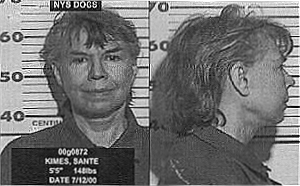
Convicted
Connection tags:
:max_bytes(150000):strip_icc():focal(749x0:751x2)/sherri-papinie-050125-6fed48fca2f5411e9f00a9c8037c330d.jpg)
Convicted
Connection tags:

Accused
Connection tags:
Case Details
The neighbors heard screaming first.
Around 9 p.m. on February 4, 1974, in a quiet residential pocket of Berkeley, California, nineteen-year-old Patricia Campbell Hearst was watching television with her fiancé, Steven Weed, when the front door of their apartment burst open. Three armed members of a fringe revolutionary cell called the Symbionese Liberation Army shoved inside. They beat Weed, bound him, and dragged Hearst toward the street. She screamed for help as they forced her into the trunk of a waiting car. Within minutes, the granddaughter of the most powerful press baron in American history had vanished into the California night.
What followed was not merely a kidnapping. It was a psychological unraveling, a criminal transformation, and a cultural reckoning that the country is still having fifty years later.
Patricia Campbell Hearst was born on February 20, 1954, the third of five daughters of Randolph Apperson Hearst and Catherine Wood Campbell. Her grandfather, William Randolph Hearst, had built one of the largest media empires in American history, and the family name carried weight that was almost impossible to overstate. She grew up in Hillsborough, California, cycling through elite private institutions: Crystal Springs School for Girls, Sacred Heart in Atherton, the Santa Catalina School in Monterey. By 1974, she was a sophomore at UC Berkeley, studying art history, engaged to her former high school mathematics tutor. Her life was not sheltered from ideas. It was sheltered from danger.
The Symbionese Liberation Army was neither large nor ideologically coherent, but it was genuinely lethal. The group was led by Donald DeFreeze, an escaped convict who called himself General Field Marshall Cinque. Before kidnapping Hearst, the SLA had already committed murder: in November 1973, they assassinated Marcus Foster, the superintendent of Oakland public schools, with cyanide-tipped bullets. This was not a protest organization. It was a cell of armed fanatics, and it chose Patricia Hearst as a hostage precisely because her name was a weapon in itself.
After the abduction, Hearst was kept blindfolded and confined in a small closet. For approximately 57 days, she had almost no light, almost no space, and constant exposure to the voices of her captors. She was physically and sexually abused. She was lectured, at length and repeatedly, on the crimes of capitalism and the obligations of revolution. Her captors addressed her as a class enemy. Over weeks, under conditions that psychologists would later describe as consistent with coercive persuasion, she began to call herself Tania, after Haydée Tamara Bunke Bider, a companion of Che Guevara.
The SLA's ransom demand was not money in the conventional sense. They ordered Randolph Hearst to fund a massive food distribution program for poor Californians. He arranged a $2 million giveaway called People in Need, which produced chaotic distribution scenes across the Bay Area. The SLA called it inadequate. The demands escalated. And Patricia Hearst, sealed in her closet, was being remade.
On April 3, 1974, an audiotape arrived at a Bay Area radio station. The voice on it was calm, measured, and unmistakably hers. She announced that she had joined the SLA's armed struggle. She renounced her family. She called herself Tania. The country received this message with a combination of horror, disbelief, and a kind of morbid fascination that would never entirely go away.
Twelve days later, the fascination turned to something colder.
On April 15, 1974, four SLA members walked into the Hibernia Bank branch in San Francisco's Sunset District and robbed it. Surveillance cameras recorded everything. In the footage, Hearst is visible holding an assault rifle, moving through the bank with apparent confidence. She is wearing a beret. She does not look like a hostage. A federal grand jury indicted her in June 1974, and the photograph from those cameras became one of the defining images of American crime in the twentieth century.
The SLA's momentum did not hold. On May 16, 1974, Hearst was outside Mel's Sporting Goods in Inglewood when SLA members William and Emily Harris were caught shoplifting inside. When confronted by store security, she opened fire from the vehicle, spraying more than 80 rounds of automatic gunfire into the street to cover their escape. No one died, but the intent was unambiguous.
The following day, May 17, 1974, Los Angeles police surrounded an SLA safe house. What followed was a ferocious, hours-long gun battle broadcast live on television across the country. The house caught fire. Six SLA members died in the siege, including DeFreeze. Hearst and the Harrises, not present at the safe house, watched the inferno on a motel television set. She later wrote that she expected to be caught and killed within days. Instead, the three of them went underground and stayed there for more than a year.
During those months as a fugitive, Hearst helped construct improvised explosive devices used in a series of attempted bombings targeting police vehicles in August 1975. She moved through safe houses, changed her appearance, and drifted through an underworld that grew smaller and more paranoid by the month.
On September 18, 1975, FBI agents and San Francisco police surrounded an apartment in the Mission District. Hearst was inside with a woman named Wendy Yoshimura. She offered no resistance. William and Emily Harris were arrested separately the same day. At booking, when asked her occupation, Hearst gave an answer that would be quoted for decades: 'Urban guerrilla.'
She weighed 87 pounds.
Post-arrest testing revealed that her IQ had dropped from approximately 130 to 112 and that she had significant gaps in her memory of the preceding nineteen months. The physical and psychological deterioration she presented was consistent with severe, prolonged trauma. But by 1976, the country had largely made up its mind, and nuance was not welcome.
Her trial began on February 4, 1976, exactly two years after the kidnapping, in U.S. District Court in San Francisco. Judge Oliver J. Carter presided. The prosecution was led by U.S. Attorney James L. Browning Jr. F. Lee Bailey, already famous for the Sam Sheppard defense and cultivating the reputation that would later define his career, took on her defense. Bailey argued that Hearst had been brainwashed and had acted throughout under duress. He brought in expert witnesses who described coercive persuasion in clinical terms.
The prosecution argued that she had been a willing participant. They played the audiotapes of her revolutionary declarations. They displayed the bank surveillance photographs. They pointed out that she had had opportunities to escape and had not taken them. On the stand, Hearst testified that she had been raped, threatened with death, and had fired the weapon at Mel's out of terror rather than conviction. But she also invoked the Fifth Amendment repeatedly during cross-examination, and the jury noticed.
On March 20, 1976, the jury returned a verdict of guilty on charges of bank robbery and use of a firearm during the commission of a felony. Judge Carter initially sentenced her to 35 years. After Carter's death, the sentence was reduced to seven years by Judge William H. Orrick Jr. Bail was revoked in 1978 when the Supreme Court declined to hear her appeal. She served a total of approximately 22 months, a period that included a collapsed lung requiring emergency surgery.
On February 1, 1979, President Jimmy Carter commuted her sentence to time served. She walked out of the Federal Correctional Institution at Dublin, California, back into a world that had spent five years debating whether she was a victim, a villain, or something the law did not yet have words for.
Within two months of her release, she married Bernard Lee Shaw, a San Francisco police officer who had been part of her security detail during bail. They remained married for 34 years, until his death from cancer in December 2013, at age 68, in Garrison, New York. By then, Shaw was vice president of corporate security for the Hearst Corporation. They had two daughters together, Gillian Hearst Simonds and Lydia Hearst-Shaw.
Hearst published her memoir, 'Every Secret Thing,' in 1982, co-written with Alvin Moscow. She built a secondary life as a character actress in a series of John Waters films: 'Cry-Baby' in 1990, 'Serial Mom' in 1994, 'Pecker' in 1998, 'Cecil B. DeMented' in 2000, and 'A Dirty Shame' in 2004. Waters, who had a gift for reclaiming taboo figures, seemed to understand something about Hearst that the legal system never quite had the vocabulary to address. She appeared in 'Veronica Mars' and 'Boston Common.' She became, in her own peculiar way, a cult figure.
On January 20, 2001, the last day of his presidency, Bill Clinton granted Patricia Campbell Hearst a full presidential pardon, restoring all her civil rights.
Her case did something else that has outlasted the court records and the presidential clemency. It lodged the concept of Stockholm syndrome into American consciousness, providing a popular framework for understanding why captives sometimes identify with their captors. (The term itself had originated from a 1973 bank robbery in Stockholm, Sweden, in which hostages defended their captors after their release.) The Hearst case became the definitive American reference point for that phenomenon, because it gave the concept a face that was rich, famous, photogenic, and saturated in controversy.
The question that drove the trial, and that has never been settled to everyone's satisfaction, is not really a legal question. It is a psychological one: what do 57 days in a closet, under sustained abuse and relentless indoctrination, do to a human mind? The prosecution insisted Hearst chose her path. The defense insisted that choice itself had been stripped from her. The jury sided with the prosecution. History has been less decisive.
Today, Patricia Hearst Shaw breeds French bulldogs with a seriousness of purpose that would surprise anyone who knows her only from the surveillance footage. Her dogs placed in competition at the Westminster Kennel Club Dog Show in 2017. She rarely gives interviews. In January 2024, Roger Rapoport published 'Searching for Patty Hearst: A True Crime Novel,' reigniting the old debates on the fiftieth anniversary of the kidnapping. Hearst herself had nothing to say.
That silence, after all these years, may be the most honest thing she has left us.
Timeline
Birth of Patricia Campbell Hearst
Patricia Campbell Hearst was born in San Francisco, California, the third of five daughters of Randolph Apperson Hearst and Catherine Wood Campbell. As the granddaughter of publishing magnate William Randolph Hearst, she was raised in privilege in Hillsborough, California, attending elite private schools. At the time of her kidnapping she was a sophomore at UC Berkeley studying art history and engaged to her former math tutor, Steven Weed.
Her identity as a wealthy media heiress made her an ideologically symbolic target for the Symbionese Liberation Army and ensured her case would become one of the most publicized criminal sagas of the 20th century.
SLA Kidnapping from Berkeley Apartment
On the night of February 4, 1974, three armed members of the Symbionese Liberation Army burst into Hearst's Berkeley apartment, beat her fiancé Steven Weed, and dragged a screaming 19-year-old Hearst into the trunk of a waiting car. The SLA, led by escaped convict Donald DeFreeze (alias 'General Field Marshall Cinque'), was a radical domestic terrorist group that had already assassinated Oakland school superintendent Marcus Foster with cyanide-tipped bullets. Hearst was blindfolded and confined to a small closet for approximately 57–59 days, during which she was subjected to physical and sexual abuse and relentless psychological manipulation.
The abduction of one of America's most prominent heiresses triggered a massive FBI manhunt and a media frenzy, and the prolonged isolation and abuse Hearst endured in captivity became the crux of her later legal defense.
Hearst Announces Joining the SLA as 'Tania'
Approximately two months after her kidnapping, an audiotape was released in which Hearst announced she had joined the SLA's revolutionary struggle, adopted the name 'Tania' — after Haydée Tamara Bunke Bider, a Che Guevara associate — and renounced her family and her former life. The SLA had previously demanded her father Randolph Hearst fund a massive food distribution program; he arranged a $2 million 'People in Need' giveaway, but the SLA declared it inadequate. The tape shocked the nation and transformed the case from a kidnapping into a profound and contested question about identity, coercion, and free will.
The 'Tania' tape dramatically shifted public perception of Hearst from victim to potential willing participant, laying the groundwork for the prosecution's theory at trial while also fueling debate about brainwashing and coercive persuasion.
Hibernia Bank Robbery — Hearst Filmed with Assault Rifle
Hearst was captured on bank surveillance cameras at the Hibernia Bank's Sunset District branch in San Francisco, visibly wielding an assault rifle while SLA members robbed the bank of approximately $10,960. She identified herself on a subsequent audiotape as a willing combatant, not a hostage acting under duress, declaring she had chosen to stay with the SLA. A federal grand jury indicted her in June 1974 for bank robbery and use of a firearm during the commission of a felony.
The surveillance footage became the single most damning piece of evidence against Hearst at trial, providing prosecutors with a vivid visual record of her apparent active participation in an armed felony.
Mel's Sporting Goods Shooting and LA Safe House Siege
On May 16–17, 1974, Hearst fired over 80 rounds of automatic gunfire into the street outside Mel's Sporting Goods store in Inglewood, California, to cover the escape of SLA members William and Emily Harris who had been caught shoplifting. The following day, May 17, six SLA members including leader Donald DeFreeze were killed by LAPD in a massive shootout and fire at an SLA safe house in Los Angeles — an event Hearst and the Harrises watched on television from a nearby motel. Hearst and the surviving Harrises then fled, going on the run across the country for over a year.
The Mel's shooting demonstrated Hearst's capacity for independent armed action in defense of her captors, further undermining her later duress defense, while the destruction of the SLA's core leadership transformed the fugitive group into a desperate remnant.
Arrest in San Francisco's Mission District
After more than 19 months as a fugitive — during which she helped manufacture improvised explosive devices used in attempted attacks on police officers in August 1975 — Hearst was arrested at an apartment in San Francisco's Mission District along with Wendy Yoshimura; William and Emily Harris were captured separately the same day. At the time of booking, Hearst listed her occupation as 'Urban Guerrilla,' and she weighed only 87 pounds; post-arrest testing revealed her IQ had dropped from 130 to 112 with significant memory gaps, consistent with severe trauma. The FBI had been hunting her for over a year under a National Firearms Act warrant issued in September 1974.
The arrest ended one of the longest and most publicized fugitive hunts in American history, and Hearst's dramatically deteriorated physical and cognitive condition immediately became central evidence for the defense's coercive persuasion argument.
Federal Bank Robbery Trial Begins
Hearst's trial commenced on February 4, 1976 — exactly two years to the day after her kidnapping — in U.S. District Court in San Francisco before Judge Oliver J. Carter, with celebrity defense attorney F. Lee Bailey representing her and U.S. Attorney James L. Browning Jr. prosecuting. Bailey's defense centered on the argument that Hearst had been brainwashed through coercive persuasion and acted under constant threat of death, calling expert witnesses on psychological manipulation and trauma. Prosecutors countered that she was a voluntary revolutionary who had multiple opportunities to escape and chose not to, and Hearst's repeated invocations of the Fifth Amendment on the stand — 42 times by some counts — severely damaged her credibility with the jury.
The trial became a landmark cultural and legal event, placing the concepts of brainwashing, Stockholm Syndrome, and coercive persuasion before a national audience and raising fundamental questions about criminal responsibility under psychological duress.
Conviction for Bank Robbery and Firearms Felony
After deliberating for approximately 12 hours, the jury found Patricia Hearst guilty of armed bank robbery and use of a firearm during the commission of a felony in connection with the April 1974 Hibernia Bank robbery. Judge Oliver Carter originally sentenced her to 35 years in prison, a sentence later reduced to seven years by Judge William H. Orrick Jr. following Judge Carter's death. Hearst was imprisoned at the Federal Correctional Institution in Dublin (later Pleasanton), California, where she suffered a collapsed lung requiring emergency surgery.
The conviction rejected the coercive persuasion defense and set a significant legal precedent regarding the limits of duress as a criminal defense, while the relatively short sentence ultimately served reflected ongoing public ambivalence about her culpability.
President Carter Commutes Sentence; Hearst Released
On February 1, 1979, President Jimmy Carter commuted Patricia Hearst's sentence to time served, freeing her approximately eight months before her first parole eligibility date after she had served roughly 22 months in federal prison. Her bail had been revoked in May 1978 when the Supreme Court declined to hear her appeal, meaning she had served the final stretch of her sentence without the possibility of early release. Two months after her release, Hearst married Bernard Lee Shaw, a San Francisco police officer who had served as part of her security detail during her time on bail; they would have two daughters and remain married for 34 years until his death in 2013.
Carter's commutation — reportedly influenced in part by former Attorney General Griffin Bell and former FBI Director Clarence Kelley, both of whom questioned the fairness of her prosecution — signaled the beginning of Hearst's long rehabilitation into public life.
Full Presidential Pardon Granted by President Clinton
On the final day of his presidency, President Bill Clinton granted Patricia Campbell Hearst a full presidential pardon, completely restoring her civil rights and officially expunging her federal conviction from her record. The pardon came nearly 27 years after the Hibernia Bank robbery and was among a controversial batch of last-day pardons that Clinton issued, though Hearst's received comparatively little criticism given the extraordinary circumstances of her case. Now known as Patricia Hearst Shaw, she had by this point built a second career as a character actress in John Waters films, become a prominent figure on the competitive dog-show circuit, and published her memoir 'Every Secret Thing' — her case remaining one of the most debated and culturally resonant criminal sagas of the 20th century.
The full pardon provided the legal and symbolic closure to a case that had divided America for over two decades, and its issuance by a sitting president implicitly acknowledged the profound moral complexity of holding Hearst fully responsible for acts committed under extreme psychological and physical duress.
Crime Location
Photos
Hearst-hibernia-yell

Patti Hearst1

PattyHearstmug
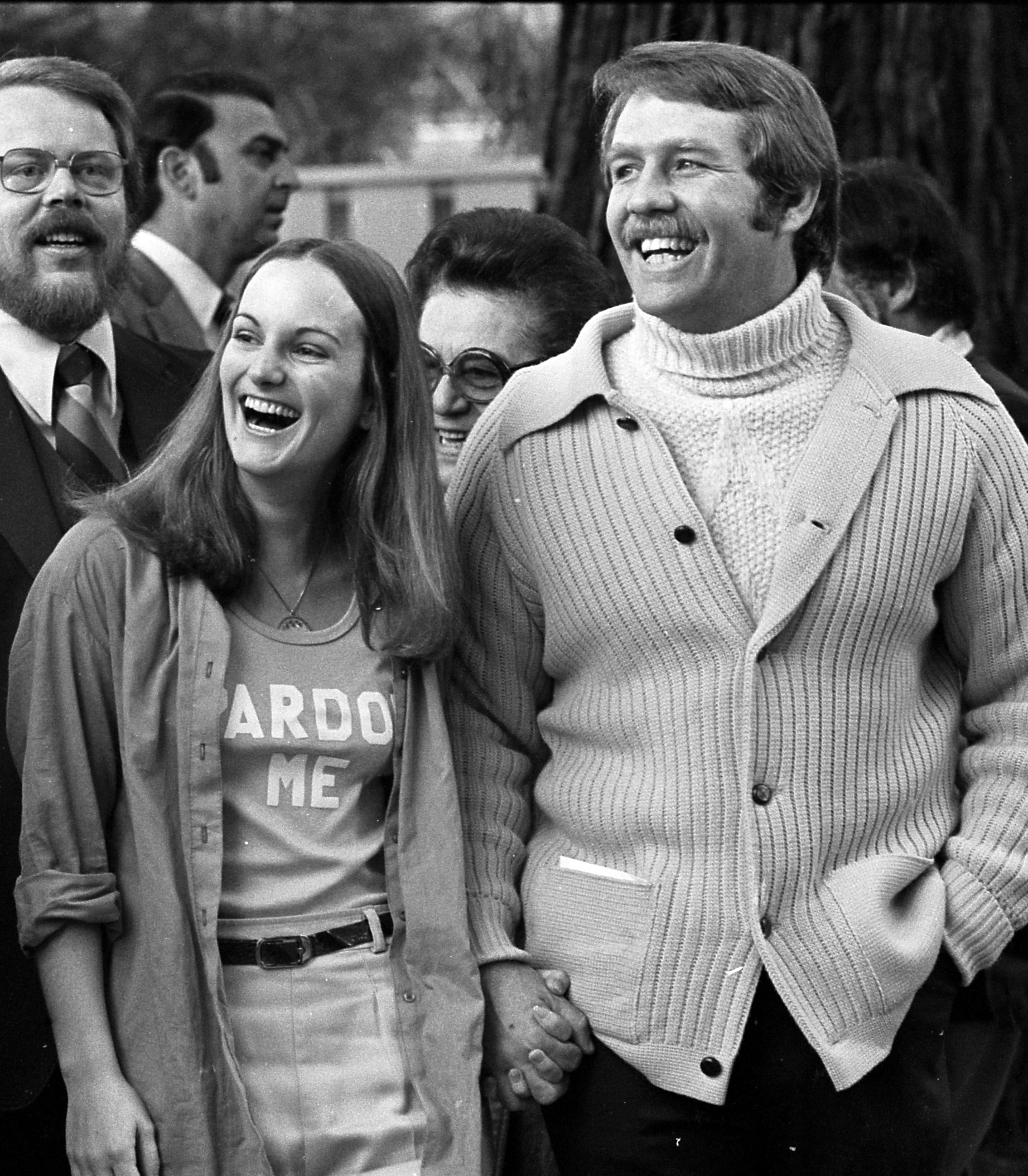
Patty Hearst and Bernard Shaw, 1979

Patty Hearst escorted by marshals
Sources
- Patty Hearst — Famous Cases & Criminals
- Every Secret Thing
- Searching for Patty Hearst: A True Crime Novel
- United States v. Hearst, 412 F. Supp. 893 (N.D. Cal. 1976)
- Patricia Hearst — Wikipedia
- Patty Hearst: Her Own Story (Film)
- The Symbionese Liberation Army and the Kidnapping of Patty Hearst
- Coercive Persuasion and the Hearst Case: Brainwashing or Voluntary Conversion?
Frequently Asked Questions
Table of Contents
Case Summary
The grainy black-and-white surveillance image from April 15, 1974 remains one of the most startling photographs in American criminal history: Patricia Campbell Hearst, granddaughter of publishing magnate William Randolph Hearst, standing inside a San Francisco bank with an assault rifle, a beret on her head and a new name on her lips. She called herself Tania. Seventy days earlier, she had been a nineteen-year-old UC Berkeley sophomore, engaged to be married, asleep in her Berkeley apartment when armed radicals dragged her screaming into the night. What happened during 57 days of blindfolded captivity in a closet, and what it produced in a young woman's mind, became the defining psychological mystery of the 1970s. Was she a victim coerced beyond the breaking point, or a willing revolutionary who found the cause intoxicating? A jury took less than two weeks to convict her. Jimmy Carter freed her. Bill Clinton pardoned her. Fifty years later, no one has fully agreed on who Patty Hearst really is. She weighed 87 pounds at her arrest. At booking, she listed her occupation as 'Urban Guerrilla.' The case that followed would rewrite how Americans understood the human mind under captivity, introduce a new term into the cultural vocabulary, and raise questions about identity, coercion, and justice that no verdict has ever put to rest.
February 20, 1954, San Francisco, California, USA(Age: 72)
Case Details
The neighbors heard screaming first.
Around 9 p.m. on February 4, 1974, in a quiet residential pocket of Berkeley, California, nineteen-year-old Patricia Campbell Hearst was watching television with her fiancé, Steven Weed, when the front door of their apartment burst open. Three armed members of a fringe revolutionary cell called the Symbionese Liberation Army shoved inside. They beat Weed, bound him, and dragged Hearst toward the street. She screamed for help as they forced her into the trunk of a waiting car. Within minutes, the granddaughter of the most powerful press baron in American history had vanished into the California night.
What followed was not merely a kidnapping. It was a psychological unraveling, a criminal transformation, and a cultural reckoning that the country is still having fifty years later.
Patricia Campbell Hearst was born on February 20, 1954, the third of five daughters of Randolph Apperson Hearst and Catherine Wood Campbell. Her grandfather, William Randolph Hearst, had built one of the largest media empires in American history, and the family name carried weight that was almost impossible to overstate. She grew up in Hillsborough, California, cycling through elite private institutions: Crystal Springs School for Girls, Sacred Heart in Atherton, the Santa Catalina School in Monterey. By 1974, she was a sophomore at UC Berkeley, studying art history, engaged to her former high school mathematics tutor. Her life was not sheltered from ideas. It was sheltered from danger.
The Symbionese Liberation Army was neither large nor ideologically coherent, but it was genuinely lethal. The group was led by Donald DeFreeze, an escaped convict who called himself General Field Marshall Cinque. Before kidnapping Hearst, the SLA had already committed murder: in November 1973, they assassinated Marcus Foster, the superintendent of Oakland public schools, with cyanide-tipped bullets. This was not a protest organization. It was a cell of armed fanatics, and it chose Patricia Hearst as a hostage precisely because her name was a weapon in itself.
After the abduction, Hearst was kept blindfolded and confined in a small closet. For approximately 57 days, she had almost no light, almost no space, and constant exposure to the voices of her captors. She was physically and sexually abused. She was lectured, at length and repeatedly, on the crimes of capitalism and the obligations of revolution. Her captors addressed her as a class enemy. Over weeks, under conditions that psychologists would later describe as consistent with coercive persuasion, she began to call herself Tania, after Haydée Tamara Bunke Bider, a companion of Che Guevara.
The SLA's ransom demand was not money in the conventional sense. They ordered Randolph Hearst to fund a massive food distribution program for poor Californians. He arranged a $2 million giveaway called People in Need, which produced chaotic distribution scenes across the Bay Area. The SLA called it inadequate. The demands escalated. And Patricia Hearst, sealed in her closet, was being remade.
On April 3, 1974, an audiotape arrived at a Bay Area radio station. The voice on it was calm, measured, and unmistakably hers. She announced that she had joined the SLA's armed struggle. She renounced her family. She called herself Tania. The country received this message with a combination of horror, disbelief, and a kind of morbid fascination that would never entirely go away.
Twelve days later, the fascination turned to something colder.
On April 15, 1974, four SLA members walked into the Hibernia Bank branch in San Francisco's Sunset District and robbed it. Surveillance cameras recorded everything. In the footage, Hearst is visible holding an assault rifle, moving through the bank with apparent confidence. She is wearing a beret. She does not look like a hostage. A federal grand jury indicted her in June 1974, and the photograph from those cameras became one of the defining images of American crime in the twentieth century.
The SLA's momentum did not hold. On May 16, 1974, Hearst was outside Mel's Sporting Goods in Inglewood when SLA members William and Emily Harris were caught shoplifting inside. When confronted by store security, she opened fire from the vehicle, spraying more than 80 rounds of automatic gunfire into the street to cover their escape. No one died, but the intent was unambiguous.
The following day, May 17, 1974, Los Angeles police surrounded an SLA safe house. What followed was a ferocious, hours-long gun battle broadcast live on television across the country. The house caught fire. Six SLA members died in the siege, including DeFreeze. Hearst and the Harrises, not present at the safe house, watched the inferno on a motel television set. She later wrote that she expected to be caught and killed within days. Instead, the three of them went underground and stayed there for more than a year.
During those months as a fugitive, Hearst helped construct improvised explosive devices used in a series of attempted bombings targeting police vehicles in August 1975. She moved through safe houses, changed her appearance, and drifted through an underworld that grew smaller and more paranoid by the month.
On September 18, 1975, FBI agents and San Francisco police surrounded an apartment in the Mission District. Hearst was inside with a woman named Wendy Yoshimura. She offered no resistance. William and Emily Harris were arrested separately the same day. At booking, when asked her occupation, Hearst gave an answer that would be quoted for decades: 'Urban guerrilla.'
She weighed 87 pounds.
Post-arrest testing revealed that her IQ had dropped from approximately 130 to 112 and that she had significant gaps in her memory of the preceding nineteen months. The physical and psychological deterioration she presented was consistent with severe, prolonged trauma. But by 1976, the country had largely made up its mind, and nuance was not welcome.
Her trial began on February 4, 1976, exactly two years after the kidnapping, in U.S. District Court in San Francisco. Judge Oliver J. Carter presided. The prosecution was led by U.S. Attorney James L. Browning Jr. F. Lee Bailey, already famous for the Sam Sheppard defense and cultivating the reputation that would later define his career, took on her defense. Bailey argued that Hearst had been brainwashed and had acted throughout under duress. He brought in expert witnesses who described coercive persuasion in clinical terms.
The prosecution argued that she had been a willing participant. They played the audiotapes of her revolutionary declarations. They displayed the bank surveillance photographs. They pointed out that she had had opportunities to escape and had not taken them. On the stand, Hearst testified that she had been raped, threatened with death, and had fired the weapon at Mel's out of terror rather than conviction. But she also invoked the Fifth Amendment repeatedly during cross-examination, and the jury noticed.
On March 20, 1976, the jury returned a verdict of guilty on charges of bank robbery and use of a firearm during the commission of a felony. Judge Carter initially sentenced her to 35 years. After Carter's death, the sentence was reduced to seven years by Judge William H. Orrick Jr. Bail was revoked in 1978 when the Supreme Court declined to hear her appeal. She served a total of approximately 22 months, a period that included a collapsed lung requiring emergency surgery.
On February 1, 1979, President Jimmy Carter commuted her sentence to time served. She walked out of the Federal Correctional Institution at Dublin, California, back into a world that had spent five years debating whether she was a victim, a villain, or something the law did not yet have words for.
Within two months of her release, she married Bernard Lee Shaw, a San Francisco police officer who had been part of her security detail during bail. They remained married for 34 years, until his death from cancer in December 2013, at age 68, in Garrison, New York. By then, Shaw was vice president of corporate security for the Hearst Corporation. They had two daughters together, Gillian Hearst Simonds and Lydia Hearst-Shaw.
Hearst published her memoir, 'Every Secret Thing,' in 1982, co-written with Alvin Moscow. She built a secondary life as a character actress in a series of John Waters films: 'Cry-Baby' in 1990, 'Serial Mom' in 1994, 'Pecker' in 1998, 'Cecil B. DeMented' in 2000, and 'A Dirty Shame' in 2004. Waters, who had a gift for reclaiming taboo figures, seemed to understand something about Hearst that the legal system never quite had the vocabulary to address. She appeared in 'Veronica Mars' and 'Boston Common.' She became, in her own peculiar way, a cult figure.
On January 20, 2001, the last day of his presidency, Bill Clinton granted Patricia Campbell Hearst a full presidential pardon, restoring all her civil rights.
Her case did something else that has outlasted the court records and the presidential clemency. It lodged the concept of Stockholm syndrome into American consciousness, providing a popular framework for understanding why captives sometimes identify with their captors. (The term itself had originated from a 1973 bank robbery in Stockholm, Sweden, in which hostages defended their captors after their release.) The Hearst case became the definitive American reference point for that phenomenon, because it gave the concept a face that was rich, famous, photogenic, and saturated in controversy.
The question that drove the trial, and that has never been settled to everyone's satisfaction, is not really a legal question. It is a psychological one: what do 57 days in a closet, under sustained abuse and relentless indoctrination, do to a human mind? The prosecution insisted Hearst chose her path. The defense insisted that choice itself had been stripped from her. The jury sided with the prosecution. History has been less decisive.
Today, Patricia Hearst Shaw breeds French bulldogs with a seriousness of purpose that would surprise anyone who knows her only from the surveillance footage. Her dogs placed in competition at the Westminster Kennel Club Dog Show in 2017. She rarely gives interviews. In January 2024, Roger Rapoport published 'Searching for Patty Hearst: A True Crime Novel,' reigniting the old debates on the fiftieth anniversary of the kidnapping. Hearst herself had nothing to say.
That silence, after all these years, may be the most honest thing she has left us.
Timeline
Birth of Patricia Campbell Hearst
Patricia Campbell Hearst was born in San Francisco, California, the third of five daughters of Randolph Apperson Hearst and Catherine Wood Campbell. As the granddaughter of publishing magnate William Randolph Hearst, she was raised in privilege in Hillsborough, California, attending elite private schools. At the time of her kidnapping she was a sophomore at UC Berkeley studying art history and engaged to her former math tutor, Steven Weed.
Her identity as a wealthy media heiress made her an ideologically symbolic target for the Symbionese Liberation Army and ensured her case would become one of the most publicized criminal sagas of the 20th century.
SLA Kidnapping from Berkeley Apartment
On the night of February 4, 1974, three armed members of the Symbionese Liberation Army burst into Hearst's Berkeley apartment, beat her fiancé Steven Weed, and dragged a screaming 19-year-old Hearst into the trunk of a waiting car. The SLA, led by escaped convict Donald DeFreeze (alias 'General Field Marshall Cinque'), was a radical domestic terrorist group that had already assassinated Oakland school superintendent Marcus Foster with cyanide-tipped bullets. Hearst was blindfolded and confined to a small closet for approximately 57–59 days, during which she was subjected to physical and sexual abuse and relentless psychological manipulation.
The abduction of one of America's most prominent heiresses triggered a massive FBI manhunt and a media frenzy, and the prolonged isolation and abuse Hearst endured in captivity became the crux of her later legal defense.
Hearst Announces Joining the SLA as 'Tania'
Approximately two months after her kidnapping, an audiotape was released in which Hearst announced she had joined the SLA's revolutionary struggle, adopted the name 'Tania' — after Haydée Tamara Bunke Bider, a Che Guevara associate — and renounced her family and her former life. The SLA had previously demanded her father Randolph Hearst fund a massive food distribution program; he arranged a $2 million 'People in Need' giveaway, but the SLA declared it inadequate. The tape shocked the nation and transformed the case from a kidnapping into a profound and contested question about identity, coercion, and free will.
The 'Tania' tape dramatically shifted public perception of Hearst from victim to potential willing participant, laying the groundwork for the prosecution's theory at trial while also fueling debate about brainwashing and coercive persuasion.
Hibernia Bank Robbery — Hearst Filmed with Assault Rifle
Hearst was captured on bank surveillance cameras at the Hibernia Bank's Sunset District branch in San Francisco, visibly wielding an assault rifle while SLA members robbed the bank of approximately $10,960. She identified herself on a subsequent audiotape as a willing combatant, not a hostage acting under duress, declaring she had chosen to stay with the SLA. A federal grand jury indicted her in June 1974 for bank robbery and use of a firearm during the commission of a felony.
The surveillance footage became the single most damning piece of evidence against Hearst at trial, providing prosecutors with a vivid visual record of her apparent active participation in an armed felony.
Mel's Sporting Goods Shooting and LA Safe House Siege
On May 16–17, 1974, Hearst fired over 80 rounds of automatic gunfire into the street outside Mel's Sporting Goods store in Inglewood, California, to cover the escape of SLA members William and Emily Harris who had been caught shoplifting. The following day, May 17, six SLA members including leader Donald DeFreeze were killed by LAPD in a massive shootout and fire at an SLA safe house in Los Angeles — an event Hearst and the Harrises watched on television from a nearby motel. Hearst and the surviving Harrises then fled, going on the run across the country for over a year.
The Mel's shooting demonstrated Hearst's capacity for independent armed action in defense of her captors, further undermining her later duress defense, while the destruction of the SLA's core leadership transformed the fugitive group into a desperate remnant.
Arrest in San Francisco's Mission District
After more than 19 months as a fugitive — during which she helped manufacture improvised explosive devices used in attempted attacks on police officers in August 1975 — Hearst was arrested at an apartment in San Francisco's Mission District along with Wendy Yoshimura; William and Emily Harris were captured separately the same day. At the time of booking, Hearst listed her occupation as 'Urban Guerrilla,' and she weighed only 87 pounds; post-arrest testing revealed her IQ had dropped from 130 to 112 with significant memory gaps, consistent with severe trauma. The FBI had been hunting her for over a year under a National Firearms Act warrant issued in September 1974.
The arrest ended one of the longest and most publicized fugitive hunts in American history, and Hearst's dramatically deteriorated physical and cognitive condition immediately became central evidence for the defense's coercive persuasion argument.
Federal Bank Robbery Trial Begins
Hearst's trial commenced on February 4, 1976 — exactly two years to the day after her kidnapping — in U.S. District Court in San Francisco before Judge Oliver J. Carter, with celebrity defense attorney F. Lee Bailey representing her and U.S. Attorney James L. Browning Jr. prosecuting. Bailey's defense centered on the argument that Hearst had been brainwashed through coercive persuasion and acted under constant threat of death, calling expert witnesses on psychological manipulation and trauma. Prosecutors countered that she was a voluntary revolutionary who had multiple opportunities to escape and chose not to, and Hearst's repeated invocations of the Fifth Amendment on the stand — 42 times by some counts — severely damaged her credibility with the jury.
The trial became a landmark cultural and legal event, placing the concepts of brainwashing, Stockholm Syndrome, and coercive persuasion before a national audience and raising fundamental questions about criminal responsibility under psychological duress.
Conviction for Bank Robbery and Firearms Felony
After deliberating for approximately 12 hours, the jury found Patricia Hearst guilty of armed bank robbery and use of a firearm during the commission of a felony in connection with the April 1974 Hibernia Bank robbery. Judge Oliver Carter originally sentenced her to 35 years in prison, a sentence later reduced to seven years by Judge William H. Orrick Jr. following Judge Carter's death. Hearst was imprisoned at the Federal Correctional Institution in Dublin (later Pleasanton), California, where she suffered a collapsed lung requiring emergency surgery.
The conviction rejected the coercive persuasion defense and set a significant legal precedent regarding the limits of duress as a criminal defense, while the relatively short sentence ultimately served reflected ongoing public ambivalence about her culpability.
President Carter Commutes Sentence; Hearst Released
On February 1, 1979, President Jimmy Carter commuted Patricia Hearst's sentence to time served, freeing her approximately eight months before her first parole eligibility date after she had served roughly 22 months in federal prison. Her bail had been revoked in May 1978 when the Supreme Court declined to hear her appeal, meaning she had served the final stretch of her sentence without the possibility of early release. Two months after her release, Hearst married Bernard Lee Shaw, a San Francisco police officer who had served as part of her security detail during her time on bail; they would have two daughters and remain married for 34 years until his death in 2013.
Carter's commutation — reportedly influenced in part by former Attorney General Griffin Bell and former FBI Director Clarence Kelley, both of whom questioned the fairness of her prosecution — signaled the beginning of Hearst's long rehabilitation into public life.
Full Presidential Pardon Granted by President Clinton
On the final day of his presidency, President Bill Clinton granted Patricia Campbell Hearst a full presidential pardon, completely restoring her civil rights and officially expunging her federal conviction from her record. The pardon came nearly 27 years after the Hibernia Bank robbery and was among a controversial batch of last-day pardons that Clinton issued, though Hearst's received comparatively little criticism given the extraordinary circumstances of her case. Now known as Patricia Hearst Shaw, she had by this point built a second career as a character actress in John Waters films, become a prominent figure on the competitive dog-show circuit, and published her memoir 'Every Secret Thing' — her case remaining one of the most debated and culturally resonant criminal sagas of the 20th century.
The full pardon provided the legal and symbolic closure to a case that had divided America for over two decades, and its issuance by a sitting president implicitly acknowledged the profound moral complexity of holding Hearst fully responsible for acts committed under extreme psychological and physical duress.
Crime Location
Photos
Hearst-hibernia-yell
Patti Hearst1
PattyHearstmug
Patty Hearst and Bernard Shaw, 1979
Patty Hearst escorted by marshals
Sources
- Patty Hearst — Famous Cases & Criminals
- Every Secret Thing
- Searching for Patty Hearst: A True Crime Novel
- United States v. Hearst, 412 F. Supp. 893 (N.D. Cal. 1976)
- Patricia Hearst — Wikipedia
- Patty Hearst: Her Own Story (Film)
- The Symbionese Liberation Army and the Kidnapping of Patty Hearst
- Coercive Persuasion and the Hearst Case: Brainwashing or Voluntary Conversion?
Frequently Asked Questions
Related Cases
Accused
Connection tags:
Convicted
Connection tags:
Accused
Connection tags:
Convicted
Connection tags:
Convicted
Connection tags:
Accused
Connection tags:
Tags
Popular Culture
movie (1988)
Film adaptation of Hearst's memoir directed by Paul Schrader, starring Natasha Richardson as Patricia Hearst, depicting her kidnapping, SLA captivity, and trial.
book (1982)
Hearst's own memoir co-written with Alvin Moscow, providing her first-person account of the kidnapping, SLA indoctrination, crimes, trial, and imprisonment.
movie (1990)
John Waters musical comedy in which Patricia Hearst Shaw appeared as an actress, marking her entry into Waters' ensemble of performers.
movie (1994)
John Waters dark comedy featuring Patricia Hearst Shaw in a supporting role.
movie (1998)
John Waters comedy in which Patricia Hearst Shaw appeared as a supporting character.
movie (2000)
John Waters film featuring Patricia Hearst Shaw; notably thematically resonant given its plot involving a kidnapped actress forced into radical filmmaking.
movie (2004)
John Waters comedy featuring Patricia Hearst Shaw in a supporting role.
TV (2005)
Television drama series in which Patricia Hearst Shaw made a guest appearance.
documentary (1988)
Documentary examining the kidnapping, SLA activities, and the criminal trial of Patricia Hearst.
documentary (2004)
PBS American Experience documentary directed by Robert Stone, examining the SLA kidnapping of Patty Hearst and its political and cultural context.
book (2024)
Roger Rapoport's 2024 true crime book reigniting public debate on the case on its 50th anniversary.