7 cases tagged “life sentence”
Convicted: Sara Jane Moore
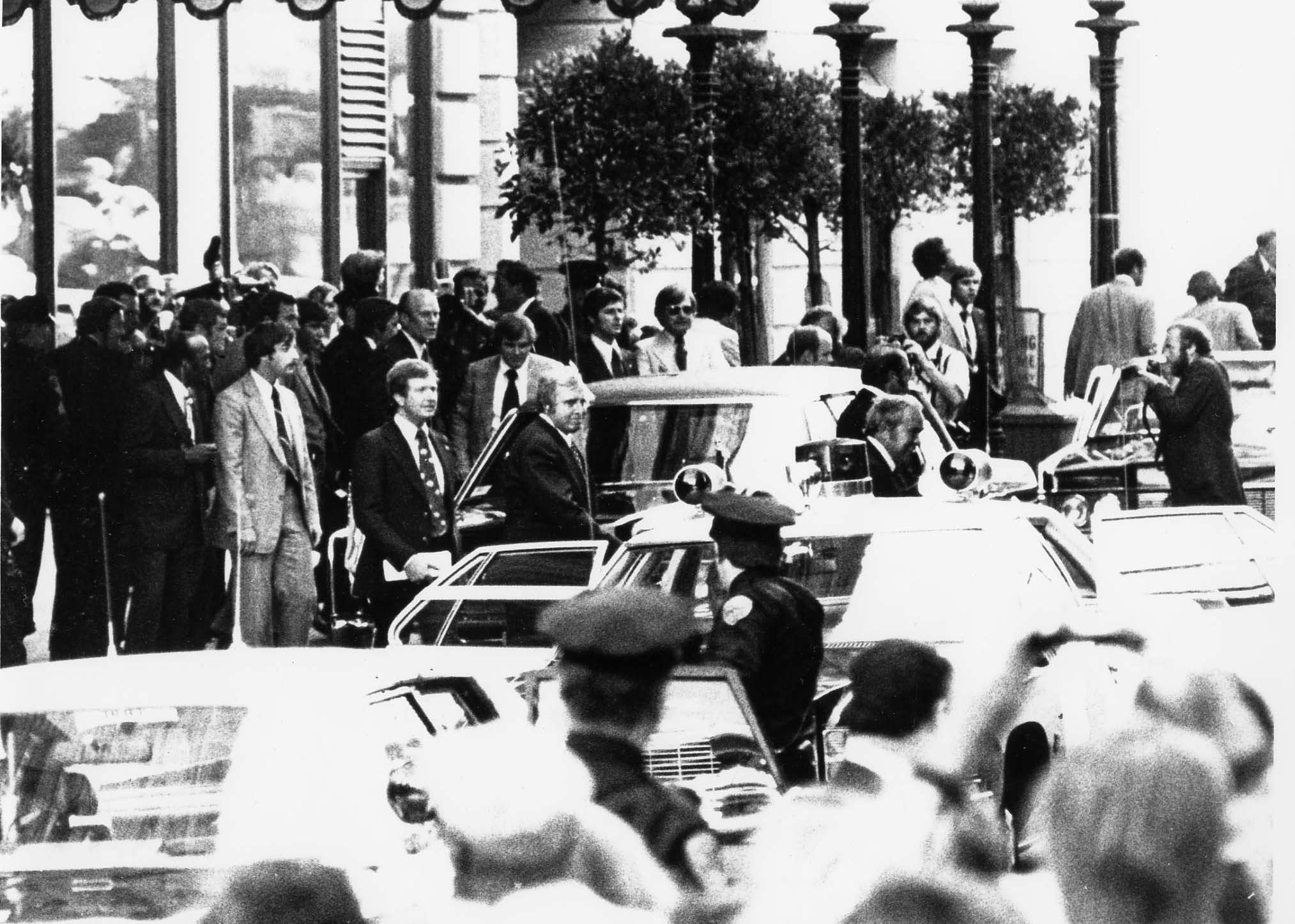
On September 22, 1975, a 45-year-old woman with a new .38-caliber revolver stood in the crowd outside San Francisco's St. Francis Hotel and fired one shot at the President of the United States. The bullet missed Gerald Ford's head by five inches. The day before, police had already arrested Sara Jane Moore on an illegal weapons charge and confiscated her gun; she walked free, bought a replacement the next morning, and tried anyway. She was not a trained operative, not a seasoned radical, not a career criminal. She was a five-times-married West Virginia bookkeeper who had somehow become simultaneously an FBI informant and a spy against the FBI, a woman so consumed by the revolutionary fervor of 1970s San Francisco that she convinced herself murdering a president would ignite a leftist uprising. She was wrong about nearly everything. But she came terrifyingly close to being right about one thing: five more inches, and American history changes. Sara Jane Moore died on September 24, 2025, in a nursing home in Franklin, Tennessee, at age 95, two days after the 50th anniversary of her attempt. This is the story of how an ordinary woman walked to the edge of history and pulled the trigger.
Convicted: Celeste Beard Johnson
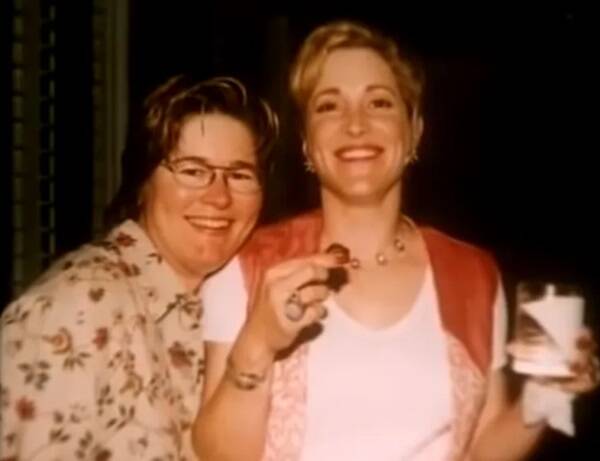
At 3:00 in the morning on October 2, 1999, Tracey Tarlton crept into a sleeping man's bedroom in the affluent Westlake Hills neighborhood of Austin, Texas, and pressed a 20-gauge shotgun against his abdomen. Steven Beard, a 76-year-old retired Fox Broadcasting executive worth millions, never heard her coming. His much younger wife was asleep in a separate wing of their lakeside mansion. Or so she claimed. Celeste Beard Johnson was beautiful, charming, and seemingly devoted. She was also, investigators would discover, spending at a pace that defied grief: more than $670,000 burned through in the months surrounding her husband's wounding and death. When Tarlton was arrested six days after the shooting, police found a shrine of Celeste's photographs in her home. When Tarlton finally broke her silence, she described a calculated manipulation, a manufactured love affair, and a cold-blooded plot to collect an inheritance. Celeste's own twin daughters took the stand against her. A phone call, recorded by one of those daughters, captured Celeste screaming that she had 'hired somebody' to have Tarlton silenced. In March 2003, a Travis County jury found Celeste Beard Johnson guilty of capital murder. She is currently serving a life sentence at the Lane Murray Unit in Gatesville, Texas, with parole eligibility not until 2042, when she will be nearly 80 years old. She has always maintained her innocence. Her daughters disagree.
Convicted: Diane Michelle Zamora
In the fall of 1996, a nineteen-year-old Naval Academy midshipman named Diane Zamora sat in her barracks at Annapolis, trading stories with her fellow cadets about devotion and sacrifice. She had a fiancé, she told them. He loved her so much that he had killed a girl for her. She said it like a badge of honor. What the cadets did next would unravel a nine-month-old murder and destroy two of the most promising military careers in Texas. Diane Zamora had grown up in Crowley, Texas, with straight A's, a National Honor Society pin, and dreams of becoming an astronaut. Her boyfriend, David Graham, was bound for the Air Force Academy. Together, they looked like the future. But on the night of December 3, 1995, a sixteen-year-old girl named Adrianne Jones climbed into Graham's car and never came home. What followed was one of the most chilling true crime cases of the 1990s: a story about jealousy so corrosive it became lethal, two killers who confessed and then blamed each other, and a murder that a jury watched unfold on Court TV. Zamora is currently serving a life sentence in Texas. She won't be eligible for parole until 2036.
Convicted: Sharee Paulette Kitley Miller
Two days after her husband Bruce was shot dead at his junkyard in rural Michigan, Sharee Miller was spotted dancing at a nightclub. Within weeks, she had moved a new boyfriend into her home. She was twenty-eight years old, newly widowed, and utterly unbothered. The murder itself had been methodical: Sharee had spent months in AOL adult chat rooms, crafting a persona designed to ensnare a man named Jerry Cassaday, a former homicide detective. She told him Bruce was abusive, that he had mafia connections, that he had forced her to abort their babies. None of it was true. But Cassaday believed every word, and in November 1999 he drove nearly eight hundred miles to put a shotgun to Bruce Miller's back. When it was over, Sharee simply vanished from Cassaday's life. He died by suicide three months later, leaving behind a briefcase stuffed with printed chat logs, hotel receipts, and an airline ticket that told the whole story. What followed was something American courts had never quite seen before: a murder trial built almost entirely on digital evidence harvested from the early internet. This is the story of how a woman from a Flint, Michigan trailer park turned an AOL chat room into a weapon.
Convicted: Sante Louise Kimes (née Singhrs; also known as Sandra Louise Singhrs, Sandra Chambers)
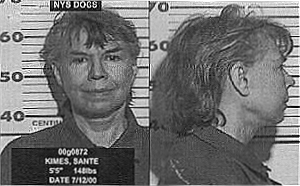
When New York City police stopped Sante Kimes and her son Kenny on an unrelated bad-check warrant on July 5, 1998, they expected a routine collar. What they found inside the car rewrote the definition of premeditation: two loaded pistols, plastic handcuffs, wigs, fright masks, syringes, a date-rape drug, an empty stun gun box, thirty thousand dollars in cash, a forged deed to a $7.7 million Manhattan mansion, and fifteen notebooks in which Sante had carefully practiced forging an 82-year-old woman's signature. Irene Silverman, the socialite who had rented a room to Kenny just weeks earlier, was already gone. Her body has never been found. It was the ending of a story that had begun decades earlier in the dust of Oklahoma City, wound through con jobs and slave-keeping and a White House party crasher and insurance fires, and arrived at last at the feet of a woman a judge would call 'a sociopath and a degenerate.' Sante Kimes was 64 years old and had not yet finished.
Convicted: Joyce Lemay McDillon Cohen
At 5:25 on a March morning in 1986, Joyce Cohen called 911 from her Coconut Grove mansion and told dispatchers that burglars had shot her millionaire husband four times in the head while he slept. Then she kept police waiting outside the house for more than eight hours. It was the first of many decisions that would define the rest of her life. The story of Joyce Cohen is a portrait of poverty survived and luxury squandered, of a woman who clawed her way from foster homes in Illinois to the highest rungs of Miami society, only to watch it all collapse in a single pre-dawn hour. What followed was a nearly three-year investigation, a sensational trial, a jailhouse informant who failed three polygraphs, and a lead detective who privately believed the whole prosecution theory was wrong. Joyce Cohen has maintained her innocence for nearly four decades. She is in her late seventies now, housed at Homestead Correctional Institution in Florida, with a parole board having pushed her release date to 2048. The mansion is gone. The Jaguars are gone. Stanley Cohen has been in the ground since 1986. And the full truth of what happened that night may never be known.
Convicted: Susan Leigh Smith
The lake was quiet when Susan Smith let her car roll in. With her sons, three-year-old Michael and fourteen-month-old Alexander, still strapped in their car seats, the 1990 Mazda Protegé sank 122 feet from shore at John D. Long Lake in Union County, South Carolina. It took approximately six minutes. Then Susan Smith ran to a nearby house and told a lie that gripped an entire nation: a Black man had carjacked her vehicle, her babies still inside. For nine days, America watched her weep on television while a manhunt consumed Union County and innocent Black men were stopped by police hunting a suspect who never existed. The lie collapsed on November 3, 1994, when Smith confessed and led divers to the sunken car. She was convicted of two counts of first-degree murder. Thirty years later, she sat before a parole board via video link and said: 'I know what I did was horrible.' The board voted unanimously to deny her release. Her next hearing is in November 2026. This is the story of Susan Smith: her shattered childhood, her calculating deception, her infamous trial, and the question that still has no satisfying answer. What made a mother choose a man over her sons?