Susan Denise Atkins

Case Summary
Susan Denise Atkins was a member of the 'Manson Family', the cult led by Charles Manson that committed a series of nine murders at four locations in California over a period of five weeks in the summer of 1969. Known within the Manson family as Sadie, Sadie Glutz, Sadie Mae Glutz or Sexy Sadie, Atkins was convicted for her participation in eight of these killings, most notably the Tate murders. She was originally sentenced to death, but her sentence was later commuted to life imprisonment after the California Supreme Court invalidated all death sentences issued prior to 1972. She was incarcerated until her death in 2009, at the time being California's longest-serving female inmate.
May 7, 1948, San Gabriel, California, United States(Age: 61)
September 24, 2009, Chowchilla, California, U.S.
Related Cases

Convicted
Connection tags:

Convicted
Connection tags:
Convicted
Connection tags:

Convicted
Connection tags:
Convicted
Connection tags:

Accused
Connection tags:
Case Details
In the dark annals of American crime history, few names conjure as much horror and fascination as that of Charles Manson and his infamous "Family." Among this motley crew of societal outcasts and lost souls, one woman stood out for her involvement in some of the most notorious crimes of the 20th century: Susan Denise Atkins or, as she was known within the Manson Family, Sadie Mae Glutz or Sexy Sadie.
Born in 1948, Atkins began life under circumstances that seemed to foreshadow her tumultuous future. Raised in a troubled household, she was the middle child of alcoholic parents. Her mother died of cancer when Atkins was only 15, and her father abandoned the family, leaving Atkins to fend for herself and her younger brother. This unstable childhood may have been the catalyst that propelled her into a life of crime and her eventual association with Charles Manson.
In the mid-1960s, Atkins met Manson, a charismatic ex-convict with a burgeoning following of young, disaffected followers attracted to his anti-establishment philosophy and promises of a utopian society. Atkins, like many others, was drawn in by Manson's charisma and became a loyal follower, living with him and his other disciples on Spahn Ranch, a dilapidated movie set turned commune in the outskirts of Los Angeles.
In the summer of 1969, the Manson Family's twisted interpretation of societal revolution culminated in a series of horrific murders that would shake the nation to its core. Atkins was implicated in eight of these brutal killings, including the notorious Tate murders, which claimed the life of actress Sharon Tate and four others.
On August 9, 1969, Atkins, along with fellow Manson family members Charles "Tex" Watson, Patricia Krenwinkel, and Linda Kasabian, drove to the home of Sharon Tate, who was eight months pregnant at the time. Following Manson's orders, they brutally murdered Tate and four other victims: Jay Sebring, Abigail Folger, Wojciech Frykowski, and Steven Parent. The following night, Atkins participated in the murders of Leno and Rosemary LaBianca, again acting under Manson's directives.
The murders were gruesome, marked by overkill and a macabre desire to instill fear. Atkins, in particular, was reported to have been exceptionally brutal, stabbing Tate multiple times and later admitting to having tasted the actress's blood. The killers left behind a chilling message at the Tate residence, using their victims' blood to write the word "PIG" on the front door.
The Manson Family's reign of terror came to an end when Atkins was arrested for an unrelated crime in October 1969. While in custody, she confessed to her cellmate, Ronnie Howard, about her involvement in the Tate-LaBianca murders. This confession would later prove to be the breakthrough that investigators needed to link Manson and his followers to the killings.
In the subsequent trial, Atkins testified, providing a chilling account of the murders. She expressed no remorse, a fact that shocked and horrified the nation. Her testimony, coupled with other evidence, led to her conviction and death sentence in 1971, along with Manson and several other family members. However, in 1972, the California Supreme Court invalidated all death sentences issued prior to that year, and Atkins' sentence was commuted to life imprisonment.
During her incarceration, Atkins' behavior underwent a significant transformation. She claimed to have found religion, specifically Christianity, and expressed remorse for her actions. Despite these assertions of change, her numerous parole requests were denied, the last being in 2009, three months before her death from brain cancer. At the time of her death, she was California's longest-serving female inmate, a dubious distinction since surpassed by fellow Manson Family members Leslie Van Houten and Patricia Krenwinkel.
Atkins' case, like that of her fellow Manson Family members, elicited widespread public outrage and fascination. The sheer brutality of the crimes, coupled with the killers' lack of remorse, resonated deeply with the public and the media, making it one of the most notorious criminal cases of the 20th century. Atkins, in particular, due to her direct involvement in the murders and her later transformation in prison, became a symbol of the darkest aspects of the counterculture movement of the 1960s.
The cultural impact of the Manson Family murders, with Atkins at the center, has been profound and lasting. The case not only shocked the world but also marked a turning point in American society, signalling the end of the era of peace and love associated with the 1960s. It has since become a subject of numerous books, films, and documentaries, a testament to its enduring fascination and horror.
In the annals of true crime, Susan Atkins stands out as a chilling example of how a troubled individual can be drawn into a life of violence and depravity under the influence of a charismatic leader. Her life and crimes serve as a stark reminder of the dark side of human nature, and the capacity for evil that can lurk beneath the surface of seemingly ordinary individuals.
Timeline
Tate Murders
Atkins participated in the Tate murders, a mass murder of five individuals.
Arrest
Atkins was arrested in connection with the Tate murders.
Convicted
Atkins was convicted of first degree murder and conspiracy to commit murder.
Death Sentence Commuted
Atkins' death sentence was commuted to life imprisonment.
Death
Susan Atkins died in prison.
Crime Location
Photos
Mugshot of Susan Atkins
The Manson Family
Crime Scene of the Tate Murders
Susan Atkins - Primary image
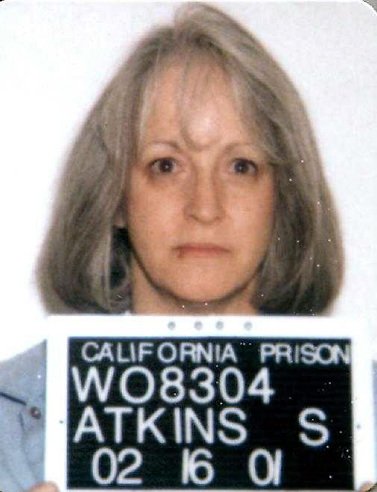
Susan Atkins - Image 2
Sources
Frequently Asked Questions
Table of Contents
Case Summary
Susan Denise Atkins was a member of the 'Manson Family', the cult led by Charles Manson that committed a series of nine murders at four locations in California over a period of five weeks in the summer of 1969. Known within the Manson family as Sadie, Sadie Glutz, Sadie Mae Glutz or Sexy Sadie, Atkins was convicted for her participation in eight of these killings, most notably the Tate murders. She was originally sentenced to death, but her sentence was later commuted to life imprisonment after the California Supreme Court invalidated all death sentences issued prior to 1972. She was incarcerated until her death in 2009, at the time being California's longest-serving female inmate.
May 7, 1948, San Gabriel, California, United States(Age: 61)
September 24, 2009, Chowchilla, California, U.S.
Case Details
In the dark annals of American crime history, few names conjure as much horror and fascination as that of Charles Manson and his infamous "Family." Among this motley crew of societal outcasts and lost souls, one woman stood out for her involvement in some of the most notorious crimes of the 20th century: Susan Denise Atkins or, as she was known within the Manson Family, Sadie Mae Glutz or Sexy Sadie.
Born in 1948, Atkins began life under circumstances that seemed to foreshadow her tumultuous future. Raised in a troubled household, she was the middle child of alcoholic parents. Her mother died of cancer when Atkins was only 15, and her father abandoned the family, leaving Atkins to fend for herself and her younger brother. This unstable childhood may have been the catalyst that propelled her into a life of crime and her eventual association with Charles Manson.
In the mid-1960s, Atkins met Manson, a charismatic ex-convict with a burgeoning following of young, disaffected followers attracted to his anti-establishment philosophy and promises of a utopian society. Atkins, like many others, was drawn in by Manson's charisma and became a loyal follower, living with him and his other disciples on Spahn Ranch, a dilapidated movie set turned commune in the outskirts of Los Angeles.
In the summer of 1969, the Manson Family's twisted interpretation of societal revolution culminated in a series of horrific murders that would shake the nation to its core. Atkins was implicated in eight of these brutal killings, including the notorious Tate murders, which claimed the life of actress Sharon Tate and four others.
On August 9, 1969, Atkins, along with fellow Manson family members Charles "Tex" Watson, Patricia Krenwinkel, and Linda Kasabian, drove to the home of Sharon Tate, who was eight months pregnant at the time. Following Manson's orders, they brutally murdered Tate and four other victims: Jay Sebring, Abigail Folger, Wojciech Frykowski, and Steven Parent. The following night, Atkins participated in the murders of Leno and Rosemary LaBianca, again acting under Manson's directives.
The murders were gruesome, marked by overkill and a macabre desire to instill fear. Atkins, in particular, was reported to have been exceptionally brutal, stabbing Tate multiple times and later admitting to having tasted the actress's blood. The killers left behind a chilling message at the Tate residence, using their victims' blood to write the word "PIG" on the front door.
The Manson Family's reign of terror came to an end when Atkins was arrested for an unrelated crime in October 1969. While in custody, she confessed to her cellmate, Ronnie Howard, about her involvement in the Tate-LaBianca murders. This confession would later prove to be the breakthrough that investigators needed to link Manson and his followers to the killings.
In the subsequent trial, Atkins testified, providing a chilling account of the murders. She expressed no remorse, a fact that shocked and horrified the nation. Her testimony, coupled with other evidence, led to her conviction and death sentence in 1971, along with Manson and several other family members. However, in 1972, the California Supreme Court invalidated all death sentences issued prior to that year, and Atkins' sentence was commuted to life imprisonment.
During her incarceration, Atkins' behavior underwent a significant transformation. She claimed to have found religion, specifically Christianity, and expressed remorse for her actions. Despite these assertions of change, her numerous parole requests were denied, the last being in 2009, three months before her death from brain cancer. At the time of her death, she was California's longest-serving female inmate, a dubious distinction since surpassed by fellow Manson Family members Leslie Van Houten and Patricia Krenwinkel.
Atkins' case, like that of her fellow Manson Family members, elicited widespread public outrage and fascination. The sheer brutality of the crimes, coupled with the killers' lack of remorse, resonated deeply with the public and the media, making it one of the most notorious criminal cases of the 20th century. Atkins, in particular, due to her direct involvement in the murders and her later transformation in prison, became a symbol of the darkest aspects of the counterculture movement of the 1960s.
The cultural impact of the Manson Family murders, with Atkins at the center, has been profound and lasting. The case not only shocked the world but also marked a turning point in American society, signalling the end of the era of peace and love associated with the 1960s. It has since become a subject of numerous books, films, and documentaries, a testament to its enduring fascination and horror.
In the annals of true crime, Susan Atkins stands out as a chilling example of how a troubled individual can be drawn into a life of violence and depravity under the influence of a charismatic leader. Her life and crimes serve as a stark reminder of the dark side of human nature, and the capacity for evil that can lurk beneath the surface of seemingly ordinary individuals.
Timeline
Tate Murders
Atkins participated in the Tate murders, a mass murder of five individuals.
Arrest
Atkins was arrested in connection with the Tate murders.
Convicted
Atkins was convicted of first degree murder and conspiracy to commit murder.
Death Sentence Commuted
Atkins' death sentence was commuted to life imprisonment.
Death
Susan Atkins died in prison.
Crime Location
Photos
Mugshot of Susan Atkins
The Manson Family
Crime Scene of the Tate Murders
Susan Atkins - Primary image
Susan Atkins - Image 2
Sources
Frequently Asked Questions
Related Cases
Convicted
Connection tags:
Convicted
Connection tags:
Convicted
Connection tags:
Convicted
Connection tags:
Convicted
Connection tags:
Accused
Connection tags:
Popular Culture
book (1974)
A true crime book about the Manson Family murders, including Susan Atkins' involvement.
movie (2003)
A crime drama film that depicts the Manson Family and their crimes.
TV (2015)
A television series that includes a character based on Susan Atkins.