Tracey Avril Wigginton
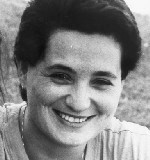
Case Summary
The police found her bank card tucked inside the dead man's shoe. His clothes had been folded neatly nearby, as though someone had taken great care with them, though no such care had been taken with Edward Baldock himself. He lay on the grass at Orleigh Park, stabbed twenty-seven times, his head nearly severed from his body. It was October 1989, and Brisbane was about to reckon with one of the most disturbing murders in its history.
The woman whose card was found in that shoe was Tracey Wigginton, a 24-year-old who stood six feet tall and moved through the city's occult underground with quiet intensity. She had, by her own account and the accounts of her associates, been working toward this night for some time. She wanted to drink a human being's blood. When police caught up with her, she told them she had felt nothing while stabbing Baldock, that she had sat down afterward to smoke a cigarette and watched him die.
At sentencing, she faced the cameras and said: "It's hard to be famous, isn't it? A legend in my own mind."
This is the story of Tracey Wigginton: a troubled child from Rockhampton who became the most notorious female killer in modern Australian history, and the questions her case still provokes today about justice, rehabilitation, and the darkness that can take root inside a human being.
August 4, 1965, Australia (grew up in Rockhampton, Queensland)(Age: 15)
January 1, 1981
Related Cases

Convicted
Connection tags:
Accused
Connection tags:

Convicted
Connection tags:

Convicted
Connection tags:
Convicted
Connection tags:

Convicted
Connection tags:
Case Details
The shoes were what gave her away.
Edward Baldock's clothes had been folded with strange, almost ceremonial neatness and left on the grass at Orleigh Park, a quiet stretch of riverfront in Brisbane's inner suburb of West End. It was the early hours of October 21, 1989, and Baldock, forty-seven years old, a Brisbane City Council worker and father of four, lay dead nearby, his body bearing twenty-seven stab wounds, his head nearly severed from his neck. Inside one of his shoes, officers found a bank card. It belonged to a twenty-four-year-old woman named Tracey Avril Wigginton.
She had not tried to take it back.
That detail would become one of the most discussed elements of the case in the months that followed: the sheer carelessness, or perhaps the indifference, with which Wigginton had left the card behind. She had, by her own admission to police, felt nothing during the stabbing. She had sat down afterward, lit a cigarette, and watched Edward Baldock die.
Tracey Wigginton was born on August 4, 1965, and grew up in Rockhampton, a sun-baked city in central Queensland. When she was approximately three years old, her mother, struggling after a divorce, placed her in the care of her maternal grandparents, George and Avril Wigginton, who were wealthy and, according to Tracey, deeply dangerous. She would later claim that both grandparents subjected her to physical and sexual abuse throughout her childhood, a period she described as one of sustained terror and control.
Whatever the precise truth of those years, their effects were visible. A family friend would describe the young Tracey as "a loving girl, gifted artist and devout Catholic," and those who knew her in adolescence seemed to see someone straining to hold together a fractured interior life. Then, in 1981, when Tracey was approximately fifteen, both grandparents died, leaving her $75,000, a sum worth well over $300,000 in contemporary terms. She was suddenly alone, and solvent.
She moved back with her biological mother, who rejected her lesbianism, and the rupture was final. Over the following years, Wigginton drifted. After a miscarriage she could no longer bring herself to attend Mass, and the faith that had once anchored her slipped away entirely. She began corresponding with a white witch in Adelaide. When she eventually settled in Brisbane, she immersed herself in the occult, filling her space with black magic items and drawing symbols in animal blood. She was, within the city's occult subculture, a committed believer.
She also began killing animals and drinking their blood. She spoke openly, among her small circle of intimates, about her belief that she needed blood to survive, and about escalating beyond animals. Those who heard her apparently took it seriously enough to follow her when the night finally came.
By October 1989, Wigginton was twenty-four years old. She stood six feet tall and weighed two hundred and nine pounds, a physically imposing presence. Her girlfriend was Lisa Ptaschinski, also twenty-four. Two friends, Kim Jervis and Tracy Waugh, both twenty-three, moved in their orbit. On the night of October 21, the four women climbed into Wigginton's Holden Commodore and drove through Brisbane. They were looking for someone.
Edward Baldock had no way to know any of this. He was at Kangaroo Point, a riverside suburb south of the CBD, playing darts and drinking with friends. He was the kind of man who fills a room with noise and leaves it with handshakes. When the night wound down, he stepped outside to wait for a taxi.
Kim Jervis approached him. The exact nature of the approach is disputed; some accounts say she offered him a lift, others that she posed as a sex worker. Either way, Baldock got into the car. The group drove him across the river to Orleigh Park.
At the park, Baldock undressed. While he did so, Wigginton returned to the Holden and retrieved a knife. What followed was ferocious and brief. She stabbed him twenty-seven times, with wounds so severe his head was nearly separated from his body. She then drank his blood. Later, speaking to police, she said she "felt nothing" during the attack, that she sat down and smoked a cigarette while he died.
When investigators arrived at the scene, they found Baldock's clothes in that precise, unsettling arrangement: folded neatly, shoes set together, bank card tucked inside one of them. The card traced back to Wigginton within hours. All four women were arrested quickly. The investigation, in terms of identifying suspects, was the simplest part of the entire case.
What followed in court was considerably more complicated. Wigginton was the only one of the four to plead guilty to murder. Because she pleaded guilty, no full trial was conducted for her; a jury never heard her testimony under cross-examination. The three co-accused went to trial, and it was in that courtroom that the full strangeness of the case entered the public record. Ptaschinski, Jervis, and Waugh each described Wigginton's vampiric beliefs, her expressed need to feed, the months of planning and animal killing that had preceded the night at Orleigh Park. The trial became a spectacle unlike anything Brisbane's legal community had previously witnessed.
In January 1991, the Supreme Court of Queensland formally convicted Wigginton of murder. Justice Vasta sentenced her to life imprisonment, describing the attack as "brutal and savage," with a minimum non-parole period of thirteen years. Lisa Ptaschinski was also convicted of murder and received a life sentence. Kim Jervis was convicted of manslaughter and sentenced to eighteen years. Tracy Waugh was acquitted of all charges.
Wigginton, facing the cameras, offered the only public commentary she would give on the proceedings: "It's hard to be famous, isn't it? A legend in my own mind."
She served her sentence primarily at Brisbane Women's Correctional Centre. In 2003, administrators moved her to Numinbah Correctional Centre, a lower-security facility in the hinterland south of Brisbane, a transfer that suggested progress. It did not last. In 2006, following an assault on a fellow inmate and a prison guard, she was transferred back to Brisbane Women's Correctional Centre. The move came at a cost; she sustained a serious knee injury that significantly reduced her mobility and required sustained medical attention for years afterward.
While imprisoned, she was not entirely disengaged from the world of ideas. In May 2002, the academic journal Hecate published a first-person essay she had written titled "A Perspective on Long Term Imprisonment," appearing in volume 28, number 1. The piece was a measured, articulate reflection on extended incarceration. It was not the work of a woman who had simply switched off.
But rehabilitation, as parole boards measure it, proved elusive. Wigginton became first eligible for parole in 2002 and was denied. She was denied again, and again. Queensland Corrective Services cited ongoing social and anger management issues. A July 2009 application was rejected on the grounds that she represented an "unacceptable risk to the community." Her co-accused Ptaschinski, meanwhile, had been quietly approved for a resettlement leave program in 2008 and eventually released that year, a development that was briefly and incorrectly reported by several media outlets as Wigginton's own release.
Wigginton's release came in January 2012. The Queensland Parole Board approved her application in December 2011, and she walked free on January 11, twenty-one years after her conviction. She was forty-six years old.
The release was not without controversy. Reports emerged that she had been less than truthful with the parole board during her application process, and both the original investigating officers and the prosecutor raised serious public concerns. Her parole conditions barred her from contacting her co-offenders or the family of Edward Baldock. She was prohibited from selling her story or profiting in any way from the crime. She was not subject to electronic monitoring.
For nearly a decade, public attention faded. Then, in 2021, it returned via Facebook. Images she had posted publicly showed vampires, witches, and skulls. For the officers who had worked the Baldock case, the posts were not abstract provocation; they called publicly for her parole to be revoked.
Edward Baldock left behind four children. He had gone out for a night of darts and drinks and had never come home, and the particular cruelty of that ordinary beginning has always made the case difficult to fully absorb. He was not targeted because of anything he had done or said or was. He was targeted because he was available.
The case has never quite left the Australian cultural imagination. It has been the subject of books, including Trish Samuelson's "Lesbian Vampire Killer: The True Story of Tracey Wigginton," as well as documentaries, podcasts, and academic papers. The tabloid label attached to it from the beginning has been criticized, fairly, for reducing a complex and brutal crime to a headline calibrated to titillate. But the label also reflects something genuinely unprecedented in Australian criminal history: the combination of occult motivation, female perpetrators acting in concert, and the ferocity of the attack produced a case that resisted every familiar category.
What drove Tracey Wigginton is a question without a clean answer. Her account of a childhood defined by abuse, if true, describes the kind of early damage that can rewire a person at the deepest level. The occult world she entered gave structure and narrative to impulses that might otherwise have had none. Her co-accused followed her, which tells you something about the force of her personality, something that photographs and court transcripts cannot fully convey.
She is out of prison now, living somewhere in Queensland under conditions she is prohibited from turning into profit. Edward Baldock's children have long since grown. The Brisbane River still runs past Orleigh Park on summer nights, quiet and dark and indifferent to what happened there.
And somewhere in the public record, in the archives of a feminist academic journal and the transcripts of the Queensland Supreme Court and the memory of the officers who found a bank card inside a dead man's shoe, the story of October 21, 1989, continues to demand its accounting.
Timeline
Birth and Early Adoption
Tracey Avril Wigginton was born on 4 August 1965 in Australia and grew up in Rockhampton, Queensland. At approximately age three, she was adopted by her wealthy maternal grandparents, George and Avril Wigginton, after her mother could no longer care for her following a divorce. Wigginton would later claim her grandparents subjected her to controlling behaviour and physical and sexual abuse throughout her childhood.
Her traumatic early childhood and abusive upbringing were later cited as formative factors in her psychological development and eventual criminal behaviour.
Grandparents Die, Leaving Wigginton an Inheritance
When Wigginton was approximately 15 years old, both of her grandparents died, leaving her an inheritance of $75,000 (equivalent to roughly $310,640 in 2022 dollars). She briefly moved back in with her biological mother, who was not accepting of her lesbianism. A family friend described her at this time as 'a loving girl, gifted artist and devout Catholic.'
The death of her grandparents marked a pivotal turning point, severing her from the only home she had known and setting in motion a period of psychological and social instability.
Descent into the Occult
Following a miscarriage, Wigginton stopped attending Mass and began communicating with a white witch in Adelaide. After relocating to Brisbane, she immersed herself deeply in the occult, keeping black magic items and using animal blood to draw occult symbols. She allegedly killed and drank the blood of animals during this period, and had been planning to escalate to killing a human to 'feed.'
This period of occult immersion and escalating violent behaviour directly preceded the murder of Edward Baldock and established the vampiric motive that would define the case.
Murder of Edward Baldock at Orleigh Park
On the night of 21 October 1989, Wigginton and three associates — Lisa Ptaschinski, Kim Jervis, and Tracy Waugh — drove around Brisbane in Wigginton's Holden Commodore seeking a victim. They lured Edward Baldock, 47, a Brisbane council worker and father of four, into the car at Kangaroo Point after he had been drinking with friends. At Orleigh Park on the banks of the Brisbane River, Wigginton stabbed Baldock 27 times, nearly severing his head, before drinking his blood; she later told police she 'felt nothing' during the attack and calmly smoked a cigarette while watching him die.
The brutal and ritualistic nature of the killing — and Wigginton's chilling composure during and after it — made this one of the most shocking crimes in Australian history.
Bank Card Discovery Leads to Arrest
Police were led directly to Wigginton when they discovered her bank card inside one of Edward Baldock's shoes, found among his neatly folded clothes at the crime scene. All four women — Wigginton, Ptaschinski, Jervis, and Waugh — were quickly arrested in the days following the murder. The discovery of the bank card was a critical investigative breakthrough that unravelled the entire group.
The fortuitous discovery of the bank card was the singular piece of physical evidence that directly linked Wigginton to the scene and led to the swift arrest of all four co-accused.
Wigginton Pleads Guilty; Co-Accused Stand Trial
Wigginton was the only one of the four co-accused to plead guilty to murder, meaning no full trial was conducted for her charge. The three remaining co-accused — Ptaschinski, Jervis, and Waugh — stood trial, during which they described Wigginton's claimed vampiric tendencies and her self-described 'need to feed' as the motive for the murder. Ptaschinski was convicted of murder, Jervis of manslaughter, and Waugh was acquitted of all charges.
Wigginton's guilty plea and the subsequent trial of her co-accused brought the full, disturbing details of her vampiric beliefs and premeditated intent into the public record.
Life Sentence Handed Down by Justice Vasta
Wigginton was formally convicted of murder and sentenced to life imprisonment by the Supreme Court of Queensland, with a minimum non-parole period of 13 years. Justice Vasta described the attack as 'brutal and savage.' In a statement to the media following sentencing, Wigginton remarked: 'It's hard to be famous, isn't it? A legend in my own mind.'
The life sentence and Wigginton's callous post-sentencing remark reinforced public perception of her as remorseless and cemented the case's notoriety in Australian criminal history.
Appeals to Reduce Sentence Denied
During the 1990s, Wigginton made unsuccessful appeals to higher courts seeking to reduce her sentence. All appeals were denied, and the courts upheld the original sentencing determination. The repeated rejections reflected the judiciary's assessment of the severity of the crime and Wigginton's ongoing risk profile.
The failure of her appeals confirmed the finality of her life sentence and underscored the courts' view that the minimum non-parole period was appropriate given the brutality of the offence.
Transfer to Lower-Security Facility and Subsequent Return After Assault
In 2003, Wigginton was transferred from Brisbane Women's Correctional Centre (BWCC) to the lower-security Numinbah Correctional Centre, reflecting a degree of improved classification. However, in 2006 she was transferred back to BWCC following an assault on a fellow inmate and a prison guard. She also sustained a serious knee injury around this period that significantly reduced her mobility and required ongoing medical attention.
The assault and forced return to a higher-security facility illustrated persistent anger management issues that would continue to hinder her parole applications for years.
Parole Granted; Released After 21 Years
In December 2011, the independent Queensland Parole Board granted Wigginton's parole application after four previous rejections, including one in July 2009 where the board had cited 'unacceptable risk to the community.' She was released from prison on 11 January 2012, having served approximately 21 years. Reports indicated she had lied to the parole board during the application process, prompting concerns from original investigating officers and the prosecutor; her parole conditions barred her from contacting co-offenders or the victim's family and prohibited her from profiting from her story.
Her release — despite concerns about deception during the parole process and no electronic monitoring requirement — reignited public debate about community safety and the adequacy of parole oversight in high-profile cases.
Crime Location
Photos
Tracey Wigginton — photo published on Murderpedia's profile page for the case
Sources
- Tracey Wigginton — Murderpedia Profile
- Tracey Wigginton — Alchetron Biographical Entry
- Lesbian Vampire Killer: The True Story of Tracey Wigginton
- A Perspective on Long Term Imprisonment
- Tracey Wigginton — Wikipedia
Frequently Asked Questions
Table of Contents
Case Summary
The police found her bank card tucked inside the dead man's shoe. His clothes had been folded neatly nearby, as though someone had taken great care with them, though no such care had been taken with Edward Baldock himself. He lay on the grass at Orleigh Park, stabbed twenty-seven times, his head nearly severed from his body. It was October 1989, and Brisbane was about to reckon with one of the most disturbing murders in its history.
The woman whose card was found in that shoe was Tracey Wigginton, a 24-year-old who stood six feet tall and moved through the city's occult underground with quiet intensity. She had, by her own account and the accounts of her associates, been working toward this night for some time. She wanted to drink a human being's blood. When police caught up with her, she told them she had felt nothing while stabbing Baldock, that she had sat down afterward to smoke a cigarette and watched him die.
At sentencing, she faced the cameras and said: "It's hard to be famous, isn't it? A legend in my own mind."
This is the story of Tracey Wigginton: a troubled child from Rockhampton who became the most notorious female killer in modern Australian history, and the questions her case still provokes today about justice, rehabilitation, and the darkness that can take root inside a human being.
August 4, 1965, Australia (grew up in Rockhampton, Queensland)(Age: 15)
January 1, 1981
Case Details
The shoes were what gave her away.
Edward Baldock's clothes had been folded with strange, almost ceremonial neatness and left on the grass at Orleigh Park, a quiet stretch of riverfront in Brisbane's inner suburb of West End. It was the early hours of October 21, 1989, and Baldock, forty-seven years old, a Brisbane City Council worker and father of four, lay dead nearby, his body bearing twenty-seven stab wounds, his head nearly severed from his neck. Inside one of his shoes, officers found a bank card. It belonged to a twenty-four-year-old woman named Tracey Avril Wigginton.
She had not tried to take it back.
That detail would become one of the most discussed elements of the case in the months that followed: the sheer carelessness, or perhaps the indifference, with which Wigginton had left the card behind. She had, by her own admission to police, felt nothing during the stabbing. She had sat down afterward, lit a cigarette, and watched Edward Baldock die.
Tracey Wigginton was born on August 4, 1965, and grew up in Rockhampton, a sun-baked city in central Queensland. When she was approximately three years old, her mother, struggling after a divorce, placed her in the care of her maternal grandparents, George and Avril Wigginton, who were wealthy and, according to Tracey, deeply dangerous. She would later claim that both grandparents subjected her to physical and sexual abuse throughout her childhood, a period she described as one of sustained terror and control.
Whatever the precise truth of those years, their effects were visible. A family friend would describe the young Tracey as "a loving girl, gifted artist and devout Catholic," and those who knew her in adolescence seemed to see someone straining to hold together a fractured interior life. Then, in 1981, when Tracey was approximately fifteen, both grandparents died, leaving her $75,000, a sum worth well over $300,000 in contemporary terms. She was suddenly alone, and solvent.
She moved back with her biological mother, who rejected her lesbianism, and the rupture was final. Over the following years, Wigginton drifted. After a miscarriage she could no longer bring herself to attend Mass, and the faith that had once anchored her slipped away entirely. She began corresponding with a white witch in Adelaide. When she eventually settled in Brisbane, she immersed herself in the occult, filling her space with black magic items and drawing symbols in animal blood. She was, within the city's occult subculture, a committed believer.
She also began killing animals and drinking their blood. She spoke openly, among her small circle of intimates, about her belief that she needed blood to survive, and about escalating beyond animals. Those who heard her apparently took it seriously enough to follow her when the night finally came.
By October 1989, Wigginton was twenty-four years old. She stood six feet tall and weighed two hundred and nine pounds, a physically imposing presence. Her girlfriend was Lisa Ptaschinski, also twenty-four. Two friends, Kim Jervis and Tracy Waugh, both twenty-three, moved in their orbit. On the night of October 21, the four women climbed into Wigginton's Holden Commodore and drove through Brisbane. They were looking for someone.
Edward Baldock had no way to know any of this. He was at Kangaroo Point, a riverside suburb south of the CBD, playing darts and drinking with friends. He was the kind of man who fills a room with noise and leaves it with handshakes. When the night wound down, he stepped outside to wait for a taxi.
Kim Jervis approached him. The exact nature of the approach is disputed; some accounts say she offered him a lift, others that she posed as a sex worker. Either way, Baldock got into the car. The group drove him across the river to Orleigh Park.
At the park, Baldock undressed. While he did so, Wigginton returned to the Holden and retrieved a knife. What followed was ferocious and brief. She stabbed him twenty-seven times, with wounds so severe his head was nearly separated from his body. She then drank his blood. Later, speaking to police, she said she "felt nothing" during the attack, that she sat down and smoked a cigarette while he died.
When investigators arrived at the scene, they found Baldock's clothes in that precise, unsettling arrangement: folded neatly, shoes set together, bank card tucked inside one of them. The card traced back to Wigginton within hours. All four women were arrested quickly. The investigation, in terms of identifying suspects, was the simplest part of the entire case.
What followed in court was considerably more complicated. Wigginton was the only one of the four to plead guilty to murder. Because she pleaded guilty, no full trial was conducted for her; a jury never heard her testimony under cross-examination. The three co-accused went to trial, and it was in that courtroom that the full strangeness of the case entered the public record. Ptaschinski, Jervis, and Waugh each described Wigginton's vampiric beliefs, her expressed need to feed, the months of planning and animal killing that had preceded the night at Orleigh Park. The trial became a spectacle unlike anything Brisbane's legal community had previously witnessed.
In January 1991, the Supreme Court of Queensland formally convicted Wigginton of murder. Justice Vasta sentenced her to life imprisonment, describing the attack as "brutal and savage," with a minimum non-parole period of thirteen years. Lisa Ptaschinski was also convicted of murder and received a life sentence. Kim Jervis was convicted of manslaughter and sentenced to eighteen years. Tracy Waugh was acquitted of all charges.
Wigginton, facing the cameras, offered the only public commentary she would give on the proceedings: "It's hard to be famous, isn't it? A legend in my own mind."
She served her sentence primarily at Brisbane Women's Correctional Centre. In 2003, administrators moved her to Numinbah Correctional Centre, a lower-security facility in the hinterland south of Brisbane, a transfer that suggested progress. It did not last. In 2006, following an assault on a fellow inmate and a prison guard, she was transferred back to Brisbane Women's Correctional Centre. The move came at a cost; she sustained a serious knee injury that significantly reduced her mobility and required sustained medical attention for years afterward.
While imprisoned, she was not entirely disengaged from the world of ideas. In May 2002, the academic journal Hecate published a first-person essay she had written titled "A Perspective on Long Term Imprisonment," appearing in volume 28, number 1. The piece was a measured, articulate reflection on extended incarceration. It was not the work of a woman who had simply switched off.
But rehabilitation, as parole boards measure it, proved elusive. Wigginton became first eligible for parole in 2002 and was denied. She was denied again, and again. Queensland Corrective Services cited ongoing social and anger management issues. A July 2009 application was rejected on the grounds that she represented an "unacceptable risk to the community." Her co-accused Ptaschinski, meanwhile, had been quietly approved for a resettlement leave program in 2008 and eventually released that year, a development that was briefly and incorrectly reported by several media outlets as Wigginton's own release.
Wigginton's release came in January 2012. The Queensland Parole Board approved her application in December 2011, and she walked free on January 11, twenty-one years after her conviction. She was forty-six years old.
The release was not without controversy. Reports emerged that she had been less than truthful with the parole board during her application process, and both the original investigating officers and the prosecutor raised serious public concerns. Her parole conditions barred her from contacting her co-offenders or the family of Edward Baldock. She was prohibited from selling her story or profiting in any way from the crime. She was not subject to electronic monitoring.
For nearly a decade, public attention faded. Then, in 2021, it returned via Facebook. Images she had posted publicly showed vampires, witches, and skulls. For the officers who had worked the Baldock case, the posts were not abstract provocation; they called publicly for her parole to be revoked.
Edward Baldock left behind four children. He had gone out for a night of darts and drinks and had never come home, and the particular cruelty of that ordinary beginning has always made the case difficult to fully absorb. He was not targeted because of anything he had done or said or was. He was targeted because he was available.
The case has never quite left the Australian cultural imagination. It has been the subject of books, including Trish Samuelson's "Lesbian Vampire Killer: The True Story of Tracey Wigginton," as well as documentaries, podcasts, and academic papers. The tabloid label attached to it from the beginning has been criticized, fairly, for reducing a complex and brutal crime to a headline calibrated to titillate. But the label also reflects something genuinely unprecedented in Australian criminal history: the combination of occult motivation, female perpetrators acting in concert, and the ferocity of the attack produced a case that resisted every familiar category.
What drove Tracey Wigginton is a question without a clean answer. Her account of a childhood defined by abuse, if true, describes the kind of early damage that can rewire a person at the deepest level. The occult world she entered gave structure and narrative to impulses that might otherwise have had none. Her co-accused followed her, which tells you something about the force of her personality, something that photographs and court transcripts cannot fully convey.
She is out of prison now, living somewhere in Queensland under conditions she is prohibited from turning into profit. Edward Baldock's children have long since grown. The Brisbane River still runs past Orleigh Park on summer nights, quiet and dark and indifferent to what happened there.
And somewhere in the public record, in the archives of a feminist academic journal and the transcripts of the Queensland Supreme Court and the memory of the officers who found a bank card inside a dead man's shoe, the story of October 21, 1989, continues to demand its accounting.
Timeline
Birth and Early Adoption
Tracey Avril Wigginton was born on 4 August 1965 in Australia and grew up in Rockhampton, Queensland. At approximately age three, she was adopted by her wealthy maternal grandparents, George and Avril Wigginton, after her mother could no longer care for her following a divorce. Wigginton would later claim her grandparents subjected her to controlling behaviour and physical and sexual abuse throughout her childhood.
Her traumatic early childhood and abusive upbringing were later cited as formative factors in her psychological development and eventual criminal behaviour.
Grandparents Die, Leaving Wigginton an Inheritance
When Wigginton was approximately 15 years old, both of her grandparents died, leaving her an inheritance of $75,000 (equivalent to roughly $310,640 in 2022 dollars). She briefly moved back in with her biological mother, who was not accepting of her lesbianism. A family friend described her at this time as 'a loving girl, gifted artist and devout Catholic.'
The death of her grandparents marked a pivotal turning point, severing her from the only home she had known and setting in motion a period of psychological and social instability.
Descent into the Occult
Following a miscarriage, Wigginton stopped attending Mass and began communicating with a white witch in Adelaide. After relocating to Brisbane, she immersed herself deeply in the occult, keeping black magic items and using animal blood to draw occult symbols. She allegedly killed and drank the blood of animals during this period, and had been planning to escalate to killing a human to 'feed.'
This period of occult immersion and escalating violent behaviour directly preceded the murder of Edward Baldock and established the vampiric motive that would define the case.
Murder of Edward Baldock at Orleigh Park
On the night of 21 October 1989, Wigginton and three associates — Lisa Ptaschinski, Kim Jervis, and Tracy Waugh — drove around Brisbane in Wigginton's Holden Commodore seeking a victim. They lured Edward Baldock, 47, a Brisbane council worker and father of four, into the car at Kangaroo Point after he had been drinking with friends. At Orleigh Park on the banks of the Brisbane River, Wigginton stabbed Baldock 27 times, nearly severing his head, before drinking his blood; she later told police she 'felt nothing' during the attack and calmly smoked a cigarette while watching him die.
The brutal and ritualistic nature of the killing — and Wigginton's chilling composure during and after it — made this one of the most shocking crimes in Australian history.
Bank Card Discovery Leads to Arrest
Police were led directly to Wigginton when they discovered her bank card inside one of Edward Baldock's shoes, found among his neatly folded clothes at the crime scene. All four women — Wigginton, Ptaschinski, Jervis, and Waugh — were quickly arrested in the days following the murder. The discovery of the bank card was a critical investigative breakthrough that unravelled the entire group.
The fortuitous discovery of the bank card was the singular piece of physical evidence that directly linked Wigginton to the scene and led to the swift arrest of all four co-accused.
Wigginton Pleads Guilty; Co-Accused Stand Trial
Wigginton was the only one of the four co-accused to plead guilty to murder, meaning no full trial was conducted for her charge. The three remaining co-accused — Ptaschinski, Jervis, and Waugh — stood trial, during which they described Wigginton's claimed vampiric tendencies and her self-described 'need to feed' as the motive for the murder. Ptaschinski was convicted of murder, Jervis of manslaughter, and Waugh was acquitted of all charges.
Wigginton's guilty plea and the subsequent trial of her co-accused brought the full, disturbing details of her vampiric beliefs and premeditated intent into the public record.
Life Sentence Handed Down by Justice Vasta
Wigginton was formally convicted of murder and sentenced to life imprisonment by the Supreme Court of Queensland, with a minimum non-parole period of 13 years. Justice Vasta described the attack as 'brutal and savage.' In a statement to the media following sentencing, Wigginton remarked: 'It's hard to be famous, isn't it? A legend in my own mind.'
The life sentence and Wigginton's callous post-sentencing remark reinforced public perception of her as remorseless and cemented the case's notoriety in Australian criminal history.
Appeals to Reduce Sentence Denied
During the 1990s, Wigginton made unsuccessful appeals to higher courts seeking to reduce her sentence. All appeals were denied, and the courts upheld the original sentencing determination. The repeated rejections reflected the judiciary's assessment of the severity of the crime and Wigginton's ongoing risk profile.
The failure of her appeals confirmed the finality of her life sentence and underscored the courts' view that the minimum non-parole period was appropriate given the brutality of the offence.
Transfer to Lower-Security Facility and Subsequent Return After Assault
In 2003, Wigginton was transferred from Brisbane Women's Correctional Centre (BWCC) to the lower-security Numinbah Correctional Centre, reflecting a degree of improved classification. However, in 2006 she was transferred back to BWCC following an assault on a fellow inmate and a prison guard. She also sustained a serious knee injury around this period that significantly reduced her mobility and required ongoing medical attention.
The assault and forced return to a higher-security facility illustrated persistent anger management issues that would continue to hinder her parole applications for years.
Parole Granted; Released After 21 Years
In December 2011, the independent Queensland Parole Board granted Wigginton's parole application after four previous rejections, including one in July 2009 where the board had cited 'unacceptable risk to the community.' She was released from prison on 11 January 2012, having served approximately 21 years. Reports indicated she had lied to the parole board during the application process, prompting concerns from original investigating officers and the prosecutor; her parole conditions barred her from contacting co-offenders or the victim's family and prohibited her from profiting from her story.
Her release — despite concerns about deception during the parole process and no electronic monitoring requirement — reignited public debate about community safety and the adequacy of parole oversight in high-profile cases.
Crime Location
Photos
Tracey Wigginton — photo published on Murderpedia's profile page for the case
Sources
- Tracey Wigginton — Murderpedia Profile
- Tracey Wigginton — Alchetron Biographical Entry
- Lesbian Vampire Killer: The True Story of Tracey Wigginton
- A Perspective on Long Term Imprisonment
- Tracey Wigginton — Wikipedia
Frequently Asked Questions
Related Cases
Convicted
Connection tags:
Accused
Connection tags:
Convicted
Connection tags:
Convicted
Connection tags:
Convicted
Connection tags:
Convicted
Connection tags:
Tags
Popular Culture
book ()
True crime book by Trish Samuelson providing a detailed account of the Wigginton case, including the murder, trial, and the 'lesbian vampire killer' media narrative.
podcast ()
Multiple true crime podcasts have covered the Wigginton case, exploring the vampiric motive claims, the trial of the four co-accused, and Wigginton's 2012 parole.
documentary ()
The case has been featured in Australian and international true crime documentary television programmes, described as one of the most bizarre and brutal crimes in Australian history.