Valerie Jean Solanas
Case Summary
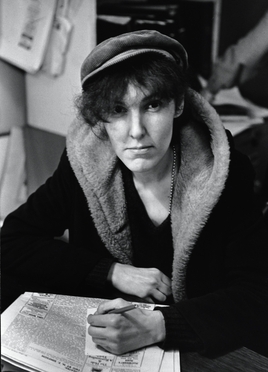
On the afternoon of June 3, 1968, Valerie Jean Solanas rode an elevator to Andy Warhol's Manhattan studio, pulled two firearms from a paper bag, and opened fire. She shot Warhol three times, hit art critic Mario Amaya in the hip, and attempted to execute Warhol's manager before her gun jammed. Then she walked out, hailed a cab, and waited. That evening, she surrendered to a Times Square patrolman, handed him both weapons, and offered nine words of explanation: 'He had too much control over my life.' Warhol survived, barely, after five hours of surgery during which he was briefly declared dead. He never fully recovered. Solanas, a woman with an IQ of 131 who authored one of the most provocative feminist texts of the twentieth century and held a psychology degree with honors, spent the rest of her life cycling through psychiatric wards and welfare hotels. She died alone in a San Francisco flophouse in 1988, her body undiscovered for days. What drove her to The Factory that afternoon, and what her life reveals about genius, mental illness, and the violence that festers at society's margins, remains as unsettling now as it was then.
April 9, 1936, Ventnor City, New Jersey, USA(Age: 52)
April 25, 1988, Bristol Hotel, Tenderloin District, San Francisco, California, USA (Acute and chronic aspirational bronchopneumonia and centrilobular pulmonary emphysema (bronchopneumonia); coroner also noted cachexia and fatty metamorphosis of the liver)
Related Cases
Convicted
Connection tags:
Convicted
Connection tags:
Convicted
Connection tags:

Convicted
Connection tags:

Convicted
Connection tags:

Accused
Connection tags:
Case Details
The afternoon of June 3, 1968, was unremarkable in most of Manhattan. Across the city, people were still processing Robert F. Kennedy's assassination, which had occurred less than twelve hours earlier in a Los Angeles hotel kitchen. The news cycle churned. The country felt, as it often did that year, as though it were cracking apart at its foundations.
At 33 Union Square West, the building housing Andy Warhol's studio known as The Factory, the day began like any other. Warhol was there, along with his manager Fred Hughes and art critic Mario Amaya, who had stopped by to discuss an exhibition. At approximately 4:30 in the afternoon, a woman stepped off the elevator. She wore a black turtleneck and a raincoat and carried a brown paper bag. Her name was Valerie Jean Solanas, and she had two firearms in that bag: a .32 semi-automatic and a .22 revolver.
She reached into the bag and opened fire.
The first shot missed Warhol. The second missed him, too. The third struck him in the torso, tearing through his stomach, liver, spleen, esophagus, and both lungs. Amaya caught a bullet in the hip. Solanas then turned the gun on Hughes, who pressed himself against a wall and pleaded with her to leave. Her weapon jammed. She turned and walked out.
Warhol was rushed to Columbus Hospital. Surgeons worked on him for five hours. At one point, they declared him dead. Somehow, he came back.
Several hours after the shooting, Valerie Solanas appeared in Times Square and approached Patrolman William Schmalix. She handed him both weapons. "He had too much control over my life," she said.
She was thirty-two years old.
Valerie Jean Solanas was born on April 9, 1936, in Ventnor City, New Jersey, a small Atlantic coast resort community that had long since passed its gilded age. Her father, Louis Solanas, was a bartender of Spanish-Canadian descent. Her mother, Dorothy Marie Biondo, was an Italian-American dental assistant. The marriage did not survive Valerie's childhood.
What happened inside that household before it dissolved is largely Solanas's own account. She alleged that her father sexually abused her repeatedly from childhood. Whatever the full truth of those years, the psychological damage was apparent. After the divorce, her mother remarried a piano tuner named Red Moran, whom Solanas despised. At thirteen, she was sent to live with her maternal grandparents. By fifteen, she had run away entirely, surviving on the streets through panhandling and prostitution.
In 1953, at seventeen, she gave birth to a son fathered by a married sailor. The boy was eventually adopted and given the name David Blackwell. Solanas never raised him.
The part of the story that consistently surprises people comes next. The homeless, parentless teenager who had panhandled her way through adolescence somehow finished high school on schedule, then enrolled at the University of Maryland, College Park, where she studied psychology. She joined Psi Chi, the national honor society for psychology students. She hosted a feminist radio advice program on campus. She graduated with a bachelor's degree in 1958. Intelligence testing would later place her in the top two percent of the population, with an IQ of 131.
The distance between that achievement and the life she actually lived is one of the defining tragedies of her story.
Graduate school followed, first at the University of Minnesota, then at UC Berkeley. She dropped out of both programs. She supported herself through panhandling and prostitution again. She drifted toward New York City in the mid-1960s, settling into the orbit of Greenwich Village's radical counterculture: underground theater, sexual politics, and manifestos sold on street corners.
Between 1965 and 1967, she wrote the text that would define her public identity. The SCUM Manifesto, an acronym for Society for Cutting Up Men, called for the elimination of men, the overthrow of government and the monetary system, and the construction of a fully automated, female-run world. It predicted, with unsettling specificity, technologies including ATMs, test-tube babies, and artificial insemination. She self-published it and sold copies on Village streets, charging women a dollar and men two.
Whether the manifesto was political theater, genuine ideology, or the product of a mind already detaching from consensus reality is a question scholars have debated for decades. Possibly it was all three at once.
She also wrote a play called "Up Your Ass," a scabrous, comic piece about a panhandler and a hustler navigating a city that barely sees them. In 1967, she brought the manuscript to Andy Warhol at The Factory, hoping he would produce it. Warhol misplaced it. The manuscript disappeared.
That same year, she appeared in two Warhol films, "I, a Man" and "Bike Boy," receiving $25 for her work. She also signed a contract with Maurice Girodias, the publisher of Olympia Press, for $500 in August 1967. She came to believe this contract was a trap. In her reading of the fine print, Girodias would own everything she ever wrote. In the architecture of her suspicion, Girodias and Warhol had begun to conspire against her, coordinating to strip away her intellectual property, her livelihood, the only things she had.
Paranoid schizophrenia works precisely this way. It takes the real (a poorly worded contract, a lost manuscript) and builds from those facts a fortress of conspiracy that feels, from the inside, indistinguishable from truth.
By the spring of 1968, Solanas was living in flophouses, telephoning The Factory repeatedly, demanding money and the return of her play. Warhol's staff grew accustomed to her calls. She had become, to them, a nuisance. To herself, she was a woman being systematically destroyed by powerful men who wanted to own what her mind produced.
On the morning of June 3, she loaded two guns and took a cab to Union Square.
The shooting lasted only minutes. Warhol's surgeons spent five hours trying to undo what those minutes had done to his body. The bullet had traversed nearly every organ in his torso. He spent nearly two months recovering at Columbus Hospital and was forced to wear a surgical corset for the rest of his life. The physical and psychological damage altered him fundamentally. He developed a pathological fear of hospitals; when gallbladder surgery became unavoidable in early 1987, he delayed seeking treatment far longer than he should have. He died on February 22, 1987, of cardiac arrhythmia following that surgery. Lou Reed, among others, argued publicly that the shooting effectively killed Warhol, just nineteen years after the fact.
After surrendering her weapons to Patrolman Schmalix in Times Square, Solanas was booked at the 13th Precinct. She was charged with attempted murder, assault, and illegal possession of a firearm. Photographs from that night show her in the turtleneck, her expression somewhere between defiant and exhausted, flanked by detectives.
She was initially found incompetent to stand trial. Psychiatric evaluation at Elmhurst Hospital and then Bellevue produced a formal diagnosis: chronic paranoid schizophrenia. She was transferred to Matteawan State Hospital for the Criminally Insane.
In June 1969, she pleaded guilty to a reduced charge of first-degree assault, specifically "reckless assault with intent to harm." The court sentenced her to three years' imprisonment, with credit for the time she had already spent in psychiatric confinement. She had shot one of the most famous men in the world and permanently damaged his health. She served roughly three years in total.
Upon release, she resumed making threats. In December 1971, she was arrested for threatening Grove Press editors Barney Rosset and Fred Jordan. The court institutionalized her at Dunlap-Manhattan Psychiatric Hospital on Wards Island. She escaped in February 1973 and was recommitted. The cycle of confinement, release, and deterioration continued through the decade.
The 1970s were largely lost years. She spent time in New York, briefly serving as an editor for the feminist biweekly Majority Report, and then drifted. By approximately 1981, she was homeless in Phoenix, Arizona, living primarily outdoors for several years. Eventually she relocated to San Francisco's Tenderloin District.
In San Francisco, she settled into the Bristol Hotel, a single-room occupancy welfare establishment, living on SSI assistance. She had changed her name to Onz Loh. She was reportedly working on an unpublished manuscript. She was, by any observable measure, almost entirely invisible.
In November 1987, the Warhol "superstar" Ultra Violet tracked her down and reached her by telephone. During that call, Solanas learned for the first time that Andy Warhol had died nine months earlier. Her response, as Ultra Violet recalled it: "I don't feel anything."
She had five months to live.
On April 25, 1988, Bristol Hotel supervisor Lev Krayzman found Valerie Solanas in her room. She was kneeling on the floor with her torso slumped across the bed. Her body was covered in maggots. Police estimated she had been dead for several days. She was fifty-two years old.
The official cause of death was acute and chronic aspirational bronchopneumonia combined with centrilobular pulmonary emphysema. The coroner also noted cachexia and fatty metamorphosis of the liver. She had been dying slowly for a long time, her body surrendering to the accumulated damage of a life lived mostly without adequate shelter, food, or medical care.
She was cremated on May 9, 1988. Her ashes were buried at St. Mary's Catholic Church Cemetery in Fairfax County, Virginia, at her mother's request. Her mother then burned everything that remained of Solanas's belongings.
What Valerie Solanas left behind refuses easy categorization. The SCUM Manifesto has been translated into dozens of languages and has sold more copies than nearly every other feminist text of its era. Her play "Up Your Ass," the manuscript Warhol lost, was rediscovered in 1999 in a trunk owned by photographer Billy Name and was produced in San Francisco in 2000. The 1996 film "I Shot Andy Warhol," directed by Mary Harron with Lili Taylor in the title role, earned Special Recognition at Sundance. In 2014, scholar Breanne Fahs published the definitive biography: "Valerie Solanas: The Defiant Life of the Woman Who Wrote SCUM (and Shot Andy Warhol)."
She has become, depending on who is discussing her, a martyr of radical feminism, a cautionary case study in untreated mental illness, a villain, or some uncomfortable overlap of all three. The manifesto's eerie technological predictions have given it a strange second life in the digital age, inviting readers to reckon with how seriously to take a text that demanded extermination but anticipated the ATM.
The honest accounting is this: Valerie Solanas was a person of exceptional intelligence who suffered terribly from childhood forward, who wrote with genuine fury and wit, who also shot three people in a midtown Manhattan studio on a June afternoon and permanently altered the arc of several lives, including her own. She died alone in a room in the Tenderloin, unmissed for days, her body decomposing while the city moved around her.
That image, a brilliant and broken woman kneeling against a hotel bed in the city's most forgotten neighborhood, is as close to an epitaph as she received. She had wanted control over her own life and her own words. In the end, she had neither.
Timeline
Birth and Troubled Childhood Begins
Valerie Jean Solanas is born in Ventnor City, New Jersey, to bartender Louis Solanas and dental assistant Dorothy Marie Biondo. She would later allege repeated sexual abuse by her father during childhood, and her parents' subsequent divorce set the stage for a profoundly unstable upbringing.
Her early trauma and family dysfunction are widely cited by biographers as foundational to the psychological wounds that shaped her radical ideology and eventual violent acts.
Homelessness, First Pregnancy, and Academic Perseverance
After being sent to live with her grandparents at 13 and running away at 15, Solanas gave birth to a son — later adopted as David Blackwell — fathered by a married sailor. Despite this chaotic period of homelessness and poverty, she graduated high school on time and went on to earn a B.A. in psychology from the University of Maryland in 1958, where she was inducted into the Psi Chi Honor Society.
Solanas's ability to achieve academic distinction despite extreme deprivation established the intellectual foundation for her later writings, while her marginalization deepened her rage against societal structures.
SCUM Manifesto Written and Self-Published
Between 1965 and 1967, Solanas wrote the SCUM Manifesto — Society for Cutting Up Men — a scorched-earth radical feminist text advocating the elimination of men and the overthrow of government, which she self-published and sold on Greenwich Village streets, charging women $1 and men $2 per copy. The manifesto presciently described technologies including ATMs, the internet, and artificial insemination, and would go on to be translated into numerous languages.
The SCUM Manifesto became one of the most provocative feminist texts of the 20th century, cementing Solanas's place in radical intellectual history and providing the ideological context for her later violence.
Contract with Olympia Press Fuels Paranoid Conspiracy Beliefs
In August 1967, Solanas signed a contract with publisher Maurice Girodias of Olympia Press for $500, an agreement she came to catastrophically misinterpret. She became convinced the contract gave Girodias ownership of all her future writings, and further believed that Girodias and Andy Warhol — who had misplaced her play 'Up Your Ass' — were conspiring together to steal her intellectual property.
This paranoid conviction became the immediate psychological trigger for the 1968 shooting, as Solanas's belief that powerful men were conspiring to rob her of her creative work pushed her toward violence.
Shooting of Andy Warhol at The Factory
At approximately 4:30 p.m., Solanas entered The Factory at 33 Union Square West, Manhattan, armed with a .32 semi-automatic and a .22 revolver, and shot Andy Warhol three times — one bullet tearing through his stomach, liver, spleen, esophagus, and both lungs. She also shot art critic Mario Amaya and attempted to shoot Warhol's manager Fred Hughes before her gun jammed. Warhol was briefly declared dead before being revived after five hours of emergency surgery at Columbus Hospital.
The shooting was one of the most shocking acts of violence in the history of American art, permanently altering Warhol's health and psyche, and transforming Solanas into a polarizing cultural icon.
Surrender to Police in Times Square
Several hours after the shooting, Solanas approached Patrolman William Schmalix in Times Square, handed over both firearms, and turned herself in, stating 'He had too much control over my life.' She was transported to the 13th Precinct in Manhattan, where she was booked and charged with attempted murder, assault, and illegal possession of a firearm.
Her calm, deliberate surrender and her explicit statement about Warhol's control over her life framed the case immediately in terms of power, gender, and intellectual ownership, themes that would define public debate about her actions for decades.
Psychiatric Evaluation and Incompetency Finding
Following her arrest, Solanas was found incompetent to stand trial and transferred for psychiatric evaluation at Elmhurst Hospital and Bellevue, where she was diagnosed with chronic paranoid schizophrenia. Intelligence testing placed her IQ at 131, in the top 2% of the population, a finding that underscored the tragic collision of exceptional intellect and severe mental illness.
The competency proceedings delayed trial for nearly a year and established the psychiatric framework through which Solanas's violence would be legally adjudicated, raising enduring questions about the relationship between mental illness, genius, and criminal responsibility.
Guilty Plea and Sentencing for Assault
In June 1969, Solanas pleaded guilty to first-degree assault — reduced from attempted murder to 'reckless assault with intent to harm' — and was sentenced to three years' imprisonment, including time already served in psychiatric confinement at Matteawan State Hospital for the Criminally Insane. Many observers, including Warhol himself, considered the sentence shockingly lenient given the severity of his injuries.
The lenient sentence reflected both her psychiatric diagnosis and the legal complexities of the case, but it left Warhol permanently traumatized and wearing a surgical corset for the rest of his life.
Post-Release Assault Arrests and Recommitment
In December 1971, Solanas was arrested again for aggravated assault after making threatening phone calls to Grove Press editors Barney Rosset and Fred Jordan, demonstrating that her release had not resolved her paranoid fixations. She was declared mentally ill and institutionalized at Dunlap-Manhattan Psychiatric Hospital on Wards Island, from which she escaped in February 1973 before being recommitted.
The post-release arrests confirmed that Solanas remained a danger and that her psychiatric treatment had been inadequate, setting the pattern for the homeless, institutionalized existence that would define her final two decades.
Death in Tenderloin Welfare Hotel, San Francisco
Solanas was discovered dead by Bristol Hotel supervisor Lev Krayzman, who found her kneeling on the floor with her torso on the bed, her body covered in maggots, in her single-room occupancy welfare hotel in San Francisco's Tenderloin District — police estimated she had been dead for several days. The official cause of death was acute and chronic aspirational bronchopneumonia and centrilobular pulmonary emphysema, compounded by cachexia and fatty liver disease; she was 52 years old. She was cremated on May 9, 1988, and her ashes were buried at St. Mary's Catholic Church Cemetery in Fairfax County, Virginia, at her mother's request, who subsequently burned all of Solanas's remaining belongings.
The squalid circumstances of her death — alone, unnoticed for days, in a welfare hotel — stood in stark contrast to the enduring cultural impact of her writing, and became a final symbol of the society of neglect she had spent her life raging against.
Crime Location
Photos
Valerie Solanas by Fred W. McDarrah
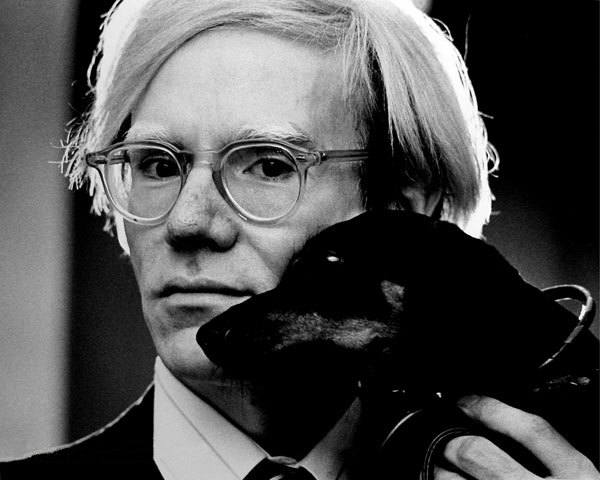
Andy Warhol by Jack Mitchell

Grave of Valerie Jean Solanas - Stierch

Solanas-signature

Warhol silver trunk 03
Sources
- Valerie Solanas: The Defiant Life of the Woman Who Wrote SCUM (and Shot Andy Warhol)
- Actress Shoots Andy Warhol / Cries He Controlled My Life
- Andy Warhol Shot: Valerie Solanas and The Factory
- Valerie Solanas and Andy Warhol: The Shooting
- Grappling with the Legacy of the Woman Who Shot Andy Warhol
- Valerie Solanas — Wikipedia
- SCUM Manifesto
- Valerie Solanas Booking Photographs, June 3, 1968
- Valerie Solanas Portrait circa 1965
Frequently Asked Questions
Table of Contents
Case Summary
On the afternoon of June 3, 1968, Valerie Jean Solanas rode an elevator to Andy Warhol's Manhattan studio, pulled two firearms from a paper bag, and opened fire. She shot Warhol three times, hit art critic Mario Amaya in the hip, and attempted to execute Warhol's manager before her gun jammed. Then she walked out, hailed a cab, and waited. That evening, she surrendered to a Times Square patrolman, handed him both weapons, and offered nine words of explanation: 'He had too much control over my life.' Warhol survived, barely, after five hours of surgery during which he was briefly declared dead. He never fully recovered. Solanas, a woman with an IQ of 131 who authored one of the most provocative feminist texts of the twentieth century and held a psychology degree with honors, spent the rest of her life cycling through psychiatric wards and welfare hotels. She died alone in a San Francisco flophouse in 1988, her body undiscovered for days. What drove her to The Factory that afternoon, and what her life reveals about genius, mental illness, and the violence that festers at society's margins, remains as unsettling now as it was then.
April 9, 1936, Ventnor City, New Jersey, USA(Age: 52)
April 25, 1988, Bristol Hotel, Tenderloin District, San Francisco, California, USA (Acute and chronic aspirational bronchopneumonia and centrilobular pulmonary emphysema (bronchopneumonia); coroner also noted cachexia and fatty metamorphosis of the liver)
Case Details
The afternoon of June 3, 1968, was unremarkable in most of Manhattan. Across the city, people were still processing Robert F. Kennedy's assassination, which had occurred less than twelve hours earlier in a Los Angeles hotel kitchen. The news cycle churned. The country felt, as it often did that year, as though it were cracking apart at its foundations.
At 33 Union Square West, the building housing Andy Warhol's studio known as The Factory, the day began like any other. Warhol was there, along with his manager Fred Hughes and art critic Mario Amaya, who had stopped by to discuss an exhibition. At approximately 4:30 in the afternoon, a woman stepped off the elevator. She wore a black turtleneck and a raincoat and carried a brown paper bag. Her name was Valerie Jean Solanas, and she had two firearms in that bag: a .32 semi-automatic and a .22 revolver.
She reached into the bag and opened fire.
The first shot missed Warhol. The second missed him, too. The third struck him in the torso, tearing through his stomach, liver, spleen, esophagus, and both lungs. Amaya caught a bullet in the hip. Solanas then turned the gun on Hughes, who pressed himself against a wall and pleaded with her to leave. Her weapon jammed. She turned and walked out.
Warhol was rushed to Columbus Hospital. Surgeons worked on him for five hours. At one point, they declared him dead. Somehow, he came back.
Several hours after the shooting, Valerie Solanas appeared in Times Square and approached Patrolman William Schmalix. She handed him both weapons. "He had too much control over my life," she said.
She was thirty-two years old.
Valerie Jean Solanas was born on April 9, 1936, in Ventnor City, New Jersey, a small Atlantic coast resort community that had long since passed its gilded age. Her father, Louis Solanas, was a bartender of Spanish-Canadian descent. Her mother, Dorothy Marie Biondo, was an Italian-American dental assistant. The marriage did not survive Valerie's childhood.
What happened inside that household before it dissolved is largely Solanas's own account. She alleged that her father sexually abused her repeatedly from childhood. Whatever the full truth of those years, the psychological damage was apparent. After the divorce, her mother remarried a piano tuner named Red Moran, whom Solanas despised. At thirteen, she was sent to live with her maternal grandparents. By fifteen, she had run away entirely, surviving on the streets through panhandling and prostitution.
In 1953, at seventeen, she gave birth to a son fathered by a married sailor. The boy was eventually adopted and given the name David Blackwell. Solanas never raised him.
The part of the story that consistently surprises people comes next. The homeless, parentless teenager who had panhandled her way through adolescence somehow finished high school on schedule, then enrolled at the University of Maryland, College Park, where she studied psychology. She joined Psi Chi, the national honor society for psychology students. She hosted a feminist radio advice program on campus. She graduated with a bachelor's degree in 1958. Intelligence testing would later place her in the top two percent of the population, with an IQ of 131.
The distance between that achievement and the life she actually lived is one of the defining tragedies of her story.
Graduate school followed, first at the University of Minnesota, then at UC Berkeley. She dropped out of both programs. She supported herself through panhandling and prostitution again. She drifted toward New York City in the mid-1960s, settling into the orbit of Greenwich Village's radical counterculture: underground theater, sexual politics, and manifestos sold on street corners.
Between 1965 and 1967, she wrote the text that would define her public identity. The SCUM Manifesto, an acronym for Society for Cutting Up Men, called for the elimination of men, the overthrow of government and the monetary system, and the construction of a fully automated, female-run world. It predicted, with unsettling specificity, technologies including ATMs, test-tube babies, and artificial insemination. She self-published it and sold copies on Village streets, charging women a dollar and men two.
Whether the manifesto was political theater, genuine ideology, or the product of a mind already detaching from consensus reality is a question scholars have debated for decades. Possibly it was all three at once.
She also wrote a play called "Up Your Ass," a scabrous, comic piece about a panhandler and a hustler navigating a city that barely sees them. In 1967, she brought the manuscript to Andy Warhol at The Factory, hoping he would produce it. Warhol misplaced it. The manuscript disappeared.
That same year, she appeared in two Warhol films, "I, a Man" and "Bike Boy," receiving $25 for her work. She also signed a contract with Maurice Girodias, the publisher of Olympia Press, for $500 in August 1967. She came to believe this contract was a trap. In her reading of the fine print, Girodias would own everything she ever wrote. In the architecture of her suspicion, Girodias and Warhol had begun to conspire against her, coordinating to strip away her intellectual property, her livelihood, the only things she had.
Paranoid schizophrenia works precisely this way. It takes the real (a poorly worded contract, a lost manuscript) and builds from those facts a fortress of conspiracy that feels, from the inside, indistinguishable from truth.
By the spring of 1968, Solanas was living in flophouses, telephoning The Factory repeatedly, demanding money and the return of her play. Warhol's staff grew accustomed to her calls. She had become, to them, a nuisance. To herself, she was a woman being systematically destroyed by powerful men who wanted to own what her mind produced.
On the morning of June 3, she loaded two guns and took a cab to Union Square.
The shooting lasted only minutes. Warhol's surgeons spent five hours trying to undo what those minutes had done to his body. The bullet had traversed nearly every organ in his torso. He spent nearly two months recovering at Columbus Hospital and was forced to wear a surgical corset for the rest of his life. The physical and psychological damage altered him fundamentally. He developed a pathological fear of hospitals; when gallbladder surgery became unavoidable in early 1987, he delayed seeking treatment far longer than he should have. He died on February 22, 1987, of cardiac arrhythmia following that surgery. Lou Reed, among others, argued publicly that the shooting effectively killed Warhol, just nineteen years after the fact.
After surrendering her weapons to Patrolman Schmalix in Times Square, Solanas was booked at the 13th Precinct. She was charged with attempted murder, assault, and illegal possession of a firearm. Photographs from that night show her in the turtleneck, her expression somewhere between defiant and exhausted, flanked by detectives.
She was initially found incompetent to stand trial. Psychiatric evaluation at Elmhurst Hospital and then Bellevue produced a formal diagnosis: chronic paranoid schizophrenia. She was transferred to Matteawan State Hospital for the Criminally Insane.
In June 1969, she pleaded guilty to a reduced charge of first-degree assault, specifically "reckless assault with intent to harm." The court sentenced her to three years' imprisonment, with credit for the time she had already spent in psychiatric confinement. She had shot one of the most famous men in the world and permanently damaged his health. She served roughly three years in total.
Upon release, she resumed making threats. In December 1971, she was arrested for threatening Grove Press editors Barney Rosset and Fred Jordan. The court institutionalized her at Dunlap-Manhattan Psychiatric Hospital on Wards Island. She escaped in February 1973 and was recommitted. The cycle of confinement, release, and deterioration continued through the decade.
The 1970s were largely lost years. She spent time in New York, briefly serving as an editor for the feminist biweekly Majority Report, and then drifted. By approximately 1981, she was homeless in Phoenix, Arizona, living primarily outdoors for several years. Eventually she relocated to San Francisco's Tenderloin District.
In San Francisco, she settled into the Bristol Hotel, a single-room occupancy welfare establishment, living on SSI assistance. She had changed her name to Onz Loh. She was reportedly working on an unpublished manuscript. She was, by any observable measure, almost entirely invisible.
In November 1987, the Warhol "superstar" Ultra Violet tracked her down and reached her by telephone. During that call, Solanas learned for the first time that Andy Warhol had died nine months earlier. Her response, as Ultra Violet recalled it: "I don't feel anything."
She had five months to live.
On April 25, 1988, Bristol Hotel supervisor Lev Krayzman found Valerie Solanas in her room. She was kneeling on the floor with her torso slumped across the bed. Her body was covered in maggots. Police estimated she had been dead for several days. She was fifty-two years old.
The official cause of death was acute and chronic aspirational bronchopneumonia combined with centrilobular pulmonary emphysema. The coroner also noted cachexia and fatty metamorphosis of the liver. She had been dying slowly for a long time, her body surrendering to the accumulated damage of a life lived mostly without adequate shelter, food, or medical care.
She was cremated on May 9, 1988. Her ashes were buried at St. Mary's Catholic Church Cemetery in Fairfax County, Virginia, at her mother's request. Her mother then burned everything that remained of Solanas's belongings.
What Valerie Solanas left behind refuses easy categorization. The SCUM Manifesto has been translated into dozens of languages and has sold more copies than nearly every other feminist text of its era. Her play "Up Your Ass," the manuscript Warhol lost, was rediscovered in 1999 in a trunk owned by photographer Billy Name and was produced in San Francisco in 2000. The 1996 film "I Shot Andy Warhol," directed by Mary Harron with Lili Taylor in the title role, earned Special Recognition at Sundance. In 2014, scholar Breanne Fahs published the definitive biography: "Valerie Solanas: The Defiant Life of the Woman Who Wrote SCUM (and Shot Andy Warhol)."
She has become, depending on who is discussing her, a martyr of radical feminism, a cautionary case study in untreated mental illness, a villain, or some uncomfortable overlap of all three. The manifesto's eerie technological predictions have given it a strange second life in the digital age, inviting readers to reckon with how seriously to take a text that demanded extermination but anticipated the ATM.
The honest accounting is this: Valerie Solanas was a person of exceptional intelligence who suffered terribly from childhood forward, who wrote with genuine fury and wit, who also shot three people in a midtown Manhattan studio on a June afternoon and permanently altered the arc of several lives, including her own. She died alone in a room in the Tenderloin, unmissed for days, her body decomposing while the city moved around her.
That image, a brilliant and broken woman kneeling against a hotel bed in the city's most forgotten neighborhood, is as close to an epitaph as she received. She had wanted control over her own life and her own words. In the end, she had neither.
Timeline
Birth and Troubled Childhood Begins
Valerie Jean Solanas is born in Ventnor City, New Jersey, to bartender Louis Solanas and dental assistant Dorothy Marie Biondo. She would later allege repeated sexual abuse by her father during childhood, and her parents' subsequent divorce set the stage for a profoundly unstable upbringing.
Her early trauma and family dysfunction are widely cited by biographers as foundational to the psychological wounds that shaped her radical ideology and eventual violent acts.
Homelessness, First Pregnancy, and Academic Perseverance
After being sent to live with her grandparents at 13 and running away at 15, Solanas gave birth to a son — later adopted as David Blackwell — fathered by a married sailor. Despite this chaotic period of homelessness and poverty, she graduated high school on time and went on to earn a B.A. in psychology from the University of Maryland in 1958, where she was inducted into the Psi Chi Honor Society.
Solanas's ability to achieve academic distinction despite extreme deprivation established the intellectual foundation for her later writings, while her marginalization deepened her rage against societal structures.
SCUM Manifesto Written and Self-Published
Between 1965 and 1967, Solanas wrote the SCUM Manifesto — Society for Cutting Up Men — a scorched-earth radical feminist text advocating the elimination of men and the overthrow of government, which she self-published and sold on Greenwich Village streets, charging women $1 and men $2 per copy. The manifesto presciently described technologies including ATMs, the internet, and artificial insemination, and would go on to be translated into numerous languages.
The SCUM Manifesto became one of the most provocative feminist texts of the 20th century, cementing Solanas's place in radical intellectual history and providing the ideological context for her later violence.
Contract with Olympia Press Fuels Paranoid Conspiracy Beliefs
In August 1967, Solanas signed a contract with publisher Maurice Girodias of Olympia Press for $500, an agreement she came to catastrophically misinterpret. She became convinced the contract gave Girodias ownership of all her future writings, and further believed that Girodias and Andy Warhol — who had misplaced her play 'Up Your Ass' — were conspiring together to steal her intellectual property.
This paranoid conviction became the immediate psychological trigger for the 1968 shooting, as Solanas's belief that powerful men were conspiring to rob her of her creative work pushed her toward violence.
Shooting of Andy Warhol at The Factory
At approximately 4:30 p.m., Solanas entered The Factory at 33 Union Square West, Manhattan, armed with a .32 semi-automatic and a .22 revolver, and shot Andy Warhol three times — one bullet tearing through his stomach, liver, spleen, esophagus, and both lungs. She also shot art critic Mario Amaya and attempted to shoot Warhol's manager Fred Hughes before her gun jammed. Warhol was briefly declared dead before being revived after five hours of emergency surgery at Columbus Hospital.
The shooting was one of the most shocking acts of violence in the history of American art, permanently altering Warhol's health and psyche, and transforming Solanas into a polarizing cultural icon.
Surrender to Police in Times Square
Several hours after the shooting, Solanas approached Patrolman William Schmalix in Times Square, handed over both firearms, and turned herself in, stating 'He had too much control over my life.' She was transported to the 13th Precinct in Manhattan, where she was booked and charged with attempted murder, assault, and illegal possession of a firearm.
Her calm, deliberate surrender and her explicit statement about Warhol's control over her life framed the case immediately in terms of power, gender, and intellectual ownership, themes that would define public debate about her actions for decades.
Psychiatric Evaluation and Incompetency Finding
Following her arrest, Solanas was found incompetent to stand trial and transferred for psychiatric evaluation at Elmhurst Hospital and Bellevue, where she was diagnosed with chronic paranoid schizophrenia. Intelligence testing placed her IQ at 131, in the top 2% of the population, a finding that underscored the tragic collision of exceptional intellect and severe mental illness.
The competency proceedings delayed trial for nearly a year and established the psychiatric framework through which Solanas's violence would be legally adjudicated, raising enduring questions about the relationship between mental illness, genius, and criminal responsibility.
Guilty Plea and Sentencing for Assault
In June 1969, Solanas pleaded guilty to first-degree assault — reduced from attempted murder to 'reckless assault with intent to harm' — and was sentenced to three years' imprisonment, including time already served in psychiatric confinement at Matteawan State Hospital for the Criminally Insane. Many observers, including Warhol himself, considered the sentence shockingly lenient given the severity of his injuries.
The lenient sentence reflected both her psychiatric diagnosis and the legal complexities of the case, but it left Warhol permanently traumatized and wearing a surgical corset for the rest of his life.
Post-Release Assault Arrests and Recommitment
In December 1971, Solanas was arrested again for aggravated assault after making threatening phone calls to Grove Press editors Barney Rosset and Fred Jordan, demonstrating that her release had not resolved her paranoid fixations. She was declared mentally ill and institutionalized at Dunlap-Manhattan Psychiatric Hospital on Wards Island, from which she escaped in February 1973 before being recommitted.
The post-release arrests confirmed that Solanas remained a danger and that her psychiatric treatment had been inadequate, setting the pattern for the homeless, institutionalized existence that would define her final two decades.
Death in Tenderloin Welfare Hotel, San Francisco
Solanas was discovered dead by Bristol Hotel supervisor Lev Krayzman, who found her kneeling on the floor with her torso on the bed, her body covered in maggots, in her single-room occupancy welfare hotel in San Francisco's Tenderloin District — police estimated she had been dead for several days. The official cause of death was acute and chronic aspirational bronchopneumonia and centrilobular pulmonary emphysema, compounded by cachexia and fatty liver disease; she was 52 years old. She was cremated on May 9, 1988, and her ashes were buried at St. Mary's Catholic Church Cemetery in Fairfax County, Virginia, at her mother's request, who subsequently burned all of Solanas's remaining belongings.
The squalid circumstances of her death — alone, unnoticed for days, in a welfare hotel — stood in stark contrast to the enduring cultural impact of her writing, and became a final symbol of the society of neglect she had spent her life raging against.
Crime Location
Photos
Valerie Solanas by Fred W. McDarrah
Andy Warhol by Jack Mitchell
Grave of Valerie Jean Solanas - Stierch
Solanas-signature
Warhol silver trunk 03
Sources
- Valerie Solanas: The Defiant Life of the Woman Who Wrote SCUM (and Shot Andy Warhol)
- Actress Shoots Andy Warhol / Cries He Controlled My Life
- Andy Warhol Shot: Valerie Solanas and The Factory
- Valerie Solanas and Andy Warhol: The Shooting
- Grappling with the Legacy of the Woman Who Shot Andy Warhol
- Valerie Solanas — Wikipedia
- SCUM Manifesto
- Valerie Solanas Booking Photographs, June 3, 1968
- Valerie Solanas Portrait circa 1965
Frequently Asked Questions
Related Cases
Convicted
Connection tags:
Convicted
Connection tags:
Convicted
Connection tags:
Convicted
Connection tags:
Convicted
Connection tags:
Accused
Connection tags:
Tags
Popular Culture
movie (1996)
Biographical drama directed by Mary Harron depicting Solanas's life, her radical feminist writings, her relationship with Andy Warhol, and the 1968 Factory shooting; Lili Taylor portrays Solanas and won Special Recognition at the Sundance Film Festival
TV (2017)
FX anthology series Season 7; Valerie Solanas appears as a recurring character portrayed by Lena Dunham, depicted as a cult leader and radical feminist icon whose SCUM Manifesto inspires the season's themes
other (2000)
Solanas's play, originally submitted to Andy Warhol in the 1960s and subsequently lost, was rediscovered in 1999 in a trunk owned by Factory photographer Billy Name and produced on stage in San Francisco in 2000
book (2014)
Definitive biography by academic Breanne Fahs drawing on extensive archival research and interviews; considered the authoritative account of Solanas's life and legacy
book (1967)
Solanas's radical feminist text, self-published in 1967 and later republished by multiple presses; translated into numerous languages and cited as both a feminist landmark and a document of extreme ideology; predicted technologies including ATMs, the internet, test-tube babies, and artificial insemination
movie (1967)
Andy Warhol underground film in which Solanas appeared, paid $25 for her role; one of two Warhol films featuring Solanas before the 1968 shooting
movie (1967)
Andy Warhol underground film featuring Valerie Solanas; produced the same year as 'I, a Man' and shortly before the 1968 Factory shooting