Felícitas Sánchez Aguillón
Case Summary
Felícitas Sánchez Aguillón, also known as Sánchez Neyra, was a notorious Mexican nurse, midwife, baby farmer, and serial killer who operated in Mexico City during the 1930s. She became infamous for killing babies under her care, with a total of 40 to 50 murders attributed to her. Sánchez Aguillón was also referred to as 'The Ogress of Colonia Roma,' 'The Female Ripper of Colonia Roma,' and 'The Human Crusher of Little Angels.'
Unknown, Mexico
July 14, 1941 (Suicide)
Related Cases

Convicted
Connection tags:

Convicted
Connection tags:

Convicted
Connection tags:

Convicted
Connection tags:

Convicted
Connection tags:

Convicted
Connection tags:
Case Details
In the gritty underbelly of Mexico City during the 1930s, a sinister figure emerged, casting a shadow of fear and horror over the bustling metropolis. This was a time when the city was thriving, experiencing a cultural renaissance, and yet, a dark cloud loomed in the form of a woman known as Felícitas Sánchez Aguillón. A nurse, midwife and baby farmer by profession, Aguillón was no ordinary caregiver. Her legacy was one of death and cruelty, earning her the ominous nicknames “The Ogress of Colonia Roma,” “The Female Ripper of Colonia Roma,” and “The Human Crusher of Little Angels.” With between 40 and 50 murders attributed to her, Aguillón’s reign of terror stands as a chilling testament to the darkness that can hide behind the façade of care and compassion.
Born into an obscure background, Felícitas Sánchez Aguillón's early life remains largely shrouded in mystery, but it was her later years that would cause her name to be inked in the annals of criminal history. She rose to prominence in Mexico City as a respected nurse and midwife, a profession that would later serve as a façade for her pathological tendencies. Her modus operandi involved taking in babies for care, a practice known as baby farming, only to later murder them in cold blood.
The alleged crimes began to unfold chronologically around the early 1930s. Aguillón would attract the trust of desperate parents, often impoverished, who were unable to care for their infants. As a nurse and midwife with seemingly legitimate credentials, she presented herself as a beacon of hope to these struggling families, promising to provide their children with a better life. She would charge a fee for her services, thus profiting from the desperation of these families. However, once the children were in her care, their fate was sealed.
The exact methods used by Aguillón to commit her horrific crimes remain a subject of speculation, but it is believed that she killed the infants shortly after taking them into her care. The sheer scale of her operation was shocking, with an estimated 40 to 50 murders attributed to her. However, the actual number of victims could be much higher, given the clandestine nature of her operations and the lack of comprehensive records.
The case came to light when authorities discovered the bodies of several infants in the vicinity of Aguillón's residence. The grim discovery sparked a thorough investigation, with law enforcement agencies delving deep into the activities of the seemingly respectable nurse and midwife. As the investigation progressed, the horrifying truth began to unfold, revealing the depth of Aguillón's depravity.
The legal proceedings that followed were complex and drawn out, owing to the scale and nature of the crimes. Aguillón was formally charged with multiple counts of murder. The trial itself was a media spectacle, drawing widespread attention both locally and internationally. The severity of the crimes committed by Aguillón led to her being labeled as a serial killer, a term that was relatively new to the lexicon of criminal justice at the time.
The current status of the case remains a part of Mexico's criminal history. Aguillón's crimes came to an end when she was convicted and sentenced. However, the legacy of her atrocities continues to haunt the collective memory of Mexico City and the wider nation. The case of Felícitas Sánchez Aguillón is often referenced in discussions on child welfare and criminal justice reforms in the country, serving as a stark reminder of the need for vigilance and accountability in these sectors.
The public reaction to the case was one of shock and horror. The fact that a trusted caregiver could betray the faith of desperate parents and commit such heinous acts was beyond comprehension for many. The media coverage of the case only served to amplify the public's fear and fascination, with graphic details of Aguillón's crimes making headlines across the country. The case triggered a broader conversation about the vulnerability of children and the need for stricter regulations in the childcare sector.
The cultural impact of the case was significant. In a society where trust in caregivers is paramount, the case of Felícitas Sánchez Aguillón served as a harsh wake-up call. It exposed the dark underbelly of baby farming, bringing to light the exploitation of desperate families and the lack of oversight in the childcare sector. The case also inspired several works of fiction, with Aguillón's character serving as a terrifying antagonist in crime novels and true crime podcasts.
Similar cases have surfaced over the years, such as that of Amelia Dyer in the United Kingdom, who also used baby farming as a cover for her murderous activities. These cases serve as a chilling reminder that individuals like Felícitas Sánchez Aguillón exist in every corner of the world, exploiting trust and desperation for their own nefarious ends.
In conclusion, the case of Felícitas Sánchez Aguillón stands as one of the most horrific in the annals of criminal history. Her crimes, committed under the guise of care and compassion, remind us of the darkness that can lurk behind the most ordinary of façades. As we reflect on her life and crimes, it is imperative that we continue to strive for reforms in child welfare and criminal justice, to ensure that such atrocities do not repeat themselves. The legacy of Felícitas Sánchez Aguillón serves as a stark reminder of the worst that humanity is capable of, but it also serves as a call to action, urging us to create a safer and more just society for the most vulnerable among us.
Timeline
Human Remains Found
Human remains were discovered near her building
Arrested
She was arrested with two of her accomplices
Suicide
Suicide by medication overdose
Crime Location
Photos

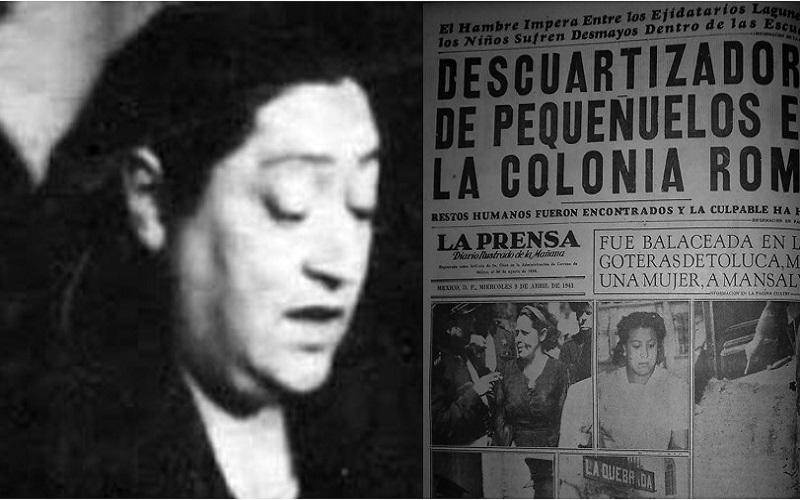
Felícitas Sánchez Aguillón
Colonia Roma in the 1930s
Mexican newspaper report of Sánchez Aguillón's crimes
Frequently Asked Questions
Table of Contents
Case Summary
Felícitas Sánchez Aguillón, also known as Sánchez Neyra, was a notorious Mexican nurse, midwife, baby farmer, and serial killer who operated in Mexico City during the 1930s. She became infamous for killing babies under her care, with a total of 40 to 50 murders attributed to her. Sánchez Aguillón was also referred to as 'The Ogress of Colonia Roma,' 'The Female Ripper of Colonia Roma,' and 'The Human Crusher of Little Angels.'
Unknown, Mexico
July 14, 1941 (Suicide)
Case Details
In the gritty underbelly of Mexico City during the 1930s, a sinister figure emerged, casting a shadow of fear and horror over the bustling metropolis. This was a time when the city was thriving, experiencing a cultural renaissance, and yet, a dark cloud loomed in the form of a woman known as Felícitas Sánchez Aguillón. A nurse, midwife and baby farmer by profession, Aguillón was no ordinary caregiver. Her legacy was one of death and cruelty, earning her the ominous nicknames “The Ogress of Colonia Roma,” “The Female Ripper of Colonia Roma,” and “The Human Crusher of Little Angels.” With between 40 and 50 murders attributed to her, Aguillón’s reign of terror stands as a chilling testament to the darkness that can hide behind the façade of care and compassion.
Born into an obscure background, Felícitas Sánchez Aguillón's early life remains largely shrouded in mystery, but it was her later years that would cause her name to be inked in the annals of criminal history. She rose to prominence in Mexico City as a respected nurse and midwife, a profession that would later serve as a façade for her pathological tendencies. Her modus operandi involved taking in babies for care, a practice known as baby farming, only to later murder them in cold blood.
The alleged crimes began to unfold chronologically around the early 1930s. Aguillón would attract the trust of desperate parents, often impoverished, who were unable to care for their infants. As a nurse and midwife with seemingly legitimate credentials, she presented herself as a beacon of hope to these struggling families, promising to provide their children with a better life. She would charge a fee for her services, thus profiting from the desperation of these families. However, once the children were in her care, their fate was sealed.
The exact methods used by Aguillón to commit her horrific crimes remain a subject of speculation, but it is believed that she killed the infants shortly after taking them into her care. The sheer scale of her operation was shocking, with an estimated 40 to 50 murders attributed to her. However, the actual number of victims could be much higher, given the clandestine nature of her operations and the lack of comprehensive records.
The case came to light when authorities discovered the bodies of several infants in the vicinity of Aguillón's residence. The grim discovery sparked a thorough investigation, with law enforcement agencies delving deep into the activities of the seemingly respectable nurse and midwife. As the investigation progressed, the horrifying truth began to unfold, revealing the depth of Aguillón's depravity.
The legal proceedings that followed were complex and drawn out, owing to the scale and nature of the crimes. Aguillón was formally charged with multiple counts of murder. The trial itself was a media spectacle, drawing widespread attention both locally and internationally. The severity of the crimes committed by Aguillón led to her being labeled as a serial killer, a term that was relatively new to the lexicon of criminal justice at the time.
The current status of the case remains a part of Mexico's criminal history. Aguillón's crimes came to an end when she was convicted and sentenced. However, the legacy of her atrocities continues to haunt the collective memory of Mexico City and the wider nation. The case of Felícitas Sánchez Aguillón is often referenced in discussions on child welfare and criminal justice reforms in the country, serving as a stark reminder of the need for vigilance and accountability in these sectors.
The public reaction to the case was one of shock and horror. The fact that a trusted caregiver could betray the faith of desperate parents and commit such heinous acts was beyond comprehension for many. The media coverage of the case only served to amplify the public's fear and fascination, with graphic details of Aguillón's crimes making headlines across the country. The case triggered a broader conversation about the vulnerability of children and the need for stricter regulations in the childcare sector.
The cultural impact of the case was significant. In a society where trust in caregivers is paramount, the case of Felícitas Sánchez Aguillón served as a harsh wake-up call. It exposed the dark underbelly of baby farming, bringing to light the exploitation of desperate families and the lack of oversight in the childcare sector. The case also inspired several works of fiction, with Aguillón's character serving as a terrifying antagonist in crime novels and true crime podcasts.
Similar cases have surfaced over the years, such as that of Amelia Dyer in the United Kingdom, who also used baby farming as a cover for her murderous activities. These cases serve as a chilling reminder that individuals like Felícitas Sánchez Aguillón exist in every corner of the world, exploiting trust and desperation for their own nefarious ends.
In conclusion, the case of Felícitas Sánchez Aguillón stands as one of the most horrific in the annals of criminal history. Her crimes, committed under the guise of care and compassion, remind us of the darkness that can lurk behind the most ordinary of façades. As we reflect on her life and crimes, it is imperative that we continue to strive for reforms in child welfare and criminal justice, to ensure that such atrocities do not repeat themselves. The legacy of Felícitas Sánchez Aguillón serves as a stark reminder of the worst that humanity is capable of, but it also serves as a call to action, urging us to create a safer and more just society for the most vulnerable among us.
Timeline
Human Remains Found
Human remains were discovered near her building
Arrested
She was arrested with two of her accomplices
Suicide
Suicide by medication overdose
Crime Location
Photos
Felícitas Sánchez Aguillón
Colonia Roma in the 1930s
Mexican newspaper report of Sánchez Aguillón's crimes
Frequently Asked Questions
Related Cases
Convicted
Connection tags:
Convicted
Connection tags:
Convicted
Connection tags:
Convicted
Connection tags:
Convicted
Connection tags:
Convicted
Connection tags: