23 cases tagged “serial killer”
Convicted: Myra Hindley
On the morning of October 7, 1965, eighteen-year-old David Smith walked to a public telephone box in Hattersley, Greater Manchester, hands shaking, and dialed 999. The night before, he had watched his brother-in-law bludgeon a seventeen-year-old to death with an axe. The brother-in-law was Ian Brady. The woman who had invited him to witness it was Myra Hindley. What that phone call exposed would redefine evil in the British imagination for generations. Between 1963 and 1965, Brady and Hindley abducted five children and teenagers from the streets of Greater Manchester, sexually assaulted them, and buried four in shallow graves on the desolate expanse of Saddleworth Moor. The fifth was killed in Hindley's living room. The evidence police found inside that house was staggering in its horror: photographs of a ten-year-old girl bound and gagged in Hindley's bedroom, and sixteen minutes of audio tape capturing that same child's final, agonized moments. A luggage ticket for the suitcase containing these materials was found hidden inside the spine of Hindley's Catholic prayer book. Myra Hindley would spend thirty-six years in prison, applying repeatedly for parole, insisting she had changed. The British public never believed her. One of her victims, Keith Bennett, has never been found. His mother died in 2012, still waiting. This is the story of how an ordinary girl from Gorton became the most reviled woman in British criminal history.
Convicted: Dagmar Johanne Amalie Overbye
When Copenhagen police sifted through the cold ashes of a masonry stove in a Vesterbro apartment in the autumn of 1920, they found what they had feared most: charred bone fragments and a small, unmistakable human skull. The apartment belonged to Dagmar Johanne Amalie Overbye, a soft-spoken woman who had built a quiet business promising desperate, unmarried mothers a better life for their newborns. She charged them roughly 200 kroner, shook their hands, and took their babies. Then she burned them alive, drowned them, smothered them, or strangled them, disposing of the remains in her stove, her garden, or the building's loft. Between 1913 and 1920, she confessed to killing 16 infants. Police could physically confirm only 9. She is Denmark's most prolific known serial killer, the first woman sentenced to death in the country since 1861, and the architect, however grotesquely, of the child welfare laws that Denmark passed in 1923. Her nickname, whispered across Copenhagen for a century since, is 'Englemagersken': The Angel Maker. This is her story.
Convicted: Delfina María de Jesús González
Delfina de Jesús González, along with her sister María de Jesús González, were Mexican serial killers. They operated a bordello in the state of Guanajuato, Mexico, from the 1950s to the mid-1960s, luring poor girls with promises of good jobs, only to force them into prostitution. The sisters murdered the girls when they became ill, unattractive to clients, or stopped complying. The exact number of their victims remains unknown, with estimates ranging from 91 to 150 people.
Convicted: Rosemary Pauline West (née Letts; also known as Jennifer Jones since 2020)
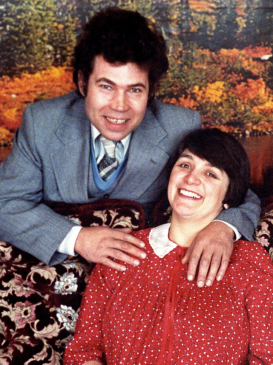
In February 1994, police arrived at 25 Cromwell Street, Gloucester, looking for a missing teenage girl. What they found instead would stop Britain cold: nine sets of human remains buried beneath the floorboards and garden of a nondescript terraced house — and that was only the beginning. Rosemary West, a 40-year-old mother of eight, sat at the center of it all. She had helped lure young women and girls to that house. She had participated in their torture, their sexual abuse, their deaths. She had then gone on living there — cooking meals, watching television, raising children — while the bodies of ten victims, including her own stepdaughter and her own teenage daughter, rotted in the earth beneath her feet. On 22 November 1995, a jury took less than two days to convict her on all ten counts of murder. The judge said she should never be freed. He was right. Thirty years later, Rose West — now calling herself Jennifer Jones — remains in a prison cell, in declining health, largely alone, still insisting she is innocent. This is the story of how ordinary evil hides in plain sight.
Convicted: Miyuki Ishikawa
Miyuki Ishikawa was a Japanese midwife and real estate agent turned serial killer. During the American occupation of Japan, she and several accomplices were involved in the deaths of dozens of infants. These horrific events, known as the Kotobuki San'in incident, marked one of the most devastating crime sprees in post-war Japan.
Convicted: Mary Ann Cotton (née Robson)
'I won't be troubled long. He'll go like all the rest of the Cottons.' That was Mary Ann Cotton's assessment of her seven-year-old stepson Charles Edward, delivered to a parish official in West Auckland, County Durham, in the spring of 1872. Five days later, the boy was dead. It was the statement that finally brought her down. By the time investigators began pulling at the thread, they found two decades of bodies behind it: eleven of her thirteen children, three of her four husbands, her own mother, and a string of lodgers and stepchildren, each one dead of 'gastric fever,' each one insured, each one mourned briefly and then forgotten. The death toll, historians estimate, may have reached twenty-one. Mary Ann Cotton was a nurse, a mother, a wife. She was trusted by the sick she nursed and by the physicians who signed off on her victims' deaths. She understood, precisely, that Victorian medicine would not look twice at a working-class child dying of gastroenteritis. She killed for insurance money: modest sums, accumulated over years, in exchange for the lives of nearly everyone who had ever depended on her. She was only ever convicted of one murder. She was hanged in Durham County Gaol on March 24, 1873, in a botched execution that left her strangling at the end of a too-short rope. She was forty years old. The full story of what she did is both a portrait of individual evil and an indictment of a system that made it catastrophically easy.
Convicted: Vera Renczi
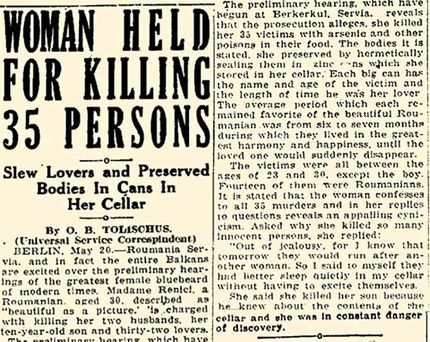
Thirty-two men lay in zinc-lined coffins in the wine cellar beneath a Romanian chateau, each one poisoned with arsenic by the woman who had loved them. Or so the story goes. Vera Renczi, dubbed the 'Black Widow' and 'Chatelaine of Berkerekul,' is one of history's most notorious female serial killers: a wealthy beauty who allegedly confessed to murdering 35 people during the 1920s, including two husbands, dozens of lovers, and her own son. According to the legend, she laced their wine when she feared they might leave her, then kept their bodies in the cellar so they never could. Police reportedly found her sitting peacefully among the coffins. But here is where the story fractures. When the Guinness Book of World Records investigated in 1972, researchers found nothing verifiable: no arrest records, no trial transcripts, no regional newspapers, no prison files. Every account traces back to a single 1925 dispatch by an American journalist who cited no primary sources. Photographs circulated as Renczi's have been identified as a Russian actress dead since 1910. The Daily Mirror once published a photo of a living Spanish fashion model and called it Renczi, later apologizing unreservedly. Was Vera Renczi a monster, or a myth? The answer, it turns out, is more unsettling than either option alone.
Convicted: Elizabeth Báthory
Elizabeth Báthory, a Hungarian noblewoman from the powerful House of Báthory, is notorious for her alleged crimes as a serial killer. Between 1590 and 1610, she and her four accomplices were accused of torturing and killing hundreds of girls and women. The victims were predominantly from the lower classes, and the crimes were purportedly committed in her estates across the Kingdom of Hungary. Báthory's trial resulted in the execution of her servants, while she herself was imprisoned in the Castle of Csejte where she eventually died in 1614.
Accused: Enriqueta Martí Ripollés
On the morning of February 10, 1912, Barcelona police broke down the door of a ground-floor apartment on Carrer de Ponent and found something that would haunt the city for generations. Behind a locked interior door sat roughly fifty jars and basins arranged with terrible precision: congealed human blood, rendered fat, hand skeletons, bone dust, and small glass vials of finished elixirs, each one labeled in elegant calligraphy. Cowering in the front room were two children, one of them a five-year-old girl named Teresita who had been missing from the streets of El Raval for only days. The apartment's tenant was a woman named Enriqueta Martí Ripollés. By day, neighbors knew her as a ragged beggar who shuffled through Barcelona's poorest quarters with a child at her side. By night, she was something else entirely: wigged, jeweled, and dressed in silk, moving through the parlors of the city's wealthiest families and selling them preparations she claimed could cure tuberculosis, reverse aging, and treat venereal disease. Preparations made, authorities alleged, from the bodies of the city's most vulnerable children. She became known across Spain as "The Vampire of Barcelona." She was never convicted. She never stood trial. And the full truth of what happened inside that locked room may have been buried, deliberately and permanently, by the very people she served.
Convicted: Judias Anna Lou 'Judy' Buenoano
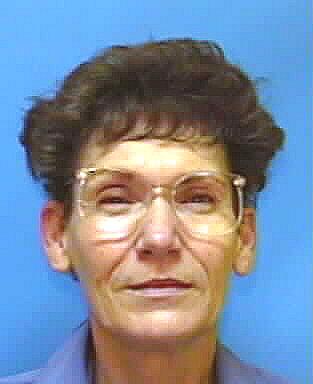
At 7:08 on the morning of March 30, 1998, a correctional officer at Florida State Prison threw the switch on the electric chair. The woman strapped into it, asked moments earlier if she had any final words, had answered only 'No, sir,' and closed her eyes. She was pronounced dead at 7:13 a.m. Her name was Judy Buenoano, and she had spent the previous evening watching a hunting and fishing show, eating chocolates, and reading a Mary Higgins Clark murder mystery. The neatness of that detail feels almost unbearable: a woman convicted of poisoning her husband, her son, and her boyfriend with arsenic, spending her last hours absorbed in fiction about someone else's crime. Prosecutor Russell Edgar had a name for her. He called her the Black Widow, a woman who 'fed off her mates and her young.' The evidence bore him out. Across nearly two decades, Buenoano is believed to have poisoned at least three people and built a life on their insurance payouts. She never confessed. She maintained her innocence to the end, eyes shut, silent in the chair. This is the story of how she got there.
Convicted: Felícitas Sánchez Aguillón
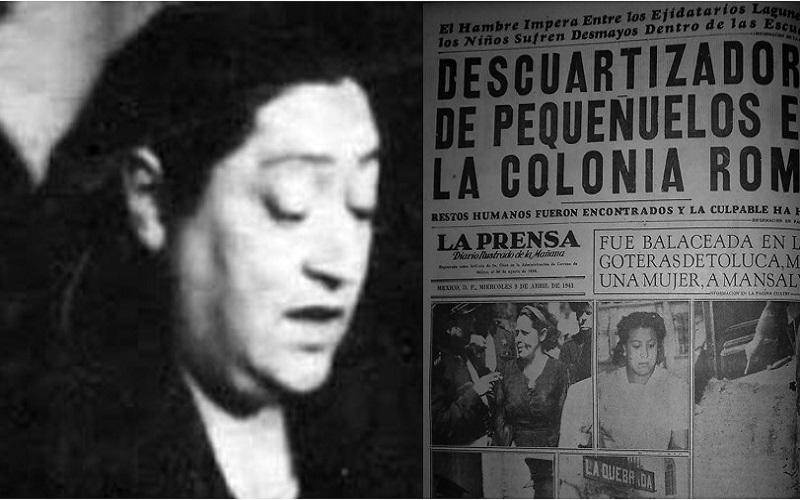
Felícitas Sánchez Aguillón, also known as Sánchez Neyra, was a notorious Mexican nurse, midwife, baby farmer, and serial killer who operated in Mexico City during the 1930s. She became infamous for killing babies under her care, with a total of 40 to 50 murders attributed to her. Sánchez Aguillón was also referred to as 'The Ogress of Colonia Roma,' 'The Female Ripper of Colonia Roma,' and 'The Human Crusher of Little Angels.'
Convicted: Daisy Louisa C. de Melker
Daisy Louisa C. de Melker, commonly known as Daisy de Melker, was a South African nurse accused of poisoning two of her husbands with strychnine to claim their life insurance. However, she was only found guilty of poisoning her only son with arsenic, the reason for which remains unclear. De Melker was the second woman in South African criminal history to be executed.
Alleged Offender: Belle Sorenson Gunness (born Brynhild Paulsdatter Størseth)
They came to La Porte, Indiana, one by one, with their life savings tucked in their coat pockets and her letters folded in their hands. A warm heart waiting, she had promised. A fine farm. A future. Belle Gunness wrote those letters for years, placing matrimonial advertisements in Norwegian-language newspapers across the Midwest, casting for men who were lonely and solvent and, crucially, willing to tell no one where they were going. When investigators finally dug up her farm in May 1908, they found the answer to where those men had gone: butchered, dismembered, folded into gunny sacks, and buried in shallow graves near the hog pen. More than forty victims lay scattered beneath the Indiana soil. Then the farmhouse burned, a headless torso was found in the ruins, and the question of whether Belle Gunness had died alongside her crimes or simply escaped them has never been definitively answered. One of the most prolific female serial killers in American history, she was never charged with a single murder. This is her story.
Convicted: Amy Duggan Archer-Gilligan
Between 1911 and 1916, forty-eight elderly residents died inside the Archer Home for Elderly People and Chronic Invalids in Windsor, Connecticut. The Jefferson Street Home in Hartford housed seven times as many residents and buried a similar number in the same period. The math was damning. The woman behind those numbers was Amy Archer-Gilligan, known to her congregation as 'Sister Amy,' a woman who donated a stained-glass window to St. Gabriel's Church and whom neighbors described as compassionate and devout. She was also a poisoner of breathtaking audacity. She had purchased more than ten ounces of arsenic from a local drugstore, enough to kill over a hundred people. She had forged a dead man's will. She had taken out life insurance policies on her husbands and encouraged her elderly boarders to name her as their beneficiary. When Connecticut state police exhumed five bodies, every single one tested positive for poison. The case scandalized the nation, inspired one of Broadway's most beloved dark comedies, and forced Connecticut to overhaul its elder care laws entirely. It also left behind questions the courts never fully answered: how many people truly died at Amy's hands, and how long had she been killing? This is the story of Sister Amy.
Convicted: Sante Louise Kimes (née Singhrs; also known as Sandra Louise Singhrs, Sandra Chambers)
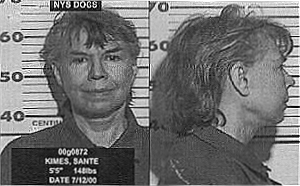
When New York City police stopped Sante Kimes and her son Kenny on an unrelated bad-check warrant on July 5, 1998, they expected a routine collar. What they found inside the car rewrote the definition of premeditation: two loaded pistols, plastic handcuffs, wigs, fright masks, syringes, a date-rape drug, an empty stun gun box, thirty thousand dollars in cash, a forged deed to a $7.7 million Manhattan mansion, and fifteen notebooks in which Sante had carefully practiced forging an 82-year-old woman's signature. Irene Silverman, the socialite who had rented a room to Kenny just weeks earlier, was already gone. Her body has never been found. It was the ending of a story that had begun decades earlier in the dust of Oklahoma City, wound through con jobs and slave-keeping and a White House party crasher and insurance fires, and arrived at last at the feet of a woman a judge would call 'a sociopath and a degenerate.' Sante Kimes was 64 years old and had not yet finished.
Convicted: Jane Toppan
Jane Toppan, better recognized by her chilling alias 'Jolly Jane', is infamous for her role as a serial killer in the annals of American crime history. As a nurse, she exploited her position of trust to commit heinous acts, targeting primarily her patients and their relatives in Massachusetts between 1895 and 1901. Toppan's case is particularly notorious as she is believed to have taken the lives of over 100 individuals, though she confessed to 31 murders. Her motivation was rooted in a perverse sexual fetish that drove her to attain a grim satisfaction from the act of murder. A native of Boston, Massachusetts, Toppan's life was marked by early trauma. Following the death of her mother, she and her sister were given up for adoption by their father. The Toppan family took her in, leading to her adopting their surname. Despite the hardships of her past, Toppan managed to maintain a facade of normalcy. Her cheerful demeanor earned her the nickname 'Jolly Jane', a stark contrast to her sinister actions. Her killing spree finally came to an end when an autopsy on one of her victims revealed lethal doses of poison, leading to her arrest and subsequent conviction. Her case serves as a grim reminder of the potential for evil that can lurk beneath the surface, even in those entrusted with the care of others.
Convicted: Amelia Elizabeth Dyer (née Hobley)
'You'll know all mine by the tape around their necks.' When Amelia Dyer spoke those words to Reading police in the spring of 1896, she did so with the calm of a woman who had been getting away with murder — quite literally — for two decades. On March 30, 1896, a bargeman pulled a brown paper parcel from the River Thames near Caversham. Inside was a baby girl, strangled with white dressmaker's tape. She would not be the last. By the time detectives closed in on the mild-mannered, churchgoing widow operating out of a modest terrace on Kensington Road, seven infant bodies had been recovered from the river. Experts now estimate that Amelia Dyer — the 'Ogress of Reading,' a trained nurse turned baby farmer — murdered between 200 and 400 children over twenty years, making her one of the most prolific killers in British history. The jury took four and a half minutes to convict her. The tape never lied. This is her story.
Convicted: Juana Dayanara Barraza Samperio
Juana Dayanara Barraza Samperio, a former professional wrestler and a Mexican serial killer, also known as La Mataviejitas, was sentenced to 759 years in prison for the murder of 16 elderly women. The first murder attributed to Mataviejitas has been dated variously to the late 1990s and to a specific killing on 17 November 2003. Estimates of the total number of the Mataviejitas victims range from 42 to 48 deaths. After Barraza's arrest, the case was officially closed despite more than 30 unresolved cases. Two other individuals, Araceli Vázquez and Mario Tablas, were also arrested in 2005 and labelled as The Mataviejitas by police and media.
Convicted: Darya Nikolayevna Saltykova
Darya Nikolayevna Saltykova, also known as Saltychikha, was a Russian noblewoman, sadist, and serial killer from the Saltykov family in Moscow. She was notorious for her brutal treatment and murder of many of her serfs, especially women. Her crimes have often been compared to those of the Hungarian 'Blood Countess,' Elizabeth Báthory, who allegedly committed similar atrocities against servant girls and local serfs in her home, Čachtice Castle. The charges against Saltykova, however, are better documented and less disputed by historians.
Convicted: Karla Leanne Homolka (also known as Karla Leanne Teale and Leanne Bordelais)
She was blonde, pretty, and worked part-time at an animal hospital. She cried on cue for investigators. She told them she was a victim — a battered woman trapped in a monster's web. Canada believed her. Prosecutors believed her. They gave her a deal. Then the videotapes surfaced, and everything changed. The footage showed Karla Homolka not cowering in fear, but actively participating in acts so savage that seasoned law enforcement officers required counseling after viewing them. Among the victims captured on those tapes was her own fifteen-year-old sister, Tammy — drugged, assaulted, and dead by Christmas. The plea bargain had already been signed. Double jeopardy protections made it untouchable. The deal that spared Karla Homolka from a murder conviction — struck before prosecutors had seen a single frame of evidence — would become the most reviled legal arrangement in Canadian history, immortalized forever as 'the Deal with the Devil.' She served twelve years. Then she walked free, changed her name, married, had three children, and disappeared into ordinary life. She is out there still. This is how it happened.
Convicted: Genene Anne Jones
Genene Anne Jones was a licensed vocational nurse who is responsible for the deaths of up to 60 infants and children during the 1970s and 1980s. She used injections of digoxin, heparin, and later succinylcholine to induce medical crises in her patients, leading to numerous fatalities. Convicted in 1984 for murder and injury to a child, the exact number of her victims remains uncertain due to missing and destroyed hospital records.
Convicted: Aileen Carol Wuornos (née Pittman)
Her last words from the execution chamber stopped the witnesses cold. "I'd just like to say I'm sailing with the rock, and I'll be back like Independence Day, with Jesus, June 6, like the movie, big mothership and all. I'll be back." Moments later, at 9:47 a.m. on October 9, 2002, Aileen Carol Wuornos was pronounced dead. She had declined her final meal. She accepted only a cup of coffee. Between November 1989 and November 1990, Wuornos shot and killed seven men along the highways of Florida, each of them a middle-aged motorist who had stopped for a woman working the roads. She took their money, their cars, and their lives. She was a highway prostitute operating under multiple aliases, a drifter with a .22 and a history that read less like a criminal file and more like an indictment of everyone who had ever failed her. She was raised by alcoholic grandparents after her mother abandoned her at age four. Her father, whom she never met, was serving a life sentence for raping a seven-year-old child when he hanged himself in his prison cell. She was pregnant and living on the streets by fourteen. She told police, and later the courts, that every man she killed had attacked her first. The jury in her first trial deliberated for less than two hours before convicting her. She received six death sentences in total. The tabloids called her America's first female serial killer. The more precise truth: she was the first woman formally profiled by the FBI as a serial killer. The distinction hardly seemed to matter by the end. What mattered was that seven men were dead, and Aileen Wuornos had spent a lifetime arriving at that outcome.
Convicted: Dorothea Helen Puente
On the morning of November 11, 1988, police began digging up the yard of a blue-and-white Victorian boarding house at 1426 F Street in Sacramento, California. By the end of the day, they had found seven bodies. The woman who owned the house, a stout, silver-haired grandmother type named Dorothea Puente, stood nearby in a housecoat and watched. Detectives didn't consider her a suspect yet. They let her walk to a nearby café to get coffee. She never came back. For years, Puente had presented herself to social workers and city officials as a saint: a warm, generous landlady who took in the elderly, the mentally ill, the homeless, the people no one else would accept. She cooked elaborate meals and sent tenants to bed with warm milk. She also drugged them, buried them in her yard, and cashed their Social Security checks. Prosecutors would later allege she collected over $87,000 this way, spending some of it on a facelift. The Death House Landlady, as the press called her, was eventually convicted of three murders and died in prison in 2011 at age 82, still insisting she was innocent. The full story of how Dorothea Puente became one of America's most prolific female serial killers is a portrait of survival twisted into something monstrous.