Opal Margaret "Peggy" Holder Lowe
Case Summary
The man who walked into Peggy Lowe's bank branch that September morning in 1981 had a new name, a government-issued identity, and $800 in his pocket, courtesy of the United States Federal Witness Protection Program. He had earned that protection by testifying about a prison murder. What federal prosecutors did not yet know, what they could not have imagined, was that he had committed that murder himself. Marion Albert Pruett was a liar so accomplished he fooled the government, and Peggy Lowe, a 43-year-old branch manager and grandmother who had spent her career helping ordinary people manage their savings, was the one who paid for that failure with her life. He chose her branch specifically because no men were on staff, believing women would resist less. He robbed the register of roughly $7,000, and when her phone rang mid-robbery — her son calling, an ordinary moment in an ordinary day — Pruett made a decision that sealed her fate. He took her instead. The full horror of what followed, from a dirt road in Sumter County, Alabama, to a death row press conference in which Pruett boasted about his crimes and tried to sell victim information to television producers, is a story about institutional failure, ordinary evil, and one woman whose name deserves far more than a footnote.
June 5, 1938, Mississippi, USA (exact city unconfirmed)(Age: 43)
September 17, 1981, Sumter County, Alabama, USA (kidnapped from Jackson, Hinds County, Mississippi) (Gunshot wound to the back of the head; murdered by Marion Albert Pruett)
Related Cases

Accused
Connection tags:

Convicted
Connection tags:

Accused
Connection tags:

Convicted
Connection tags:
Convicted
Connection tags:

Accused
Connection tags:
Case Details
The morning of September 17, 1981, was unremarkable in Jackson, Mississippi. The summer heat was beginning its slow retreat, and the Metrocenter Mall hummed with the ambient noise of a Wednesday. Inside the Unifirst Federal Savings and Loan branch, Peggy Lowe was doing what she had done for years: managing her staff, reviewing files, keeping the quiet machinery of a neighborhood savings institution running on time.
She was 43 years old. Born Opal Margaret Holder on June 5, 1938, she had long since shed the formal name in favor of Peggy, a nickname spun from her middle name that fit her better. She lived with her husband Ed at 165 Crossover Drive in Brandon, just east of Jackson. She had a son named Mark and a daughter named Lana. She had a grandson. She was, by every available account, the kind of person a community bank branch was built around: steady, professional, trusted.
The man who walked through the door that morning called himself Charles Sonny Pearson. That name was a fiction. His real name was Marion Albert Pruett, and the United States government had given him the alias, along with $800 in cash and a fresh start, in 1979. Pruett had entered the Federal Witness Protection Program after testifying in connection with a murder that occurred inside an Atlanta federal prison. Prosecutors had found him useful. What they had not established, at the time they cut him loose with a new identity and a handshake, was that Pruett had committed that prison murder himself. He had lied his way into the program designed to protect witnesses from killers, because he was the killer.
By September 1981, Pruett had already murdered at least one person: Pamela Sue Barker, his common-law wife, in New Mexico. He was moving. He was armed. He had chosen the Unifirst branch at Metrocenter with a specific calculation in mind: no male employees were present. He believed women would be less likely to fight back.
He produced a weapon and announced the robbery. The staff complied. Pruett took approximately $7,000 from the branch and should, by any rational criminal logic, have left. Instead, a phone rang.
Peggy Lowe's son Mark was calling his mother. It was the kind of call that happens every day in every office in the country, a child checking in, a mother answering. But Pruett heard it and made a calculation. He decided Peggy Lowe had now seen too much, knew too much, or perhaps simply that a hostage would give him an edge. He forced her out of the branch at gunpoint and into her own car.
They crossed the Mississippi state line into Alabama. Pruett drove west into Sumter County, a rural expanse of red clay and timber, and turned onto a dirt road that led nowhere anyone would look. He forced Peggy Lowe out of the car and walked her into the woods. He ordered her to remove most of her clothing. The cruelty of this detail was tactical: he wanted to ensure she could not run far without being conspicuous. He left her there and returned to the car.
He administered cocaine to himself. Then he went back into the woods.
She had moved. She had not run far, but she had moved, because she was a person and not a prop, because survival instinct does not politely sit still. Pruett found her. He raised a .357 Magnum revolver and shot her once in the back of the head at close range.
Peggy Lowe was left in the Alabama woods on September 17, 1981. Her body would not be found for forty-one days.
Pruett kept moving. He drove out of Alabama and continued his itinerary of violence with a speed and geographical range that made him difficult to track. On October 12, 1981, he walked into a convenience store in Fort Smith, Arkansas, and shot clerk Bobbie Jean Robertson. Before that, in Colorado, he had killed James R. Balderson and Anthony Taitt. The bodies were accumulating across four states, but no single law enforcement agency had yet assembled the full picture.
The picture came together on October 17, 1981, in Stratford, Texas. A Texas state trooper pulled over a speeding vehicle and found Marion Pruett inside. It was a traffic stop, the most mundane of law enforcement interactions, and it ended a multistate killing spree. Pruett was taken into custody.
What followed was grotesque theater. Pruett gave authorities a detailed, self-incriminating confession that spanned multiple murders across multiple states. He told investigators where to find Peggy Lowe. On October 28, 1981, her remains were recovered in Sumter County, Alabama, exactly where he said they would be. Then Pruett held what can only be described as a two-day press conference from Mississippi custody, boasting about his crimes and giving himself a nickname: the Mad Dog Killer. He appeared to relish the attention with a thoroughness that chilled the investigators around him.
From death row, the performance continued. Pruett attempted to extort a Mississippi newspaper for $20,000 in exchange for the location of a victim's engagement ring. He offered to reveal the whereabouts of an alleged Florida victim's body if a television program would pay for his appearance. He tried to monetize the dead, as if the violence were simply a transaction he was still working out the terms of.
On November 2, 1981, a Hinds County grand jury indicted Pruett for the capital murder of Opal H. Lowe during a kidnapping connected to the Unifirst robbery. The indictment was filed in the First Judicial District of Hinds County, but the case generated such extensive local publicity that it was transferred to the Circuit Court of Lowndes County, Mississippi, in search of a jury that had not already formed a verdict.
The 1982 trial proceeded with Pruett's own confession as its centerpiece. He had described the abduction in precise detail: the route he drove, the dirt road in Sumter County, the order he gave Peggy Lowe to disrobe, the cocaine he took before returning to find she had moved, the single shot. Ballistic analysis confirmed the .357 Magnum connected to Pruett had fired the bullet that killed her. There was no competing narrative, no alibi, no alternative theory. There was only the man's own voice, recorded and replayed for a jury, describing how he walked back into those Alabama woods.
The jury convicted him of capital murder. He was sentenced to death in Mississippi, though later records reflect that this sentence was adjusted to life imprisonment in that state, with the death sentence in Arkansas ultimately becoming the instrument of his execution. In Colorado, he pleaded guilty to the murders of Balderson and Taitt and received two consecutive life sentences. The New Mexico conviction for Pamela Sue Barker's murder added a third. The arithmetic of his violence required separate accounting in four sovereign states.
The question that haunted investigators, lawmakers, and the families of Pruett's victims was not how he had operated across so many states without being caught sooner. The more disturbing question was simpler: how had the United States government put him back on the street in the first place?
Pruett had entered the witness protection program by lying about his role in a federal prison murder. The program accepted his account, gave him a new identity and seed money, and released him. The screening that should have detected his deception either did not exist in the form required or failed completely. By the time the truth emerged, Peggy Lowe was dead, along with at least four other people. The case became one of the most cited examples of institutional failure in the program's history, a cautionary lesson about what happens when a system built to protect the innocent harbors the guilty.
In the Arkansas capital proceedings for Bobbie Jean Robertson's murder, prosecutors introduced the full evidentiary record of the Unifirst robbery and Peggy Lowe's abduction and killing as an aggravating factor at sentencing. Her death, in other words, helped secure the death penalty in the state that would ultimately carry it out. She was woven into the legal architecture of Pruett's punishment even after her own case had reached its conclusion.
On April 12, 1999, Marion Albert Pruett was executed by lethal injection at the Cummins Unit in Arkansas, nearly eighteen years after he drove Peggy Lowe across the state line in her own car. He had spent those years on death row performing for journalists, manipulating the media ecosystem around capital punishment with the same cynical instinct he had brought to everything else. He died as he had lived: the loudest person in the room, convinced that his story was the interesting one.
Peggy Lowe is buried at Lakewood Memorial Park in Jackson, Mississippi. Her funeral was held at Parkway Baptist Church. She is survived in memory by her husband Ed, her son Mark, her daughter Lana Goodman, her grandson, her siblings. The Find a Grave memorial page for Opal Margaret Lowe carries a single photograph described as showing her at her daughter's wedding. In it, she exists in the way that victims of sudden violence always exist in their final photographs: entirely herself, entirely unaware of what is coming, caught in an ordinary moment of ordinary joy.
She had answered a phone call from her son. That was all. And in the moral universe occupied by Marion Pruett, that was enough to make her a liability.
The Unifirst branch is gone now. The Metrocenter Mall in Jackson has largely shuttered, a casualty of economic shifts that eroded the commercial corridors of mid-sized Southern cities through the 1990s and 2000s. The building where Peggy Lowe spent her working life stands diminished, if it stands at all. But the legal record of what happened on September 17, 1981, runs to thousands of pages across Mississippi, Alabama, Arkansas, Colorado, and New Mexico, a documentary monument to how much damage one man can do when the institutions designed to contain him wave him through the door instead.
She was a branch manager, a wife, a mother, a grandmother. She was forty-three years old and she had a phone call from her son and a career built on steadiness and trust. She deserves to be remembered by her name, not his.
Timeline
Birth of Opal Margaret 'Peggy' Holder
Opal Margaret Holder was born on June 5, 1938, in Mississippi, USA. She would go by the nickname 'Peggy,' derived from her middle name Margaret, throughout her entire life. She later married and took the surname Lowe, eventually settling in Brandon, Mississippi.
Establishes the beginning of Peggy Lowe's life and identity, the woman who would later become a victim of one of the most notorious failures of the U.S. Federal Witness Protection Program.
Peggy Lowe Employed as Branch Manager at Unifirst Federal Savings
By 1981, Peggy Lowe was working as a loan officer and branch manager at the Metrocenter Branch of Unifirst Federal Savings and Loan Association, located in the Metrocenter Mall area of Jackson, Hinds County, Mississippi. She resided at 165 Crossover Drive in Brandon, Mississippi, with her husband Ed H. Lowe. Her professional role placed her in a position of responsibility at the branch that would make her a target for Marion Albert Pruett.
Peggy's role as branch manager — and the fact that no male employees were present at the branch — made her a deliberate target in Pruett's calculated selection of the Unifirst location for his armed robbery.
Armed Robbery of Unifirst Federal Savings and Lowe's Abduction
On the morning of September 17, 1981, Marion Albert Pruett — operating under the alias 'Charles Sonny Pearson,' an identity provided by the U.S. Federal Witness Protection Program — entered the Unifirst Federal Savings branch and committed an armed robbery, stealing approximately $7,000. Pruett had deliberately chosen the branch because no male employees were present, believing women would be less likely to resist. When Peggy Lowe received a phone call from her son mid-robbery, Pruett made the calculated decision to take her as a hostage rather than another employee, forcing her into her own car at gunpoint.
This event marked the beginning of Peggy Lowe's abduction and set in motion the chain of events that would lead to her murder. It also exposed the catastrophic failure of the Witness Protection Program, which had placed Pruett — a murderer — back into society with a new identity and $800.
Murder of Peggy Lowe in Sumter County, Alabama
Pruett drove Peggy Lowe across the Mississippi-Alabama state line into a remote area of Sumter County, Alabama, where he stopped on a dirt road and led her into the woods at gunpoint. He forced her to disrobe to her underclothes to prevent escape, then administered cocaine to himself; upon returning, he found she had moved and shot her once in the back of the head at close range with a .357 Magnum revolver. Peggy Lowe was 43 years old at the time of her execution-style murder.
Peggy Lowe's murder was a deliberate, cold-blooded execution carried out by a man who had been released onto the public by the very federal government that was supposed to protect its citizens. Her death became central to both the Mississippi capital murder case and the Arkansas capital trial.
Arrest of Marion Albert Pruett in Stratford, Texas
Exactly one month after murdering Peggy Lowe, Marion Albert Pruett was apprehended on October 17, 1981, in Stratford, Texas, when Texas state troopers stopped him for a routine speeding violation. Investigators quickly linked him to a multi-state killing spree spanning New Mexico, Mississippi, Arkansas, and Colorado. Pruett subsequently held a two-day press conference while in Mississippi custody, calling himself the 'Mad Dog Killer' and boasting openly about his crimes.
Pruett's arrest brought an end to his killing spree and initiated the process by which Peggy Lowe's fate would be discovered. His voluntary confessions, including his detailed account of Lowe's murder, became the cornerstone of the prosecution's case.
Discovery of Peggy Lowe's Remains in Alabama
Nearly six weeks after her abduction and murder, Peggy Lowe's body was discovered on October 28, 1981, in Sumter County, Alabama. Pruett had confessed to authorities and personally led investigators to her remains following his arrest. The discovery confirmed the details of his confession and provided critical physical evidence, including ballistic material that would be linked to the .357 Magnum revolver associated with Pruett.
The recovery of Peggy Lowe's remains was a pivotal investigative milestone, providing the physical evidence necessary to corroborate Pruett's confession and support the capital murder indictment. It also finally gave her family the closure of knowing her fate.
Grand Jury Indictment for Capital Murder of Opal H. Lowe
On November 2, 1981, the Grand Jury of the First Judicial District of Hinds County, Mississippi, indicted Marion Albert Pruett for the capital murder of Opal H. Lowe during a kidnapping in connection with an armed robbery. Due to the extensive pretrial publicity generated by Pruett's self-proclaimed 'Mad Dog Killer' press conference and media coverage, the case was subsequently transferred to the Circuit Court of Lowndes County, Mississippi, to ensure a fair trial.
The formal indictment on capital murder charges set the legal framework for prosecuting Pruett for Peggy Lowe's death, establishing the aggravating circumstances — kidnapping and armed robbery — that made the crime eligible for the death penalty under Mississippi law.
Capital Murder Trial and Conviction in Mississippi
Pruett's capital murder trial for the killing of Peggy Lowe took place in 1982 in the Circuit Court of Lowndes County, Mississippi. The prosecution presented Pruett's detailed, self-incriminating confession, in which he admitted to the armed robbery, the abduction across state lines, and the execution-style shooting; ballistic analysis confirmed the bullet recovered from Lowe's remains matched a .357 Magnum revolver linked to Pruett. The jury convicted Pruett of capital murder and he was sentenced to life imprisonment in Mississippi for Peggy Lowe's killing.
The conviction secured justice for Peggy Lowe in Mississippi and established the evidentiary record of her abduction and murder, which would later serve as a critical aggravating factor in Pruett's Arkansas capital trial, ultimately contributing to his death sentence.
Lowe Murder Used as Aggravating Factor in Arkansas Capital Trial
In Pruett's Arkansas capital trial for the October 12, 1981 murder of convenience store clerk Bobbie Jean Robertson in Fort Smith, prosecutors introduced the full evidentiary record of the Unifirst robbery and Peggy Lowe's abduction and murder as a sentencing-phase aggravating factor. This evidence — including Pruett's confession and the details of Lowe's execution-style killing — was central to convincing the Arkansas jury to impose the death penalty. Pruett ultimately received a death sentence in Arkansas for Robertson's murder, while also accumulating life sentences in Colorado for two additional murders and in New Mexico for the murder of his common-law wife.
The deliberate use of Peggy Lowe's murder as an aggravating circumstance in the Arkansas capital proceedings meant that her death played a direct role in securing the sentence that would ultimately end Pruett's life, giving her case enduring legal weight across multiple jurisdictions.
Execution of Marion Albert Pruett by Lethal Injection in Arkansas
Nearly 18 years after murdering Peggy Lowe, Marion Albert Pruett was executed by lethal injection at the Cummins Unit in Arkansas on April 12, 1999, for the murder of Bobbie Jean Robertson. Pruett's execution brought a final legal conclusion to a killing spree that had claimed at least five confirmed lives across four states — a spree made possible by the catastrophic failure of the U.S. Federal Witness Protection Program, which had sheltered a self-admitted murderer and released him onto the public. Peggy Lowe is buried at Lakewood Memorial Park in Jackson, Mississippi, survived by her husband Ed, son Mark, daughter Lana, two sisters, a brother, and a grandson.
Pruett's execution marked the ultimate legal consequence for a man whose crimes had devastated multiple families and exposed profound systemic failures in the federal witness protection system. For Peggy Lowe's family, it represented the final chapter in a nearly two-decade pursuit of justice for her senseless murder.
Crime Location
Photos
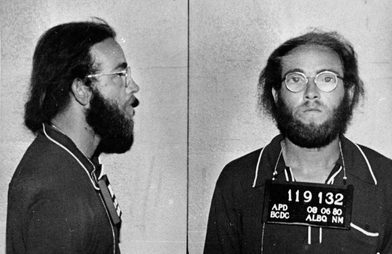
Marion Pruett
Sources
- Find a Grave Memorial: Opal Margaret 'Peggy' Holder Lowe
- Marion Albert Pruett — Serial Killer Profile
- Grand Jury Indictment: State of Mississippi v. Marion Albert Pruett, First Judicial District of Hinds County
- Pruett v. State, Capital Murder Trial Records (Mississippi, 1982)
- Arkansas Execution Record: Marion Albert Pruett, April 12, 1999
Frequently Asked Questions
Table of Contents
Case Summary
The man who walked into Peggy Lowe's bank branch that September morning in 1981 had a new name, a government-issued identity, and $800 in his pocket, courtesy of the United States Federal Witness Protection Program. He had earned that protection by testifying about a prison murder. What federal prosecutors did not yet know, what they could not have imagined, was that he had committed that murder himself. Marion Albert Pruett was a liar so accomplished he fooled the government, and Peggy Lowe, a 43-year-old branch manager and grandmother who had spent her career helping ordinary people manage their savings, was the one who paid for that failure with her life. He chose her branch specifically because no men were on staff, believing women would resist less. He robbed the register of roughly $7,000, and when her phone rang mid-robbery — her son calling, an ordinary moment in an ordinary day — Pruett made a decision that sealed her fate. He took her instead. The full horror of what followed, from a dirt road in Sumter County, Alabama, to a death row press conference in which Pruett boasted about his crimes and tried to sell victim information to television producers, is a story about institutional failure, ordinary evil, and one woman whose name deserves far more than a footnote.
June 5, 1938, Mississippi, USA (exact city unconfirmed)(Age: 43)
September 17, 1981, Sumter County, Alabama, USA (kidnapped from Jackson, Hinds County, Mississippi) (Gunshot wound to the back of the head; murdered by Marion Albert Pruett)
Case Details
The morning of September 17, 1981, was unremarkable in Jackson, Mississippi. The summer heat was beginning its slow retreat, and the Metrocenter Mall hummed with the ambient noise of a Wednesday. Inside the Unifirst Federal Savings and Loan branch, Peggy Lowe was doing what she had done for years: managing her staff, reviewing files, keeping the quiet machinery of a neighborhood savings institution running on time.
She was 43 years old. Born Opal Margaret Holder on June 5, 1938, she had long since shed the formal name in favor of Peggy, a nickname spun from her middle name that fit her better. She lived with her husband Ed at 165 Crossover Drive in Brandon, just east of Jackson. She had a son named Mark and a daughter named Lana. She had a grandson. She was, by every available account, the kind of person a community bank branch was built around: steady, professional, trusted.
The man who walked through the door that morning called himself Charles Sonny Pearson. That name was a fiction. His real name was Marion Albert Pruett, and the United States government had given him the alias, along with $800 in cash and a fresh start, in 1979. Pruett had entered the Federal Witness Protection Program after testifying in connection with a murder that occurred inside an Atlanta federal prison. Prosecutors had found him useful. What they had not established, at the time they cut him loose with a new identity and a handshake, was that Pruett had committed that prison murder himself. He had lied his way into the program designed to protect witnesses from killers, because he was the killer.
By September 1981, Pruett had already murdered at least one person: Pamela Sue Barker, his common-law wife, in New Mexico. He was moving. He was armed. He had chosen the Unifirst branch at Metrocenter with a specific calculation in mind: no male employees were present. He believed women would be less likely to fight back.
He produced a weapon and announced the robbery. The staff complied. Pruett took approximately $7,000 from the branch and should, by any rational criminal logic, have left. Instead, a phone rang.
Peggy Lowe's son Mark was calling his mother. It was the kind of call that happens every day in every office in the country, a child checking in, a mother answering. But Pruett heard it and made a calculation. He decided Peggy Lowe had now seen too much, knew too much, or perhaps simply that a hostage would give him an edge. He forced her out of the branch at gunpoint and into her own car.
They crossed the Mississippi state line into Alabama. Pruett drove west into Sumter County, a rural expanse of red clay and timber, and turned onto a dirt road that led nowhere anyone would look. He forced Peggy Lowe out of the car and walked her into the woods. He ordered her to remove most of her clothing. The cruelty of this detail was tactical: he wanted to ensure she could not run far without being conspicuous. He left her there and returned to the car.
He administered cocaine to himself. Then he went back into the woods.
She had moved. She had not run far, but she had moved, because she was a person and not a prop, because survival instinct does not politely sit still. Pruett found her. He raised a .357 Magnum revolver and shot her once in the back of the head at close range.
Peggy Lowe was left in the Alabama woods on September 17, 1981. Her body would not be found for forty-one days.
Pruett kept moving. He drove out of Alabama and continued his itinerary of violence with a speed and geographical range that made him difficult to track. On October 12, 1981, he walked into a convenience store in Fort Smith, Arkansas, and shot clerk Bobbie Jean Robertson. Before that, in Colorado, he had killed James R. Balderson and Anthony Taitt. The bodies were accumulating across four states, but no single law enforcement agency had yet assembled the full picture.
The picture came together on October 17, 1981, in Stratford, Texas. A Texas state trooper pulled over a speeding vehicle and found Marion Pruett inside. It was a traffic stop, the most mundane of law enforcement interactions, and it ended a multistate killing spree. Pruett was taken into custody.
What followed was grotesque theater. Pruett gave authorities a detailed, self-incriminating confession that spanned multiple murders across multiple states. He told investigators where to find Peggy Lowe. On October 28, 1981, her remains were recovered in Sumter County, Alabama, exactly where he said they would be. Then Pruett held what can only be described as a two-day press conference from Mississippi custody, boasting about his crimes and giving himself a nickname: the Mad Dog Killer. He appeared to relish the attention with a thoroughness that chilled the investigators around him.
From death row, the performance continued. Pruett attempted to extort a Mississippi newspaper for $20,000 in exchange for the location of a victim's engagement ring. He offered to reveal the whereabouts of an alleged Florida victim's body if a television program would pay for his appearance. He tried to monetize the dead, as if the violence were simply a transaction he was still working out the terms of.
On November 2, 1981, a Hinds County grand jury indicted Pruett for the capital murder of Opal H. Lowe during a kidnapping connected to the Unifirst robbery. The indictment was filed in the First Judicial District of Hinds County, but the case generated such extensive local publicity that it was transferred to the Circuit Court of Lowndes County, Mississippi, in search of a jury that had not already formed a verdict.
The 1982 trial proceeded with Pruett's own confession as its centerpiece. He had described the abduction in precise detail: the route he drove, the dirt road in Sumter County, the order he gave Peggy Lowe to disrobe, the cocaine he took before returning to find she had moved, the single shot. Ballistic analysis confirmed the .357 Magnum connected to Pruett had fired the bullet that killed her. There was no competing narrative, no alibi, no alternative theory. There was only the man's own voice, recorded and replayed for a jury, describing how he walked back into those Alabama woods.
The jury convicted him of capital murder. He was sentenced to death in Mississippi, though later records reflect that this sentence was adjusted to life imprisonment in that state, with the death sentence in Arkansas ultimately becoming the instrument of his execution. In Colorado, he pleaded guilty to the murders of Balderson and Taitt and received two consecutive life sentences. The New Mexico conviction for Pamela Sue Barker's murder added a third. The arithmetic of his violence required separate accounting in four sovereign states.
The question that haunted investigators, lawmakers, and the families of Pruett's victims was not how he had operated across so many states without being caught sooner. The more disturbing question was simpler: how had the United States government put him back on the street in the first place?
Pruett had entered the witness protection program by lying about his role in a federal prison murder. The program accepted his account, gave him a new identity and seed money, and released him. The screening that should have detected his deception either did not exist in the form required or failed completely. By the time the truth emerged, Peggy Lowe was dead, along with at least four other people. The case became one of the most cited examples of institutional failure in the program's history, a cautionary lesson about what happens when a system built to protect the innocent harbors the guilty.
In the Arkansas capital proceedings for Bobbie Jean Robertson's murder, prosecutors introduced the full evidentiary record of the Unifirst robbery and Peggy Lowe's abduction and killing as an aggravating factor at sentencing. Her death, in other words, helped secure the death penalty in the state that would ultimately carry it out. She was woven into the legal architecture of Pruett's punishment even after her own case had reached its conclusion.
On April 12, 1999, Marion Albert Pruett was executed by lethal injection at the Cummins Unit in Arkansas, nearly eighteen years after he drove Peggy Lowe across the state line in her own car. He had spent those years on death row performing for journalists, manipulating the media ecosystem around capital punishment with the same cynical instinct he had brought to everything else. He died as he had lived: the loudest person in the room, convinced that his story was the interesting one.
Peggy Lowe is buried at Lakewood Memorial Park in Jackson, Mississippi. Her funeral was held at Parkway Baptist Church. She is survived in memory by her husband Ed, her son Mark, her daughter Lana Goodman, her grandson, her siblings. The Find a Grave memorial page for Opal Margaret Lowe carries a single photograph described as showing her at her daughter's wedding. In it, she exists in the way that victims of sudden violence always exist in their final photographs: entirely herself, entirely unaware of what is coming, caught in an ordinary moment of ordinary joy.
She had answered a phone call from her son. That was all. And in the moral universe occupied by Marion Pruett, that was enough to make her a liability.
The Unifirst branch is gone now. The Metrocenter Mall in Jackson has largely shuttered, a casualty of economic shifts that eroded the commercial corridors of mid-sized Southern cities through the 1990s and 2000s. The building where Peggy Lowe spent her working life stands diminished, if it stands at all. But the legal record of what happened on September 17, 1981, runs to thousands of pages across Mississippi, Alabama, Arkansas, Colorado, and New Mexico, a documentary monument to how much damage one man can do when the institutions designed to contain him wave him through the door instead.
She was a branch manager, a wife, a mother, a grandmother. She was forty-three years old and she had a phone call from her son and a career built on steadiness and trust. She deserves to be remembered by her name, not his.
Timeline
Birth of Opal Margaret 'Peggy' Holder
Opal Margaret Holder was born on June 5, 1938, in Mississippi, USA. She would go by the nickname 'Peggy,' derived from her middle name Margaret, throughout her entire life. She later married and took the surname Lowe, eventually settling in Brandon, Mississippi.
Establishes the beginning of Peggy Lowe's life and identity, the woman who would later become a victim of one of the most notorious failures of the U.S. Federal Witness Protection Program.
Peggy Lowe Employed as Branch Manager at Unifirst Federal Savings
By 1981, Peggy Lowe was working as a loan officer and branch manager at the Metrocenter Branch of Unifirst Federal Savings and Loan Association, located in the Metrocenter Mall area of Jackson, Hinds County, Mississippi. She resided at 165 Crossover Drive in Brandon, Mississippi, with her husband Ed H. Lowe. Her professional role placed her in a position of responsibility at the branch that would make her a target for Marion Albert Pruett.
Peggy's role as branch manager — and the fact that no male employees were present at the branch — made her a deliberate target in Pruett's calculated selection of the Unifirst location for his armed robbery.
Armed Robbery of Unifirst Federal Savings and Lowe's Abduction
On the morning of September 17, 1981, Marion Albert Pruett — operating under the alias 'Charles Sonny Pearson,' an identity provided by the U.S. Federal Witness Protection Program — entered the Unifirst Federal Savings branch and committed an armed robbery, stealing approximately $7,000. Pruett had deliberately chosen the branch because no male employees were present, believing women would be less likely to resist. When Peggy Lowe received a phone call from her son mid-robbery, Pruett made the calculated decision to take her as a hostage rather than another employee, forcing her into her own car at gunpoint.
This event marked the beginning of Peggy Lowe's abduction and set in motion the chain of events that would lead to her murder. It also exposed the catastrophic failure of the Witness Protection Program, which had placed Pruett — a murderer — back into society with a new identity and $800.
Murder of Peggy Lowe in Sumter County, Alabama
Pruett drove Peggy Lowe across the Mississippi-Alabama state line into a remote area of Sumter County, Alabama, where he stopped on a dirt road and led her into the woods at gunpoint. He forced her to disrobe to her underclothes to prevent escape, then administered cocaine to himself; upon returning, he found she had moved and shot her once in the back of the head at close range with a .357 Magnum revolver. Peggy Lowe was 43 years old at the time of her execution-style murder.
Peggy Lowe's murder was a deliberate, cold-blooded execution carried out by a man who had been released onto the public by the very federal government that was supposed to protect its citizens. Her death became central to both the Mississippi capital murder case and the Arkansas capital trial.
Arrest of Marion Albert Pruett in Stratford, Texas
Exactly one month after murdering Peggy Lowe, Marion Albert Pruett was apprehended on October 17, 1981, in Stratford, Texas, when Texas state troopers stopped him for a routine speeding violation. Investigators quickly linked him to a multi-state killing spree spanning New Mexico, Mississippi, Arkansas, and Colorado. Pruett subsequently held a two-day press conference while in Mississippi custody, calling himself the 'Mad Dog Killer' and boasting openly about his crimes.
Pruett's arrest brought an end to his killing spree and initiated the process by which Peggy Lowe's fate would be discovered. His voluntary confessions, including his detailed account of Lowe's murder, became the cornerstone of the prosecution's case.
Discovery of Peggy Lowe's Remains in Alabama
Nearly six weeks after her abduction and murder, Peggy Lowe's body was discovered on October 28, 1981, in Sumter County, Alabama. Pruett had confessed to authorities and personally led investigators to her remains following his arrest. The discovery confirmed the details of his confession and provided critical physical evidence, including ballistic material that would be linked to the .357 Magnum revolver associated with Pruett.
The recovery of Peggy Lowe's remains was a pivotal investigative milestone, providing the physical evidence necessary to corroborate Pruett's confession and support the capital murder indictment. It also finally gave her family the closure of knowing her fate.
Grand Jury Indictment for Capital Murder of Opal H. Lowe
On November 2, 1981, the Grand Jury of the First Judicial District of Hinds County, Mississippi, indicted Marion Albert Pruett for the capital murder of Opal H. Lowe during a kidnapping in connection with an armed robbery. Due to the extensive pretrial publicity generated by Pruett's self-proclaimed 'Mad Dog Killer' press conference and media coverage, the case was subsequently transferred to the Circuit Court of Lowndes County, Mississippi, to ensure a fair trial.
The formal indictment on capital murder charges set the legal framework for prosecuting Pruett for Peggy Lowe's death, establishing the aggravating circumstances — kidnapping and armed robbery — that made the crime eligible for the death penalty under Mississippi law.
Capital Murder Trial and Conviction in Mississippi
Pruett's capital murder trial for the killing of Peggy Lowe took place in 1982 in the Circuit Court of Lowndes County, Mississippi. The prosecution presented Pruett's detailed, self-incriminating confession, in which he admitted to the armed robbery, the abduction across state lines, and the execution-style shooting; ballistic analysis confirmed the bullet recovered from Lowe's remains matched a .357 Magnum revolver linked to Pruett. The jury convicted Pruett of capital murder and he was sentenced to life imprisonment in Mississippi for Peggy Lowe's killing.
The conviction secured justice for Peggy Lowe in Mississippi and established the evidentiary record of her abduction and murder, which would later serve as a critical aggravating factor in Pruett's Arkansas capital trial, ultimately contributing to his death sentence.
Lowe Murder Used as Aggravating Factor in Arkansas Capital Trial
In Pruett's Arkansas capital trial for the October 12, 1981 murder of convenience store clerk Bobbie Jean Robertson in Fort Smith, prosecutors introduced the full evidentiary record of the Unifirst robbery and Peggy Lowe's abduction and murder as a sentencing-phase aggravating factor. This evidence — including Pruett's confession and the details of Lowe's execution-style killing — was central to convincing the Arkansas jury to impose the death penalty. Pruett ultimately received a death sentence in Arkansas for Robertson's murder, while also accumulating life sentences in Colorado for two additional murders and in New Mexico for the murder of his common-law wife.
The deliberate use of Peggy Lowe's murder as an aggravating circumstance in the Arkansas capital proceedings meant that her death played a direct role in securing the sentence that would ultimately end Pruett's life, giving her case enduring legal weight across multiple jurisdictions.
Execution of Marion Albert Pruett by Lethal Injection in Arkansas
Nearly 18 years after murdering Peggy Lowe, Marion Albert Pruett was executed by lethal injection at the Cummins Unit in Arkansas on April 12, 1999, for the murder of Bobbie Jean Robertson. Pruett's execution brought a final legal conclusion to a killing spree that had claimed at least five confirmed lives across four states — a spree made possible by the catastrophic failure of the U.S. Federal Witness Protection Program, which had sheltered a self-admitted murderer and released him onto the public. Peggy Lowe is buried at Lakewood Memorial Park in Jackson, Mississippi, survived by her husband Ed, son Mark, daughter Lana, two sisters, a brother, and a grandson.
Pruett's execution marked the ultimate legal consequence for a man whose crimes had devastated multiple families and exposed profound systemic failures in the federal witness protection system. For Peggy Lowe's family, it represented the final chapter in a nearly two-decade pursuit of justice for her senseless murder.
Crime Location
Photos
Marion Pruett
Sources
- Find a Grave Memorial: Opal Margaret 'Peggy' Holder Lowe
- Marion Albert Pruett — Serial Killer Profile
- Grand Jury Indictment: State of Mississippi v. Marion Albert Pruett, First Judicial District of Hinds County
- Pruett v. State, Capital Murder Trial Records (Mississippi, 1982)
- Arkansas Execution Record: Marion Albert Pruett, April 12, 1999
Frequently Asked Questions
Related Cases
Accused
Connection tags:
Convicted
Connection tags:
Accused
Connection tags:
Convicted
Connection tags:
Convicted
Connection tags:
Accused
Connection tags:
Tags
Popular Culture
TV ()
Pruett's crimes, including the murder of Peggy Lowe, have been referenced in true crime television programs examining failures of the U.S. Federal Witness Protection Program and Pruett's self-styled 'Mad Dog Killer' persona.