Pamela Ann Smart
Case Summary
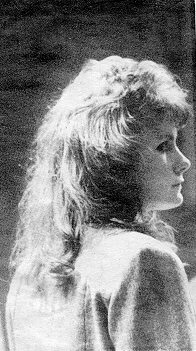
On the night of May 1, 1990, Gregg Smart came home to his condominium in Derry, New Hampshire, and found two teenagers waiting in the dark. One pressed a .38-caliber pistol to his head and fired. Gregg was 24 years old. His wife, Pamela, had arranged to be elsewhere. She was 22, a media director for a school district, and the woman who had seduced 15-year-old student Billy Flynn and, prosecutors argued, steered him toward murder to avoid a costly divorce and collect $140,000 in life insurance. When Pamela's own friend put on a police wire and recorded her coaching a witness to lie, the case cracked open like a fault line. What followed was the first murder trial in American history broadcast live on television, gavel to gavel, drawing roughly 150 reporters from around the world and turning a quiet New Hampshire courthouse into a global theater. Pamela Smart sat at the defense table and showed no emotion when the jury came back. She has been in prison ever since, more than three decades now, still filing petitions, still insisting the system failed her. The teenagers who pulled the trigger have all been paroled and gone home. She has not.
August 16, 1967, Coral Gables, Florida, USA(Age: 59)
Related Cases

Convicted
Connection tags:

Convicted
Connection tags:

Convicted
Connection tags:
Convicted
Connection tags:
Convicted
Connection tags:
Convicted
Connection tags:
Case Details
The door to the condominium at 4E Misty Morning Drive in Derry, New Hampshire, was unlocked when Gregg Smart got home that Tuesday evening. He was 24 years old, an insurance salesman, broad-shouldered and well-liked. He stepped inside and Patrick Randall was waiting with a knife. Billy Flynn was waiting with a gun. Randall grabbed Gregg from behind and held the blade to his throat, forcing him to his knees. Flynn pressed the .38-caliber pistol to the back of Gregg's head and fired a single hollow-point round. The scene was then staged to suggest a botched robbery: drawers pulled open, items scattered. Gregg Smart's body was left on the floor of his own home. His wife had made sure she was miles away.
Pamela Ann Wojas was born on August 16, 1967, in Coral Gables, Florida, the daughter of John and Linda Wojas. She was sharp and driven from an early age, the kind of girl who understood instinctively how images worked and how people responded to them. She earned a degree in communications and was drawn to the mechanics of media: what stories got told, how they were framed, who controlled the narrative. After college, she married Gregg Smart and settled in New Hampshire. On paper, they were a couple with every advantage: young, attractive, professionally established. But the marriage, by most accounts, was fracturing within its first year.
In 1989, Pamela took a job as media services director at School Administrative Unit 21, which served Winnacunnet High School in Hampton, New Hampshire. Part of her role involved working with students on educational programs, including a drug awareness project. That project is where she met William Flynn. He went by Billy. He was 15 years old.
What began as a mentorship became something else entirely. Pamela Smart, then in her early twenties and a married employee of the school system, initiated a sexual relationship with the teenager. Flynn was young, impressionable, and, by his own later account, completely consumed by her. She brought him into her world, played him music, confided in him, drew him close. By the time she was finished, he believed he would do anything for her.
Prosecutors argued that what Pamela Smart wanted, ultimately, was for her husband to disappear. A divorce would be expensive and messy; there was a prenuptial agreement to consider and a life insurance policy worth $140,000 to lose access to if the marriage ended on Gregg's terms. Whether through cold calculation or something more tangled and emotional, she allegedly began planting the idea in Flynn's mind that Gregg needed to die. Flynn, desperate to please her, recruited his friends. Patrick Randall agreed to help. So did Vance Lattime Jr. and Raymond Fowler, who served as lookouts and drivers. The four teenagers ranged in age from 15 to 17.
On the evening of May 1, 1990, Pamela took her student intern, Cecelia Pierce, to a school board meeting. She had her alibi. Randall and Flynn entered the condominium. When Gregg Smart walked through his front door, he had no chance.
Initially, police treated the scene as a robbery gone wrong. The staging was plausible enough to buy the killers some time. But investigators noticed inconsistencies. Gregg Smart's wedding ring, which he rarely removed, was still on his finger. The items that had been disturbed didn't reflect the pattern of a practiced burglar. Slowly, attention began shifting toward the widow.
The break came from within the group itself. By the summer of 1990, word of what had happened began leaking through the teenagers' social circles in Seabrook, New Hampshire. Tips reached investigators. Flynn and his friends were brought in for questioning. Under pressure, the story came apart.
Cecelia Pierce, Pamela's 16-year-old intern and the young woman who had been with her the night of the murder, became the prosecution's most important instrument. At the direction of Detective Daniel Pelletier, Pierce agreed to wear a police wire. In July 1990, she met with Pamela Smart and recorded their conversations. On those recordings, Smart could be heard appearing to instruct Pierce on what not to say to investigators. The tapes became the foundation of the witness tampering charge and offered prosecutors a window into Smart's state of mind.
On August 1, 1990, Pelletier arrested Pamela Smart in her school parking lot, three months after the murder. Flynn, Randall, Lattime, and Fowler all pleaded guilty to lesser charges and agreed to testify against her in exchange for reduced sentences. The stage was set for a trial unlike anything New Hampshire had seen before.
Rockingham County Superior Court in Exeter began hearing the case on March 4, 1991, before Judge Douglas Gray. What made the proceedings extraordinary, beyond the facts of the case itself, was the decision to allow complete live television coverage. It was the first murder trial in American history to be broadcast gavel to gavel. Cameras from around the world were permitted inside the courtroom. Roughly 150 reporters descended on the small New England town. Court TV carried the proceedings in full. Millions of Americans watched.
The effect was simultaneously inevitable and transformative. Pamela Smart, who understood cameras and media better than almost anyone in that room, became a figure onto whom the public projected everything: femme fatale, manipulative villain, victim of a system that had already convicted her before the jury was seated. She sat at the defense table in professional attire, composed and largely expressionless, and that composure read differently to different people. Some saw guilt. Some saw someone performing the only role available to a woman who knew she was being watched by the entire country.
The prosecution's case rested on three pillars. First, the testimony of Billy Flynn and Patrick Randall, who described in detail how Pamela had groomed Flynn, expressed her desire to be rid of her husband, and enlisted the group to carry out the killing. Second, the recorded conversations with Cecelia Pierce. Third, the physical evidence from the scene, which undermined the robbery narrative.
The defense argued that Flynn and Randall were unreliable witnesses with every incentive to shift blame onto Pamela in exchange for their plea deals. Defense attorneys contended that Flynn, a lovesick teenager, had acted out of his own obsession, and that Pamela had never actually solicited murder. She took the stand in her own defense. She was poised, articulate, and firm. She denied orchestrating the killing.
The jury, seven women and five men, deliberated for thirteen hours over two days. On March 22, 1991, they returned with their verdict: guilty on all three counts. Accomplice to first-degree murder. Conspiracy to commit murder. Witness tampering. Pamela Smart did not flinch. She showed no visible reaction as the forewoman read each count aloud in the hushed courtroom.
Under New Hampshire law, the accomplice to first-degree murder conviction carried a mandatory sentence: life in prison without the possibility of parole. Judge Gray imposed that sentence on May 6, 1991. Pamela Smart was 23 years old. There was no parole board to petition, no minimum term to serve out. The law offered her no exit.
In 1993, for reasons described only as related to security, she was transferred from the New Hampshire State Prison for Women in Goffstown to Bedford Hills Correctional Facility in Westchester County, New York. She is believed to be the longest-serving woman currently incarcerated there.
In the decades since her conviction, Pamela Smart has built a life within the only world available to her. She earned two master's degrees, one in law and one in English literature, and a doctorate in ministry. She was ordained as a minister. She worked as an AIDS educator, tutored fellow inmates, and served on an inmate liaison committee. These are not the activities of a woman who has given up; they are the activities of a woman who has decided that waiting is not enough.
Her appeals have been exhaustive and, so far, unsuccessful. State appeals were exhausted by the early 2000s. A federal habeas corpus petition was rejected in 2002 and upheld by the First U.S. Court of Appeals in April 2004. The New Hampshire Executive Council denied commutation requests in 2005, 2018, 2022, and on multiple occasions since. In March 2023, the New Hampshire Supreme Court dismissed her challenge to Governor Chris Sununu's refusal to grant a commutation hearing. A further request was denied in 2024 on jurisdictional grounds.
Then, on June 11, 2024, something shifted. Pamela Smart released a videotaped statement recorded at Bedford Hills. For the first time in more than thirty years, she explicitly accepted responsibility for her husband's death. She wrote to Governor Sununu that she had "made excuses, dismissed my own involvement, and blamed everyone else." It was a striking departure from the position she had maintained for decades, and it raised immediate questions about what, exactly, she was now admitting to, and why. A new commutation bid accompanied the statement.
In May 2025, newly elected Governor Kelly Ayotte declared that bid not deserving of a hearing. On August 1, 2025, supporters gathered at the State House to call on Ayotte to visit Smart at Bedford Hills. On January 6, 2026, Smart filed a new petition for habeas corpus relief in both New York and New Hampshire courts. The petition cited forensic research and a specific constitutional claim: that prosecutors had provided jurors with transcripts of the secretly recorded conversations that contained words not actually audible on the recordings. A hearing originally scheduled for February 27, 2026, in Merrimack County Superior Court was postponed after the state requested additional time; the response deadline was extended to March 23, 2026.
Meanwhile, all four teenagers who physically carried out or assisted in Gregg Smart's murder have been released. Billy Flynn was paroled in 2015, after serving roughly 25 years. Patrick Randall was paroled in June of that same year. Vance Lattime Jr. and Raymond Fowler followed. The boys who went into that condominium in Derry on a May evening in 1990 are middle-aged men now, living outside prison walls. The woman who prosecutors said put them up to it is still inside.
The case has never stopped generating its own mythology. A 1991 television film starred Helen Hunt as Pamela. Joyce Maynard drew on the story for her 1992 novel "To Die For," which Gus Van Sant adapted into a 1995 film starring Nicole Kidman and Joaquin Phoenix, a movie that understood something cold and true about ambition and image and the cameras we point at ourselves. The 2014 HBO documentary "Captivated: The Trials of Pamela Smart," directed by Jeremiah Zagar, examined not just the crime but the media frenzy that surrounded it, asking uncomfortable questions about whether a fair trial was even possible once the cameras were switched on.
That question has never been fully resolved. The first gavel-to-gavel televised murder trial in American history produced a conviction that has since served as a cautionary tale about the intersection of justice and spectacle. Whether Pamela Smart is where she belongs, whether the jury that convicted her saw the case clearly or saw the version that television had pre-assembled for them, is a question that courts have repeatedly declined to revisit in any meaningful way.
Gregg Smart has been dead for more than thirty-five years. He was 24 when Patrick Randall held a knife to his throat and Billy Flynn fired a bullet into his head in the home he shared with his wife. That is the fixed and permanent center of this story, whatever else swirls around it. A young man came home one evening and did not survive the night. Everything that followed, the trial, the cameras, the films, the petitions, the decades, has orbited that single irrevocable fact.
Timeline
Birth of Pamela Ann Wojas
Pamela Ann Wojas was born on August 16, 1967, in Coral Gables, Florida, to parents John and Linda Wojas. She would later move to New Hampshire, marry Gregg Smart, and take his surname.
Establishes the beginning of Pamela Smart's life story, later to become one of the most high-profile criminal cases of the early 1990s.
Affair with Minor Billy Flynn Begins
While working as media services director at Winnacunnet High School in Hampton, New Hampshire, Pamela Smart began a sexual affair with 15-year-old student William 'Billy' Flynn, whom she had met through a school drug awareness project. Flynn was a minor at the time, making the relationship not only adulterous but criminal. Prosecutors later argued Smart manipulated Flynn emotionally to secure his participation in her husband's murder.
The affair was the central catalyst for the murder plot and became a defining element of the prosecution's case against Smart.
Murder of Gregg Smart
Gregg Smart, age 24, was shot and killed at the couple's condominium at 4E Misty Morning Drive in Derry, New Hampshire. Billy Flynn fired a hollow-point bullet into Gregg's head while Patrick Randall held a knife to his throat; the scene was staged to resemble a botched robbery. Two other teens, Vance Lattime Jr. and Raymond Fowler, were also involved in the plot.
The murder was the central criminal act of the case and set in motion one of the most media-saturated criminal investigations in New Hampshire history.
Cecelia Pierce Wears Police Wire
At the direction of investigators, Pamela Smart's friend and school intern Cecelia Pierce wore a concealed police wire during conversations with Smart in July 1990. The recordings captured Smart appearing to instruct Pierce to lie to investigators, forming the evidentiary basis for the witness tampering charge. These secretly recorded conversations became among the most damning pieces of evidence presented at trial.
The wire recordings were pivotal prosecution evidence and directly led to the witness tampering charge that supplemented the murder conspiracy counts.
Arrest of Pamela Smart
Detective Daniel Pelletier arrested Pamela Smart in her school parking lot on August 1, 1990, three months after her husband's murder. She was charged with accomplice to first-degree murder, conspiracy to commit murder, and witness tampering. Her co-defendants — Flynn, Randall, Lattime, and Fowler — pleaded guilty to lesser charges and agreed to cooperate with prosecutors in exchange for reduced sentences.
Smart's arrest marked the culmination of a summer-long investigation and set the stage for a trial that would captivate the nation.
Trial Begins — First Gavel-to-Gavel TV Broadcast in U.S. History
Smart's trial commenced on March 4, 1991, in Rockingham County Superior Court in Exeter, New Hampshire, before Judge Douglas Gray. It became the first trial in United States history to be broadcast live on television from gavel to gavel, drawing approximately 150 reporters from around the world. The unprecedented media spectacle would later become central to Smart's appellate arguments that she could not receive a fair trial.
The trial's live broadcast transformed it into a cultural phenomenon and raised lasting questions about the influence of media on jury impartiality.
Conviction on All Three Counts
After a 14-day trial, a jury of seven women and five men found Pamela Smart guilty on all three counts: accomplice to first-degree murder, conspiracy to commit murder, and witness tampering. Smart showed no visible emotion as the verdict was read. Under New Hampshire law, the accomplice to first-degree murder conviction carried a mandatory sentence of life in prison without the possibility of parole.
The conviction sealed Smart's fate under a mandatory sentencing law that allowed no judicial discretion, making her case a flashpoint for debates about mandatory minimum sentencing.
Sentencing to Life Without Parole
On May 6, 1991, Pamela Smart was formally sentenced to life in prison without the possibility of parole, as required by New Hampshire statute for her accomplice to first-degree murder conviction. The sentence left no avenue for parole, making commutation by the governor the only potential path to release. Smart was subsequently transferred in 1993 to Bedford Hills Correctional Facility in Westchester County, New York, for unspecified security reasons.
The mandatory life-without-parole sentence has been the cornerstone of Smart's decades-long legal battle, as it forecloses parole and limits relief to executive clemency.
Federal Habeas Petition Rejected; Appeals Exhausted
After state appeals were exhausted in the early 2000s, a federal habeas corpus petition was rejected in 2002 and that rejection was upheld by the First U.S. Court of Appeals in April 2004. The New Hampshire Executive Council subsequently denied commutation requests in 2005, 2018, and 2022. Smart and her mother continued to maintain her innocence, arguing that the unprecedented media coverage had irreparably tainted the jury pool.
The exhaustion of federal appeals left executive clemency as Smart's only remaining legal avenue, shifting her strategy toward public advocacy and commutation petitions.
Smart Accepts Responsibility in Videotaped Statement; New Habeas Petition Filed
On June 11, 2024, Smart released a videotaped statement from Bedford Hills Correctional Facility — the first time she explicitly accepted responsibility for her husband's death — as part of a new commutation bid, writing that she had 'made excuses, dismissed my own involvement, and blamed everyone else.' Despite this, newly elected Governor Kelly Ayotte declared Smart's commutation request 'not deserving of a hearing' in May 2025. On January 6, 2026, Smart filed a new habeas corpus petition in both New York and New Hampshire courts, citing modern forensic science and alleging prosecutors provided jurors with inaccurate transcripts of recorded conversations.
Smart's public acceptance of responsibility marked a dramatic shift in her decades-long stance of innocence, while the 2026 habeas petition introduced new constitutional arguments that could reopen judicial scrutiny of her conviction.
Crime Location
Photos
Pamela Smart
:max_bytes(150000):strip_icc():focal(777x517:779x519):format(webp)/pamela-smart-tout-061124-005ca1f1825e4b8da17fa86fa5ad3e5c.jpg)
Pamela Smart
Sources
- Pamela Smart – Wikipedia
- Captivated: The Trials of Pamela Smart
- Pamela Smart releases video accepting responsibility for husband's murder
- NH Supreme Court dismisses Pamela Smart legal challenge
- Governor Kelly Ayotte denies Pamela Smart commutation hearing
- Pamela Smart files new habeas corpus petition
- To Die For (novel)
- Pamela Smart – Murderpedia
Frequently Asked Questions
Table of Contents
Case Summary
On the night of May 1, 1990, Gregg Smart came home to his condominium in Derry, New Hampshire, and found two teenagers waiting in the dark. One pressed a .38-caliber pistol to his head and fired. Gregg was 24 years old. His wife, Pamela, had arranged to be elsewhere. She was 22, a media director for a school district, and the woman who had seduced 15-year-old student Billy Flynn and, prosecutors argued, steered him toward murder to avoid a costly divorce and collect $140,000 in life insurance. When Pamela's own friend put on a police wire and recorded her coaching a witness to lie, the case cracked open like a fault line. What followed was the first murder trial in American history broadcast live on television, gavel to gavel, drawing roughly 150 reporters from around the world and turning a quiet New Hampshire courthouse into a global theater. Pamela Smart sat at the defense table and showed no emotion when the jury came back. She has been in prison ever since, more than three decades now, still filing petitions, still insisting the system failed her. The teenagers who pulled the trigger have all been paroled and gone home. She has not.
August 16, 1967, Coral Gables, Florida, USA(Age: 59)
Case Details
The door to the condominium at 4E Misty Morning Drive in Derry, New Hampshire, was unlocked when Gregg Smart got home that Tuesday evening. He was 24 years old, an insurance salesman, broad-shouldered and well-liked. He stepped inside and Patrick Randall was waiting with a knife. Billy Flynn was waiting with a gun. Randall grabbed Gregg from behind and held the blade to his throat, forcing him to his knees. Flynn pressed the .38-caliber pistol to the back of Gregg's head and fired a single hollow-point round. The scene was then staged to suggest a botched robbery: drawers pulled open, items scattered. Gregg Smart's body was left on the floor of his own home. His wife had made sure she was miles away.
Pamela Ann Wojas was born on August 16, 1967, in Coral Gables, Florida, the daughter of John and Linda Wojas. She was sharp and driven from an early age, the kind of girl who understood instinctively how images worked and how people responded to them. She earned a degree in communications and was drawn to the mechanics of media: what stories got told, how they were framed, who controlled the narrative. After college, she married Gregg Smart and settled in New Hampshire. On paper, they were a couple with every advantage: young, attractive, professionally established. But the marriage, by most accounts, was fracturing within its first year.
In 1989, Pamela took a job as media services director at School Administrative Unit 21, which served Winnacunnet High School in Hampton, New Hampshire. Part of her role involved working with students on educational programs, including a drug awareness project. That project is where she met William Flynn. He went by Billy. He was 15 years old.
What began as a mentorship became something else entirely. Pamela Smart, then in her early twenties and a married employee of the school system, initiated a sexual relationship with the teenager. Flynn was young, impressionable, and, by his own later account, completely consumed by her. She brought him into her world, played him music, confided in him, drew him close. By the time she was finished, he believed he would do anything for her.
Prosecutors argued that what Pamela Smart wanted, ultimately, was for her husband to disappear. A divorce would be expensive and messy; there was a prenuptial agreement to consider and a life insurance policy worth $140,000 to lose access to if the marriage ended on Gregg's terms. Whether through cold calculation or something more tangled and emotional, she allegedly began planting the idea in Flynn's mind that Gregg needed to die. Flynn, desperate to please her, recruited his friends. Patrick Randall agreed to help. So did Vance Lattime Jr. and Raymond Fowler, who served as lookouts and drivers. The four teenagers ranged in age from 15 to 17.
On the evening of May 1, 1990, Pamela took her student intern, Cecelia Pierce, to a school board meeting. She had her alibi. Randall and Flynn entered the condominium. When Gregg Smart walked through his front door, he had no chance.
Initially, police treated the scene as a robbery gone wrong. The staging was plausible enough to buy the killers some time. But investigators noticed inconsistencies. Gregg Smart's wedding ring, which he rarely removed, was still on his finger. The items that had been disturbed didn't reflect the pattern of a practiced burglar. Slowly, attention began shifting toward the widow.
The break came from within the group itself. By the summer of 1990, word of what had happened began leaking through the teenagers' social circles in Seabrook, New Hampshire. Tips reached investigators. Flynn and his friends were brought in for questioning. Under pressure, the story came apart.
Cecelia Pierce, Pamela's 16-year-old intern and the young woman who had been with her the night of the murder, became the prosecution's most important instrument. At the direction of Detective Daniel Pelletier, Pierce agreed to wear a police wire. In July 1990, she met with Pamela Smart and recorded their conversations. On those recordings, Smart could be heard appearing to instruct Pierce on what not to say to investigators. The tapes became the foundation of the witness tampering charge and offered prosecutors a window into Smart's state of mind.
On August 1, 1990, Pelletier arrested Pamela Smart in her school parking lot, three months after the murder. Flynn, Randall, Lattime, and Fowler all pleaded guilty to lesser charges and agreed to testify against her in exchange for reduced sentences. The stage was set for a trial unlike anything New Hampshire had seen before.
Rockingham County Superior Court in Exeter began hearing the case on March 4, 1991, before Judge Douglas Gray. What made the proceedings extraordinary, beyond the facts of the case itself, was the decision to allow complete live television coverage. It was the first murder trial in American history to be broadcast gavel to gavel. Cameras from around the world were permitted inside the courtroom. Roughly 150 reporters descended on the small New England town. Court TV carried the proceedings in full. Millions of Americans watched.
The effect was simultaneously inevitable and transformative. Pamela Smart, who understood cameras and media better than almost anyone in that room, became a figure onto whom the public projected everything: femme fatale, manipulative villain, victim of a system that had already convicted her before the jury was seated. She sat at the defense table in professional attire, composed and largely expressionless, and that composure read differently to different people. Some saw guilt. Some saw someone performing the only role available to a woman who knew she was being watched by the entire country.
The prosecution's case rested on three pillars. First, the testimony of Billy Flynn and Patrick Randall, who described in detail how Pamela had groomed Flynn, expressed her desire to be rid of her husband, and enlisted the group to carry out the killing. Second, the recorded conversations with Cecelia Pierce. Third, the physical evidence from the scene, which undermined the robbery narrative.
The defense argued that Flynn and Randall were unreliable witnesses with every incentive to shift blame onto Pamela in exchange for their plea deals. Defense attorneys contended that Flynn, a lovesick teenager, had acted out of his own obsession, and that Pamela had never actually solicited murder. She took the stand in her own defense. She was poised, articulate, and firm. She denied orchestrating the killing.
The jury, seven women and five men, deliberated for thirteen hours over two days. On March 22, 1991, they returned with their verdict: guilty on all three counts. Accomplice to first-degree murder. Conspiracy to commit murder. Witness tampering. Pamela Smart did not flinch. She showed no visible reaction as the forewoman read each count aloud in the hushed courtroom.
Under New Hampshire law, the accomplice to first-degree murder conviction carried a mandatory sentence: life in prison without the possibility of parole. Judge Gray imposed that sentence on May 6, 1991. Pamela Smart was 23 years old. There was no parole board to petition, no minimum term to serve out. The law offered her no exit.
In 1993, for reasons described only as related to security, she was transferred from the New Hampshire State Prison for Women in Goffstown to Bedford Hills Correctional Facility in Westchester County, New York. She is believed to be the longest-serving woman currently incarcerated there.
In the decades since her conviction, Pamela Smart has built a life within the only world available to her. She earned two master's degrees, one in law and one in English literature, and a doctorate in ministry. She was ordained as a minister. She worked as an AIDS educator, tutored fellow inmates, and served on an inmate liaison committee. These are not the activities of a woman who has given up; they are the activities of a woman who has decided that waiting is not enough.
Her appeals have been exhaustive and, so far, unsuccessful. State appeals were exhausted by the early 2000s. A federal habeas corpus petition was rejected in 2002 and upheld by the First U.S. Court of Appeals in April 2004. The New Hampshire Executive Council denied commutation requests in 2005, 2018, 2022, and on multiple occasions since. In March 2023, the New Hampshire Supreme Court dismissed her challenge to Governor Chris Sununu's refusal to grant a commutation hearing. A further request was denied in 2024 on jurisdictional grounds.
Then, on June 11, 2024, something shifted. Pamela Smart released a videotaped statement recorded at Bedford Hills. For the first time in more than thirty years, she explicitly accepted responsibility for her husband's death. She wrote to Governor Sununu that she had "made excuses, dismissed my own involvement, and blamed everyone else." It was a striking departure from the position she had maintained for decades, and it raised immediate questions about what, exactly, she was now admitting to, and why. A new commutation bid accompanied the statement.
In May 2025, newly elected Governor Kelly Ayotte declared that bid not deserving of a hearing. On August 1, 2025, supporters gathered at the State House to call on Ayotte to visit Smart at Bedford Hills. On January 6, 2026, Smart filed a new petition for habeas corpus relief in both New York and New Hampshire courts. The petition cited forensic research and a specific constitutional claim: that prosecutors had provided jurors with transcripts of the secretly recorded conversations that contained words not actually audible on the recordings. A hearing originally scheduled for February 27, 2026, in Merrimack County Superior Court was postponed after the state requested additional time; the response deadline was extended to March 23, 2026.
Meanwhile, all four teenagers who physically carried out or assisted in Gregg Smart's murder have been released. Billy Flynn was paroled in 2015, after serving roughly 25 years. Patrick Randall was paroled in June of that same year. Vance Lattime Jr. and Raymond Fowler followed. The boys who went into that condominium in Derry on a May evening in 1990 are middle-aged men now, living outside prison walls. The woman who prosecutors said put them up to it is still inside.
The case has never stopped generating its own mythology. A 1991 television film starred Helen Hunt as Pamela. Joyce Maynard drew on the story for her 1992 novel "To Die For," which Gus Van Sant adapted into a 1995 film starring Nicole Kidman and Joaquin Phoenix, a movie that understood something cold and true about ambition and image and the cameras we point at ourselves. The 2014 HBO documentary "Captivated: The Trials of Pamela Smart," directed by Jeremiah Zagar, examined not just the crime but the media frenzy that surrounded it, asking uncomfortable questions about whether a fair trial was even possible once the cameras were switched on.
That question has never been fully resolved. The first gavel-to-gavel televised murder trial in American history produced a conviction that has since served as a cautionary tale about the intersection of justice and spectacle. Whether Pamela Smart is where she belongs, whether the jury that convicted her saw the case clearly or saw the version that television had pre-assembled for them, is a question that courts have repeatedly declined to revisit in any meaningful way.
Gregg Smart has been dead for more than thirty-five years. He was 24 when Patrick Randall held a knife to his throat and Billy Flynn fired a bullet into his head in the home he shared with his wife. That is the fixed and permanent center of this story, whatever else swirls around it. A young man came home one evening and did not survive the night. Everything that followed, the trial, the cameras, the films, the petitions, the decades, has orbited that single irrevocable fact.
Timeline
Birth of Pamela Ann Wojas
Pamela Ann Wojas was born on August 16, 1967, in Coral Gables, Florida, to parents John and Linda Wojas. She would later move to New Hampshire, marry Gregg Smart, and take his surname.
Establishes the beginning of Pamela Smart's life story, later to become one of the most high-profile criminal cases of the early 1990s.
Affair with Minor Billy Flynn Begins
While working as media services director at Winnacunnet High School in Hampton, New Hampshire, Pamela Smart began a sexual affair with 15-year-old student William 'Billy' Flynn, whom she had met through a school drug awareness project. Flynn was a minor at the time, making the relationship not only adulterous but criminal. Prosecutors later argued Smart manipulated Flynn emotionally to secure his participation in her husband's murder.
The affair was the central catalyst for the murder plot and became a defining element of the prosecution's case against Smart.
Murder of Gregg Smart
Gregg Smart, age 24, was shot and killed at the couple's condominium at 4E Misty Morning Drive in Derry, New Hampshire. Billy Flynn fired a hollow-point bullet into Gregg's head while Patrick Randall held a knife to his throat; the scene was staged to resemble a botched robbery. Two other teens, Vance Lattime Jr. and Raymond Fowler, were also involved in the plot.
The murder was the central criminal act of the case and set in motion one of the most media-saturated criminal investigations in New Hampshire history.
Cecelia Pierce Wears Police Wire
At the direction of investigators, Pamela Smart's friend and school intern Cecelia Pierce wore a concealed police wire during conversations with Smart in July 1990. The recordings captured Smart appearing to instruct Pierce to lie to investigators, forming the evidentiary basis for the witness tampering charge. These secretly recorded conversations became among the most damning pieces of evidence presented at trial.
The wire recordings were pivotal prosecution evidence and directly led to the witness tampering charge that supplemented the murder conspiracy counts.
Arrest of Pamela Smart
Detective Daniel Pelletier arrested Pamela Smart in her school parking lot on August 1, 1990, three months after her husband's murder. She was charged with accomplice to first-degree murder, conspiracy to commit murder, and witness tampering. Her co-defendants — Flynn, Randall, Lattime, and Fowler — pleaded guilty to lesser charges and agreed to cooperate with prosecutors in exchange for reduced sentences.
Smart's arrest marked the culmination of a summer-long investigation and set the stage for a trial that would captivate the nation.
Trial Begins — First Gavel-to-Gavel TV Broadcast in U.S. History
Smart's trial commenced on March 4, 1991, in Rockingham County Superior Court in Exeter, New Hampshire, before Judge Douglas Gray. It became the first trial in United States history to be broadcast live on television from gavel to gavel, drawing approximately 150 reporters from around the world. The unprecedented media spectacle would later become central to Smart's appellate arguments that she could not receive a fair trial.
The trial's live broadcast transformed it into a cultural phenomenon and raised lasting questions about the influence of media on jury impartiality.
Conviction on All Three Counts
After a 14-day trial, a jury of seven women and five men found Pamela Smart guilty on all three counts: accomplice to first-degree murder, conspiracy to commit murder, and witness tampering. Smart showed no visible emotion as the verdict was read. Under New Hampshire law, the accomplice to first-degree murder conviction carried a mandatory sentence of life in prison without the possibility of parole.
The conviction sealed Smart's fate under a mandatory sentencing law that allowed no judicial discretion, making her case a flashpoint for debates about mandatory minimum sentencing.
Sentencing to Life Without Parole
On May 6, 1991, Pamela Smart was formally sentenced to life in prison without the possibility of parole, as required by New Hampshire statute for her accomplice to first-degree murder conviction. The sentence left no avenue for parole, making commutation by the governor the only potential path to release. Smart was subsequently transferred in 1993 to Bedford Hills Correctional Facility in Westchester County, New York, for unspecified security reasons.
The mandatory life-without-parole sentence has been the cornerstone of Smart's decades-long legal battle, as it forecloses parole and limits relief to executive clemency.
Federal Habeas Petition Rejected; Appeals Exhausted
After state appeals were exhausted in the early 2000s, a federal habeas corpus petition was rejected in 2002 and that rejection was upheld by the First U.S. Court of Appeals in April 2004. The New Hampshire Executive Council subsequently denied commutation requests in 2005, 2018, and 2022. Smart and her mother continued to maintain her innocence, arguing that the unprecedented media coverage had irreparably tainted the jury pool.
The exhaustion of federal appeals left executive clemency as Smart's only remaining legal avenue, shifting her strategy toward public advocacy and commutation petitions.
Smart Accepts Responsibility in Videotaped Statement; New Habeas Petition Filed
On June 11, 2024, Smart released a videotaped statement from Bedford Hills Correctional Facility — the first time she explicitly accepted responsibility for her husband's death — as part of a new commutation bid, writing that she had 'made excuses, dismissed my own involvement, and blamed everyone else.' Despite this, newly elected Governor Kelly Ayotte declared Smart's commutation request 'not deserving of a hearing' in May 2025. On January 6, 2026, Smart filed a new habeas corpus petition in both New York and New Hampshire courts, citing modern forensic science and alleging prosecutors provided jurors with inaccurate transcripts of recorded conversations.
Smart's public acceptance of responsibility marked a dramatic shift in her decades-long stance of innocence, while the 2026 habeas petition introduced new constitutional arguments that could reopen judicial scrutiny of her conviction.
Crime Location
Photos
Pamela Smart
Pamela Smart
Sources
- Pamela Smart – Wikipedia
- Captivated: The Trials of Pamela Smart
- Pamela Smart releases video accepting responsibility for husband's murder
- NH Supreme Court dismisses Pamela Smart legal challenge
- Governor Kelly Ayotte denies Pamela Smart commutation hearing
- Pamela Smart files new habeas corpus petition
- To Die For (novel)
- Pamela Smart – Murderpedia
Frequently Asked Questions
Related Cases
Convicted
Connection tags:
Convicted
Connection tags:
Convicted
Connection tags:
Convicted
Connection tags:
Convicted
Connection tags:
Convicted
Connection tags:
Tags
Popular Culture
TV (1991)
Made-for-TV movie starring Helen Hunt as Pamela Smart, dramatizing the affair, murder plot, and trial.
book (1992)
Joyce Maynard's novel loosely inspired by the Pamela Smart case, exploring a manipulative woman who enlists a teenage lover to kill her husband.
movie (1995)
Gus Van Sant film starring Nicole Kidman and Joaquin Phoenix, adapted from Joyce Maynard's novel inspired by the Smart case.
documentary (2014)
HBO documentary directed by Jeremiah Zagar examining the case, the first gavel-to-gavel televised trial in U.S. history, and its lasting cultural impact.