8 cases tagged “murder for hire”
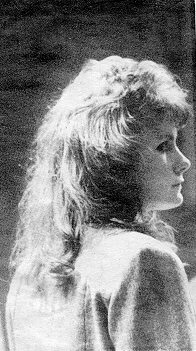
Convicted: Pamela Ann Smart
On the night of May 1, 1990, Gregg Smart came home to his condominium in Derry, New Hampshire, and found two teenagers waiting in the dark. One pressed a .38-caliber pistol to his head and fired. Gregg was 24 years old. His wife, Pamela, had arranged to be elsewhere. She was 22, a media director for a school district, and the woman who had seduced 15-year-old student Billy Flynn and, prosecutors argued, steered him toward murder to avoid a costly divorce and collect $140,000 in life insurance. When Pamela's own friend put on a police wire and recorded her coaching a witness to lie, the case cracked open like a fault line. What followed was the first murder trial in American history broadcast live on television, gavel to gavel, drawing roughly 150 reporters from around the world and turning a quiet New Hampshire courthouse into a global theater. Pamela Smart sat at the defense table and showed no emotion when the jury came back. She has been in prison ever since, more than three decades now, still filing petitions, still insisting the system failed her. The teenagers who pulled the trigger have all been paroled and gone home. She has not.
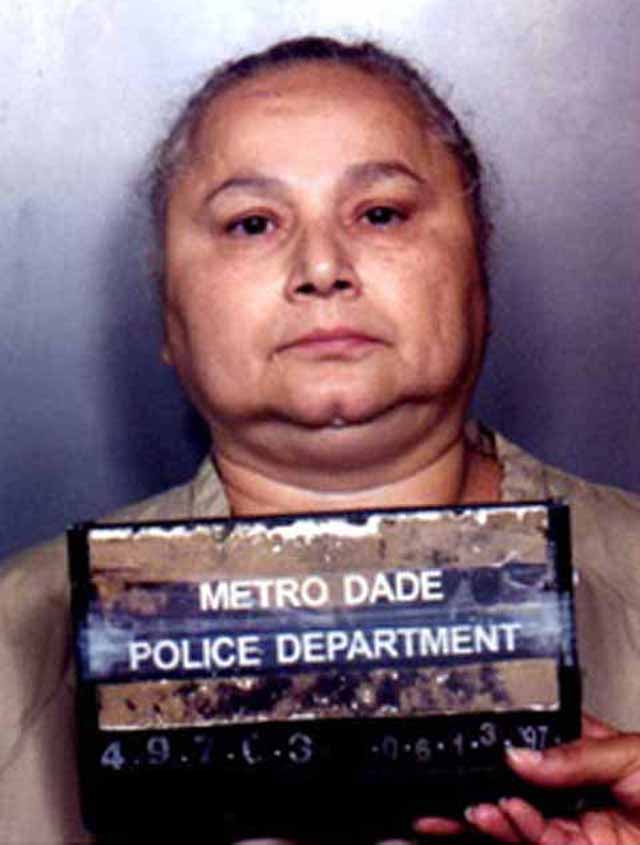
Convicted: Griselda Blanco Restrepo
On the afternoon of September 3, 2012, a gunman dismounted from a motorcycle outside a butcher shop in Medellín, Colombia, and shot a 69-year-old woman twice in the head. He was gone before anyone could stop him. The woman was Griselda Blanco Restrepo, and the method of her killing was one she had invented herself. In the 1970s and 1980s, Blanco built a cocaine empire that shipped 1,500 kilograms of product into Miami every month, generated an estimated $80 million monthly, and left dozens if not hundreds of people dead on both sides of the Atlantic. She mentored Pablo Escobar. She pioneered motorcycle assassinations. She named her youngest son Michael Corleone, after the Godfather character, because she saw the parallel and felt no shame in it. She was convicted of federal drug trafficking in 1985. She beat a capital murder case when her star witness was caught having phone sex with prosecutors' secretaries. She served nearly two decades in prison, suffered a heart attack, was deported to Colombia, and allegedly became a born-again Christian. None of it was enough to save her. The killers who found her outside the Carnicería Cardiso that September afternoon were never identified. She was buried at Jardines de Montesacro cemetery in Medellín, in the same ground as Pablo Escobar. The Godmother of Cocaine, who had ordered the deaths of husbands, rivals, and at least one two-year-old child, ended her life on the same streets where she had built her legend: in Medellín, violently, by surprise. This is her story.
Convicted: Sharee Paulette Kitley Miller
Two days after her husband Bruce was shot dead at his junkyard in rural Michigan, Sharee Miller was spotted dancing at a nightclub. Within weeks, she had moved a new boyfriend into her home. She was twenty-eight years old, newly widowed, and utterly unbothered. The murder itself had been methodical: Sharee had spent months in AOL adult chat rooms, crafting a persona designed to ensnare a man named Jerry Cassaday, a former homicide detective. She told him Bruce was abusive, that he had mafia connections, that he had forced her to abort their babies. None of it was true. But Cassaday believed every word, and in November 1999 he drove nearly eight hundred miles to put a shotgun to Bruce Miller's back. When it was over, Sharee simply vanished from Cassaday's life. He died by suicide three months later, leaving behind a briefcase stuffed with printed chat logs, hotel receipts, and an airline ticket that told the whole story. What followed was something American courts had never quite seen before: a murder trial built almost entirely on digital evidence harvested from the early internet. This is the story of how a woman from a Flint, Michigan trailer park turned an AOL chat room into a weapon.
Convicted: Adele Vicuna Craven
When Ronald Scott Pryor crouched in the basement of a handsome Edgewood, Kentucky home on July 12, 2000, a crowbar in his hand, he was waiting for a signal. It came from upstairs, from the pilot's wife: a whispered code phrase, 'the ferret is loose.' What followed would expose one of the most calculated murder-for-hire plots in Northern Kentucky history, orchestrated by a woman trained in the science of death, fueled by a secret affair, and financed by a half-million-dollar life insurance policy. Adele Vicuna Craven was a trained mortician turned stay-at-home mother, living inside the comfortable shell of a life she had come to despise. Her husband, Delta Airlines pilot Stephen Craven, earned $200,000 a year and had no idea his wife had not only taken a lover but had shopped around for someone willing to kill him. Pryor bludgeoned Stephen with a crowbar twelve times. When Stephen survived, Adele handed Pryor a firearm. Three shots finished the job. The case would consume nearly four years of courtroom battles, produce a mistrial, and ultimately force Adele into a guilty plea that sent her to the Kentucky Correctional Institution for Women for the rest of her natural life. This is the story of how a marriage rotted from the inside out, and what one woman was willing to do to escape it.
Convicted: Judith Maryanne Moran
On the morning of June 15, 2009, a small deli on Union Road in Ascot Vale erupted in gunfire. Desmond 'Tuppence' Moran, 68, was shot seven times as he reached for his wallet to pay for lunch. He was dead before ambulances arrived. Within minutes, a woman appeared at the scene, wailing his name over and over: 'Dessie, Dessie.' That woman was Judy Moran, his sister-in-law. Police would later allege she had driven the hitman to the cafe herself. Judy Moran was already one of the most recognizable figures in Australian criminal history. She had buried a husband, two sons, and a former partner, all victims of the Melbourne gangland war that consumed more than thirty lives between 1998 and 2010. She had written a memoir, given interviews, become something close to a tabloid fixture. And according to a Supreme Court jury, she had decided that grief was no longer enough, that the time had come to collect what she believed she was owed, in blood and in cash. This is the story of a woman who survived everything Melbourne's underworld could throw at her, only to become its instrument at last.
Convicted: Ruthann Greenzweig Aron (now known as Ruth Ann Green)
The manila envelope contained five hundred dollars and what Ruthann Aron believed was the beginning of a solution. In June 1997, the Cornell-educated real estate developer, former Maryland Senate candidate, and sitting Montgomery County Planning Board member slid that envelope across a counter at a Gaithersburg hotel as a down payment on the murders of two men: her husband, urologist Dr. Barry Aron, and her former attorney, Arthur G. Kahn. The man receiving the money was an undercover police detective. He had already recorded her approximately fifteen times. Every word she had spoken about the killings she wanted done had been preserved on tape. What followed was one of the most surreal true crime sagas the Washington suburbs had ever produced: a mistrial triggered by a juror who had concealed her mental health background, a 'dream team' defense built on brain injuries and allegations of childhood abuse, and a no-contest plea that sent a woman who had once nearly reached the U.S. Senate to a state prison cell. Decades later, after her son died on September 11, 2001, after she reinvented herself under a new name in Florida, after she self-published a 700-page memoir declaring herself the real victim, Ruthann Aron was still fighting to erase what those tapes had captured. She never succeeded.
Convicted: Lee Ann Armanini Reidel
On a cold January night in 2001, a man stepped into the rear parking lot of a Long Island gym to grab a CD from his car. He never made it back inside. Alexander Algeri, 32, was shot three times in the head and neck by a hired killer who mistook him for his best friend. The intended target, Paul Reidel, was alive. His wife had paid to have him killed. The case of Lee Ann Reidel is a story about money, a crumbling marriage, a mob-connected boyfriend, and a conspiracy so tangled that it destroyed everyone it touched, including an innocent man who had been the best man at the very wedding that set these events in motion. When the jury finally returned its verdict in a Suffolk County courtroom in March 2004, Lee Ann wept. She had smiled through most of the six-week trial. That detail alone tells you something about the woman at the center of this story.
Convicted: Joyce Lemay McDillon Cohen
At 5:25 on a March morning in 1986, Joyce Cohen called 911 from her Coconut Grove mansion and told dispatchers that burglars had shot her millionaire husband four times in the head while he slept. Then she kept police waiting outside the house for more than eight hours. It was the first of many decisions that would define the rest of her life. The story of Joyce Cohen is a portrait of poverty survived and luxury squandered, of a woman who clawed her way from foster homes in Illinois to the highest rungs of Miami society, only to watch it all collapse in a single pre-dawn hour. What followed was a nearly three-year investigation, a sensational trial, a jailhouse informant who failed three polygraphs, and a lead detective who privately believed the whole prosecution theory was wrong. Joyce Cohen has maintained her innocence for nearly four decades. She is in her late seventies now, housed at Homestead Correctional Institution in Florida, with a parole board having pushed her release date to 2048. The mansion is gone. The Jaguars are gone. Stanley Cohen has been in the ground since 1986. And the full truth of what happened that night may never be known.