Jodi Arias

Case Summary
When Travis Alexander's friends broke into his Mesa, Arizona home on June 9, 2008, the smell told them everything before their eyes could. He had been missing for five days. Inside the master bathroom, they found him crumpled in the shower: twenty-seven stab wounds, a throat slashed nearly to the spine, and a single .25-caliber bullet in his forehead. He was thirty years old. Within days, investigators had a name: Jodi Ann Arias, his ex-girlfriend, an aspiring photographer with a smile that charmed everyone she met. She would eventually confess to the killing, but not before telling two other stories first. What followed was one of the most-watched murder trials in American history, a 64-day courtroom spectacle broadcast live to millions, fueled by explicit text messages, recovered photographs of the victim alive in his shower just hours before his death, and a defendant who took the stand for 18 consecutive days and insisted she acted in self-defense. The jury didn't believe her. Neither did much of the country. She is serving life without parole. From a Nevada convention hall where two ambitious young people first locked eyes, to a prison cell in Goodyear, Arizona where Arias now sells artwork and writes a Substack blog, this is the full story of a killing that America could not look away from.
July 9, 1980, Salinas, California, USA(Age: 46)
Related Cases

Convicted
Connection tags:
Convicted
Connection tags:
Convicted
Connection tags:
Convicted
Connection tags:
Alleged
Connection tags:
Convicted
Connection tags:
Case Details
The smell reached them before anything else did.
When a group of Travis Alexander's friends forced their way into his home at 11428 East Queensborough Avenue in Mesa, Arizona, on the evening of June 9, 2008, they already knew something was terribly wrong. He had missed church. He had not returned a single call or text in five days. The house was locked tight against the Arizona summer heat. At 10:27 that night, someone in the group called 911.
Inside the master bathroom, they found him on the shower floor, naked, the tiles dark with dried blood. He was thirty years old. He had been stabbed twenty-seven times, including defensive wounds carved deep into his hands, the wounds of a man who had tried to fight back. His throat had been slashed with such force that the cut ran ear to ear, nearly severing his head. A single .25-caliber bullet had been fired into his forehead. The medical examiner would later testify that Alexander died from excessive blood loss. His body had been there for approximately five days.
The nature of those injuries told detectives something immediately: this was not a robbery, not a stranger, not a crime of brief and brutal opportunity. This killing had been sustained, intimate, and furious.
Within days, one name surfaced: Jodi Ann Arias.
To understand how Travis Alexander ended up dead in his own shower, you have to go back to a convention hall in Las Vegas in September 2006. Alexander was, by nearly every account, magnetic. Born July 28, 1977, in Riverside, California, he had pulled himself out of a childhood defined by poverty and parental neglect to become a motivational speaker and a rising star with Pre-Paid Legal Services, a multi-level marketing company that would later rebrand as LegalShield. He was devoutly Mormon, widely liked, and genuinely inspiring. He spoke at conferences about perseverance, and audiences believed him.
Jodi Ann Arias entered that world at one of those conferences. Born July 9, 1980, in Salinas, California, she was dark-haired, composed, and quick to charm. She had dropped out of Yreka Union High School in the eleventh grade, earned her GED, and drifted through a series of jobs: waitress, aspiring photographer, Pre-Paid Legal sales representative. She had developed a love of photography as early as age ten; it was one of the few consistent threads in an otherwise restless life. When she met Alexander at that Las Vegas conference, she was 26 and he was 29, and by most accounts the attraction was immediate.
By November 2006, Arias had converted to the Church of Jesus Christ of Latter-Day Saints. She moved to Mesa, Arizona, where Alexander lived, and the two began a formal relationship. It did not last long in that form. By the summer of 2007, they had broken up; but the breakup, it turned out, did not mean separation. What followed was an on-again, off-again sexual relationship that Alexander's friends and confidants would later describe with growing alarm. He spoke of feeling trapped. He told people he believed Arias was stalking him: showing up uninvited, reading his messages, slashing his tires (a claim that was raised at trial but never definitively proven). In private communications read aloud in court years later, Alexander himself described his feelings toward Arias in harsh, conflicted terms, suggesting a man who was attracted to someone he also feared.
Arias, for her part, had relocated again, this time to Yreka, California, to be closer to her grandparents. But Mesa was only a long drive away, and she made it more than once.
On June 4, 2008, she made it one final time.
Prosecutors would reconstruct that day in meticulous detail during the trial. Arias, they argued, had planned the trip carefully. In the days before, someone had broken into her grandparents' home and stolen a .25-caliber pistol, the same caliber as the weapon used to shoot Alexander. Investigators believed Arias staged that burglary herself. She also borrowed gas cans from a former boyfriend before leaving California, filling them to extend her driving range without stopping at traceable gas stations in Arizona.
She arrived at Alexander's home on June 4. What happened inside that house would become the central disputed question of a trial that captivated millions.
The recovered evidence, however, told its own story with unusual precision. A digital camera discovered in Alexander's washing machine, apparently thrown there in the chaos of the attack, was handed over to the Mesa Police Department's crime lab. Technicians recovered deleted photographs from the memory card. The images showed the couple together around 1:40 in the afternoon, smiling and intimate. Later photos showed Alexander alive in his shower at 5:29 p.m., posing for the camera. Then, within seconds: images of the floor, the ceiling, a blurred and frantic movement. And then nothing.
A bloody palm print on the hallway wall matched Arias's DNA. A mixture of her blood and Alexander's was found throughout the bathroom. The forensic evidence placed her at the scene beyond any reasonable doubt, which is why, by the time investigators came for her, they were not asking whether she had been there. They were waiting to hear what she would say.
She said three different things.
First, she told investigators she had not been in Mesa at all on June 4. She had not seen Travis Alexander that day. She did not know what had happened to him. This story collapsed when forensic evidence placed her at the scene.
So she told a second story: two masked intruders had broken into Alexander's home while she was there. They killed him and threatened her. She had escaped and driven away, too frightened to call the police. This story was investigated and discarded.
Finally, she told a third story: yes, she had killed Travis Alexander, but she had done so in self-defense. He had attacked her. She had grabbed a gun she claimed was stored in his closet, shot him, and then, in a fog of fear and dissociation she could not fully remember, stabbed him repeatedly. She said she had no memory of the stabbing itself.
On July 9, 2008, her 28th birthday, a Maricopa County grand jury indicted her on one count of first-degree premeditated murder, with felony murder as an alternative theory. She was arrested six days later at her grandparents' home in Northern California and extradited to Arizona. On September 11, 2008, she entered a plea of not guilty.
She would wait more than four years for trial.
The proceedings began December 10, 2012, in Maricopa County Superior Court, before Judge Sherry Stephens. Prosecutor Juan Martinez, a compact and combative litigator known for his aggressive courtroom style, led the state's case. The defense was handled by Kirk Nurmi and Jennifer Willmott. HLN and other networks carried the trial live, and viewership climbed into the millions. Legal analysts filled the airwaves. The case had everything a media moment required: sex, religion, graphic photographs, a photogenic defendant, and a victim whose friends wept openly from the gallery.
Then Jodi Arias took the stand herself, and the spectacle escalated.
Beginning February 4, 2013, she testified for 18 consecutive days, a record for a defendant in an Arizona murder case. She described her childhood, her relationships, her conversion to Mormonism, and the intimate details of her sexual relationship with Alexander. She claimed he was verbally abusive, that he had introduced her to deviant sexual practices while publicly presenting himself as a devout, chaste Mormon, and that on June 4, 2008, he had rushed at her in a rage after she accidentally dropped his camera. The jury listened. Juan Martinez cross-examined her with barely restrained ferocity, attacking her credibility at every turn and labeling her, in his closing, a manipulative liar.
Defense experts testified that Arias suffered from post-traumatic stress disorder and acute stress disorder, conditions that could explain her memory gaps. The prosecution's rebuttal expert countered with a diagnosis of borderline personality disorder.
After 64 days of testimony and fewer than three days of deliberation, the jury returned its verdict on May 8, 2013: guilty of first-degree premeditated murder. All twelve jurors agreed on premeditation; seven of the twelve also found felony murder. Unanimously, they determined the killing had been carried out in an especially cruel manner, the aggravating factor that opened the door to the death penalty.
What followed was a penalty phase unlike almost anything in recent American legal history. The first jury deadlocked in May 2013 and a mistrial was declared. A retrial of the penalty phase was ordered, and that jury, too, could not agree: eleven voted for death, one held out, and that single holdout juror subsequently received death threats serious enough to require law enforcement attention. The state declined to seat a third penalty jury.
On April 13, 2015, Judge Sherry Stephens sentenced Jodi Arias to life in prison without the possibility of parole, choosing the harsher of the two available life sentence options under Arizona law. Arias was also ordered to pay more than $32,000 in restitution to Alexander's family.
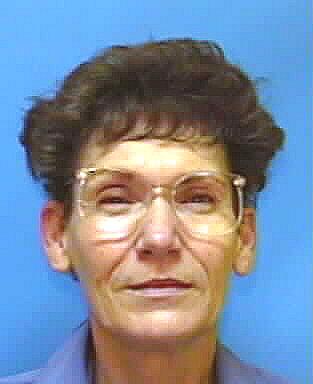
She was transported to the Arizona State Prison Complex at Perryville in Goodyear, Arizona, where she has remained. Her 2008 booking photograph, in which she smiled broadly for the camera hours after her arrest, became one of the defining images of the case and was reproduced endlessly in news coverage worldwide. The Associated Press described the trial as a worldwide sensation. Two Lifetime movies followed: "Jodi Arias: Dirty Little Secret" in 2013, and "Bad Behind Bars: Jodi Arias" in 2023.
In 2018, her attorneys filed an appeal citing excessive media coverage and prosecutorial misconduct. The Arizona Court of Appeals upheld the conviction in 2020, acknowledging that prosecutor Juan Martinez had engaged in what it called egregious misconduct, but ruling that the evidence of guilt was so overwhelming that the misconduct had not affected the verdict. The Arizona Supreme Court declined to review the case later that year. A federal habeas corpus petition was denied by the Ninth Circuit Court of Appeals in 2020 as well.
Arias was initially housed in the maximum-security Lumley Unit at Perryville. As of February 2021, her custody level had been downgraded to medium security. She has worked as a library aide and assisted with music programs inside the prison. She sells artwork. She maintains a Substack blog, where she has dismissed tabloid rumors about her life behind bars and, as recently as 2026, written cryptically about detectives losing or destroying evidence, signaling that she is preparing a new post-conviction relief petition alleging constitutional violations.
Travis Alexander's family has largely stayed out of the public eye in the years since the sentencing, though his siblings delivered devastating victim impact statements at trial that drew tears from much of the courtroom. He was buried in his hometown of Riverside, California.
The questions that lingered after the verdict were not about guilt; the jury was clear on that. They were about the nature of the relationship that produced such violence: what two people can do to each other in the dark, away from the careful personas they show the world, and how ordinary the beginning of a catastrophe can look from the outside. Travis Alexander and Jodi Arias met at a convention in Las Vegas, among balloons and motivational speeches and the ambient optimism of people trying to build something better for themselves. Eighteen months later, he was dead, and she was on a desert highway with borrowed gas cans and a story that kept changing.
She is still in Perryville. She is still writing. The appeals have not stopped. And the smiling photograph from her 2008 arrest, one of the most unsettling images in the modern history of American crime, continues to circulate online, a reminder of how little a face can tell you about what lies behind it.
Timeline
Birth of Jodi Ann Arias
Jodi Ann Arias was born in Salinas, California, to William Angelo Arias and Sandra Arias. She grew up alongside four siblings and developed an early passion for photography at age 10, later working as an aspiring professional photographer. Her childhood was marked by reported instability and physical discipline from her parents.
Establishes the origins of a person who would later become the subject of one of the most-watched murder trials in American television history.
Arias Drops Out of High School and Earns GED
Arias left Yreka Union High School during the 11th grade, later obtaining her GED. She pursued photography and worked various service industry jobs throughout her twenties, drifting between California towns before her fateful encounter with Travis Alexander. Her lack of stable roots and employment would later be examined by both defense and prosecution as context for her volatile relationships.
Establishes the peripatetic, unsettled lifestyle that characterized Arias's pre-crime years and provided background for psychological profiles introduced at trial.
Arias Meets Travis Alexander at Las Vegas Convention
Arias met Travis Victor Alexander at a Pre-Paid Legal Services business conference in Las Vegas, Nevada, and the two began a romantic relationship almost immediately. Alexander, a devout Mormon, soon introduced Arias to his faith, and she was baptized into the Church of Jesus Christ of Latter-day Saints in November 2006. She subsequently relocated to Mesa, Arizona in early 2007 to be closer to him.
This fateful meeting set in motion the relationship that would end in Alexander's brutal murder less than two years later.
Breakup and Alleged Stalking Campaign Begins
Arias and Alexander officially ended their romantic relationship in the summer of 2007 but continued an intermittent sexual relationship. Alexander confided to friends that he believed Arias was stalking him — she allegedly slashed his tires on multiple occasions, hacked into his Facebook and email accounts, and sent threatening messages to women he was dating. Despite these alarming behaviors, the two remained in contact through the spring of 2008.
Alexander's own documented fears about Arias's behavior established a pattern of obsession and jealousy that prosecutors would later argue motivated the premeditated murder.
Murder of Travis Alexander
Arias drove from Yreka, California to Mesa, Arizona and killed Travis Alexander in his home at 11428 E. Queensborough Avenue, inflicting 27 stab wounds, slitting his throat nearly ear to ear, and shooting him in the forehead with a .25-caliber bullet. The prosecution alleged she had staged a burglary at her grandparents' home beforehand to steal the pistol and used gas cans to obscure her travel route. Alexander was 30 years old; his body was not discovered until five days later.
The savage overkill nature of the attack — three separate methods of lethal force — became central to the prosecution's argument that the murder was driven by rage and premeditation, not self-defense.
Body Discovered; Critical Camera Evidence Recovered
Concerned friends entered Alexander's Mesa home on the evening of June 9, 2008, called police at 10:27 p.m., and discovered his naked body on the shower floor, dead for approximately five days. Detectives recovered a digital camera from the washing machine that Arias had apparently attempted to destroy; forensic technicians retrieved deleted photographs showing the couple together at approximately 1:40 p.m. on June 4 and Alexander alive in the shower at 5:29 p.m., as well as images accidentally captured during the attack. A bloody palm print in the hallway was matched to Arias via DNA.
The recovered camera photographs became the cornerstone of the prosecution's case, directly placing Arias at the scene and contradicting her initial denials — among the most damning photographic evidence ever recovered in a high-profile murder case.
Indictment and Arrest of Jodi Arias
Following her indictment by a Maricopa County grand jury on July 9, 2008 — her 28th birthday — Arias was arrested at her grandparents' home in Yreka, Northern California, and extradited to Arizona. Her 2008 booking photograph, in which she smiled broadly for the camera, became one of the most widely circulated and discussed mugshots in American criminal history. She was arraigned on September 11, 2008, and pleaded not guilty to one count of premeditated first-degree murder.
The smiling mugshot immediately shaped public perception of Arias as callous and unremorseful, foreshadowing the intense media scrutiny that would define her trial.
Trial Begins — Arias Testifies for 18 Days
After jury selection began in December 2012, opening arguments in Maricopa County Superior Court commenced on January 2, 2013, with the trial broadcast live to millions of viewers nationwide on HLN. Arias took the stand beginning February 4, 2013, and testified for a record 18 days — claiming Alexander had been physically and sexually abusive and that she killed him in self-defense. Prosecutor Juan Martinez's relentless cross-examination became appointment television, and the Associated Press described the proceedings as 'a worldwide sensation.'
The trial's live broadcast and Arias's marathon testimony transformed the case into a cultural phenomenon, drawing comparisons to the O.J. Simpson trial in terms of public obsession.
Jury Convicts Arias of First-Degree Premeditated Murder
After 64 days of trial testimony and fewer than three days of deliberations, all 12 jurors found Jodi Arias guilty of first-degree premeditated murder; 7 of 12 also found felony murder. The jury unanimously found the murder had been committed in an especially cruel manner, establishing the aggravating factor necessary for the state to seek the death penalty. The first penalty phase ended in a mistrial on May 23, 2013, after the jury deadlocked on the question of death.
The unanimous guilty verdict on the most serious charge validated the prosecution's premeditation theory and rejected Arias's self-defense claim entirely, setting the stage for a contentious and ultimately unresolved penalty phase.
Sentenced to Natural Life Without Parole; Appeals Exhausted
After a second penalty-phase retrial also ended in a hung jury on March 5, 2015 — with the lone holdout juror subsequently receiving death threats — Judge Sherry Stephens sentenced Arias to natural life in prison without the possibility of parole, the harsher of two available life options, and ordered her to pay over $32,000 in restitution to Alexander's family. The Arizona Court of Appeals upheld the conviction in March 2020, calling the evidence 'overwhelming' despite labeling prosecutor Juan Martinez's conduct 'egregious'; the Arizona Supreme Court declined review in November 2020, and a federal habeas corpus petition was denied by the Ninth Circuit. As of 2025, Arias is incarcerated at the Arizona State Prison Complex – Perryville in Goodyear, Arizona, where she has been downgraded to medium custody, sells artwork, and maintains a Substack blog signaling a new post-conviction relief petition alleging lost or destroyed evidence and constitutional violations.
The life-without-parole sentence brought a measure of closure to Alexander's family after seven years of proceedings, while Arias's continued legal maneuvering and public presence ensure the case remains legally and culturally active.
Crime Location
Photos
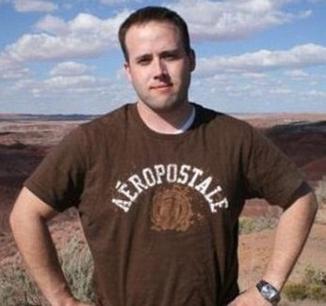
Photo of Travis Alexander
Jodi Arias (inmate)
Sources
- Jodi Arias - Wikipedia
- Travis Alexander - Wikipedia
- Jodi Arias Verdict: Guilty of First-Degree Murder
- Jodi Arias Sentenced to Life in Prison Without Parole
- Arizona Court of Appeals Upholds Jodi Arias Conviction
- Jodi Arias Trial Coverage
- Jodi Arias: Dirty Little Secret (Lifetime Movie)
- Jodi Arias Arizona Department of Corrections Inmate Record
- Maricopa County Superior Court Case Records – State v. Arias
- Jodi Arias: Bad Behind Bars (Lifetime Movie)
- Jodi Arias Substack Blog
Frequently Asked Questions
Table of Contents
Case Summary
When Travis Alexander's friends broke into his Mesa, Arizona home on June 9, 2008, the smell told them everything before their eyes could. He had been missing for five days. Inside the master bathroom, they found him crumpled in the shower: twenty-seven stab wounds, a throat slashed nearly to the spine, and a single .25-caliber bullet in his forehead. He was thirty years old. Within days, investigators had a name: Jodi Ann Arias, his ex-girlfriend, an aspiring photographer with a smile that charmed everyone she met. She would eventually confess to the killing, but not before telling two other stories first. What followed was one of the most-watched murder trials in American history, a 64-day courtroom spectacle broadcast live to millions, fueled by explicit text messages, recovered photographs of the victim alive in his shower just hours before his death, and a defendant who took the stand for 18 consecutive days and insisted she acted in self-defense. The jury didn't believe her. Neither did much of the country. She is serving life without parole. From a Nevada convention hall where two ambitious young people first locked eyes, to a prison cell in Goodyear, Arizona where Arias now sells artwork and writes a Substack blog, this is the full story of a killing that America could not look away from.
July 9, 1980, Salinas, California, USA(Age: 46)
Case Details
The smell reached them before anything else did.
When a group of Travis Alexander's friends forced their way into his home at 11428 East Queensborough Avenue in Mesa, Arizona, on the evening of June 9, 2008, they already knew something was terribly wrong. He had missed church. He had not returned a single call or text in five days. The house was locked tight against the Arizona summer heat. At 10:27 that night, someone in the group called 911.
Inside the master bathroom, they found him on the shower floor, naked, the tiles dark with dried blood. He was thirty years old. He had been stabbed twenty-seven times, including defensive wounds carved deep into his hands, the wounds of a man who had tried to fight back. His throat had been slashed with such force that the cut ran ear to ear, nearly severing his head. A single .25-caliber bullet had been fired into his forehead. The medical examiner would later testify that Alexander died from excessive blood loss. His body had been there for approximately five days.
The nature of those injuries told detectives something immediately: this was not a robbery, not a stranger, not a crime of brief and brutal opportunity. This killing had been sustained, intimate, and furious.
Within days, one name surfaced: Jodi Ann Arias.
To understand how Travis Alexander ended up dead in his own shower, you have to go back to a convention hall in Las Vegas in September 2006. Alexander was, by nearly every account, magnetic. Born July 28, 1977, in Riverside, California, he had pulled himself out of a childhood defined by poverty and parental neglect to become a motivational speaker and a rising star with Pre-Paid Legal Services, a multi-level marketing company that would later rebrand as LegalShield. He was devoutly Mormon, widely liked, and genuinely inspiring. He spoke at conferences about perseverance, and audiences believed him.
Jodi Ann Arias entered that world at one of those conferences. Born July 9, 1980, in Salinas, California, she was dark-haired, composed, and quick to charm. She had dropped out of Yreka Union High School in the eleventh grade, earned her GED, and drifted through a series of jobs: waitress, aspiring photographer, Pre-Paid Legal sales representative. She had developed a love of photography as early as age ten; it was one of the few consistent threads in an otherwise restless life. When she met Alexander at that Las Vegas conference, she was 26 and he was 29, and by most accounts the attraction was immediate.
By November 2006, Arias had converted to the Church of Jesus Christ of Latter-Day Saints. She moved to Mesa, Arizona, where Alexander lived, and the two began a formal relationship. It did not last long in that form. By the summer of 2007, they had broken up; but the breakup, it turned out, did not mean separation. What followed was an on-again, off-again sexual relationship that Alexander's friends and confidants would later describe with growing alarm. He spoke of feeling trapped. He told people he believed Arias was stalking him: showing up uninvited, reading his messages, slashing his tires (a claim that was raised at trial but never definitively proven). In private communications read aloud in court years later, Alexander himself described his feelings toward Arias in harsh, conflicted terms, suggesting a man who was attracted to someone he also feared.
Arias, for her part, had relocated again, this time to Yreka, California, to be closer to her grandparents. But Mesa was only a long drive away, and she made it more than once.
On June 4, 2008, she made it one final time.
Prosecutors would reconstruct that day in meticulous detail during the trial. Arias, they argued, had planned the trip carefully. In the days before, someone had broken into her grandparents' home and stolen a .25-caliber pistol, the same caliber as the weapon used to shoot Alexander. Investigators believed Arias staged that burglary herself. She also borrowed gas cans from a former boyfriend before leaving California, filling them to extend her driving range without stopping at traceable gas stations in Arizona.
She arrived at Alexander's home on June 4. What happened inside that house would become the central disputed question of a trial that captivated millions.
The recovered evidence, however, told its own story with unusual precision. A digital camera discovered in Alexander's washing machine, apparently thrown there in the chaos of the attack, was handed over to the Mesa Police Department's crime lab. Technicians recovered deleted photographs from the memory card. The images showed the couple together around 1:40 in the afternoon, smiling and intimate. Later photos showed Alexander alive in his shower at 5:29 p.m., posing for the camera. Then, within seconds: images of the floor, the ceiling, a blurred and frantic movement. And then nothing.
A bloody palm print on the hallway wall matched Arias's DNA. A mixture of her blood and Alexander's was found throughout the bathroom. The forensic evidence placed her at the scene beyond any reasonable doubt, which is why, by the time investigators came for her, they were not asking whether she had been there. They were waiting to hear what she would say.
She said three different things.
First, she told investigators she had not been in Mesa at all on June 4. She had not seen Travis Alexander that day. She did not know what had happened to him. This story collapsed when forensic evidence placed her at the scene.
So she told a second story: two masked intruders had broken into Alexander's home while she was there. They killed him and threatened her. She had escaped and driven away, too frightened to call the police. This story was investigated and discarded.
Finally, she told a third story: yes, she had killed Travis Alexander, but she had done so in self-defense. He had attacked her. She had grabbed a gun she claimed was stored in his closet, shot him, and then, in a fog of fear and dissociation she could not fully remember, stabbed him repeatedly. She said she had no memory of the stabbing itself.
On July 9, 2008, her 28th birthday, a Maricopa County grand jury indicted her on one count of first-degree premeditated murder, with felony murder as an alternative theory. She was arrested six days later at her grandparents' home in Northern California and extradited to Arizona. On September 11, 2008, she entered a plea of not guilty.
She would wait more than four years for trial.
The proceedings began December 10, 2012, in Maricopa County Superior Court, before Judge Sherry Stephens. Prosecutor Juan Martinez, a compact and combative litigator known for his aggressive courtroom style, led the state's case. The defense was handled by Kirk Nurmi and Jennifer Willmott. HLN and other networks carried the trial live, and viewership climbed into the millions. Legal analysts filled the airwaves. The case had everything a media moment required: sex, religion, graphic photographs, a photogenic defendant, and a victim whose friends wept openly from the gallery.
Then Jodi Arias took the stand herself, and the spectacle escalated.
Beginning February 4, 2013, she testified for 18 consecutive days, a record for a defendant in an Arizona murder case. She described her childhood, her relationships, her conversion to Mormonism, and the intimate details of her sexual relationship with Alexander. She claimed he was verbally abusive, that he had introduced her to deviant sexual practices while publicly presenting himself as a devout, chaste Mormon, and that on June 4, 2008, he had rushed at her in a rage after she accidentally dropped his camera. The jury listened. Juan Martinez cross-examined her with barely restrained ferocity, attacking her credibility at every turn and labeling her, in his closing, a manipulative liar.
Defense experts testified that Arias suffered from post-traumatic stress disorder and acute stress disorder, conditions that could explain her memory gaps. The prosecution's rebuttal expert countered with a diagnosis of borderline personality disorder.
After 64 days of testimony and fewer than three days of deliberation, the jury returned its verdict on May 8, 2013: guilty of first-degree premeditated murder. All twelve jurors agreed on premeditation; seven of the twelve also found felony murder. Unanimously, they determined the killing had been carried out in an especially cruel manner, the aggravating factor that opened the door to the death penalty.
What followed was a penalty phase unlike almost anything in recent American legal history. The first jury deadlocked in May 2013 and a mistrial was declared. A retrial of the penalty phase was ordered, and that jury, too, could not agree: eleven voted for death, one held out, and that single holdout juror subsequently received death threats serious enough to require law enforcement attention. The state declined to seat a third penalty jury.
On April 13, 2015, Judge Sherry Stephens sentenced Jodi Arias to life in prison without the possibility of parole, choosing the harsher of the two available life sentence options under Arizona law. Arias was also ordered to pay more than $32,000 in restitution to Alexander's family.
She was transported to the Arizona State Prison Complex at Perryville in Goodyear, Arizona, where she has remained. Her 2008 booking photograph, in which she smiled broadly for the camera hours after her arrest, became one of the defining images of the case and was reproduced endlessly in news coverage worldwide. The Associated Press described the trial as a worldwide sensation. Two Lifetime movies followed: "Jodi Arias: Dirty Little Secret" in 2013, and "Bad Behind Bars: Jodi Arias" in 2023.
In 2018, her attorneys filed an appeal citing excessive media coverage and prosecutorial misconduct. The Arizona Court of Appeals upheld the conviction in 2020, acknowledging that prosecutor Juan Martinez had engaged in what it called egregious misconduct, but ruling that the evidence of guilt was so overwhelming that the misconduct had not affected the verdict. The Arizona Supreme Court declined to review the case later that year. A federal habeas corpus petition was denied by the Ninth Circuit Court of Appeals in 2020 as well.
Arias was initially housed in the maximum-security Lumley Unit at Perryville. As of February 2021, her custody level had been downgraded to medium security. She has worked as a library aide and assisted with music programs inside the prison. She sells artwork. She maintains a Substack blog, where she has dismissed tabloid rumors about her life behind bars and, as recently as 2026, written cryptically about detectives losing or destroying evidence, signaling that she is preparing a new post-conviction relief petition alleging constitutional violations.
Travis Alexander's family has largely stayed out of the public eye in the years since the sentencing, though his siblings delivered devastating victim impact statements at trial that drew tears from much of the courtroom. He was buried in his hometown of Riverside, California.
The questions that lingered after the verdict were not about guilt; the jury was clear on that. They were about the nature of the relationship that produced such violence: what two people can do to each other in the dark, away from the careful personas they show the world, and how ordinary the beginning of a catastrophe can look from the outside. Travis Alexander and Jodi Arias met at a convention in Las Vegas, among balloons and motivational speeches and the ambient optimism of people trying to build something better for themselves. Eighteen months later, he was dead, and she was on a desert highway with borrowed gas cans and a story that kept changing.
She is still in Perryville. She is still writing. The appeals have not stopped. And the smiling photograph from her 2008 arrest, one of the most unsettling images in the modern history of American crime, continues to circulate online, a reminder of how little a face can tell you about what lies behind it.
Timeline
Birth of Jodi Ann Arias
Jodi Ann Arias was born in Salinas, California, to William Angelo Arias and Sandra Arias. She grew up alongside four siblings and developed an early passion for photography at age 10, later working as an aspiring professional photographer. Her childhood was marked by reported instability and physical discipline from her parents.
Establishes the origins of a person who would later become the subject of one of the most-watched murder trials in American television history.
Arias Drops Out of High School and Earns GED
Arias left Yreka Union High School during the 11th grade, later obtaining her GED. She pursued photography and worked various service industry jobs throughout her twenties, drifting between California towns before her fateful encounter with Travis Alexander. Her lack of stable roots and employment would later be examined by both defense and prosecution as context for her volatile relationships.
Establishes the peripatetic, unsettled lifestyle that characterized Arias's pre-crime years and provided background for psychological profiles introduced at trial.
Arias Meets Travis Alexander at Las Vegas Convention
Arias met Travis Victor Alexander at a Pre-Paid Legal Services business conference in Las Vegas, Nevada, and the two began a romantic relationship almost immediately. Alexander, a devout Mormon, soon introduced Arias to his faith, and she was baptized into the Church of Jesus Christ of Latter-day Saints in November 2006. She subsequently relocated to Mesa, Arizona in early 2007 to be closer to him.
This fateful meeting set in motion the relationship that would end in Alexander's brutal murder less than two years later.
Breakup and Alleged Stalking Campaign Begins
Arias and Alexander officially ended their romantic relationship in the summer of 2007 but continued an intermittent sexual relationship. Alexander confided to friends that he believed Arias was stalking him — she allegedly slashed his tires on multiple occasions, hacked into his Facebook and email accounts, and sent threatening messages to women he was dating. Despite these alarming behaviors, the two remained in contact through the spring of 2008.
Alexander's own documented fears about Arias's behavior established a pattern of obsession and jealousy that prosecutors would later argue motivated the premeditated murder.
Murder of Travis Alexander
Arias drove from Yreka, California to Mesa, Arizona and killed Travis Alexander in his home at 11428 E. Queensborough Avenue, inflicting 27 stab wounds, slitting his throat nearly ear to ear, and shooting him in the forehead with a .25-caliber bullet. The prosecution alleged she had staged a burglary at her grandparents' home beforehand to steal the pistol and used gas cans to obscure her travel route. Alexander was 30 years old; his body was not discovered until five days later.
The savage overkill nature of the attack — three separate methods of lethal force — became central to the prosecution's argument that the murder was driven by rage and premeditation, not self-defense.
Body Discovered; Critical Camera Evidence Recovered
Concerned friends entered Alexander's Mesa home on the evening of June 9, 2008, called police at 10:27 p.m., and discovered his naked body on the shower floor, dead for approximately five days. Detectives recovered a digital camera from the washing machine that Arias had apparently attempted to destroy; forensic technicians retrieved deleted photographs showing the couple together at approximately 1:40 p.m. on June 4 and Alexander alive in the shower at 5:29 p.m., as well as images accidentally captured during the attack. A bloody palm print in the hallway was matched to Arias via DNA.
The recovered camera photographs became the cornerstone of the prosecution's case, directly placing Arias at the scene and contradicting her initial denials — among the most damning photographic evidence ever recovered in a high-profile murder case.
Indictment and Arrest of Jodi Arias
Following her indictment by a Maricopa County grand jury on July 9, 2008 — her 28th birthday — Arias was arrested at her grandparents' home in Yreka, Northern California, and extradited to Arizona. Her 2008 booking photograph, in which she smiled broadly for the camera, became one of the most widely circulated and discussed mugshots in American criminal history. She was arraigned on September 11, 2008, and pleaded not guilty to one count of premeditated first-degree murder.
The smiling mugshot immediately shaped public perception of Arias as callous and unremorseful, foreshadowing the intense media scrutiny that would define her trial.
Trial Begins — Arias Testifies for 18 Days
After jury selection began in December 2012, opening arguments in Maricopa County Superior Court commenced on January 2, 2013, with the trial broadcast live to millions of viewers nationwide on HLN. Arias took the stand beginning February 4, 2013, and testified for a record 18 days — claiming Alexander had been physically and sexually abusive and that she killed him in self-defense. Prosecutor Juan Martinez's relentless cross-examination became appointment television, and the Associated Press described the proceedings as 'a worldwide sensation.'
The trial's live broadcast and Arias's marathon testimony transformed the case into a cultural phenomenon, drawing comparisons to the O.J. Simpson trial in terms of public obsession.
Jury Convicts Arias of First-Degree Premeditated Murder
After 64 days of trial testimony and fewer than three days of deliberations, all 12 jurors found Jodi Arias guilty of first-degree premeditated murder; 7 of 12 also found felony murder. The jury unanimously found the murder had been committed in an especially cruel manner, establishing the aggravating factor necessary for the state to seek the death penalty. The first penalty phase ended in a mistrial on May 23, 2013, after the jury deadlocked on the question of death.
The unanimous guilty verdict on the most serious charge validated the prosecution's premeditation theory and rejected Arias's self-defense claim entirely, setting the stage for a contentious and ultimately unresolved penalty phase.
Sentenced to Natural Life Without Parole; Appeals Exhausted
After a second penalty-phase retrial also ended in a hung jury on March 5, 2015 — with the lone holdout juror subsequently receiving death threats — Judge Sherry Stephens sentenced Arias to natural life in prison without the possibility of parole, the harsher of two available life options, and ordered her to pay over $32,000 in restitution to Alexander's family. The Arizona Court of Appeals upheld the conviction in March 2020, calling the evidence 'overwhelming' despite labeling prosecutor Juan Martinez's conduct 'egregious'; the Arizona Supreme Court declined review in November 2020, and a federal habeas corpus petition was denied by the Ninth Circuit. As of 2025, Arias is incarcerated at the Arizona State Prison Complex – Perryville in Goodyear, Arizona, where she has been downgraded to medium custody, sells artwork, and maintains a Substack blog signaling a new post-conviction relief petition alleging lost or destroyed evidence and constitutional violations.
The life-without-parole sentence brought a measure of closure to Alexander's family after seven years of proceedings, while Arias's continued legal maneuvering and public presence ensure the case remains legally and culturally active.
Crime Location
Photos
Photo of Travis Alexander
Jodi Arias (inmate)
Sources
- Jodi Arias - Wikipedia
- Travis Alexander - Wikipedia
- Jodi Arias Verdict: Guilty of First-Degree Murder
- Jodi Arias Sentenced to Life in Prison Without Parole
- Arizona Court of Appeals Upholds Jodi Arias Conviction
- Jodi Arias Trial Coverage
- Jodi Arias: Dirty Little Secret (Lifetime Movie)
- Jodi Arias Arizona Department of Corrections Inmate Record
- Maricopa County Superior Court Case Records – State v. Arias
- Jodi Arias: Bad Behind Bars (Lifetime Movie)
- Jodi Arias Substack Blog
Frequently Asked Questions
Related Cases
Convicted
Connection tags:
Convicted
Connection tags:
Convicted
Connection tags:
Convicted
Connection tags:
Alleged
Connection tags:
Convicted
Connection tags:
Tags
Popular Culture
movie (2013)
Lifetime TV movie dramatizing the relationship between Jodi Arias and Travis Alexander and the subsequent murder trial.
movie (2023)
Lifetime TV movie focusing on Jodi Arias's life and alleged manipulative behavior while incarcerated at Perryville prison.
TV (2013)
HLN (Headline News) broadcast the Jodi Arias trial live daily, drawing millions of viewers and making it a national media phenomenon described by AP as 'a worldwide sensation.'
TV (2017)
Investigation Discovery three-part documentary series re-examining the murder of Travis Alexander and the trial of Jodi Arias, featuring interviews with key figures.
TV (2017)
Oxygen network episode of 'Snapped: Notorious' profiling the Jodi Arias case as one of the most sensational true crime trials in American history.
book (2013)
True crime book by John Glatt examining the relationship between Jodi Arias and Travis Alexander, the murder, and the media circus surrounding the trial.
book (2013)
True crime book by Shanna Hogan providing an in-depth account of the Arias-Alexander relationship, the killing, and the trial proceedings.
TV (2013)
The high-profile Arias trial influenced and was frequently referenced in true crime television programming throughout 2013 and beyond.