5 cases tagged “life without parole”
Convicted: Jodi Ann Arias
When Travis Alexander's friends broke into his Mesa, Arizona home on June 9, 2008, the smell told them everything before their eyes could. He had been missing for five days. Inside the master bathroom, they found him crumpled in the shower: twenty-seven stab wounds, a throat slashed nearly to the spine, and a single .25-caliber bullet in his forehead. He was thirty years old. Within days, investigators had a name: Jodi Ann Arias, his ex-girlfriend, an aspiring photographer with a smile that charmed everyone she met. She would eventually confess to the killing, but not before telling two other stories first. What followed was one of the most-watched murder trials in American history, a 64-day courtroom spectacle broadcast live to millions, fueled by explicit text messages, recovered photographs of the victim alive in his shower just hours before his death, and a defendant who took the stand for 18 consecutive days and insisted she acted in self-defense. The jury didn't believe her. Neither did much of the country. She is serving life without parole. From a Nevada convention hall where two ambitious young people first locked eyes, to a prison cell in Goodyear, Arizona where Arias now sells artwork and writes a Substack blog, this is the full story of a killing that America could not look away from.
Convicted: Pamela Ann Smart
On the night of May 1, 1990, Gregg Smart came home to his condominium in Derry, New Hampshire, and found two teenagers waiting in the dark. One pressed a .38-caliber pistol to his head and fired. Gregg was 24 years old. His wife, Pamela, had arranged to be elsewhere. She was 22, a media director for a school district, and the woman who had seduced 15-year-old student Billy Flynn and, prosecutors argued, steered him toward murder to avoid a costly divorce and collect $140,000 in life insurance. When Pamela's own friend put on a police wire and recorded her coaching a witness to lie, the case cracked open like a fault line. What followed was the first murder trial in American history broadcast live on television, gavel to gavel, drawing roughly 150 reporters from around the world and turning a quiet New Hampshire courthouse into a global theater. Pamela Smart sat at the defense table and showed no emotion when the jury came back. She has been in prison ever since, more than three decades now, still filing petitions, still insisting the system failed her. The teenagers who pulled the trigger have all been paroled and gone home. She has not.
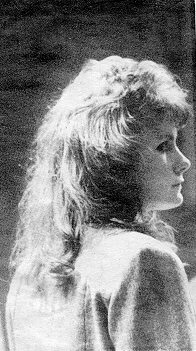
Convicted: Katherine Mary Knight
The dinner plates were already set when police broke down the back door of 84 St Andrews Street in Aberdeen, New South Wales, on the morning of 1 March 2000. Two place settings, two handwritten notes, two names: the children of John Price, a local miner who had not shown up for his shift. The food was still warm. So was what was in the pot on the stove, which turned out to be John Price's head, simmered with vegetables and seasoned with care. In the hallway, Price's skin hung from a meat hook his killer had recently installed in the living room ceiling. He had been stabbed at least 37 times. Katherine Mary Knight, a former abattoir worker with a decades-long history of escalating violence against the men in her life, was found unconscious at the scene from a drug overdose. She was 44 years old. On 8 November 2001, she became the first woman in Australian history sentenced to life imprisonment without the possibility of parole. She remains at Silverwater Women's Correctional Centre today, aged 69, banned from access to knives and assessed as too dangerous to share a cell. This is her story.
Convicted: Kristin Margrethe Rossum
When paramedics arrived at the San Diego apartment on November 6, 2000, they found Gregory de Villers lying in bed, unresponsive, his body blanketed in red rose petals, a wedding photograph pressed against his chest. His wife, Kristin, stood nearby in tears, telling them he had taken his own life. It looked like a scene from a movie. It was, in fact, staged to look like one. Kristin Rossum, 24 years old and a trained toxicologist with access to the county medical examiner's controlled substance supply, had poisoned her husband with seven times the lethal dose of fentanyl — then arranged his corpse in a tableau lifted from her favorite film, American Beauty. She was sleeping with her married boss, secretly using methamphetamine she stole from her own workplace, and her husband had just threatened to expose everything. The rose petals were the detail that haunted investigators, the detail that made the case famous, and the detail that ultimately helped convict her. This is the story of how a summa cum laude graduate with a drug habit, a secret affair, and a dangerous job became one of California's most notorious poisoners.
Convicted: Dorothea Helen Puente
On the morning of November 11, 1988, police began digging up the yard of a blue-and-white Victorian boarding house at 1426 F Street in Sacramento, California. By the end of the day, they had found seven bodies. The woman who owned the house, a stout, silver-haired grandmother type named Dorothea Puente, stood nearby in a housecoat and watched. Detectives didn't consider her a suspect yet. They let her walk to a nearby café to get coffee. She never came back. For years, Puente had presented herself to social workers and city officials as a saint: a warm, generous landlady who took in the elderly, the mentally ill, the homeless, the people no one else would accept. She cooked elaborate meals and sent tenants to bed with warm milk. She also drugged them, buried them in her yard, and cashed their Social Security checks. Prosecutors would later allege she collected over $87,000 this way, spending some of it on a facelift. The Death House Landlady, as the press called her, was eventually convicted of three murders and died in prison in 2011 at age 82, still insisting she was innocent. The full story of how Dorothea Puente became one of America's most prolific female serial killers is a portrait of survival twisted into something monstrous.

:max_bytes(150000):strip_icc():focal(761x475:763x477):format(webp)/katherine-knight-041125-7fb225de4bb047228ad1f5edfc0840fe.jpg)
