5 cases from United Kingdom
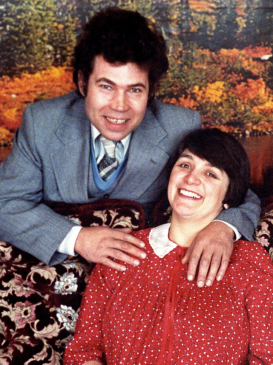
Convicted: Myra Hindley
On the morning of October 7, 1965, eighteen-year-old David Smith walked to a public telephone box in Hattersley, Greater Manchester, hands shaking, and dialed 999. The night before, he had watched his brother-in-law bludgeon a seventeen-year-old to death with an axe. The brother-in-law was Ian Brady. The woman who had invited him to witness it was Myra Hindley. What that phone call exposed would redefine evil in the British imagination for generations. Between 1963 and 1965, Brady and Hindley abducted five children and teenagers from the streets of Greater Manchester, sexually assaulted them, and buried four in shallow graves on the desolate expanse of Saddleworth Moor. The fifth was killed in Hindley's living room. The evidence police found inside that house was staggering in its horror: photographs of a ten-year-old girl bound and gagged in Hindley's bedroom, and sixteen minutes of audio tape capturing that same child's final, agonized moments. A luggage ticket for the suitcase containing these materials was found hidden inside the spine of Hindley's Catholic prayer book. Myra Hindley would spend thirty-six years in prison, applying repeatedly for parole, insisting she had changed. The British public never believed her. One of her victims, Keith Bennett, has never been found. His mother died in 2012, still waiting. This is the story of how an ordinary girl from Gorton became the most reviled woman in British criminal history.
Convicted: Ruth Ellis (née Neilson)
"It is obvious when I shot him I intended to kill him." With those eleven words, spoken calmly before a packed courtroom at the Old Bailey, Ruth Ellis handed the jury everything they needed. They deliberated for less than twenty-five minutes. Six weeks later, at nine o'clock on the morning of 13 July 1955, she walked to the gallows at Holloway Prison and became the last woman ever executed in the United Kingdom. She was twenty-eight years old. But the story of how a Welsh-born nightclub manageress came to fire four bullets into her racing-driver lover outside a Hampstead pub on Easter Sunday is not a simple story of jealousy and rage. It is a story of sustained beatings, a miscarriage caused by a punch to the stomach, a secret weapon supplier who was never charged with a crime, and a justice system that hanged a deeply traumatized woman without once telling the jury what she had endured. Seven decades later, her grandchildren are still fighting to clear her name. The question hanging over the case has never been whether Ruth Ellis pulled the trigger. It has always been whether Britain should have pulled the lever.
Convicted: Rosemary Pauline West (née Letts; also known as Jennifer Jones since 2020)
In February 1994, police arrived at 25 Cromwell Street, Gloucester, looking for a missing teenage girl. What they found instead would stop Britain cold: nine sets of human remains buried beneath the floorboards and garden of a nondescript terraced house — and that was only the beginning. Rosemary West, a 40-year-old mother of eight, sat at the center of it all. She had helped lure young women and girls to that house. She had participated in their torture, their sexual abuse, their deaths. She had then gone on living there — cooking meals, watching television, raising children — while the bodies of ten victims, including her own stepdaughter and her own teenage daughter, rotted in the earth beneath her feet. On 22 November 1995, a jury took less than two days to convict her on all ten counts of murder. The judge said she should never be freed. He was right. Thirty years later, Rose West — now calling herself Jennifer Jones — remains in a prison cell, in declining health, largely alone, still insisting she is innocent. This is the story of how ordinary evil hides in plain sight.
Convicted: Amelia Elizabeth Dyer (née Hobley)
'You'll know all mine by the tape around their necks.' When Amelia Dyer spoke those words to Reading police in the spring of 1896, she did so with the calm of a woman who had been getting away with murder — quite literally — for two decades. On March 30, 1896, a bargeman pulled a brown paper parcel from the River Thames near Caversham. Inside was a baby girl, strangled with white dressmaker's tape. She would not be the last. By the time detectives closed in on the mild-mannered, churchgoing widow operating out of a modest terrace on Kensington Road, seven infant bodies had been recovered from the river. Experts now estimate that Amelia Dyer — the 'Ogress of Reading,' a trained nurse turned baby farmer — murdered between 200 and 400 children over twenty years, making her one of the most prolific killers in British history. The jury took four and a half minutes to convict her. The tape never lied. This is her story.
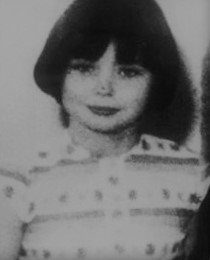
Convicted: Mary Flora Bell
The morning after Mary Bell strangled four-year-old Martin Brown to death, she broke into a nursery school and left four handwritten notes claiming responsibility for the killing. Police dismissed them as a prank. The author was ten years old. What followed over the summer of 1968 in Scotswood, Newcastle, was one of the most disturbing chapters in British criminal history: a child killer operating in plain sight, in broad daylight, returning to mutilate a victim's body with broken scissors, and sitting with the grieving families of her victims as though nothing had happened. Mary Flora Bell was not a monster who emerged from nowhere. She was a product of almost incomprehensible abuse, a girl whose own mother allegedly tried to poison her with sleeping pills and drop her from a first-floor window. That context explains nothing and excuses nothing, but it haunts everything. She would become Britain's youngest female killer on record, a title she still holds. This is her story.