Karla Leanne Homolka (also known as Karla Leanne Teale and Leanne Bordelais)

Case Summary
She was blonde, pretty, and worked part-time at an animal hospital. She cried on cue for investigators. She told them she was a victim — a battered woman trapped in a monster's web. Canada believed her. Prosecutors believed her. They gave her a deal. Then the videotapes surfaced, and everything changed. The footage showed Karla Homolka not cowering in fear, but actively participating in acts so savage that seasoned law enforcement officers required counseling after viewing them. Among the victims captured on those tapes was her own fifteen-year-old sister, Tammy — drugged, assaulted, and dead by Christmas. The plea bargain had already been signed. Double jeopardy protections made it untouchable. The deal that spared Karla Homolka from a murder conviction — struck before prosecutors had seen a single frame of evidence — would become the most reviled legal arrangement in Canadian history, immortalized forever as 'the Deal with the Devil.' She served twelve years. Then she walked free, changed her name, married, had three children, and disappeared into ordinary life. She is out there still. This is how it happened.
May 4, 1970, Port Credit, Mississauga, Ontario, Canada(Age: 20)
December 23, 1990
Related Cases
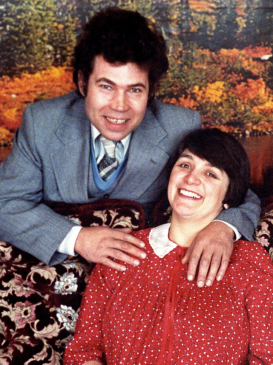
Convicted
Connection tags:

Convicted
Connection tags:

Convicted
Connection tags:

Convicted
Connection tags:

Convicted
Connection tags:

Convicted
Connection tags:
Case Details
The body of Leslie Mahaffy surfaced in pieces. Encased in concrete blocks, the fourteen-year-old's remains were pulled from Lake Gibson in St. Catharines, Ontario — on the very day, June 29, 1991, that Karla Homolka and Paul Bernardo were married in a fairy-tale ceremony in Niagara-on-the-Lake, complete with horse-drawn carriage and a reception that guests would later describe as lavish and genuinely joyful. The bride wore white.
That image — the beaming newlyweds, the white gown, the champagne flutes, while a murdered child lay dismembered beneath the surface of a nearby lake — would come to define one of the darkest criminal cases in Canadian history. Not just for its horror, but for its profound, stomach-turning ordinariness. They looked like the couple from a greeting card. They were, in the words that would echo through a stunned nation, the Ken and Barbie Killers.
Karla Leanne Homolka was born on May 4, 1970, in Port Credit, Mississauga, Ontario, the eldest of three children. The family eventually settled in Châteauguay, Quebec, and by most accounts, Karla's childhood was unremarkable in the way that later made everyone who knew her shake their heads in bewilderment. She was bright, sociable, pretty in a girl-next-door way. As a teenager, she took a part-time job at an animal hospital — a detail that would later take on a sinister significance no one could have anticipated.
She was seventeen when she met Paul Bernardo in October 1987 at a hotel restaurant in Scarborough, Ontario. He was twenty-three, charming, conventionally handsome, and possessed of the particular magnetism that, in retrospect, always seems obvious in the mugshots of men like him. They fell into a relationship immediately. By 1989, they were engaged.
What Karla did not know — or claimed not to know — was that Bernardo was already committing a string of brutal sexual assaults in Scarborough that had earned him the tabloid nickname the Scarborough Rapist. He had attacked more than a dozen women. The attacks were escalating. In Paul Bernardo, Karla Homolka had attached herself to a predator in the process of becoming something far worse. The question that Canadian courts, forensic psychiatrists, and the public would argue over for decades was whether she was his unwilling captive — or his willing partner.
The answer arrived on December 23, 1990, in the Homolka family home, and it was devastating.
That night, Karla used veterinary halothane and sedatives stolen from her workplace to drug her younger sister, fifteen-year-old Tammy Homolka. While their parents slept in the same house, Bernardo raped the unconscious girl. Tammy choked on her own vomit and died. Her death was initially ruled accidental. Her family grieved. Her parents had no idea. For two more years, Karla Homolka would live with that knowledge — and continue.
In June 1991, the couple abducted fourteen-year-old Leslie Mahaffy. The girl had been locked out of her house after missing curfew when Bernardo encountered her. What followed was days of torture, rape, and murder. Bernardo dismembered her body himself and encased the remains in concrete. The blocks were dumped in Lake Gibson. They were discovered the morning of the Homolka-Bernardo wedding, though investigators would not identify the remains as Leslie's for some time.
Eleven months later, on April 16, 1992, the couple abducted fifteen-year-old Kristen French from a church parking lot in St. Catharines. A witness saw a woman approach Kristen with a map, asking for directions — a calculated lure that brought the teenager close enough to be forced into a car. That woman, investigators would eventually determine, was Karla. Kristen French was held captive for three days, subjected to prolonged torture and rape. Her body was found weeks later, on April 30, 1992, in a ditch near Burlington, Ontario. Her hair had been cut off, likely to eliminate forensic evidence.
By the time the bodies of Leslie Mahaffy and Kristen French had been found, Ontario was gripped by fear. The Green Ribbon Task Force, established to find the killer or killers, was one of the largest investigations in Canadian history. The Scarborough Rapist case had already generated substantial attention. In November 1990, a DNA sample had been taken from Bernardo as part of that investigation, but a catastrophic backlog in the Centre of Forensic Sciences laboratory meant the results would not be processed and matched for nearly two and a half years. Bernardo walked free while two more girls died.
On January 6, 1993, everything cracked open — though not in the way justice demanded. Paul Bernardo beat Karla Homolka savagely with a flashlight, leaving her with visible, severe injuries. She was admitted to hospital. It was this beating that gave Karla Homolka her exit — and her story. She went to police. She told them she was a victim. A battered woman. A woman terrified of the man she had married.
Bernardo was arrested on February 17, 1993, when DNA evidence finally confirmed him as the Scarborough Rapist. During a search of the couple's home in Port Dalhousie, St. Catharines, investigators found evidence of the murders. What they did not find — because it had already been removed — were six 8mm videotapes hidden in a light fixture in the ceiling. Bernardo's criminal defence lawyer, Ken Murray, had retrieved the tapes from their hiding spot and kept them concealed for approximately seventeen months.
While those tapes sat in a lawyer's possession, prosecutors built their case around Karla Homolka's account. She portrayed herself as a coerced accomplice, an abused woman who had lived in terror. Forensic psychiatrists found her difficult to categorize — one described her as 'a diagnostic mystery' with a 'moral vacuity' that resisted clean clinical framing. One theory that gained currency was hybristophilia, a sexual arousal derived from a partner's violent behavior. But in May 1993, before any of these deeper questions could be definitively answered, before prosecutors had reviewed the videotapes that didn't yet know existed, a plea agreement was struck.
Karla Homolka would receive two concurrent twelve-year sentences for manslaughter — not murder — in exchange for her full cooperation and testimony against Paul Bernardo. She was convicted on July 6, 1993. The public, operating on the information available, was uneasy but grudgingly accepted the narrative of a battered accomplice.
Then came September 1994, and the tapes.
Ken Murray, Bernardo's original defense lawyer, had withdrawn from the case. His successor, John Rosen, turned the videotapes over to authorities. What prosecutors saw on those tapes annihilated the carefully constructed image of Karla Homolka as a passive, terrified victim. The footage — graphic, methodical, and deeply disturbing — showed Homolka as an active, willing participant in the assaults. She was not cowering in a corner. She was not screaming for the victims. She appeared, on tape, to be engaged. Among the victims documented on the recordings were Tammy Homolka, Leslie Mahaffy, Kristen French, and an additional victim referred to as Jane Doe, who survived.
Prosecutors acknowledged publicly that they never would have offered Homolka the plea deal had they seen the tapes first. The deal they had offered — the deal they were now bound by — became known across Canada and beyond as 'the Deal with the Devil.' Double jeopardy protections under Canadian law made it legally impenetrable. Homolka could not be retried for murder. The deal held.
Paul Bernardo stood trial in 1995. The videotapes were played in court. Judge Patrick LeSage imposed a publication ban on specific tape contents to protect the dignity of victims' families, but what was known publicly was enough. On September 1, 1995, Bernardo was convicted of two counts of first-degree murder, two counts each of kidnapping, unlawful confinement, and aggravated sexual assault, and one count of committing an indignity to a human body. He was sentenced to life in prison and designated a dangerous offender — a classification that imposes no fixed release date and subjects an inmate to indefinite review. Ken Murray, the lawyer who had concealed the tapes, was later charged with obstruction of justice. He was acquitted in 2000.
Homolka served her sentence at various federal institutions. The National Parole Board denied her statutory release and parole repeatedly, determining she remained a risk to reoffend. She was required to serve the full twelve years. On July 4, 2005, she walked out of Ste-Anne-des-Plaines Institution, north of Montreal. She was thirty-five years old.
She gave one television interview, to Radio-Canada, speaking in French. Then she set about becoming someone else. She changed her surname first to Teale — a name Bernardo had wanted the couple to legally adopt during their marriage, drawn from a fictional serial killer — and later to Bordelais, after she married Thierry Bordelais, the brother of her defense lawyer, Sylvie Bordelais. Together they had three children: two boys and a girl.
The family relocated to Guadeloupe, in the French Caribbean, where they lived quietly under the name Leanne Bordelais for several years. In May 2012, journalist Paula Todd tracked Homolka down there for a deeply reported ebook, 'Finding Karla.' By 2014 or 2016, depending on the account, the family had returned to Châteauguay, Quebec — the same suburb where Karla had grown up. The past folded back on itself in a way that felt almost deliberate.
In 2016, a reporter from La Presse identified Homolka's husband in Châteauguay and reported that her children were enrolled at Centennial Park Elementary School. The revelation triggered fresh outrage. The school board wrote a letter to parents assuring them that children were safe. Parents were not reassured. Protests followed. Canada's recurring confrontation with its most infamous female criminal resumed.
In 2010, news had emerged that Homolka was eligible to apply for a criminal record suspension — effectively a pardon — as early as that summer, owing to the fact that her conviction was for manslaughter rather than murder. Parliament responded with remarkable speed: within twelve days of first reading to Royal Assent, a bill was fast-tracked that tightened pardon eligibility for serious offenders, widely understood as a legislative response to Homolka's case specifically.
Paul Bernardo, meanwhile, remained in federal custody — though not without his own provocations of public fury. In May 2023, he was controversially transferred from maximum-security Millhaven Institution in Ontario to medium-security La Macaza Institution in Quebec. The transfer outraged the families of his victims and re-ignited national debate about how Canada manages its most dangerous offenders. His third bid for parole was denied on November 26, 2024, following testimony from the families of Kristen French and Leslie Mahaffy — families who have spent three decades finding the strength to re-enter courtrooms and argue that what was done to their daughters must never be minimized or forgotten.
The case has never stopped generating cultural reckoning. The 2006 film 'Karla' dramatized her story. A 2021 Investigation Discovery docuseries, 'Ken and Barbie Killers: The Lost Murder Tapes,' revisited the evidence for a new generation. The nickname itself — Ken and Barbie — speaks to the case's most enduring and disturbing quality: that evil arrived in a form Canada's suburban imagination had not prepared for. Not a monster who looked like one, but a couple who looked like your neighbors. Who looked, frankly, like the couple on the wedding invitation on your refrigerator.
As of 2025, Karla Homolka — now Leanne Bordelais, or perhaps Leanne Teale, depending on the document — is believed to be living somewhere in the Châteauguay or greater Montreal area. She is in her mid-fifties. Her children are growing up. She reportedly must keep her whereabouts on file with police and faces restrictions on unsupervised contact with minors. Beyond that, the law has nothing more to say to her.
Forensic psychiatrists who examined her could not agree on what she was. Their reports speak of moral vacuity, of a diagnostic mystery, of a woman who did not fit the templates available to them. Whether Karla Homolka was a victim manipulated by a dominant psychopath, a willing co-predator who found in Bernardo a vehicle for her own darkness, or something more complicated and therefore more troubling than either narrative allows — that question has never been conclusively answered. It may never be.
What is not in question is this: three young women are dead. Tammy Homolka was fifteen and trusted her older sister. Leslie Mahaffy was fourteen and locked out of her house past curfew. Kristen French was fifteen and stopped to help someone read a map. They had names, and futures, and people who loved them with the specific, irreplaceable intensity that only loss can fully illuminate. They are the fixed point around which every other question in this case must orbit — and the reason that, no matter how many times the woman once known as Karla Homolka changes her name, Canada cannot bring itself to look away.
Timeline
Birth and Early Life in Ontario
Karla Leanne Homolka was born on May 4, 1970, in Port Credit, Mississauga, Ontario, Canada, the eldest of three daughters. The family later relocated to Châteauguay, Quebec, where she grew up presenting as a cheerful, ambitious teenager. As a young woman she worked part-time at a veterinary clinic, a position that would later give her access to the drugs used in her crimes.
Her access to veterinary sedatives and halothane through her animal hospital job became a direct instrument of the crimes she would later commit.
Meeting Paul Bernardo
In October 1987, the 17-year-old Homolka met 23-year-old Paul Bernardo at a hotel restaurant in Scarborough, Ontario, and the two began a romantic relationship almost immediately. The pair became engaged by 1989, and Bernardo was already an active serial rapist — the so-called Scarborough Rapist — during the entire course of their courtship. Homolka later claimed ignorance of his predatory activities, a claim disputed by investigators and the videotaped evidence.
The relationship forged the criminal partnership that would result in at least three murders; the significant age gap and Bernardo's established predatory behavior framed later debates about coercion versus willing participation.
Drugging and Death of Tammy Homolka
On December 23, 1990, Karla Homolka used halothane and sedatives stolen from her veterinary workplace to drug her own 15-year-old sister Tammy, enabling Paul Bernardo to rape her while Homolka actively assisted and participated. Tammy choked on her own vomit during the assault and died, just two days before Christmas. Authorities initially ruled the death accidental, and the true circumstances would not be confirmed until videotape evidence surfaced years later.
The murder of her own sister was the most shocking revelation of Homolka's active culpability and fundamentally undermined her later portrayal of herself as a purely coerced victim.
Abduction and Murder of Leslie Mahaffy
In June 1991, Bernardo and Homolka abducted 14-year-old Leslie Mahaffy near her home in Burlington, Ontario, bringing her to their house where she was tortured, raped, and murdered over a period of days. Bernardo dismembered her body and encased the remains in concrete, which were discovered in Lake Gibson on June 29, 1991 — the very day of Bernardo and Homolka's wedding in Niagara-on-the-Lake. The remains were not immediately identified, and the case remained unsolved for nearly two more years.
The grotesque timing — Mahaffy's remains surfacing on their wedding day — underscored the calculated coldness of both offenders and became one of the most chilling details in Canadian criminal history.
Abduction and Murder of Kristen French
In April 1992, Bernardo and Homolka abducted 15-year-old Kristen French from a church parking lot in St. Catharines, Ontario, with Homolka acting as a lure to lower the teenager's guard. French was held captive for approximately three days, subjected to repeated torture and sexual assault before being murdered, and her body was discovered in a ditch weeks later. The murders of Mahaffy and French sparked one of the largest police investigations in Canadian history, known as Project Juniper.
The abduction of French — in which Homolka played an active, deliberate luring role — directly contradicted any claim that she was a passive, terrorized bystander in the crimes.
Homolka Hospitalized After Bernardo's Assault
On January 6, 1993, Paul Bernardo savagely beat Karla Homolka with a flashlight, sending her to the hospital with severe bruising and injuries. Homolka used this documented assault to establish herself in the eyes of investigators as a battered spouse and victim of domestic abuse, laying the groundwork for her eventual plea deal. While the beating was real, prosecutors would later acknowledge that the narrative of victimhood it supported was profoundly misleading given the videotaped evidence of her willing participation.
The hospitalization was the pivotal moment that allowed Homolka to reframe herself as a victim and initiate contact with investigators, directly enabling the plea bargain that many Canadians later considered a catastrophic miscarriage of justice.
The 'Deal with the Devil' Plea Bargain
On May 14, 1993, before prosecutors had reviewed the hidden videotapes, Crown attorneys struck a plea agreement with Homolka in which she agreed to testify against Paul Bernardo in exchange for two concurrent 12-year sentences for manslaughter — avoiding murder charges entirely. Homolka was convicted on July 6, 1993, and the deal was considered reasonable at the time given the evidence then available. When the videotapes later surfaced revealing her active, enthusiastic participation in the crimes, the agreement was publicly condemned as 'the Deal with the Devil' and became a landmark cautionary case in Canadian prosecutorial history.
The plea bargain became one of the most controversial prosecutorial decisions in Canadian legal history, ultimately allowing a willing participant in multiple murders to serve only 12 years and walk free.
Videotapes Surface — Homolka's True Role Exposed
In September 1994, Bernardo's defence lawyer Ken Murray — who had withheld the six 8mm videotapes for approximately 17 months after recovering them from a hiding spot in the couple's home — finally turned them over to authorities. The tapes graphically documented the rapes and torture of Tammy Homolka, Leslie Mahaffy, Kristen French, and a fourth victim known as Jane Doe, and showed Karla as an active, willing, and at times enthusiastic participant rather than a coerced victim. Prosecutors publicly acknowledged they never would have offered Homolka the plea deal had they viewed the tapes beforehand, but double jeopardy protections meant she could not be retried.
The emergence of the tapes permanently shattered Homolka's victim narrative and transformed the case into a defining Canadian debate about prosecutorial process, victims' rights, and the limits of plea bargaining.
Paul Bernardo Convicted of First-Degree Murder
On September 1, 1995, Paul Bernardo was convicted of two counts of first-degree murder in the deaths of Leslie Mahaffy and Kristen French, along with two counts each of kidnapping, unlawful confinement, and aggravated sexual assault, plus one count of committing an indignity to a human body. He was sentenced to life in prison with no possibility of parole for 25 years and was declared a dangerous offender — a designation that imposes indefinite supervision. Homolka testified against him as part of her plea agreement.
Bernardo's conviction closed the judicial chapter of the case but deepened public fury at Homolka's deal, as the full scope of the crimes became part of the official record.
Release from Prison After Full 12-Year Term
Having been denied statutory release and parole repeatedly because the National Parole Board deemed her a continuing risk to reoffend, Homolka was required to serve her full 12-year sentence and was finally released on July 4, 2005, from Ste-Anne-des-Plaines Institution north of Montreal. Upon release she gave an exclusive television interview to Radio-Canada in French and subsequently changed her name first to Karla Leanne Teale and then to Leanne Bordelais after marrying Thierry Bordelais, the brother of her defence lawyer. She and her husband went on to have three children.
Her release triggered enormous public outcry across Canada and reignited debate about the adequacy of her sentence, victim justice, and the dangers of plea bargaining in cases of incomplete evidence.
Parliament Fast-Tracks Pardon Restriction Bill
In April 2010, it was reported that Homolka — convicted of manslaughter rather than murder — was legally eligible to apply for a criminal record pardon as early as the summer of 2010. The prospect of Homolka obtaining a pardon prompted Canada's Parliament to fast-track legislation within 12 days from first reading to Royal Assent in June 2010, tightening restrictions on pardons for serious offenders. The episode illustrated how the fallout from the Homolka plea deal continued to reshape Canadian law years after the crimes.
The legislative response demonstrated that the Homolka case had lasting consequences for Canadian criminal justice policy far beyond the courtroom.
Homolka Tracked Down in Guadeloupe, Returns to Quebec
In May 2012, investigative journalist Paula Todd located Homolka — living under the name Leanne Bordelais — in Guadeloupe in the French Caribbean, where she had relocated with her husband and children circa 2007, and published her findings in the ebook 'Finding Karla.' By 2014–2016 the family had returned to Châteauguay, Quebec, a suburb of Montreal, where a La Presse reporter identified Homolka's husband and revealed her children were attending Centennial Park Elementary School. The school board was compelled to send letters to parents assuring them of their children's safety, reigniting national debate about whether a convicted participant in child murders should live anonymously near schools.
The discovery that Homolka was living a quiet suburban life with children of her own — under a new name, near an elementary school — provoked intense public and political debate about community safety, identity, and the adequacy of post-release monitoring.
Crime Location
Photos

Karla Homolka — widely circulated press/court-era photograph

Karla Homolka — early photo from Murderpedia case file

Karla Homolka — additional case file photo

Karla Homolka — case file photo

Getty Images editorial photo gallery — 29 images including court and press photos of Karla Homolka (licensing required for download)
Alamy editorial photo gallery — high-resolution press and court images of Karla Homolka (licensing required)
Karla Homolka photo featured in the Alcatraz East Crime Museum digital crime library
Sources
- Karla Homolka — Wikipedia
- Paul Bernardo — Wikipedia
- Finding Karla
- Invisible Darkness: The Strange Case of Paul Bernardo and Karla Homolka
- Karla Homolka case profile — Murderpedia
- Bernardo parole bid denied — CBC News
- Karla Homolka's children attend Châteauguay school — La Presse
- Canada fast-tracks pardon reform bill in response to Homolka eligibility — Globe and Mail
- Bernardo transferred to medium-security prison — CBC News
- R. v. Bernardo — Ontario Court of Justice
Frequently Asked Questions
Table of Contents
Case Summary
She was blonde, pretty, and worked part-time at an animal hospital. She cried on cue for investigators. She told them she was a victim — a battered woman trapped in a monster's web. Canada believed her. Prosecutors believed her. They gave her a deal. Then the videotapes surfaced, and everything changed. The footage showed Karla Homolka not cowering in fear, but actively participating in acts so savage that seasoned law enforcement officers required counseling after viewing them. Among the victims captured on those tapes was her own fifteen-year-old sister, Tammy — drugged, assaulted, and dead by Christmas. The plea bargain had already been signed. Double jeopardy protections made it untouchable. The deal that spared Karla Homolka from a murder conviction — struck before prosecutors had seen a single frame of evidence — would become the most reviled legal arrangement in Canadian history, immortalized forever as 'the Deal with the Devil.' She served twelve years. Then she walked free, changed her name, married, had three children, and disappeared into ordinary life. She is out there still. This is how it happened.
May 4, 1970, Port Credit, Mississauga, Ontario, Canada(Age: 20)
December 23, 1990
Case Details
The body of Leslie Mahaffy surfaced in pieces. Encased in concrete blocks, the fourteen-year-old's remains were pulled from Lake Gibson in St. Catharines, Ontario — on the very day, June 29, 1991, that Karla Homolka and Paul Bernardo were married in a fairy-tale ceremony in Niagara-on-the-Lake, complete with horse-drawn carriage and a reception that guests would later describe as lavish and genuinely joyful. The bride wore white.
That image — the beaming newlyweds, the white gown, the champagne flutes, while a murdered child lay dismembered beneath the surface of a nearby lake — would come to define one of the darkest criminal cases in Canadian history. Not just for its horror, but for its profound, stomach-turning ordinariness. They looked like the couple from a greeting card. They were, in the words that would echo through a stunned nation, the Ken and Barbie Killers.
Karla Leanne Homolka was born on May 4, 1970, in Port Credit, Mississauga, Ontario, the eldest of three children. The family eventually settled in Châteauguay, Quebec, and by most accounts, Karla's childhood was unremarkable in the way that later made everyone who knew her shake their heads in bewilderment. She was bright, sociable, pretty in a girl-next-door way. As a teenager, she took a part-time job at an animal hospital — a detail that would later take on a sinister significance no one could have anticipated.
She was seventeen when she met Paul Bernardo in October 1987 at a hotel restaurant in Scarborough, Ontario. He was twenty-three, charming, conventionally handsome, and possessed of the particular magnetism that, in retrospect, always seems obvious in the mugshots of men like him. They fell into a relationship immediately. By 1989, they were engaged.
What Karla did not know — or claimed not to know — was that Bernardo was already committing a string of brutal sexual assaults in Scarborough that had earned him the tabloid nickname the Scarborough Rapist. He had attacked more than a dozen women. The attacks were escalating. In Paul Bernardo, Karla Homolka had attached herself to a predator in the process of becoming something far worse. The question that Canadian courts, forensic psychiatrists, and the public would argue over for decades was whether she was his unwilling captive — or his willing partner.
The answer arrived on December 23, 1990, in the Homolka family home, and it was devastating.
That night, Karla used veterinary halothane and sedatives stolen from her workplace to drug her younger sister, fifteen-year-old Tammy Homolka. While their parents slept in the same house, Bernardo raped the unconscious girl. Tammy choked on her own vomit and died. Her death was initially ruled accidental. Her family grieved. Her parents had no idea. For two more years, Karla Homolka would live with that knowledge — and continue.
In June 1991, the couple abducted fourteen-year-old Leslie Mahaffy. The girl had been locked out of her house after missing curfew when Bernardo encountered her. What followed was days of torture, rape, and murder. Bernardo dismembered her body himself and encased the remains in concrete. The blocks were dumped in Lake Gibson. They were discovered the morning of the Homolka-Bernardo wedding, though investigators would not identify the remains as Leslie's for some time.
Eleven months later, on April 16, 1992, the couple abducted fifteen-year-old Kristen French from a church parking lot in St. Catharines. A witness saw a woman approach Kristen with a map, asking for directions — a calculated lure that brought the teenager close enough to be forced into a car. That woman, investigators would eventually determine, was Karla. Kristen French was held captive for three days, subjected to prolonged torture and rape. Her body was found weeks later, on April 30, 1992, in a ditch near Burlington, Ontario. Her hair had been cut off, likely to eliminate forensic evidence.
By the time the bodies of Leslie Mahaffy and Kristen French had been found, Ontario was gripped by fear. The Green Ribbon Task Force, established to find the killer or killers, was one of the largest investigations in Canadian history. The Scarborough Rapist case had already generated substantial attention. In November 1990, a DNA sample had been taken from Bernardo as part of that investigation, but a catastrophic backlog in the Centre of Forensic Sciences laboratory meant the results would not be processed and matched for nearly two and a half years. Bernardo walked free while two more girls died.
On January 6, 1993, everything cracked open — though not in the way justice demanded. Paul Bernardo beat Karla Homolka savagely with a flashlight, leaving her with visible, severe injuries. She was admitted to hospital. It was this beating that gave Karla Homolka her exit — and her story. She went to police. She told them she was a victim. A battered woman. A woman terrified of the man she had married.
Bernardo was arrested on February 17, 1993, when DNA evidence finally confirmed him as the Scarborough Rapist. During a search of the couple's home in Port Dalhousie, St. Catharines, investigators found evidence of the murders. What they did not find — because it had already been removed — were six 8mm videotapes hidden in a light fixture in the ceiling. Bernardo's criminal defence lawyer, Ken Murray, had retrieved the tapes from their hiding spot and kept them concealed for approximately seventeen months.
While those tapes sat in a lawyer's possession, prosecutors built their case around Karla Homolka's account. She portrayed herself as a coerced accomplice, an abused woman who had lived in terror. Forensic psychiatrists found her difficult to categorize — one described her as 'a diagnostic mystery' with a 'moral vacuity' that resisted clean clinical framing. One theory that gained currency was hybristophilia, a sexual arousal derived from a partner's violent behavior. But in May 1993, before any of these deeper questions could be definitively answered, before prosecutors had reviewed the videotapes that didn't yet know existed, a plea agreement was struck.
Karla Homolka would receive two concurrent twelve-year sentences for manslaughter — not murder — in exchange for her full cooperation and testimony against Paul Bernardo. She was convicted on July 6, 1993. The public, operating on the information available, was uneasy but grudgingly accepted the narrative of a battered accomplice.
Then came September 1994, and the tapes.
Ken Murray, Bernardo's original defense lawyer, had withdrawn from the case. His successor, John Rosen, turned the videotapes over to authorities. What prosecutors saw on those tapes annihilated the carefully constructed image of Karla Homolka as a passive, terrified victim. The footage — graphic, methodical, and deeply disturbing — showed Homolka as an active, willing participant in the assaults. She was not cowering in a corner. She was not screaming for the victims. She appeared, on tape, to be engaged. Among the victims documented on the recordings were Tammy Homolka, Leslie Mahaffy, Kristen French, and an additional victim referred to as Jane Doe, who survived.
Prosecutors acknowledged publicly that they never would have offered Homolka the plea deal had they seen the tapes first. The deal they had offered — the deal they were now bound by — became known across Canada and beyond as 'the Deal with the Devil.' Double jeopardy protections under Canadian law made it legally impenetrable. Homolka could not be retried for murder. The deal held.
Paul Bernardo stood trial in 1995. The videotapes were played in court. Judge Patrick LeSage imposed a publication ban on specific tape contents to protect the dignity of victims' families, but what was known publicly was enough. On September 1, 1995, Bernardo was convicted of two counts of first-degree murder, two counts each of kidnapping, unlawful confinement, and aggravated sexual assault, and one count of committing an indignity to a human body. He was sentenced to life in prison and designated a dangerous offender — a classification that imposes no fixed release date and subjects an inmate to indefinite review. Ken Murray, the lawyer who had concealed the tapes, was later charged with obstruction of justice. He was acquitted in 2000.
Homolka served her sentence at various federal institutions. The National Parole Board denied her statutory release and parole repeatedly, determining she remained a risk to reoffend. She was required to serve the full twelve years. On July 4, 2005, she walked out of Ste-Anne-des-Plaines Institution, north of Montreal. She was thirty-five years old.
She gave one television interview, to Radio-Canada, speaking in French. Then she set about becoming someone else. She changed her surname first to Teale — a name Bernardo had wanted the couple to legally adopt during their marriage, drawn from a fictional serial killer — and later to Bordelais, after she married Thierry Bordelais, the brother of her defense lawyer, Sylvie Bordelais. Together they had three children: two boys and a girl.
The family relocated to Guadeloupe, in the French Caribbean, where they lived quietly under the name Leanne Bordelais for several years. In May 2012, journalist Paula Todd tracked Homolka down there for a deeply reported ebook, 'Finding Karla.' By 2014 or 2016, depending on the account, the family had returned to Châteauguay, Quebec — the same suburb where Karla had grown up. The past folded back on itself in a way that felt almost deliberate.
In 2016, a reporter from La Presse identified Homolka's husband in Châteauguay and reported that her children were enrolled at Centennial Park Elementary School. The revelation triggered fresh outrage. The school board wrote a letter to parents assuring them that children were safe. Parents were not reassured. Protests followed. Canada's recurring confrontation with its most infamous female criminal resumed.
In 2010, news had emerged that Homolka was eligible to apply for a criminal record suspension — effectively a pardon — as early as that summer, owing to the fact that her conviction was for manslaughter rather than murder. Parliament responded with remarkable speed: within twelve days of first reading to Royal Assent, a bill was fast-tracked that tightened pardon eligibility for serious offenders, widely understood as a legislative response to Homolka's case specifically.
Paul Bernardo, meanwhile, remained in federal custody — though not without his own provocations of public fury. In May 2023, he was controversially transferred from maximum-security Millhaven Institution in Ontario to medium-security La Macaza Institution in Quebec. The transfer outraged the families of his victims and re-ignited national debate about how Canada manages its most dangerous offenders. His third bid for parole was denied on November 26, 2024, following testimony from the families of Kristen French and Leslie Mahaffy — families who have spent three decades finding the strength to re-enter courtrooms and argue that what was done to their daughters must never be minimized or forgotten.
The case has never stopped generating cultural reckoning. The 2006 film 'Karla' dramatized her story. A 2021 Investigation Discovery docuseries, 'Ken and Barbie Killers: The Lost Murder Tapes,' revisited the evidence for a new generation. The nickname itself — Ken and Barbie — speaks to the case's most enduring and disturbing quality: that evil arrived in a form Canada's suburban imagination had not prepared for. Not a monster who looked like one, but a couple who looked like your neighbors. Who looked, frankly, like the couple on the wedding invitation on your refrigerator.
As of 2025, Karla Homolka — now Leanne Bordelais, or perhaps Leanne Teale, depending on the document — is believed to be living somewhere in the Châteauguay or greater Montreal area. She is in her mid-fifties. Her children are growing up. She reportedly must keep her whereabouts on file with police and faces restrictions on unsupervised contact with minors. Beyond that, the law has nothing more to say to her.
Forensic psychiatrists who examined her could not agree on what she was. Their reports speak of moral vacuity, of a diagnostic mystery, of a woman who did not fit the templates available to them. Whether Karla Homolka was a victim manipulated by a dominant psychopath, a willing co-predator who found in Bernardo a vehicle for her own darkness, or something more complicated and therefore more troubling than either narrative allows — that question has never been conclusively answered. It may never be.
What is not in question is this: three young women are dead. Tammy Homolka was fifteen and trusted her older sister. Leslie Mahaffy was fourteen and locked out of her house past curfew. Kristen French was fifteen and stopped to help someone read a map. They had names, and futures, and people who loved them with the specific, irreplaceable intensity that only loss can fully illuminate. They are the fixed point around which every other question in this case must orbit — and the reason that, no matter how many times the woman once known as Karla Homolka changes her name, Canada cannot bring itself to look away.
Timeline
Birth and Early Life in Ontario
Karla Leanne Homolka was born on May 4, 1970, in Port Credit, Mississauga, Ontario, Canada, the eldest of three daughters. The family later relocated to Châteauguay, Quebec, where she grew up presenting as a cheerful, ambitious teenager. As a young woman she worked part-time at a veterinary clinic, a position that would later give her access to the drugs used in her crimes.
Her access to veterinary sedatives and halothane through her animal hospital job became a direct instrument of the crimes she would later commit.
Meeting Paul Bernardo
In October 1987, the 17-year-old Homolka met 23-year-old Paul Bernardo at a hotel restaurant in Scarborough, Ontario, and the two began a romantic relationship almost immediately. The pair became engaged by 1989, and Bernardo was already an active serial rapist — the so-called Scarborough Rapist — during the entire course of their courtship. Homolka later claimed ignorance of his predatory activities, a claim disputed by investigators and the videotaped evidence.
The relationship forged the criminal partnership that would result in at least three murders; the significant age gap and Bernardo's established predatory behavior framed later debates about coercion versus willing participation.
Drugging and Death of Tammy Homolka
On December 23, 1990, Karla Homolka used halothane and sedatives stolen from her veterinary workplace to drug her own 15-year-old sister Tammy, enabling Paul Bernardo to rape her while Homolka actively assisted and participated. Tammy choked on her own vomit during the assault and died, just two days before Christmas. Authorities initially ruled the death accidental, and the true circumstances would not be confirmed until videotape evidence surfaced years later.
The murder of her own sister was the most shocking revelation of Homolka's active culpability and fundamentally undermined her later portrayal of herself as a purely coerced victim.
Abduction and Murder of Leslie Mahaffy
In June 1991, Bernardo and Homolka abducted 14-year-old Leslie Mahaffy near her home in Burlington, Ontario, bringing her to their house where she was tortured, raped, and murdered over a period of days. Bernardo dismembered her body and encased the remains in concrete, which were discovered in Lake Gibson on June 29, 1991 — the very day of Bernardo and Homolka's wedding in Niagara-on-the-Lake. The remains were not immediately identified, and the case remained unsolved for nearly two more years.
The grotesque timing — Mahaffy's remains surfacing on their wedding day — underscored the calculated coldness of both offenders and became one of the most chilling details in Canadian criminal history.
Abduction and Murder of Kristen French
In April 1992, Bernardo and Homolka abducted 15-year-old Kristen French from a church parking lot in St. Catharines, Ontario, with Homolka acting as a lure to lower the teenager's guard. French was held captive for approximately three days, subjected to repeated torture and sexual assault before being murdered, and her body was discovered in a ditch weeks later. The murders of Mahaffy and French sparked one of the largest police investigations in Canadian history, known as Project Juniper.
The abduction of French — in which Homolka played an active, deliberate luring role — directly contradicted any claim that she was a passive, terrorized bystander in the crimes.
Homolka Hospitalized After Bernardo's Assault
On January 6, 1993, Paul Bernardo savagely beat Karla Homolka with a flashlight, sending her to the hospital with severe bruising and injuries. Homolka used this documented assault to establish herself in the eyes of investigators as a battered spouse and victim of domestic abuse, laying the groundwork for her eventual plea deal. While the beating was real, prosecutors would later acknowledge that the narrative of victimhood it supported was profoundly misleading given the videotaped evidence of her willing participation.
The hospitalization was the pivotal moment that allowed Homolka to reframe herself as a victim and initiate contact with investigators, directly enabling the plea bargain that many Canadians later considered a catastrophic miscarriage of justice.
The 'Deal with the Devil' Plea Bargain
On May 14, 1993, before prosecutors had reviewed the hidden videotapes, Crown attorneys struck a plea agreement with Homolka in which she agreed to testify against Paul Bernardo in exchange for two concurrent 12-year sentences for manslaughter — avoiding murder charges entirely. Homolka was convicted on July 6, 1993, and the deal was considered reasonable at the time given the evidence then available. When the videotapes later surfaced revealing her active, enthusiastic participation in the crimes, the agreement was publicly condemned as 'the Deal with the Devil' and became a landmark cautionary case in Canadian prosecutorial history.
The plea bargain became one of the most controversial prosecutorial decisions in Canadian legal history, ultimately allowing a willing participant in multiple murders to serve only 12 years and walk free.
Videotapes Surface — Homolka's True Role Exposed
In September 1994, Bernardo's defence lawyer Ken Murray — who had withheld the six 8mm videotapes for approximately 17 months after recovering them from a hiding spot in the couple's home — finally turned them over to authorities. The tapes graphically documented the rapes and torture of Tammy Homolka, Leslie Mahaffy, Kristen French, and a fourth victim known as Jane Doe, and showed Karla as an active, willing, and at times enthusiastic participant rather than a coerced victim. Prosecutors publicly acknowledged they never would have offered Homolka the plea deal had they viewed the tapes beforehand, but double jeopardy protections meant she could not be retried.
The emergence of the tapes permanently shattered Homolka's victim narrative and transformed the case into a defining Canadian debate about prosecutorial process, victims' rights, and the limits of plea bargaining.
Paul Bernardo Convicted of First-Degree Murder
On September 1, 1995, Paul Bernardo was convicted of two counts of first-degree murder in the deaths of Leslie Mahaffy and Kristen French, along with two counts each of kidnapping, unlawful confinement, and aggravated sexual assault, plus one count of committing an indignity to a human body. He was sentenced to life in prison with no possibility of parole for 25 years and was declared a dangerous offender — a designation that imposes indefinite supervision. Homolka testified against him as part of her plea agreement.
Bernardo's conviction closed the judicial chapter of the case but deepened public fury at Homolka's deal, as the full scope of the crimes became part of the official record.
Release from Prison After Full 12-Year Term
Having been denied statutory release and parole repeatedly because the National Parole Board deemed her a continuing risk to reoffend, Homolka was required to serve her full 12-year sentence and was finally released on July 4, 2005, from Ste-Anne-des-Plaines Institution north of Montreal. Upon release she gave an exclusive television interview to Radio-Canada in French and subsequently changed her name first to Karla Leanne Teale and then to Leanne Bordelais after marrying Thierry Bordelais, the brother of her defence lawyer. She and her husband went on to have three children.
Her release triggered enormous public outcry across Canada and reignited debate about the adequacy of her sentence, victim justice, and the dangers of plea bargaining in cases of incomplete evidence.
Parliament Fast-Tracks Pardon Restriction Bill
In April 2010, it was reported that Homolka — convicted of manslaughter rather than murder — was legally eligible to apply for a criminal record pardon as early as the summer of 2010. The prospect of Homolka obtaining a pardon prompted Canada's Parliament to fast-track legislation within 12 days from first reading to Royal Assent in June 2010, tightening restrictions on pardons for serious offenders. The episode illustrated how the fallout from the Homolka plea deal continued to reshape Canadian law years after the crimes.
The legislative response demonstrated that the Homolka case had lasting consequences for Canadian criminal justice policy far beyond the courtroom.
Homolka Tracked Down in Guadeloupe, Returns to Quebec
In May 2012, investigative journalist Paula Todd located Homolka — living under the name Leanne Bordelais — in Guadeloupe in the French Caribbean, where she had relocated with her husband and children circa 2007, and published her findings in the ebook 'Finding Karla.' By 2014–2016 the family had returned to Châteauguay, Quebec, a suburb of Montreal, where a La Presse reporter identified Homolka's husband and revealed her children were attending Centennial Park Elementary School. The school board was compelled to send letters to parents assuring them of their children's safety, reigniting national debate about whether a convicted participant in child murders should live anonymously near schools.
The discovery that Homolka was living a quiet suburban life with children of her own — under a new name, near an elementary school — provoked intense public and political debate about community safety, identity, and the adequacy of post-release monitoring.
Crime Location
Photos
Karla Homolka — widely circulated press/court-era photograph
Karla Homolka — early photo from Murderpedia case file
Karla Homolka — additional case file photo
Karla Homolka — case file photo
Getty Images editorial photo gallery — 29 images including court and press photos of Karla Homolka (licensing required for download)
Alamy editorial photo gallery — high-resolution press and court images of Karla Homolka (licensing required)
Karla Homolka photo featured in the Alcatraz East Crime Museum digital crime library
Sources
- Karla Homolka — Wikipedia
- Paul Bernardo — Wikipedia
- Finding Karla
- Invisible Darkness: The Strange Case of Paul Bernardo and Karla Homolka
- Karla Homolka case profile — Murderpedia
- Bernardo parole bid denied — CBC News
- Karla Homolka's children attend Châteauguay school — La Presse
- Canada fast-tracks pardon reform bill in response to Homolka eligibility — Globe and Mail
- Bernardo transferred to medium-security prison — CBC News
- R. v. Bernardo — Ontario Court of Justice
Frequently Asked Questions
Related Cases
Convicted
Connection tags:
Convicted
Connection tags:
Convicted
Connection tags:
Convicted
Connection tags:
Convicted
Connection tags:
Convicted
Connection tags:
Tags
Popular Culture
movie (2006)
Dramatic film depicting Karla Homolka's relationship with Paul Bernardo and her role in the murders. Starring Laura Prepon as Homolka. The film was controversial and briefly banned in Ontario.
documentary (2021)
Four-part Investigation Discovery docuseries examining the Bernardo-Homolka case, including the suppressed videotape evidence and the controversial plea deal.
book (2012)
Journalist Paula Todd's ebook documenting her tracking of Homolka to Guadeloupe in May 2012, offering a rare post-prison account of Homolka's life under the name Leanne Bordelais.
book (1996)
Stephen Williams's landmark true crime book providing a detailed account of the crimes, the videotapes, and the controversial plea bargain.
TV (1995)
Canadian television docudrama covering the Bernardo-Homolka case from the initial investigation through Bernardo's conviction.
podcast (2018)
Popular true crime podcast dedicating multiple episodes to the Ken and Barbie Killers case, examining evidence, the plea deal, and Homolka's post-prison life.
TV (2016)
Television episode examining the public alarm triggered when Homolka's children were found attending a Quebec elementary school.