9 cases tagged “child murder”
Convicted: Myra Hindley
On the morning of October 7, 1965, eighteen-year-old David Smith walked to a public telephone box in Hattersley, Greater Manchester, hands shaking, and dialed 999. The night before, he had watched his brother-in-law bludgeon a seventeen-year-old to death with an axe. The brother-in-law was Ian Brady. The woman who had invited him to witness it was Myra Hindley. What that phone call exposed would redefine evil in the British imagination for generations. Between 1963 and 1965, Brady and Hindley abducted five children and teenagers from the streets of Greater Manchester, sexually assaulted them, and buried four in shallow graves on the desolate expanse of Saddleworth Moor. The fifth was killed in Hindley's living room. The evidence police found inside that house was staggering in its horror: photographs of a ten-year-old girl bound and gagged in Hindley's bedroom, and sixteen minutes of audio tape capturing that same child's final, agonized moments. A luggage ticket for the suitcase containing these materials was found hidden inside the spine of Hindley's Catholic prayer book. Myra Hindley would spend thirty-six years in prison, applying repeatedly for parole, insisting she had changed. The British public never believed her. One of her victims, Keith Bennett, has never been found. His mother died in 2012, still waiting. This is the story of how an ordinary girl from Gorton became the most reviled woman in British criminal history.
Convicted: Rosemary Pauline West (née Letts; also known as Jennifer Jones since 2020)
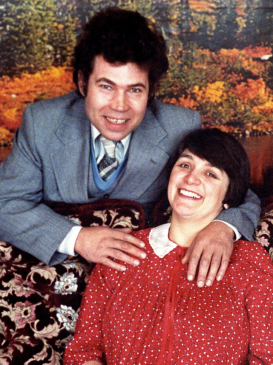
In February 1994, police arrived at 25 Cromwell Street, Gloucester, looking for a missing teenage girl. What they found instead would stop Britain cold: nine sets of human remains buried beneath the floorboards and garden of a nondescript terraced house — and that was only the beginning. Rosemary West, a 40-year-old mother of eight, sat at the center of it all. She had helped lure young women and girls to that house. She had participated in their torture, their sexual abuse, their deaths. She had then gone on living there — cooking meals, watching television, raising children — while the bodies of ten victims, including her own stepdaughter and her own teenage daughter, rotted in the earth beneath her feet. On 22 November 1995, a jury took less than two days to convict her on all ten counts of murder. The judge said she should never be freed. He was right. Thirty years later, Rose West — now calling herself Jennifer Jones — remains in a prison cell, in declining health, largely alone, still insisting she is innocent. This is the story of how ordinary evil hides in plain sight.
Convicted: Mary Ann Cotton (née Robson)
'I won't be troubled long. He'll go like all the rest of the Cottons.' That was Mary Ann Cotton's assessment of her seven-year-old stepson Charles Edward, delivered to a parish official in West Auckland, County Durham, in the spring of 1872. Five days later, the boy was dead. It was the statement that finally brought her down. By the time investigators began pulling at the thread, they found two decades of bodies behind it: eleven of her thirteen children, three of her four husbands, her own mother, and a string of lodgers and stepchildren, each one dead of 'gastric fever,' each one insured, each one mourned briefly and then forgotten. The death toll, historians estimate, may have reached twenty-one. Mary Ann Cotton was a nurse, a mother, a wife. She was trusted by the sick she nursed and by the physicians who signed off on her victims' deaths. She understood, precisely, that Victorian medicine would not look twice at a working-class child dying of gastroenteritis. She killed for insurance money: modest sums, accumulated over years, in exchange for the lives of nearly everyone who had ever depended on her. She was only ever convicted of one murder. She was hanged in Durham County Gaol on March 24, 1873, in a botched execution that left her strangling at the end of a too-short rope. She was forty years old. The full story of what she did is both a portrait of individual evil and an indictment of a system that made it catastrophically easy.
Subject: Casey Marie Anthony
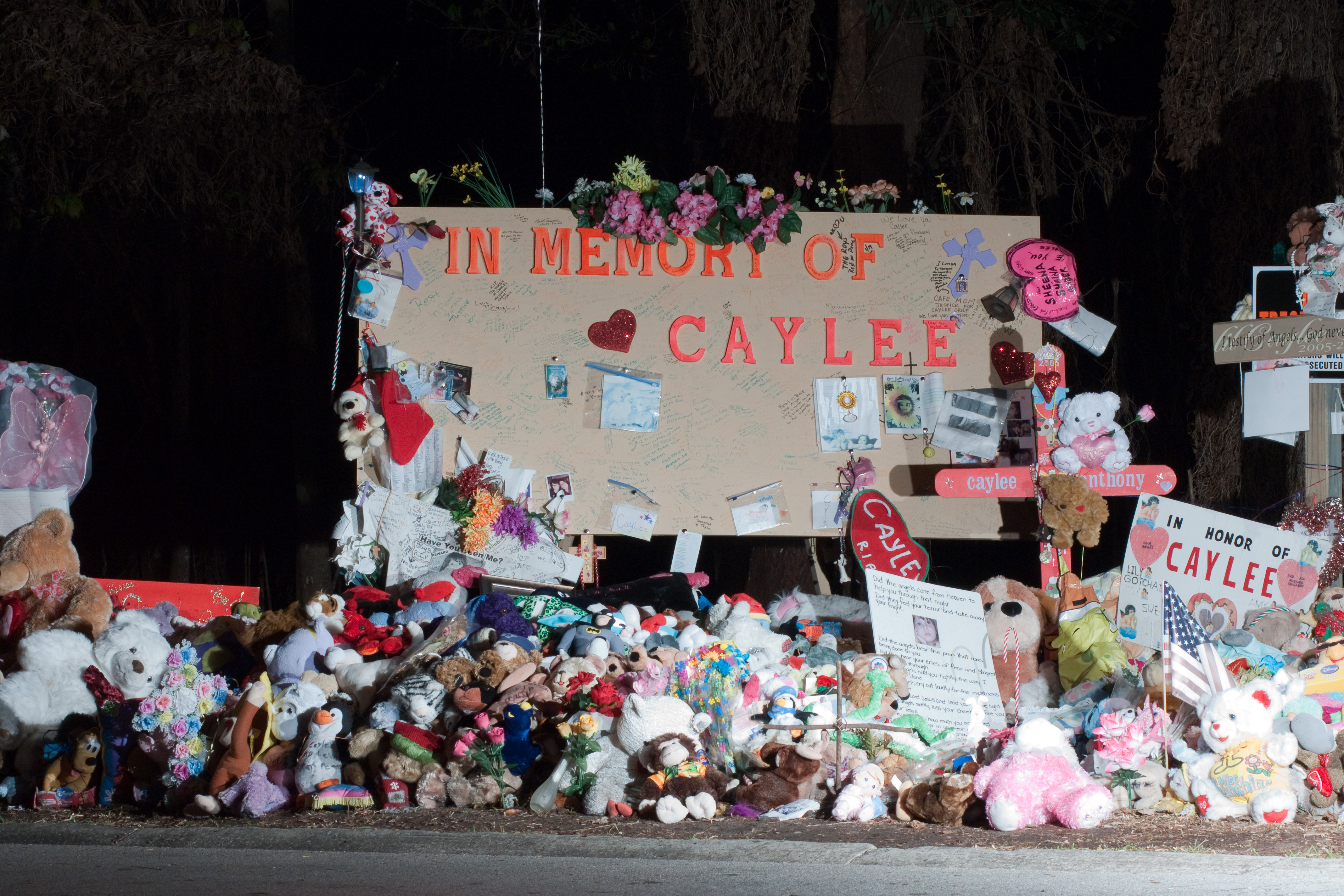
On July 15, 2008, Cindy Anthony called 911 in a panic, telling the dispatcher that her daughter Casey's car smelled 'like there's been a dead body' in it. Her granddaughter, two-year-old Caylee Marie Anthony, had been missing for thirty-one days. Thirty-one days Casey had spent partying with friends, sleeping at her boyfriend's apartment, and getting a tattoo on her shoulder that read 'Bella Vita': Beautiful Life. She had told anyone who asked that Caylee was with a nanny named Zenaida Fernandez-Gonzalez. The nanny did not exist. When Caylee's skeletal remains were found in December 2008, less than a mile from the Anthony family home, duct tape near the child's skull, the case exploded into a national obsession. What followed was one of the most polarizing murder trials in American history: a courtroom battle over chloroform, swimming pools, family secrets, and the limits of reasonable doubt. On July 5, 2011, the jury delivered a verdict that left much of America stunned. Casey Anthony walked free. The question of what really happened to Caylee Marie Anthony has never been answered in a court of law, and it likely never will be.
Accused: Enriqueta Martí Ripollés
On the morning of February 10, 1912, Barcelona police broke down the door of a ground-floor apartment on Carrer de Ponent and found something that would haunt the city for generations. Behind a locked interior door sat roughly fifty jars and basins arranged with terrible precision: congealed human blood, rendered fat, hand skeletons, bone dust, and small glass vials of finished elixirs, each one labeled in elegant calligraphy. Cowering in the front room were two children, one of them a five-year-old girl named Teresita who had been missing from the streets of El Raval for only days. The apartment's tenant was a woman named Enriqueta Martí Ripollés. By day, neighbors knew her as a ragged beggar who shuffled through Barcelona's poorest quarters with a child at her side. By night, she was something else entirely: wigged, jeweled, and dressed in silk, moving through the parlors of the city's wealthiest families and selling them preparations she claimed could cure tuberculosis, reverse aging, and treat venereal disease. Preparations made, authorities alleged, from the bodies of the city's most vulnerable children. She became known across Spain as "The Vampire of Barcelona." She was never convicted. She never stood trial. And the full truth of what happened inside that locked room may have been buried, deliberately and permanently, by the very people she served.
Convicted: Amelia Elizabeth Dyer (née Hobley)
'You'll know all mine by the tape around their necks.' When Amelia Dyer spoke those words to Reading police in the spring of 1896, she did so with the calm of a woman who had been getting away with murder — quite literally — for two decades. On March 30, 1896, a bargeman pulled a brown paper parcel from the River Thames near Caversham. Inside was a baby girl, strangled with white dressmaker's tape. She would not be the last. By the time detectives closed in on the mild-mannered, churchgoing widow operating out of a modest terrace on Kensington Road, seven infant bodies had been recovered from the river. Experts now estimate that Amelia Dyer — the 'Ogress of Reading,' a trained nurse turned baby farmer — murdered between 200 and 400 children over twenty years, making her one of the most prolific killers in British history. The jury took four and a half minutes to convict her. The tape never lied. This is her story.
Convicted: Karla Leanne Homolka (also known as Karla Leanne Teale and Leanne Bordelais)
She was blonde, pretty, and worked part-time at an animal hospital. She cried on cue for investigators. She told them she was a victim — a battered woman trapped in a monster's web. Canada believed her. Prosecutors believed her. They gave her a deal. Then the videotapes surfaced, and everything changed. The footage showed Karla Homolka not cowering in fear, but actively participating in acts so savage that seasoned law enforcement officers required counseling after viewing them. Among the victims captured on those tapes was her own fifteen-year-old sister, Tammy — drugged, assaulted, and dead by Christmas. The plea bargain had already been signed. Double jeopardy protections made it untouchable. The deal that spared Karla Homolka from a murder conviction — struck before prosecutors had seen a single frame of evidence — would become the most reviled legal arrangement in Canadian history, immortalized forever as 'the Deal with the Devil.' She served twelve years. Then she walked free, changed her name, married, had three children, and disappeared into ordinary life. She is out there still. This is how it happened.
Convicted: Genene Anne Jones
Genene Anne Jones was a licensed vocational nurse who is responsible for the deaths of up to 60 infants and children during the 1970s and 1980s. She used injections of digoxin, heparin, and later succinylcholine to induce medical crises in her patients, leading to numerous fatalities. Convicted in 1984 for murder and injury to a child, the exact number of her victims remains uncertain due to missing and destroyed hospital records.
Convicted: Susan Leigh Smith
The lake was quiet when Susan Smith let her car roll in. With her sons, three-year-old Michael and fourteen-month-old Alexander, still strapped in their car seats, the 1990 Mazda Protegé sank 122 feet from shore at John D. Long Lake in Union County, South Carolina. It took approximately six minutes. Then Susan Smith ran to a nearby house and told a lie that gripped an entire nation: a Black man had carjacked her vehicle, her babies still inside. For nine days, America watched her weep on television while a manhunt consumed Union County and innocent Black men were stopped by police hunting a suspect who never existed. The lie collapsed on November 3, 1994, when Smith confessed and led divers to the sunken car. She was convicted of two counts of first-degree murder. Thirty years later, she sat before a parole board via video link and said: 'I know what I did was horrible.' The board voted unanimously to deny her release. Her next hearing is in November 2026. This is the story of Susan Smith: her shattered childhood, her calculating deception, her infamous trial, and the question that still has no satisfying answer. What made a mother choose a man over her sons?