Aileen Wuornos

Case Summary
Her last words from the execution chamber stopped the witnesses cold. "I'd just like to say I'm sailing with the rock, and I'll be back like Independence Day, with Jesus, June 6, like the movie, big mothership and all. I'll be back." Moments later, at 9:47 a.m. on October 9, 2002, Aileen Carol Wuornos was pronounced dead. She had declined her final meal. She accepted only a cup of coffee.
Between November 1989 and November 1990, Wuornos shot and killed seven men along the highways of Florida, each of them a middle-aged motorist who had stopped for a woman working the roads. She took their money, their cars, and their lives. She was a highway prostitute operating under multiple aliases, a drifter with a .22 and a history that read less like a criminal file and more like an indictment of everyone who had ever failed her.
She was raised by alcoholic grandparents after her mother abandoned her at age four. Her father, whom she never met, was serving a life sentence for raping a seven-year-old child when he hanged himself in his prison cell. She was pregnant and living on the streets by fourteen.
She told police, and later the courts, that every man she killed had attacked her first. The jury in her first trial deliberated for less than two hours before convicting her. She received six death sentences in total.
The tabloids called her America's first female serial killer. The more precise truth: she was the first woman formally profiled by the FBI as a serial killer. The distinction hardly seemed to matter by the end. What mattered was that seven men were dead, and Aileen Wuornos had spent a lifetime arriving at that outcome.
February 29, 1956, Rochester, Michigan, USA(Age: 46)
October 9, 2002, Florida State Prison, Starke, Florida, USA (Execution by lethal injection)
Related Cases
Convicted
Connection tags:

Accused
Connection tags:

Accused
Connection tags:
Convicted
Connection tags:

Convicted
Connection tags:

Accused
Connection tags:
Case Details
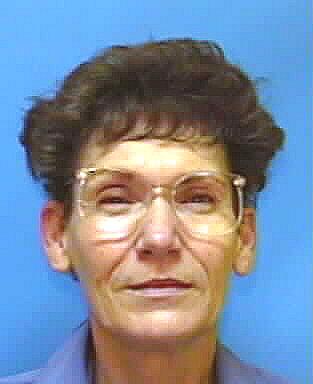
On January 9, 1991, Volusia County sheriff's deputies found her exactly where a tip had placed her: at The Last Resort bar in Port Orange, Florida, a low-ceilinged roadside dive that catered to bikers and drifters and people who had nowhere better to be. The woman sitting inside matched the composite sketch that had been circulating through Florida law enforcement for months. She was thirty-four years old, five feet four inches tall, with strawberry-blonde hair and the weathered look of someone who had been living hard and outdoors for a very long time. She was arrested on an outstanding warrant, a minor charge, almost incidental. But the deputies who put her in handcuffs that afternoon knew they had someone much bigger than a warrant case. They had the woman they believed had been shooting men dead on the Florida highway system for over a year.
Her name was Aileen Carol Wuornos, though she had gone by many others: Susan Lynn Blahovec, Cammie Marsh Greene, Lori Kristine Grody. She had been slipping between identities for years, a necessary skill for a woman who had been accumulating criminal charges since adolescence. But before any of that, before the aliases and the warrants and the bodies found in ditches and forests across six Florida counties, she had simply been a little girl named Aileen Pittman, born on February 29, 1956, in Rochester, Michigan, to two teenagers who couldn't hold their own lives together, let alone hers.
She never met her father, Leo Dale Pittman. He was already gone by the time she had any memory to place him in. In 1967, Pittman was sentenced to life in prison for the kidnapping and rape of a seven-year-old girl. Two years later, diagnosed with schizophrenia and apparently unable to endure what remained of his existence, he hanged himself in his cell. Aileen was twelve years old when her father died. She had never exchanged a single word with him.
Her mother, Diane Wuornos, was barely more present. In January 1960, when Aileen was not yet four years old, Diane abandoned her daughter and her son Keith, walking away from both of them without looking back. The children went to live with their maternal grandparents, Lauri and Britta Wuornos, who legally adopted them on March 18, 1960. The grandparents were alcoholics. Lauri, Aileen would later allege, sexually assaulted and beat her throughout her childhood. The home that was supposed to save her was its own form of damage.
By the time she was eleven, she had begun trading sexual favors for small things: money, cigarettes, beer. By fourteen, she was pregnant. Neighbors at the time suggested the father was an older man, an adult friend of her grandfather's. On March 23, 1971, Aileen gave birth to a baby boy at a home for unwed mothers. She was a child herself. The baby was placed for adoption immediately. Shortly after, she was expelled from her grandparents' home and left to fend for herself on the streets of rural Michigan.
She was fourteen years old. She had nowhere to go.
What followed was decades of transient living, petty crime, and the particular degradation of survival at the margins. She hitchhiked. She drifted south. She was convicted of disorderly conduct in Florida in 1974. She attempted armed robbery in Colorado in 1976. That same year, she briefly married a seventy-year-old yacht club president named Lewis Gratz Fell, a union that lasted less than three months before Fell reportedly sought a restraining order and the marriage was annulled on July 21, 1976. Also in 1976, her brother Keith died of cancer. He had been the one constant in her fractured life. After his death, she collected the $10,000 in life insurance she received as his next of kin, spent it quickly, and moved to Florida for good.
Florida was where the story accelerated into something irreversible.
In 1986, Wuornos walked into a bar in Daytona Beach and met a woman named Tyria Moore. Moore was younger, steadier, and apparently charmed by the brash, restless woman who had appeared in her orbit. They became romantic partners, sharing a series of cheap motel rooms and apartments across central Florida, supporting themselves in part by selling stolen goods at local pawnshops. Wuornos was working as a highway prostitute, flagging down male motorists along the interstate corridors. It was dangerous work. She kept a .22-caliber pistol nearby.
Late on the night of November 30, 1989, Richard Charles Mallory, a fifty-one-year-old electronics store owner from Clearwater, picked up Aileen Wuornos somewhere along a stretch of highway in Volusia County. His body was found on December 13, 1989, partially hidden in the woods. He had been shot multiple times. His car was gone. His wallet was gone.
Mallory was the first. Over the next eleven months, six more men died in nearly identical circumstances: David Spears, forty-three, a construction worker, shot six times, found in Citrus County on June 1, 1990; Charles Carskaddon, forty, found in Pasco County; Peter Siems, sixty-five, a retired merchant seaman whose car was later found crashed and abandoned but whose body was never recovered; Eugene Troy Burress, fifty, a delivery driver, found in the Ocala National Forest on August 4, shot twice; Charles Richard Humphreys, fifty-six, a retired Air Force major and former police chief, found in Marion County on September 12, shot seven times; Walter Gino Antonio, sixty-one, a trucker and reserve police officer, found in Dixie County on November 19, shot four times. All of them were middle-aged men. All of them had stopped along Florida highways. All of them were dead.
The investigation cracked open gradually, then all at once. On July 4, 1990, Wuornos and Moore crashed Peter Siems' car outside Orange Springs, Florida. A witness named Rhonda Bailey saw two women at the scene and gave police a description detailed enough to work from. Meanwhile, detectives tracing the theft of Richard Mallory's belongings tracked a pawnshop receipt to a thumbprint. The thumbprint matched a known alias. The alias connected to Aileen Wuornos.
By the time deputies arrested her at The Last Resort that January evening, Tyria Moore had already fled to Pennsylvania, increasingly frightened by what she was beginning to understand about the woman she loved. Law enforcement found her and made her an offer: full immunity in exchange for cooperation. Moore agreed. She placed a series of recorded phone calls to Wuornos in the days following the arrest, maneuvering the conversation toward confession while investigators listened in. Wuornos, apparently desperate to protect Moore from prosecution, obliged. She told Moore she had done it. She told Moore not to worry, that she would take the fall alone.
On January 16, 1991, Wuornos confessed formally. She did not deny the killings. What she denied was cold-blooded murder. Every man, she insisted, had attacked or threatened her first. Every shooting, in her telling, had been an act of self-defense by a woman in a fundamentally dangerous profession. It was the claim she would repeat for the rest of her life, and it was the claim that no jury ever accepted.
Her first trial, for the murder of Richard Mallory, began in January 1992 in Daytona Beach. Prosecutor John Tanner argued premeditated murder and robbery. The defense maintained her self-defense account. What the defense did not know, and failed to uncover through its own research, was that Richard Mallory had a prior conviction for rape in Maryland. A fact that could have given the jury reason to pause. A fact that came out only later, too late to matter. On January 27, 1992, after deliberating for less than two hours, the jury returned a verdict of guilty on all counts and unanimously recommended death. On January 31, Judge Uriel Blount Jr. formally sentenced her to die.
Five more death sentences followed in the months ahead. She pleaded guilty to the murders of Troy Burress, Dick Humphreys, and David Spears in March 1992, and was sentenced in May. She pleaded guilty to Charles Carskaddon in June 1992, sentenced in November. She entered a no-contest plea for the murder of Walter Antonio in February 1993. No charges were ever filed in the death of Peter Siems; without a body, there was no case to bring. Six death sentences, six victims accounted for by the courts, and one who simply vanished.
On death row at Broward Correctional Institution, Wuornos drew an unlikely companion. In 1991, a born-again Christian named Arlene Pralle, who had seen Wuornos's face in the news and felt what she described as a spiritual calling, became her legal adoptive mother. Wuornos, who had never known a stable parent, was forty years old when the adoption was finalized. She had also sold the rights to her story almost immediately after her arrest, a transaction that would fuel years of legal and ethical debate about the commodification of violent crime.
By 2001, Wuornos had grown exhausted. She filed a petition with the Florida Supreme Court seeking to dismiss her remaining appeals and proceed to execution. She stated plainly that she had killed the men not in self-defense but for robbery, and that she wanted to die. Governor Jeb Bush ordered a psychiatric evaluation. Three court-appointed psychiatrists examined her and concluded she was mentally competent to make the decision. A final stay was briefly granted in September 2002, then lifted after the competency finding was confirmed. The U.S. Supreme Court had already denied her petition for review years earlier, in April 1995. Every avenue was closed.
On the morning of October 9, 2002, Aileen Wuornos was escorted into the execution chamber at Florida State Prison near Starke. She had been offered a final meal — anything she wanted, up to $20. She declined it. She asked only for a cup of coffee. At 9:30 a.m., the lethal injection process began. At 9:47 a.m., she was pronounced dead. She was forty-six years old: the second woman executed in Florida since the state reinstated capital punishment, and the tenth in the entire United States.
Before she died, she was asked if she had any final words. She looked at the witnesses assembled beyond the glass and delivered what would become the most memorable and baffling last statement in recent execution history. "I'd just like to say I'm sailing with the rock, and I'll be back like Independence Day, with Jesus, June 6, like the movie, big mothership and all. I'll be back."
Her body was cremated. Her childhood friend Dawn Botkins brought her ashes back to Michigan and scattered them beneath a tree. At her funeral, per her request, they played Natalie Merchant's "Carnival."
The culture could not let her go. Nick Broomfield had already documented her story in two films: "Aileen Wuornos: The Selling of a Serial Killer" in 1992 and "Aileen: Life and Death of a Serial Killer" in 2003. That same year, the biographical film "Monster" put Charlize Theron on screen as Wuornos in a physically transformative performance that won Theron the Academy Award for Best Actress. A Netflix documentary, "Aileen: Queen of the Serial Killers," followed in 2025. Sarah Paulson is set to portray her in the fourth season of Ryan Murphy's "Monster" anthology series on Netflix.
The tabloids called her America's first female serial killer. Criminologists were more precise: she was the first woman formally profiled by the FBI as a serial killer. The distinction matters, though perhaps not in the way the FBI intended it to. What the label captures is not just the body count but the pathology, the pattern, the premeditation. The FBI profile is a portrait of someone who planned, who repeated, who chose. Whether Wuornos was a predator or a victim defending herself by extreme and lethal measures, or some complicated mixture of both, is a question that legal proceedings settled but history has never quite closed.
Seven men are dead. Aileen Wuornos lived forty-six years in conditions that would have broken most people far sooner. Neither fact cancels out the other. That, perhaps, is the most honest thing that can be said about a life that resists any single, satisfying conclusion.
Timeline
Birth & Early Abandonment
Aileen Carol Pittman was born on February 29, 1956, in Rochester, Michigan, to teenage parents who divorced before her birth. By January 1960, her mother Diane had abandoned Aileen and her brother Keith, leaving them with their maternal grandparents Lauri and Britta Wuornos, who legally adopted both children on March 18, 1960. Wuornos later alleged that her grandfather subjected her to physical and sexual abuse throughout her childhood.
Her chaotic, abusive upbringing — compounded by alcoholic grandparents and the absence of both biological parents — is widely considered foundational to her later criminal trajectory.
Teenage Pregnancy & Expulsion
Having begun trading sexual favors for cigarettes and money around age 11, Wuornos became pregnant at 14 and gave birth to a baby boy on March 23, 1971, at a home for unwed mothers; the child was immediately surrendered for adoption. Shortly afterward she was expelled from her grandparents' home and left to fend for herself on the streets of Michigan. She began a transient life of survival prostitution and petty crime that would define the next two decades.
Her expulsion at 14 effectively ended any semblance of a stable home life and launched her into the criminal underworld where she would operate for the rest of her life.
Brief Marriage to Lewis Fell
Wuornos married 69-year-old yacht-club president Lewis Gratz Fell on May 4, 1976, in a union that lasted less than three months before being annulled on July 21, 1976, after Fell reportedly sought a restraining order against her. That same year her brother Keith died of cancer, severing her last meaningful family tie. Following Keith's death, she relocated to Florida and resumed working as a highway prostitute.
The failed marriage and her brother's death in 1976 marked the final collapse of Wuornos's personal support network and cemented her permanent move to Florida.
Relationship with Tyria Moore Begins
In 1986, Wuornos met Tyria Moore at a Daytona Beach bar and the two began an intense romantic relationship that would last until just before Wuornos's arrest in 1991. Together they drifted across Florida, with Wuornos financing their life through prostitution and the pair supplementing income by selling stolen goods at pawnshops. Moore's eventual cooperation with law enforcement would prove decisive in bringing Wuornos to justice.
The relationship with Moore gave Wuornos her most stable emotional bond but also created the paper trail — pawnshop receipts, stolen property — that investigators would later use to identify and arrest her.
First Murder: Richard Mallory
On November 30, 1989, Wuornos shot and killed Richard Charles Mallory, 51, an electronics store owner from Clearwater, Florida, along a Volusia County highway after he picked her up as a hitchhiker. Mallory's body was not discovered until December 13, 1989. Wuornos claimed Mallory had violently raped her and that she fired in self-defense — a claim that gained some credibility when investigators later uncovered Mallory's prior rape conviction in Maryland, a record her trial counsel failed to find.
Mallory's murder was the first in a series of seven killings and became the centerpiece of Wuornos's most consequential trial; the failure to surface his rape record was later cited as a critical defense error.
Six Additional Victims Killed
Between June and November 1990, Wuornos killed six more men along Florida highways: David Spears (body found June 1), Charles Carskaddon (body found in Pasco County), Peter Siems (disappeared June 1990, body never recovered), Eugene 'Troy' Burress (body found August 4 in Ocala National Forest), Charles 'Dick' Humphreys (body found September 12 in Marion County), and Walter Gino Antonio (body found November 19 in Dixie County). All were middle-aged male motorists aged 40–65. Wuornos maintained each killing was an act of self-defense against men who had attacked or attempted to rape her.
The rapid succession of seven murders along Florida's highways made Wuornos one of the most prolific female killers in American history and prompted a massive multi-county law enforcement investigation.
Investigation Breaks Open: Car Crash & Pawnshop Receipt
On July 4, 1990, Wuornos and Moore crashed victim Peter Siems's car near Orange Springs, Florida; a witness named Rhonda Bailey provided police with descriptions of two women fleeing the scene. Separately, detectives traced stolen property belonging to Richard Mallory to a Florida pawnshop, where a receipt bore Wuornos's thumbprint. The convergence of these two evidence threads allowed investigators to composite-sketch and ultimately identify Wuornos as the prime suspect.
The pawnshop thumbprint and the eyewitness account from the Siems crash were the twin pillars that cracked the investigation open and led directly to Wuornos's identification and arrest.
Arrest at The Last Resort Bar
On January 9, 1991, Wuornos was arrested at The Last Resort biker bar in Port Orange, Volusia County, Florida, on an outstanding warrant unrelated to the murders. Police then located Tyria Moore in Pennsylvania and, in exchange for full immunity from prosecution, persuaded her to make a series of recorded phone calls to Wuornos. Confronted with Moore's emotional appeals, Wuornos confessed to all seven killings, insisting throughout that she had acted in self-defense.
The arrest and Moore's cooperation produced the recorded confession that became the prosecution's most powerful evidence, effectively sealing Wuornos's fate before trial even began.
Conviction & Death Sentence for Mallory Murder
On January 27, 1992, after less than two hours of deliberation, a jury found Wuornos guilty of first-degree murder in the death of Richard Mallory. The jury unanimously recommended the death penalty, and on January 31, 1992, Judge Blount formally sentenced her to death. Her defense counsel's failure to discover Mallory's prior Maryland rape conviction — which could have bolstered the self-defense narrative — was later identified as a significant miscarriage of justice.
This verdict and sentence set the template for five subsequent death sentences and established Wuornos as a figure at the center of national debates about gender, self-defense, and capital punishment.
Execution by Lethal Injection
On October 9, 2002, Wuornos was executed by lethal injection at Florida State Prison near Starke, Florida; the process began at 9:30 a.m. and she was pronounced dead at 9:47 a.m. She declined a last meal, accepting only a cup of coffee, and delivered a rambling final statement referencing Jesus and the film Independence Day. She was 46 years old, the second woman executed in Florida and the tenth in the United States since the Supreme Court restored capital punishment in 1976.
Her execution closed a case that had sparked widespread cultural debate and spawned documentaries, an Academy Award-winning film, and ongoing arguments about whether the justice system had fairly adjudicated her claims of self-defense.
Crime Location
Photos
Aileen Wuornos (4x5 cropped)

The Last Resort - Port Orange, FL (7113274795) (cropped)
Sources
- Aileen Wuornos — Wikipedia
- Aileen Carol Wuornos Execution Record #805
- Aileen Wuornos Photo Gallery
- Aileen Wuornos: The Selling of a Serial Killer (documentary)
- Aileen: Life and Death of a Serial Killer (documentary)
- Florida Department of Corrections — Inmate Record: Aileen Carol Wuornos
- Monster (2003 Film) — Production Notes
- Aileen: Queen of the Serial Killers (Netflix Documentary)
Frequently Asked Questions
Table of Contents
Case Summary
Her last words from the execution chamber stopped the witnesses cold. "I'd just like to say I'm sailing with the rock, and I'll be back like Independence Day, with Jesus, June 6, like the movie, big mothership and all. I'll be back." Moments later, at 9:47 a.m. on October 9, 2002, Aileen Carol Wuornos was pronounced dead. She had declined her final meal. She accepted only a cup of coffee.
Between November 1989 and November 1990, Wuornos shot and killed seven men along the highways of Florida, each of them a middle-aged motorist who had stopped for a woman working the roads. She took their money, their cars, and their lives. She was a highway prostitute operating under multiple aliases, a drifter with a .22 and a history that read less like a criminal file and more like an indictment of everyone who had ever failed her.
She was raised by alcoholic grandparents after her mother abandoned her at age four. Her father, whom she never met, was serving a life sentence for raping a seven-year-old child when he hanged himself in his prison cell. She was pregnant and living on the streets by fourteen.
She told police, and later the courts, that every man she killed had attacked her first. The jury in her first trial deliberated for less than two hours before convicting her. She received six death sentences in total.
The tabloids called her America's first female serial killer. The more precise truth: she was the first woman formally profiled by the FBI as a serial killer. The distinction hardly seemed to matter by the end. What mattered was that seven men were dead, and Aileen Wuornos had spent a lifetime arriving at that outcome.
February 29, 1956, Rochester, Michigan, USA(Age: 46)
October 9, 2002, Florida State Prison, Starke, Florida, USA (Execution by lethal injection)
Case Details
On January 9, 1991, Volusia County sheriff's deputies found her exactly where a tip had placed her: at The Last Resort bar in Port Orange, Florida, a low-ceilinged roadside dive that catered to bikers and drifters and people who had nowhere better to be. The woman sitting inside matched the composite sketch that had been circulating through Florida law enforcement for months. She was thirty-four years old, five feet four inches tall, with strawberry-blonde hair and the weathered look of someone who had been living hard and outdoors for a very long time. She was arrested on an outstanding warrant, a minor charge, almost incidental. But the deputies who put her in handcuffs that afternoon knew they had someone much bigger than a warrant case. They had the woman they believed had been shooting men dead on the Florida highway system for over a year.
Her name was Aileen Carol Wuornos, though she had gone by many others: Susan Lynn Blahovec, Cammie Marsh Greene, Lori Kristine Grody. She had been slipping between identities for years, a necessary skill for a woman who had been accumulating criminal charges since adolescence. But before any of that, before the aliases and the warrants and the bodies found in ditches and forests across six Florida counties, she had simply been a little girl named Aileen Pittman, born on February 29, 1956, in Rochester, Michigan, to two teenagers who couldn't hold their own lives together, let alone hers.
She never met her father, Leo Dale Pittman. He was already gone by the time she had any memory to place him in. In 1967, Pittman was sentenced to life in prison for the kidnapping and rape of a seven-year-old girl. Two years later, diagnosed with schizophrenia and apparently unable to endure what remained of his existence, he hanged himself in his cell. Aileen was twelve years old when her father died. She had never exchanged a single word with him.
Her mother, Diane Wuornos, was barely more present. In January 1960, when Aileen was not yet four years old, Diane abandoned her daughter and her son Keith, walking away from both of them without looking back. The children went to live with their maternal grandparents, Lauri and Britta Wuornos, who legally adopted them on March 18, 1960. The grandparents were alcoholics. Lauri, Aileen would later allege, sexually assaulted and beat her throughout her childhood. The home that was supposed to save her was its own form of damage.
By the time she was eleven, she had begun trading sexual favors for small things: money, cigarettes, beer. By fourteen, she was pregnant. Neighbors at the time suggested the father was an older man, an adult friend of her grandfather's. On March 23, 1971, Aileen gave birth to a baby boy at a home for unwed mothers. She was a child herself. The baby was placed for adoption immediately. Shortly after, she was expelled from her grandparents' home and left to fend for herself on the streets of rural Michigan.
She was fourteen years old. She had nowhere to go.
What followed was decades of transient living, petty crime, and the particular degradation of survival at the margins. She hitchhiked. She drifted south. She was convicted of disorderly conduct in Florida in 1974. She attempted armed robbery in Colorado in 1976. That same year, she briefly married a seventy-year-old yacht club president named Lewis Gratz Fell, a union that lasted less than three months before Fell reportedly sought a restraining order and the marriage was annulled on July 21, 1976. Also in 1976, her brother Keith died of cancer. He had been the one constant in her fractured life. After his death, she collected the $10,000 in life insurance she received as his next of kin, spent it quickly, and moved to Florida for good.
Florida was where the story accelerated into something irreversible.
In 1986, Wuornos walked into a bar in Daytona Beach and met a woman named Tyria Moore. Moore was younger, steadier, and apparently charmed by the brash, restless woman who had appeared in her orbit. They became romantic partners, sharing a series of cheap motel rooms and apartments across central Florida, supporting themselves in part by selling stolen goods at local pawnshops. Wuornos was working as a highway prostitute, flagging down male motorists along the interstate corridors. It was dangerous work. She kept a .22-caliber pistol nearby.
Late on the night of November 30, 1989, Richard Charles Mallory, a fifty-one-year-old electronics store owner from Clearwater, picked up Aileen Wuornos somewhere along a stretch of highway in Volusia County. His body was found on December 13, 1989, partially hidden in the woods. He had been shot multiple times. His car was gone. His wallet was gone.
Mallory was the first. Over the next eleven months, six more men died in nearly identical circumstances: David Spears, forty-three, a construction worker, shot six times, found in Citrus County on June 1, 1990; Charles Carskaddon, forty, found in Pasco County; Peter Siems, sixty-five, a retired merchant seaman whose car was later found crashed and abandoned but whose body was never recovered; Eugene Troy Burress, fifty, a delivery driver, found in the Ocala National Forest on August 4, shot twice; Charles Richard Humphreys, fifty-six, a retired Air Force major and former police chief, found in Marion County on September 12, shot seven times; Walter Gino Antonio, sixty-one, a trucker and reserve police officer, found in Dixie County on November 19, shot four times. All of them were middle-aged men. All of them had stopped along Florida highways. All of them were dead.
The investigation cracked open gradually, then all at once. On July 4, 1990, Wuornos and Moore crashed Peter Siems' car outside Orange Springs, Florida. A witness named Rhonda Bailey saw two women at the scene and gave police a description detailed enough to work from. Meanwhile, detectives tracing the theft of Richard Mallory's belongings tracked a pawnshop receipt to a thumbprint. The thumbprint matched a known alias. The alias connected to Aileen Wuornos.
By the time deputies arrested her at The Last Resort that January evening, Tyria Moore had already fled to Pennsylvania, increasingly frightened by what she was beginning to understand about the woman she loved. Law enforcement found her and made her an offer: full immunity in exchange for cooperation. Moore agreed. She placed a series of recorded phone calls to Wuornos in the days following the arrest, maneuvering the conversation toward confession while investigators listened in. Wuornos, apparently desperate to protect Moore from prosecution, obliged. She told Moore she had done it. She told Moore not to worry, that she would take the fall alone.
On January 16, 1991, Wuornos confessed formally. She did not deny the killings. What she denied was cold-blooded murder. Every man, she insisted, had attacked or threatened her first. Every shooting, in her telling, had been an act of self-defense by a woman in a fundamentally dangerous profession. It was the claim she would repeat for the rest of her life, and it was the claim that no jury ever accepted.
Her first trial, for the murder of Richard Mallory, began in January 1992 in Daytona Beach. Prosecutor John Tanner argued premeditated murder and robbery. The defense maintained her self-defense account. What the defense did not know, and failed to uncover through its own research, was that Richard Mallory had a prior conviction for rape in Maryland. A fact that could have given the jury reason to pause. A fact that came out only later, too late to matter. On January 27, 1992, after deliberating for less than two hours, the jury returned a verdict of guilty on all counts and unanimously recommended death. On January 31, Judge Uriel Blount Jr. formally sentenced her to die.
Five more death sentences followed in the months ahead. She pleaded guilty to the murders of Troy Burress, Dick Humphreys, and David Spears in March 1992, and was sentenced in May. She pleaded guilty to Charles Carskaddon in June 1992, sentenced in November. She entered a no-contest plea for the murder of Walter Antonio in February 1993. No charges were ever filed in the death of Peter Siems; without a body, there was no case to bring. Six death sentences, six victims accounted for by the courts, and one who simply vanished.
On death row at Broward Correctional Institution, Wuornos drew an unlikely companion. In 1991, a born-again Christian named Arlene Pralle, who had seen Wuornos's face in the news and felt what she described as a spiritual calling, became her legal adoptive mother. Wuornos, who had never known a stable parent, was forty years old when the adoption was finalized. She had also sold the rights to her story almost immediately after her arrest, a transaction that would fuel years of legal and ethical debate about the commodification of violent crime.
By 2001, Wuornos had grown exhausted. She filed a petition with the Florida Supreme Court seeking to dismiss her remaining appeals and proceed to execution. She stated plainly that she had killed the men not in self-defense but for robbery, and that she wanted to die. Governor Jeb Bush ordered a psychiatric evaluation. Three court-appointed psychiatrists examined her and concluded she was mentally competent to make the decision. A final stay was briefly granted in September 2002, then lifted after the competency finding was confirmed. The U.S. Supreme Court had already denied her petition for review years earlier, in April 1995. Every avenue was closed.
On the morning of October 9, 2002, Aileen Wuornos was escorted into the execution chamber at Florida State Prison near Starke. She had been offered a final meal — anything she wanted, up to $20. She declined it. She asked only for a cup of coffee. At 9:30 a.m., the lethal injection process began. At 9:47 a.m., she was pronounced dead. She was forty-six years old: the second woman executed in Florida since the state reinstated capital punishment, and the tenth in the entire United States.
Before she died, she was asked if she had any final words. She looked at the witnesses assembled beyond the glass and delivered what would become the most memorable and baffling last statement in recent execution history. "I'd just like to say I'm sailing with the rock, and I'll be back like Independence Day, with Jesus, June 6, like the movie, big mothership and all. I'll be back."
Her body was cremated. Her childhood friend Dawn Botkins brought her ashes back to Michigan and scattered them beneath a tree. At her funeral, per her request, they played Natalie Merchant's "Carnival."
The culture could not let her go. Nick Broomfield had already documented her story in two films: "Aileen Wuornos: The Selling of a Serial Killer" in 1992 and "Aileen: Life and Death of a Serial Killer" in 2003. That same year, the biographical film "Monster" put Charlize Theron on screen as Wuornos in a physically transformative performance that won Theron the Academy Award for Best Actress. A Netflix documentary, "Aileen: Queen of the Serial Killers," followed in 2025. Sarah Paulson is set to portray her in the fourth season of Ryan Murphy's "Monster" anthology series on Netflix.
The tabloids called her America's first female serial killer. Criminologists were more precise: she was the first woman formally profiled by the FBI as a serial killer. The distinction matters, though perhaps not in the way the FBI intended it to. What the label captures is not just the body count but the pathology, the pattern, the premeditation. The FBI profile is a portrait of someone who planned, who repeated, who chose. Whether Wuornos was a predator or a victim defending herself by extreme and lethal measures, or some complicated mixture of both, is a question that legal proceedings settled but history has never quite closed.
Seven men are dead. Aileen Wuornos lived forty-six years in conditions that would have broken most people far sooner. Neither fact cancels out the other. That, perhaps, is the most honest thing that can be said about a life that resists any single, satisfying conclusion.
Timeline
Birth & Early Abandonment
Aileen Carol Pittman was born on February 29, 1956, in Rochester, Michigan, to teenage parents who divorced before her birth. By January 1960, her mother Diane had abandoned Aileen and her brother Keith, leaving them with their maternal grandparents Lauri and Britta Wuornos, who legally adopted both children on March 18, 1960. Wuornos later alleged that her grandfather subjected her to physical and sexual abuse throughout her childhood.
Her chaotic, abusive upbringing — compounded by alcoholic grandparents and the absence of both biological parents — is widely considered foundational to her later criminal trajectory.
Teenage Pregnancy & Expulsion
Having begun trading sexual favors for cigarettes and money around age 11, Wuornos became pregnant at 14 and gave birth to a baby boy on March 23, 1971, at a home for unwed mothers; the child was immediately surrendered for adoption. Shortly afterward she was expelled from her grandparents' home and left to fend for herself on the streets of Michigan. She began a transient life of survival prostitution and petty crime that would define the next two decades.
Her expulsion at 14 effectively ended any semblance of a stable home life and launched her into the criminal underworld where she would operate for the rest of her life.
Brief Marriage to Lewis Fell
Wuornos married 69-year-old yacht-club president Lewis Gratz Fell on May 4, 1976, in a union that lasted less than three months before being annulled on July 21, 1976, after Fell reportedly sought a restraining order against her. That same year her brother Keith died of cancer, severing her last meaningful family tie. Following Keith's death, she relocated to Florida and resumed working as a highway prostitute.
The failed marriage and her brother's death in 1976 marked the final collapse of Wuornos's personal support network and cemented her permanent move to Florida.
Relationship with Tyria Moore Begins
In 1986, Wuornos met Tyria Moore at a Daytona Beach bar and the two began an intense romantic relationship that would last until just before Wuornos's arrest in 1991. Together they drifted across Florida, with Wuornos financing their life through prostitution and the pair supplementing income by selling stolen goods at pawnshops. Moore's eventual cooperation with law enforcement would prove decisive in bringing Wuornos to justice.
The relationship with Moore gave Wuornos her most stable emotional bond but also created the paper trail — pawnshop receipts, stolen property — that investigators would later use to identify and arrest her.
First Murder: Richard Mallory
On November 30, 1989, Wuornos shot and killed Richard Charles Mallory, 51, an electronics store owner from Clearwater, Florida, along a Volusia County highway after he picked her up as a hitchhiker. Mallory's body was not discovered until December 13, 1989. Wuornos claimed Mallory had violently raped her and that she fired in self-defense — a claim that gained some credibility when investigators later uncovered Mallory's prior rape conviction in Maryland, a record her trial counsel failed to find.
Mallory's murder was the first in a series of seven killings and became the centerpiece of Wuornos's most consequential trial; the failure to surface his rape record was later cited as a critical defense error.
Six Additional Victims Killed
Between June and November 1990, Wuornos killed six more men along Florida highways: David Spears (body found June 1), Charles Carskaddon (body found in Pasco County), Peter Siems (disappeared June 1990, body never recovered), Eugene 'Troy' Burress (body found August 4 in Ocala National Forest), Charles 'Dick' Humphreys (body found September 12 in Marion County), and Walter Gino Antonio (body found November 19 in Dixie County). All were middle-aged male motorists aged 40–65. Wuornos maintained each killing was an act of self-defense against men who had attacked or attempted to rape her.
The rapid succession of seven murders along Florida's highways made Wuornos one of the most prolific female killers in American history and prompted a massive multi-county law enforcement investigation.
Investigation Breaks Open: Car Crash & Pawnshop Receipt
On July 4, 1990, Wuornos and Moore crashed victim Peter Siems's car near Orange Springs, Florida; a witness named Rhonda Bailey provided police with descriptions of two women fleeing the scene. Separately, detectives traced stolen property belonging to Richard Mallory to a Florida pawnshop, where a receipt bore Wuornos's thumbprint. The convergence of these two evidence threads allowed investigators to composite-sketch and ultimately identify Wuornos as the prime suspect.
The pawnshop thumbprint and the eyewitness account from the Siems crash were the twin pillars that cracked the investigation open and led directly to Wuornos's identification and arrest.
Arrest at The Last Resort Bar
On January 9, 1991, Wuornos was arrested at The Last Resort biker bar in Port Orange, Volusia County, Florida, on an outstanding warrant unrelated to the murders. Police then located Tyria Moore in Pennsylvania and, in exchange for full immunity from prosecution, persuaded her to make a series of recorded phone calls to Wuornos. Confronted with Moore's emotional appeals, Wuornos confessed to all seven killings, insisting throughout that she had acted in self-defense.
The arrest and Moore's cooperation produced the recorded confession that became the prosecution's most powerful evidence, effectively sealing Wuornos's fate before trial even began.
Conviction & Death Sentence for Mallory Murder
On January 27, 1992, after less than two hours of deliberation, a jury found Wuornos guilty of first-degree murder in the death of Richard Mallory. The jury unanimously recommended the death penalty, and on January 31, 1992, Judge Blount formally sentenced her to death. Her defense counsel's failure to discover Mallory's prior Maryland rape conviction — which could have bolstered the self-defense narrative — was later identified as a significant miscarriage of justice.
This verdict and sentence set the template for five subsequent death sentences and established Wuornos as a figure at the center of national debates about gender, self-defense, and capital punishment.
Execution by Lethal Injection
On October 9, 2002, Wuornos was executed by lethal injection at Florida State Prison near Starke, Florida; the process began at 9:30 a.m. and she was pronounced dead at 9:47 a.m. She declined a last meal, accepting only a cup of coffee, and delivered a rambling final statement referencing Jesus and the film Independence Day. She was 46 years old, the second woman executed in Florida and the tenth in the United States since the Supreme Court restored capital punishment in 1976.
Her execution closed a case that had sparked widespread cultural debate and spawned documentaries, an Academy Award-winning film, and ongoing arguments about whether the justice system had fairly adjudicated her claims of self-defense.
Crime Location
Photos
Aileen Wuornos (4x5 cropped)
The Last Resort - Port Orange, FL (7113274795) (cropped)
Sources
- Aileen Wuornos — Wikipedia
- Aileen Carol Wuornos Execution Record #805
- Aileen Wuornos Photo Gallery
- Aileen Wuornos: The Selling of a Serial Killer (documentary)
- Aileen: Life and Death of a Serial Killer (documentary)
- Florida Department of Corrections — Inmate Record: Aileen Carol Wuornos
- Monster (2003 Film) — Production Notes
- Aileen: Queen of the Serial Killers (Netflix Documentary)
Frequently Asked Questions
Related Cases
Convicted
Connection tags:
Accused
Connection tags:
Accused
Connection tags:
Convicted
Connection tags:
Convicted
Connection tags:
Accused
Connection tags:
Tags
Popular Culture
movie (2003)
Biographical drama directed by Patty Jenkins depicting Wuornos's life, crimes, and relationship with Tyria Moore. Charlize Theron won the Academy Award for Best Actress for her portrayal; Christina Ricci co-starred as Moore.
documentary (1992)
Nick Broomfield's first documentary on Wuornos, critically examining the commercial exploitation of her case by those around her, including her attorney and adoptive mother.
documentary (2003)
Nick Broomfield's follow-up documentary covering Wuornos's final years on death row, her evolving mental state, and her execution in 2002.
documentary (2025)
Netflix documentary re-examining the life, crimes, and legacy of Aileen Wuornos with new perspective and archival material.
TV (2025)
Upcoming fourth season of Ryan Murphy's Netflix anthology series Monster, with Sarah Paulson set to portray Aileen Wuornos.
movie (2021)
Low-budget biographical thriller depicting Wuornos's early life and criminal history before her murder spree.