true crime

19 cases tagged “true crime

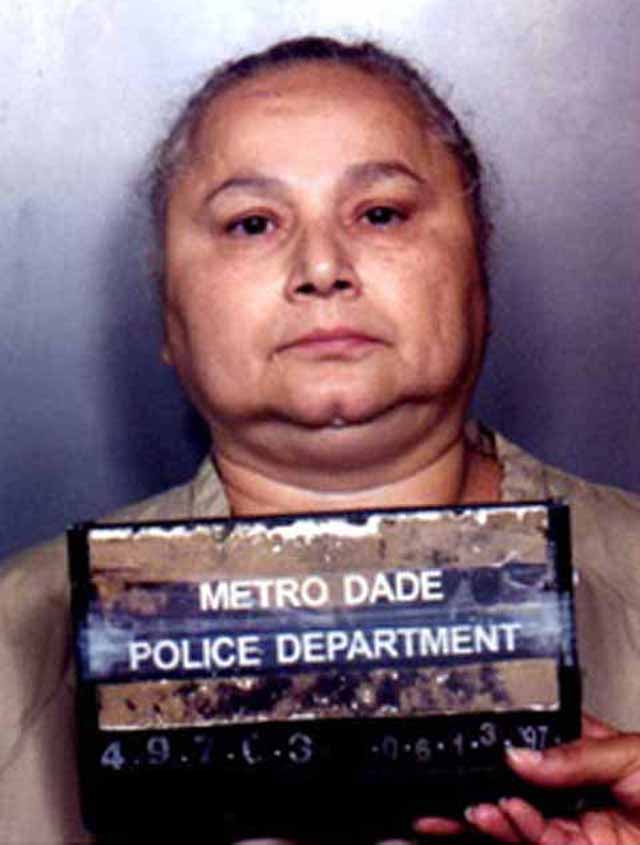
Griselda Blanco Restrepo
closedConvictedHistorical

Griselda Blanco Restrepo

Convicted: Griselda Blanco Restrepo

On the afternoon of September 3, 2012, a gunman dismounted from a motorcycle outside a butcher shop in Medellín, Colombia, and shot a 69-year-old woman twice in the head. He was gone before anyone could stop him. The woman was Griselda Blanco Restrepo, and the method of her killing was one she had invented herself. In the 1970s and 1980s, Blanco built a cocaine empire that shipped 1,500 kilograms of product into Miami every month, generated an estimated $80 million monthly, and left dozens if not hundreds of people dead on both sides of the Atlantic. She mentored Pablo Escobar. She pioneered motorcycle assassinations. She named her youngest son Michael Corleone, after the Godfather character, because she saw the parallel and felt no shame in it. She was convicted of federal drug trafficking in 1985. She beat a capital murder case when her star witness was caught having phone sex with prosecutors' secretaries. She served nearly two decades in prison, suffered a heart attack, was deported to Colombia, and allegedly became a born-again Christian. None of it was enough to save her. The killers who found her outside the Carnicería Cardiso that September afternoon were never identified. She was buried at Jardines de Montesacro cemetery in Medellín, in the same ground as Pablo Escobar. The Godmother of Cocaine, who had ordered the deaths of husbands, rivals, and at least one two-year-old child, ended her life on the same streets where she had built her legend: in Medellín, violently, by surprise. This is her story.

drug traffickingcocaine
Laren Renee Sims (alias: Elisa McNabney, also known as Elisa Redelsperger, Elisa Barasch, Shane Ivaroni, and 34+ other aliases — total 38 documented aliases)
closedAccusedHistorical

Laren Renee Sims (alias: Elisa McNabney, also known as Elisa Redelsperger, Elisa Barasch, Shane Ivaroni, and 34+ other aliases — total 38 documented aliases)

Accused: Laren Renee Sims (alias: Elisa McNabney, also known as Elisa Redelsperger, Elisa Barasch, Shane Ivaroni, and 34+ other aliases — total 38 documented aliases)

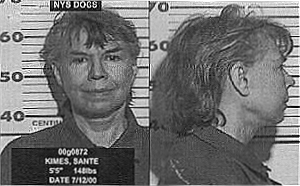
On Easter Sunday 2002, a jail officer in Brooksville, Florida found a woman dead in her cell. She had braided strips from her pillowcase into a rope and fastened it to an air duct in the ceiling. She was thirty-six years old, and she had been, at various points in her life, at least thirty-eight different people. Her FBI criminal rap sheet ran to one hundred and thirteen pages. Her real name was Laren Renee Sims. Most people knew her as Elisa McNabney, the glamorous, horse-loving wife of Sacramento trial attorney Larry McNabney. In the fall of 2001, she and her twenty-one-year-old legal secretary administered horse tranquilizer to Larry at a show in Los Angeles County, stored his body in a garage refrigerator for three months, buried him in a vineyard, liquidated over $500,000 in assets, and fled across the country in a red Jaguar. She was a former straight-A student with a reported IQ of 140. She was a mother who kept her teenage daughter by her side through the whole gruesome flight. She was a con artist, a forger, and a fugitive. When detectives finally traced her to a Florida beach, she looked up and said simply: "I'm the one you're looking for." This is the story of Laren Renee Sims: a woman who spent thirty years constructing false identities, fell into a marriage that may have saved her and ultimately destroyed her, and chose suicide over a courtroom. It is one of the most bizarre, cold-blooded, and strangely human cases in California criminal history.

poisoninghorse tranquilizer
Aileen Carol Wuornos (née Pittman)
closedConvictedHistorical

Aileen Wuornos

Convicted: Aileen Carol Wuornos (née Pittman)

Her last words from the execution chamber stopped the witnesses cold. "I'd just like to say I'm sailing with the rock, and I'll be back like Independence Day, with Jesus, June 6, like the movie, big mothership and all. I'll be back." Moments later, at 9:47 a.m. on October 9, 2002, Aileen Carol Wuornos was pronounced dead. She had declined her final meal. She accepted only a cup of coffee. Between November 1989 and November 1990, Wuornos shot and killed seven men along the highways of Florida, each of them a middle-aged motorist who had stopped for a woman working the roads. She took their money, their cars, and their lives. She was a highway prostitute operating under multiple aliases, a drifter with a .22 and a history that read less like a criminal file and more like an indictment of everyone who had ever failed her. She was raised by alcoholic grandparents after her mother abandoned her at age four. Her father, whom she never met, was serving a life sentence for raping a seven-year-old child when he hanged himself in his prison cell. She was pregnant and living on the streets by fourteen. She told police, and later the courts, that every man she killed had attacked her first. The jury in her first trial deliberated for less than two hours before convicting her. She received six death sentences in total. The tabloids called her America's first female serial killer. The more precise truth: she was the first woman formally profiled by the FBI as a serial killer. The distinction hardly seemed to matter by the end. What mattered was that seven men were dead, and Aileen Wuornos had spent a lifetime arriving at that outcome.

serial killerfemale serial killer