Lavinia Fisher
Case Summary
Her last words were an invitation: 'If you have a message you want to send to hell, give it to me. I'll carry it.' Then, according to those who witnessed it, Lavinia Fisher jumped from the scaffold herself rather than wait for the hangman's hand. The year was 1820. The crowd numbered roughly 2,000. And the woman swinging from the gallows outside Charleston's Old City Jail had never been convicted of murder. Not a single count of it. History remembers Lavinia Fisher as America's first female serial killer, a poisoner and innkeeper who disposed of hundreds of travelers in the South Carolina backcountry. The problem is that almost none of that is true. What is true is stranger, in some ways more troubling, and far more human: a charismatic, defiant woman who terrorized a government watchman, possibly ran with an organized outlaw gang, and went to her death cursing the city that condemned her. The legend swallowed the real story whole. It's long past time to dig it back out.
January 1, 1793, Unknown — possibly Charleston, South Carolina, USA; no birth records survive(Age: 27)
February 18, 1820, Charleston, South Carolina, USA (gallows near the Old City Jail) (Execution by hanging)
Related Cases
Convicted
Connection tags:
Convicted
Connection tags:

Convicted
Connection tags:
Convicted
Connection tags:

Convicted
Connection tags:
Convicted
Connection tags:
Case Details
The bed was the thing that saved John Peeples. Not his instincts, not his courage, though he would need both before the night was through. Just the bed, collapsing in the dark of a room he had been wise enough not to sleep in.
It was sometime in February 1819, and Peeples, a traveling merchant passing through the South Carolina low country, had stopped at the Six Mile Wayfarer House, an inn situated roughly six miles outside Charleston along one of the region's busiest commercial roads. He had asked for a room. The proprietress told him there was no vacancy. Then she invited him inside anyway.
Her name was Lavinia Fisher, and she was, by every contemporary account, extraordinarily persuasive. She sat Peeples down, served him tea, and talked. She talked at length, with the practiced ease of someone for whom conversation was a tool as purposeful as any lock or key. She asked about his travels, his business, his route. Peeples, suspicious in the way that cautious men sometimes are without being able to say exactly why, quietly poured his tea out rather than drink it. Eventually, a room materialized. He was shown upstairs.
He did not lie down on the bed. Something held him back. He pulled a chair to the corner of the room and sat in it through the small hours of the night, watching the darkness, listening. Then he heard it: a sound from beneath the floor, mechanical and deliberate, and the bed dropped away through a trapdoor, or so the story goes in its most dramatic telling. What Peeples himself reported to authorities was somewhat less theatrical but alarming enough. He leaped from the window, rode hard for Charleston, and gave investigators the names they had been looking for: John and Lavinia Fisher.
And with that, one of the most distorted true crime legends in American history was born.
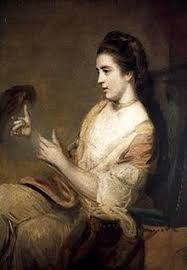
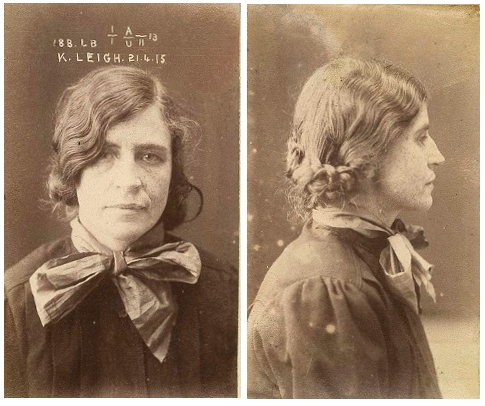
Who Lavinia Fisher actually was before she became a ghost story is almost impossible to know. She appears in the historical record only after her marriage to John Fisher, born 1791, and even her birth year is an estimate, placed at around 1793. No maiden name survives. No birth record. No childhood portrait. The face most commonly attached to her name, reproduced on ghost tour posters and crime websites, is actually Kitty Fisher, an eighteenth-century British courtesan painted by Joshua Reynolds. No authenticated likeness of Lavinia Fisher is known to exist. She emerged from nothing, vivid and fully formed, into the documented world of Charleston's criminal underworld.
The Six Mile Wayfarer House was not simply a dishonest inn. It was one node in what appeared to be an organized outlaw network operating along the roads feeding into Charleston, a city that in 1819 hummed with merchant traffic, with traders and travelers carrying cash and goods between the port and the backcountry. The gang also operated out of a nearby Five Mile House. Lavinia, whatever else she was, seems to have been the network's most effective front: beautiful, charming, and unafraid.
The authorities had been aware of the group's activities for some time before events forced their hand. In February 1819, a vigilante committee moved against the gang's territory, attempting to drive them out. The response was immediate and brutal. A watchman named David Ross, posted to keep an eye on the situation, was set upon. Lavinia Fisher herself grabbed him by the throat, choked him, and smashed his head through a window before he managed to break free and run. He survived. He also talked.
Combined with Peeples' report, authorities had what they needed. On or around February 18, 1819, Lavinia and John Fisher were arrested, along with several associates including William Heyward and Jane Howard. Police burned the Six Mile House after taking the Fishers into custody. Two unidentified corpses were found in the surrounding woods, but they were never connected to the Fishers, and no murder charges were ever contemplated. The co-conspirators were released on bail. The Fishers were taken to Charleston's Old City Jail on Magazine Street, a grim Gothic structure that had opened its doors in 1802, and they were not released.
Their trial came in May 1819. The charge was highway robbery, a capital offense under South Carolina law. The jury convicted them on both counts. The judge granted an appeal to the Constitutional Court, and the Fishers waited in their cell through the sweltering Carolina summer while the legal machinery ground forward.
They did not wait passively. On September 13, 1819, they made their move. John Fisher had knotted bedsheets and blankets into a makeshift rope and lowered himself from their cell window to the ground below. The rope held for him. It did not hold for Lavinia. It broke while she was still partway down, and John, standing free in the night air with escape within reach, refused to go without his wife. He stayed. They were both recaptured and placed under significantly tighter supervision for the remainder of their confinement.
The Constitutional Court rejected their appeal in early 1820. On February 4, both were formally sentenced to hang. The execution was scheduled and then postponed two weeks, to February 18, 1820, at the request of Reverend Richard Furman, a prominent Baptist minister who wanted time to prepare their souls for what was coming. Furman was a man of considerable standing in Charleston; his counseling of condemned prisoners was not unusual, but the contrast between his temperament and Lavinia's was absolute.
John Fisher accepted Furman's ministry. He expressed remorse. He made his peace. Lavinia did none of these things. She raged. She cursed. She professed her innocence with a ferocity that never softened. She also advanced a legal argument: as a married woman, she could not be hanged. The law, she insisted, protected her.
The judge disposed of this argument with blunt efficiency. On the morning of February 18, 1820, John Fisher was hanged first. The moment he died, Lavinia Fisher was a widow, and the legal protection she had claimed dissolved with him. The crowd that had gathered near the Old City Jail numbered approximately 2,000 people. It was, by the standards of the time and place, a significant audience.
Lavinia had to be dragged to the gallows. She would not walk. On the scaffold, she turned on the Charleston socialites she could see in the crowd, the women she believed had worked against her, and she screamed at them. Then she composed herself enough to deliver the words that have followed her into legend: 'If you have a message you want to send to hell, give it to me. I'll carry it.'
According to several accounts, she then jumped from the scaffold herself rather than wait for the drop to come to her.
No relatives claimed their bodies. In keeping with South Carolina practice for executed criminals, the remains of John and Lavinia Fisher were turned over to the Medical College of South Carolina, now the Medical University of South Carolina, for anatomical dissection. What was left was buried in an unmarked grave in a potter's field adjacent to the Old City Jail, now beneath the MUSC hospital campus. Ghost tour guides have long claimed she is buried at the Unitarian Church cemetery in Charleston; this is a fabrication, entertaining but without any basis in the historical record.
The legend that grew in the decades following the execution bears only a loose relationship to the documented facts. The tale accumulated details the way rivers accumulate silt: gradually, invisibly, until the original channel is buried. The poisoned tea became a certainty. The trapdoor became elaborate, mechanical, engineered for murder. The two unidentified corpses found in the woods near the Six Mile House became hundreds of victims, a basement charnel house, a systematic slaughter of travelers across years. Lavinia Fisher became, in the telling, America's first female serial killer.
She was not. She was convicted of highway robbery. She was never charged with murder, never tried for murder, and the physical evidence at the Six Mile House connected her to no murders whatsoever. The title of first widely documented female serial killer in the United States belongs to Jane Toppan, a nurse who confessed in 1901 to killing 31 people. Lavinia Fisher's legend appears to have absorbed elements from the Bloody Benders, a Kansas family who murdered travelers at their roadside inn in the early 1870s, with details migrating backward through time and attaching themselves to a story that predated them by half a century.
The Six Mile House itself stood for nearly a century and a half after the executions, a weathered relic of the Fisher story, before being demolished in 1969 during construction of the Charleston Naval Hospital in North Charleston. This detail sits at the center of a theory advanced by Bruce Orr, a former homicide investigator who re-examined the case in his 2010 book, 'Six Miles to Charleston: The True Story of John and Lavinia Fisher.' Working from primary newspaper accounts and court records, Orr raised the possibility that the Fishers were, in part, victims of political corruption: that powerful interests wanted their land, and that the machinery of justice was used to take it. The naval base that eventually occupied the site lends the theory a certain grim plausibility, though it remains speculative.
What Orr's research makes clear is how thoroughly the historical record had been obscured. The dramatic embellishments serve a purpose, and it is not historical accuracy. They make Lavinia Fisher into a monster, and monsters are easier to hang than people.
The Old City Jail on Magazine Street operated until 1939 and now serves as a ghost tour venue and event space. Lavinia Fisher is said to haunt it, appearing in a white dress or a red-and-white wedding gown, depending on the account. Tourists pay to walk through its corridors at night and hear her story. The story they are told is mostly invention.
What the real story offers is something more unsettling than a serial killer in a haunted inn. It offers a woman whose origins are completely erased from the record, who appears in history already defined by violence and defiance, who attacked a government watchman with her bare hands, who refused every offer of comfort or salvation in her final weeks, and who went to her death on her own terms as much as any condemned person ever has. It offers a legal system that hanged people for robbery, that allowed a man to be executed first so that his wife's legal defense would dissolve. It offers the persistent human appetite for the monstrous, and the way that appetite reshapes the past to feed itself.
The portrait everyone uses is the wrong woman. The grave no one can visit is beneath a hospital. The crimes everyone describes never appeared on any indictment. And somewhere inside all of that erasure and embellishment, Lavinia Fisher stands at the edge of a scaffold in the February cold, 2,000 faces turned toward her, and she speaks her last words not as a confession or a prayer but as a dare.
Timeline
Birth of Lavinia Fisher
Lavinia Fisher is born around 1793, likely in or near Charleston, South Carolina, though no birth records survive. Her maiden name, parentage, and all details of her early life remain entirely unknown to history. She enters the historical record only after her marriage to John Fisher, born 1791.
Establishes the obscure origins of a figure who would become one of America's most mythologized criminals, with legend far outpacing documented fact.
Six Mile Wayfarer House Established
Lavinia and John Fisher operate the Six Mile Wayfarer House, an inn located approximately six miles outside Charleston along a major road frequented by traveling merchants and tradespeople. The establishment was part of a broader outlaw network that also operated out of a nearby Five Mile House. Lavinia served as the most charismatic and visible member of the gang, using her charm and beauty to lure and engage travelers.
The inn became the center of the Fishers' criminal operations and the source of their notoriety, later mythologized as a murder hotel despite no murder charges ever being filed.
Vigilante Raid and Attack on David Ross
A vigilante group raided the gang's territory around the Six Mile and Five Mile Houses in February 1819. A watchman named David Ross was subsequently attacked by Lavinia herself — she personally choked him and smashed his head through a window before he managed to escape. Ross rode to Charleston and alerted authorities to the violent criminal gang operating along the road.
The attack on Ross was one of the first documented violent acts directly attributed to Lavinia, and his testimony helped bring law enforcement attention to the Six Mile House operation.
John Peeples Escapes the Six Mile House
Traveler John Peeples was invited inside the Six Mile House despite a claimed 'no vacancy,' served tea he discretely poured out, interrogated at length by Lavinia, and then assigned a room. Suspicious of his hosts, he slept in a chair rather than the bed — and awoke in the night to the sound of the bed collapsing through a trapdoor or mechanism. He leaped from a window, rode to Charleston, and reported the Fishers by name to authorities.
Peeples' account was the critical eyewitness report that gave authorities the names of John and Lavinia Fisher and provided the narrative kernel around which later murder legends would be elaborated.
Arrest and Burning of the Six Mile House
Lavinia and John Fisher, along with gang members including William Heyward and Jane Howard, were arrested on or around February 18, 1819. Police burned the Six Mile House to the ground following the arrest. Only two unrelated corpses were found in the nearby woods — never connected to the Fishers — and no murder charges were ever filed against them.
The arrest ended the Fishers' criminal operation, but the absence of murder charges is a crucial fact that directly contradicts the popular 'serial killer' legend attached to Lavinia Fisher.
Arraignment and Pretrial Detention
Lavinia and John Fisher pleaded not guilty at their arraignment on charges of highway robbery, a capital offense under South Carolina law. Their co-conspirators were released on bail while the Fishers were held without bail at Charleston's Old City Jail on Magazine Street, which had been in operation since 1802. The couple would remain imprisoned there until their executions more than a year later.
The decision to hold the Fishers without bail while releasing co-conspirators underscored the severity of the charges against them and began their prolonged confinement in one of the South's most notorious jails.
Trial and Conviction for Highway Robbery
The trial of Lavinia and John Fisher took place in May 1819, with the jury convicting both on charges of highway robbery — a capital offense in South Carolina at the time. The judge subsequently granted an appeal, temporarily sparing the couple from immediate sentencing. No murder charges were ever brought; the conviction was solely for robbery.
The conviction on highway robbery rather than murder is historically significant, as it directly refutes the enduring myth that Lavinia Fisher was America's first female serial killer or was ever tried for homicide.
Failed Jailbreak Attempt
While awaiting the outcome of their appeal, the Fishers attempted a daring jailbreak from the Old City Jail on September 13, 1819. John Fisher climbed down a rope fashioned from knotted blankets from their cell window, but the rope broke before Lavinia could follow. John refused to flee without his wife and was recaptured; both were then placed under significantly tighter security for the remainder of their imprisonment.
The failed escape attempt demonstrated the couple's desperation and deep loyalty to one another, and it resulted in conditions that made any further escape impossible.
Appeal Rejected and Death Sentence Imposed
The Constitutional Court rejected the Fishers' appeal and on February 4, 1820, formally sentenced both Lavinia and John Fisher to death by hanging. The execution was initially set for that date but was postponed two weeks to February 18, 1820, to allow time for religious preparation and counsel. Reverend Richard Furman, a prominent Baptist minister, was brought in to counsel the condemned couple.
The rejection of the appeal sealed the Fishers' fate and set in motion the final dramatic weeks of Lavinia's life, during which her defiant behavior would cement her legendary status.
Execution Before 2,000 Spectators
Lavinia and John Fisher were executed by hanging before a crowd of approximately 2,000 spectators near the Old City Jail. John was hanged first — a legal maneuver to nullify Lavinia's argument that a married woman could not be executed, making her a widow before her own turn. Lavinia had to be physically dragged to the gallows, screaming at Charleston socialites she blamed for her conviction, and delivered her legendary final words: 'If you have a message you want to send to hell, give it to me — I'll carry it.' She reportedly jumped from the scaffold herself rather than wait for the hangman. No relatives claimed the bodies; per South Carolina practice, the remains were turned over to the Medical College of South Carolina for anatomical dissection and then buried in an unmarked potter's field adjacent to the jail.
Lavinia Fisher's dramatic final words and defiant death transformed her from a convicted highway robber into a folkloric figure, launching a legend of haunting, serial murder, and Southern Gothic mythology that persists to the present day.
Crime Location
Photos
Artist's rendition of Lavinia Fisher
Sources
- Six Miles to Charleston: The True Story of John and Lavinia Fisher
- Lavinia Fisher
- Kitty Fisher by Joshua Reynolds (misattributed portrait)
- Old City Jail Charleston (photograph)
Frequently Asked Questions
Table of Contents
Case Summary
Her last words were an invitation: 'If you have a message you want to send to hell, give it to me. I'll carry it.' Then, according to those who witnessed it, Lavinia Fisher jumped from the scaffold herself rather than wait for the hangman's hand. The year was 1820. The crowd numbered roughly 2,000. And the woman swinging from the gallows outside Charleston's Old City Jail had never been convicted of murder. Not a single count of it. History remembers Lavinia Fisher as America's first female serial killer, a poisoner and innkeeper who disposed of hundreds of travelers in the South Carolina backcountry. The problem is that almost none of that is true. What is true is stranger, in some ways more troubling, and far more human: a charismatic, defiant woman who terrorized a government watchman, possibly ran with an organized outlaw gang, and went to her death cursing the city that condemned her. The legend swallowed the real story whole. It's long past time to dig it back out.
January 1, 1793, Unknown — possibly Charleston, South Carolina, USA; no birth records survive(Age: 27)
February 18, 1820, Charleston, South Carolina, USA (gallows near the Old City Jail) (Execution by hanging)
Case Details
The bed was the thing that saved John Peeples. Not his instincts, not his courage, though he would need both before the night was through. Just the bed, collapsing in the dark of a room he had been wise enough not to sleep in.
It was sometime in February 1819, and Peeples, a traveling merchant passing through the South Carolina low country, had stopped at the Six Mile Wayfarer House, an inn situated roughly six miles outside Charleston along one of the region's busiest commercial roads. He had asked for a room. The proprietress told him there was no vacancy. Then she invited him inside anyway.
Her name was Lavinia Fisher, and she was, by every contemporary account, extraordinarily persuasive. She sat Peeples down, served him tea, and talked. She talked at length, with the practiced ease of someone for whom conversation was a tool as purposeful as any lock or key. She asked about his travels, his business, his route. Peeples, suspicious in the way that cautious men sometimes are without being able to say exactly why, quietly poured his tea out rather than drink it. Eventually, a room materialized. He was shown upstairs.
He did not lie down on the bed. Something held him back. He pulled a chair to the corner of the room and sat in it through the small hours of the night, watching the darkness, listening. Then he heard it: a sound from beneath the floor, mechanical and deliberate, and the bed dropped away through a trapdoor, or so the story goes in its most dramatic telling. What Peeples himself reported to authorities was somewhat less theatrical but alarming enough. He leaped from the window, rode hard for Charleston, and gave investigators the names they had been looking for: John and Lavinia Fisher.
And with that, one of the most distorted true crime legends in American history was born.
Who Lavinia Fisher actually was before she became a ghost story is almost impossible to know. She appears in the historical record only after her marriage to John Fisher, born 1791, and even her birth year is an estimate, placed at around 1793. No maiden name survives. No birth record. No childhood portrait. The face most commonly attached to her name, reproduced on ghost tour posters and crime websites, is actually Kitty Fisher, an eighteenth-century British courtesan painted by Joshua Reynolds. No authenticated likeness of Lavinia Fisher is known to exist. She emerged from nothing, vivid and fully formed, into the documented world of Charleston's criminal underworld.
The Six Mile Wayfarer House was not simply a dishonest inn. It was one node in what appeared to be an organized outlaw network operating along the roads feeding into Charleston, a city that in 1819 hummed with merchant traffic, with traders and travelers carrying cash and goods between the port and the backcountry. The gang also operated out of a nearby Five Mile House. Lavinia, whatever else she was, seems to have been the network's most effective front: beautiful, charming, and unafraid.
The authorities had been aware of the group's activities for some time before events forced their hand. In February 1819, a vigilante committee moved against the gang's territory, attempting to drive them out. The response was immediate and brutal. A watchman named David Ross, posted to keep an eye on the situation, was set upon. Lavinia Fisher herself grabbed him by the throat, choked him, and smashed his head through a window before he managed to break free and run. He survived. He also talked.
Combined with Peeples' report, authorities had what they needed. On or around February 18, 1819, Lavinia and John Fisher were arrested, along with several associates including William Heyward and Jane Howard. Police burned the Six Mile House after taking the Fishers into custody. Two unidentified corpses were found in the surrounding woods, but they were never connected to the Fishers, and no murder charges were ever contemplated. The co-conspirators were released on bail. The Fishers were taken to Charleston's Old City Jail on Magazine Street, a grim Gothic structure that had opened its doors in 1802, and they were not released.
Their trial came in May 1819. The charge was highway robbery, a capital offense under South Carolina law. The jury convicted them on both counts. The judge granted an appeal to the Constitutional Court, and the Fishers waited in their cell through the sweltering Carolina summer while the legal machinery ground forward.
They did not wait passively. On September 13, 1819, they made their move. John Fisher had knotted bedsheets and blankets into a makeshift rope and lowered himself from their cell window to the ground below. The rope held for him. It did not hold for Lavinia. It broke while she was still partway down, and John, standing free in the night air with escape within reach, refused to go without his wife. He stayed. They were both recaptured and placed under significantly tighter supervision for the remainder of their confinement.
The Constitutional Court rejected their appeal in early 1820. On February 4, both were formally sentenced to hang. The execution was scheduled and then postponed two weeks, to February 18, 1820, at the request of Reverend Richard Furman, a prominent Baptist minister who wanted time to prepare their souls for what was coming. Furman was a man of considerable standing in Charleston; his counseling of condemned prisoners was not unusual, but the contrast between his temperament and Lavinia's was absolute.
John Fisher accepted Furman's ministry. He expressed remorse. He made his peace. Lavinia did none of these things. She raged. She cursed. She professed her innocence with a ferocity that never softened. She also advanced a legal argument: as a married woman, she could not be hanged. The law, she insisted, protected her.
The judge disposed of this argument with blunt efficiency. On the morning of February 18, 1820, John Fisher was hanged first. The moment he died, Lavinia Fisher was a widow, and the legal protection she had claimed dissolved with him. The crowd that had gathered near the Old City Jail numbered approximately 2,000 people. It was, by the standards of the time and place, a significant audience.
Lavinia had to be dragged to the gallows. She would not walk. On the scaffold, she turned on the Charleston socialites she could see in the crowd, the women she believed had worked against her, and she screamed at them. Then she composed herself enough to deliver the words that have followed her into legend: 'If you have a message you want to send to hell, give it to me. I'll carry it.'
According to several accounts, she then jumped from the scaffold herself rather than wait for the drop to come to her.
No relatives claimed their bodies. In keeping with South Carolina practice for executed criminals, the remains of John and Lavinia Fisher were turned over to the Medical College of South Carolina, now the Medical University of South Carolina, for anatomical dissection. What was left was buried in an unmarked grave in a potter's field adjacent to the Old City Jail, now beneath the MUSC hospital campus. Ghost tour guides have long claimed she is buried at the Unitarian Church cemetery in Charleston; this is a fabrication, entertaining but without any basis in the historical record.
The legend that grew in the decades following the execution bears only a loose relationship to the documented facts. The tale accumulated details the way rivers accumulate silt: gradually, invisibly, until the original channel is buried. The poisoned tea became a certainty. The trapdoor became elaborate, mechanical, engineered for murder. The two unidentified corpses found in the woods near the Six Mile House became hundreds of victims, a basement charnel house, a systematic slaughter of travelers across years. Lavinia Fisher became, in the telling, America's first female serial killer.
She was not. She was convicted of highway robbery. She was never charged with murder, never tried for murder, and the physical evidence at the Six Mile House connected her to no murders whatsoever. The title of first widely documented female serial killer in the United States belongs to Jane Toppan, a nurse who confessed in 1901 to killing 31 people. Lavinia Fisher's legend appears to have absorbed elements from the Bloody Benders, a Kansas family who murdered travelers at their roadside inn in the early 1870s, with details migrating backward through time and attaching themselves to a story that predated them by half a century.
The Six Mile House itself stood for nearly a century and a half after the executions, a weathered relic of the Fisher story, before being demolished in 1969 during construction of the Charleston Naval Hospital in North Charleston. This detail sits at the center of a theory advanced by Bruce Orr, a former homicide investigator who re-examined the case in his 2010 book, 'Six Miles to Charleston: The True Story of John and Lavinia Fisher.' Working from primary newspaper accounts and court records, Orr raised the possibility that the Fishers were, in part, victims of political corruption: that powerful interests wanted their land, and that the machinery of justice was used to take it. The naval base that eventually occupied the site lends the theory a certain grim plausibility, though it remains speculative.
What Orr's research makes clear is how thoroughly the historical record had been obscured. The dramatic embellishments serve a purpose, and it is not historical accuracy. They make Lavinia Fisher into a monster, and monsters are easier to hang than people.
The Old City Jail on Magazine Street operated until 1939 and now serves as a ghost tour venue and event space. Lavinia Fisher is said to haunt it, appearing in a white dress or a red-and-white wedding gown, depending on the account. Tourists pay to walk through its corridors at night and hear her story. The story they are told is mostly invention.
What the real story offers is something more unsettling than a serial killer in a haunted inn. It offers a woman whose origins are completely erased from the record, who appears in history already defined by violence and defiance, who attacked a government watchman with her bare hands, who refused every offer of comfort or salvation in her final weeks, and who went to her death on her own terms as much as any condemned person ever has. It offers a legal system that hanged people for robbery, that allowed a man to be executed first so that his wife's legal defense would dissolve. It offers the persistent human appetite for the monstrous, and the way that appetite reshapes the past to feed itself.
The portrait everyone uses is the wrong woman. The grave no one can visit is beneath a hospital. The crimes everyone describes never appeared on any indictment. And somewhere inside all of that erasure and embellishment, Lavinia Fisher stands at the edge of a scaffold in the February cold, 2,000 faces turned toward her, and she speaks her last words not as a confession or a prayer but as a dare.
Timeline
Birth of Lavinia Fisher
Lavinia Fisher is born around 1793, likely in or near Charleston, South Carolina, though no birth records survive. Her maiden name, parentage, and all details of her early life remain entirely unknown to history. She enters the historical record only after her marriage to John Fisher, born 1791.
Establishes the obscure origins of a figure who would become one of America's most mythologized criminals, with legend far outpacing documented fact.
Six Mile Wayfarer House Established
Lavinia and John Fisher operate the Six Mile Wayfarer House, an inn located approximately six miles outside Charleston along a major road frequented by traveling merchants and tradespeople. The establishment was part of a broader outlaw network that also operated out of a nearby Five Mile House. Lavinia served as the most charismatic and visible member of the gang, using her charm and beauty to lure and engage travelers.
The inn became the center of the Fishers' criminal operations and the source of their notoriety, later mythologized as a murder hotel despite no murder charges ever being filed.
Vigilante Raid and Attack on David Ross
A vigilante group raided the gang's territory around the Six Mile and Five Mile Houses in February 1819. A watchman named David Ross was subsequently attacked by Lavinia herself — she personally choked him and smashed his head through a window before he managed to escape. Ross rode to Charleston and alerted authorities to the violent criminal gang operating along the road.
The attack on Ross was one of the first documented violent acts directly attributed to Lavinia, and his testimony helped bring law enforcement attention to the Six Mile House operation.
John Peeples Escapes the Six Mile House
Traveler John Peeples was invited inside the Six Mile House despite a claimed 'no vacancy,' served tea he discretely poured out, interrogated at length by Lavinia, and then assigned a room. Suspicious of his hosts, he slept in a chair rather than the bed — and awoke in the night to the sound of the bed collapsing through a trapdoor or mechanism. He leaped from a window, rode to Charleston, and reported the Fishers by name to authorities.
Peeples' account was the critical eyewitness report that gave authorities the names of John and Lavinia Fisher and provided the narrative kernel around which later murder legends would be elaborated.
Arrest and Burning of the Six Mile House
Lavinia and John Fisher, along with gang members including William Heyward and Jane Howard, were arrested on or around February 18, 1819. Police burned the Six Mile House to the ground following the arrest. Only two unrelated corpses were found in the nearby woods — never connected to the Fishers — and no murder charges were ever filed against them.
The arrest ended the Fishers' criminal operation, but the absence of murder charges is a crucial fact that directly contradicts the popular 'serial killer' legend attached to Lavinia Fisher.
Arraignment and Pretrial Detention
Lavinia and John Fisher pleaded not guilty at their arraignment on charges of highway robbery, a capital offense under South Carolina law. Their co-conspirators were released on bail while the Fishers were held without bail at Charleston's Old City Jail on Magazine Street, which had been in operation since 1802. The couple would remain imprisoned there until their executions more than a year later.
The decision to hold the Fishers without bail while releasing co-conspirators underscored the severity of the charges against them and began their prolonged confinement in one of the South's most notorious jails.
Trial and Conviction for Highway Robbery
The trial of Lavinia and John Fisher took place in May 1819, with the jury convicting both on charges of highway robbery — a capital offense in South Carolina at the time. The judge subsequently granted an appeal, temporarily sparing the couple from immediate sentencing. No murder charges were ever brought; the conviction was solely for robbery.
The conviction on highway robbery rather than murder is historically significant, as it directly refutes the enduring myth that Lavinia Fisher was America's first female serial killer or was ever tried for homicide.
Failed Jailbreak Attempt
While awaiting the outcome of their appeal, the Fishers attempted a daring jailbreak from the Old City Jail on September 13, 1819. John Fisher climbed down a rope fashioned from knotted blankets from their cell window, but the rope broke before Lavinia could follow. John refused to flee without his wife and was recaptured; both were then placed under significantly tighter security for the remainder of their imprisonment.
The failed escape attempt demonstrated the couple's desperation and deep loyalty to one another, and it resulted in conditions that made any further escape impossible.
Appeal Rejected and Death Sentence Imposed
The Constitutional Court rejected the Fishers' appeal and on February 4, 1820, formally sentenced both Lavinia and John Fisher to death by hanging. The execution was initially set for that date but was postponed two weeks to February 18, 1820, to allow time for religious preparation and counsel. Reverend Richard Furman, a prominent Baptist minister, was brought in to counsel the condemned couple.
The rejection of the appeal sealed the Fishers' fate and set in motion the final dramatic weeks of Lavinia's life, during which her defiant behavior would cement her legendary status.
Execution Before 2,000 Spectators
Lavinia and John Fisher were executed by hanging before a crowd of approximately 2,000 spectators near the Old City Jail. John was hanged first — a legal maneuver to nullify Lavinia's argument that a married woman could not be executed, making her a widow before her own turn. Lavinia had to be physically dragged to the gallows, screaming at Charleston socialites she blamed for her conviction, and delivered her legendary final words: 'If you have a message you want to send to hell, give it to me — I'll carry it.' She reportedly jumped from the scaffold herself rather than wait for the hangman. No relatives claimed the bodies; per South Carolina practice, the remains were turned over to the Medical College of South Carolina for anatomical dissection and then buried in an unmarked potter's field adjacent to the jail.
Lavinia Fisher's dramatic final words and defiant death transformed her from a convicted highway robber into a folkloric figure, launching a legend of haunting, serial murder, and Southern Gothic mythology that persists to the present day.
Crime Location
Photos
Artist's rendition of Lavinia Fisher
Sources
- Six Miles to Charleston: The True Story of John and Lavinia Fisher
- Lavinia Fisher
- Kitty Fisher by Joshua Reynolds (misattributed portrait)
- Old City Jail Charleston (photograph)
Frequently Asked Questions
Related Cases
Convicted
Connection tags:
Convicted
Connection tags:
Convicted
Connection tags:
Convicted
Connection tags:
Convicted
Connection tags:
Convicted
Connection tags:
Tags
Popular Culture
book (2010)
Nonfiction book by former homicide investigator Bruce Orr that uses primary sources to separate fact from legend in the Lavinia Fisher story, including the political corruption theory surrounding the land seizure.
other ()
Lavinia Fisher's ghost is a central attraction of ghost tours at the Charleston Old City Jail. She is reportedly seen in a white or red-and-white wedding dress and is marketed — inaccurately — as 'America's first female serial killer.'