6 cases tagged “19th century crime”
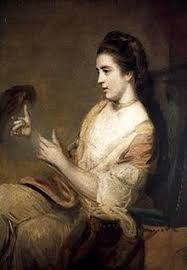
Convicted: Lavinia Fisher
Her last words were an invitation: 'If you have a message you want to send to hell, give it to me. I'll carry it.' Then, according to those who witnessed it, Lavinia Fisher jumped from the scaffold herself rather than wait for the hangman's hand. The year was 1820. The crowd numbered roughly 2,000. And the woman swinging from the gallows outside Charleston's Old City Jail had never been convicted of murder. Not a single count of it. History remembers Lavinia Fisher as America's first female serial killer, a poisoner and innkeeper who disposed of hundreds of travelers in the South Carolina backcountry. The problem is that almost none of that is true. What is true is stranger, in some ways more troubling, and far more human: a charismatic, defiant woman who terrorized a government watchman, possibly ran with an organized outlaw gang, and went to her death cursing the city that condemned her. The legend swallowed the real story whole. It's long past time to dig it back out.
Convicted: Mary Ann Cotton (née Robson)
'I won't be troubled long. He'll go like all the rest of the Cottons.' That was Mary Ann Cotton's assessment of her seven-year-old stepson Charles Edward, delivered to a parish official in West Auckland, County Durham, in the spring of 1872. Five days later, the boy was dead. It was the statement that finally brought her down. By the time investigators began pulling at the thread, they found two decades of bodies behind it: eleven of her thirteen children, three of her four husbands, her own mother, and a string of lodgers and stepchildren, each one dead of 'gastric fever,' each one insured, each one mourned briefly and then forgotten. The death toll, historians estimate, may have reached twenty-one. Mary Ann Cotton was a nurse, a mother, a wife. She was trusted by the sick she nursed and by the physicians who signed off on her victims' deaths. She understood, precisely, that Victorian medicine would not look twice at a working-class child dying of gastroenteritis. She killed for insurance money: modest sums, accumulated over years, in exchange for the lives of nearly everyone who had ever depended on her. She was only ever convicted of one murder. She was hanged in Durham County Gaol on March 24, 1873, in a botched execution that left her strangling at the end of a too-short rope. She was forty years old. The full story of what she did is both a portrait of individual evil and an indictment of a system that made it catastrophically easy.
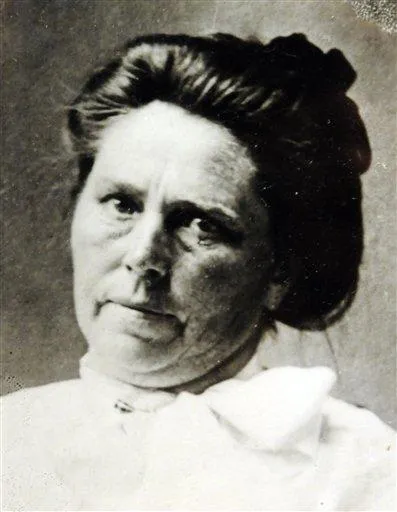
Alleged Offender: Belle Sorenson Gunness (born Brynhild Paulsdatter Størseth)
They came to La Porte, Indiana, one by one, with their life savings tucked in their coat pockets and her letters folded in their hands. A warm heart waiting, she had promised. A fine farm. A future. Belle Gunness wrote those letters for years, placing matrimonial advertisements in Norwegian-language newspapers across the Midwest, casting for men who were lonely and solvent and, crucially, willing to tell no one where they were going. When investigators finally dug up her farm in May 1908, they found the answer to where those men had gone: butchered, dismembered, folded into gunny sacks, and buried in shallow graves near the hog pen. More than forty victims lay scattered beneath the Indiana soil. Then the farmhouse burned, a headless torso was found in the ruins, and the question of whether Belle Gunness had died alongside her crimes or simply escaped them has never been definitively answered. One of the most prolific female serial killers in American history, she was never charged with a single murder. This is her story.
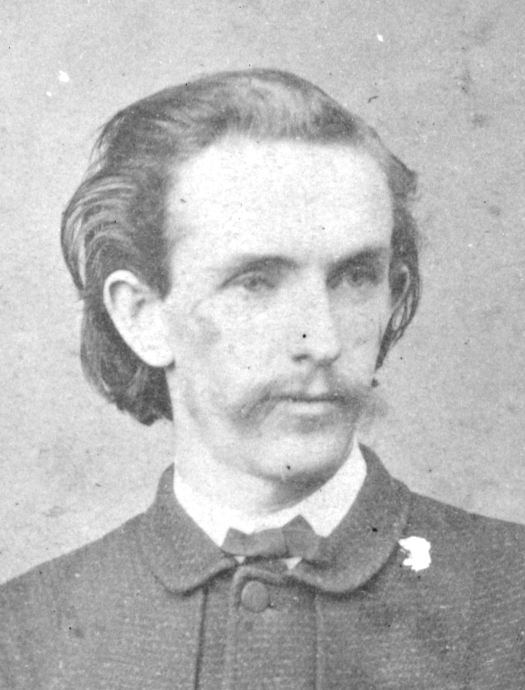
Convicted: Mary Elizabeth Surratt (née Jenkins; baptismal name Maria Eugenia Jenkins Surratt)
On July 7, 1865, in the sweltering heat of a Washington summer that pushed nearly 100 degrees, a middle-aged Catholic widow in a black bombazine dress was escorted to a wooden scaffold at the Old Arsenal Penitentiary. Moments later, Mary Elizabeth Surratt became the first woman ever executed by the United States federal government. She died for her alleged role in the assassination of Abraham Lincoln, convicted on the testimony of a self-serving tenant and a debt-ridden tavern keeper whose own freedom may have depended on what they said about her. Surratt never testified. She was not permitted to. Five of the nine military commissioners who condemned her signed a petition begging President Andrew Johnson to spare her life. He refused, later claiming he never saw it. Her son, who fled to the Vatican to escape justice, was eventually tried in a civilian court and walked free after the jury deadlocked. Her co-conspirator Lewis Powell, standing on his own gallows, said she was innocent. More than 150 years later, historians still argue about whether the United States government hanged a guilty woman, a scapegoat, or something more complicated than either.
Convicted: Amelia Elizabeth Dyer (née Hobley)
'You'll know all mine by the tape around their necks.' When Amelia Dyer spoke those words to Reading police in the spring of 1896, she did so with the calm of a woman who had been getting away with murder — quite literally — for two decades. On March 30, 1896, a bargeman pulled a brown paper parcel from the River Thames near Caversham. Inside was a baby girl, strangled with white dressmaker's tape. She would not be the last. By the time detectives closed in on the mild-mannered, churchgoing widow operating out of a modest terrace on Kensington Road, seven infant bodies had been recovered from the river. Experts now estimate that Amelia Dyer — the 'Ogress of Reading,' a trained nurse turned baby farmer — murdered between 200 and 400 children over twenty years, making her one of the most prolific killers in British history. The jury took four and a half minutes to convict her. The tape never lied. This is her story.
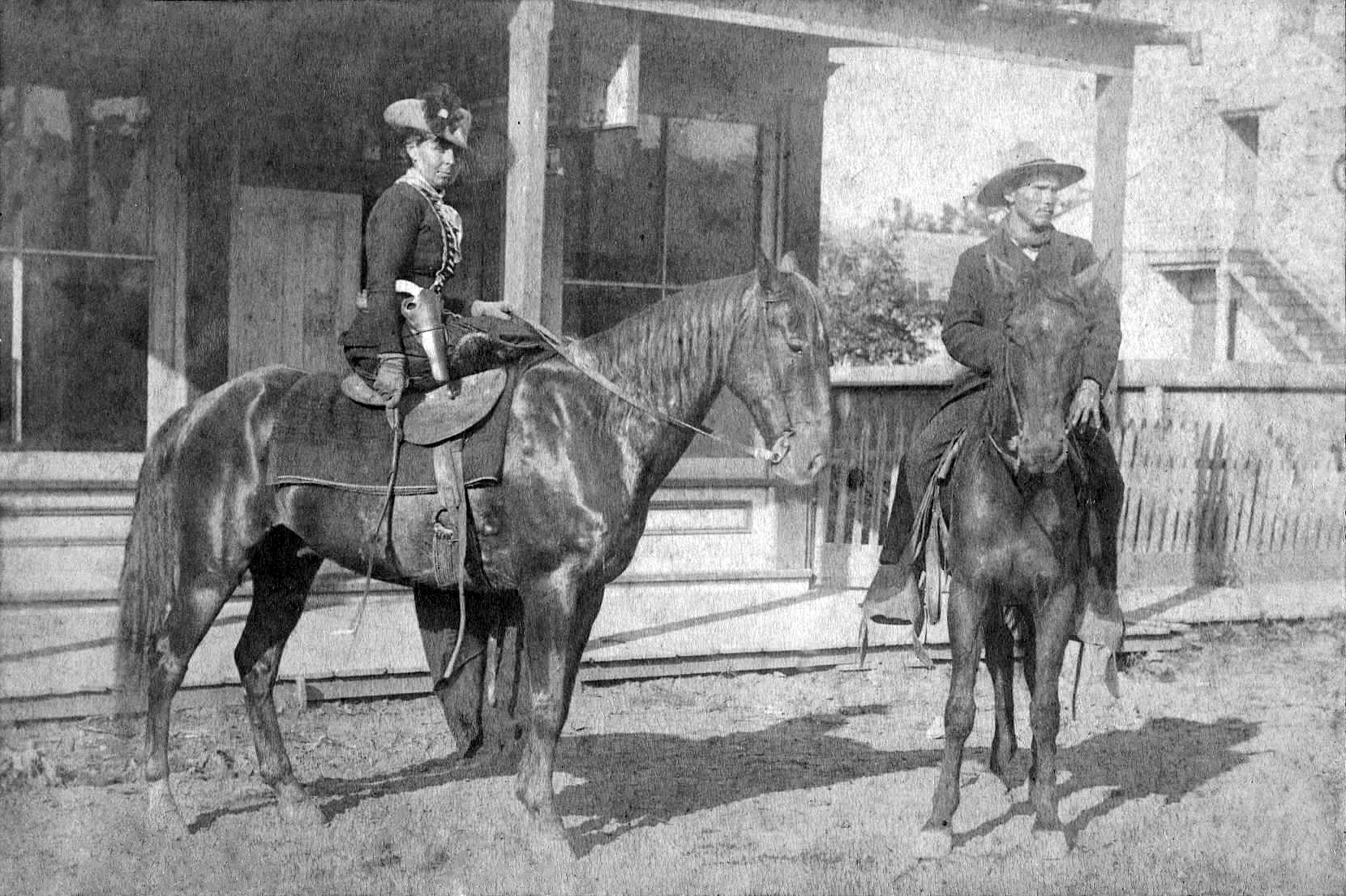
Convicted: Myra Maybelle Shirley Reed Starr
Two days before her forty-first birthday, Myra Maybelle Shirley Reed Starr was riding home alone along a dirt road near Briartown in Indian Territory when someone shot her in the back. Twice. She fell from her horse, and the shooter approached and fired again, leaving wounds across her neck, shoulder, and face. It was February 3, 1889, and the woman the New York Times would soon call 'a most desperate woman' never saw forty-one. Her murder has never been solved. History remembers her as Belle Starr, the 'Bandit Queen' of the Old West: pistol-carrying, sidesaddle-riding, a known associate of Jesse James who harbored outlaws at her ranch on the Canadian River. But the truth is both stranger and more human than the dime novel legend that was already being written before her body was cold. She had a classical education. She could play the piano. She had two children, a series of husbands who kept dying violently, and exactly one criminal conviction on her record: horse theft. This is the story of how a Missouri innkeeper's daughter became America's most famous female outlaw, and who might have been waiting in ambush on that winter road outside Briartown.