7 cases · Violent Crime
Convicted: Fusako Shigenobu
On May 28, 2022, a 76-year-old woman in a black hat and gray suit walked out of a Tokyo prison and let her daughter drape a Palestinian keffiyeh around her shoulders. Cameras clicked. Supporters waved Palestinian flags. And Fusako Shigenobu, the woman Western media had dubbed 'the Empress of Terror,' blinked into the daylight after two decades behind bars. For thirty years before her arrest, she had been one of the world's most wanted fugitives: the founder of the Japanese Red Army, a group linked to bombings, hijackings, and one of the deadliest airport massacres in history. On May 30, 1972, three JRA militants opened fire with automatic weapons at Lod Airport near Tel Aviv, killing 26 people and wounding approximately 80 more in a crowded arrival hall. Shigenobu was never charged for that attack. Born in postwar Tokyo to a disgraced ultranationalist father, she transformed herself from a Kikkoman soy sauce office worker into a global revolutionary, building an armed network from the refugee camps of Beirut while raising a stateless daughter in the shadows. This is the story of how she got there, what she built, and what remains unanswered.
Convicted: Gudrun Ensslin
Gudrun Ensslin was a German far-left militant and founder of the Red Army Faction, a West German terrorist group. She was involved in several bombings, robberies, and other violent actions against the West German government and capitalist institutions. She was arrested in 1972 and was imprisoned until her death in 1977, which was ruled a suicide.
Convicted: Valerie Jean Solanas
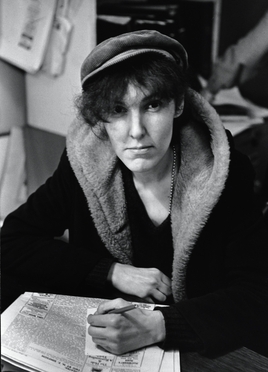
On the afternoon of June 3, 1968, Valerie Jean Solanas rode an elevator to Andy Warhol's Manhattan studio, pulled two firearms from a paper bag, and opened fire. She shot Warhol three times, hit art critic Mario Amaya in the hip, and attempted to execute Warhol's manager before her gun jammed. Then she walked out, hailed a cab, and waited. That evening, she surrendered to a Times Square patrolman, handed him both weapons, and offered nine words of explanation: 'He had too much control over my life.' Warhol survived, barely, after five hours of surgery during which he was briefly declared dead. He never fully recovered. Solanas, a woman with an IQ of 131 who authored one of the most provocative feminist texts of the twentieth century and held a psychology degree with honors, spent the rest of her life cycling through psychiatric wards and welfare hotels. She died alone in a San Francisco flophouse in 1988, her body undiscovered for days. What drove her to The Factory that afternoon, and what her life reveals about genius, mental illness, and the violence that festers at society's margins, remains as unsettling now as it was then.
Defendant: Leila Khaled
Leila Khaled, born in 1944, is a Palestinian former militant and activist. She was a member of the Popular Front for the Liberation of Palestine (PFLP). Khaled is known for being the first woman to hijack an airplane. Her first hijacking was in 1969 on a flight from Rome to Athens, which was diverted to Damascus. A year later, she attempted another hijack on a flight from Amsterdam to New York, but this was thwarted by the air marshals on board.
Convicted: Patricia Campbell Hearst
The grainy black-and-white surveillance image from April 15, 1974 remains one of the most startling photographs in American criminal history: Patricia Campbell Hearst, granddaughter of publishing magnate William Randolph Hearst, standing inside a San Francisco bank with an assault rifle, a beret on her head and a new name on her lips. She called herself Tania. Seventy days earlier, she had been a nineteen-year-old UC Berkeley sophomore, engaged to be married, asleep in her Berkeley apartment when armed radicals dragged her screaming into the night. What happened during 57 days of blindfolded captivity in a closet, and what it produced in a young woman's mind, became the defining psychological mystery of the 1970s. Was she a victim coerced beyond the breaking point, or a willing revolutionary who found the cause intoxicating? A jury took less than two weeks to convict her. Jimmy Carter freed her. Bill Clinton pardoned her. Fifty years later, no one has fully agreed on who Patty Hearst really is. She weighed 87 pounds at her arrest. At booking, she listed her occupation as 'Urban Guerrilla.' The case that followed would rewrite how Americans understood the human mind under captivity, introduce a new term into the cultural vocabulary, and raise questions about identity, coercion, and justice that no verdict has ever put to rest.
Convicted: Judias Anna Lou 'Judy' Buenoano
At 7:08 on the morning of March 30, 1998, a correctional officer at Florida State Prison threw the switch on the electric chair. The woman strapped into it, asked moments earlier if she had any final words, had answered only 'No, sir,' and closed her eyes. She was pronounced dead at 7:13 a.m. Her name was Judy Buenoano, and she had spent the previous evening watching a hunting and fishing show, eating chocolates, and reading a Mary Higgins Clark murder mystery. The neatness of that detail feels almost unbearable: a woman convicted of poisoning her husband, her son, and her boyfriend with arsenic, spending her last hours absorbed in fiction about someone else's crime. Prosecutor Russell Edgar had a name for her. He called her the Black Widow, a woman who 'fed off her mates and her young.' The evidence bore him out. Across nearly two decades, Buenoano is believed to have poisoned at least three people and built a life on their insurance payouts. She never confessed. She maintained her innocence to the end, eyes shut, silent in the chair. This is the story of how she got there.
Subject: Andrea Pia Yates
On the morning of June 20, 2001, a thirty-six-year-old Houston woman dialed 911 at 9:34 a.m. and told the dispatcher three words that would ignite a decade of legal and psychiatric reckoning: 'I just killed my kids.' Andrea Pia Yates had drowned all five of her children, ages seven months to seven years, one by one in the family bathtub. She then laid their bodies on the bed and waited. What followed was not a simple story of evil. It was a story of a shattered mental health system, a traveling preacher whose fundamentalist teachings poisoned a household, a psychiatrist who ignored explicit warnings from a colleague, and a husband who left his visibly psychotic wife alone with five small children on a morning that could not be undone. Andrea Yates was convicted, then acquitted, then quietly disappeared into a Texas psychiatric hospital, where she remains today at sixty-one. The case reshaped Texas law, redefined public understanding of postpartum psychosis, and asked a question American courts still struggle to answer: when a mind is so thoroughly broken that it cannot distinguish reality, what does justice require?