4 cases tagged “1990s true crime”
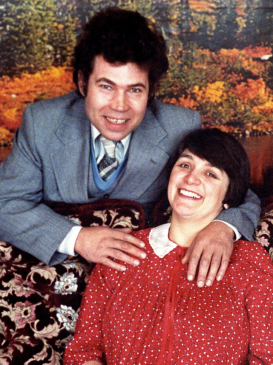
Convicted: Rosemary Pauline West (née Letts; also known as Jennifer Jones since 2020)
In February 1994, police arrived at 25 Cromwell Street, Gloucester, looking for a missing teenage girl. What they found instead would stop Britain cold: nine sets of human remains buried beneath the floorboards and garden of a nondescript terraced house — and that was only the beginning. Rosemary West, a 40-year-old mother of eight, sat at the center of it all. She had helped lure young women and girls to that house. She had participated in their torture, their sexual abuse, their deaths. She had then gone on living there — cooking meals, watching television, raising children — while the bodies of ten victims, including her own stepdaughter and her own teenage daughter, rotted in the earth beneath her feet. On 22 November 1995, a jury took less than two days to convict her on all ten counts of murder. The judge said she should never be freed. He was right. Thirty years later, Rose West — now calling herself Jennifer Jones — remains in a prison cell, in declining health, largely alone, still insisting she is innocent. This is the story of how ordinary evil hides in plain sight.
Convicted: Diane Michelle Zamora
In the fall of 1996, a nineteen-year-old Naval Academy midshipman named Diane Zamora sat in her barracks at Annapolis, trading stories with her fellow cadets about devotion and sacrifice. She had a fiancé, she told them. He loved her so much that he had killed a girl for her. She said it like a badge of honor. What the cadets did next would unravel a nine-month-old murder and destroy two of the most promising military careers in Texas. Diane Zamora had grown up in Crowley, Texas, with straight A's, a National Honor Society pin, and dreams of becoming an astronaut. Her boyfriend, David Graham, was bound for the Air Force Academy. Together, they looked like the future. But on the night of December 3, 1995, a sixteen-year-old girl named Adrianne Jones climbed into Graham's car and never came home. What followed was one of the most chilling true crime cases of the 1990s: a story about jealousy so corrosive it became lethal, two killers who confessed and then blamed each other, and a murder that a jury watched unfold on Court TV. Zamora is currently serving a life sentence in Texas. She won't be eligible for parole until 2036.
Convicted: Kimberly Michelle Hricko
On Valentine's Day 1998, guests at the Harbourtowne Golf Resort on Maryland's Eastern Shore laughed through a murder mystery dinner called 'The Bride Who Cried,' a campy audience-participation whodunit where everyone got to play detective. Somewhere in that dining room sat Kimberly Hricko and her husband Steven. By morning, one of them would be dead. Kimberly was a surgical technologist with direct access to succinylcholine, a muscle paralytic that stops breathing and metabolizes so quickly it leaves almost no trace in the body. She had spent months telling friends and coworkers, in precise and specific detail, exactly how she planned to kill her husband: inject him with the drug, set a fire, make it look like a drunken accident. She had even bought the cigars she intended to plant at the scene. When Steven's body was found burned in their hotel bed that night, Kimberly told investigators he must have fallen asleep drunk while smoking. But the autopsy refused to cooperate: no carbon monoxide in his blood, no soot in his airways, no alcohol in his system. Steven Hricko had already stopped breathing before the first flame was lit.
Convicted: Ruthann Greenzweig Aron (now known as Ruth Ann Green)
The manila envelope contained five hundred dollars and what Ruthann Aron believed was the beginning of a solution. In June 1997, the Cornell-educated real estate developer, former Maryland Senate candidate, and sitting Montgomery County Planning Board member slid that envelope across a counter at a Gaithersburg hotel as a down payment on the murders of two men: her husband, urologist Dr. Barry Aron, and her former attorney, Arthur G. Kahn. The man receiving the money was an undercover police detective. He had already recorded her approximately fifteen times. Every word she had spoken about the killings she wanted done had been preserved on tape. What followed was one of the most surreal true crime sagas the Washington suburbs had ever produced: a mistrial triggered by a juror who had concealed her mental health background, a 'dream team' defense built on brain injuries and allegations of childhood abuse, and a no-contest plea that sent a woman who had once nearly reached the U.S. Senate to a state prison cell. Decades later, after her son died on September 11, 2001, after she reinvented herself under a new name in Florida, after she self-published a 700-page memoir declaring herself the real victim, Ruthann Aron was still fighting to erase what those tapes had captured. She never succeeded.