3 cases tagged “filicide”
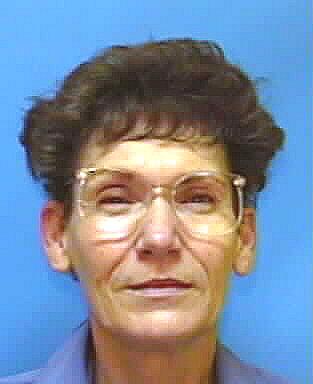
Convicted: Judias Anna Lou 'Judy' Buenoano
At 7:08 on the morning of March 30, 1998, a correctional officer at Florida State Prison threw the switch on the electric chair. The woman strapped into it, asked moments earlier if she had any final words, had answered only 'No, sir,' and closed her eyes. She was pronounced dead at 7:13 a.m. Her name was Judy Buenoano, and she had spent the previous evening watching a hunting and fishing show, eating chocolates, and reading a Mary Higgins Clark murder mystery. The neatness of that detail feels almost unbearable: a woman convicted of poisoning her husband, her son, and her boyfriend with arsenic, spending her last hours absorbed in fiction about someone else's crime. Prosecutor Russell Edgar had a name for her. He called her the Black Widow, a woman who 'fed off her mates and her young.' The evidence bore him out. Across nearly two decades, Buenoano is believed to have poisoned at least three people and built a life on their insurance payouts. She never confessed. She maintained her innocence to the end, eyes shut, silent in the chair. This is the story of how she got there.
Subject: Andrea Pia Yates
On the morning of June 20, 2001, a thirty-six-year-old Houston woman dialed 911 at 9:34 a.m. and told the dispatcher three words that would ignite a decade of legal and psychiatric reckoning: 'I just killed my kids.' Andrea Pia Yates had drowned all five of her children, ages seven months to seven years, one by one in the family bathtub. She then laid their bodies on the bed and waited. What followed was not a simple story of evil. It was a story of a shattered mental health system, a traveling preacher whose fundamentalist teachings poisoned a household, a psychiatrist who ignored explicit warnings from a colleague, and a husband who left his visibly psychotic wife alone with five small children on a morning that could not be undone. Andrea Yates was convicted, then acquitted, then quietly disappeared into a Texas psychiatric hospital, where she remains today at sixty-one. The case reshaped Texas law, redefined public understanding of postpartum psychosis, and asked a question American courts still struggle to answer: when a mind is so thoroughly broken that it cannot distinguish reality, what does justice require?
Convicted: Susan Leigh Smith
The lake was quiet when Susan Smith let her car roll in. With her sons, three-year-old Michael and fourteen-month-old Alexander, still strapped in their car seats, the 1990 Mazda Protegé sank 122 feet from shore at John D. Long Lake in Union County, South Carolina. It took approximately six minutes. Then Susan Smith ran to a nearby house and told a lie that gripped an entire nation: a Black man had carjacked her vehicle, her babies still inside. For nine days, America watched her weep on television while a manhunt consumed Union County and innocent Black men were stopped by police hunting a suspect who never existed. The lie collapsed on November 3, 1994, when Smith confessed and led divers to the sunken car. She was convicted of two counts of first-degree murder. Thirty years later, she sat before a parole board via video link and said: 'I know what I did was horrible.' The board voted unanimously to deny her release. Her next hearing is in November 2026. This is the story of Susan Smith: her shattered childhood, her calculating deception, her infamous trial, and the question that still has no satisfying answer. What made a mother choose a man over her sons?