Dorothea Helen Puente

Case Summary
On the morning of November 11, 1988, police began digging up the yard of a blue-and-white Victorian boarding house at 1426 F Street in Sacramento, California. By the end of the day, they had found seven bodies. The woman who owned the house, a stout, silver-haired grandmother type named Dorothea Puente, stood nearby in a housecoat and watched. Detectives didn't consider her a suspect yet. They let her walk to a nearby café to get coffee. She never came back.
For years, Puente had presented herself to social workers and city officials as a saint: a warm, generous landlady who took in the elderly, the mentally ill, the homeless, the people no one else would accept. She cooked elaborate meals and sent tenants to bed with warm milk. She also drugged them, buried them in her yard, and cashed their Social Security checks. Prosecutors would later allege she collected over $87,000 this way, spending some of it on a facelift.
The Death House Landlady, as the press called her, was eventually convicted of three murders and died in prison in 2011 at age 82, still insisting she was innocent. The full story of how Dorothea Puente became one of America's most prolific female serial killers is a portrait of survival twisted into something monstrous.
January 9, 1929, Redlands, California, USA(Age: 82)
March 27, 2011, Central California Women's Facility, Chowchilla, California, USA (Natural causes)
Related Cases

Accused
Connection tags:
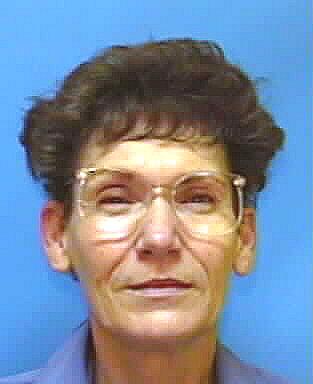
Convicted
Connection tags:

Convicted
Connection tags:
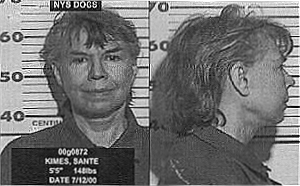
Convicted
Connection tags:
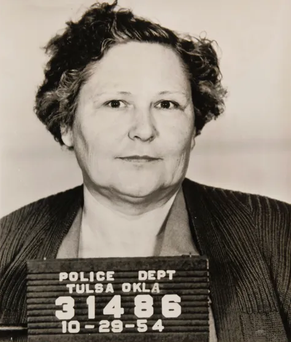
Convicted
Connection tags:

Convicted
Connection tags:
Case Details
The detective knelt in the soft dirt of the backyard and knew immediately that the smell was wrong. It was November 11, 1988, a crisp Saturday in Sacramento, California, and officers from the Sacramento Police Department had come to 1426 F Street on what seemed like a routine welfare check. Social worker Judy Moise had filed a missing persons report for one of her clients, a 51-year-old developmentally disabled man named Alvaro Montoya, known to everyone as Bert. He lived at the boarding house run by Dorothea Puente. He had not been seen in weeks. One of Puente's other tenants had secretly slipped police a handwritten note that read, simply: "She wants me to lie to you."
By the end of that Saturday, authorities had unearthed seven bodies from the yard of the blue-and-white Victorian on F Street. And its proprietor, a stout, white-haired woman in her late fifties who had watched the excavation from the porch in a housecoat, had asked if she might walk to the nearby Clarion Hotel for a cup of coffee. Detectives, not yet treating her as a suspect, said yes. Dorothea Puente walked out of their sight and did not stop walking for five days.
The story of how a trauma-shaped girl from Redlands, California grew into the Death House Landlady is, at its core, a story about invisibility: the invisibility of the poor, the elderly, the mentally ill, and the way a determined predator can hide in plain sight behind an apron and a warm smile.
Dorothea Helen Gray was born on January 9, 1929, in Redlands, California, the child of Jesse James Gray and Trudy Mae Yates Gray, both alcoholics. She was one of roughly six or seven children raised in conditions of grinding poverty and instability. Her father died of tuberculosis in 1937, when Dorothea was eight years old. Her mother lost custody of the children the following year and died in a motorcycle accident shortly thereafter. Dorothea and her siblings were sent to an orphanage. She would later claim she was sexually abused there, and nothing in the record suggests that claim was implausible.
At sixteen, she married Fred McFaul, a World War II veteran. They had two daughters between 1946 and 1948. Puente sent one child to live with relatives and placed the other for adoption. The marriage collapsed in 1948, the same year she was arrested for forging checks. She pleaded guilty and served four months. It was the first entry in a criminal history that would grow steadily thicker over the next four decades.
She married again, and again, accumulating husbands the way she accumulated aliases: Axel Bren Johansson around 1952, Roberto Jose Puente in 1968 (the marriage lasted roughly sixteen months, but she kept his surname for over twenty years), and Pedro Angel Montalvo in 1976, a union that lasted only a few months. Between marriages she reinvented herself continuously, dressing well, speaking with authority, presenting a face of competence and care to anyone who might be useful.
In 1960, Sacramento police arrested her for running a brothel she had disguised as a bookkeeping firm. She served ninety days. In 1978, she was convicted of illegally cashing thirty-four government checks belonging to her tenants. The pattern was already forming: find vulnerable people, insert yourself into their finances, take what you can.
By 1982, Puente had graduated to something darker. She was convicted that year of administering a controlled substance to elderly victims, along with grand theft and forgery, and sentenced to five years in state prison. A prison psychologist evaluated her and recorded a diagnosis of schizophrenia, noting that she was dangerous. The parole board attached strict conditions to her eventual release: she was to have no contact with the elderly and was not to handle government checks. The conditions were not enforced with any rigor.
While incarcerated, Puente struck up a pen-pal correspondence with a 77-year-old widower from Oregon named Everson Gillmouth. He was smitten before he ever met her. When she was released on September 9, 1985, he was waiting. He moved with her into 1426 F Street, the F Street boarding house she had already established in Sacramento, and he never left it alive.
Sometime in late November or early December of 1985, Dorothea Puente murdered Everson Gillmouth. She hired a handyman named Ismael Florez to build a wooden box, telling him she needed it to store junk. Florez built the box, helped load it into a truck, and helped dump it near the Sacramento River in Sutter County. He would later say he had no idea a body was inside. On January 1, 1986, a fisherman spotted the box along the riverbank. Investigators found human remains but could not immediately identify them. The body would not be confirmed as Gillmouth's for nearly three more years, until December 28, 1988, long after the case against Puente had already broken open.
In the years between Gillmouth's death and that November morning in 1988, Puente ran 1426 F Street as a licensed residential care home, accepting tenants that other facilities turned away: the elderly, the chronically ill, the mentally disabled, people with addiction histories, people with no one left to call. Social workers adored her. She accepted the cases nobody else would take. She cooked generous meals. She was attentive and warm.
What she was also doing, prosecutors would later argue, was systematically drugging her tenants with Dalmane (flurazepam) and other prescription sedatives, likely suffocating them once they were incapacitated, burying their bodies in the yard, and then forging their signatures on Social Security checks, pension checks, and government benefit payments. In total, prosecutors alleged she collected more than $87,000 through this scheme. Some of that money went toward a facelift.
The victims were: Everson Gillmouth, 77; Ruth Munroe, 61, who died in April 1982 of a codeine overdose that was initially ruled a suicide; Leona Carpenter, 78; Alvaro "Bert" Montoya, 51, the developmentally disabled man whose disappearance finally broke the case open; Dorothy Miller, 64; Benjamin Fink, 55; James Gallop, 62; Vera Faye Martin, 64; and Betty Palmer, 78. They were, in almost every case, people the world had already half-forgotten.
The investigation accelerated when Judy Moise, Bert Montoya's social worker, refused to let his disappearance be explained away. Puente gave her a series of unconvincing stories about where Bert had gone. Moise kept pushing. The secret note from another tenant arrived. Police obtained permission to search the property.
On November 11, 1988, as shovels broke the soft earth of the backyard, neighbors gathered on the sidewalk and reporters set up cameras. A body was found in the garden. Then another. Then another. The count reached seven before nightfall. And Dorothea Puente, having been permitted to leave for coffee, was on a Greyhound bus heading south.
She arrived in Los Angeles and checked into a motel. She went to a bar. By November 16, her face was on every television screen in California. An elderly man she befriended at that bar recognized her and called police. Officers arrested her quietly, without incident. She was arraigned in Sacramento Municipal Court on November 17, 1988, photographs from that morning showing a composed, white-haired woman in a red dress, looking for all the world like someone's favorite aunt.
The pretrial period was long and legally complex. Intense media coverage in Sacramento made it impossible to seat an impartial jury there, and the trial was moved to Monterey County. Sacramento County Superior Court case number 18056, The People v. Dorothea Montalvo Puente, formally began on February 9, 1993. The prosecution called more than 130 of the 156 witnesses who ultimately testified. More than 3,100 exhibits were submitted into evidence. The transcript ran to over 22,000 pages.
The physical evidence was meticulous and devastating: toxicology reports showing sedatives in the bodies of the victims, pill vials recovered from the property, falsified driver's licenses, forged checks, and the careful records of a woman who understood that paperwork was power. Sacramento County had preserved it all, and it now resides in the Center for Sacramento History.
Puente sat through all of it with the same composed expression she had worn at her arraignment. She maintained, consistently and without evident distress, that her tenants had died of natural causes and that she had merely continued cashing their checks because she needed the money. She said she had no reason to kill anyone since she was already collecting the payments.
On August 26, 1993, the jury returned its verdict. Puente was convicted of two counts of first-degree murder, for the deaths of Dorothy Miller and Benjamin Fink, and one count of second-degree murder for the death of Leona Carpenter. The jury deadlocked on the remaining six counts. During the penalty phase, they deadlocked again on whether to impose the death penalty, and on October 13, 1993, Puente's life was spared.
On December 10, 1993, Judge Michael J. Virga sentenced her to two consecutive terms of life without the possibility of parole for the first-degree convictions, plus a concurrent fifteen-years-to-life for the second-degree conviction. An appellate court affirmed the convictions in August 1997. A subsequent challenge based on alleged juror misconduct was rejected in September 1998.
Puente was transferred to the Central California Women's Facility in Chowchilla, in Madera County. She spent her remaining years there, writing letters, painting, and eventually collaborating with writer Shane Bugbee on a 2004 book titled "Cooking with a Serial Killer," which included nearly fifty of her recipes alongside interviews and her prison artwork. She never wavered from her position of innocence, and she seemed, by most accounts, genuinely unbothered by the fact that almost no one believed her.
She died of natural causes at approximately 10:15 in the morning on March 27, 2011, at the facility in Chowchilla. She was 82 years old. The case is officially closed.
The house at 1426 F Street still stands. It was included in the Sacramento Old City Association's home tour in 2013. A 2015 documentary short was titled "The House Is Innocent." A biopic, "Dorothea," directed by Chad Ferrin and starring Susan Priver, was released in November 2025. The address draws visitors the way crime scenes sometimes do, not because people are celebrating what happened there, but because the human mind struggles to reconcile the ordinary with the monstrous.
That is perhaps the most enduring fact about Dorothea Puente: she was not a figure from nightmare. She was a woman who cooked meals and chatted with social workers and accepted the tenants nobody else wanted. She looked like comfort. She offered it, even. And beneath the garden where she grew her flowers, she buried the people who had trusted her with their lives.
Timeline
Birth of Dorothea Helen Gray
Dorothea Helen Gray was born in Redlands, California, to Jesse James Gray and Trudy Mae Gray, both alcoholics. She was one of approximately six to seven siblings born into a deeply troubled household. Her difficult origins foreshadowed a childhood marked by loss, institutionalization, and abuse.
Her impoverished and chaotic upbringing, including the early death of her father to tuberculosis in 1937 and her mother's death in 1938, left Puente and her siblings orphaned and sent to an institution where she suffered sexual abuse — formative trauma that shaped her later life.
Early Criminal History: Check Forgery & Brothel
Puente was arrested in 1948 for forging checks, pleading guilty and serving four months in custody. She was arrested again in 1960 for operating a brothel disguised as a bookkeeping firm in Sacramento, serving 90 days. These early offenses established a pattern of financial deception targeting vulnerable people.
Puente's decades-long criminal career of financial fraud and deception laid the groundwork for her later scheme of murdering boarding house tenants and forging their government benefit checks.
Convicted of Drugging Elderly Victims
Puente was convicted of administering a controlled substance to elderly victims, along with grand theft and forgery, and sentenced to five years in state prison. A prison psychologist diagnosed her with schizophrenia and explicitly warned that she was dangerous. As a condition of parole, she was ordered to stay away from the elderly and not handle government checks.
Despite this conviction and the explicit parole conditions designed to protect vulnerable people, Puente immediately resumed preying on elderly and disabled tenants upon her release — demonstrating how catastrophically the system failed to prevent her subsequent murders.
First Murder: Everson Gillmouth
Upon her release from prison on September 9, 1985, Puente moved in with 77-year-old pen pal Everson Gillmouth at her boarding house at 1426 F Street, Sacramento. She murdered Gillmouth in late November or early December 1985, had handyman Ismael Florez seal his body in a wooden box, and had it dumped near Sutter County. A fisherman discovered the box on January 1, 1986, but the body was not identified as Gillmouth's until December 28, 1988.
Gillmouth's murder was Puente's first confirmed killing and established her modus operandi of targeting vulnerable individuals, disposing of bodies covertly, and continuing to collect their financial benefits — all while evading detection for years.
Seven Bodies Unearthed at 1426 F Street
After social worker Judy Moise filed a missing persons report for 51-year-old developmentally disabled tenant Alvaro 'Bert' Montoya, Sacramento police began excavating the yard of Puente's Victorian boarding house. Seven bodies were discovered buried on the property, and a tenant secretly slipped detectives a note reading 'She wants me to lie to you.' The victims had been drugged, murdered, and buried while Puente forged and cashed their Social Security and pension checks.
The discovery of seven bodies in a single residential yard was one of the most shocking moments in Sacramento criminal history and transformed Puente from a respected community caretaker into one of America's most notorious serial killers.
Puente Flees to Los Angeles; Arrested November 16
As detectives excavated her yard, Puente was not initially considered a suspect and was permitted to leave the property, ostensibly to buy coffee. She instead fled by bus to Los Angeles, where she befriended an elderly man in a bar who recognized her from television news reports and called police. She was arrested on November 16, 1988, and arraigned the following day in Sacramento Municipal Court on murder charges.
Puente's brazen flight and subsequent capture — recognized by a stranger watching news coverage — became emblematic of the case's extraordinary public profile and the systemic failures that had allowed her to operate undetected for years.
Murder Trial Begins in Monterey County
Due to intense pretrial media saturation in Sacramento, the trial of Sacramento County Superior Court case #18056, The People v. Dorothea Montalvo Puente, was moved to Monterey County. The trial formally commenced on February 9, 1993, with the prosecution ultimately calling over 130 witnesses, submitting more than 3,100 exhibits, and generating over 22,000 pages of transcript. Preliminary hearings had begun as early as 1990.
The scale and complexity of the trial — one of the longest and most evidence-intensive in California history — reflected both the gravity of the crimes and the extraordinary challenge of prosecuting a case built largely on circumstantial forensic and financial evidence.
Convicted of Three Murders
On August 26, 1993, the jury convicted Puente of two counts of first-degree murder (Dorothy Miller and Benjamin Fink) and one count of second-degree murder (Leona Carpenter). The jury deadlocked on the remaining six counts, including the murder of Everson Gillmouth. During the subsequent penalty phase, the jury also deadlocked on the death penalty on October 13, 1993, sparing Puente from execution.
The mixed verdict — convictions on three counts but deadlocks on six and on the death penalty — left many victims' families without full legal closure, while ensuring Puente would spend the rest of her natural life in prison.
Sentenced to Life Without the Possibility of Parole
Judge Michael J. Virga sentenced Puente to two consecutive life-without-parole terms for the two first-degree murder convictions, plus a concurrent 15-years-to-life sentence for the second-degree murder conviction. Puente maintained her innocence in court, claiming her tenants had died of natural causes and that she had no need to murder anyone since she was already collecting their checks. On August 28, 1997, an appellate court affirmed all convictions.
The life-without-parole sentence ensured that Puente — who had previously re-offended almost immediately after her 1985 release — would never again have access to vulnerable victims, closing the possibility of further harm.
Death at CCWF; Case Closed
Dorothea Puente died of natural causes at approximately 10:15 a.m. on March 27, 2011, at the Central California Women's Facility in Chowchilla, California, at the age of 82. She had spent her final years in prison maintaining her innocence, corresponding with writer Shane Bugbee (resulting in the 2004 book Cooking with a Serial Killer), and producing prison artwork. The case is officially closed.
Puente's death in custody ended one of California's most chilling serial murder cases, though her boarding house at 1426 F Street continued to draw public fascination, appearing on a 2013 home tour and inspiring a 2015 documentary and a 2025 biopic.
Crime Location
Photos
Dorothea-Puente 01

Dorothy Puente
Sources
- The People v. Dorothea Montalvo Puente — Sacramento County Superior Court Case #18056
- Cooking with a Serial Killer
- Dorothea Puente — Murderpedia Entry
- Dorothea Puente Arraignment Coverage
- The House Is Innocent
- Dorothea Puente — Wikipedia
- Sactown Magazine — Puente Booking Photo and Case Coverage
- Investigation Discovery — Dorothea Puente Profile
Frequently Asked Questions
Table of Contents
Case Summary
On the morning of November 11, 1988, police began digging up the yard of a blue-and-white Victorian boarding house at 1426 F Street in Sacramento, California. By the end of the day, they had found seven bodies. The woman who owned the house, a stout, silver-haired grandmother type named Dorothea Puente, stood nearby in a housecoat and watched. Detectives didn't consider her a suspect yet. They let her walk to a nearby café to get coffee. She never came back.
For years, Puente had presented herself to social workers and city officials as a saint: a warm, generous landlady who took in the elderly, the mentally ill, the homeless, the people no one else would accept. She cooked elaborate meals and sent tenants to bed with warm milk. She also drugged them, buried them in her yard, and cashed their Social Security checks. Prosecutors would later allege she collected over $87,000 this way, spending some of it on a facelift.
The Death House Landlady, as the press called her, was eventually convicted of three murders and died in prison in 2011 at age 82, still insisting she was innocent. The full story of how Dorothea Puente became one of America's most prolific female serial killers is a portrait of survival twisted into something monstrous.
January 9, 1929, Redlands, California, USA(Age: 82)
March 27, 2011, Central California Women's Facility, Chowchilla, California, USA (Natural causes)
Case Details
The detective knelt in the soft dirt of the backyard and knew immediately that the smell was wrong. It was November 11, 1988, a crisp Saturday in Sacramento, California, and officers from the Sacramento Police Department had come to 1426 F Street on what seemed like a routine welfare check. Social worker Judy Moise had filed a missing persons report for one of her clients, a 51-year-old developmentally disabled man named Alvaro Montoya, known to everyone as Bert. He lived at the boarding house run by Dorothea Puente. He had not been seen in weeks. One of Puente's other tenants had secretly slipped police a handwritten note that read, simply: "She wants me to lie to you."
By the end of that Saturday, authorities had unearthed seven bodies from the yard of the blue-and-white Victorian on F Street. And its proprietor, a stout, white-haired woman in her late fifties who had watched the excavation from the porch in a housecoat, had asked if she might walk to the nearby Clarion Hotel for a cup of coffee. Detectives, not yet treating her as a suspect, said yes. Dorothea Puente walked out of their sight and did not stop walking for five days.
The story of how a trauma-shaped girl from Redlands, California grew into the Death House Landlady is, at its core, a story about invisibility: the invisibility of the poor, the elderly, the mentally ill, and the way a determined predator can hide in plain sight behind an apron and a warm smile.
Dorothea Helen Gray was born on January 9, 1929, in Redlands, California, the child of Jesse James Gray and Trudy Mae Yates Gray, both alcoholics. She was one of roughly six or seven children raised in conditions of grinding poverty and instability. Her father died of tuberculosis in 1937, when Dorothea was eight years old. Her mother lost custody of the children the following year and died in a motorcycle accident shortly thereafter. Dorothea and her siblings were sent to an orphanage. She would later claim she was sexually abused there, and nothing in the record suggests that claim was implausible.
At sixteen, she married Fred McFaul, a World War II veteran. They had two daughters between 1946 and 1948. Puente sent one child to live with relatives and placed the other for adoption. The marriage collapsed in 1948, the same year she was arrested for forging checks. She pleaded guilty and served four months. It was the first entry in a criminal history that would grow steadily thicker over the next four decades.
She married again, and again, accumulating husbands the way she accumulated aliases: Axel Bren Johansson around 1952, Roberto Jose Puente in 1968 (the marriage lasted roughly sixteen months, but she kept his surname for over twenty years), and Pedro Angel Montalvo in 1976, a union that lasted only a few months. Between marriages she reinvented herself continuously, dressing well, speaking with authority, presenting a face of competence and care to anyone who might be useful.
In 1960, Sacramento police arrested her for running a brothel she had disguised as a bookkeeping firm. She served ninety days. In 1978, she was convicted of illegally cashing thirty-four government checks belonging to her tenants. The pattern was already forming: find vulnerable people, insert yourself into their finances, take what you can.
By 1982, Puente had graduated to something darker. She was convicted that year of administering a controlled substance to elderly victims, along with grand theft and forgery, and sentenced to five years in state prison. A prison psychologist evaluated her and recorded a diagnosis of schizophrenia, noting that she was dangerous. The parole board attached strict conditions to her eventual release: she was to have no contact with the elderly and was not to handle government checks. The conditions were not enforced with any rigor.
While incarcerated, Puente struck up a pen-pal correspondence with a 77-year-old widower from Oregon named Everson Gillmouth. He was smitten before he ever met her. When she was released on September 9, 1985, he was waiting. He moved with her into 1426 F Street, the F Street boarding house she had already established in Sacramento, and he never left it alive.
Sometime in late November or early December of 1985, Dorothea Puente murdered Everson Gillmouth. She hired a handyman named Ismael Florez to build a wooden box, telling him she needed it to store junk. Florez built the box, helped load it into a truck, and helped dump it near the Sacramento River in Sutter County. He would later say he had no idea a body was inside. On January 1, 1986, a fisherman spotted the box along the riverbank. Investigators found human remains but could not immediately identify them. The body would not be confirmed as Gillmouth's for nearly three more years, until December 28, 1988, long after the case against Puente had already broken open.
In the years between Gillmouth's death and that November morning in 1988, Puente ran 1426 F Street as a licensed residential care home, accepting tenants that other facilities turned away: the elderly, the chronically ill, the mentally disabled, people with addiction histories, people with no one left to call. Social workers adored her. She accepted the cases nobody else would take. She cooked generous meals. She was attentive and warm.
What she was also doing, prosecutors would later argue, was systematically drugging her tenants with Dalmane (flurazepam) and other prescription sedatives, likely suffocating them once they were incapacitated, burying their bodies in the yard, and then forging their signatures on Social Security checks, pension checks, and government benefit payments. In total, prosecutors alleged she collected more than $87,000 through this scheme. Some of that money went toward a facelift.
The victims were: Everson Gillmouth, 77; Ruth Munroe, 61, who died in April 1982 of a codeine overdose that was initially ruled a suicide; Leona Carpenter, 78; Alvaro "Bert" Montoya, 51, the developmentally disabled man whose disappearance finally broke the case open; Dorothy Miller, 64; Benjamin Fink, 55; James Gallop, 62; Vera Faye Martin, 64; and Betty Palmer, 78. They were, in almost every case, people the world had already half-forgotten.
The investigation accelerated when Judy Moise, Bert Montoya's social worker, refused to let his disappearance be explained away. Puente gave her a series of unconvincing stories about where Bert had gone. Moise kept pushing. The secret note from another tenant arrived. Police obtained permission to search the property.
On November 11, 1988, as shovels broke the soft earth of the backyard, neighbors gathered on the sidewalk and reporters set up cameras. A body was found in the garden. Then another. Then another. The count reached seven before nightfall. And Dorothea Puente, having been permitted to leave for coffee, was on a Greyhound bus heading south.
She arrived in Los Angeles and checked into a motel. She went to a bar. By November 16, her face was on every television screen in California. An elderly man she befriended at that bar recognized her and called police. Officers arrested her quietly, without incident. She was arraigned in Sacramento Municipal Court on November 17, 1988, photographs from that morning showing a composed, white-haired woman in a red dress, looking for all the world like someone's favorite aunt.
The pretrial period was long and legally complex. Intense media coverage in Sacramento made it impossible to seat an impartial jury there, and the trial was moved to Monterey County. Sacramento County Superior Court case number 18056, The People v. Dorothea Montalvo Puente, formally began on February 9, 1993. The prosecution called more than 130 of the 156 witnesses who ultimately testified. More than 3,100 exhibits were submitted into evidence. The transcript ran to over 22,000 pages.
The physical evidence was meticulous and devastating: toxicology reports showing sedatives in the bodies of the victims, pill vials recovered from the property, falsified driver's licenses, forged checks, and the careful records of a woman who understood that paperwork was power. Sacramento County had preserved it all, and it now resides in the Center for Sacramento History.
Puente sat through all of it with the same composed expression she had worn at her arraignment. She maintained, consistently and without evident distress, that her tenants had died of natural causes and that she had merely continued cashing their checks because she needed the money. She said she had no reason to kill anyone since she was already collecting the payments.
On August 26, 1993, the jury returned its verdict. Puente was convicted of two counts of first-degree murder, for the deaths of Dorothy Miller and Benjamin Fink, and one count of second-degree murder for the death of Leona Carpenter. The jury deadlocked on the remaining six counts. During the penalty phase, they deadlocked again on whether to impose the death penalty, and on October 13, 1993, Puente's life was spared.
On December 10, 1993, Judge Michael J. Virga sentenced her to two consecutive terms of life without the possibility of parole for the first-degree convictions, plus a concurrent fifteen-years-to-life for the second-degree conviction. An appellate court affirmed the convictions in August 1997. A subsequent challenge based on alleged juror misconduct was rejected in September 1998.
Puente was transferred to the Central California Women's Facility in Chowchilla, in Madera County. She spent her remaining years there, writing letters, painting, and eventually collaborating with writer Shane Bugbee on a 2004 book titled "Cooking with a Serial Killer," which included nearly fifty of her recipes alongside interviews and her prison artwork. She never wavered from her position of innocence, and she seemed, by most accounts, genuinely unbothered by the fact that almost no one believed her.
She died of natural causes at approximately 10:15 in the morning on March 27, 2011, at the facility in Chowchilla. She was 82 years old. The case is officially closed.
The house at 1426 F Street still stands. It was included in the Sacramento Old City Association's home tour in 2013. A 2015 documentary short was titled "The House Is Innocent." A biopic, "Dorothea," directed by Chad Ferrin and starring Susan Priver, was released in November 2025. The address draws visitors the way crime scenes sometimes do, not because people are celebrating what happened there, but because the human mind struggles to reconcile the ordinary with the monstrous.
That is perhaps the most enduring fact about Dorothea Puente: she was not a figure from nightmare. She was a woman who cooked meals and chatted with social workers and accepted the tenants nobody else wanted. She looked like comfort. She offered it, even. And beneath the garden where she grew her flowers, she buried the people who had trusted her with their lives.
Timeline
Birth of Dorothea Helen Gray
Dorothea Helen Gray was born in Redlands, California, to Jesse James Gray and Trudy Mae Gray, both alcoholics. She was one of approximately six to seven siblings born into a deeply troubled household. Her difficult origins foreshadowed a childhood marked by loss, institutionalization, and abuse.
Her impoverished and chaotic upbringing, including the early death of her father to tuberculosis in 1937 and her mother's death in 1938, left Puente and her siblings orphaned and sent to an institution where she suffered sexual abuse — formative trauma that shaped her later life.
Early Criminal History: Check Forgery & Brothel
Puente was arrested in 1948 for forging checks, pleading guilty and serving four months in custody. She was arrested again in 1960 for operating a brothel disguised as a bookkeeping firm in Sacramento, serving 90 days. These early offenses established a pattern of financial deception targeting vulnerable people.
Puente's decades-long criminal career of financial fraud and deception laid the groundwork for her later scheme of murdering boarding house tenants and forging their government benefit checks.
Convicted of Drugging Elderly Victims
Puente was convicted of administering a controlled substance to elderly victims, along with grand theft and forgery, and sentenced to five years in state prison. A prison psychologist diagnosed her with schizophrenia and explicitly warned that she was dangerous. As a condition of parole, she was ordered to stay away from the elderly and not handle government checks.
Despite this conviction and the explicit parole conditions designed to protect vulnerable people, Puente immediately resumed preying on elderly and disabled tenants upon her release — demonstrating how catastrophically the system failed to prevent her subsequent murders.
First Murder: Everson Gillmouth
Upon her release from prison on September 9, 1985, Puente moved in with 77-year-old pen pal Everson Gillmouth at her boarding house at 1426 F Street, Sacramento. She murdered Gillmouth in late November or early December 1985, had handyman Ismael Florez seal his body in a wooden box, and had it dumped near Sutter County. A fisherman discovered the box on January 1, 1986, but the body was not identified as Gillmouth's until December 28, 1988.
Gillmouth's murder was Puente's first confirmed killing and established her modus operandi of targeting vulnerable individuals, disposing of bodies covertly, and continuing to collect their financial benefits — all while evading detection for years.
Seven Bodies Unearthed at 1426 F Street
After social worker Judy Moise filed a missing persons report for 51-year-old developmentally disabled tenant Alvaro 'Bert' Montoya, Sacramento police began excavating the yard of Puente's Victorian boarding house. Seven bodies were discovered buried on the property, and a tenant secretly slipped detectives a note reading 'She wants me to lie to you.' The victims had been drugged, murdered, and buried while Puente forged and cashed their Social Security and pension checks.
The discovery of seven bodies in a single residential yard was one of the most shocking moments in Sacramento criminal history and transformed Puente from a respected community caretaker into one of America's most notorious serial killers.
Puente Flees to Los Angeles; Arrested November 16
As detectives excavated her yard, Puente was not initially considered a suspect and was permitted to leave the property, ostensibly to buy coffee. She instead fled by bus to Los Angeles, where she befriended an elderly man in a bar who recognized her from television news reports and called police. She was arrested on November 16, 1988, and arraigned the following day in Sacramento Municipal Court on murder charges.
Puente's brazen flight and subsequent capture — recognized by a stranger watching news coverage — became emblematic of the case's extraordinary public profile and the systemic failures that had allowed her to operate undetected for years.
Murder Trial Begins in Monterey County
Due to intense pretrial media saturation in Sacramento, the trial of Sacramento County Superior Court case #18056, The People v. Dorothea Montalvo Puente, was moved to Monterey County. The trial formally commenced on February 9, 1993, with the prosecution ultimately calling over 130 witnesses, submitting more than 3,100 exhibits, and generating over 22,000 pages of transcript. Preliminary hearings had begun as early as 1990.
The scale and complexity of the trial — one of the longest and most evidence-intensive in California history — reflected both the gravity of the crimes and the extraordinary challenge of prosecuting a case built largely on circumstantial forensic and financial evidence.
Convicted of Three Murders
On August 26, 1993, the jury convicted Puente of two counts of first-degree murder (Dorothy Miller and Benjamin Fink) and one count of second-degree murder (Leona Carpenter). The jury deadlocked on the remaining six counts, including the murder of Everson Gillmouth. During the subsequent penalty phase, the jury also deadlocked on the death penalty on October 13, 1993, sparing Puente from execution.
The mixed verdict — convictions on three counts but deadlocks on six and on the death penalty — left many victims' families without full legal closure, while ensuring Puente would spend the rest of her natural life in prison.
Sentenced to Life Without the Possibility of Parole
Judge Michael J. Virga sentenced Puente to two consecutive life-without-parole terms for the two first-degree murder convictions, plus a concurrent 15-years-to-life sentence for the second-degree murder conviction. Puente maintained her innocence in court, claiming her tenants had died of natural causes and that she had no need to murder anyone since she was already collecting their checks. On August 28, 1997, an appellate court affirmed all convictions.
The life-without-parole sentence ensured that Puente — who had previously re-offended almost immediately after her 1985 release — would never again have access to vulnerable victims, closing the possibility of further harm.
Death at CCWF; Case Closed
Dorothea Puente died of natural causes at approximately 10:15 a.m. on March 27, 2011, at the Central California Women's Facility in Chowchilla, California, at the age of 82. She had spent her final years in prison maintaining her innocence, corresponding with writer Shane Bugbee (resulting in the 2004 book Cooking with a Serial Killer), and producing prison artwork. The case is officially closed.
Puente's death in custody ended one of California's most chilling serial murder cases, though her boarding house at 1426 F Street continued to draw public fascination, appearing on a 2013 home tour and inspiring a 2015 documentary and a 2025 biopic.
Crime Location
Photos
Dorothea-Puente 01
Dorothy Puente
Sources
- The People v. Dorothea Montalvo Puente — Sacramento County Superior Court Case #18056
- Cooking with a Serial Killer
- Dorothea Puente — Murderpedia Entry
- Dorothea Puente Arraignment Coverage
- The House Is Innocent
- Dorothea Puente — Wikipedia
- Sactown Magazine — Puente Booking Photo and Case Coverage
- Investigation Discovery — Dorothea Puente Profile
Frequently Asked Questions
Related Cases
Accused
Connection tags:
Convicted
Connection tags:
Convicted
Connection tags:
Convicted
Connection tags:
Convicted
Connection tags:
Convicted
Connection tags:
Tags
Popular Culture
book (2004)
A book by Shane Bugbee based on correspondence with Puente, featuring her recipes, interviews, and prison artwork.
documentary (2015)
A documentary short examining the history and public fascination with Puente's boarding house at 1426 F Street, Sacramento.
movie (2025)
A biopic directed by Chad Ferrin with Susan Priver playing Dorothea Puente, released November 4, 2025.
other (2013)
Puente's former boarding house at 1426 F Street was included in the Sacramento Old City Association's 2013 home tour, reflecting ongoing public fascination.