Virginia Gail Larzelere

Case Summary
At approximately 1:00 p.m. on March 8, 1991, a masked gunman walked into a quiet dental office in Edgewater, Florida, and fired a sawed-off shotgun through a wooden door. Behind that door, cowering against the wood, was Dr. Norman Larzelere. His last audible words were a name: his son's. Witnesses heard him call out 'Jason, is that you?' before the blast tore through his chest.
On the other side of the door stood his wife, Virginia, who promptly called 911 and performed CPR on the man she had allegedly just arranged to have killed. She had spent the preceding months taking out seven life insurance policies on Norman totaling $2.1 million, and prosecutors alleged she had forged his signature on every one of them.
What followed was one of Florida's most tangled criminal sagas: a death sentence, fifteen years on death row alongside Aileen Wuornos, a defense attorney later convicted of sixteen felonies who was allegedly consuming a liter of vodka and methamphetamine daily during her trial, and a son who was acquitted of the very conspiracy that sent his mother to the electric chair. Virginia Larzelere has maintained her innocence for more than three decades. The legal fight is still not over.
January 1, 1952, Lake Wales, Florida, USA(Age: 39)
March 8, 1991
Related Cases
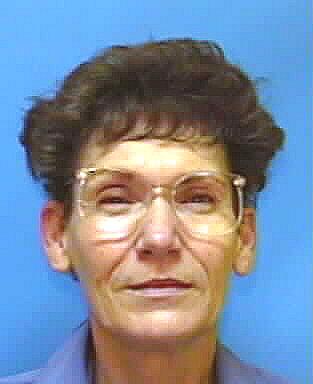
Convicted
Connection tags:

Convicted
Connection tags:

Accused
Connection tags:
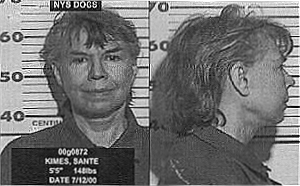
Convicted
Connection tags:

Accused
Connection tags:

Convicted
Connection tags:
Case Details
The last thing Norman Larzelere heard was the sound of his own voice asking if his son had come to kill him.
It was a Friday afternoon in March 1991, sunny and unremarkable in Edgewater, Florida, the kind of day that settles into the coastal air with no particular urgency. Patients cycled through the dental office at their usual pace. Then a man in a mask walked through the front door carrying a sawed-off shotgun, and the afternoon stopped being ordinary.
Norman spotted the intruder and ran. He made it to a wooden door at the back of the office, threw himself against it, and barricaded himself inside. Witnesses, a dental assistant and a patient already in the waiting area, heard him cry out from behind that door. 'Jason, is that you?' The name hung in the air. The gunman fired through the wood. The blast caught Norman in the chest, and he collapsed. He died shortly afterward.
His wife, Virginia, called 911. She knelt beside her husband and performed CPR. She was crying. She looked, by every outward measure, like a woman in shock.
She had also, in the months prior, taken out seven life insurance policies on her husband totaling approximately $2.1 million, and prosecutors would later allege she had forged his signature on every document.
Virginia Gail Larzelere was born in 1952 in Lake Wales, Florida, a small citrus-country town in the middle of the state. By her own account, the childhood that followed was not a gentle one. She reported suffering sexual abuse at the hands of her father, an alcoholic, and the damage of those early years would become a recurring thread in the story she told about herself across decades of legal proceedings. Whether that story explained what she later became, or simply accompanied it, was a question that no court ever satisfactorily resolved.
She married three times. The third marriage, formalized on June 14, 1985, brought her to Norman Larzelere, a dentist with a thriving practice in Volusia County and a net worth hovering around $1.1 million. Norman subsequently adopted Virginia's two children, Jessica and Jason, and the newly assembled family moved into a life that looked, from the outside, almost extravagantly comfortable: a multi-wing mansion in DeLand, expensive cars in the driveway, a yacht on the water, an airplane. Virginia worked in Norman's office as the receptionist and office manager, which gave her authority over the practice's administrative life and, it turned out, access to the kinds of documents that carry serious financial weight.
The insurance policies began appearing in the months before the murder. Seven of them, stacked one on top of another, all naming Virginia as sole beneficiary, all bearing Norman's signature. Prosecutors argued at trial that the signatures were forgeries. Investigators also alleged she had altered his will in her favor. The total payout she stood to collect, had everything gone cleanly, was $2.1 million.
In retrospect, the financial architecture of the scheme was almost architectural in its ambition. But ambition has a tendency to generate witnesses, and Virginia had not been careful about that.
Two of those witnesses were Steven Heidle and Kristen Palmieri. Heidle was a friend of Jason's who had been living with the Larzelere family. Palmieri worked part-time at the dental office. Both would go on to become the prosecution's most consequential voices at trial.
Heidle testified that Virginia had offered her son Jason $200,000, using the phrase 'for taking care of business.' He said Jason had stayed home the day of the murder, waiting for a phone call from his mother with a specific message: 'he's dead.' And after the killing, Heidle testified, Virginia had instructed him and Palmieri to dispose of the murder weapon. The method she allegedly specified was precise and gruesome in its practicality: rub the shotgun with acid, encase it in cement, and drop it in a river. Heidle later led detectives to the weapon's location.
Police arrested Virginia on May 4, 1991, roughly two months after Norman died. The circumstances of the arrest added a layer of implication that prosecutors found difficult to ignore: she was allegedly preparing to leave town, carrying a purse full of cash and gold.
Jason Larzelere was charged separately. The state's theory required both of them, mother and son working in concert, each playing a defined role in a murder-for-insurance scheme. It was a clean theory. It would prove considerably messier in practice.
Virginia's trial began in early 1992, and from the start it was afflicted by a problem the jury could not see. Her defense attorney, Jack Wilkins, was in a state of catastrophic personal deterioration. Appellate records would later document the full picture: Wilkins was allegedly consuming a liter of vodka daily throughout the proceedings, along with cocaine and methamphetamine. He spent less than $3,000 on Virginia's defense in total. He called no expert witnesses. While the state presented fourteen days of testimony, Wilkins offered a single day of defense evidence. His cross-examinations were brief and, according to later appellate findings, strategically hollow.
The jury deliberated for one hour. On February 24, 1992, they found Virginia Larzelere guilty of first-degree murder.
Judge John W. Watson sentenced her to death on May 11, 1993, following a 7-5 jury recommendation. His language at sentencing was unsparing. He called Virginia a 'conniving and manipulative' woman who had killed 'to satisfy her greed for money.' The method of execution prescribed by Florida law at the time was electrocution.
She went to Broward Correctional Institution, where she would spend approximately fifteen years on death row. Among her neighbors during part of that time was Aileen Wuornos, the serial killer whose own case had transfixed Florida in the early 1990s. Two women, two death sentences, the same institution. The proximity felt almost too symbolic to be true, yet it was simply geography.
Meanwhile, Jason Larzelere went to trial in 1992 and 1993. His defense team presented an alternative theory: that Steven Heidle, the prosecution's most important witness against Virginia, was actually the gunman. Heidle, the defense argued, had motive, means, and opportunity, and his testimony implicating the Larzeleres was self-serving fabrication designed to shift blame. The jury found the argument persuasive enough. Jason was acquitted of first-degree murder.
The logical tension this created was significant, and it would become the foundation of Virginia's continuing legal fight. The prosecution's theory had been explicitly conspiratorial: mother and son, working together. The son's acquittal did not automatically free the mother, but it did leave the state's narrative with a structural crack that defense attorneys would return to repeatedly in the years that followed.
Jack Wilkins's post-trial story did not improve. He was eventually convicted of sixteen felonies in unrelated matters, including laundering drug money and obstruction of justice. The record of his conduct during Virginia's trial became central to her appeals. In postconviction proceedings, the circuit court agreed that Wilkins had provided constitutionally deficient representation, specifically during the penalty phase of trial. The court vacated her death sentence while leaving the murder conviction intact. The Florida Supreme Court affirmed this outcome in 2008, in State v. Larzelere (979 So.2d 195).
On August 1, 2008, Circuit Judge Joseph Will resentenced Virginia Larzelere to life in prison. Both the prosecution and the defense had agreed to the life sentence beforehand, an arrangement designed to avoid the cost and uncertainty of a new penalty-phase hearing. She was transferred to Homestead Correctional Institution in Miami-Dade County, where she remains incarcerated.
In 2015, Virginia married a man named Jim McNulty, whom she had come to know through prison visits and correspondence. It was, by any measure, an unlikely romance, born entirely within the constraints of institutional life. She has, throughout her decades of incarceration, never stopped asserting her innocence. Her own words on the subject are carefully calibrated: 'I was only guilty of having an affair, partying, loose morals, but no matter what I did in the past... it does not make me guilty of taking my husband's life.'
In April 2020, attorneys from the Florida Justice League filed a new motion for postconviction relief, arguing that Virginia's conviction was constitutionally untenable given Jason's acquittal. If the state's theory required a conspiracy between mother and son, and the son was found not guilty of participating in that conspiracy, what exactly had the mother been convicted of conspiring to do? The argument was philosophically pointed, though courts have historically been reluctant to let one verdict destabilize another.
The same month, Virginia tested positive for COVID-19 inside Homestead Correctional Institution, joining thousands of incarcerated people across Florida whose vulnerability to the virus became a point of national debate.
As recently as September 2023, a new case, Virginia Larzelere v. State of Florida (Docket 5D23-1406), was filed before the Florida Fifth District Court of Appeal. The legal machinery is still turning. A Change.org petition titled 'Free Virginia Larzelere' continues to circulate, citing unused evidence and the sustained argument about ineffective counsel.
The case has never entirely left the public consciousness. It was featured on the true crime series 'Snapped' in 2004, covered at length by the Miami New Times and the Orlando Sentinel, and revisited periodically by journalists drawn to its particular density of contradiction: the dying man who called his son's name, the son who walked free, the mother who did not, the lawyer who was an addict and later a convicted felon, the insurance policies stacked like a paper argument for premeditation.
Norman Larzelere died behind a wooden door in a dental office in Florida in 1991, calling out to someone who may or may not have been there. More than thirty years later, the full truth of what happened in that office, who planned it, who carried it out, and who knew what and when, remains disputed in a court of law. Virginia Larzelere sits in Homestead Correctional Institution and insists she did not do it. The state of Florida, for now, disagrees.
Some cases close cleanly. This one has never stopped opening.
Timeline
Birth and Troubled Childhood
Virginia Gail Larzelere was born in 1952 in Lake Wales, Florida, into a deeply troubled household. She later reported suffering childhood sexual abuse at the hands of her alcoholic father, an upbringing that would be cited in later legal proceedings as formative trauma.
Her difficult early life was later referenced by defense attorneys and advocates as context for her psychological development and behavior as an adult.
Marriage to Norman Larzelere
Virginia married Norman Larzelere, a successful dentist in Edgewater, Florida, in her third marriage. Norman subsequently adopted her two children, Jessica and Jason, and the family settled into a lavish lifestyle including a multi-wing mansion in DeLand, expensive cars, a yacht, and an airplane, sustained by Norman's net worth of approximately $1.1 million.
This marriage placed Virginia in a position of financial comfort and access, and her role as office manager at Norman's dental practice would later give her the means and opportunity to orchestrate his murder.
Life Insurance Policies Taken Out on Norman
In the months leading up to the murder, Virginia took out seven life insurance policies on Norman Larzelere totaling approximately $2.1 million. Prosecutors alleged she forged Norman's signature on the policy documents and on his will, naming herself the sole beneficiary.
The insurance policies became the cornerstone of the prosecution's motive argument, painting Virginia as a calculating killer who systematically prepared to profit from her husband's death.
Murder of Norman Larzelere
A masked gunman armed with a sawed-off shotgun entered Norman Larzelere's dental office around 1:00 p.m. Norman spotted the intruder, ran, and barricaded himself behind a wooden door, shouting 'Jason, is that you?' The gunman fired through the door, striking Norman in the chest; he died shortly afterward. Virginia called 911 and performed CPR, while a dental assistant and a patient at the scene reported hearing Norman cry out Jason's name multiple times.
Norman's dying words — calling out his son Jason's name — became a pivotal piece of evidence suggesting he recognized his killer, directly implicating the alleged family conspiracy.
Arrest of Virginia Larzelere
Approximately two months after the murder, police arrested Virginia Larzelere as she was allegedly preparing to flee town, found in possession of a purse full of cash and gold. Her attempted flight was viewed by investigators as a strong indicator of guilt.
The circumstances of her arrest — appearing to flee with liquid assets — severely damaged Virginia's credibility and bolstered the prosecution's narrative of premeditated murder for financial gain.
Key Witness Testimony and Weapon Discovery
Steven Heidle, a friend of Jason's who lived with the family, and Kristen Palmieri, a part-time dental employee, provided critical testimony to investigators. Heidle testified that Virginia had ordered them to dispose of the murder weapon by rubbing it with acid, encasing it in cement, and dumping it in a river — and he led police to its location. Heidle also testified he heard Virginia offer Jason '$200,000 for taking care of business.'
The recovery of the murder weapon based on Heidle's cooperation was a decisive investigative breakthrough, and his testimony about the payment offer directly tied Virginia to the conspiracy to kill her husband.
Conviction of First-Degree Murder
After only one hour of deliberation, the jury convicted Virginia Larzelere of first-degree murder. Her defense attorney, Jack Wilkins, later faced accusations of gross incompetence — alleged to have spent less than $3,000 on her defense, called no expert witnesses, presented only one day of testimony against the state's 14, and was reportedly consuming cocaine, methamphetamine, and a liter of vodka daily during the trial.
The swift verdict reflected the jury's overwhelming acceptance of the prosecution's case, though the subsequent revelations about her attorney's conduct would fuel decades of appeals centered on ineffective assistance of counsel.
Death Sentence Imposed
Judge John W. Watson sentenced Virginia Larzelere to death by electrocution, following a 7-5 jury recommendation for death. He described her as a 'conniving and manipulative' woman who murdered 'to satisfy her greed for money.' Separately, her son Jason was acquitted of first-degree murder in 1992–1993 after his defense suggested key witness Steven Heidle was actually the killer.
Jason's acquittal on the same conspiracy theory that convicted Virginia created a profound legal inconsistency that would anchor future post-conviction arguments about the constitutionality of her conviction.
Florida Supreme Court Affirms Conviction; Death Sentence Later Vacated
In 1996, the Florida Supreme Court affirmed Virginia's conviction and death sentence on direct appeal in Larzelere v. State. However, in subsequent post-conviction proceedings, circuit court orders in 2001 and 2005 vacated her death sentence due to ineffective assistance of counsel during the penalty phase, a ruling the Florida Supreme Court affirmed in 2008 in State v. Larzelere, 979 So.2d 195.
The eventual vacating of her death sentence marked a significant legal victory, validating long-standing claims about her trial attorney's catastrophic failures, though her murder conviction remained intact.
Resentenced to Life; Ongoing Fight for Exoneration
Circuit Judge Joseph Will resentenced Virginia Larzelere to life in prison, with both prosecution and defense agreeing to the life sentence to avoid a new penalty-phase hearing. Her legal battle continued: in April 2020 attorneys filed a new post-conviction motion arguing her conviction was unconstitutional given Jason's acquittal, and as of September 26, 2023, a new appeal — Virginia Larzelere v. State of Florida, Docket 5D23-1406 — was filed before the Florida Fifth District Court of Appeal. Virginia, who married Jim McNulty in 2015 while incarcerated at Homestead Correctional Institution, continues to maintain her innocence.
Virginia's resentencing to life and her unrelenting appellate efforts illustrate a case that remains legally and morally contested, with her supporters arguing that the collapse of the co-conspiracy theory after Jason's acquittal renders her conviction fundamentally unjust.
Crime Location
Sources
- Larzelere v. State, 676 So.2d 394 (Fla. 1996)
- State v. Larzelere, 979 So.2d 195 (Fla. 2008)
- Virginia Larzelere v. State of Florida, Docket 5D23-1406
- Virginia Larzelere — Murderpedia Profile
- Miami New Times Investigative Feature on Virginia Larzelere
- Virginia Larzelere Tests Positive for COVID-19 in Prison
- Broward Palm Beach New Times — Virginia Larzelere Coverage
- Free Virginia Larzelere — Change.org Petition
- Wikipedia: Snapped
Frequently Asked Questions
Table of Contents
Case Summary
At approximately 1:00 p.m. on March 8, 1991, a masked gunman walked into a quiet dental office in Edgewater, Florida, and fired a sawed-off shotgun through a wooden door. Behind that door, cowering against the wood, was Dr. Norman Larzelere. His last audible words were a name: his son's. Witnesses heard him call out 'Jason, is that you?' before the blast tore through his chest.
On the other side of the door stood his wife, Virginia, who promptly called 911 and performed CPR on the man she had allegedly just arranged to have killed. She had spent the preceding months taking out seven life insurance policies on Norman totaling $2.1 million, and prosecutors alleged she had forged his signature on every one of them.
What followed was one of Florida's most tangled criminal sagas: a death sentence, fifteen years on death row alongside Aileen Wuornos, a defense attorney later convicted of sixteen felonies who was allegedly consuming a liter of vodka and methamphetamine daily during her trial, and a son who was acquitted of the very conspiracy that sent his mother to the electric chair. Virginia Larzelere has maintained her innocence for more than three decades. The legal fight is still not over.
January 1, 1952, Lake Wales, Florida, USA(Age: 39)
March 8, 1991
Case Details
The last thing Norman Larzelere heard was the sound of his own voice asking if his son had come to kill him.
It was a Friday afternoon in March 1991, sunny and unremarkable in Edgewater, Florida, the kind of day that settles into the coastal air with no particular urgency. Patients cycled through the dental office at their usual pace. Then a man in a mask walked through the front door carrying a sawed-off shotgun, and the afternoon stopped being ordinary.
Norman spotted the intruder and ran. He made it to a wooden door at the back of the office, threw himself against it, and barricaded himself inside. Witnesses, a dental assistant and a patient already in the waiting area, heard him cry out from behind that door. 'Jason, is that you?' The name hung in the air. The gunman fired through the wood. The blast caught Norman in the chest, and he collapsed. He died shortly afterward.
His wife, Virginia, called 911. She knelt beside her husband and performed CPR. She was crying. She looked, by every outward measure, like a woman in shock.
She had also, in the months prior, taken out seven life insurance policies on her husband totaling approximately $2.1 million, and prosecutors would later allege she had forged his signature on every document.
Virginia Gail Larzelere was born in 1952 in Lake Wales, Florida, a small citrus-country town in the middle of the state. By her own account, the childhood that followed was not a gentle one. She reported suffering sexual abuse at the hands of her father, an alcoholic, and the damage of those early years would become a recurring thread in the story she told about herself across decades of legal proceedings. Whether that story explained what she later became, or simply accompanied it, was a question that no court ever satisfactorily resolved.
She married three times. The third marriage, formalized on June 14, 1985, brought her to Norman Larzelere, a dentist with a thriving practice in Volusia County and a net worth hovering around $1.1 million. Norman subsequently adopted Virginia's two children, Jessica and Jason, and the newly assembled family moved into a life that looked, from the outside, almost extravagantly comfortable: a multi-wing mansion in DeLand, expensive cars in the driveway, a yacht on the water, an airplane. Virginia worked in Norman's office as the receptionist and office manager, which gave her authority over the practice's administrative life and, it turned out, access to the kinds of documents that carry serious financial weight.
The insurance policies began appearing in the months before the murder. Seven of them, stacked one on top of another, all naming Virginia as sole beneficiary, all bearing Norman's signature. Prosecutors argued at trial that the signatures were forgeries. Investigators also alleged she had altered his will in her favor. The total payout she stood to collect, had everything gone cleanly, was $2.1 million.
In retrospect, the financial architecture of the scheme was almost architectural in its ambition. But ambition has a tendency to generate witnesses, and Virginia had not been careful about that.
Two of those witnesses were Steven Heidle and Kristen Palmieri. Heidle was a friend of Jason's who had been living with the Larzelere family. Palmieri worked part-time at the dental office. Both would go on to become the prosecution's most consequential voices at trial.
Heidle testified that Virginia had offered her son Jason $200,000, using the phrase 'for taking care of business.' He said Jason had stayed home the day of the murder, waiting for a phone call from his mother with a specific message: 'he's dead.' And after the killing, Heidle testified, Virginia had instructed him and Palmieri to dispose of the murder weapon. The method she allegedly specified was precise and gruesome in its practicality: rub the shotgun with acid, encase it in cement, and drop it in a river. Heidle later led detectives to the weapon's location.
Police arrested Virginia on May 4, 1991, roughly two months after Norman died. The circumstances of the arrest added a layer of implication that prosecutors found difficult to ignore: she was allegedly preparing to leave town, carrying a purse full of cash and gold.
Jason Larzelere was charged separately. The state's theory required both of them, mother and son working in concert, each playing a defined role in a murder-for-insurance scheme. It was a clean theory. It would prove considerably messier in practice.
Virginia's trial began in early 1992, and from the start it was afflicted by a problem the jury could not see. Her defense attorney, Jack Wilkins, was in a state of catastrophic personal deterioration. Appellate records would later document the full picture: Wilkins was allegedly consuming a liter of vodka daily throughout the proceedings, along with cocaine and methamphetamine. He spent less than $3,000 on Virginia's defense in total. He called no expert witnesses. While the state presented fourteen days of testimony, Wilkins offered a single day of defense evidence. His cross-examinations were brief and, according to later appellate findings, strategically hollow.
The jury deliberated for one hour. On February 24, 1992, they found Virginia Larzelere guilty of first-degree murder.
Judge John W. Watson sentenced her to death on May 11, 1993, following a 7-5 jury recommendation. His language at sentencing was unsparing. He called Virginia a 'conniving and manipulative' woman who had killed 'to satisfy her greed for money.' The method of execution prescribed by Florida law at the time was electrocution.
She went to Broward Correctional Institution, where she would spend approximately fifteen years on death row. Among her neighbors during part of that time was Aileen Wuornos, the serial killer whose own case had transfixed Florida in the early 1990s. Two women, two death sentences, the same institution. The proximity felt almost too symbolic to be true, yet it was simply geography.
Meanwhile, Jason Larzelere went to trial in 1992 and 1993. His defense team presented an alternative theory: that Steven Heidle, the prosecution's most important witness against Virginia, was actually the gunman. Heidle, the defense argued, had motive, means, and opportunity, and his testimony implicating the Larzeleres was self-serving fabrication designed to shift blame. The jury found the argument persuasive enough. Jason was acquitted of first-degree murder.
The logical tension this created was significant, and it would become the foundation of Virginia's continuing legal fight. The prosecution's theory had been explicitly conspiratorial: mother and son, working together. The son's acquittal did not automatically free the mother, but it did leave the state's narrative with a structural crack that defense attorneys would return to repeatedly in the years that followed.
Jack Wilkins's post-trial story did not improve. He was eventually convicted of sixteen felonies in unrelated matters, including laundering drug money and obstruction of justice. The record of his conduct during Virginia's trial became central to her appeals. In postconviction proceedings, the circuit court agreed that Wilkins had provided constitutionally deficient representation, specifically during the penalty phase of trial. The court vacated her death sentence while leaving the murder conviction intact. The Florida Supreme Court affirmed this outcome in 2008, in State v. Larzelere (979 So.2d 195).
On August 1, 2008, Circuit Judge Joseph Will resentenced Virginia Larzelere to life in prison. Both the prosecution and the defense had agreed to the life sentence beforehand, an arrangement designed to avoid the cost and uncertainty of a new penalty-phase hearing. She was transferred to Homestead Correctional Institution in Miami-Dade County, where she remains incarcerated.
In 2015, Virginia married a man named Jim McNulty, whom she had come to know through prison visits and correspondence. It was, by any measure, an unlikely romance, born entirely within the constraints of institutional life. She has, throughout her decades of incarceration, never stopped asserting her innocence. Her own words on the subject are carefully calibrated: 'I was only guilty of having an affair, partying, loose morals, but no matter what I did in the past... it does not make me guilty of taking my husband's life.'
In April 2020, attorneys from the Florida Justice League filed a new motion for postconviction relief, arguing that Virginia's conviction was constitutionally untenable given Jason's acquittal. If the state's theory required a conspiracy between mother and son, and the son was found not guilty of participating in that conspiracy, what exactly had the mother been convicted of conspiring to do? The argument was philosophically pointed, though courts have historically been reluctant to let one verdict destabilize another.
The same month, Virginia tested positive for COVID-19 inside Homestead Correctional Institution, joining thousands of incarcerated people across Florida whose vulnerability to the virus became a point of national debate.
As recently as September 2023, a new case, Virginia Larzelere v. State of Florida (Docket 5D23-1406), was filed before the Florida Fifth District Court of Appeal. The legal machinery is still turning. A Change.org petition titled 'Free Virginia Larzelere' continues to circulate, citing unused evidence and the sustained argument about ineffective counsel.
The case has never entirely left the public consciousness. It was featured on the true crime series 'Snapped' in 2004, covered at length by the Miami New Times and the Orlando Sentinel, and revisited periodically by journalists drawn to its particular density of contradiction: the dying man who called his son's name, the son who walked free, the mother who did not, the lawyer who was an addict and later a convicted felon, the insurance policies stacked like a paper argument for premeditation.
Norman Larzelere died behind a wooden door in a dental office in Florida in 1991, calling out to someone who may or may not have been there. More than thirty years later, the full truth of what happened in that office, who planned it, who carried it out, and who knew what and when, remains disputed in a court of law. Virginia Larzelere sits in Homestead Correctional Institution and insists she did not do it. The state of Florida, for now, disagrees.
Some cases close cleanly. This one has never stopped opening.
Timeline
Birth and Troubled Childhood
Virginia Gail Larzelere was born in 1952 in Lake Wales, Florida, into a deeply troubled household. She later reported suffering childhood sexual abuse at the hands of her alcoholic father, an upbringing that would be cited in later legal proceedings as formative trauma.
Her difficult early life was later referenced by defense attorneys and advocates as context for her psychological development and behavior as an adult.
Marriage to Norman Larzelere
Virginia married Norman Larzelere, a successful dentist in Edgewater, Florida, in her third marriage. Norman subsequently adopted her two children, Jessica and Jason, and the family settled into a lavish lifestyle including a multi-wing mansion in DeLand, expensive cars, a yacht, and an airplane, sustained by Norman's net worth of approximately $1.1 million.
This marriage placed Virginia in a position of financial comfort and access, and her role as office manager at Norman's dental practice would later give her the means and opportunity to orchestrate his murder.
Life Insurance Policies Taken Out on Norman
In the months leading up to the murder, Virginia took out seven life insurance policies on Norman Larzelere totaling approximately $2.1 million. Prosecutors alleged she forged Norman's signature on the policy documents and on his will, naming herself the sole beneficiary.
The insurance policies became the cornerstone of the prosecution's motive argument, painting Virginia as a calculating killer who systematically prepared to profit from her husband's death.
Murder of Norman Larzelere
A masked gunman armed with a sawed-off shotgun entered Norman Larzelere's dental office around 1:00 p.m. Norman spotted the intruder, ran, and barricaded himself behind a wooden door, shouting 'Jason, is that you?' The gunman fired through the door, striking Norman in the chest; he died shortly afterward. Virginia called 911 and performed CPR, while a dental assistant and a patient at the scene reported hearing Norman cry out Jason's name multiple times.
Norman's dying words — calling out his son Jason's name — became a pivotal piece of evidence suggesting he recognized his killer, directly implicating the alleged family conspiracy.
Arrest of Virginia Larzelere
Approximately two months after the murder, police arrested Virginia Larzelere as she was allegedly preparing to flee town, found in possession of a purse full of cash and gold. Her attempted flight was viewed by investigators as a strong indicator of guilt.
The circumstances of her arrest — appearing to flee with liquid assets — severely damaged Virginia's credibility and bolstered the prosecution's narrative of premeditated murder for financial gain.
Key Witness Testimony and Weapon Discovery
Steven Heidle, a friend of Jason's who lived with the family, and Kristen Palmieri, a part-time dental employee, provided critical testimony to investigators. Heidle testified that Virginia had ordered them to dispose of the murder weapon by rubbing it with acid, encasing it in cement, and dumping it in a river — and he led police to its location. Heidle also testified he heard Virginia offer Jason '$200,000 for taking care of business.'
The recovery of the murder weapon based on Heidle's cooperation was a decisive investigative breakthrough, and his testimony about the payment offer directly tied Virginia to the conspiracy to kill her husband.
Conviction of First-Degree Murder
After only one hour of deliberation, the jury convicted Virginia Larzelere of first-degree murder. Her defense attorney, Jack Wilkins, later faced accusations of gross incompetence — alleged to have spent less than $3,000 on her defense, called no expert witnesses, presented only one day of testimony against the state's 14, and was reportedly consuming cocaine, methamphetamine, and a liter of vodka daily during the trial.
The swift verdict reflected the jury's overwhelming acceptance of the prosecution's case, though the subsequent revelations about her attorney's conduct would fuel decades of appeals centered on ineffective assistance of counsel.
Death Sentence Imposed
Judge John W. Watson sentenced Virginia Larzelere to death by electrocution, following a 7-5 jury recommendation for death. He described her as a 'conniving and manipulative' woman who murdered 'to satisfy her greed for money.' Separately, her son Jason was acquitted of first-degree murder in 1992–1993 after his defense suggested key witness Steven Heidle was actually the killer.
Jason's acquittal on the same conspiracy theory that convicted Virginia created a profound legal inconsistency that would anchor future post-conviction arguments about the constitutionality of her conviction.
Florida Supreme Court Affirms Conviction; Death Sentence Later Vacated
In 1996, the Florida Supreme Court affirmed Virginia's conviction and death sentence on direct appeal in Larzelere v. State. However, in subsequent post-conviction proceedings, circuit court orders in 2001 and 2005 vacated her death sentence due to ineffective assistance of counsel during the penalty phase, a ruling the Florida Supreme Court affirmed in 2008 in State v. Larzelere, 979 So.2d 195.
The eventual vacating of her death sentence marked a significant legal victory, validating long-standing claims about her trial attorney's catastrophic failures, though her murder conviction remained intact.
Resentenced to Life; Ongoing Fight for Exoneration
Circuit Judge Joseph Will resentenced Virginia Larzelere to life in prison, with both prosecution and defense agreeing to the life sentence to avoid a new penalty-phase hearing. Her legal battle continued: in April 2020 attorneys filed a new post-conviction motion arguing her conviction was unconstitutional given Jason's acquittal, and as of September 26, 2023, a new appeal — Virginia Larzelere v. State of Florida, Docket 5D23-1406 — was filed before the Florida Fifth District Court of Appeal. Virginia, who married Jim McNulty in 2015 while incarcerated at Homestead Correctional Institution, continues to maintain her innocence.
Virginia's resentencing to life and her unrelenting appellate efforts illustrate a case that remains legally and morally contested, with her supporters arguing that the collapse of the co-conspiracy theory after Jason's acquittal renders her conviction fundamentally unjust.
Crime Location
Sources
- Larzelere v. State, 676 So.2d 394 (Fla. 1996)
- State v. Larzelere, 979 So.2d 195 (Fla. 2008)
- Virginia Larzelere v. State of Florida, Docket 5D23-1406
- Virginia Larzelere — Murderpedia Profile
- Miami New Times Investigative Feature on Virginia Larzelere
- Virginia Larzelere Tests Positive for COVID-19 in Prison
- Broward Palm Beach New Times — Virginia Larzelere Coverage
- Free Virginia Larzelere — Change.org Petition
- Wikipedia: Snapped
Frequently Asked Questions
Related Cases
Convicted
Connection tags:
Convicted
Connection tags:
Accused
Connection tags:
Convicted
Connection tags:
Accused
Connection tags:
Convicted
Connection tags:
Tags
Popular Culture
TV (2004)
Virginia Larzelere's case was featured in Season 1, Episode 2 of the Oxygen/USA Network true crime series 'Snapped,' which profiles women accused of murder and examines their motivations.