Belle Sorenson Gunness (born Brynhild Paulsdatter Størseth)
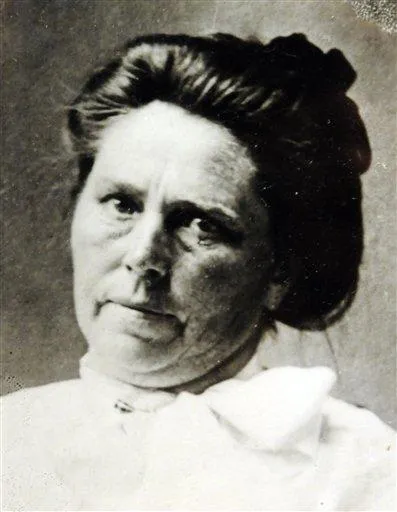
Case Summary
They came to La Porte, Indiana, one by one, with their life savings tucked in their coat pockets and her letters folded in their hands. A warm heart waiting, she had promised. A fine farm. A future. Belle Gunness wrote those letters for years, placing matrimonial advertisements in Norwegian-language newspapers across the Midwest, casting for men who were lonely and solvent and, crucially, willing to tell no one where they were going. When investigators finally dug up her farm in May 1908, they found the answer to where those men had gone: butchered, dismembered, folded into gunny sacks, and buried in shallow graves near the hog pen. More than forty victims lay scattered beneath the Indiana soil. Then the farmhouse burned, a headless torso was found in the ruins, and the question of whether Belle Gunness had died alongside her crimes or simply escaped them has never been definitively answered. One of the most prolific female serial killers in American history, she was never charged with a single murder. This is her story.
November 11, 1859, Selbu, Sør-Trøndelag (Søndre Trondhjem county), Norway(Age: 48)
April 28, 1908, La Porte, Indiana, USA (unconfirmed) (Unknown — perished in farmhouse fire per official record, but widely believed to have faked death and fled; fate unconfirmed)
Related Cases
Convicted
Connection tags:

Convicted
Connection tags:

Convicted
Connection tags:
Convicted
Connection tags:
Convicted
Connection tags:

Accused
Connection tags:
Case Details
The fire that destroyed Belle Gunness's farmhouse on McClung Road, outside La Porte, Indiana, burned so fiercely that neighbors watched the glow from miles away. It was the early hours of April 28, 1908, and by the time daylight permitted investigators to pick through the smoking rubble, they had found four bodies in the basement: three small children and, beside them, the headless torso of an adult woman. The county sheriff had his explanation ready. Belle Gunness, widow, farmer, and respected community figure, had perished in an arson fire set by her jealous, unstable former farmhand, Ray Lamphere. Case closed.
Except the torso was too short. And too light. And no one could find the head.
She had been born Brynhild Paulsdatter Størseth on November 11, 1859, in Selbu, a village in Sør-Trøndelag, Norway, the youngest of eight children of a stonemason and a farm wife. The family worked a cotter's farm roughly sixty kilometers southeast of Trondheim, surviving in the careful, hungry way that thousands of Norwegian families did. At twenty-one, Brynhild boarded a ship for America. She arrived in 1881 at Castle Garden, New York's immigration processing station, and shed her name with the ease of a woman who had already decided that the old self would not serve her in the new world. She became Belle. She settled in Chicago, found her sister Nellie, and went to work as a domestic servant.
Chicago in the 1880s was a city of noise and reinvention, exactly the sort of place where a determined immigrant woman could disappear into the crowd and emerge as someone else entirely. Belle was physically formidable, standing between five feet seven and five feet nine inches tall, built like someone raised on hard labor. In 1884, she married Mads Ditlev Anton Sorenson, and the couple opened a confectionery store. The store burned down. The insurance paid out. Their house also caught fire. That insurance paid out too. Two of Belle's young children, Caroline and Axel, died in infancy from what was recorded as acute colitis; the symptoms of colitis and strychnine poisoning present in remarkably similar ways, and Belle collected life insurance after each death.
Mads Sorenson himself died on July 30, 1900. The date was significant: it was the single day on which two of his life insurance policies overlapped, a coincidence that should have given investigators serious pause. The first physician to examine him suspected strychnine poisoning. The family doctor disagreed and attributed the death to heart failure. No autopsy was performed. Belle collected approximately $8,500, a sum worth roughly $217,000 in modern dollars, and began looking for somewhere new to begin again.
She found La Porte, Indiana. With the Sorenson insurance money, she purchased a farm on McClung Road on the town's outskirts and, on April 1, 1902, married a Norwegian-born widower named Peter Gunness, a butcher by trade. One week after the wedding, Peter's infant daughter died under unexplained circumstances while alone in the house with Belle. That December, Peter himself was dead. Belle's explanation: a heavy sausage grinder had fallen from a high shelf and struck him fatally on the head. The coroner, during his inquest, was reported to have muttered, "This is a case of murder." Belle's adopted daughter, Jennie Olsen, told her school friends, "My mama killed my papa." No charges were filed. Belle collected another $3,000 and settled into her role as a twice-bereaved widow with a farm to run.
The story she told next was addressed to lonely men.
She placed matrimonial advertisements in Norwegian-language newspapers across the Midwest, including the Minneapolis Tidende, and in other regional papers. The advertisements were crafted with care: Belle presented herself as a prosperous widow seeking a reliable husband and business partner, a woman of means who needed someone to match her ambition. She wanted men of financial substance, men willing to prove their sincerity by arriving with their liquid assets in hand. She instructed them, with the gravity of a woman who simply preferred discretion, to tell no one where they were going.
The letters she wrote in response were almost tender. Come to me, she wrote. I have a fine farm, a good home, and a warm heart waiting. Men replied by the dozen: farmers, clerks, laborers, men who had spent years working and saving, hoping for a second chance at happiness. They sent photographs and bank references. They wrote about their children, their land, their plans. Then they climbed onto trains and came to La Porte.
The mechanics of what happened next were reconstructed, piece by grim piece, after the fire. Belle's method was consistent. She welcomed each suitor warmly, fed him a substantial meal, and served him coffee. The coffee, investigators concluded, was almost certainly laced with strychnine. Once incapacitated, the man was killed, likely by bludgeoning. Belle then dismembered the body, separating the head, arms, and legs, wrapped the parts in gunny sacks, and buried them in shallow graves near the hog pen, under outbuildings, and along the edge of the property. Quicklime accelerated decomposition. The hogs took care of what remained.
Sometime in September 1906, Jennie Olsen, the adopted daughter who had once told classmates what her mother had done to her father, disappeared. Belle told anyone who asked that she had sent Jennie to school in Los Angeles. Investigators would later dig Jennie's body from the ground at the Gunness farm.
By early 1908, the operation was unraveling from two directions at once. Ray Lamphere, the farmhand she had hired and taken as an intermittent lover, had become a liability; he had witnessed too much and had begun making threats. Belle fired him in February 1908 and immediately started telling neighbors and the county sheriff that she feared he would burn her house down. At the same time, she was receiving increasingly urgent letters from a man named Asle Helgelien, whose brother Andrew had traveled to La Porte the previous winter with his savings and had not been heard from since. Asle was threatening to come to Indiana himself.
Belle appeared before a judge and requested a peace bond against Lamphere, building a paper trail designed to make him the obvious suspect when the fire came.
On the night of April 27 going into April 28, 1908, the farmhouse burned. Lamphere was arrested and charged with arson and murder. Then Asle Helgelien arrived in La Porte and refused to be satisfied. His brother had written of traveling to Belle's farm with his life savings. He demanded excavation. Law enforcement resisted, then relented. On May 3, the digging began.
Within the first two days, investigators unearthed at least eleven butchered victims near the hog pen. Body parts emerged from the ground in gunny sacks: heads separated from torsos, limbs folded into parcels. The number of victims discovered on the property ultimately exceeded forty, though identifications were largely impossible given the state of the remains. Andrew Helgelien's body was among those recovered.
The headless torso found in the basement, initially assumed to be Belle, became the subject of intense scrutiny. Belle had been a large woman, described by contemporaries as standing tall and weighing between two hundred and two hundred fifty pounds. The torso was significantly shorter and lighter than any reasonable estimate of her body. A dental bridge allegedly belonging to Gunness was found in the rubble; skeptics pointed out she could easily have planted it before she left.
Ray Lamphere went to trial in November 1908. He was convicted of arson and acquitted of murder; the jury apparently could not determine with certainty that Belle was dead. He died in Indiana State Prison at Michigan City. Before dying, he made confessions to a minister, Reverend Edwin Schell, and through a journalist named Edward Bechly. According to those confessions, Belle had obtained the corpse of another woman, removed the head to prevent identification, planted the body in the farmhouse, and fled before the fire. She had asked Lamphere to set the blaze with her three children still inside.
The children were nine-year-old Myrtle, eleven-year-old Lucy, and five-year-old Philip.
In 1931, a woman calling herself Esther Carlson was arrested in Los Angeles for poisoning a Norwegian-American man named August Lindstrom for his money. Two people who had known Belle Gunness looked at photographs of Carlson and said they recognized her. Carlson had no documented history before 1908. She was roughly the right age and physical type. She used the same method. She died of tuberculosis on May 6, 1931, before her trial could begin, taking whatever she knew about herself to the grave.
In November 2007, forensic anthropologist Stephen Nawrocki led a team of graduate students from the University of Indianapolis to Forest Home Cemetery in Forest Park, Illinois, where the farmhouse remains had been buried for nearly a century. They opened the coffin. Inside were the commingled bones of a woman and two children, mixed together during the chaotic 1908 recovery. Researchers attempted DNA comparison against saliva traces found on envelopes Belle had mailed to suitors and against DNA from a living Norwegian descendant of Belle's grandmother. The samples had degraded too severely. The results were inconclusive.
Belle Gunness was never formally charged with a single murder. All criminal charges in the La Porte case were brought against Ray Lamphere, who was acquitted of killing anyone. She remains, in the legal record, an alleged perpetrator. Conservative estimates credit her with at least fourteen confirmed victims; some researchers believe the total exceeds forty. She is remembered under several names: Hell's Belle, Lady Bluebeard, the Black Widow of La Porte, the La Porte Ghoul.
The La Porte County Historical Society Museum maintains a permanent exhibit on her case. Among the artifacts: the garden cart she allegedly used to transport bodies across her property at night, wood salvaged from the chicken coop, a coroner's inquisition record, and the skull of an unidentified victim who has never been named.
What is strangest about the Belle Gunness story is not the scale of the killing. It is the patience. She waited. She placed her advertisements, answered her letters, welcomed her suitors, and waited, year after year, on a farm at the edge of a quiet Indiana town. She had been waiting since Selbu, since the cold farm sixty kilometers from Trondheim, since the moment a girl named Brynhild looked at a world that had nothing to offer her and decided, with absolute composure, to take what she needed from whoever came within reach.
Whether she died in that Indiana farmhouse on a spring night in 1908 or walked away from the ashes of her own myth and reinvented herself one final time, no one has ever been able to say for certain. That uncertainty is, in its way, exactly what she would have wanted.
Timeline
Birth in Selbu, Norway
Brynhild Paulsdatter Størseth is born in Selbu, Sør-Trøndelag, Norway, the youngest of eight children of stonemason Paul Pedersen Størset and Berit Olsdatter. The family lived on a small cotter's farm in Innbygda, approximately 60 km southeast of Trondheim. Nothing in her rural Norwegian upbringing foreshadowed the carnage she would later orchestrate in America.
Establishes the origins of one of America's most prolific alleged female serial killers, whose immigrant story would become a dark counterpoint to the American Dream narrative.
Immigration to America and First Marriage
Having immigrated to the United States in 1881 at age 21 and Americanizing her name to 'Belle,' she married Mads Ditlev Anton Sørensen in Chicago in 1884. The couple opened a confectionery store that suspiciously burned down, netting an insurance payout, followed by a second house fire that yielded another payout. Two of their infants, Caroline and Axel, died from what was recorded as acute colitis — symptoms consistent with poisoning — and Belle collected insurance money after each death.
Marks the beginning of Belle's pattern of insurance fraud through arson and suspicious deaths, establishing the financial motive and methodology she would refine over the next two decades.
Death of Mads Sorenson
Mads Sorenson died on the one and only day on which two of his life insurance policies overlapped, under circumstances the first attending physician initially attributed to strychnine poisoning, though his family doctor ruled it heart failure. No autopsy was conducted, and Belle collected approximately $8,500 — equivalent to roughly $217,000 in 2008 dollars — in life insurance proceeds. The suspicious timing of his death on that singular policy overlap day has long been considered the clearest indicator of premeditated murder.
The death of Mads Sorenson provided the capital Belle needed to purchase her La Porte farm and launch her most prolific killing operation, and stands as one of the most damning circumstantial pieces of evidence against her.
Fatal 'Accident' of Peter Gunness
Belle's second husband, Norwegian-born butcher Peter Gunness, whom she had married on April 1, 1902, died under highly suspicious circumstances just months after their wedding — Belle claimed a heavy sausage-grinding machine fell from a high shelf and struck him fatally on the head. The coroner reportedly muttered 'This is a case of murder,' and Belle's adopted daughter Jennie Olsen told classmates 'My mama killed my papa.' Despite an inquest, no charges were filed and Belle collected another insurance payout of approximately $3,000.
Peter's death freed Belle from marital constraints, provided additional capital, and gave her the Gunness farm as a fully controlled killing ground; it also demonstrated her ability to evade justice even when suspicion was openly voiced.
Matrimonial Advertisements Lure Victims
Following Peter's death, Belle placed matrimonial and business-partner advertisements in Midwestern Norwegian-language newspapers, including the Minneapolis Tidende, seeking wealthy bachelor suitors to come to her remote La Porte farm. She instructed respondents to bring cash and tell no one of their plans, a detail that ensured victims would not be immediately missed. Her modus operandi was to feed suitors strychnine-laced coffee, bludgeon the incapacitated men, dismember the bodies, and bury the remains in gunny sacks with quicklime near the hog pen and outbuildings.
The advertisement campaign transformed Belle's farm into a systematic murder-for-profit operation, making her one of the earliest documented users of personal advertisements as a tool for serial predation.
Disappearance of Adopted Daughter Jennie Olsen
Belle's adopted daughter Jennie Olsen, who had told classmates that her mother had killed her father, disappeared in September 1906; Belle claimed she had sent the girl to school in Los Angeles. Jennie's body was later discovered buried on the farm during the 1908 excavations, confirming that Belle had murdered the one witness most likely to expose her. The killing of Jennie represented a chilling escalation — eliminating not just strangers for profit but a child who posed a threat.
Jennie's murder demonstrated Belle's willingness to kill anyone who threatened her security, and her body's discovery during excavations provided investigators with direct evidence of murders beyond the suitor victims.
Farmhouse Fire and Discovery of Bodies
On the night of April 27–28, 1908, Belle's farmhouse on McClung Road burned to the ground; in the charred basement rubble, authorities found the bodies of three children — Myrtle, Lucy, and Philip — and a headless adult female torso initially assumed to be Belle. The headless corpse was notably shorter and lighter than Gunness, who stood approximately 5'7"–5'9" and weighed 200–250 lbs, raising immediate doubts about the identification. A dental bridge allegedly belonging to Belle was found in the rubble, but critics argued she could have planted it to stage her own death.
The fire and its ambiguous remains launched one of the most debated questions in American true crime history — whether Belle Gunness perished in the blaze or successfully faked her own death and fled.
Excavation of the Gunness Farm
Spurred by Asle Helgelien's insistence that his brother Andrew had been murdered on the property, investigators began excavating the Gunness farm and unearthed at least 11 butchered victims near the hog pen within the first two days alone. The total number of bodies and body parts discovered on the property ultimately exceeded 40, with most remains too decomposed or dismembered to be identified. The scale of the discovery shocked the nation and cemented Belle Gunness's reputation as one of the most prolific serial killers in American history.
The farm excavation transformed a suspicious fire into a mass murder investigation of unprecedented scope, providing physical evidence of a systematic killing operation spanning years.
Trial and Conviction of Ray Lamphere
Ray Lamphere, Belle's fired farmhand and former lover, was tried in November 1908 for arson and murder; he was convicted of arson but acquitted of murder. In confessions made to Reverend Edwin Schell and relayed via journalist Edward Bechly, Lamphere stated that Belle had staged her death by planting the headless corpse of a victim, fled before the fire, and had asked him to set the blaze with her children still inside. Lamphere died in prison at Indiana State Prison in Michigan City, taking key details of Belle's fate with him.
Lamphere's acquittal on murder charges meant no one was ever convicted of the Gunness farm murders, and his deathbed confessions provided the most direct testimony that Belle had survived and escaped — though they could not be corroborated.
The 'Esther Carlson' Lead and Inconclusive DNA Exhumation
In 1931 in Los Angeles, a woman known as 'Esther Carlson' was arrested for poisoning a Norwegian-American man named August Lindstrom for his money, using the same strychnine methodology as Gunness; two people who had known Belle believed they recognized Carlson from photographs, and Carlson had no documented history prior to 1908. Carlson died of tuberculosis on May 6, 1931, before her trial began, and her identity was never conclusively confirmed or denied. In 2007, forensic anthropologist Stephen Nawrocki exhumed the Forest Home Cemetery grave, but DNA comparisons against envelope saliva and a Norwegian descendant's DNA proved inconclusive due to sample degradation, leaving Belle Gunness's true fate permanently unresolved.
The Carlson lead and the failed 2007 DNA analysis represent the bookends of a century-long effort to determine whether Belle Gunness escaped justice, making her fate one of American true crime's greatest enduring mysteries.
Crime Location
Photos
BelleGunness

Sources
- Hell's Princess: The Mystery of Belle Gunness, Butcher of Men
- Belle Gunness — Wikipedia
- Belle Gunness Portrait — Library of Congress Prints and Photographs Division
- The Mistress of Murder Hill: The Serial Killings of Belle Gunness
- America's First Female Serial Killer? The Story of Belle Gunness
- Exhumation of Belle Gunness Grave — University of Indianapolis Forensic Investigation
- La Porte County Historical Society Museum — Belle Gunness Exhibit
- Deadly Women: Belle Gunness Episode
Frequently Asked Questions
Table of Contents
Case Summary
They came to La Porte, Indiana, one by one, with their life savings tucked in their coat pockets and her letters folded in their hands. A warm heart waiting, she had promised. A fine farm. A future. Belle Gunness wrote those letters for years, placing matrimonial advertisements in Norwegian-language newspapers across the Midwest, casting for men who were lonely and solvent and, crucially, willing to tell no one where they were going. When investigators finally dug up her farm in May 1908, they found the answer to where those men had gone: butchered, dismembered, folded into gunny sacks, and buried in shallow graves near the hog pen. More than forty victims lay scattered beneath the Indiana soil. Then the farmhouse burned, a headless torso was found in the ruins, and the question of whether Belle Gunness had died alongside her crimes or simply escaped them has never been definitively answered. One of the most prolific female serial killers in American history, she was never charged with a single murder. This is her story.
November 11, 1859, Selbu, Sør-Trøndelag (Søndre Trondhjem county), Norway(Age: 48)
April 28, 1908, La Porte, Indiana, USA (unconfirmed) (Unknown — perished in farmhouse fire per official record, but widely believed to have faked death and fled; fate unconfirmed)
Case Details
The fire that destroyed Belle Gunness's farmhouse on McClung Road, outside La Porte, Indiana, burned so fiercely that neighbors watched the glow from miles away. It was the early hours of April 28, 1908, and by the time daylight permitted investigators to pick through the smoking rubble, they had found four bodies in the basement: three small children and, beside them, the headless torso of an adult woman. The county sheriff had his explanation ready. Belle Gunness, widow, farmer, and respected community figure, had perished in an arson fire set by her jealous, unstable former farmhand, Ray Lamphere. Case closed.
Except the torso was too short. And too light. And no one could find the head.
She had been born Brynhild Paulsdatter Størseth on November 11, 1859, in Selbu, a village in Sør-Trøndelag, Norway, the youngest of eight children of a stonemason and a farm wife. The family worked a cotter's farm roughly sixty kilometers southeast of Trondheim, surviving in the careful, hungry way that thousands of Norwegian families did. At twenty-one, Brynhild boarded a ship for America. She arrived in 1881 at Castle Garden, New York's immigration processing station, and shed her name with the ease of a woman who had already decided that the old self would not serve her in the new world. She became Belle. She settled in Chicago, found her sister Nellie, and went to work as a domestic servant.
Chicago in the 1880s was a city of noise and reinvention, exactly the sort of place where a determined immigrant woman could disappear into the crowd and emerge as someone else entirely. Belle was physically formidable, standing between five feet seven and five feet nine inches tall, built like someone raised on hard labor. In 1884, she married Mads Ditlev Anton Sorenson, and the couple opened a confectionery store. The store burned down. The insurance paid out. Their house also caught fire. That insurance paid out too. Two of Belle's young children, Caroline and Axel, died in infancy from what was recorded as acute colitis; the symptoms of colitis and strychnine poisoning present in remarkably similar ways, and Belle collected life insurance after each death.
Mads Sorenson himself died on July 30, 1900. The date was significant: it was the single day on which two of his life insurance policies overlapped, a coincidence that should have given investigators serious pause. The first physician to examine him suspected strychnine poisoning. The family doctor disagreed and attributed the death to heart failure. No autopsy was performed. Belle collected approximately $8,500, a sum worth roughly $217,000 in modern dollars, and began looking for somewhere new to begin again.
She found La Porte, Indiana. With the Sorenson insurance money, she purchased a farm on McClung Road on the town's outskirts and, on April 1, 1902, married a Norwegian-born widower named Peter Gunness, a butcher by trade. One week after the wedding, Peter's infant daughter died under unexplained circumstances while alone in the house with Belle. That December, Peter himself was dead. Belle's explanation: a heavy sausage grinder had fallen from a high shelf and struck him fatally on the head. The coroner, during his inquest, was reported to have muttered, "This is a case of murder." Belle's adopted daughter, Jennie Olsen, told her school friends, "My mama killed my papa." No charges were filed. Belle collected another $3,000 and settled into her role as a twice-bereaved widow with a farm to run.
The story she told next was addressed to lonely men.
She placed matrimonial advertisements in Norwegian-language newspapers across the Midwest, including the Minneapolis Tidende, and in other regional papers. The advertisements were crafted with care: Belle presented herself as a prosperous widow seeking a reliable husband and business partner, a woman of means who needed someone to match her ambition. She wanted men of financial substance, men willing to prove their sincerity by arriving with their liquid assets in hand. She instructed them, with the gravity of a woman who simply preferred discretion, to tell no one where they were going.
The letters she wrote in response were almost tender. Come to me, she wrote. I have a fine farm, a good home, and a warm heart waiting. Men replied by the dozen: farmers, clerks, laborers, men who had spent years working and saving, hoping for a second chance at happiness. They sent photographs and bank references. They wrote about their children, their land, their plans. Then they climbed onto trains and came to La Porte.
The mechanics of what happened next were reconstructed, piece by grim piece, after the fire. Belle's method was consistent. She welcomed each suitor warmly, fed him a substantial meal, and served him coffee. The coffee, investigators concluded, was almost certainly laced with strychnine. Once incapacitated, the man was killed, likely by bludgeoning. Belle then dismembered the body, separating the head, arms, and legs, wrapped the parts in gunny sacks, and buried them in shallow graves near the hog pen, under outbuildings, and along the edge of the property. Quicklime accelerated decomposition. The hogs took care of what remained.
Sometime in September 1906, Jennie Olsen, the adopted daughter who had once told classmates what her mother had done to her father, disappeared. Belle told anyone who asked that she had sent Jennie to school in Los Angeles. Investigators would later dig Jennie's body from the ground at the Gunness farm.
By early 1908, the operation was unraveling from two directions at once. Ray Lamphere, the farmhand she had hired and taken as an intermittent lover, had become a liability; he had witnessed too much and had begun making threats. Belle fired him in February 1908 and immediately started telling neighbors and the county sheriff that she feared he would burn her house down. At the same time, she was receiving increasingly urgent letters from a man named Asle Helgelien, whose brother Andrew had traveled to La Porte the previous winter with his savings and had not been heard from since. Asle was threatening to come to Indiana himself.
Belle appeared before a judge and requested a peace bond against Lamphere, building a paper trail designed to make him the obvious suspect when the fire came.
On the night of April 27 going into April 28, 1908, the farmhouse burned. Lamphere was arrested and charged with arson and murder. Then Asle Helgelien arrived in La Porte and refused to be satisfied. His brother had written of traveling to Belle's farm with his life savings. He demanded excavation. Law enforcement resisted, then relented. On May 3, the digging began.
Within the first two days, investigators unearthed at least eleven butchered victims near the hog pen. Body parts emerged from the ground in gunny sacks: heads separated from torsos, limbs folded into parcels. The number of victims discovered on the property ultimately exceeded forty, though identifications were largely impossible given the state of the remains. Andrew Helgelien's body was among those recovered.
The headless torso found in the basement, initially assumed to be Belle, became the subject of intense scrutiny. Belle had been a large woman, described by contemporaries as standing tall and weighing between two hundred and two hundred fifty pounds. The torso was significantly shorter and lighter than any reasonable estimate of her body. A dental bridge allegedly belonging to Gunness was found in the rubble; skeptics pointed out she could easily have planted it before she left.
Ray Lamphere went to trial in November 1908. He was convicted of arson and acquitted of murder; the jury apparently could not determine with certainty that Belle was dead. He died in Indiana State Prison at Michigan City. Before dying, he made confessions to a minister, Reverend Edwin Schell, and through a journalist named Edward Bechly. According to those confessions, Belle had obtained the corpse of another woman, removed the head to prevent identification, planted the body in the farmhouse, and fled before the fire. She had asked Lamphere to set the blaze with her three children still inside.
The children were nine-year-old Myrtle, eleven-year-old Lucy, and five-year-old Philip.
In 1931, a woman calling herself Esther Carlson was arrested in Los Angeles for poisoning a Norwegian-American man named August Lindstrom for his money. Two people who had known Belle Gunness looked at photographs of Carlson and said they recognized her. Carlson had no documented history before 1908. She was roughly the right age and physical type. She used the same method. She died of tuberculosis on May 6, 1931, before her trial could begin, taking whatever she knew about herself to the grave.
In November 2007, forensic anthropologist Stephen Nawrocki led a team of graduate students from the University of Indianapolis to Forest Home Cemetery in Forest Park, Illinois, where the farmhouse remains had been buried for nearly a century. They opened the coffin. Inside were the commingled bones of a woman and two children, mixed together during the chaotic 1908 recovery. Researchers attempted DNA comparison against saliva traces found on envelopes Belle had mailed to suitors and against DNA from a living Norwegian descendant of Belle's grandmother. The samples had degraded too severely. The results were inconclusive.
Belle Gunness was never formally charged with a single murder. All criminal charges in the La Porte case were brought against Ray Lamphere, who was acquitted of killing anyone. She remains, in the legal record, an alleged perpetrator. Conservative estimates credit her with at least fourteen confirmed victims; some researchers believe the total exceeds forty. She is remembered under several names: Hell's Belle, Lady Bluebeard, the Black Widow of La Porte, the La Porte Ghoul.
The La Porte County Historical Society Museum maintains a permanent exhibit on her case. Among the artifacts: the garden cart she allegedly used to transport bodies across her property at night, wood salvaged from the chicken coop, a coroner's inquisition record, and the skull of an unidentified victim who has never been named.
What is strangest about the Belle Gunness story is not the scale of the killing. It is the patience. She waited. She placed her advertisements, answered her letters, welcomed her suitors, and waited, year after year, on a farm at the edge of a quiet Indiana town. She had been waiting since Selbu, since the cold farm sixty kilometers from Trondheim, since the moment a girl named Brynhild looked at a world that had nothing to offer her and decided, with absolute composure, to take what she needed from whoever came within reach.
Whether she died in that Indiana farmhouse on a spring night in 1908 or walked away from the ashes of her own myth and reinvented herself one final time, no one has ever been able to say for certain. That uncertainty is, in its way, exactly what she would have wanted.
Timeline
Birth in Selbu, Norway
Brynhild Paulsdatter Størseth is born in Selbu, Sør-Trøndelag, Norway, the youngest of eight children of stonemason Paul Pedersen Størset and Berit Olsdatter. The family lived on a small cotter's farm in Innbygda, approximately 60 km southeast of Trondheim. Nothing in her rural Norwegian upbringing foreshadowed the carnage she would later orchestrate in America.
Establishes the origins of one of America's most prolific alleged female serial killers, whose immigrant story would become a dark counterpoint to the American Dream narrative.
Immigration to America and First Marriage
Having immigrated to the United States in 1881 at age 21 and Americanizing her name to 'Belle,' she married Mads Ditlev Anton Sørensen in Chicago in 1884. The couple opened a confectionery store that suspiciously burned down, netting an insurance payout, followed by a second house fire that yielded another payout. Two of their infants, Caroline and Axel, died from what was recorded as acute colitis — symptoms consistent with poisoning — and Belle collected insurance money after each death.
Marks the beginning of Belle's pattern of insurance fraud through arson and suspicious deaths, establishing the financial motive and methodology she would refine over the next two decades.
Death of Mads Sorenson
Mads Sorenson died on the one and only day on which two of his life insurance policies overlapped, under circumstances the first attending physician initially attributed to strychnine poisoning, though his family doctor ruled it heart failure. No autopsy was conducted, and Belle collected approximately $8,500 — equivalent to roughly $217,000 in 2008 dollars — in life insurance proceeds. The suspicious timing of his death on that singular policy overlap day has long been considered the clearest indicator of premeditated murder.
The death of Mads Sorenson provided the capital Belle needed to purchase her La Porte farm and launch her most prolific killing operation, and stands as one of the most damning circumstantial pieces of evidence against her.
Fatal 'Accident' of Peter Gunness
Belle's second husband, Norwegian-born butcher Peter Gunness, whom she had married on April 1, 1902, died under highly suspicious circumstances just months after their wedding — Belle claimed a heavy sausage-grinding machine fell from a high shelf and struck him fatally on the head. The coroner reportedly muttered 'This is a case of murder,' and Belle's adopted daughter Jennie Olsen told classmates 'My mama killed my papa.' Despite an inquest, no charges were filed and Belle collected another insurance payout of approximately $3,000.
Peter's death freed Belle from marital constraints, provided additional capital, and gave her the Gunness farm as a fully controlled killing ground; it also demonstrated her ability to evade justice even when suspicion was openly voiced.
Matrimonial Advertisements Lure Victims
Following Peter's death, Belle placed matrimonial and business-partner advertisements in Midwestern Norwegian-language newspapers, including the Minneapolis Tidende, seeking wealthy bachelor suitors to come to her remote La Porte farm. She instructed respondents to bring cash and tell no one of their plans, a detail that ensured victims would not be immediately missed. Her modus operandi was to feed suitors strychnine-laced coffee, bludgeon the incapacitated men, dismember the bodies, and bury the remains in gunny sacks with quicklime near the hog pen and outbuildings.
The advertisement campaign transformed Belle's farm into a systematic murder-for-profit operation, making her one of the earliest documented users of personal advertisements as a tool for serial predation.
Disappearance of Adopted Daughter Jennie Olsen
Belle's adopted daughter Jennie Olsen, who had told classmates that her mother had killed her father, disappeared in September 1906; Belle claimed she had sent the girl to school in Los Angeles. Jennie's body was later discovered buried on the farm during the 1908 excavations, confirming that Belle had murdered the one witness most likely to expose her. The killing of Jennie represented a chilling escalation — eliminating not just strangers for profit but a child who posed a threat.
Jennie's murder demonstrated Belle's willingness to kill anyone who threatened her security, and her body's discovery during excavations provided investigators with direct evidence of murders beyond the suitor victims.
Farmhouse Fire and Discovery of Bodies
On the night of April 27–28, 1908, Belle's farmhouse on McClung Road burned to the ground; in the charred basement rubble, authorities found the bodies of three children — Myrtle, Lucy, and Philip — and a headless adult female torso initially assumed to be Belle. The headless corpse was notably shorter and lighter than Gunness, who stood approximately 5'7"–5'9" and weighed 200–250 lbs, raising immediate doubts about the identification. A dental bridge allegedly belonging to Belle was found in the rubble, but critics argued she could have planted it to stage her own death.
The fire and its ambiguous remains launched one of the most debated questions in American true crime history — whether Belle Gunness perished in the blaze or successfully faked her own death and fled.
Excavation of the Gunness Farm
Spurred by Asle Helgelien's insistence that his brother Andrew had been murdered on the property, investigators began excavating the Gunness farm and unearthed at least 11 butchered victims near the hog pen within the first two days alone. The total number of bodies and body parts discovered on the property ultimately exceeded 40, with most remains too decomposed or dismembered to be identified. The scale of the discovery shocked the nation and cemented Belle Gunness's reputation as one of the most prolific serial killers in American history.
The farm excavation transformed a suspicious fire into a mass murder investigation of unprecedented scope, providing physical evidence of a systematic killing operation spanning years.
Trial and Conviction of Ray Lamphere
Ray Lamphere, Belle's fired farmhand and former lover, was tried in November 1908 for arson and murder; he was convicted of arson but acquitted of murder. In confessions made to Reverend Edwin Schell and relayed via journalist Edward Bechly, Lamphere stated that Belle had staged her death by planting the headless corpse of a victim, fled before the fire, and had asked him to set the blaze with her children still inside. Lamphere died in prison at Indiana State Prison in Michigan City, taking key details of Belle's fate with him.
Lamphere's acquittal on murder charges meant no one was ever convicted of the Gunness farm murders, and his deathbed confessions provided the most direct testimony that Belle had survived and escaped — though they could not be corroborated.
The 'Esther Carlson' Lead and Inconclusive DNA Exhumation
In 1931 in Los Angeles, a woman known as 'Esther Carlson' was arrested for poisoning a Norwegian-American man named August Lindstrom for his money, using the same strychnine methodology as Gunness; two people who had known Belle believed they recognized Carlson from photographs, and Carlson had no documented history prior to 1908. Carlson died of tuberculosis on May 6, 1931, before her trial began, and her identity was never conclusively confirmed or denied. In 2007, forensic anthropologist Stephen Nawrocki exhumed the Forest Home Cemetery grave, but DNA comparisons against envelope saliva and a Norwegian descendant's DNA proved inconclusive due to sample degradation, leaving Belle Gunness's true fate permanently unresolved.
The Carlson lead and the failed 2007 DNA analysis represent the bookends of a century-long effort to determine whether Belle Gunness escaped justice, making her fate one of American true crime's greatest enduring mysteries.
Crime Location
Photos
BelleGunness
Sources
- Hell's Princess: The Mystery of Belle Gunness, Butcher of Men
- Belle Gunness — Wikipedia
- Belle Gunness Portrait — Library of Congress Prints and Photographs Division
- The Mistress of Murder Hill: The Serial Killings of Belle Gunness
- America's First Female Serial Killer? The Story of Belle Gunness
- Exhumation of Belle Gunness Grave — University of Indianapolis Forensic Investigation
- La Porte County Historical Society Museum — Belle Gunness Exhibit
- Deadly Women: Belle Gunness Episode
Frequently Asked Questions
Related Cases
Convicted
Connection tags:
Convicted
Connection tags:
Convicted
Connection tags:
Convicted
Connection tags:
Convicted
Connection tags:
Accused
Connection tags:
Tags
Popular Culture
book (2018)
Harold Schechter's narrative nonfiction account is considered the definitive modern treatment of the Gunness case, covering her Norwegian origins through the 2007 exhumation.
book (2001)
Sylvia Elizabeth Shepherd's detailed account of the Gunness murders and the La Porte farm excavations.
book (1985)
Lillian de la Torre's dramatized account of Belle Gunness's crimes, one of the earlier popular treatments of the case.
TV (2008)
Investigation Discovery true crime series featured Belle Gunness in its premiere episode, dramatizing her luring and poisoning of suitors.
TV (2016)
Investigation Discovery series profiling Belle Gunness as one of America's most prolific female serial killers.
documentary (2008)
PBS documentary examining the Gunness farm murders, the 1908 fire, and the 2007 forensic exhumation at Forest Home Cemetery.
podcast (2017)
Popular true crime comedy podcast covered the Belle Gunness case, bringing the story to a new generation of true crime listeners.
podcast (2019)
True crime podcast covered Gunness's insurance fraud schemes and serial murders as part of its series on corporate and criminal malfeasance.
book (2020)
Gunness is frequently referenced alongside the Bloody Benders as a pioneering female serial killer of the American Midwest in popular true crime literature.