20 cases from United States
Convicted: Ghislaine Maxwell
Ghislaine Maxwell, once a high-profile British socialite, became globally notorious following her association and subsequent legal trial with financier Jeffrey Epstein. Her life transformed dramatically from attending elite social gatherings to facing charges in a New York trial for sex trafficking and child abuse. Maxwell's case captured international attention due to its depth of criminal activities intertwined with the lifestyles of the influential. Convicted in 2021, Maxwell was handed a 20-year prison sentence, underscoring her pivotal role in facilitating Epstein's network of sexual exploitation. This outcome not only secured a measure of justice for the victims but also highlighted the severe implications of power misuse in elite circles. Currently, Maxwell remains incarcerated, her previous affluent lifestyle starkly contrasted by her life behind bars, continually making headlines and prompting discussions about accountability and the social elite.
Convicted: Anna Vadimovna Sorokin
When Rachel DeLoache Williams returned from a luxury week at the Surf Club in Marrakech in the spring of 2017, she was $62,000 poorer. Her friend had promised the wire transfer was coming. It never came. The friend was Anna Sorokin, the 26-year-old daughter of a Russian truck driver who had spent four years convincing Manhattan's elite that she controlled a 60-million-euro European trust fund. Operating under the alias Anna Delvey, she defrauded banks, luxury hotels, and private individuals of approximately $275,000, forged financial documents, bounced checks, and nearly secured a $22 million bank loan using fabricated paperwork. When she was arrested, tried, and convicted in 2019, she hired a courtroom stylist and showed up in Saint Laurent and Victoria Beckham, making international headlines for her courtroom looks as much as her crimes. Netflix paid $320,000 for her story. The state took most of it under the Son of Sam law. She was released from prison, immediately detained by ICE, held for nineteen months, then released to house arrest in a 470-square-foot East Village apartment. She started selling art and made $340,000. She appeared on Dancing With the Stars wearing a bedazzled ankle monitor. Her deportation case remains unresolved. Anna Delvey, it turns out, is very hard to get rid of.
Convicted: Lavinia Fisher
Her last words were an invitation: 'If you have a message you want to send to hell, give it to me. I'll carry it.' Then, according to those who witnessed it, Lavinia Fisher jumped from the scaffold herself rather than wait for the hangman's hand. The year was 1820. The crowd numbered roughly 2,000. And the woman swinging from the gallows outside Charleston's Old City Jail had never been convicted of murder. Not a single count of it. History remembers Lavinia Fisher as America's first female serial killer, a poisoner and innkeeper who disposed of hundreds of travelers in the South Carolina backcountry. The problem is that almost none of that is true. What is true is stranger, in some ways more troubling, and far more human: a charismatic, defiant woman who terrorized a government watchman, possibly ran with an organized outlaw gang, and went to her death cursing the city that condemned her. The legend swallowed the real story whole. It's long past time to dig it back out.
Subject: Casey Marie Anthony
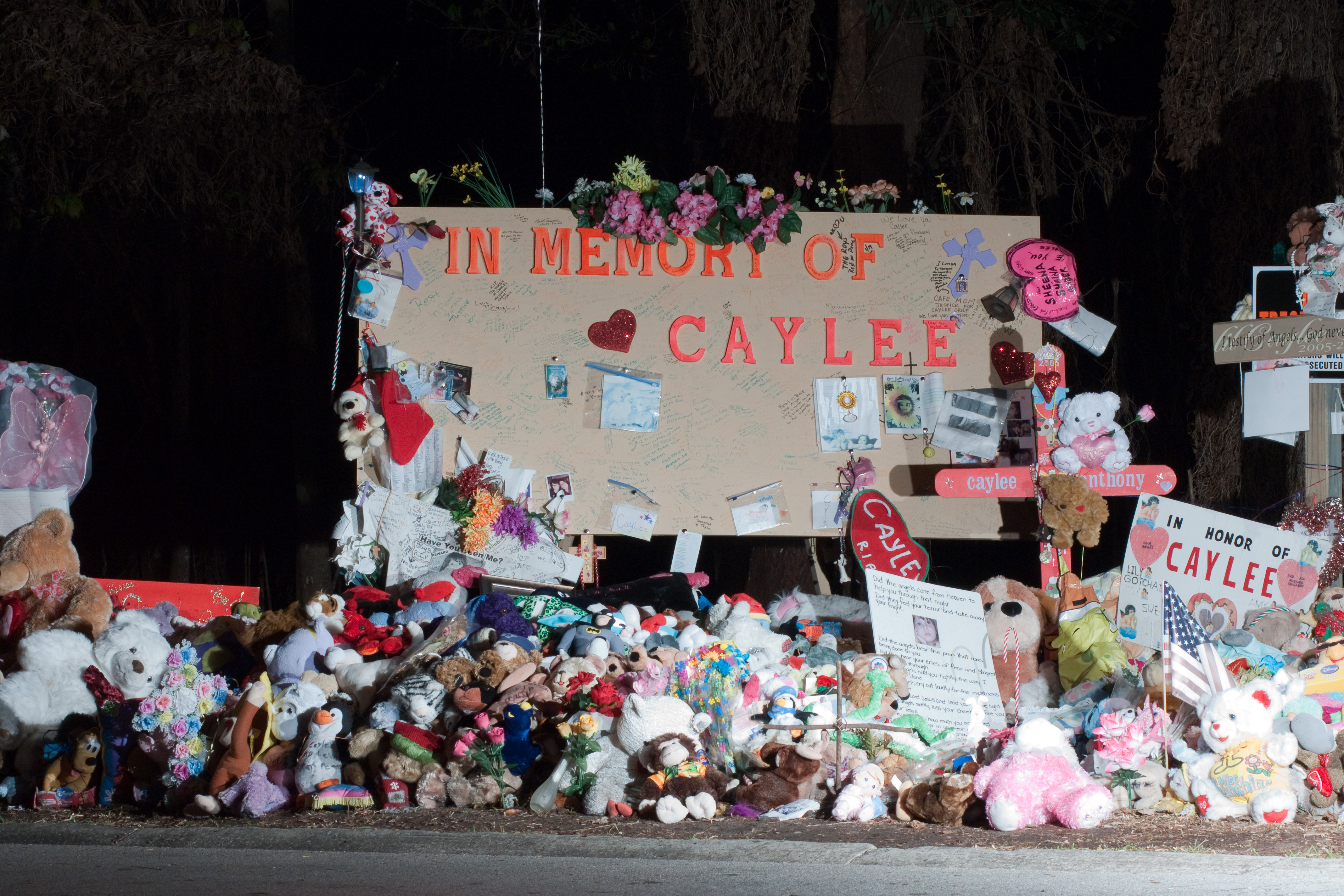
On July 15, 2008, Cindy Anthony called 911 in a panic, telling the dispatcher that her daughter Casey's car smelled 'like there's been a dead body' in it. Her granddaughter, two-year-old Caylee Marie Anthony, had been missing for thirty-one days. Thirty-one days Casey had spent partying with friends, sleeping at her boyfriend's apartment, and getting a tattoo on her shoulder that read 'Bella Vita': Beautiful Life. She had told anyone who asked that Caylee was with a nanny named Zenaida Fernandez-Gonzalez. The nanny did not exist. When Caylee's skeletal remains were found in December 2008, less than a mile from the Anthony family home, duct tape near the child's skull, the case exploded into a national obsession. What followed was one of the most polarizing murder trials in American history: a courtroom battle over chloroform, swimming pools, family secrets, and the limits of reasonable doubt. On July 5, 2011, the jury delivered a verdict that left much of America stunned. Casey Anthony walked free. The question of what really happened to Caylee Marie Anthony has never been answered in a court of law, and it likely never will be.
Convicted: Leslie Louise Van Houten
Leslie Van Houten is an American convicted murderer who was a member of the Manson Family, a cult led by Charles Manson. Van Houten was involved in the murders of Leno and Rosemary LaBianca, a crime for which she was convicted. During her time with Manson's group, she was known by various aliases, including Louella Alexandria, Leslie Marie Sankston, Linda Sue Owens and Lulu.
Defendant: Lizzie Andrew Borden
Lizzie Andrew Borden was an American woman who was the main suspect in the axe murders of her father and stepmother on August 4, 1892, in Fall River, Massachusetts. Despite being tried for the brutal crime, she was acquitted due to a lack of evidence. No one else was charged in the murders, and, despite ostracism from other residents, Borden spent the remainder of her life in Fall River.
Convicted: Gertrude Nadine Baniszewski
Gertrude Baniszewski was the primary perpetrator in the torture and murder of teenager Sylvia Likens in 1965. Likens was under the care of Baniszewski, who, along with her children and several neighborhood friends, subjected Likens to three months of brutal abuse and neglect. The torture escalated incrementally and culminated in Likens' death from extensive injuries and malnutrition on October 26, 1965, in Indianapolis, Indiana.
Convicted: Griselda Blanco Restrepo
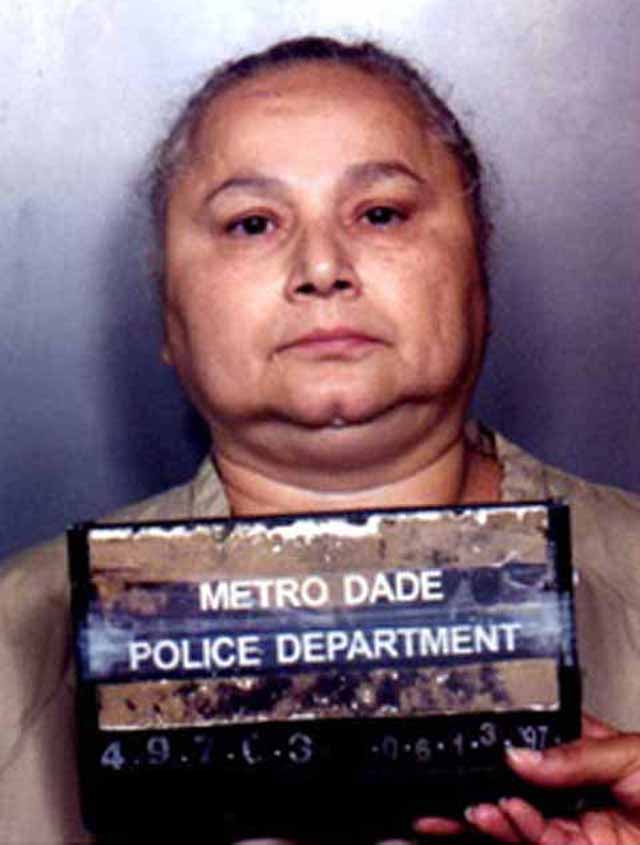
On the afternoon of September 3, 2012, a gunman dismounted from a motorcycle outside a butcher shop in Medellín, Colombia, and shot a 69-year-old woman twice in the head. He was gone before anyone could stop him. The woman was Griselda Blanco Restrepo, and the method of her killing was one she had invented herself. In the 1970s and 1980s, Blanco built a cocaine empire that shipped 1,500 kilograms of product into Miami every month, generated an estimated $80 million monthly, and left dozens if not hundreds of people dead on both sides of the Atlantic. She mentored Pablo Escobar. She pioneered motorcycle assassinations. She named her youngest son Michael Corleone, after the Godfather character, because she saw the parallel and felt no shame in it. She was convicted of federal drug trafficking in 1985. She beat a capital murder case when her star witness was caught having phone sex with prosecutors' secretaries. She served nearly two decades in prison, suffered a heart attack, was deported to Colombia, and allegedly became a born-again Christian. None of it was enough to save her. The killers who found her outside the Carnicería Cardiso that September afternoon were never identified. She was buried at Jardines de Montesacro cemetery in Medellín, in the same ground as Pablo Escobar. The Godmother of Cocaine, who had ordered the deaths of husbands, rivals, and at least one two-year-old child, ended her life on the same streets where she had built her legend: in Medellín, violently, by surprise. This is her story.
Convicted: Patricia Dianne Krenwinkel
Patricia Dianne Krenwinkel is a convicted American mass murderer and former member of the Manson Family. She participated in the notorious murders at 10050 Cielo Drive in Benedict Canyon, Los Angeles on August 9, 1969, alongside fellow Manson Family members Tex Watson and Susan Atkins. The victims included pregnant actress Sharon Tate, Jay Sebring, Wojciech Frykowski, Abigail Folger, and Steven Parent. During her time with Manson's group, Krenwinkel went by various aliases, including Big Patty, Yellow, Marnie Reeves and Mary Ann Scott, however, within The Family, she was most commonly known as Katie.
Convicted: Bonnie Elizabeth Parker
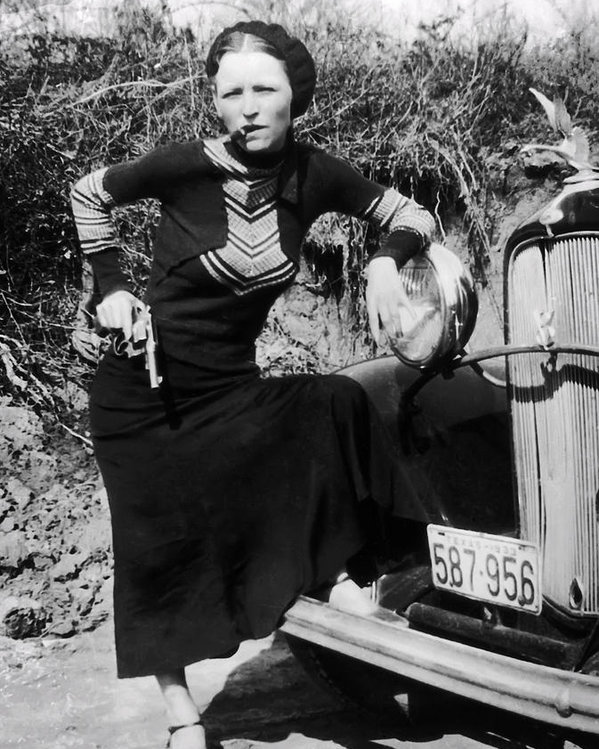
Bonnie Elizabeth Parker, a pivotal figure among American female criminals, captured the public's attention as part of the infamous duo Bonnie and Clyde. Their crime spree during the Great Depression positioned them as both feared outlaws and pop culture icons. Bonnie, born in 1910 in Rowena, Texas, joined forces with Clyde Barrow in the early 1930s, embarking on a notorious journey that included bank robberies and violent confrontations with law enforcement. The duo's criminal activities culminated in their death in 1934 in Bienville Parish, Louisiana, where they were ambushed and killed by police in their well-known Bonnie and Clyde car. The bullet-riddled vehicle and their dramatic demise are emblematic of their violent lifestyle. Bonnie and Clyde's funeral drew significant attention, reflecting their infamy. Their story remains a fascinating study of crime and desperation during one of America's most challenging eras, with Bonnie Parker at the heart of this enduring narrative.
Convicted: Sandra Ávila Beltrán
When federal agents swarmed a Mexico City restaurant on September 28, 2007, and placed Sandra Ávila Beltrán under arrest, she did not flinch. She smiled. Then she asked if she could freshen her makeup before the cameras filmed her. It was the kind of composure that takes a lifetime to cultivate, and Sandra's lifetime had been extraordinary preparation. Born into one of Mexico's most storied narco dynasties, niece of Guadalajara Cartel godfather Miguel Ángel Félix Gallardo, she had watched the drug trade operate from her cradle. She had buried two husbands, both former police commanders turned traffickers, both killed by hired assassins. She had allegedly coordinated a 9.5-ton cocaine shipment and paid millions in ransom when her own son was kidnapped. By the time the agents clicked the handcuffs, she had already become a legend: La Reina del Pacífico. The Queen of the Pacific. What followed her arrest was almost as astonishing as the life that preceded it. This is the true story of the most glamorous and dangerous woman in the history of the Mexican drug war.
Convicted: Mary Elizabeth Surratt (née Jenkins; baptismal name Maria Eugenia Jenkins Surratt)
On July 7, 1865, in the sweltering heat of a Washington summer that pushed nearly 100 degrees, a middle-aged Catholic widow in a black bombazine dress was escorted to a wooden scaffold at the Old Arsenal Penitentiary. Moments later, Mary Elizabeth Surratt became the first woman ever executed by the United States federal government. She died for her alleged role in the assassination of Abraham Lincoln, convicted on the testimony of a self-serving tenant and a debt-ridden tavern keeper whose own freedom may have depended on what they said about her. Surratt never testified. She was not permitted to. Five of the nine military commissioners who condemned her signed a petition begging President Andrew Johnson to spare her life. He refused, later claiming he never saw it. Her son, who fled to the Vatican to escape justice, was eventually tried in a civilian court and walked free after the jury deadlocked. Her co-conspirator Lewis Powell, standing on his own gallows, said she was innocent. More than 150 years later, historians still argue about whether the United States government hanged a guilty woman, a scapegoat, or something more complicated than either.
Convicted: Pearl Hart
Pearl Hart, a Canadian-born outlaw of the American Old West, was known for committing one of the last recorded stagecoach robberies in the United States. Her crime gained notoriety primarily because of her gender, with many details about her life remaining uncertain due to varied and often contradictory reports.
Convicted: Jane Toppan
Jane Toppan, better recognized by her chilling alias 'Jolly Jane', is infamous for her role as a serial killer in the annals of American crime history. As a nurse, she exploited her position of trust to commit heinous acts, targeting primarily her patients and their relatives in Massachusetts between 1895 and 1901. Toppan's case is particularly notorious as she is believed to have taken the lives of over 100 individuals, though she confessed to 31 murders. Her motivation was rooted in a perverse sexual fetish that drove her to attain a grim satisfaction from the act of murder. A native of Boston, Massachusetts, Toppan's life was marked by early trauma. Following the death of her mother, she and her sister were given up for adoption by their father. The Toppan family took her in, leading to her adopting their surname. Despite the hardships of her past, Toppan managed to maintain a facade of normalcy. Her cheerful demeanor earned her the nickname 'Jolly Jane', a stark contrast to her sinister actions. Her killing spree finally came to an end when an autopsy on one of her victims revealed lethal doses of poison, leading to her arrest and subsequent conviction. Her case serves as a grim reminder of the potential for evil that can lurk beneath the surface, even in those entrusted with the care of others.
Convicted: Rita Gluzman (born Rita Shapiro)
On Easter Sunday morning, April 7, 1996, an East Rutherford police officer spotted a man dropping garbage bags into the Passaic River behind a small New Jersey electronics company. When Officer Richard Freeman approached, he found blood on the man's hands and clothing. Inside those bags were sixty-five pieces of what had once been Yakov Gluzman, a prominent cancer researcher, dismembered through the night with hacksaws and a scalpel after his wife and her cousin attacked him with axes in his own apartment. The woman who orchestrated it had once moved George H.W. Bush, UN Secretary-General U Thant, and Canadian Prime Minister Pierre Trudeau to action on her behalf. She had survived rape at age ten, near-starvation at eleven, and the entire machinery of Soviet bureaucracy. She had gone on an 18-day hunger strike to free her husband from the USSR. And then, more than two decades later, she waited in his darkened apartment holding an axe. Rita Gluzman became the first woman ever charged and convicted under the Violence Against Women Act, a law built to protect women from men like the one prosecutors said she had become. Tabloids called her the Jewish Lizzie Borden. She still calls herself innocent.
Convicted: Elena Kiejliches
Three days after her husband was shot to death inside their Staten Island home, Elena Kiejliches packed her two young children into the car and drove to Disney World. When she returned, she told authorities that Borys Kiejliches might have simply walked out on the marriage. What investigators eventually uncovered was something far darker: a calculated killing rooted in an eighteen-month affair with an aspiring rapper she had met at a Manhattan traffic light, a man she had showered with more than $85,000 in cash, jewelry, and gifts. The body of Borys Kiejliches, a jet-fuel magnate worth an estimated $3 million, turned up a month later in a marsh near the Belt Parkway, wrapped in carpet and stuffed in a cardboard barrel. Elena has maintained her innocence ever since, and her defense attorney still believes her. But a Staten Island jury did not. In 2002, she was sentenced to 22 years to life. This is the story of a marriage, a murder, and a cover-up that stretched from a quiet hilltop neighborhood all the way to a Florida theme park.
Alleged Offender: Enedina Arellano Félix de Toledo
She outlasted them all. While her brothers were being shot in the streets, arrested by federal police, and extradited to American courtrooms, Enedina Arellano Félix de Toledo was doing something none of them ever managed: disappearing in plain sight. Born in Mazatlán in 1961, she earned a legitimate accounting degree, married a Tijuana lawyer, and spent decades managing the financial engine of one of Mexico's most brutal criminal organizations. The U.S. Treasury sanctioned her in 2000. The DEA tracked her for years. Mexico's attorney general eventually put her on a priority fugitives list shared with U.S. authorities. And yet, as of early 2026, she has never been arrested. Not once. No handcuffs, no courtroom, no extradition hearing. While the Tijuana Cartel her family built collapsed around her, one brother killed, the others imprisoned, she transformed what remained into a quieter, more businesslike operation running through pharmacies and real estate in Guadalajara. The DEA and Mexican authorities consider her the first woman ever to lead a major Mexican drug cartel. She carries the aliases La Jefa, La Madrina, and La Narcomami. Intelligence reports place her in Guadalajara today, living under a false identity. The accountant, it turns out, has always been the hardest one to catch.
Convicted: Susan Denise Atkins
Susan Denise Atkins was a member of the 'Manson Family', the cult led by Charles Manson that committed a series of nine murders at four locations in California over a period of five weeks in the summer of 1969. Known within the Manson family as Sadie, Sadie Glutz, Sadie Mae Glutz or Sexy Sadie, Atkins was convicted for her participation in eight of these killings, most notably the Tate murders. She was originally sentenced to death, but her sentence was later commuted to life imprisonment after the California Supreme Court invalidated all death sentences issued prior to 1972. She was incarcerated until her death in 2009, at the time being California's longest-serving female inmate.
Convicted: Genene Anne Jones
Genene Anne Jones was a licensed vocational nurse who is responsible for the deaths of up to 60 infants and children during the 1970s and 1980s. She used injections of digoxin, heparin, and later succinylcholine to induce medical crises in her patients, leading to numerous fatalities. Convicted in 1984 for murder and injury to a child, the exact number of her victims remains uncertain due to missing and destroyed hospital records.
Convicted: Stephanie St. Clair (also known as Stephanie Saint-Clair; later Stephanie St. Clair Hamid)
On October 23, 1935, a Bronx gangster named Dutch Schultz lay bleeding from four bullet wounds in a Newark chophouse, the victim of a Murder Inc. hit ordered by Lucky Luciano. As he drifted in and out of consciousness, a telegram arrived at his hospital bedside. It read: 'As ye sow, so shall ye reap.' It was signed 'Madame Queen of Policy.' The woman who sent it had survived a murder contract, a cellar full of coal dust, and a decade of all-out war with the most dangerous mobster in New York. She had done it all without the backing of any organized crime family, without the protection of the law, and without the privilege that white men in her industry took for granted. Stephanie St. Clair was a Black woman from Guadeloupe who had arrived in Harlem with nothing and built a half-million-dollar criminal empire, educated her neighbors about their constitutional rights, and exposed a corrupt police department before the world. She was, by any measure, one of the most remarkable figures in American organized crime history. Almost nobody knows her name.